9 Balcony Flower Box Ideas for Year-Round Color Without Clutter
A narrow flower box can carry the color without claiming precious floor space, but it has to suit your light, railing, drainage, and winter weather. These nine compact planting plans use bulbs, annuals, perennials, and evergreen structure to keep the view lively across the seasons.
This page contains affiliate links — we may earn a commission at no extra cost to you. See our disclosure.
1. Build a Four-Season Backbone With Dwarf Evergreens
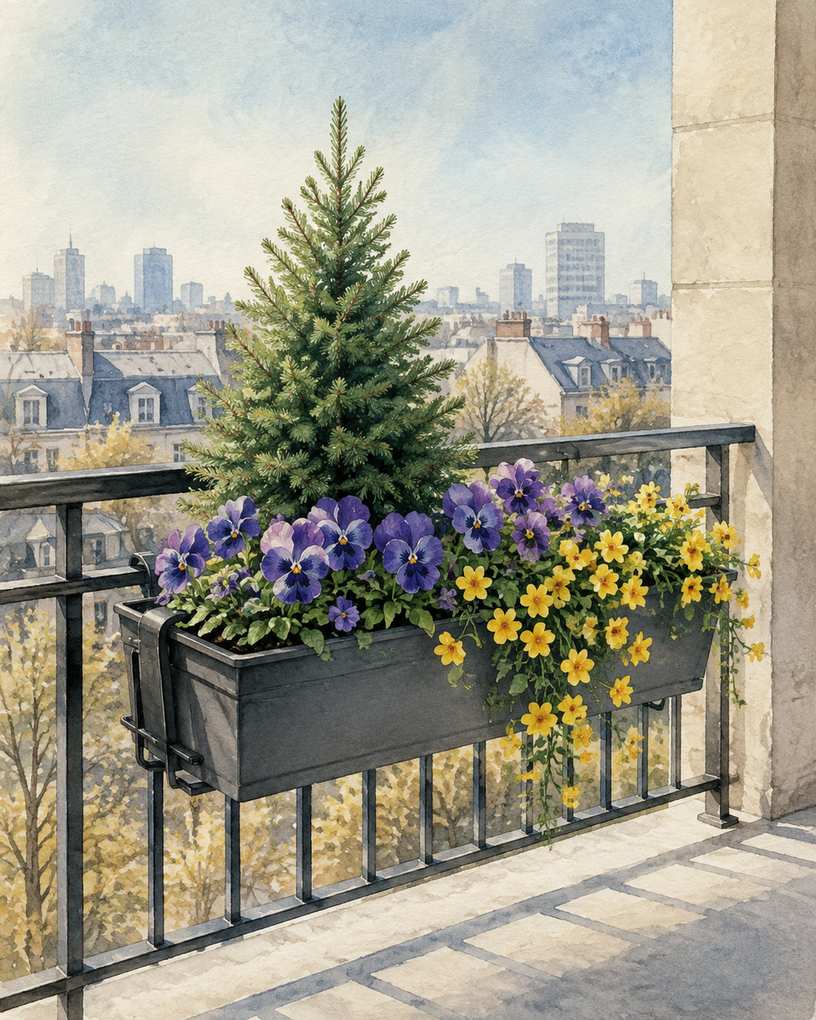
Start with one dwarf evergreen per 24-inch box, then change the smaller plants around it. A compact ‘Wilma’ Monterey cypress or dwarf Alberta spruce gives shape in winter; tuck violas in for cool months and calibrachoa around the edge in summer. Before buying, check mature size rather than the tiny nursery pot: even a slow grower can outgrow a box within two or three years. Use a container at least 10 inches deep, and confirm that the railing and brackets can carry wet potting mix plus the shrub. The trade-off is root competition, so annual companions need regular water and half-strength liquid feed every two weeks in active growth. In very cold climates, exposed roots may need insulation or a hardier evergreen rated two zones colder than yours.
2. Layer Miniature Bulbs Under Cool-Season Violas
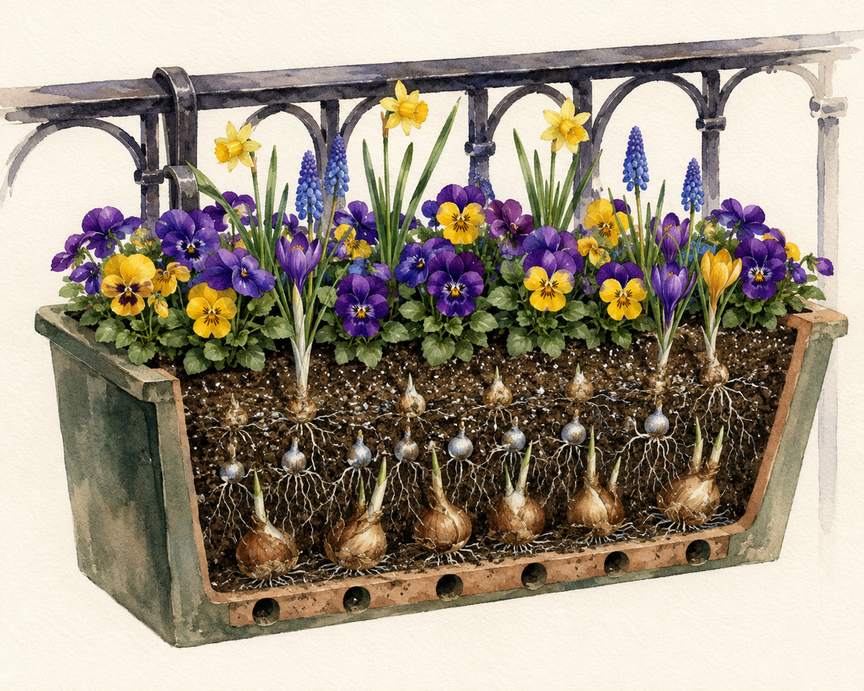
Plant a small bulb lasagna in autumn for color that arrives before most balconies wake up. In an 8- to 10-inch-deep box, set dwarf ‘Tête-à-Tête’ daffodils low, then place crocuses or grape hyacinths above them, leaving roughly twice each bulb’s height in soil over its nose. Finish with violas for immediate fall and early-spring flowers. This works best where the box receives winter rain but never sits waterlogged; use drainage holes and a free-draining container mix. Bulbs also need a real cold period, so warm-winter gardeners should buy pre-chilled bulbs or choose locally suitable species. Once foliage yellows, lift and store the bulbs or hide the fading leaves behind summer annuals. The messy six-week dieback is the honest downside, but cutting green leaves early means fewer flowers next year.
3. Use Heuchera for Color That Does Not Depend on Flowers
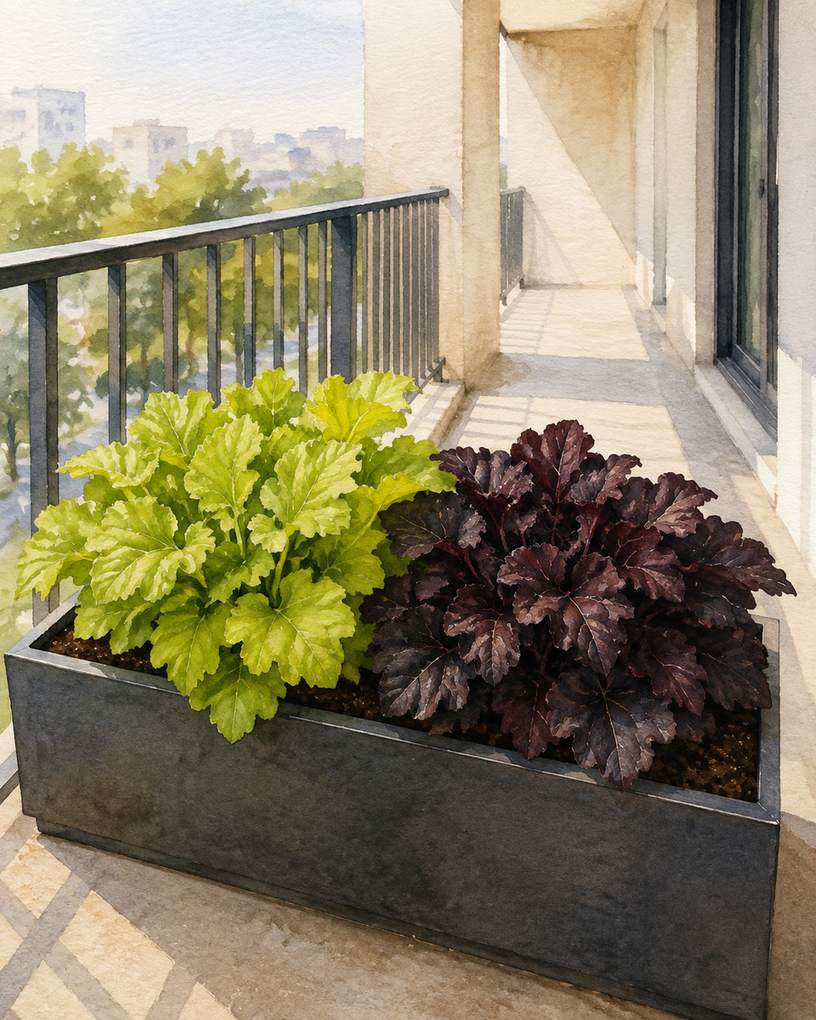
Heuchera keeps a box colorful when few plants are blooming, especially on an east- or north-facing balcony. Combine a lime-leaved cultivar such as ‘Lime Marmalade’ with burgundy ‘Obsidian,’ spacing crowns about 10 to 12 inches apart in a box at least 8 inches deep. Their leaves usually hold from spring into late fall, and may remain evergreen in mild winters. Morning sun brings out the color; harsh afternoon sun can scorch pale varieties, while deep shade may dull the burgundy ones. Keep each crown at soil level and avoid constantly wet mix, which invites rot. Flower stalks are airy rather than showy, so clip them if you want a cleaner silhouette. In cold, windy buildings, the leaves can look battered by February; trim damaged foliage in spring rather than replacing the whole plant.
4. Rotate Two Removable Nursery-Pot Inserts
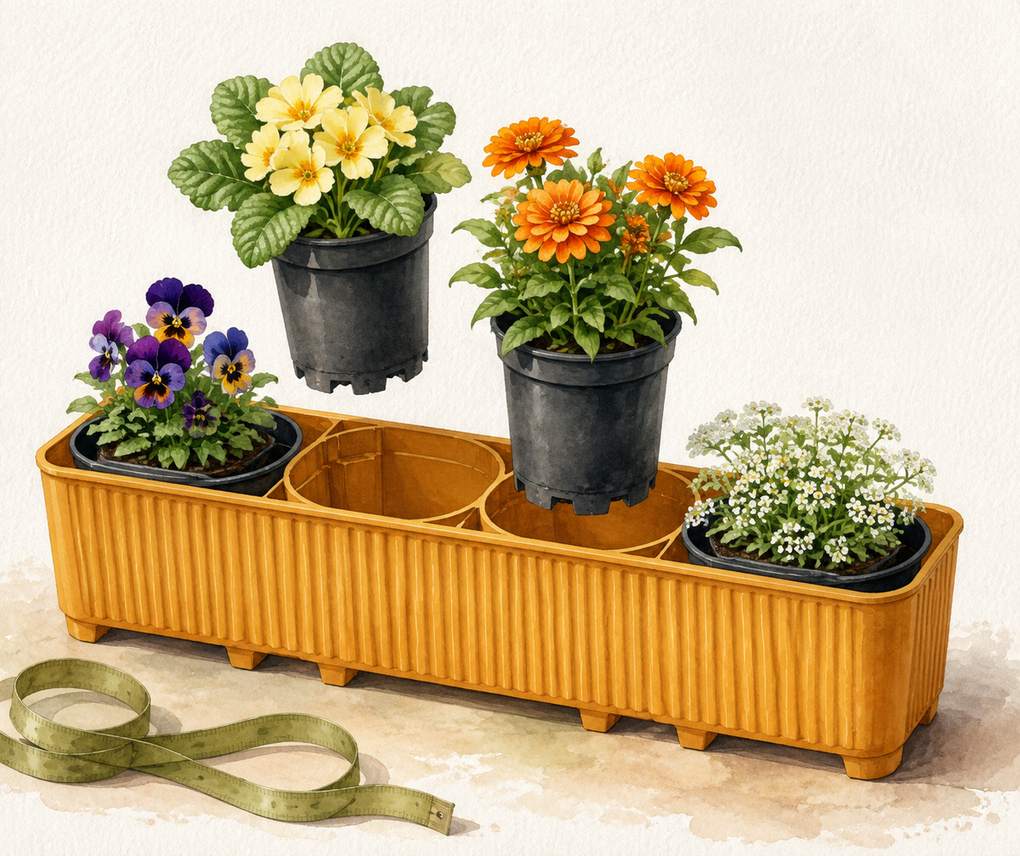
Treat one decorative box as a sleeve and rotate smaller planted pots inside it as seasons change. Three 6-inch nursery pots fit many 24-inch troughs, letting you swap primroses in spring, dwarf zinnias in summer, ornamental peppers in fall, and cut evergreen stems in winter without hauling a soil-filled box indoors. Measure the interior first; tapered walls and bracket hardware can steal an inch of usable width. Set the pots on a shallow spacer so their rims sit level, and make sure both the inserts and outer box drain freely. This system costs a little more in pots and leaves less soil around each root ball, so it dries faster in July. Its advantage is control: a spent plant can be replaced in minutes, while the railing hardware and uncluttered footprint stay exactly where they are.
5. Pair Wind-Low Annuals With a Self-Watering Reservoir
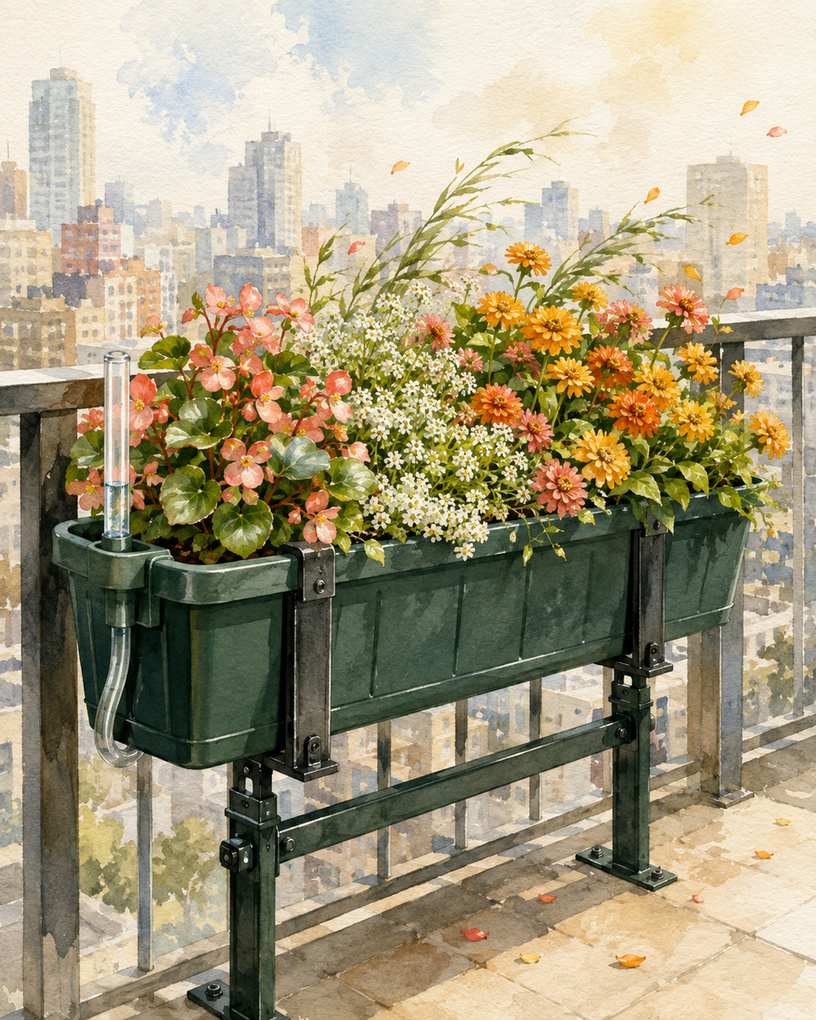
For an exposed upper-floor rail, choose flowers that stay below about 12 inches and place them in a reservoir-style box. Wax begonias, sweet alyssum, and compact ‘Profusion’ zinnias bend less than tall cosmos or snapdragons, while stored water slows the noon wilt common in shallow planters. The reservoir does not make the box maintenance-free: check the fill tube every two or three days during hot, windy weather, and flush the mix monthly so fertilizer salts do not build up. Secure the planter with hardware rated for its filled weight, because several quarts of stored water add pounds. This combination suits four to six hours of sun; use begonias and alyssum alone if light is gentler. The main compromise is weight, so a floor-mounted rail stand may be safer where over-rail planters are prohibited.
Product pick — a self-watering railing planter with a fill gauge
6. Run a Spring-to-Frost Calibrachoa Ribbon
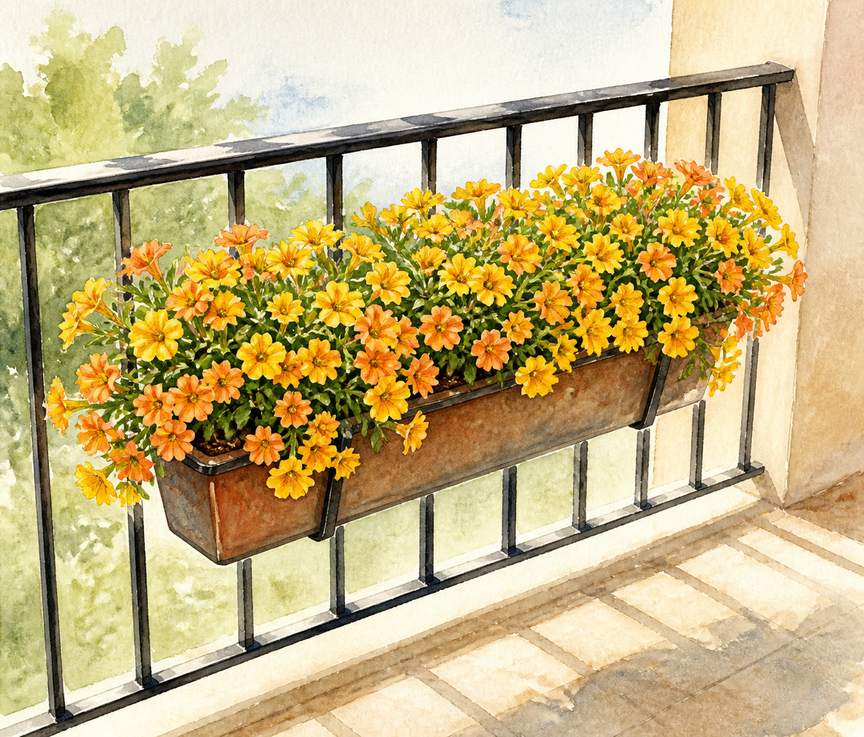
A single ribbon of calibrachoa gives saturated color without the visual clutter of five unrelated plants. Set three plants in a 24-inch box and let them trail over the outside edge, choosing one series in two nearby shades, such as apricot and deep yellow. They flower from late spring to frost with six or more hours of sun, but they resent heavy, soggy soil. Use a peat-free container mix amended for drainage and water when the top inch feels dry; on a hot south-facing rail, that may still mean daily checks. Calibrachoa also prefers slightly acidic conditions and can show yellow leaves in alkaline water. A fertilizer labeled for flowering containers every one to two weeks helps. The downside is seasonal: the first hard frost ends the display, so plan a cool-weather insert rather than expecting these annuals to overwinter.
7. Make a Shady Box With Begonia, Fern, and Lamium
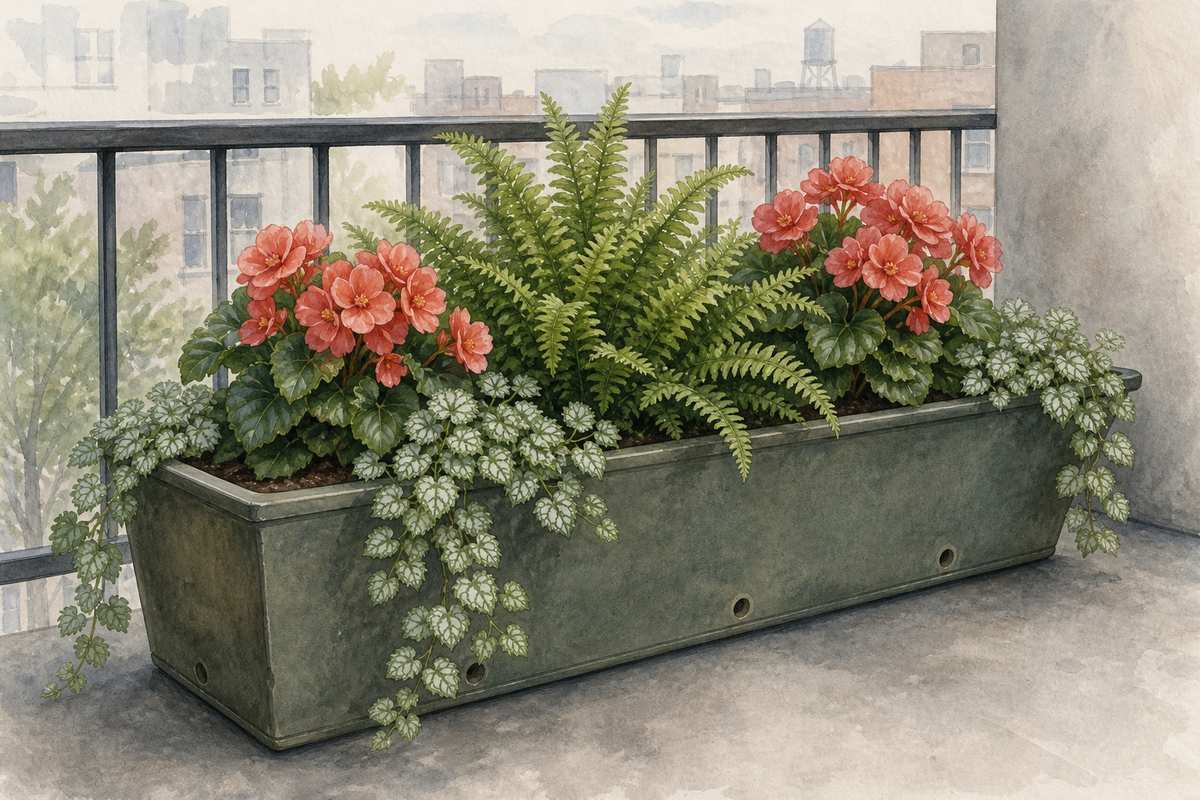
For a balcony with bright shade or two to three hours of gentle morning sun, combine one compact painted fern, two tuberous begonias, and trailing ‘White Nancy’ lamium in a 30-inch box. The fern supplies structure, begonias carry the summer flowers, and lamium keeps silver foliage after a bloom lull. This is not a deep-shade cure: in a dark recess, begonias become sparse and flower poorly. Use an 8- to 10-inch-deep box with drainage, and water when the upper inch of mix dries rather than keeping it swampy. Tuberous begonias are frost-tender; lift and store the tubers after the foliage dies, or replace them each spring. Lamium can root aggressively where stems touch soil, so trim it monthly. Check pet access too, since begonias are not a good choice for a box that curious cats or dogs can chew.
8. Turn Fall Into the Main Event With Sedge and Asters
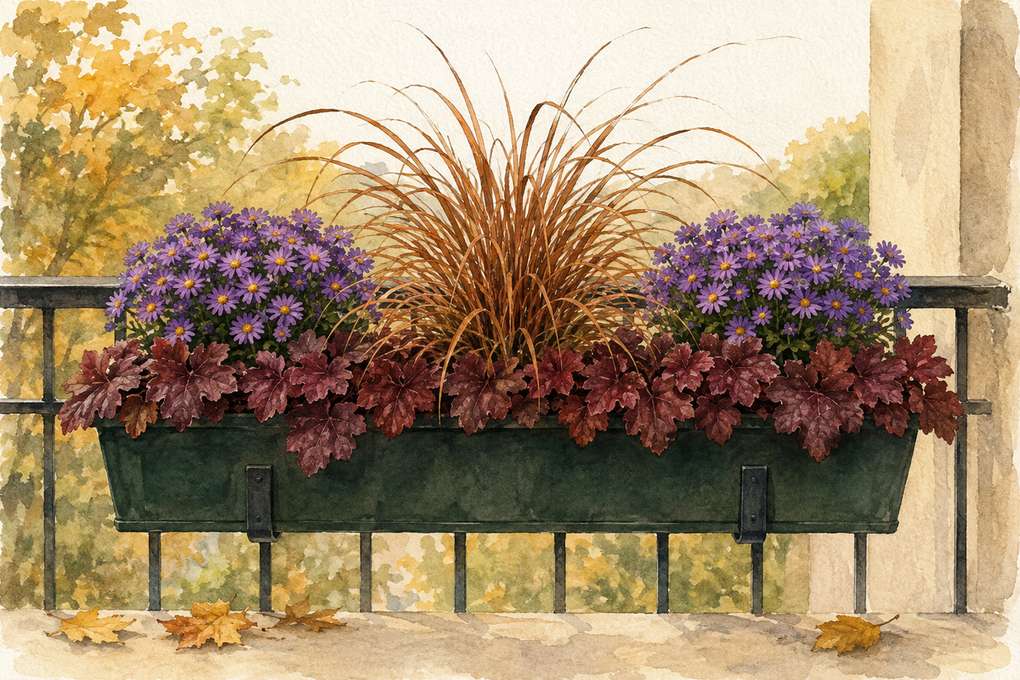
Instead of treating September as cleanup time, build a box around one bronze carex and two compact asters, then edge it with burgundy heuchera. The sedge keeps its fine texture through much of winter in mild climates, while asters provide several weeks of blue or purple flowers when summer annuals are tired. A 30-inch box about 10 inches deep gives these roots enough room for one season and often longer. Give asters at least six hours of sun and pinch them once in early summer to keep them compact; skip the pinch after July or you may remove flower buds. Deadheading stretches the show, but the plants still need cutting back after frost. Verify carex hardiness for your zone, since not every bronze cultivar handles a frozen, exposed railing. The palette is restrained, but that is what keeps the small box from looking busy.
9. Dress an Empty Winter Box With Cut Branches
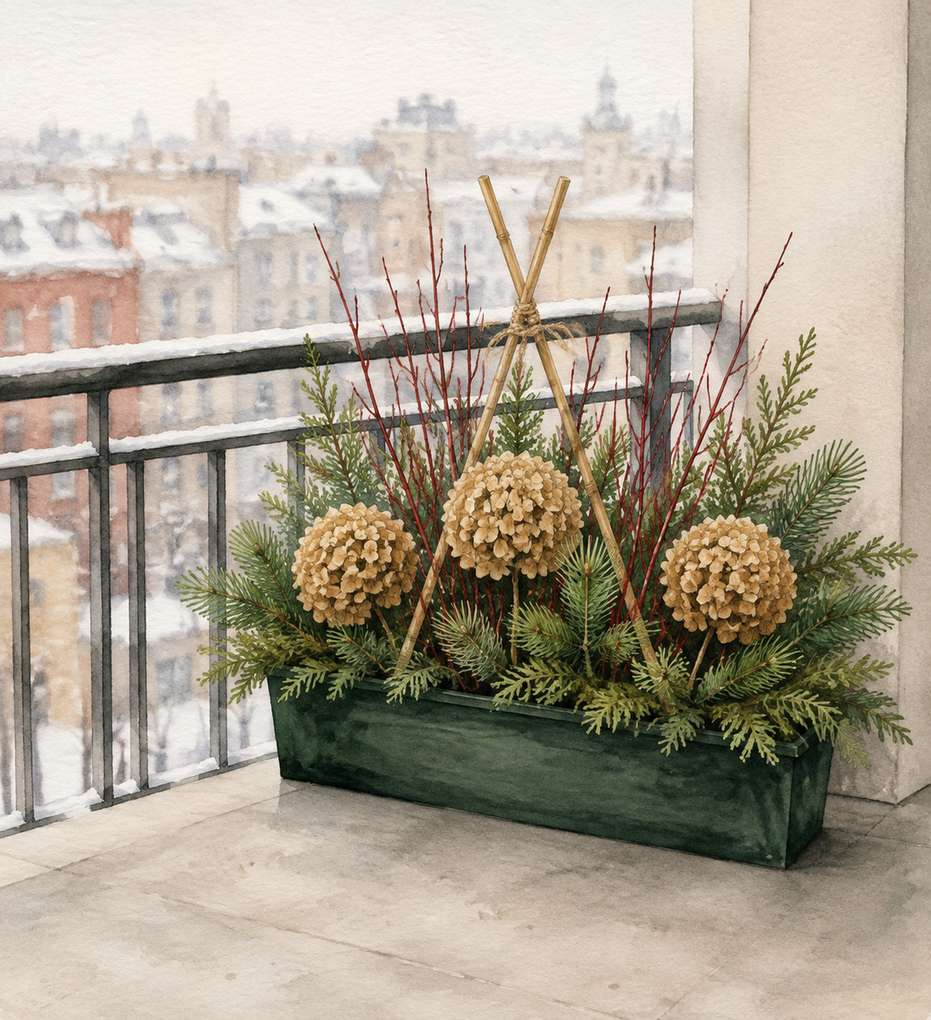
Where living roots cannot survive an exposed winter box, use the container as a holder for cut material. Push redtwig dogwood stems, short pine or cedar tips, and three dried hydrangea heads into damp leftover potting mix, keeping the arrangement below the railing height if wind is strong. Floral foam is unnecessary and creates waste; soil, crossed bamboo stakes, and jute twine can hold stems securely. Aim for branches no more than about 18 inches tall on a gusty balcony, and tether the box itself with approved hardware. This display needs no watering once the mix freezes, though sun and salt spray may brown evergreen tips after four to six weeks. Never cut from public or shared landscaping without permission. In fire-prone buildings or where grills are used, skip dried material and follow property rules for combustible decorations.
Common questions
- How do I know whether my balcony railing can hold a flower box?
- Check the lease, HOA rules, and the railing or balcony load guidance before mounting anything. Weigh the empty box, then add the bagged weight of dry mix, plants, and water; saturated mix and a reservoir can be much heavier than they look. Use brackets rated above that total, keep boxes on the inside of the rail where required, and never rely on improvised zip ties.
- What can stay colorful in a balcony box through winter?
- In mild climates, hardy heuchera, carex, and dwarf evergreens may hold useful foliage all winter. For exposed cold balconies, choose plants rated about two USDA zones colder than your local zone because roots in a box lack ground insulation. Where that is unrealistic, cut pine, cedar, and redtwig dogwood provide winter color without risking a living plant.
- How often do balcony flower boxes need watering?
- Check the top inch of mix daily during hot or windy spells; a shallow sunny box may need water every day, while a shaded 10-inch-deep box may go several days. Water until excess drains, and empty any catch tray before roots sit submerged. A reservoir extends the interval, but its gauge or fill tube still needs checking every two or three days in peak summer.
- Can I get year-round color with only one planting?
- Usually not without accepting quiet periods. An evergreen or heuchera can provide a permanent backbone, but bulbs, summer annuals, and fall flowers peak at different times. The least cluttered approach is one long-lived anchor plus two planned swaps each year, or removable 6-inch pot inserts that change without disturbing the main box.