9 Balcony Garden Storage Ideas That Do Not Eat Your Floor Space
When every square foot is already holding a chair or planter, garden supplies need to move up and out of the way. These nine storage ideas use railings, doors, walls, and existing furniture while accounting for wind, weight, drainage, and rental rules.
This page contains affiliate links — we may earn a commission at no extra cost to you. See our disclosure.
1. Clip a lidded storage box inside the railing
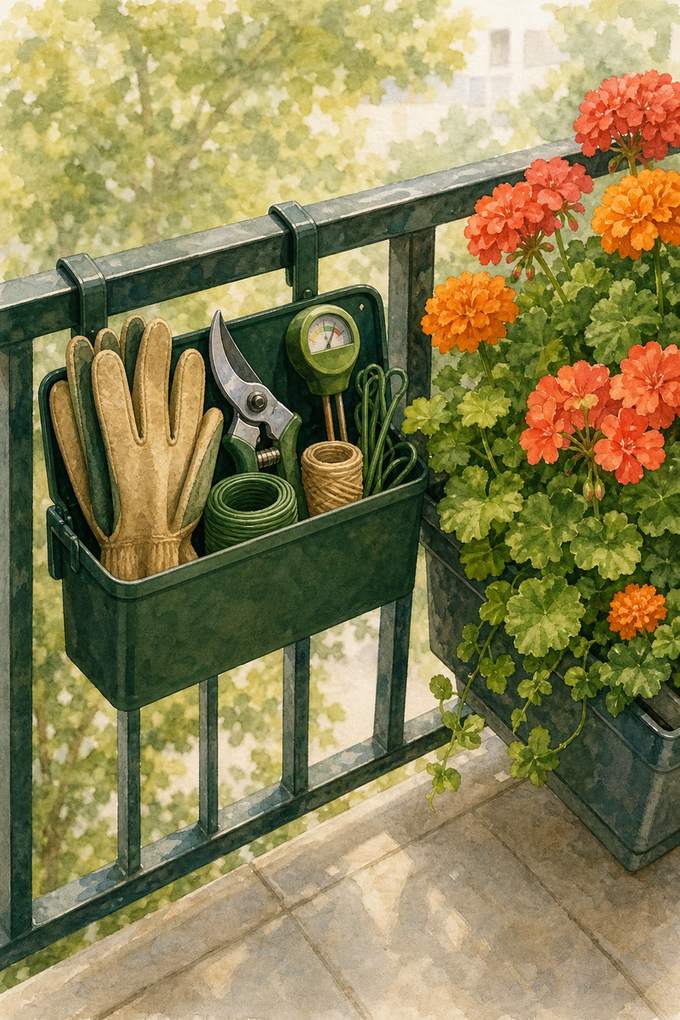
A slim, lidded box mounted to the inside of the railing can hold gloves, plant ties, pruners, and a small moisture meter without taking floor space. Look for a box no deeper than 6 to 8 inches so it does not crowd your knees or block the door. Mount it inside the balcony, never over the street, and use two independent straps or clamps rated for outdoor use. Plastic stays lighter than wood, but dark plastic can become surprisingly hot in full afternoon sun. Add two drainage holes at the lowest point, and keep fertilizer or sharp tools indoors if children or pets can reach the latch.
2. Hang clear tool pockets over the balcony door

An over-door pocket organizer turns the back of a balcony door into storage for seed packets, labels, gloves, twine, and other light supplies. Choose mesh or clear vinyl pockets no more than about 3 inches deep, then confirm the top hooks do not scrape the door frame or stop the weather seal from closing. This works best on an inward-swinging door; an organizer on a sliding door can snag the fixed panel. Keep wet tools out of the pockets because trapped moisture invites rust and mildew. Seed packets also fare better indoors, away from balcony humidity and temperatures that can climb above 90°F behind glass.
3. Strap a narrow pegboard to the railing
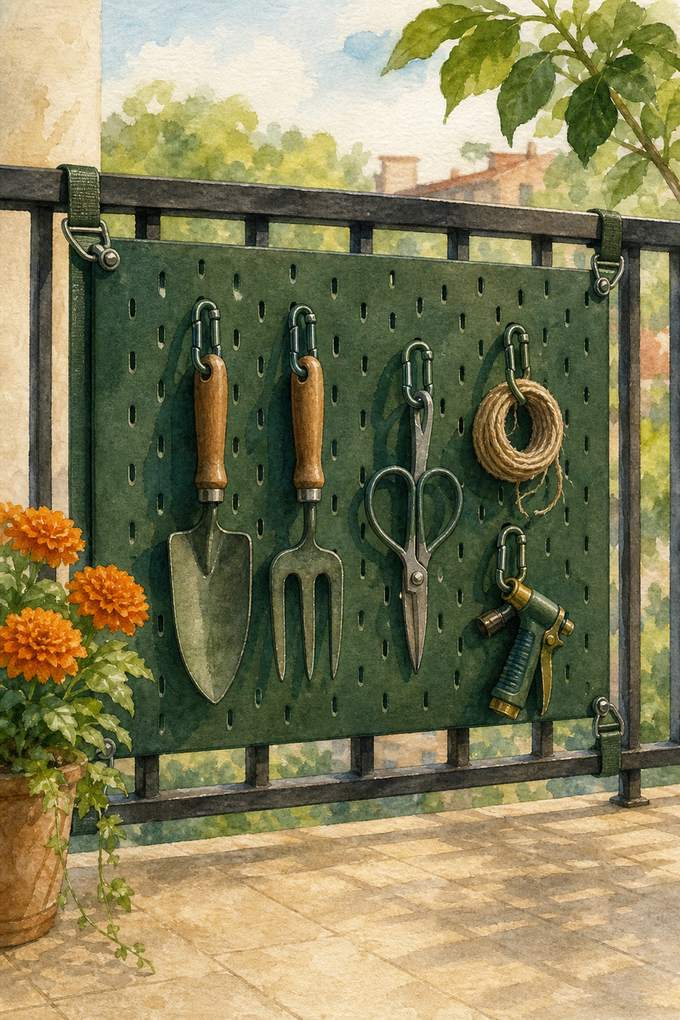
A small outdoor pegboard makes an adjustable home for a trowel, hand fork, scissors, hose nozzle, and coiled twine. Use a plastic or powder-coated metal panel around 18 by 24 inches; untreated fiberboard swells after the first wet week. Fasten it to the inside of the railing at all four corners with UV-resistant cable ties or stainless hose clamps, leaving a half-inch gap for drainage and airflow. Every tool needs a closed hook, carabiner, or short safety cord in windy locations. The drawback is visual clutter, and metal tools can become hot in direct sun. Remove the whole panel before severe storms rather than trusting small hooks against high-rise gusts.
4. Use magnetic tins on a steel privacy panel
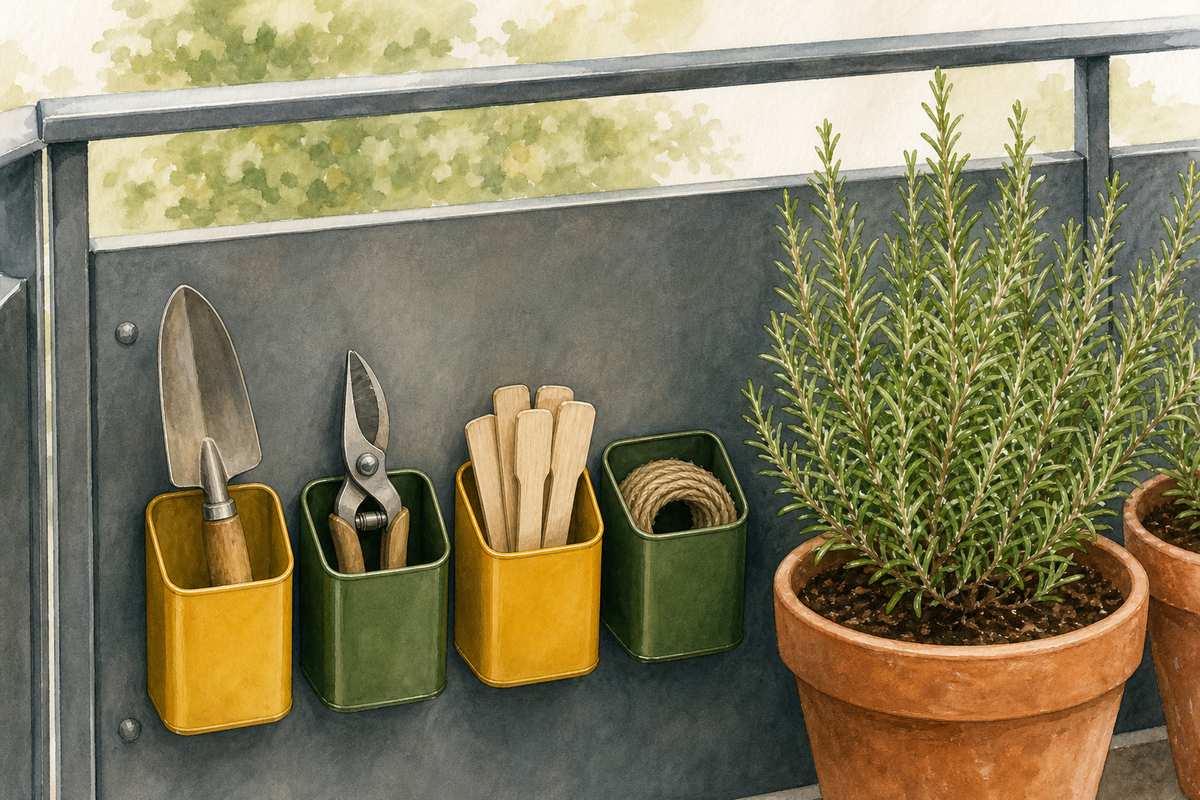
Magnetic tins and tool cups work well when the balcony already has a steel divider, utility cabinet, or magnetic railing panel. Test the surface with a refrigerator magnet before buying anything, since aluminum and many stainless-steel grades will not hold one. Pick rubber-coated magnets rated for at least twice the loaded weight; a cup carrying 2 pounds of tools should have 4 pounds or more of tested holding force. Keep the containers low and inside the railing so a bumped trowel cannot fall over the edge. Magnets may leave faint rust rings on wet steel, so wipe behind them monthly. This option is best for hand tools, not bags of soil or ceramic pots.
5. Add a fold-down potting shelf to the railing
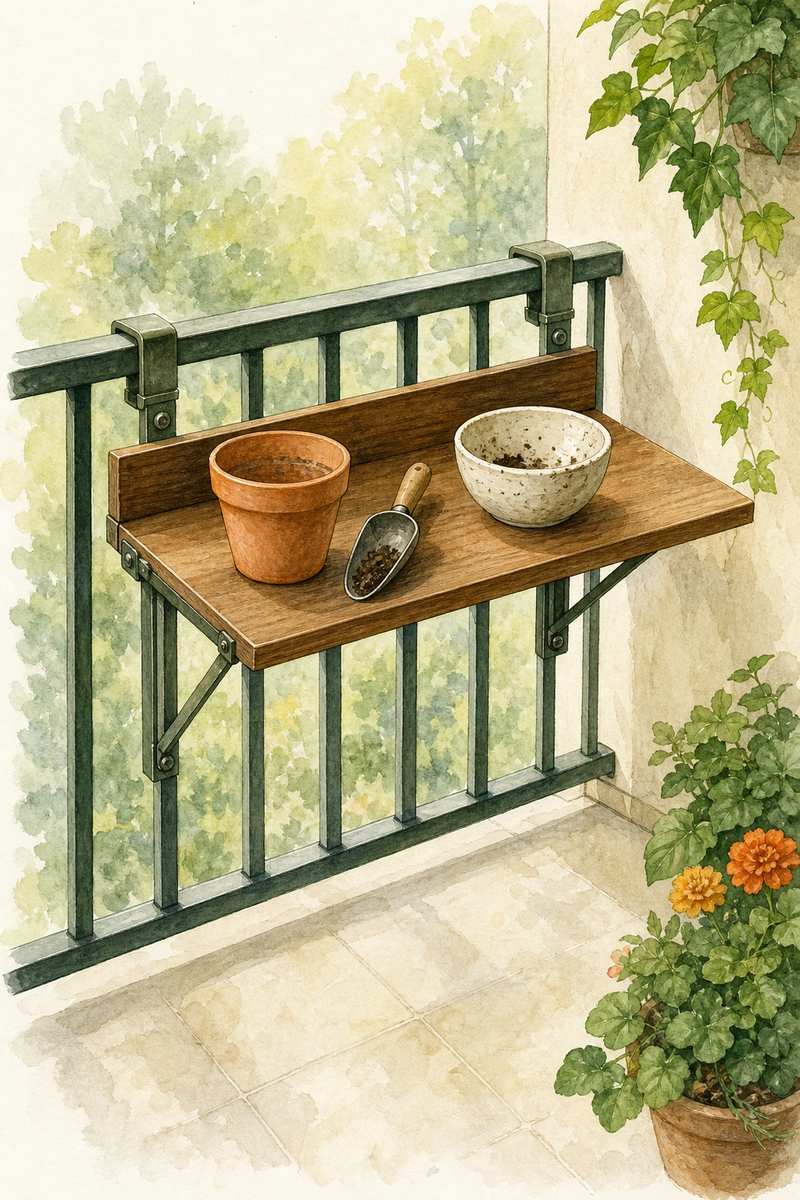
A fold-down railing shelf gives you a temporary potting surface and a shallow storage ledge, then closes nearly flat when the job is done. A 12-by-24-inch aluminum or sealed plywood top is large enough for a 6-inch pot, a scoop, and a small bowl of mix. Use clamps made for your exact railing shape, add a raised back lip, and check both the shelf rating and the building rules before loading it. Keep the total working weight under the manufacturer's limit, including wet soil, which is much heavier than dry mix. The hinges collect grit, so brush them out monthly. Fold the shelf down and empty it before windy weather.
Product pick — a clamp-on fold-down railing shelf
6. Suspend a washable tool roll from railing hooks
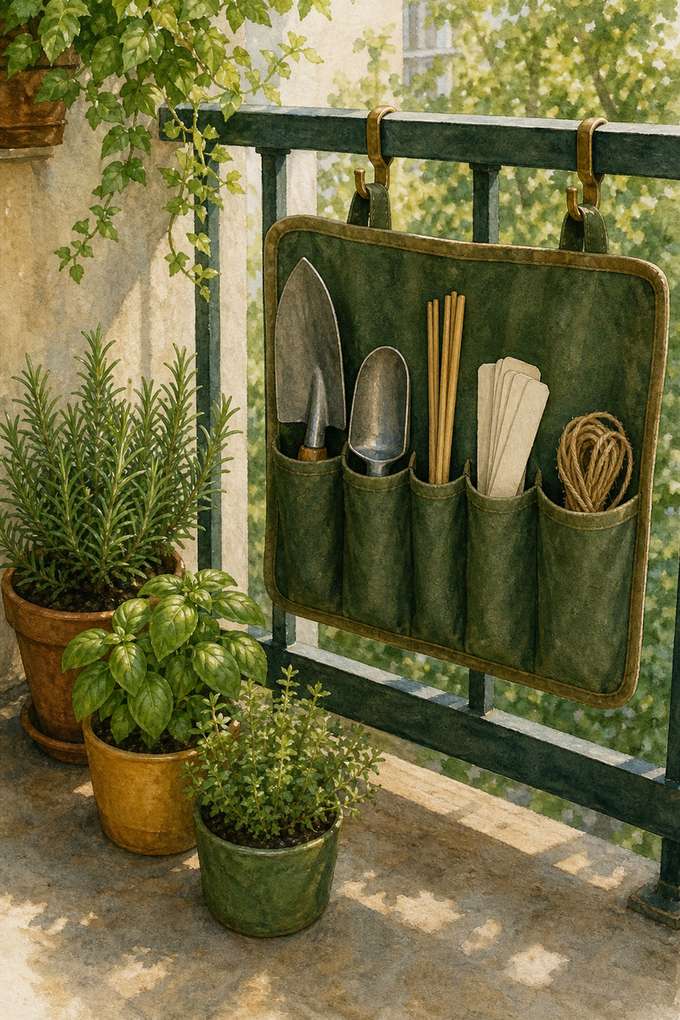
A canvas or synthetic tool roll keeps long, narrow items together and hangs from two railing hooks when you are gardening. Fill the pockets with a soil scoop, narrow trowel, chopsticks for checking moisture, plant labels, and soft ties, then roll it up and bring it indoors after use. Choose polyester or waxed canvas rather than untreated cotton, which can stay damp and mildew. The loaded roll should weigh less than about 5 pounds, and both hooks should close fully around the railing. This is not permanent outdoor storage in rainy climates, but it is one of the easiest renter options because nothing is drilled, glued, or left where wind can catch it overnight.
7. Hang empty nursery pots in a secured mesh sling
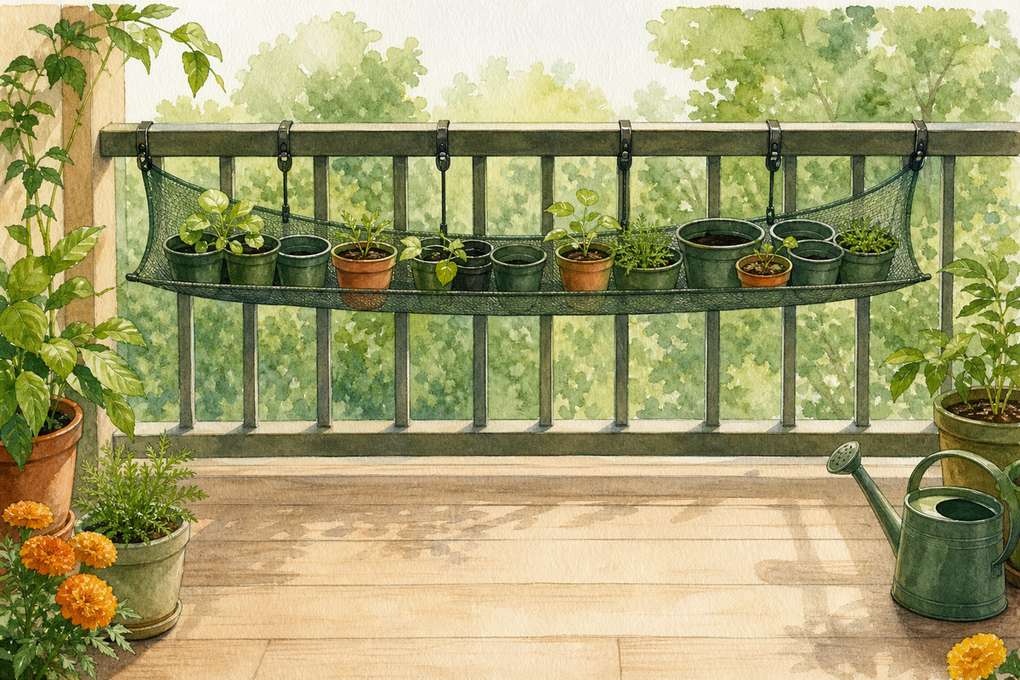
A shallow mesh sling beneath the inside rail is useful for empty plastic nursery pots that otherwise tumble around the balcony. Use UV-resistant cargo mesh with openings smaller than the smallest 4-inch pot, and attach it at six or more points so it cannot sag into the walking path. Store only clean, lightweight plastic pots there; terracotta, soil, and watering cans are too heavy and dangerous overhead. The sling should remain entirely inside the balcony envelope and at least 6 inches above any heater or outlet. Expect sun-exposed mesh to weaken after a few seasons. Check the stitching and straps each spring, and remove the whole setup when strong-wind warnings are issued.
8. Clip small bins to the side of an existing plant rack
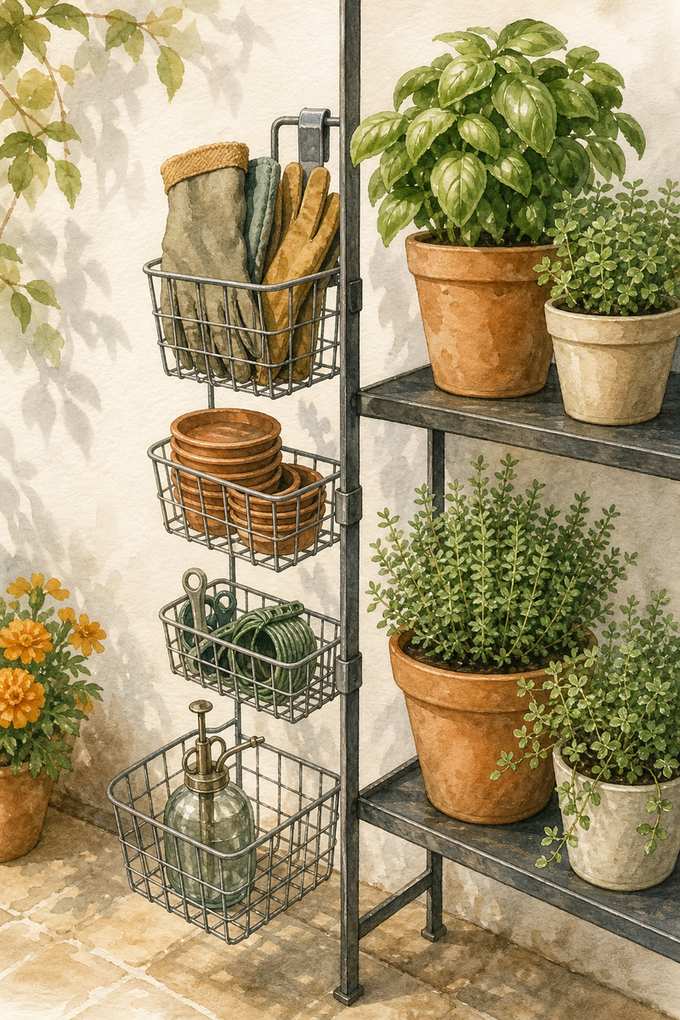
If a plant rack already occupies a corner, use its unused side rails for storage instead of adding another piece of furniture. Clip on two or three wire baskets about 4 inches deep for gloves, saucers, plant clips, and a compact spray bottle. Place the heaviest basket near the bottom and keep the combined load below the rack maker's limit. A lightweight rack can tip when weight hangs from one side, so anchor it according to the instructions or balance the opposite side with pots. Avoid solid bins outdoors because they collect rainwater; wire baskets with removable fabric liners dry faster. Galvanized steel lasts longer than painted wire once scratches appear.
9. Mount an overhead basket only where the structure allows

An overhead wire basket can store featherlight supplies such as frost cloth, empty seed trays, and folded shade fabric on a covered balcony. Treat this as an owner-approved option, not a universal renter hack. Ceiling anchors must go into a structural material specified by the building, never just drywall or thin soffit panels, and the basket should not hang over a chair, doorway, or public edge. Keep at least 7 feet of head clearance and limit the contents to a few pounds even if the hardware claims more. Outdoor fabric gathers dust and spiders overhead, so wash it before wrapping plants. If drilling is prohibited or the ceiling material is uncertain, skip this idea rather than improvising with adhesive hooks.
Common questions
- How much storage weight can a balcony railing safely hold?
- There is no reliable universal number. Railings are designed as safety barriers, and some buildings prohibit attached loads altogether. Check your lease, HOA rules, or building manager, then follow the storage product's rating. Keep attachments inside the railing and reserve them for light tools rather than soil bags, water, or ceramic pots.
- How do I keep balcony storage from becoming a wind hazard?
- Use closed clamps, locking hooks, or two independent attachment points instead of open S-hooks. Nothing should project beyond the railing. Bring tool rolls, empty pots, and loose accessories indoors when strong winds are forecast; high-rise gusts can lift items that seem secure at ground level.
- Can potting soil be stored off the balcony floor?
- Usually, it is better stored indoors in a sealed container. A 20-quart bag can weigh roughly 15 to 25 pounds depending on moisture and mix, which is too much for most hanging organizers. If soil must stay outside, split it into smaller sealed tubs on a structurally rated shelf and include their full wet weight in your load calculation.
- What should come indoors for winter?
- Bring in liquids that can freeze, including some fertilizers and spray bottles, plus untreated steel tools that rust in damp pockets. Wash and dry fabric organizers before storing them. Plastic bins and coated metal racks may stay out if their manufacturer permits freezing temperatures, but empty anything that can trap water and crack after a freeze.