9 Balcony Privacy Planting Ideas That Won't Annoy Your Landlord
A useful balcony screen has to block the right sightline without becoming a sail, overloading the slab, or violating rental rules. These nine planting ideas work with containers and removable supports, with options for sun, shade, wind, and narrow floors.
This page contains affiliate links — we may earn a commission at no extra cost to you. See our disclosure.
1. Grow clumping bamboo in a long fiberglass planter
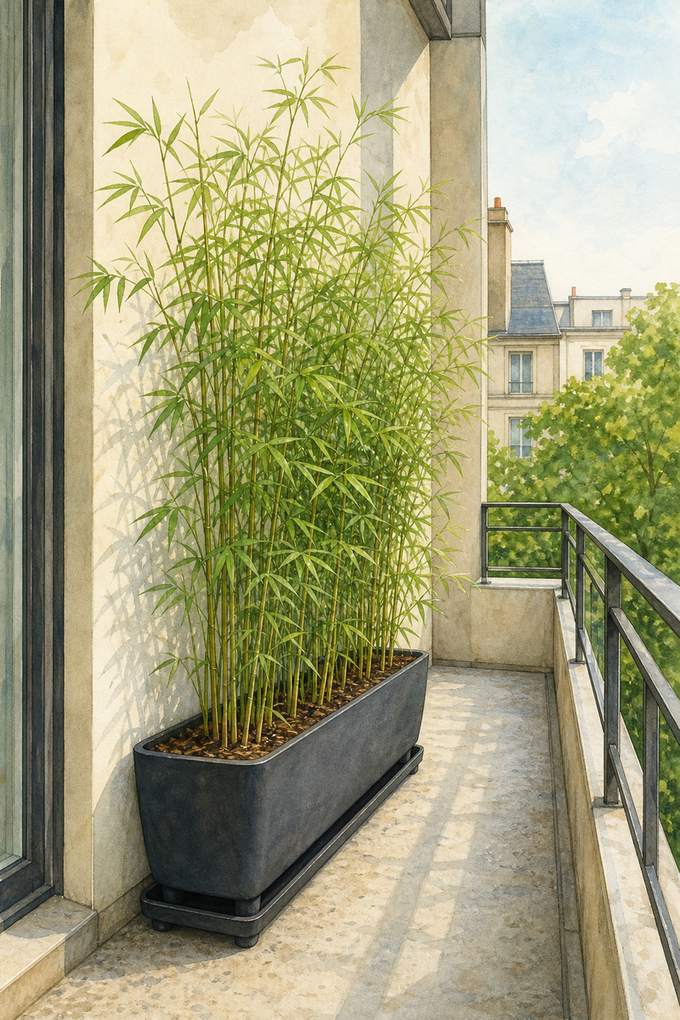
Clumping bamboo makes a leafy screen without the wandering roots that give running bamboo its bad reputation. Choose a compact Fargesia variety and a planter at least 18 inches deep; a 36- to 48-inch fiberglass trough can screen one seating area while using less floor space than several round pots. Check the loaded weight before buying: wet soil, bamboo, and a large container can easily exceed 150 pounds. Keep it near a structural wall rather than hanging it from the railing, and use pot feet so drainage holes stay open. Bamboo also sheds leaves and needs regular water in summer. On exposed upper floors, its dense foliage catches wind, so shorten the screen or choose a more open plant.
2. Train star jasmine up a planter-mounted trellis
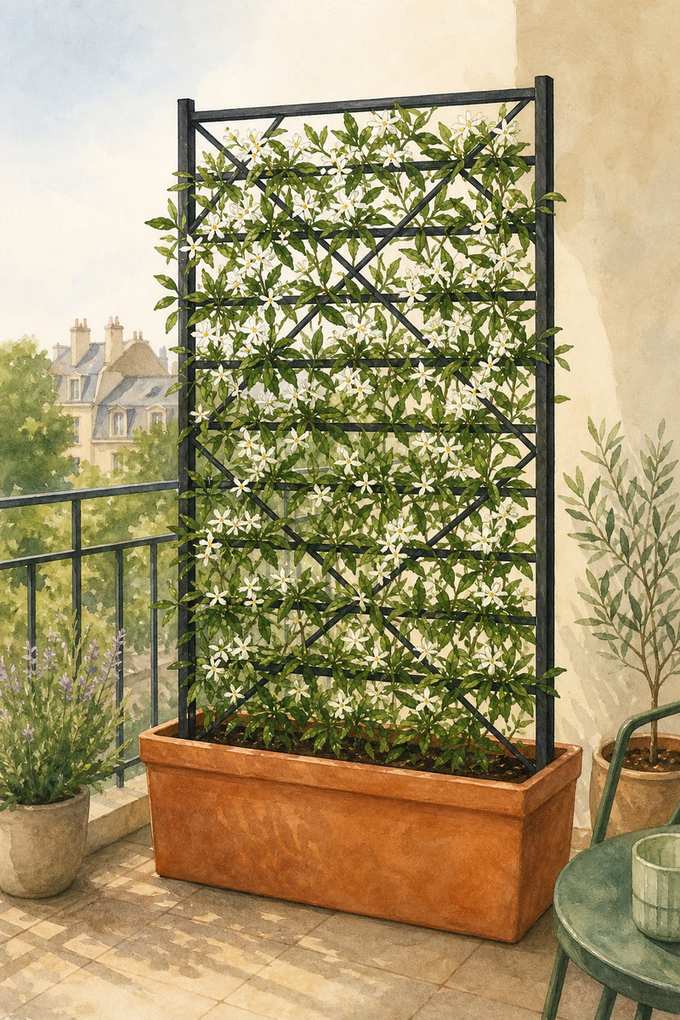
A freestanding trellis planted with star jasmine creates privacy above the railing without drilling into brick or siding. Use a 16- to 20-inch pot and secure a 5- or 6-foot metal trellis inside it with cross braces or a planter designed to hold a screen. Star jasmine stays evergreen in mild climates and handles partial sun, but it is usually hardy only around USDA Zones 8 to 10; colder balconies need winter protection or a different vine. The first year may look sparse, so weave stems sideways rather than letting them race straight up. A solid wall of foliage can become top-heavy in wind. Anchor the planter at floor level, never to a railing your lease forbids altering.
Product pick — a planter box with an integrated trellis
3. Use switchgrass for a screen that lets wind through
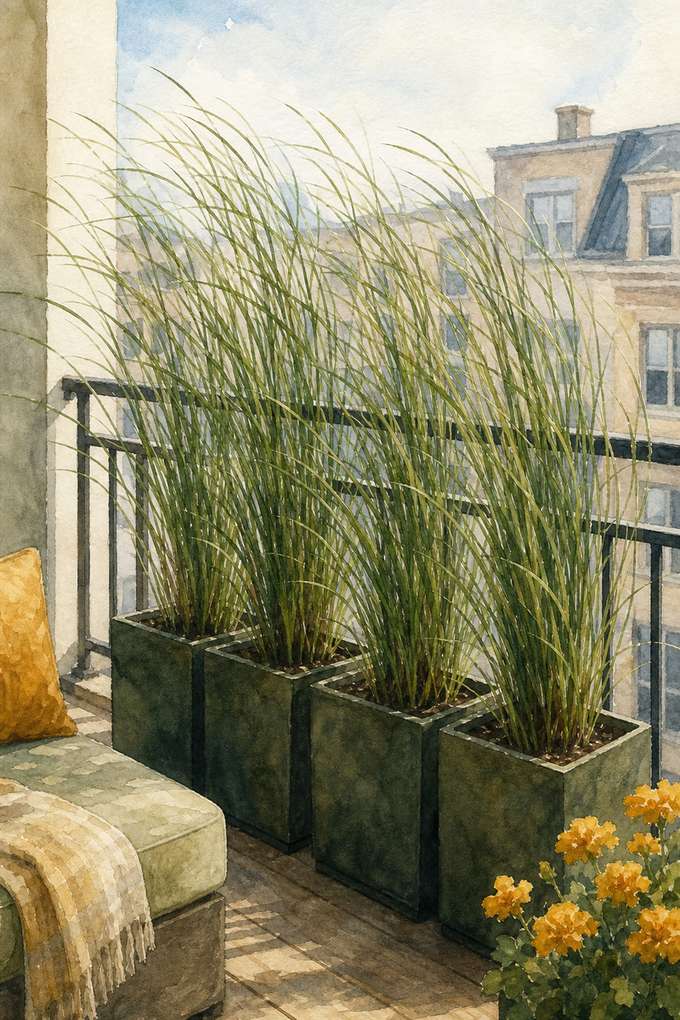
Upright switchgrass blocks direct views while allowing more airflow than bamboo or a dense evergreen hedge. Cultivars such as 'Northwind' grow about 4 to 5 feet tall in full sun and fit well in a row of 14- to 18-inch containers. This is a smart choice for a breezy balcony because the narrow blades bend instead of acting like one solid sail. The trade-off is seasonal privacy: switchgrass turns tan in fall and should be cut back to roughly 6 inches before spring growth, leaving a low screen for several weeks. It also prefers at least six hours of sun. Use heavy, low planters, and confirm that loose seed heads or dry blades will not blow onto the balcony below.
4. Place columnar junipers where winter privacy matters
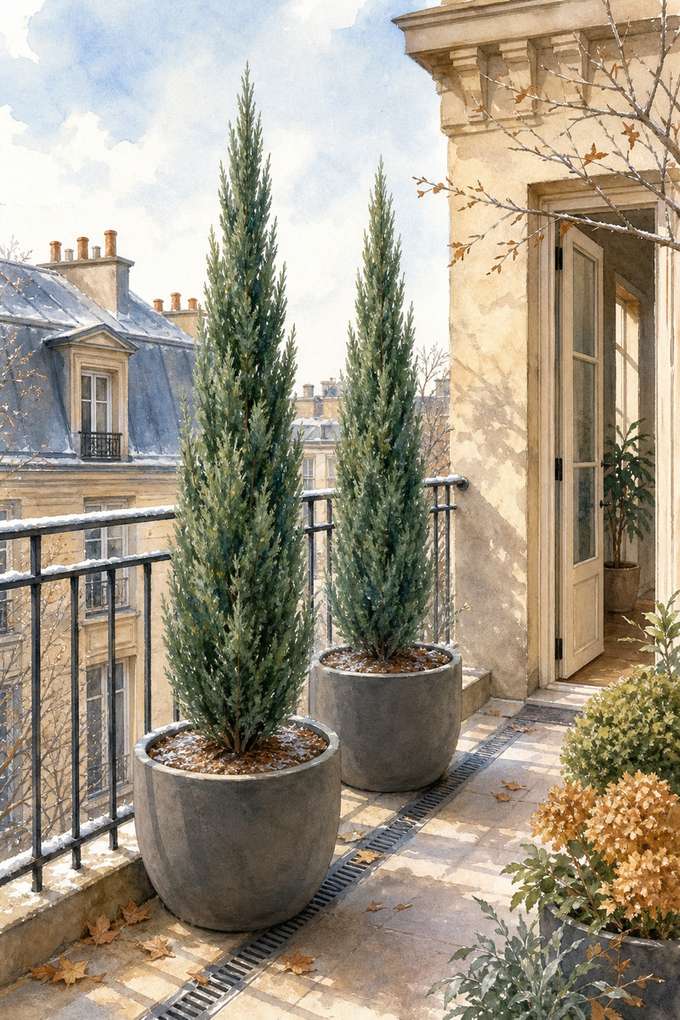
Two columnar junipers can hide a neighboring window year-round without consuming the width of bushier shrubs. Look for narrow cultivars such as 'Blue Arrow,' then start with containers at least 20 inches wide and deep so the roots have insulation and the plants resist tipping. Junipers need strong light, good drainage, and room for air around their foliage; a dim north-facing balcony is a poor fit. They are also heavier and more expensive than annual vines. Ask your building for its balcony load guidance before lining up multiple large pots, and choose frost-tolerant containers if winter temperatures drop below freezing. Water occasionally during winter thaws because evergreen needles continue losing moisture even when growth has slowed.
5. Fill a narrow trellis with annual black-eyed Susan vine
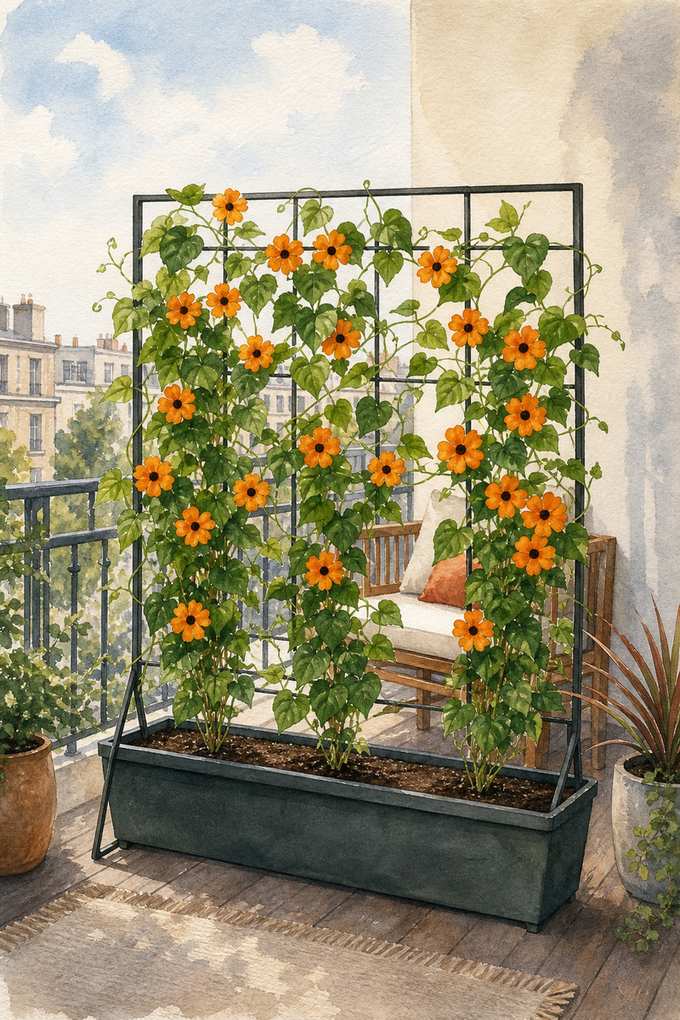
Black-eyed Susan vine gives renters a quick summer screen without asking them to overwinter a large woody plant. Set a 30- to 36-inch trough behind a slim freestanding trellis and plant two or three Thunbergia alata seedlings after nights stay above 50°F. The vines can reach 6 feet in one season with regular water and four or more hours of sun. Orange, yellow, or cream flowers make the screen less severe than plain fencing. Its weakness is timing: you will have little privacy in spring, and frost ends the display. Pinch young tips to encourage side shoots, then guide stems across the trellis every week. Avoid flimsy mesh that tangles badly when dead vines need removing in fall.
6. Screen a shady balcony with Japanese aralia
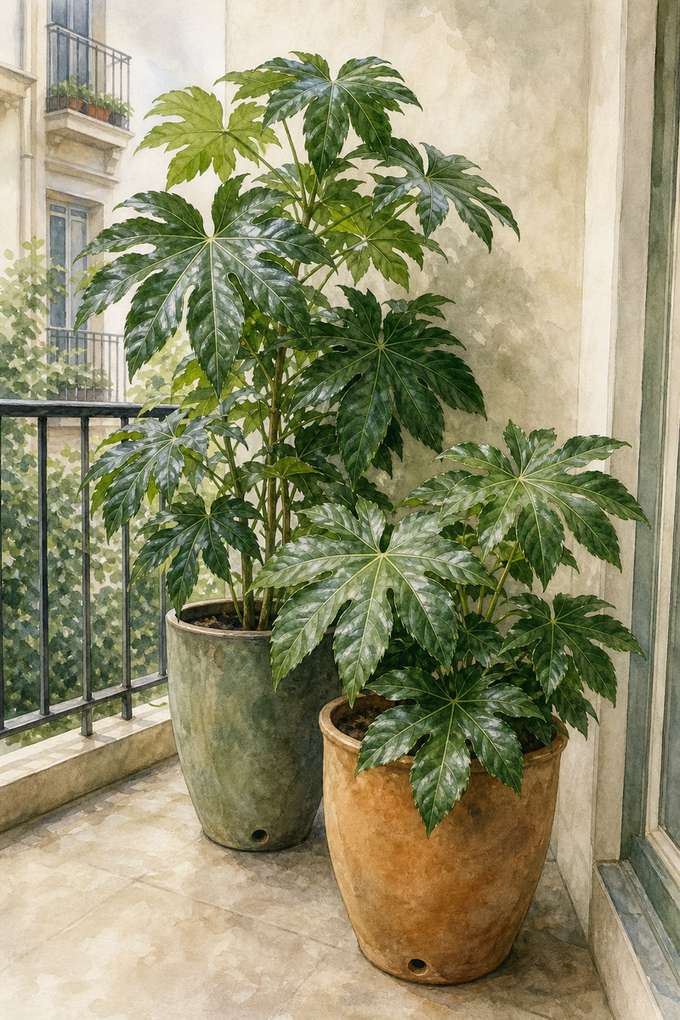
Japanese aralia, Fatsia japonica, has broad hand-shaped leaves that interrupt sightlines better than many wispy shade plants. One mature plant in an 18- to 22-inch pot can soften a low side view, while two staggered plants cover more height without forming a solid wind wall. It suits bright shade and sheltered balconies, especially where afternoon sun would scorch thinner foliage. Cold tolerance varies by cultivar and exposure, so check your USDA zone and remember that a container gets colder than garden soil. Fatsia dislikes sitting in water, yet its large leaves wilt quickly when the mix dries completely. The leaves can tear on a gusty corner; reserve this idea for a protected balcony rather than an exposed twentieth-floor edge.
7. Build a movable privacy hedge with wheeled planters
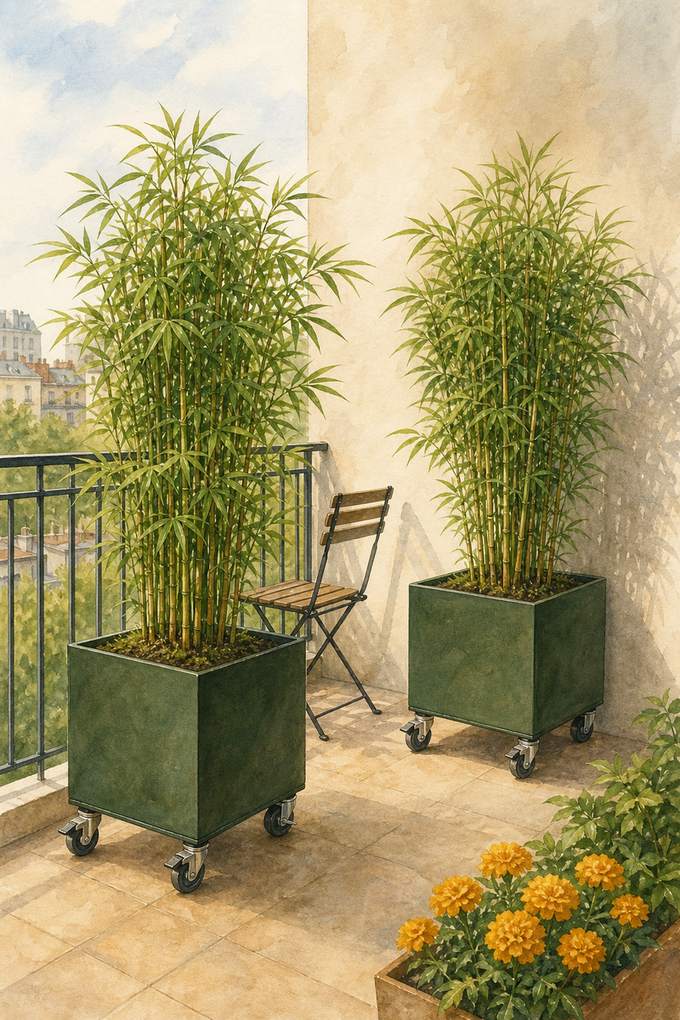
A pair of rectangular planters on locking casters lets you move the screen to wherever the sightline is worst: beside breakfast seating in the morning or near the railing after work. Plant upright shrubs such as dwarf privet where permitted, or use compact clumping bamboo in mild shade. Each box should have four load-rated casters and a broad base; ordinary furniture wheels may fail once wet potting mix pushes the total above 100 pounds. Lock every wheel before sitting outside, and do not roll heavy planters across cracked tile or toward an open railing. Mobility costs extra and raises the planter slightly, but it is useful when a lease prohibits permanent partitions. Measure the doorway first if the plants must come indoors for storms.
Product pick — locking outdoor planter caddies rated for heavy pots
8. Stagger tall and medium pots instead of building a wall
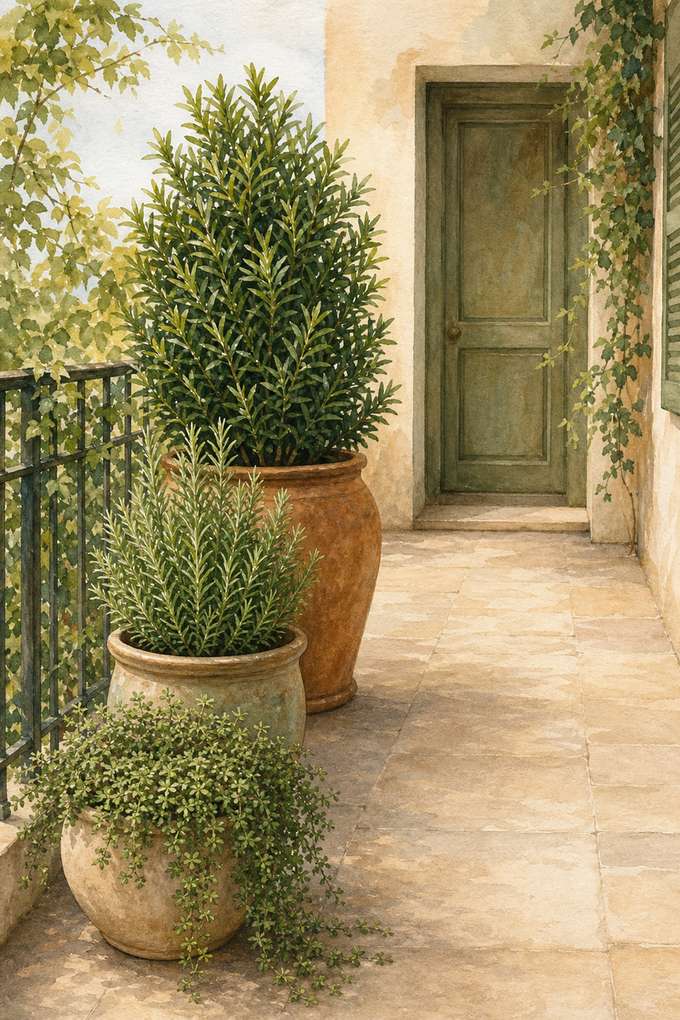
A staggered group of pots can block a seated person's view without creating a six-foot barrier. Put a 4-foot plant such as a compact podocarpus at the back, a 2- to 3-foot rosemary or dwarf pittosporum in front, and a low trailing plant at the edge. This arrangement works best when the unwanted view comes from one diagonal direction rather than straight across the whole railing. Three separate containers also spread weight more flexibly than one enormous trough, though the total load still counts. Match all plants to the same light and watering conditions; rosemary will struggle beside moisture-loving plants on a shady balcony. Leave at least a 30-inch walking route if that path serves your door or required exit.
9. Raise herbs to railing height on a slim plant stand
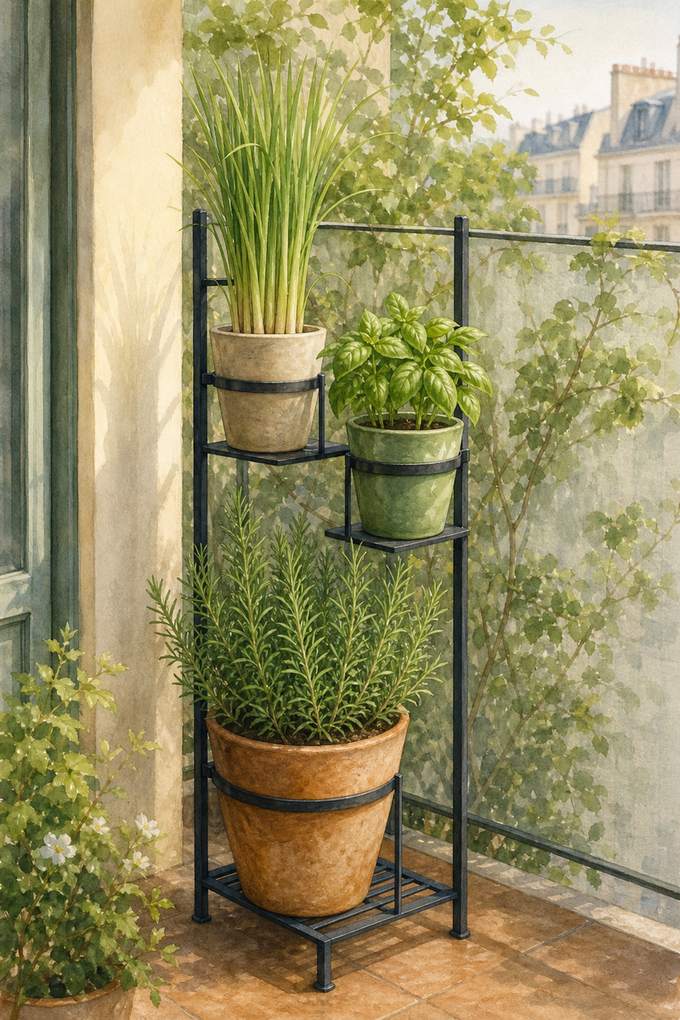
If the street view reaches only the lower half of your balcony, lift useful plants instead of growing a full-height hedge. A 30-inch-wide metal stand holding rosemary, lemongrass, and upright basil can bring foliage to seated eye level while keeping the floor footprint under a foot deep. Choose a stand with a stated weight capacity, add up the wet weight of every pot, and place the heaviest container on the bottom shelf. This setup needs six hours of sun for dense growth; in shade, substitute cast-iron plant and compact ferns, though the screen will be looser. Tie pots to the stand with discreet straps in windy locations. Never balance containers on top of the railing, where one gust or careless elbow could send them below.
Common questions
- How do I know whether my balcony can hold large privacy planters?
- Ask the landlord, HOA, or building manager for the balcony's load limit and any rules about where weight may sit. Count the container, saturated potting mix, plant, water reservoir, and trellis. A large planted trough can weigh well over 150 pounds, so several smaller pots may be easier to place safely.
- Which privacy plants work on a north-facing balcony?
- Japanese aralia is a good broad-leaved option for bright shade on a sheltered balcony. Cast-iron plant, compact ferns, and some Fargesia bamboos also tolerate limited direct sun. Skip sun-hungry rosemary, juniper, and switchgrass if the space receives fewer than four hours of useful light.
- Can balcony privacy plants stay outside through winter?
- That depends on the plant, pot, USDA zone, and how exposed the balcony is. Container roots get colder than roots in the ground, while upper floors add drying wind. Use frost-resistant pots, choose plants hardy below your local minimum, and water evergreens during mild winter spells when the mix is dry.
- How can I keep a planted privacy screen from blowing over?
- Use a wide, low container; keep dense screens near the building wall; and attach trellises to the planter rather than balancing them loosely behind it. Do not tie anything to a railing without permission. On very windy floors, switchgrass or staggered plants are safer than one solid wall of bamboo or vine.