9 Balcony Water Garden Ideas Using Bowls and Mini Ponds
A balcony pond has to earn its footprint without overloading the slab, dripping downstairs, or becoming a mosquito nursery. These nine bowl and mini-pond setups keep water contained while making room for real aquatic plants, even in a renter-sized space.
1. Start With a Three-Gallon Tabletop Bowl
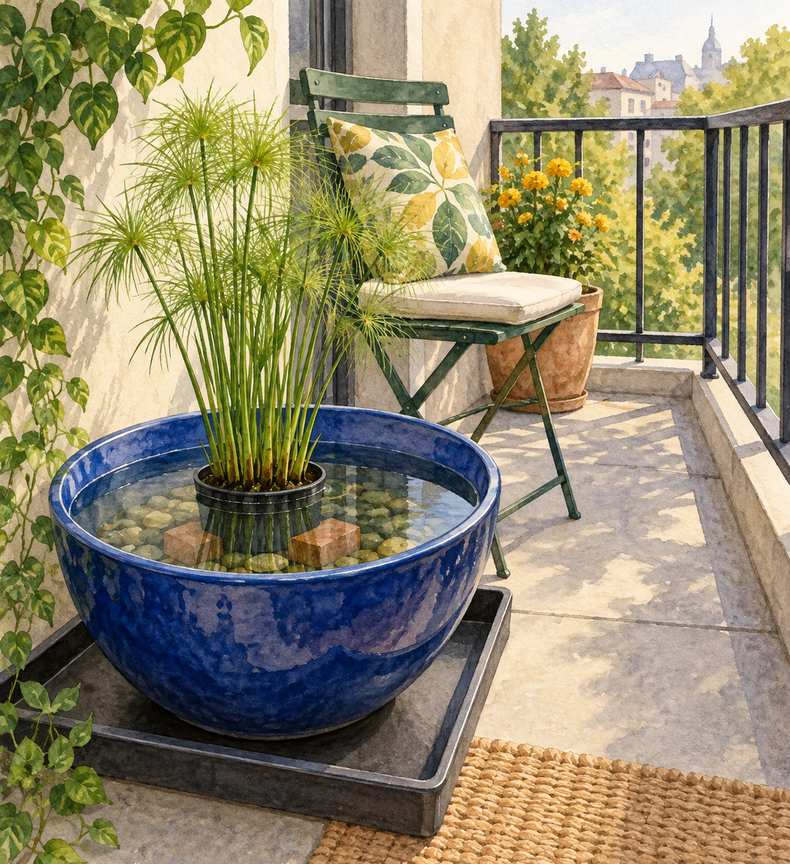
Use a watertight, 12- to 16-inch glazed bowl for the smallest workable water garden: one dwarf papyrus in its nursery pot, a few rinsed river stones, and open water around it. Three gallons of water alone weighs about 25 pounds, so place the bowl on a sturdy floor-level stand or directly on the slab, never on a railing ledge. Set the plant crown at the depth listed on its tag by propping the pot on bricks. This setup fits beside a chair and is easy to empty, but the low volume warms quickly and may need topping up every day during a windy heat wave. Put a waterproof boot tray underneath and leave 2 inches below the rim to stop sloshing into the unit below.
2. Add a Low-Splash Solar Bubbler to a Tall Pot
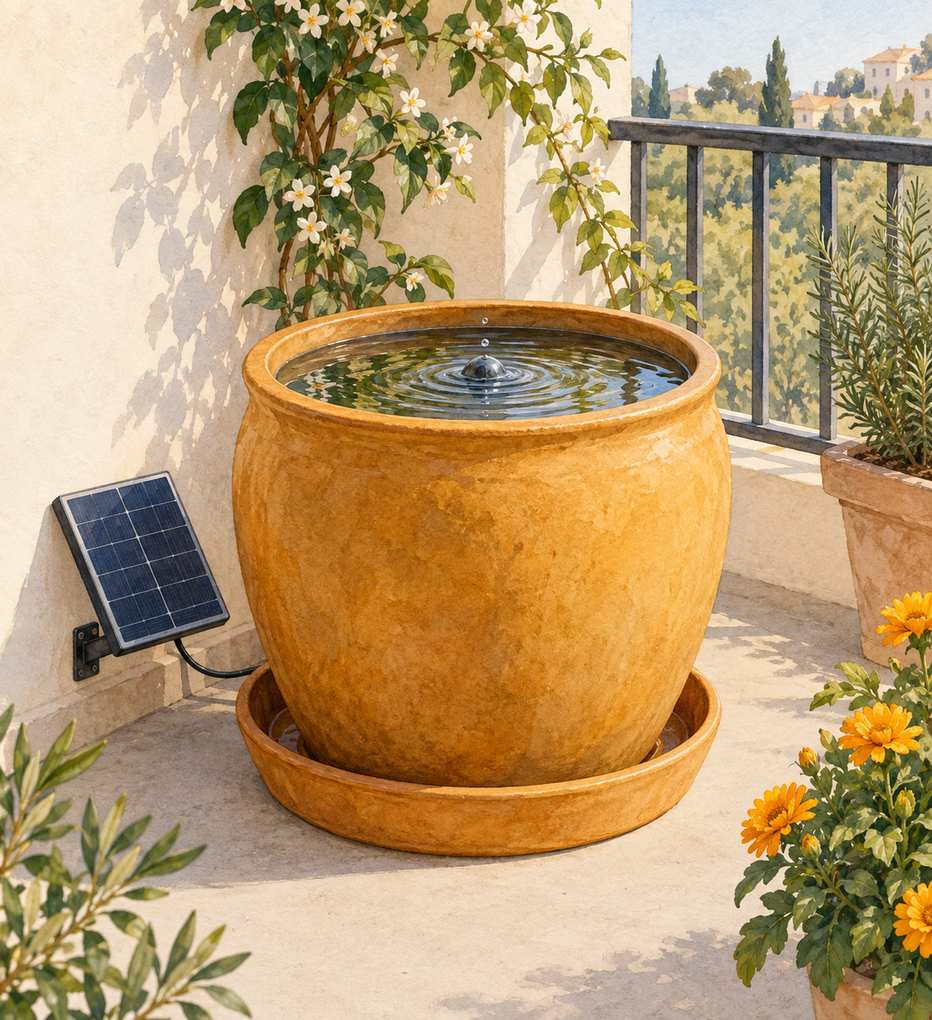
Turn a hole-free ceramic cachepot into a quiet fountain by adding a small solar pump with its spray head removed. A gentle upwelling keeps the surface moving without sending droplets across the balcony; test the flow in a sink or bathtub before setting it outside. Choose a pot at least 16 inches wide so the pump cannot easily spray past the rim, and secure the floating panel or cord so wind cannot flip it. Solar pumps pause under clouds and usually stop at night, so they are movement, not dependable filtration. Mineral scale also collects on dark pots. Wipe the pump intake weekly, top up with rainwater or dechlorinated tap water, and place the pot on a waterproof saucer where overspray cannot stain concrete.
3. Line a Half Barrel for a Roomier Corner Pond
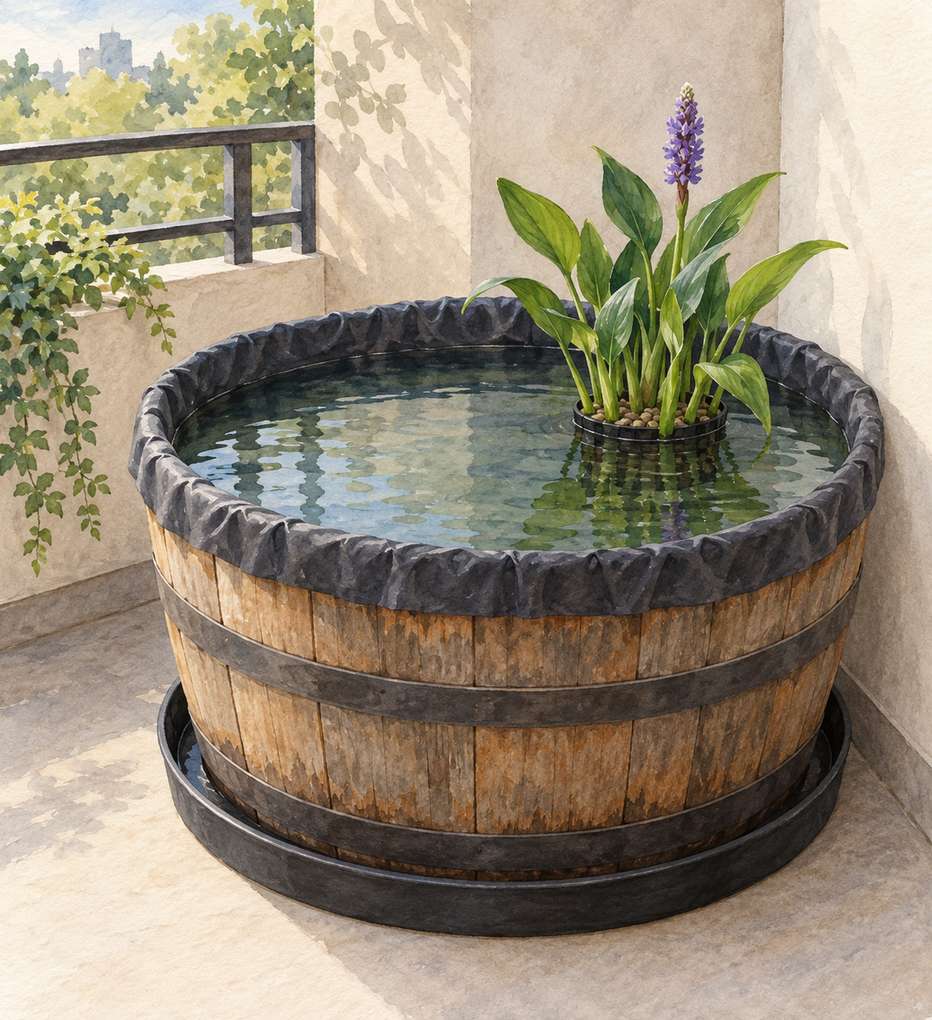
A half whiskey barrel gives roots and floating leaves more room without looking like aquarium equipment. Fit a preformed insert or EPDM pond liner inside; untreated wood can leak, while old barrel residue is an unnecessary gamble around plants. A 20-gallon fill weighs about 167 pounds before the barrel, liner, gravel, and plants, so confirm your building's load rules and keep the pond on the slab near a structurally supported edge only if management approves that location. Add one compact marginal such as pickerelweed in a mesh pot, not a crowd of fast growers. The broad surface loses water quickly and gathers leaves, but it is easier to balance than a tiny bowl. Leave several inches unfilled and protect the floor with a seamless containment tray.
4. Use a Lined Galvanized Tub for a Modern Look
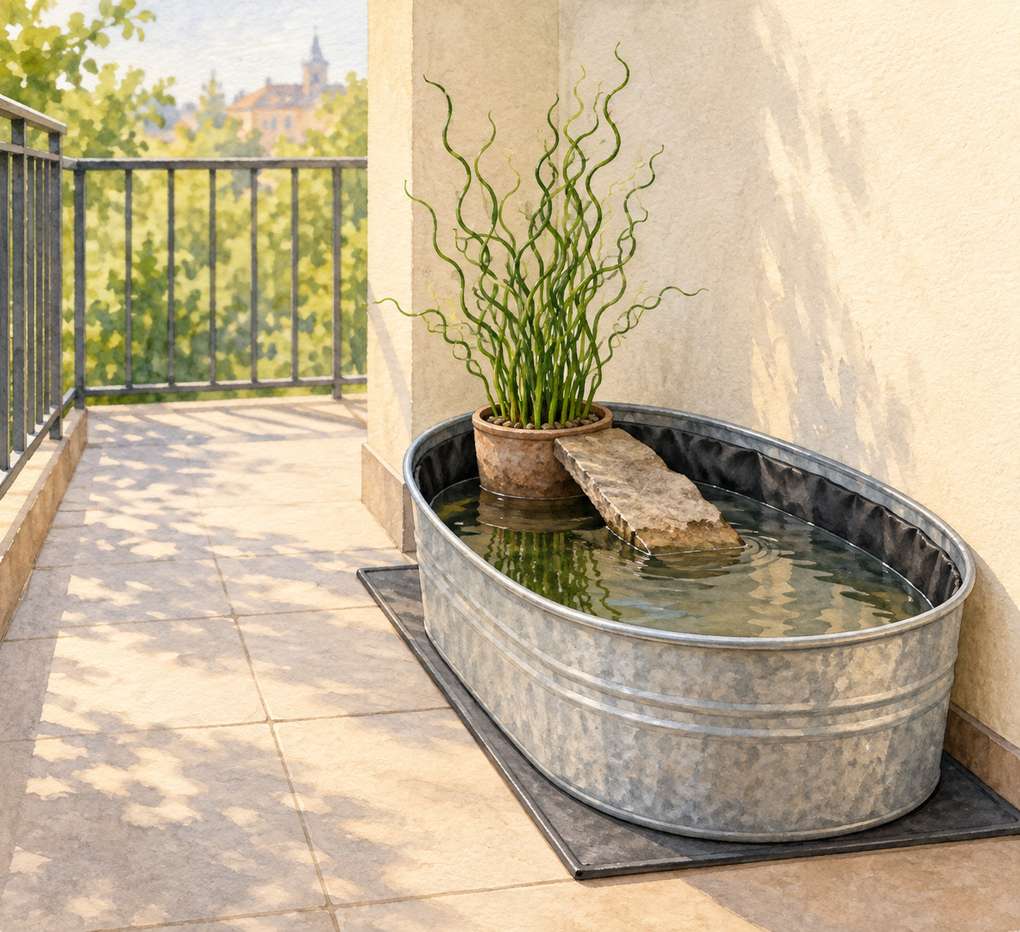
A 10- to 15-gallon galvanized wash tub makes a wide, low pond that suits a narrow balcony, provided you isolate the water from the metal. Fit a food-safe rigid insert or pond-rated liner rather than planting directly against zinc-coated walls, and fold the liner neatly below the rim. The tub's handles suggest portability, but a filled 12-gallon version holds about 100 pounds of water; drain it before moving. A potted corkscrew rush adds height without blocking the view, and a flat stone gives insects an escape ramp. Metal in direct afternoon sun can heat the water sharply, so use this design in morning sun or bright shade. Check the liner for pinches monthly and set the entire tub inside a low waterproof tray.
5. Grow One Miniature Water Lily in a Wide Tub
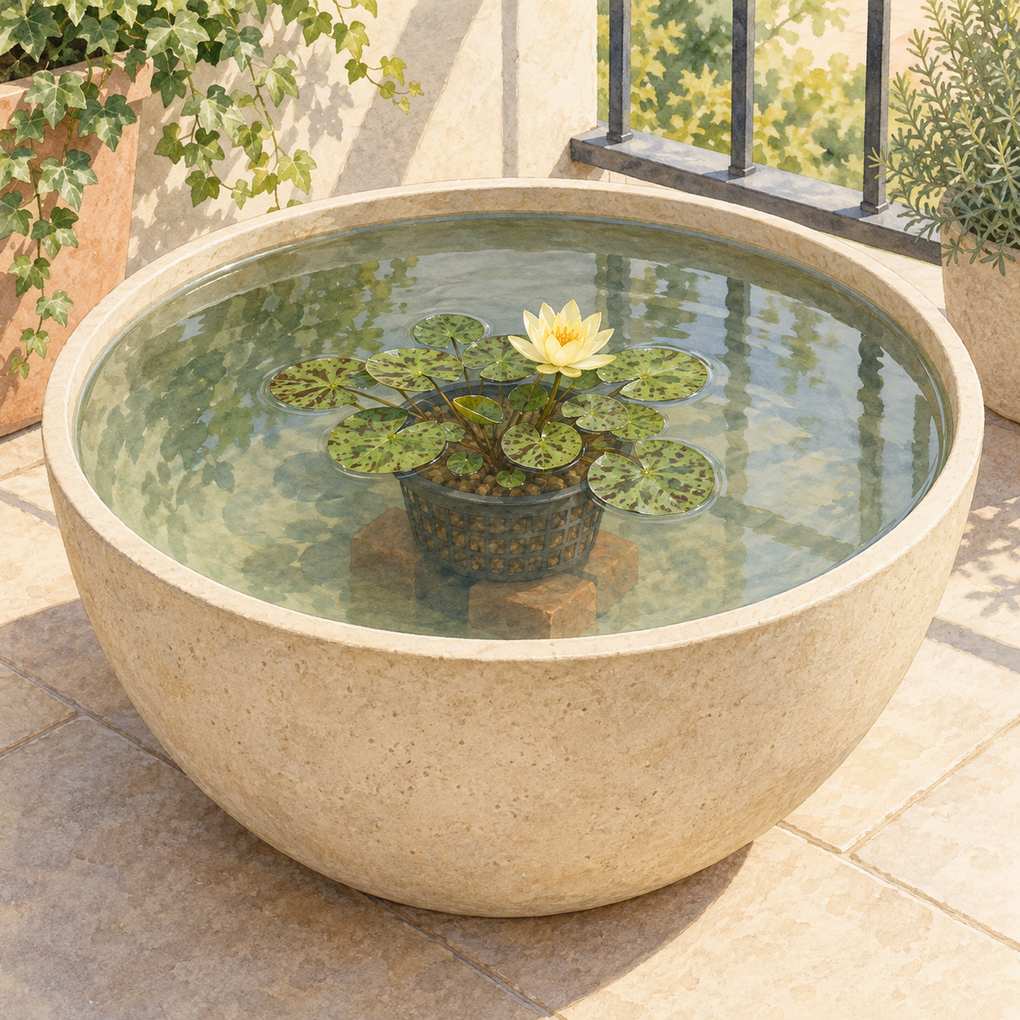
Make a single miniature water lily the whole composition rather than squeezing it among tall marginals. Use a squat, watertight tub about 18 to 24 inches wide and follow the cultivar label for planting depth; named miniatures such as 'Helvola' stay far smaller than standard pond lilies. Set its aquatic basket on stable bricks, then lower it gradually as new leaves reach the surface. Expect better flowering with about 6 hours of direct sun. The trade-off is heat: a black tub in reflected afternoon sun can become too warm, so choose a light-colored vessel or give it morning sun instead. Remove yellow leaves, top up slowly, and resist adding fish—the limited water volume swings in temperature and oxygen faster than an in-ground pond.
6. Give a Dwarf Lotus Its Own No-Hole Tub
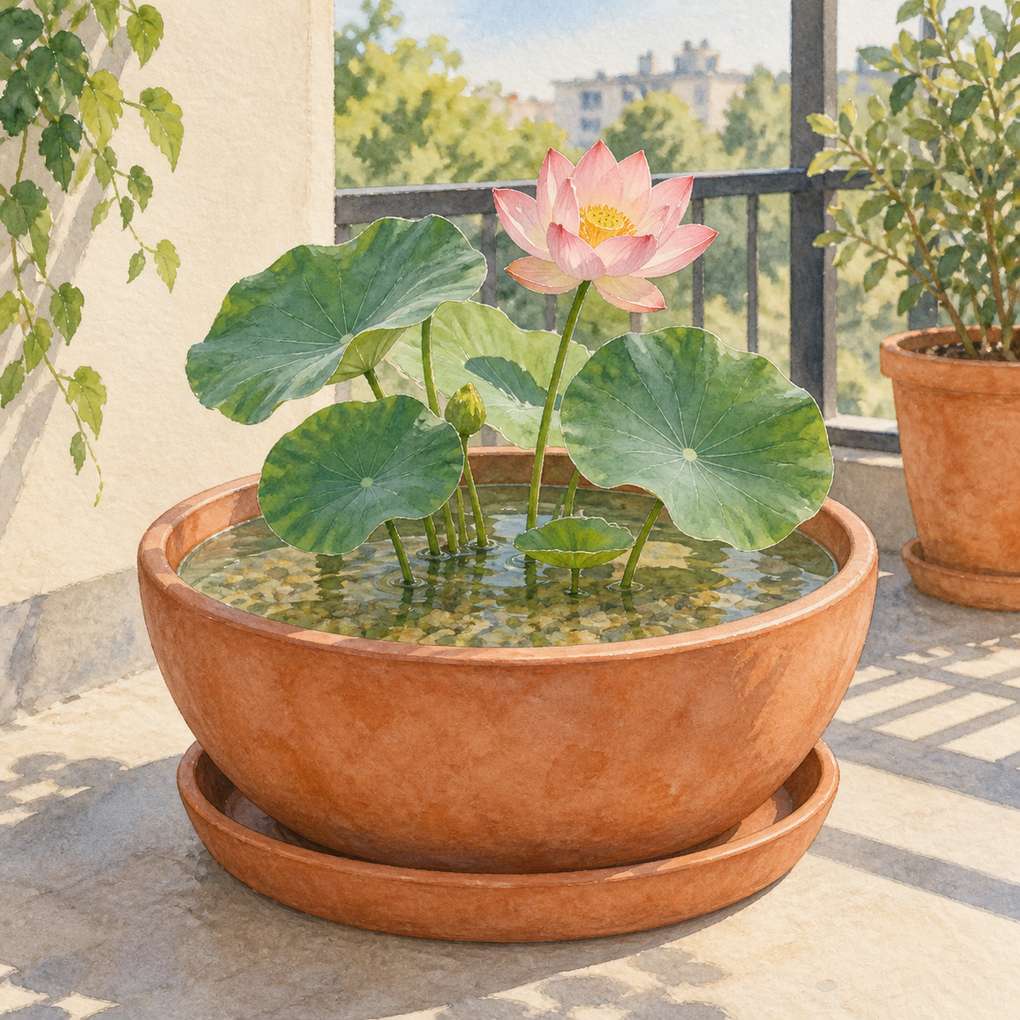
Plant a true dwarf or bowl lotus alone in a broad, hole-free tub so its runners cannot compete with other plants. A vessel roughly 20 inches across gives a small cultivar room to spread; use heavy loam intended for aquatic planting, cap it with washed gravel, and add water gently so the soil stays put. Lotus wants warmth and around 6 hours of direct sun, making this a better match for a bright balcony than a north-facing one. Even dwarf labels can be optimistic, so check the cultivar's mature height before buying. The tub becomes awkwardly heavy once filled, and disturbing the growing tip can set the plant back. Position it first, protect the slab with a tray, and thin only after learning the plant's seasonal growth cycle.
7. Build a Bright-Shade Pond With Japanese Sweet Flag
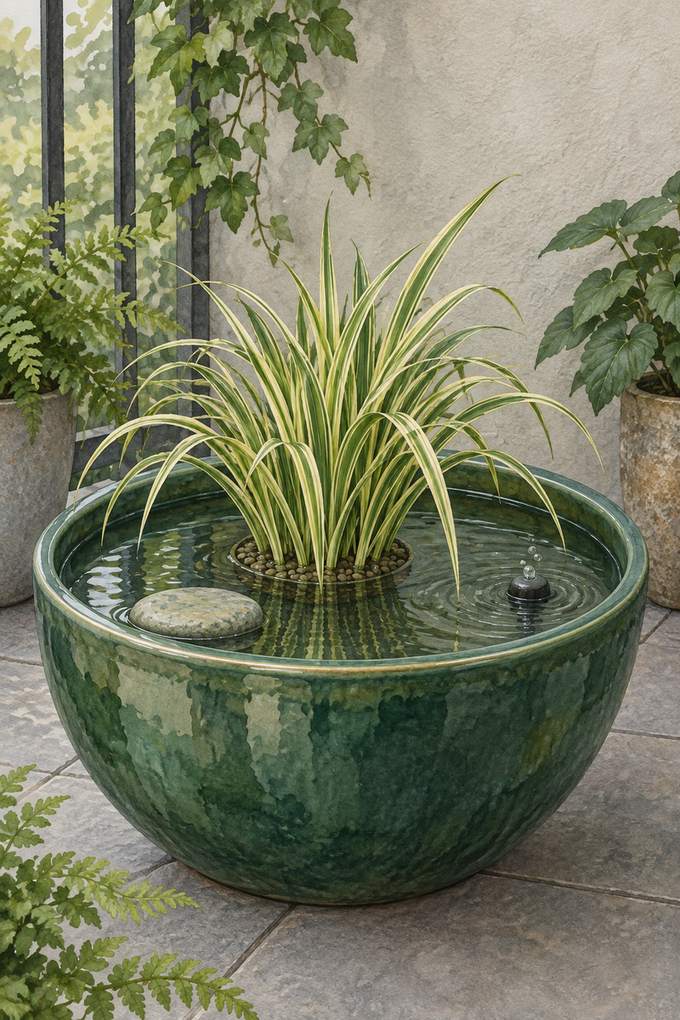
For a balcony with little direct sun, skip bloom-dependent lotus and build around Japanese sweet flag, Acorus gramineus. Place one compact cultivar in a 5- to 8-gallon glazed bowl with its pot rim at the water level, then add a pale stone to brighten the surface. Sweet flag supplies grassy texture in bright shade, although variegated leaves can scorch in harsh afternoon exposure. Less sun does not mean no algae or maintenance: fallen leaves still decay, and stagnant water still invites mosquitoes. Use a low-flow bubbler or refresh part of the water regularly without dumping it over the railing. The bowl will not deliver showy water-lily flowers, but it stays visually tidy and avoids forcing a full-sun plant into a dim site.
8. Make a Shallow Pebble Drinking Bowl for Wildlife
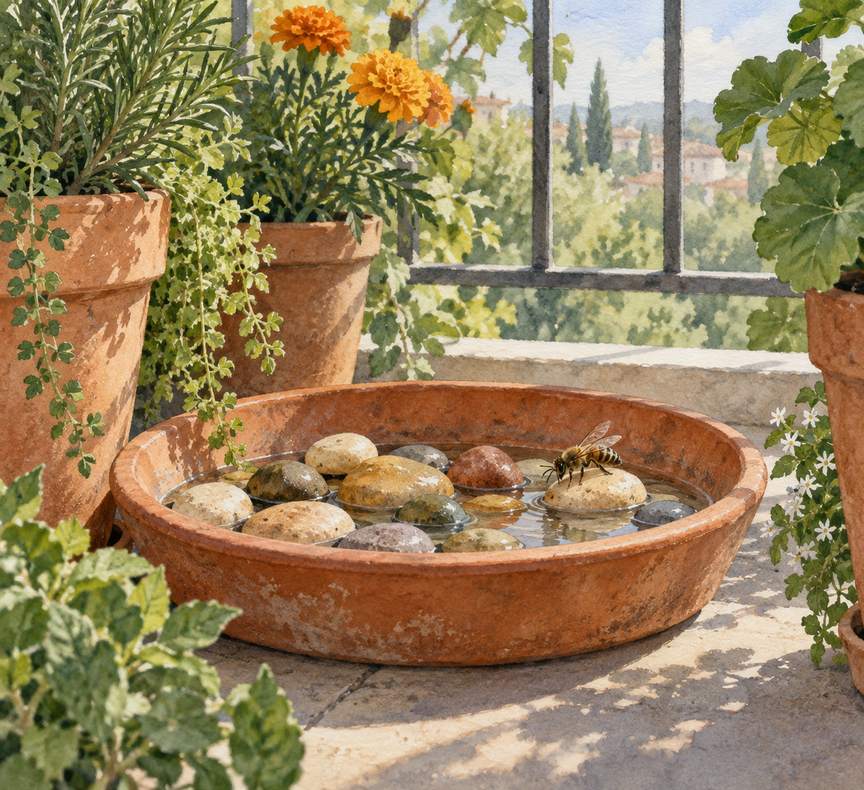
A shallow bowl can serve as a drinking stop without pretending to be a full pond. Fill a 2- to 3-inch-deep terracotta saucer with mixed pebbles, then add water only to just below the stone tops so bees and other insects have dry landing places and easy exits. Set it among pots where you can see it, but not on the balcony rail; wind and curious birds can shift a lightweight dish. This is the lightest option and needs no pump, yet it demands the most frequent reset. Tip out the water, scrub away slime, and refill every 2–3 days in warm weather to interrupt mosquito development. Avoid pesticides nearby, and do not add sugar or honey. On very hot concrete, give the saucer afternoon shade so the water does not become a warm puddle.
9. Hide a Five-Gallon Bucket Inside a Woven Sleeve
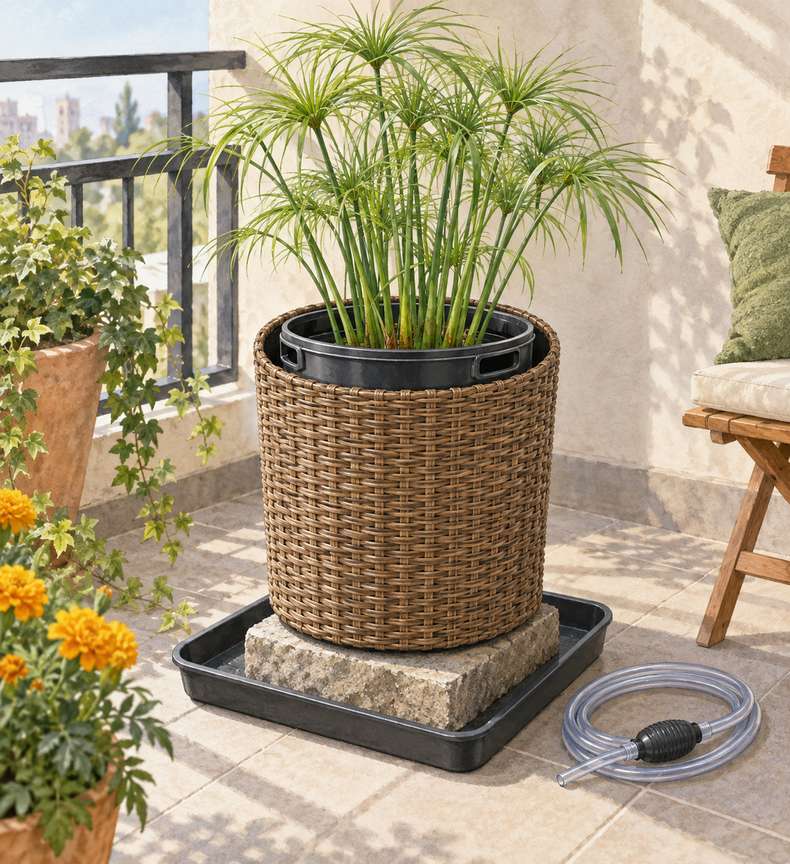
For renters who may need to clear the balcony quickly, use a sturdy 5-gallon bucket as the watertight pond and place it inside a weather-resistant woven-look sleeve. Keep the sleeve purely decorative and leave the bucket rim accessible for inspection; natural seagrass will mildew outdoors, so choose resin wicker or a slatted cedar surround with airflow. One small potted dwarf papyrus and a stone riser are enough. Five gallons of water weighs nearly 42 pounds, which is movable only after you siphon most of it out. The narrow opening also evaporates more slowly than a broad bowl but limits plant choice. Add recessed handholds, keep the assembly on the floor, and slide a waterproof tray underneath before filling—not after it becomes heavy.
Common questions
- How much does a balcony mini pond weigh?
- Water weighs about 8.34 pounds per US gallon before you add the container, gravel, plants, or a person leaning over it. A filled 15-gallon tub can therefore exceed 140 pounds as a complete setup. Keep it on the balcony floor, not a railing or table, and ask your landlord, HOA, or building professional about both total load and where concentrated loads are allowed.
- Will a bowl water garden attract mosquitoes?
- It can if water sits undisturbed for a week or more. Keep a small pump moving the surface, empty and scrub a shallow wildlife bowl every 2–3 days, or use a labeled Bacillus thuringiensis israelensis larvicide exactly as directed. Do not release aquarium fish as mosquito control; a tiny bowl also heats up and loses oxygen too quickly for most fish.
- Can a balcony pond survive winter?
- That depends on the container, plant, and local winter. Thin ceramic can crack when trapped water freezes, and a small pond may freeze solid even where a ground pond would not. Before hard freezes, drain fragile bowls and move pumps indoors. Overwinter tropical papyrus or dwarf lotus according to its needs; check your USDA zone and the plant label rather than assuming “hardy” means hardy in a container.
- How much sun do water plants need?
- Flowering miniature water lilies and dwarf lotus usually perform best with roughly 6 hours of direct sun, while Japanese sweet flag tolerates brighter shade. Hot reflected afternoon sun can overheat a dark 5-gallon vessel, so favor a larger water volume or morning sun. Match each plant to measured balcony light, not the direction the balcony faces alone.