9 No-Screw Balcony Railing Planter Ideas That Keep Landlords Happy
You can add flowers, herbs, and trailing greenery to a balcony rail without drilling holes or leaving rusty hardware behind. These nine setups prioritize removable attachments, manageable weight, and planters that stay secure when the wind picks up.
This page contains affiliate links — we may earn a commission at no extra cost to you. See our disclosure.
1. Hang a Trough From Padded Over-Rail Hooks
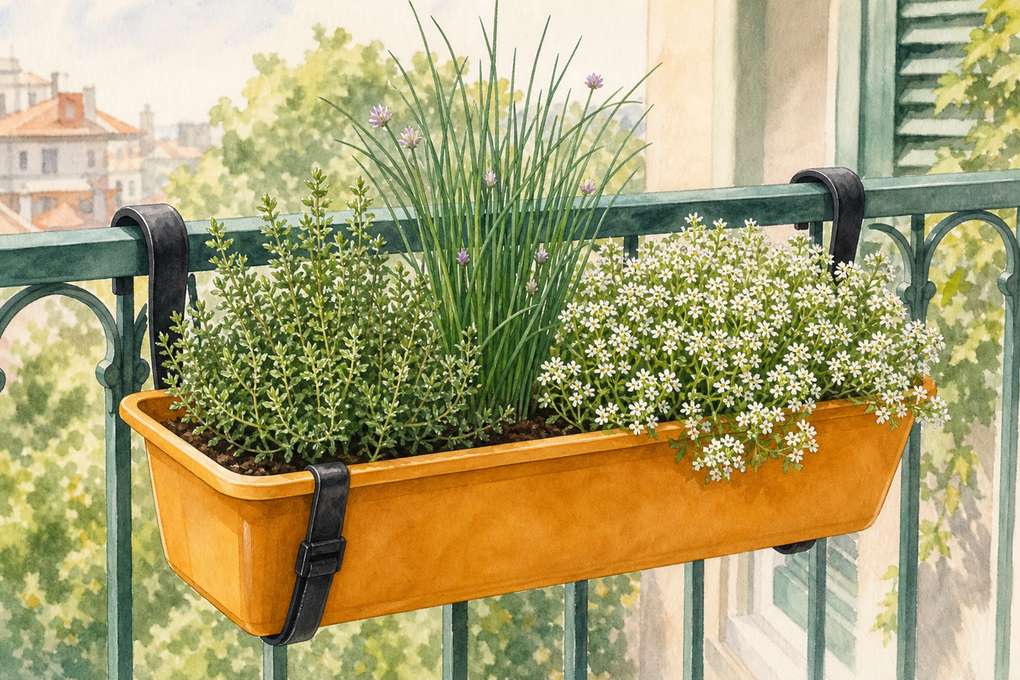
Padded steel hooks let a standard 24-inch trough hang from the inside of the railing without holes or permanent hardware. Measure the rail first: many hooks fit rails between roughly 2 and 6 inches wide, but round metal bars may need a different profile than a flat wood cap. Keep the planter light with a plastic or resin box, potting mix containing perlite, and compact plants such as thyme, chives, or sweet alyssum. Rubber sleeves or a strip of outdoor-rated neoprene can prevent scraped paint. The downside is movement in gusty weather, so choose a model with a lower stabilizing arm and add a removable safety strap. Keep the whole arrangement inward-facing unless your building explicitly permits exterior planters.
2. Use a Railing-Top Saddle Planter

A saddle planter straddles the top rail, balancing two planting pockets without separate brackets. It works best on a broad, level rail that matches the planter's molded channel; a 4-inch planter groove will not sit safely on a narrow 2-inch bar. Choose shallow-rooted plants such as lobelia, bacopa, dwarf marigolds, or leaf lettuce, and fill both sides evenly so one wet pocket does not outweigh the other. Some models include removable straps underneath, which are worth using even on a sheltered second-floor balcony. Water slowly because runoff can escape from both sides. The main drawback is compatibility: decorative, sloped, glass, and rounded rails often provide too little contact. Lift the planter monthly to dry the surface and check for trapped grit or paint marks.
3. Strap a Wire Basket to Vertical Balusters
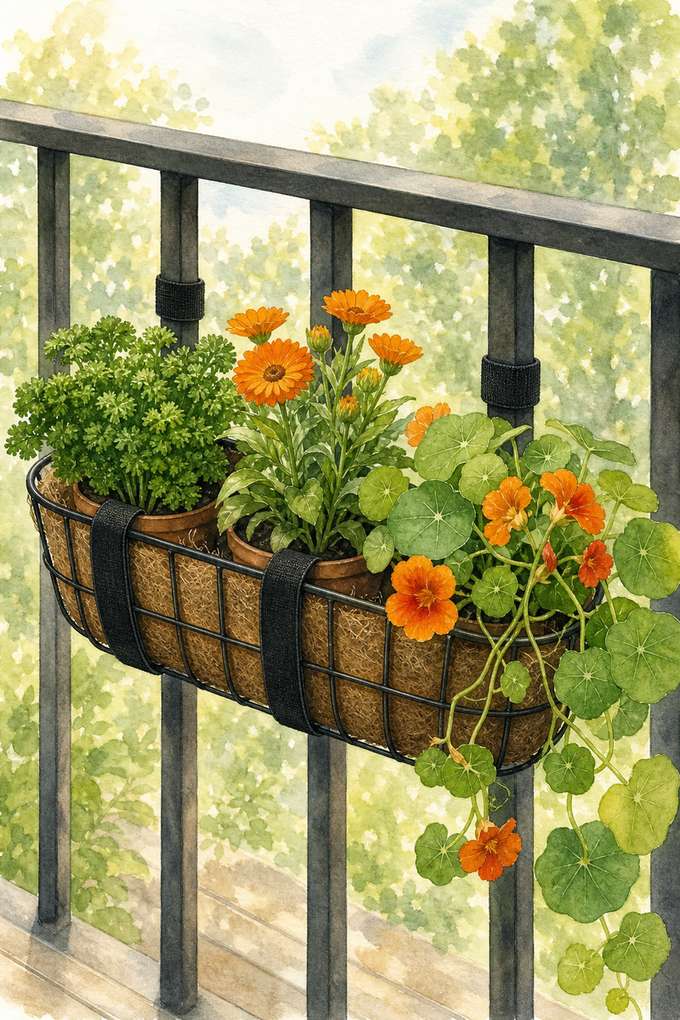
A powder-coated wire basket can become a removable rail planter when secured to vertical balusters with two or three heavy-duty outdoor hook-and-loop straps. Place the basket on the balcony side of the rail, then line it with coir and set lightweight 4-inch nursery pots inside rather than filling the entire basket with wet soil. That makes each plant easy to remove for watering and keeps the load predictable. Nasturtiums, parsley, and compact calendula suit the shallow setup. Check that the straps are UV-rated and overlap by at least several inches; indoor cable organizers deteriorate quickly outdoors. The honest trade-off is appearance, since exposed straps look more utilitarian than metal brackets. Inspect them monthly and replace any strap showing fraying, stiffness, or faded fibers.
4. Secure Small Pots With UV-Rated Reusable Ties
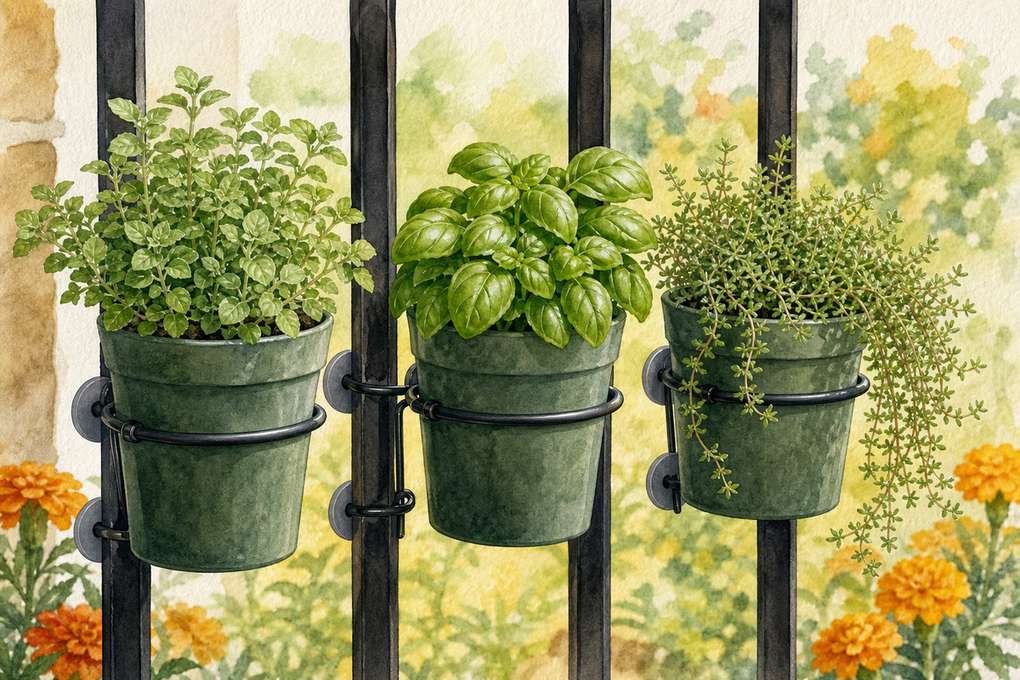
Reusable UV-rated cable ties are useful for attaching purpose-made pot rings or lightweight railing baskets to narrow metal balusters. Use at least two independent ties per holder, trim no structural parts, and keep each container small—about 6 inches across is a sensible ceiling for herbs such as oregano, dwarf basil, or creeping thyme. A plastic pot is preferable to terracotta because saturated clay adds weight and can crack if it swings against the rail. Slip a thin silicone pad between the holder and painted metal to reduce rubbing. This is an inexpensive solution, but ties are not permanent safety hardware: sun, freezing weather, and repeated flexing weaken them. Inspect every few weeks, replace them each growing season, and never use this setup above a sidewalk or another balcony.
5. Choose a Compression-Fit Rail Planter
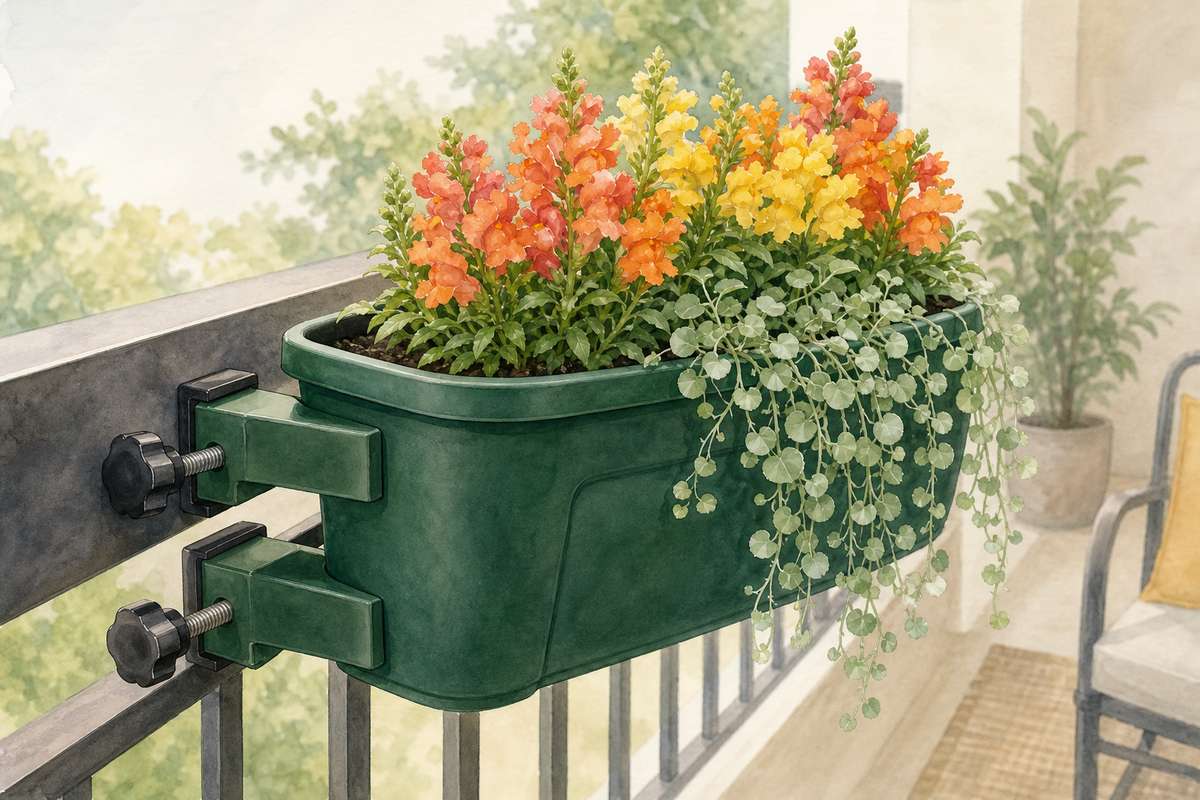
A compression-fit planter uses padded jaws or hand-tightened knobs to grip the railing without penetrating it. This is a good option for an unusually deep rail because many adjustable models span roughly 1 to 5 inches, but confirm the manufacturer's range before ordering. Tighten both sides evenly over rubber pads, then test the empty planter with a firm downward and sideways pull before adding soil. A 16-inch resin box planted with dwarf snapdragons and trailing dichondra keeps the load modest. Compression hardware can still dent soft wood, mark powder coating, or loosen after temperature swings, so it is not automatically landlord-proof. Photograph the rail before installation, remove the unit every month to inspect the finish, and follow any building rule that prohibits objects attached above railing height.
Product pick — an adjustable compression-fit rail planter
6. Add Magnetic Pots to a Steel Railing
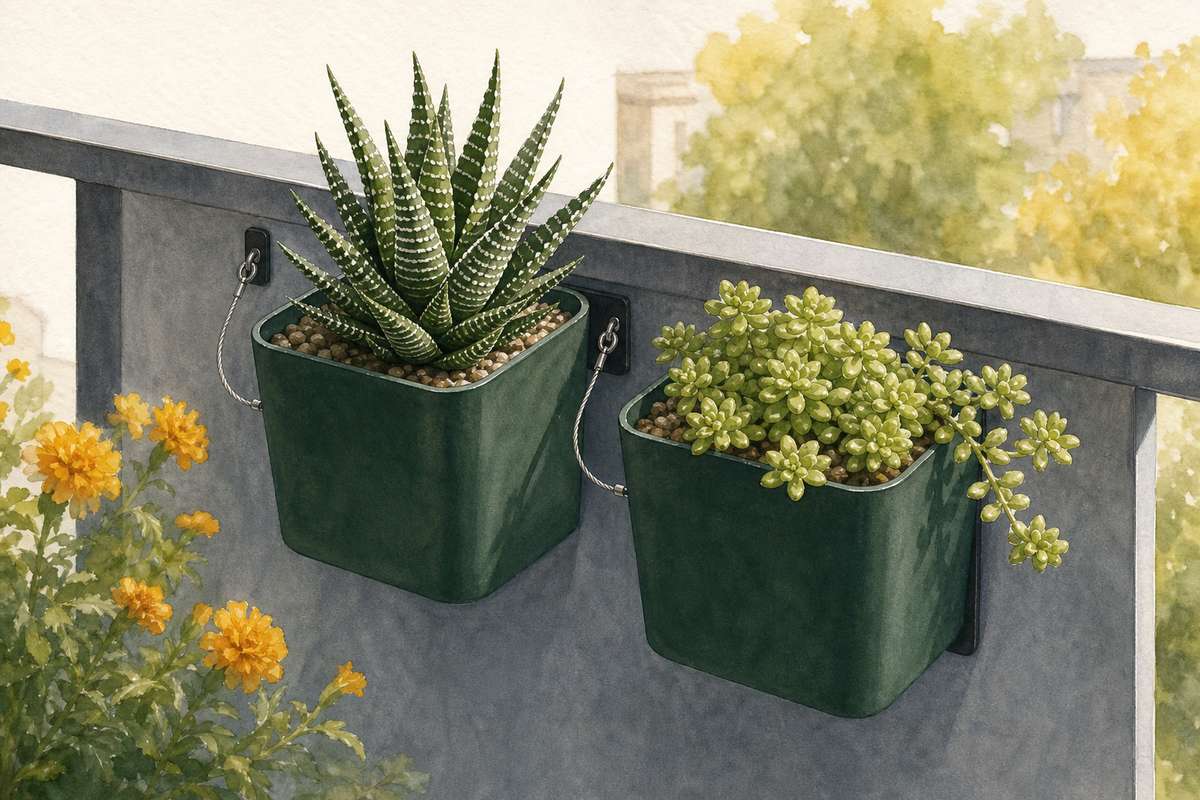
Magnetic planters offer a genuinely hardware-free option when the railing is ferromagnetic steel rather than aluminum, stainless steel, or vinyl. Test the exact spot with an ordinary refrigerator magnet before buying anything. Choose a planter with several rubber-coated neodymium magnets, keep the pot under about 6 inches, and use lightweight potting mix with compact succulents such as haworthia or hardy sedum suited to your climate. Mount it on the balcony side and add a thin secondary tether around a baluster. Magnets lose holding power when grit, peeling paint, or a curved surface prevents full contact, and the advertised rating may assume a clean, flat steel plate. Remove the pot before severe wind, and wipe moisture from behind it weekly to discourage rust stains.
7. Wrap the Rail With a Felt Planting Pocket
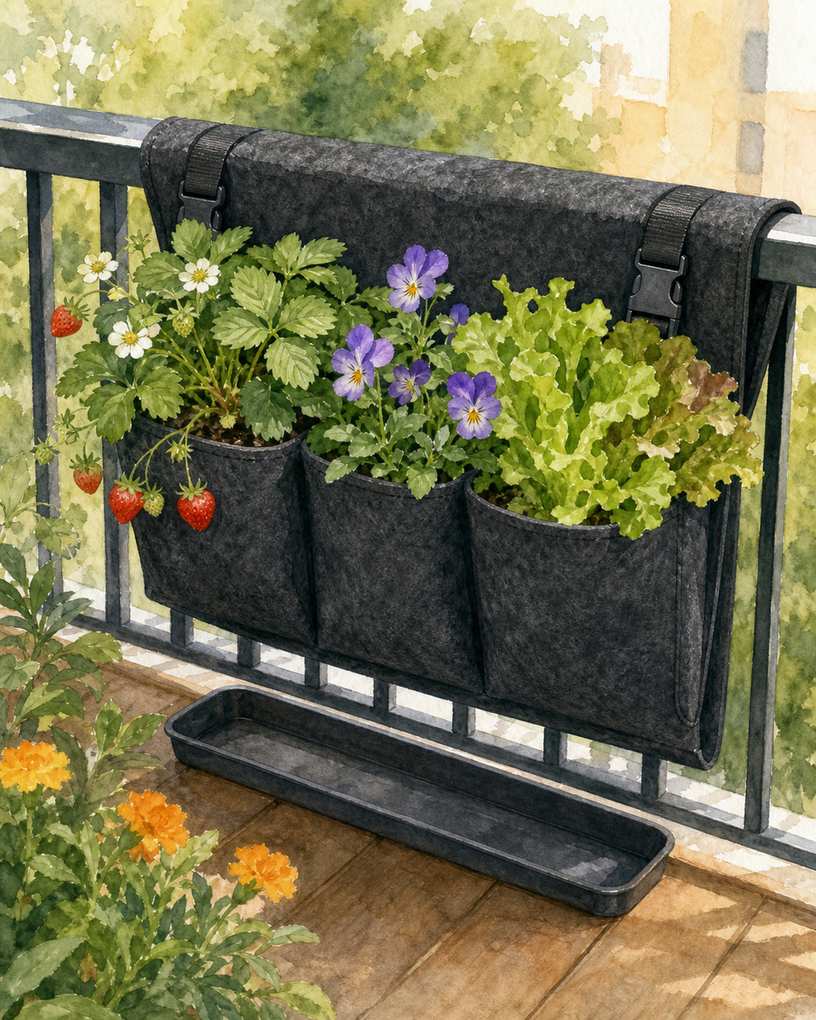
A railing pocket is a narrow felt or reinforced fabric planter that folds over the rail and fastens underneath with straps. Look for UV-resistant polyester felt, reinforced seams, and at least two separate buckles rather than snaps alone. Fill its 5- to 7-inch-deep pockets with a light container mix and shallow-rooted plants such as alpine strawberries, violas, or loose-leaf lettuce. Because fabric dries faster than plastic, this setup suits gardeners willing to check moisture daily during hot weather. It can also drip through the bottom, so keep it facing inward and place a removable tray below when your lease forbids runoff. Wet fabric becomes substantially heavier and may stain a pale railing; empty it after the season, wash away fertilizer salts, and let both the pocket and rail dry completely.
8. Turn an Inward-Facing Trough Into a Herb Rail
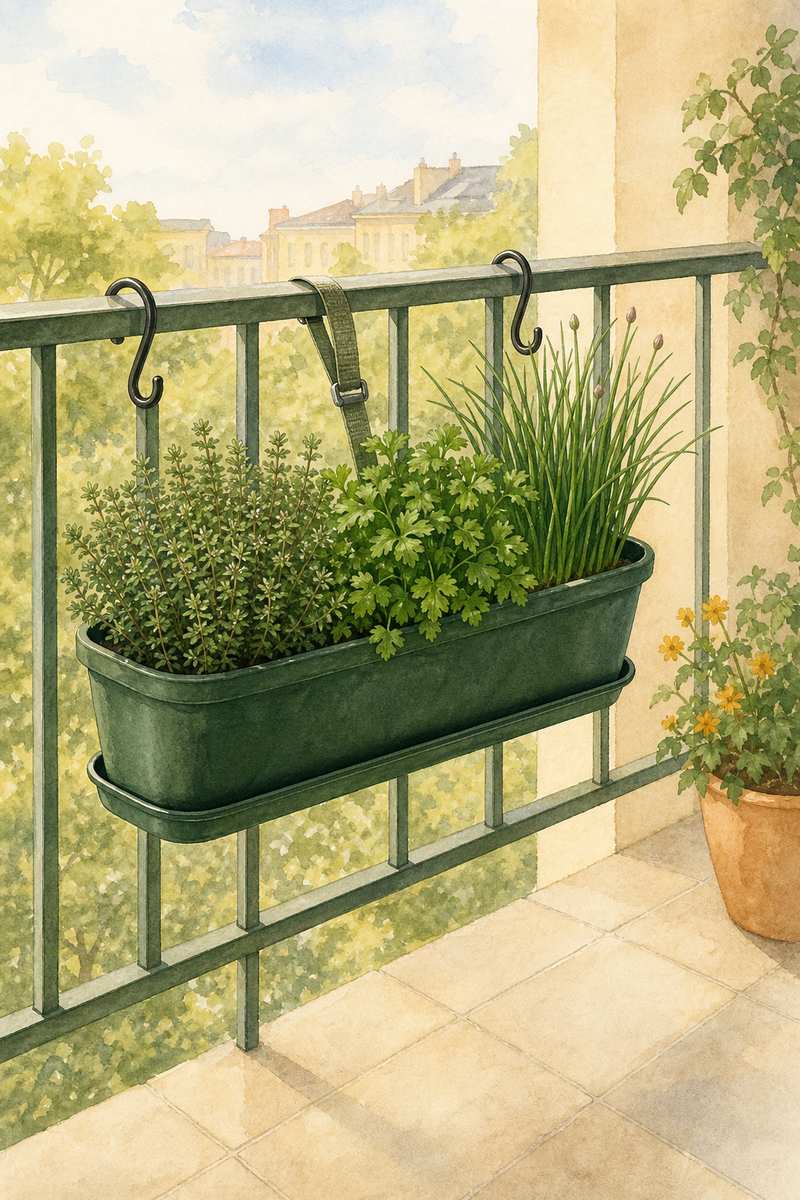
An inward-facing herb trough keeps plants within reach and avoids sending leaves, tools, or dripping water over the balcony edge. Suspend a lightweight 20-inch box from removable S-hooks with closed lower loops, then add a separate strap so the trough cannot bounce free. A practical planting trio is thyme, flat-leaf parsley, and chives, which tolerate regular harvesting without becoming top-heavy. Leave at least 30 inches of clear walking width if this planter projects into your balcony, and make sure it does not block the door or an emergency route. The compromise is lost elbow room, particularly around café chairs. Water with a narrow-spout can and use a fitted saucer, but empty standing water after about 30 minutes so roots and mosquitoes do not get comfortable.
9. Fake a Rail Planter With a Freestanding Console Box
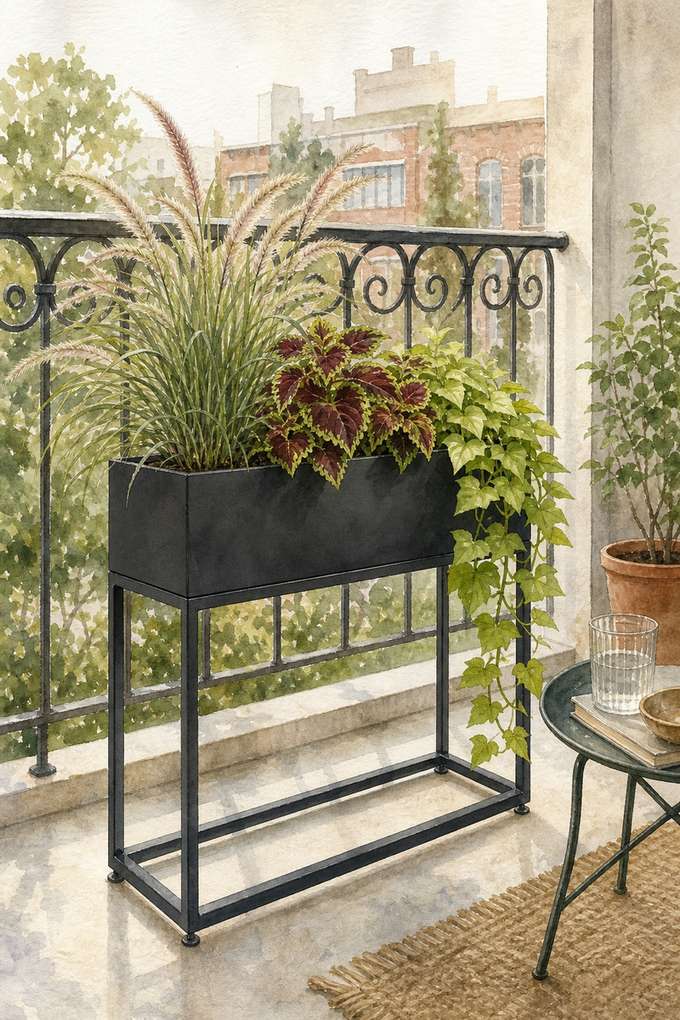
When the lease bans anything attached to the railing, place a narrow freestanding planter directly inside it instead. A box about 8 to 10 inches deep on a low metal stand creates the same green edge while leaving the rail untouched. Choose a stand with a broad base, adjustable feet, and enough clearance for a drainage tray; do not rely on the railing to keep it upright. Compact fountain grass, dwarf coleus, and trailing sweet potato vine make a layered display without needing a wall. This arrangement occupies precious floor area and may be heavier to move than hanging plastic, especially after watering. Keep the planter below the rail where possible, maintain the required exit path, and use locking casters only on a level balcony where they cannot roll toward the edge.
Common questions
- How much weight can a balcony railing planter safely hold?
- There is no universal safe number because rail materials, fasteners, age, and building codes differ. Ask the landlord or building manager for the railing and balcony load rules, then include the weight of the container, saturated potting mix, plants, and retained water. A 24-inch trough can easily exceed 20 pounds when wet. When documentation is unavailable, choose a small inward-facing plastic planter or a freestanding setup rather than guessing.
- Can a no-drill planter still damage a rental balcony?
- Yes. Bare hooks can scratch paint, compression clamps can dent soft wood, and trapped moisture can leave rust or mildew marks. Use rubber or silicone padding, clean grit from contact points, and lift the planter monthly so the railing can dry. Photograph the surface before installation and obtain written permission if the lease prohibits any railing attachments, not just drilled ones.
- Should railing planters face inside or outside the balcony?
- Inside is usually safer and is required by many buildings. An inward-facing planter is less likely to fall onto a sidewalk, drip onto a neighbor, or catch strong wind. Maintain the exit path and keep doors operable; around 30 inches of clear walking width is a useful target, but your local fire code or lease may require more.
- What should I do with railing planters in winter or severe wind?
- Remove hanging planters before severe wind, hurricanes, or building maintenance rather than trusting straps or hooks. In freezing climates, empty resin and terracotta containers that are not labeled frost-resistant, since trapped water can split them. Perennial herbs need winter care based on species and USDA zone, while removable hardware should be cleaned, dried, and stored indoors to prevent corrosion.