7 North-Facing Balcony Plants That Can Handle Low Light
A north-facing balcony may receive little direct sun, but it can still support more than bare railings and plastic furniture. These seven plants tolerate lower light while fitting the drainage, wind, and container limits that come with a rented balcony.
This page contains affiliate links — we may earn a commission at no extra cost to you. See our disclosure.
1. Use Japanese forest grass for a bright leafy base
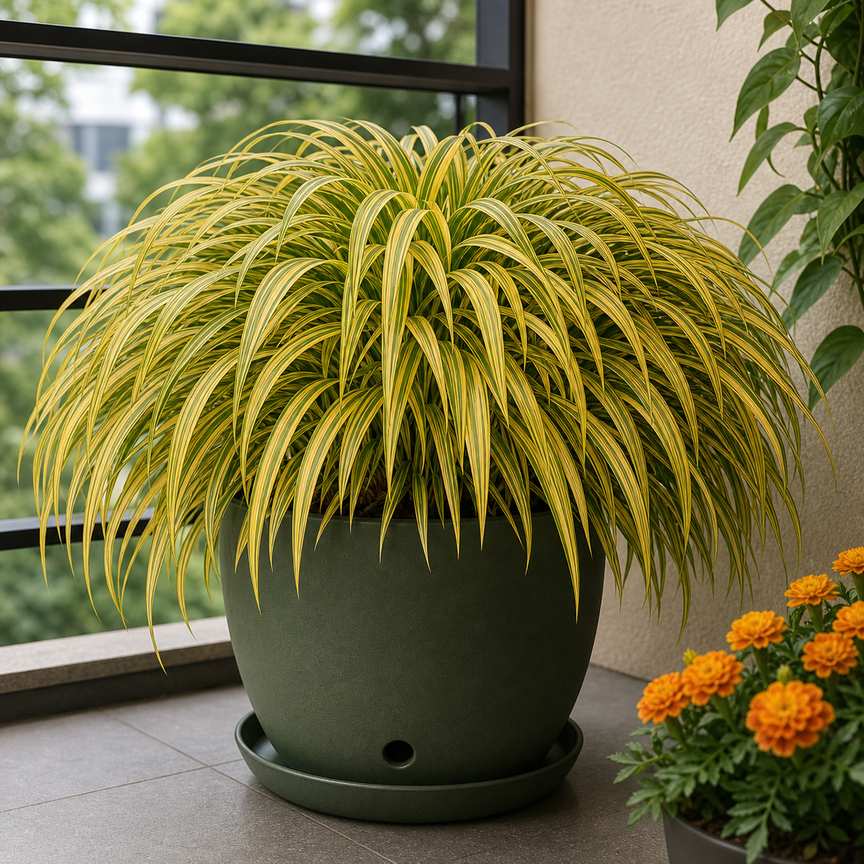
Japanese forest grass, especially golden Hakonechloa macra 'Aureola,' brings color to a north-facing balcony without needing flowers. Give one plant a pot at least 12 inches wide so its arching leaves can form a soft mound beside a chair or wall. It likes evenly moist soil, but the container must have a drainage hole; waterlogged roots are a bigger risk than shade. Choose a resin or fiberglass pot if balcony weight is tight, since a similarly sized glazed ceramic planter can be surprisingly heavy once wet. This grass is perennial in roughly USDA zones 5–9, though roots in pots get colder than roots in the ground. In colder areas, protect the container or treat the plant as seasonal.
2. Plant heuchera for foliage that stays colorful
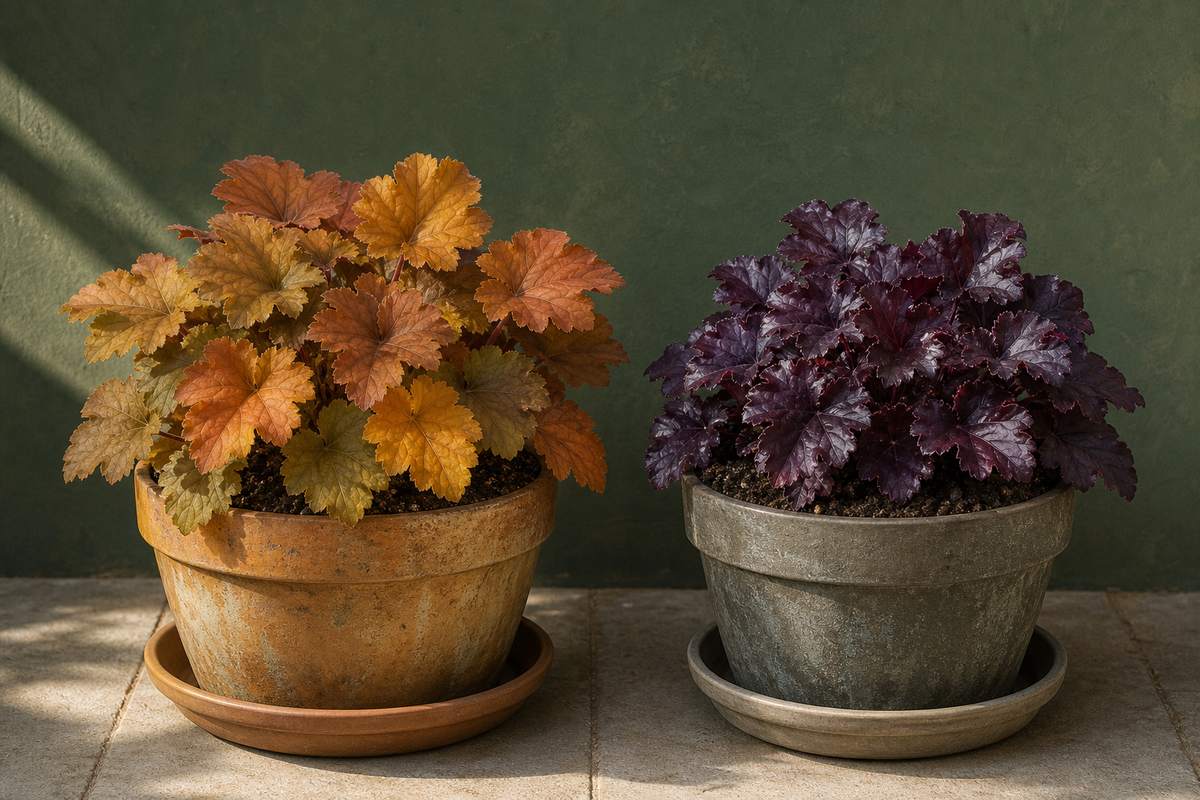
Heuchera earns its space with leaves rather than unreliable blooms. Try 'Caramel' for amber foliage or 'Palace Purple' for a darker contrast, using one crown per 8- to 10-inch pot. Morning brightness or open sky is usually enough, but deep shade can dull the strongest leaf colors. Keep the crown level with the soil instead of burying it, and let the top inch dry before watering again. Heuchera dislikes sitting in a full saucer after rain, so empty runoff promptly. The trade-off is seasonal appearance: leaves may stay present in mild climates but look tired or disappear during a cold winter. A pot placed against the building wall gets some shelter, provided it does not block drainage or an exit route.
3. Hang a fuchsia where the wind cannot whip it
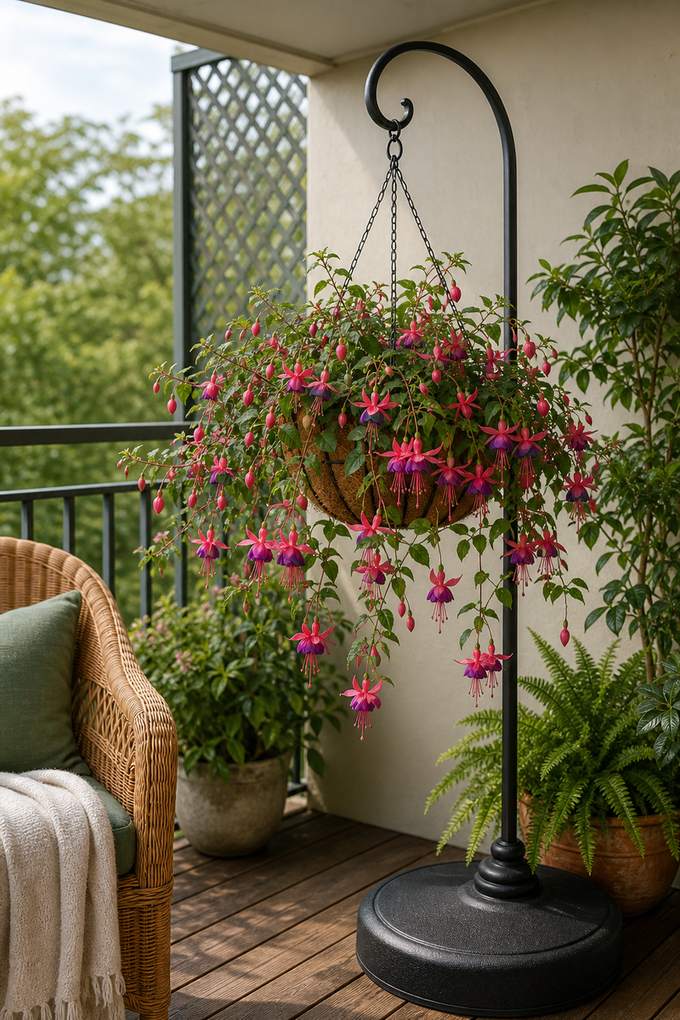
A trailing fuchsia can flower in bright shade, making it useful when a north-facing balcony has plenty of open sky but no direct afternoon sun. Put one plant in a 10- to 12-inch hanging basket and pinch the tips early for a fuller shape. The difficult part is placement: fuchsia stems snap in strong wind, and hanging containers dry faster than floor pots. Use a landlord-approved freestanding shepherd's hook or plant stand rather than drilling overhead, then secure the base so it cannot tip. Check moisture daily during hot weather; the mix should feel damp, not swampy. Fuchsias also struggle in sustained high heat, so balconies with reflected summer heat may get fewer flowers even when the light level is right.
4. Fill a shallow bowl with tuberous begonias
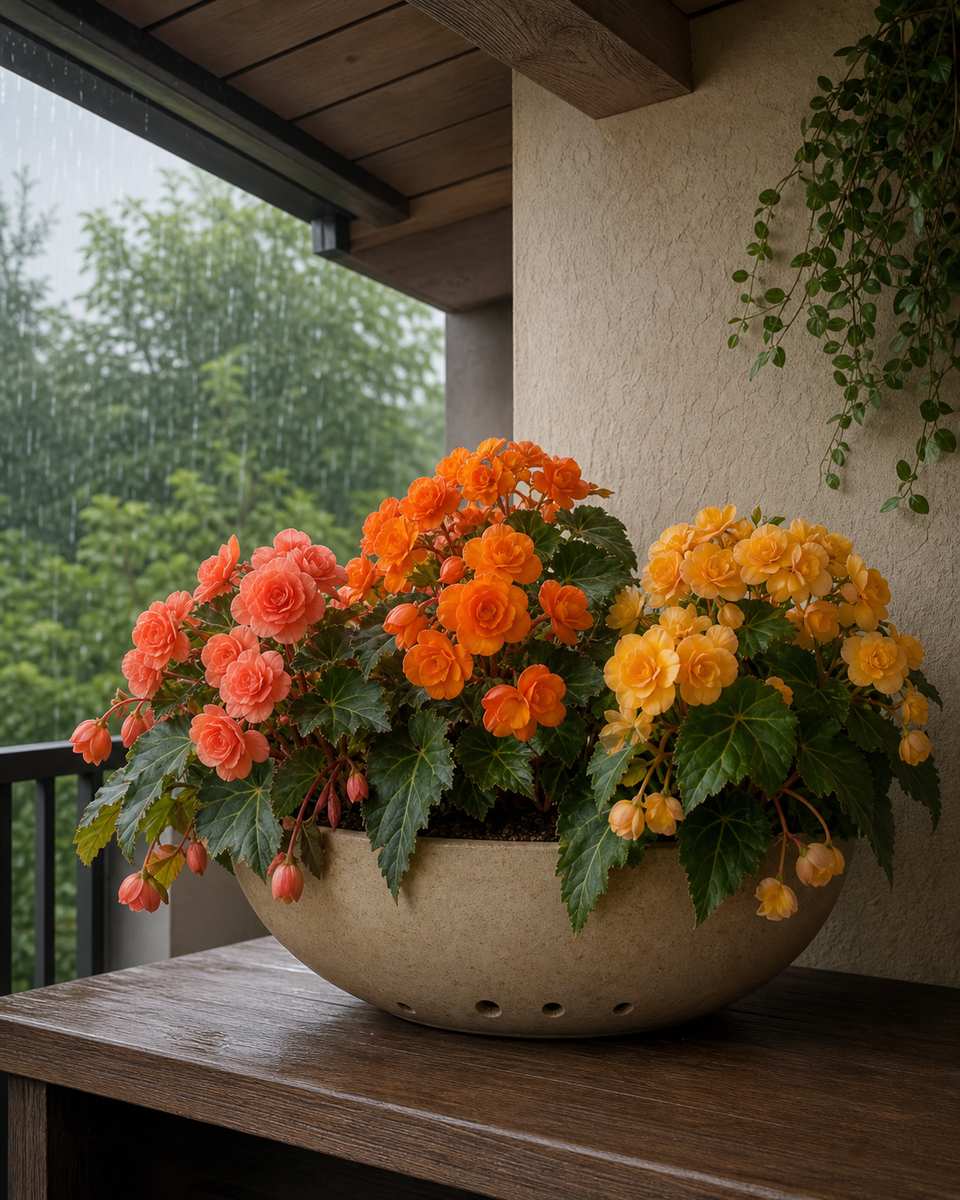
Tuberous begonias provide the showiest flowers on this list and are well suited to bright, indirect balcony light. Three small plants fit comfortably in a bowl about 14 inches across and 7–8 inches deep, as long as it has drainage holes. Keep the container under cover if wind-driven rain regularly soaks the balcony; begonia stems are brittle, and constantly wet foliage invites mildew. Water the potting mix near the soil instead of pouring over the leaves. These begonias are not frost hardy, so most renters will grow them as annuals or lift and store the tubers after the foliage dies back. They also need more attention than heuchera or ferns. If you travel often, a wick-style self-watering planter can reduce missed waterings, but it cannot correct soggy soil.
Product pick — a compact wick-style self-watering planter
5. Give one compact fern a sheltered floor pot
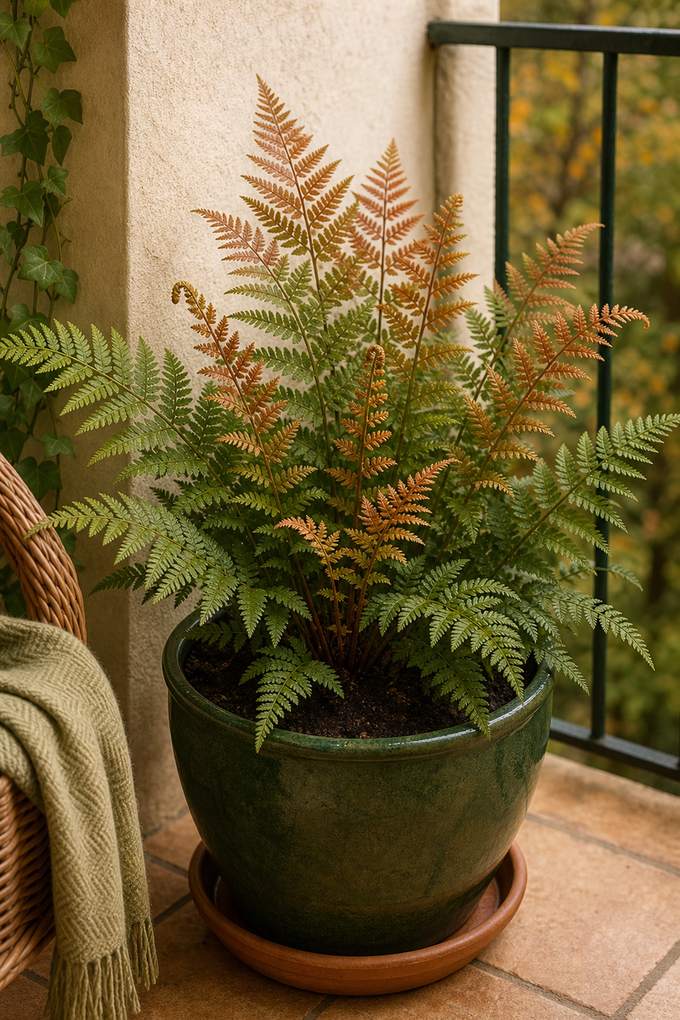
A compact fern makes sense on a protected north-facing balcony where the air does not dry out constantly. Autumn fern, Dryopteris erythrosora, is a sturdier outdoor choice than the delicate Boston ferns often sold for porches. Start with one plant in a 10- to 12-inch pot filled with moisture-retentive potting mix, not garden soil. Set it on the floor near a side wall, because elevated fronds can become ragged in steady wind. Ferns want consistent moisture, yet a permanently full saucer can rot the roots. The honest drawback is climate: hot, dry, windy balconies may require watering every day and still produce brown tips. Check the plant's hardiness against your USDA zone, remembering that an exposed container offers less winter protection than a garden bed.
6. Grow parsley and mint in separate containers
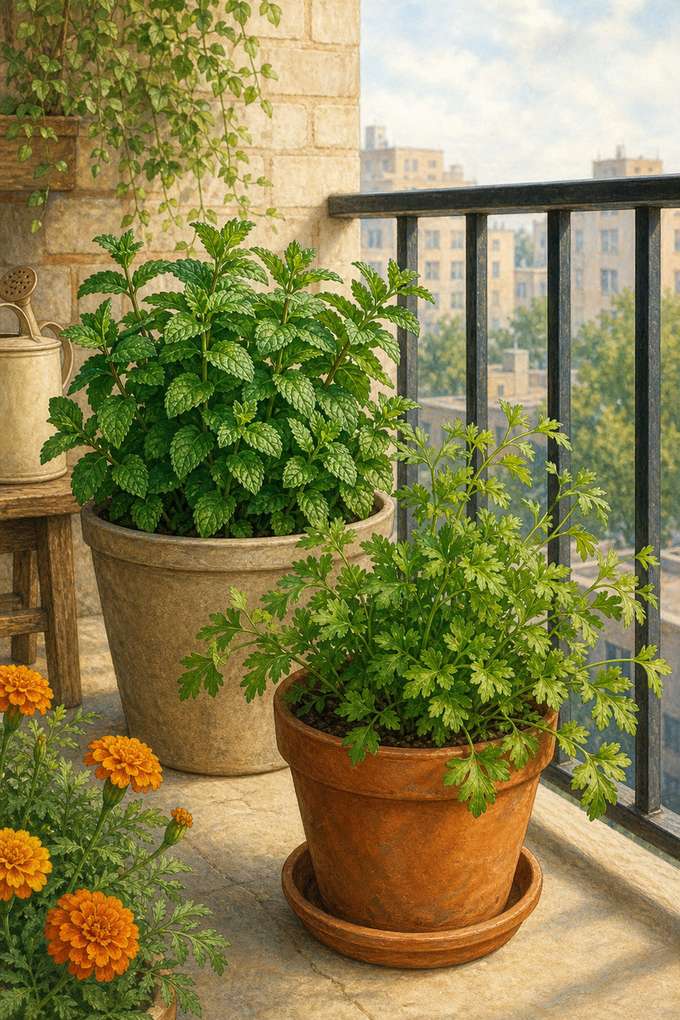
Parsley and mint tolerate less sun than basil, rosemary, or tomatoes, so they are sensible edible choices for a north-facing balcony with bright ambient light. Give curly or flat-leaf parsley an 8-inch-deep pot, and confine mint to its own 10-inch container so its roots cannot crowd anything else. Expect leafy harvests rather than supermarket-sized growth; fewer than about 3 hours of gentle sun usually means slower production. Rotate the pots a quarter turn each week if the plants lean toward the railing. Mint needs regular water, while parsley prefers the surface to dry slightly between drinks, which is another reason not to combine them. Both can attract aphids. Check leaf undersides weekly and rinse small infestations off before they spread to neighboring pots.
7. Train climbing hydrangea on a removable trellis
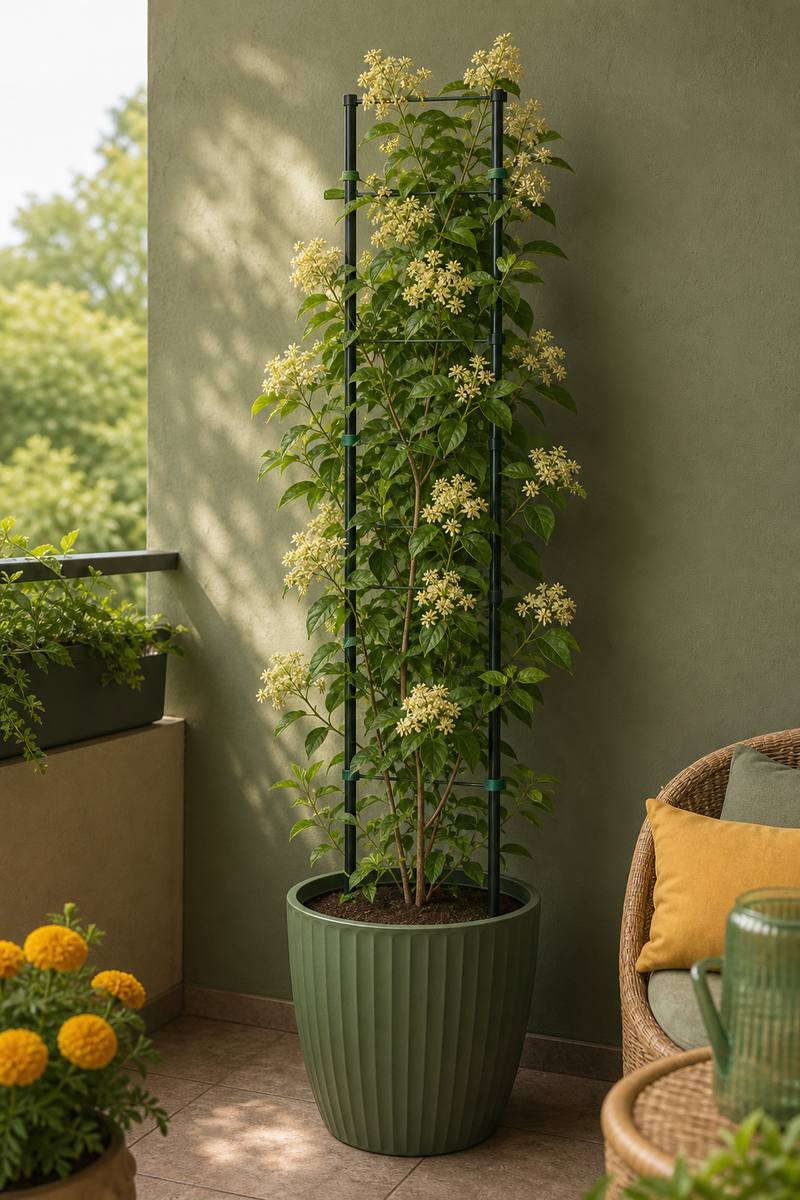
Climbing hydrangea, Hydrangea anomala subsp. petiolaris, can cover a dim balcony wall without requiring screws if you train a young plant onto a freestanding trellis. Use a container at least 18 inches wide and tie new stems loosely with soft plant tape. This is the heaviest and slowest option here: a large pot, wet mix, plant, and trellis may exceed what is sensible for one spot, so check the balcony's load rules before buying anything. Keep the trellis below railing-height restrictions and secure it against wind without attaching it to shared masonry. Flowering may take several years and can be sparse in deep shade. Choose this plant for long-term foliage and structure, not quick blooms, and confirm that your winter zone suits container-grown hydrangea roots.
Common questions
- How can I tell whether my north-facing balcony has enough light for plants?
- Watch the space at several times on a clear day. Bright shade means you can see open sky and cast a faint shadow, even without direct sun; deep shade feels dim all day because another building or roof blocks the sky. Most plants here prefer bright shade. A basic light meter can help, but observing where plants lean and whether new growth becomes pale or stretched is often more useful.
- Do I need to check the balcony weight limit before adding pots?
- Yes, especially for an 18-inch planter, ceramic pot, or trellis. Wet potting mix and water reservoirs add weight quickly, and published building limits do not tell you whether one corner is suitable for a concentrated load. Ask the landlord, HOA, or building manager what is allowed. Favor resin or fiberglass containers, spread pots out, and never assume the railing can carry a planter unless the rules specifically permit it.
- Will these plants survive winter outside in containers?
- That depends on the plant, your USDA zone, wind exposure, and pot size. Container roots are less insulated than roots in the ground, so a plant rated hardy in your zone can still be damaged. Fuchsia and tuberous begonias usually need frost-free storage or replacement in cold regions. For hardy plants, group pots near a sheltered wall and check local guidance before wrapping or moving them.
- How often should low-light balcony plants be watered?
- Check the soil rather than following a fixed calendar. Shade slows evaporation, but wind and hanging baskets can reverse that. Push a finger about 1 inch into the mix: water moisture-loving fuchsia or fern before it dries fully, while heuchera and parsley can dry slightly at the surface. Let excess water drain, empty saucers after rain, and make sure runoff cannot drip onto a neighbor's balcony.