9 Pet-Safe Balcony Garden Ideas for Renters With Curious Cats and Dogs
A balcony garden has to survive curious paws, occasional nibbling, wind, and the limits of a rented space. These nine setups use pet-safe plants, stable containers, and no-drill safeguards while being honest about weight, drainage, and maintenance.
This page contains affiliate links — we may earn a commission at no extra cost to you. See our disclosure.
1. Build a Low Nibbling Border With Spider Plants
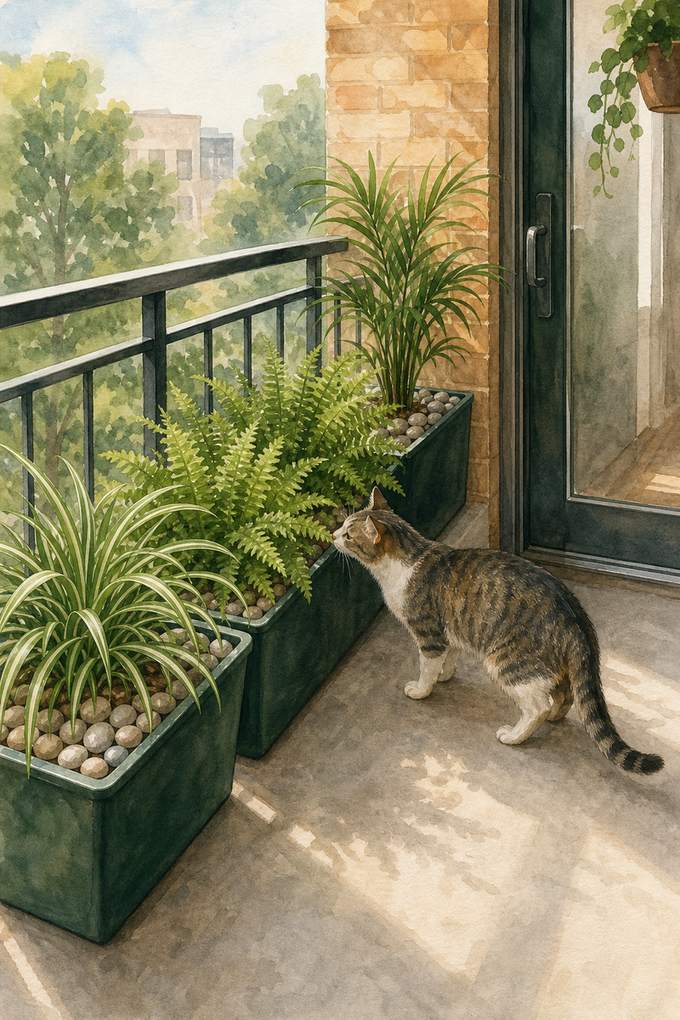
Create a leafy border at floor level with spider plants, Boston ferns, and compact parlor palms, all commonly listed as non-toxic to cats and dogs. Use two or three rectangular planters about 24 inches long rather than a row of small pots that paws can tip. The catch is weight: wet potting mix can make even a modest planter surprisingly heavy, so check your lease, balcony rules, and building guidance before lining an entire edge. Plastic or fiberglass containers are lighter than ceramic. Leave a 24-inch walking route to the door, cover exposed soil with large smooth stones too big to swallow, and expect spider-plant leaves to acquire a few tooth marks.
2. Give Cats a Dedicated Grass Grazing Tray
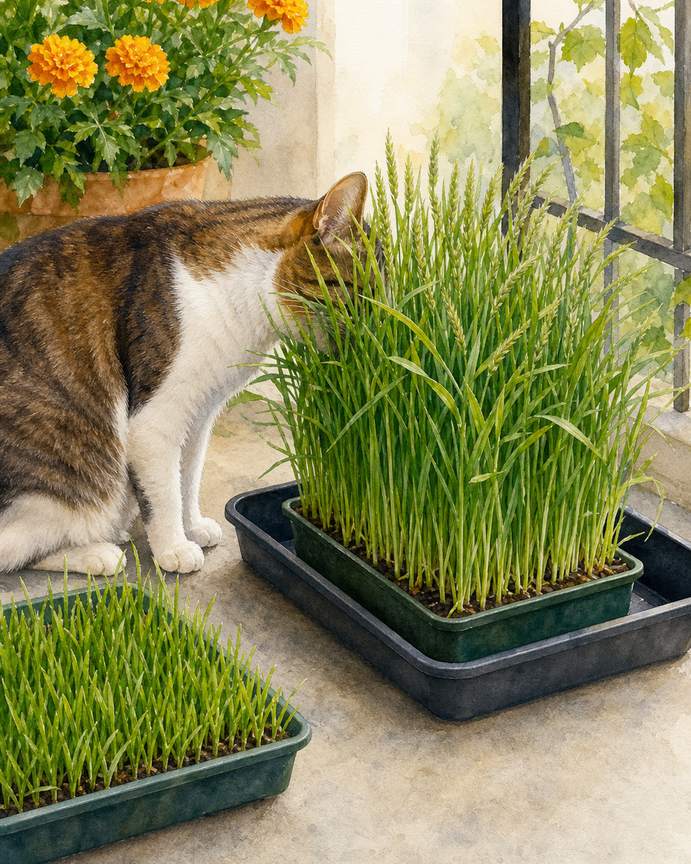
A shallow tray of oat, wheat, or barley grass gives a plant-chewing cat an approved target before it discovers the rest of the garden. Choose a container 3 to 4 inches deep with drainage holes, sow untreated seed, and set the tray inside a waterproof boot tray rather than letting runoff reach the downstairs balcony. Start a second tray 7 to 10 days later so one can regrow while the other is in use. Cat grass is temporary, not decorative forever; indoor-style trays often become moldy outdoors if they stay constantly wet. Trim at roughly 4 inches, discard sour-smelling soil, and never substitute lawn seed treated with fungicide or fertilizer.
3. Plant a Pet-Safe Cooking Herb Station
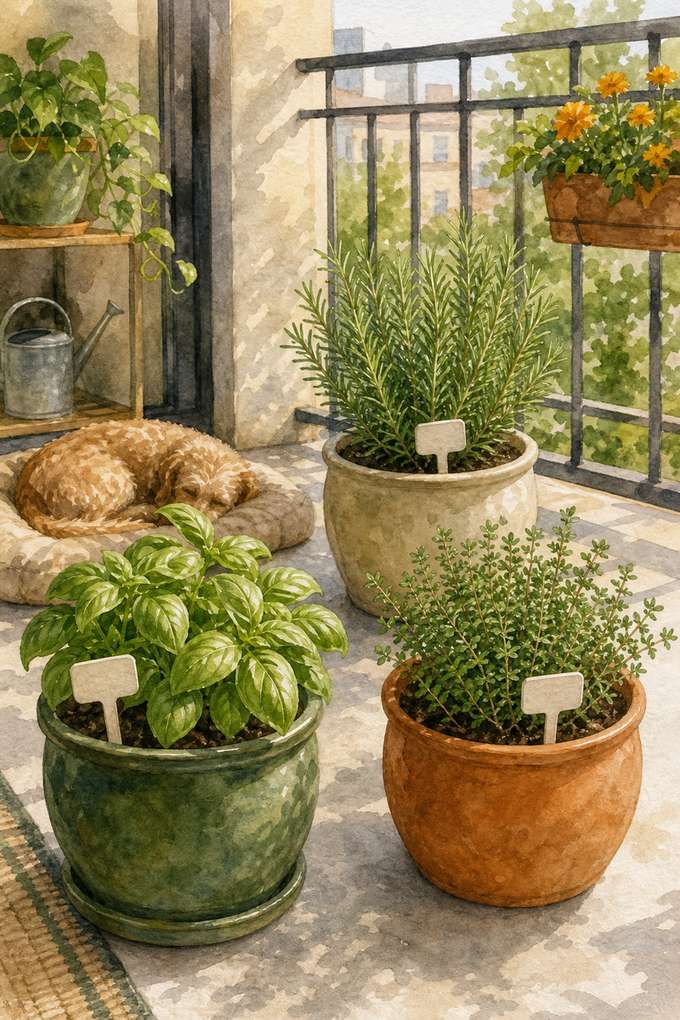
Group basil, rosemary, and common thyme in separate 8- to 10-inch pots for a useful herb station that avoids alliums such as chives, garlic, and onions. Separate pots matter because rosemary wants drier soil than thirsty basil, and one shared planter usually leaves one of them unhappy. Give basil around 6 hours of sun if possible; in less light it becomes leggy and needs frequent pinching. Rosemary can become woody and top-heavy, so use a broad-based pot and keep it away from a railing edge. Although these herbs are generally considered non-toxic, eating a large quantity can still upset a pet's stomach. Harvest often and remove dropped stems before they become chew toys.
4. Keep Tall Plants Low and Pots Broad
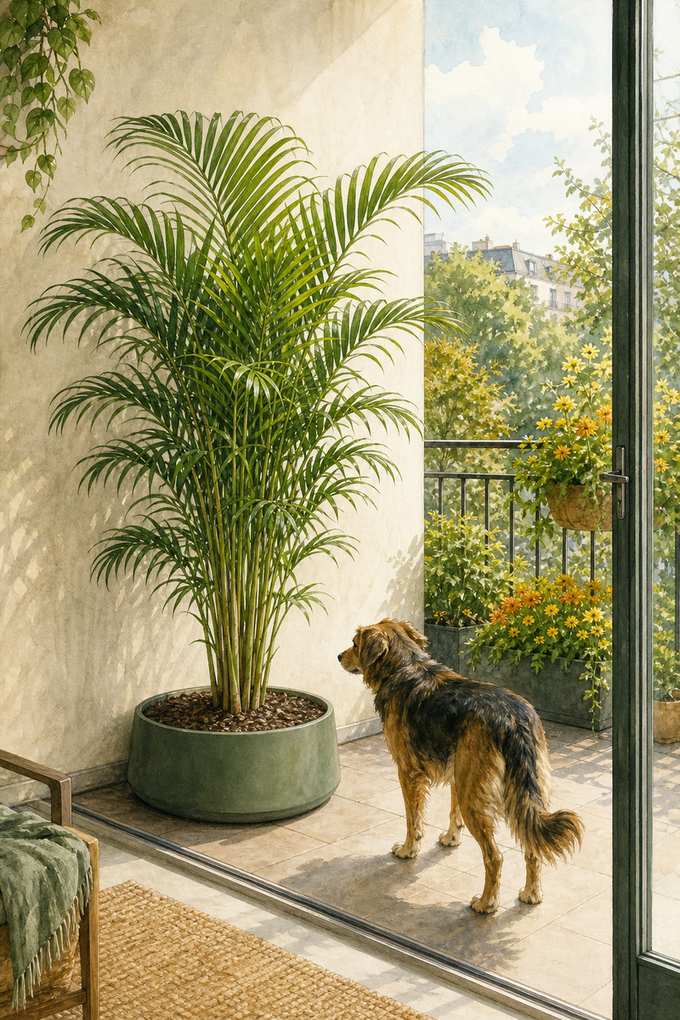
Set taller pet-safe plants such as areca palms or bamboo palms directly on the balcony floor in broad, lightweight planters instead of balancing them on narrow stands. A container whose base is at least half as wide as the plant's leafy spread is harder for a dog or leaping cat to overturn. Stability has a trade-off: adding rocks to the bottom increases weight without improving drainage, so use potting mix and a wide fiberglass or resin pot instead. Place the planter against an interior wall, not beside the railing where foliage can become a climbing aid. Add a removable wall-side plant tie only if your lease permits an adhesive anchor, and check the palm weekly for spider mites in hot, dry weather.
5. Add a No-Drill Mesh Guard Behind the Plants
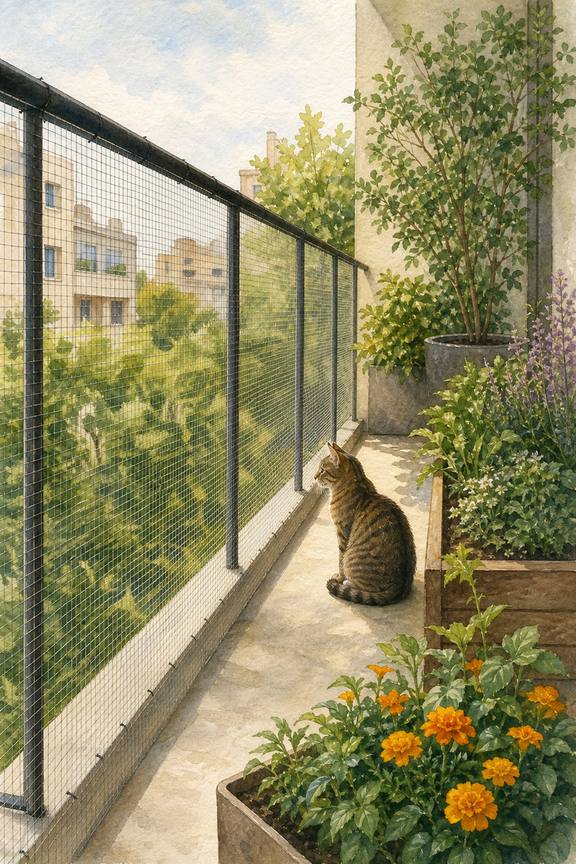
A taut balcony mesh guard closes tempting railing gaps while preserving room for a narrow planting strip. Choose UV-resistant pet mesh with openings smaller than your pet's head, then secure it to the inside of the railing at intervals of about 6 inches using outdoor-rated cable ties. The bottom edge must sit flush with the floor; a loose 2-inch gap is exactly where a paw or nose will investigate. This is a deterrent, not permission to leave a pet unattended, and some buildings prohibit anything attached to exterior railings. Ask first, trim tie ends, and inspect the mesh monthly for sun damage. Keep benches and planters at least 18 inches from the railing so they do not become launching platforms.
6. Use a Locked Shelf for Small Pet-Safe Pots
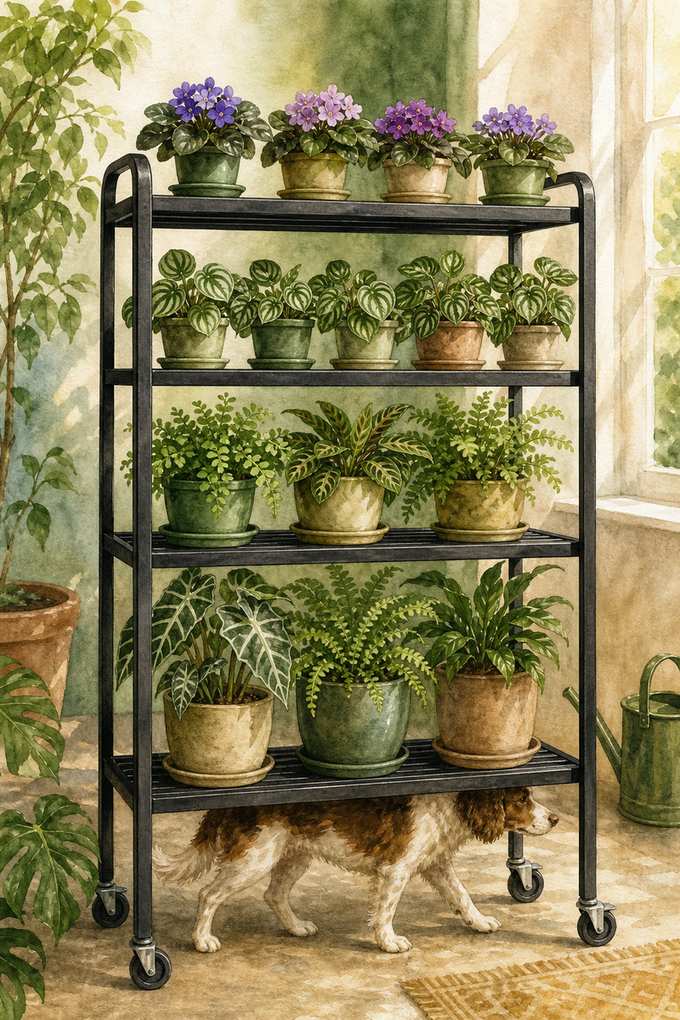
A freestanding metal shelf with locking casters puts African violets and watermelon peperomia above a wagging tail while remaining movable for inspections or storms. Pick a unit no taller than 48 inches and place the heaviest pots on its lowest shelf; a tall, lightly loaded rack is easy to topple. Lock all four wheels during normal use, and do not count elevation as protection for toxic plants because cats climb and leaves fall. African violets prefer bright indirect light, while peperomia can scorch in harsh afternoon sun, so this works best against an east-facing wall or behind a shade cloth. The downside is watering: remove each pot or use fitted saucers, since runoff dripping through wire shelves stains floors and furniture.
7. Catch Every Drip With a Self-Watering Planter
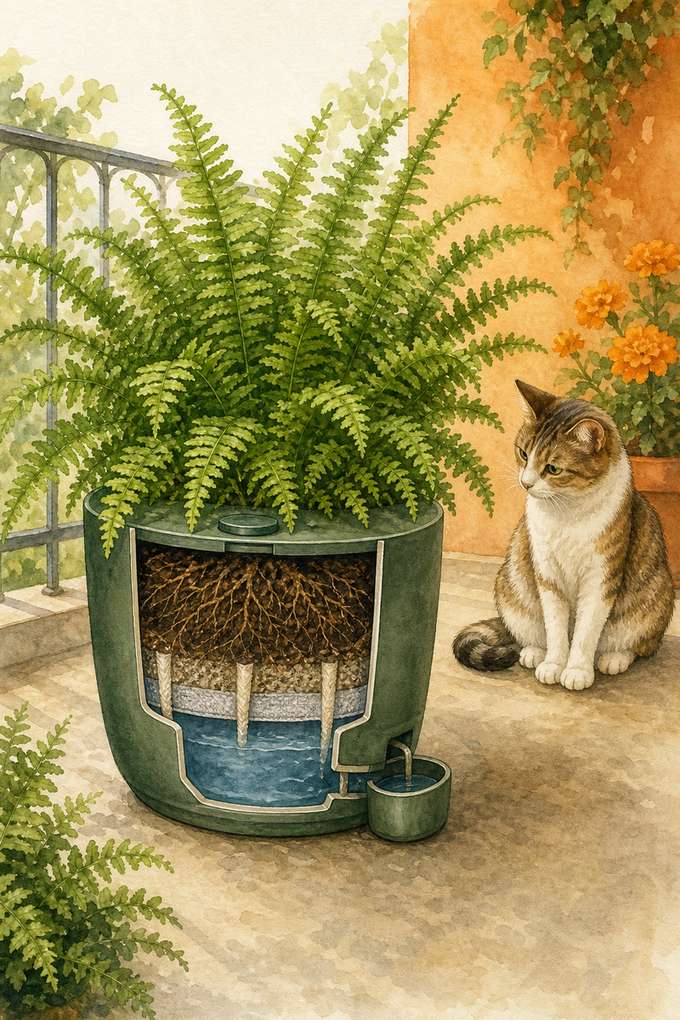
Use a self-watering planter for a thirsty Boston fern or basil so there is no open saucer of fertilizer-laced water for pets to drink. A 12-inch reservoir planter usually provides enough soil volume for one fern, but choose a model with a covered fill port and an overflow outlet you can aim into a removable catch cup. Empty that cup after heavy rain. Reservoirs reduce daily watering, yet they are not maintenance-free: flush the pot from the top about once a month to prevent mineral and fertilizer salts from building up. Mosquito larvae can also appear in uncovered water, so keep caps in place. Before buying, confirm the filled planter's weight and avoid hanging it over a public walkway.
Product pick — a covered-reservoir self-watering planter
8. Make a Digging Box That Protects the Real Pots
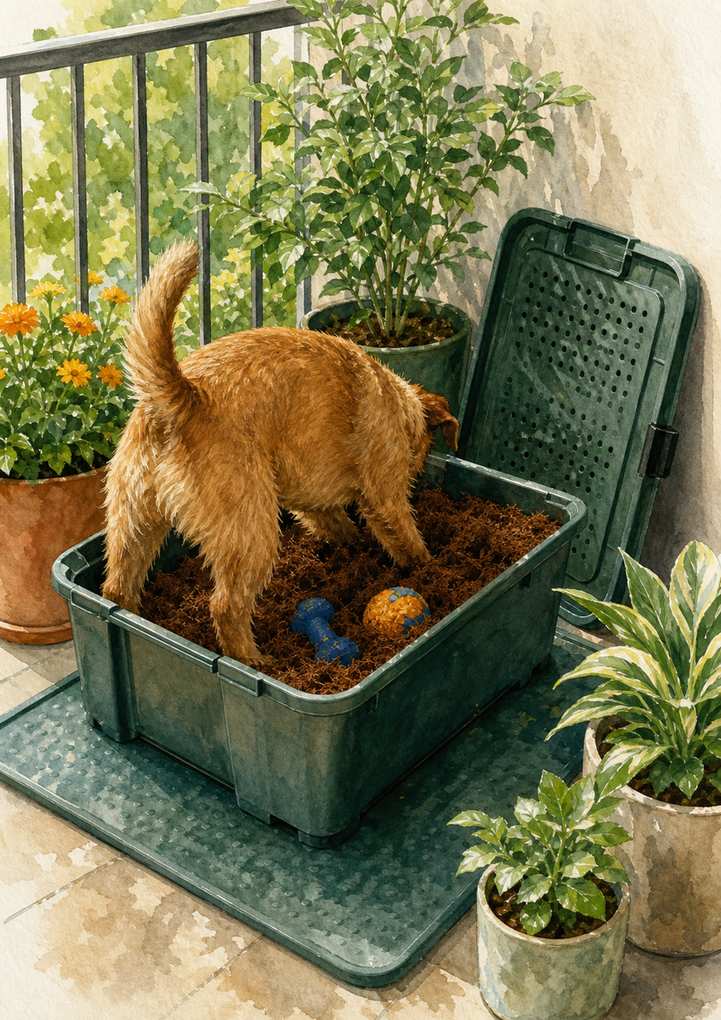
Redirect a dog that paws at potting soil with a dedicated digging box rather than covering every planter in sharp or uncomfortable material. Fill a sturdy 18- to 24-inch plastic tub with 4 inches of clean play sand or plain coconut coir, then bury two washable toys just below the surface. Place it on a waterproof mat and reward the dog for choosing it; the box only works with training, not wishful placement. Skip cocoa-shell mulch, which contains compounds related to those in chocolate, and avoid soil treated with systemic insecticides. Sand tracks indoors and coir blows in strong wind, so sweep regularly and fit a ventilated lid when the box is not being used.
9. Rotate Pet-Safe Flowers for Seasonal Color
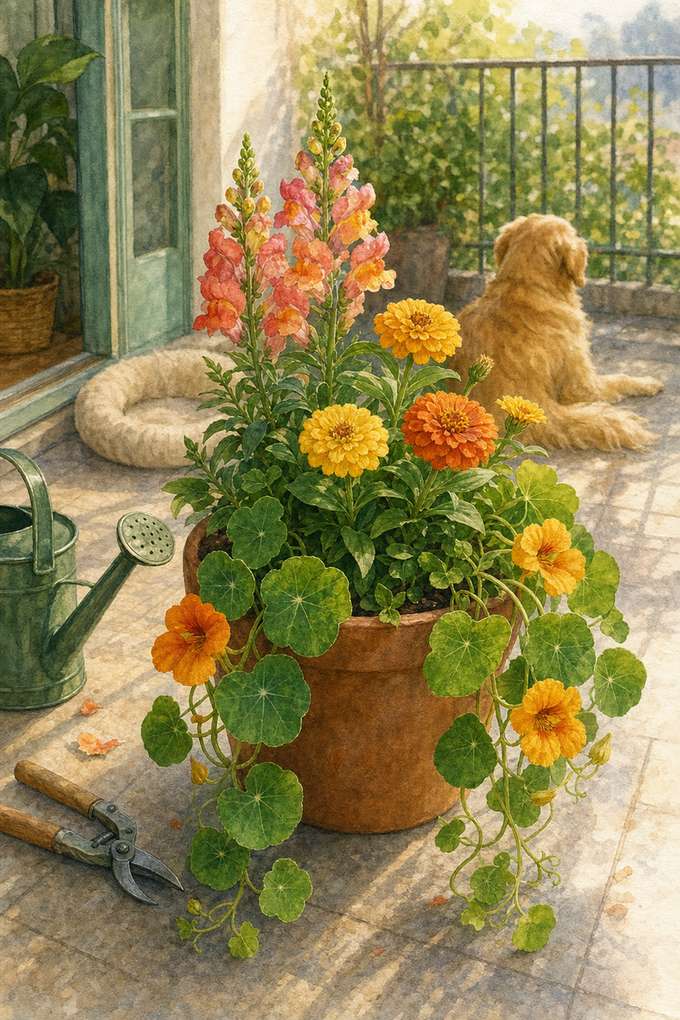
Fill one portable color pot with pet-safe annuals such as snapdragons, zinnias, and nasturtiums instead of buying an unlabeled mixed planter. A 14-inch container can hold one compact snapdragon, one dwarf zinnia, and two trailing nasturtiums without becoming overcrowded. These flowers need roughly 6 hours of direct sun for their best display, and nasturtiums often stop blooming during the hottest part of summer. Bees will visit, which is useful but may be a concern for pets that snap at insects; move the pot away from beds and doorways if that happens. Deadhead weekly, avoid pesticide granules, and confirm every cultivar before purchase because common names on nursery tags can hide a different species.
Common questions
- How do I confirm that a balcony plant is safe for my pet?
- Check the plant's botanical name, not just its common name, against a veterinarian-reviewed source such as the ASPCA toxic and non-toxic plant database. Ask your veterinarian about any pet with kidney, liver, or digestive problems. Even non-toxic plants can cause vomiting when eaten in quantity, and fertilizers, pesticide granules, cocoa mulch, and moldy soil may be more dangerous than the plant itself.
- How much weight can I safely put on a balcony?
- There is no universal planter limit because balcony design, age, condition, and local code vary. Ask the landlord or building manager for the permitted load before adding large containers. Remember that water is heavy: one US gallon weighs about 8.3 pounds, and saturated potting mix weighs more than dry mix. Spread containers near structurally supported edges rather than clustering them, but follow building-specific guidance over general rules.
- What pet-safe plants work on a low-light balcony?
- Boston ferns, parlor palms, spider plants, and many peperomias can manage bright shade or gentle morning sun. Low light still needs to be usable daylight; a balcony blocked by deep walls may not support dense growth. Watch the actual space for a day, note its direct-sun hours, and rotate pots every week or two so plants do not lean heavily toward the opening.
- Can these plants stay outside during winter?
- Most of the tropical plants here, including spider plants, Boston ferns, peperomias, and palms, should come indoors before nights fall below about 50°F. Inspect leaves for pests, rinse the pots, and quarantine them from houseplants for 1 to 2 weeks. Annual flowers and basil usually finish with frost, while rosemary survival depends on cultivar, container exposure, and USDA zone; check your local zone and protect the pot from repeated freeze-thaw cycles.