9 Small-Balcony Garden Layouts That Actually Fit (Under 4 m²)
Nine layouts for balconies under 4 m² — no drilling required for any of them, and each one is built around a real constraint (weight, sun, or wind) instead of a generic 'add some plants' suggestion.
1. The Rail-Planter Perimeter
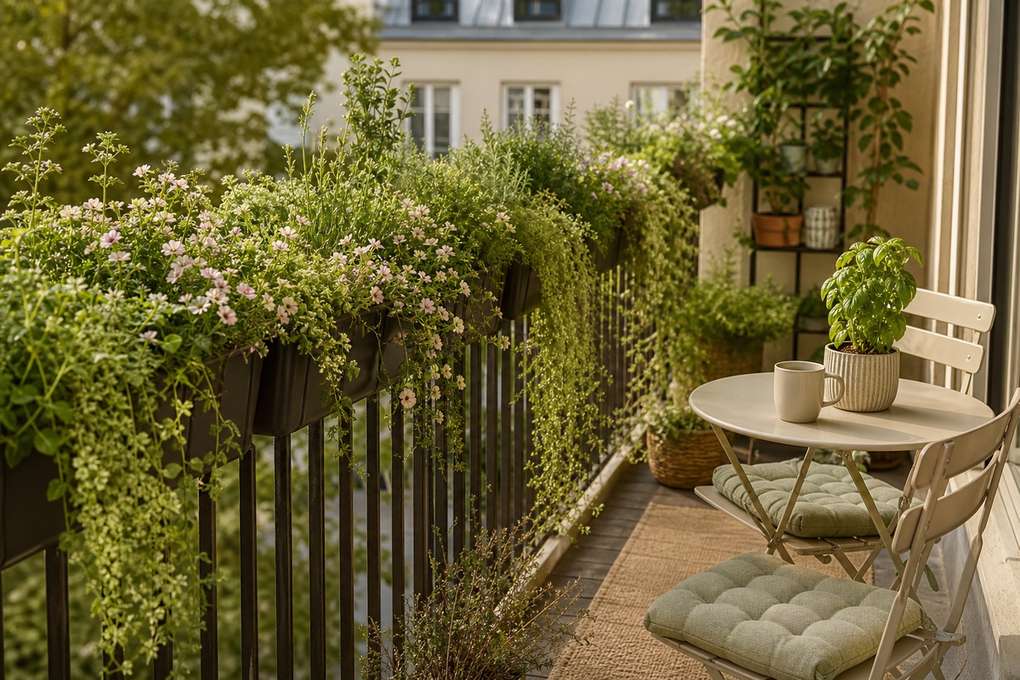
Clip-on rail planters run the full length of the balcony railing, turning dead perimeter space into growing space without touching the floor. Best for herbs and trailing flowers — anything shallow-rooted and light. Check your railing's weight rating before filling every planter with wet soil; a saturated planter can weigh 3-4x its dry weight.
2. The Vertical Herb Wall
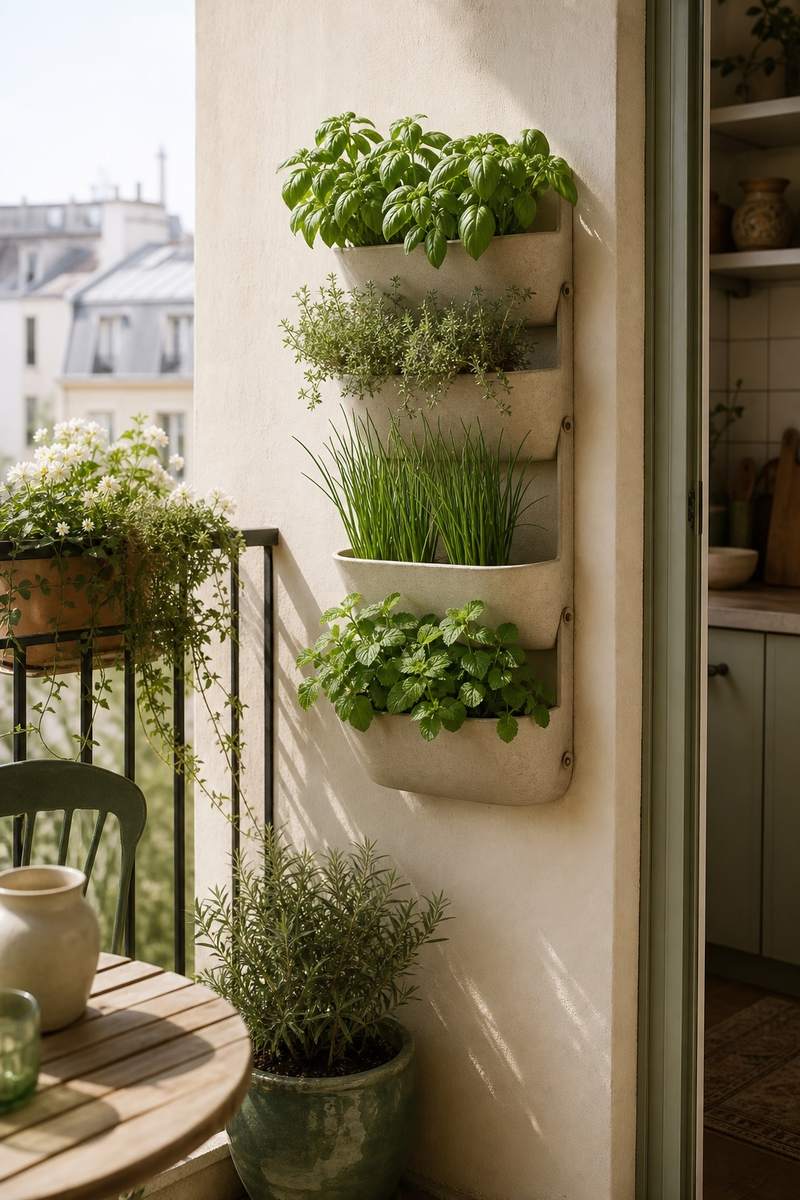
A tiered wall-mounted planter (or a repurposed pallet) turns one wall into a kitchen-herb pantry: basil, thyme, chives, and mint stacked in reach of the kitchen door. Needs at least 4-6 hours of direct sun on that wall — check before committing, since a shaded wall will leave the top tier thriving and the bottom tier leggy.
3. Corner Bench + Container Cluster
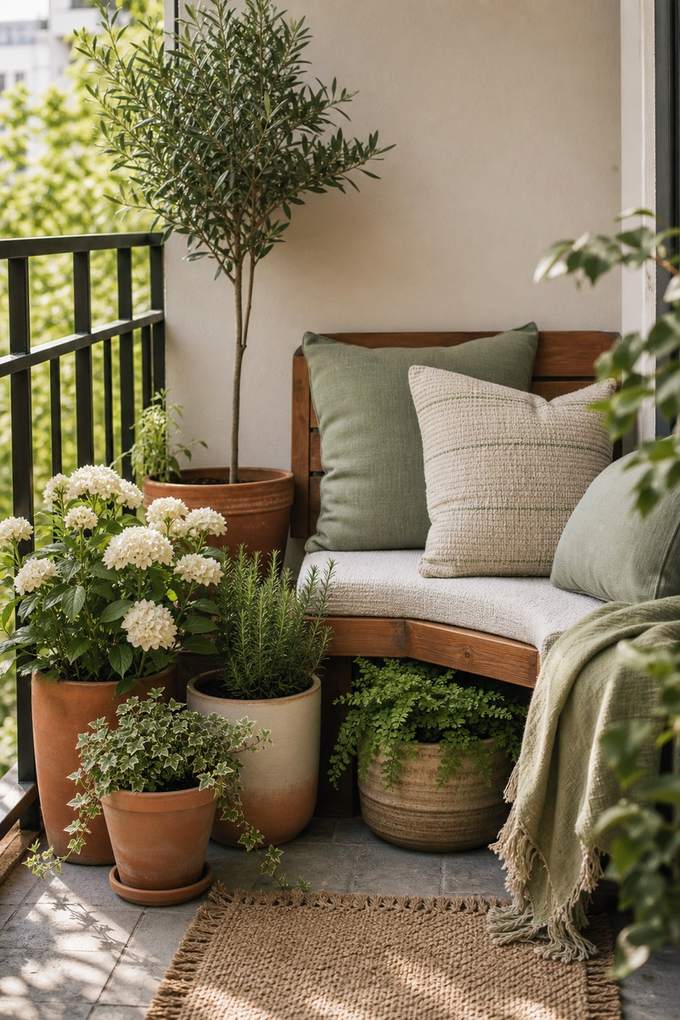
A single corner bench doubles as seating and a plant stand — cluster 3-5 containers of varying height underneath and beside it rather than lining them up. Odd numbers and varied heights read as intentional rather than leftover pots; keep the tallest plant behind the bench, not in front.
4. The Fold-Down Table Garden
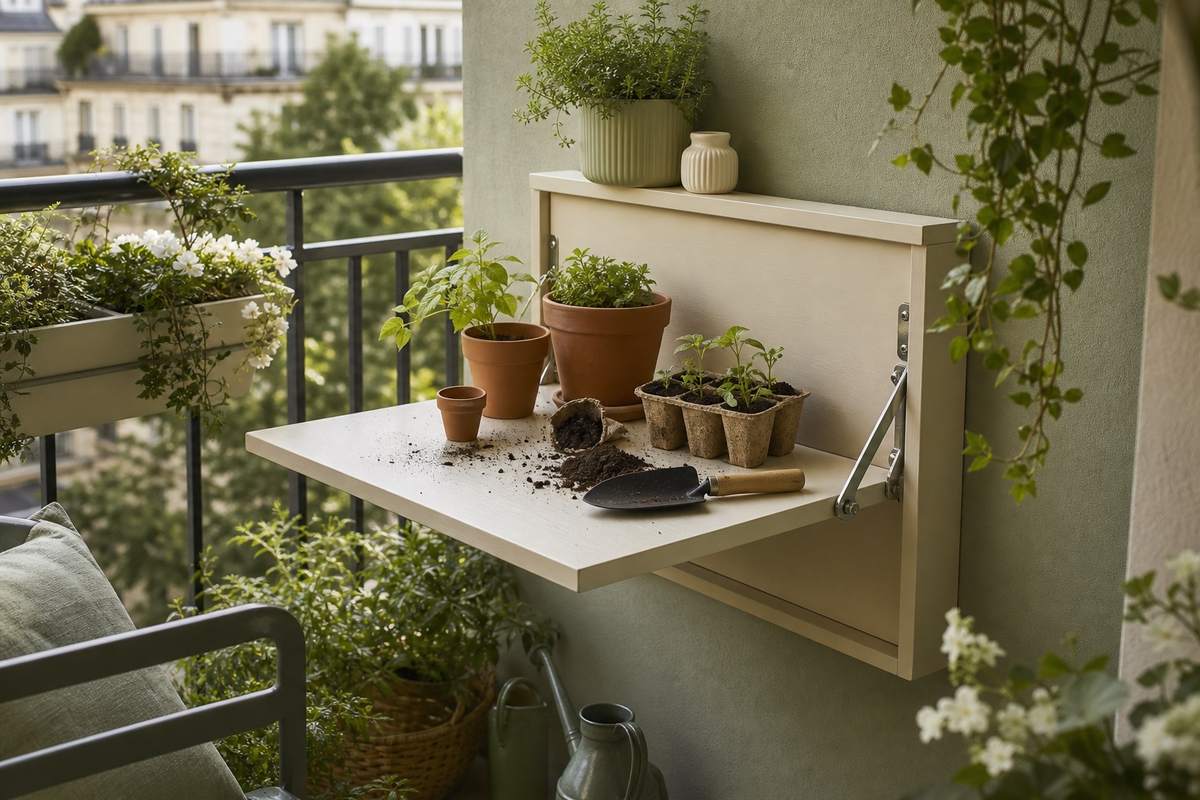
A wall-mounted fold-down table gives you a potting surface that disappears when not in use — ideal for balconies under 3 m² where every square foot is contested. Fold it down only to repot or harvest; keep it flat against the wall the rest of the time so it doesn't eat into walking space.
5. Shade-Tolerant North Layout
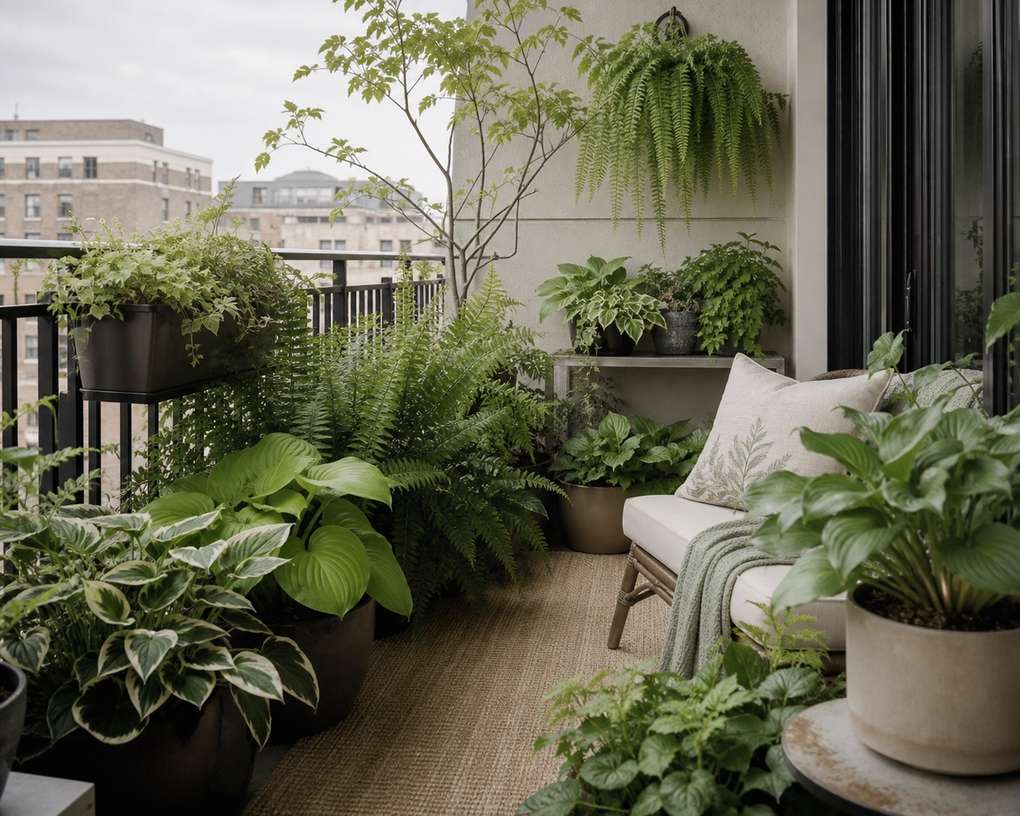
North-facing balconies (in the northern hemisphere) rarely get direct sun, so this layout leans on ferns, hostas, and shade-loving foliage instead of fighting for flowering plants that need sun they'll never get. Ferns in particular tolerate the lower light and higher humidity typical of shaded balconies.
6. Privacy-Screen Planting
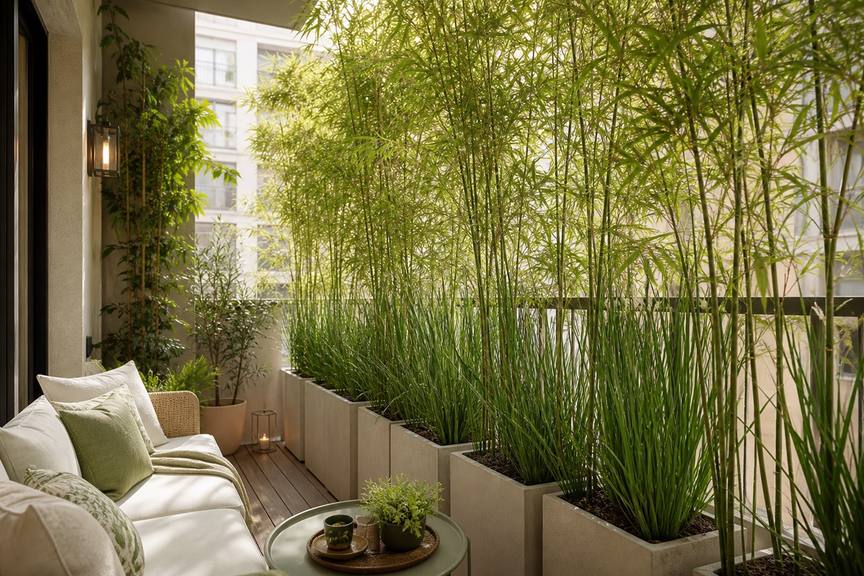
A row of tall, narrow planters along one open side (bamboo, upright grasses, or a trellis with climbers) blocks a sightline from a neighboring balcony without needing a permanent screen. Confirm your HOA/landlord's rules on trellises attached to railings before drilling anything in — clip-on mounts avoid the question entirely.
7. Two-Chair Café Layout
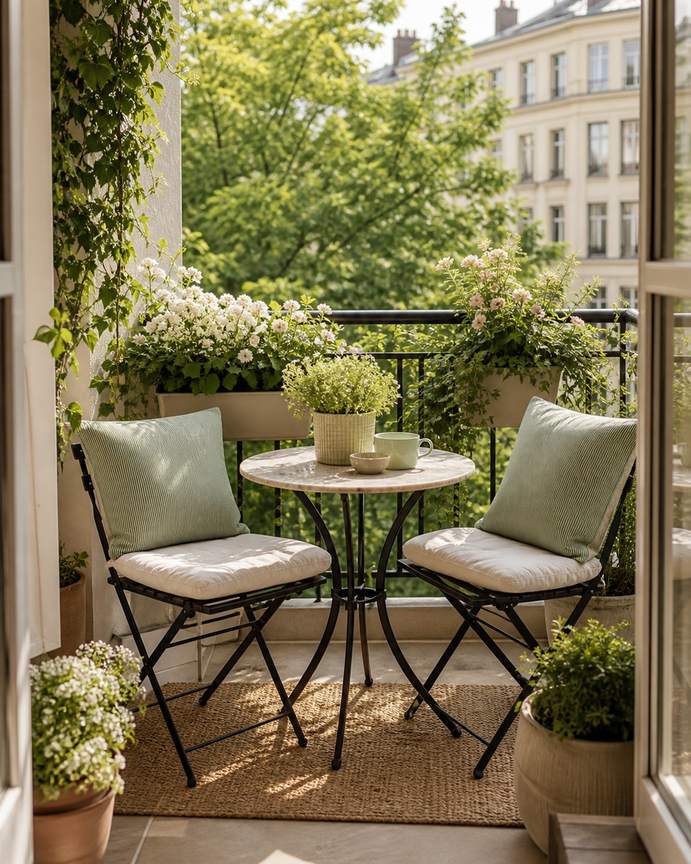
Two chairs and a small round table in the center, plants pushed entirely to the perimeter — this layout prioritizes actually sitting outside over maximizing plant count. Works best on balconies at least 1.5 m deep; anything smaller and the chairs will block the planters.
8. Hanging-Basket Canopy
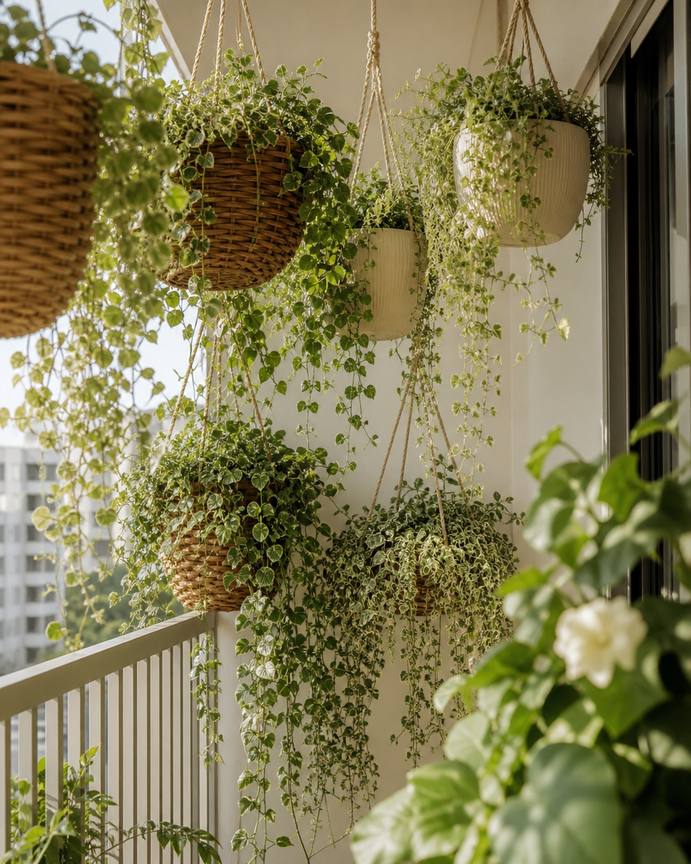
Hanging baskets at two different overhead heights create a layered canopy effect using zero floor space — good for balconies where the floor is already spoken for by furniture. Stagger the heights so the lower baskets don't block light to the upper ones, and check the ceiling or overhang can bear the mounted weight when wet.
9. Wheeled-Planter Flexible Layout
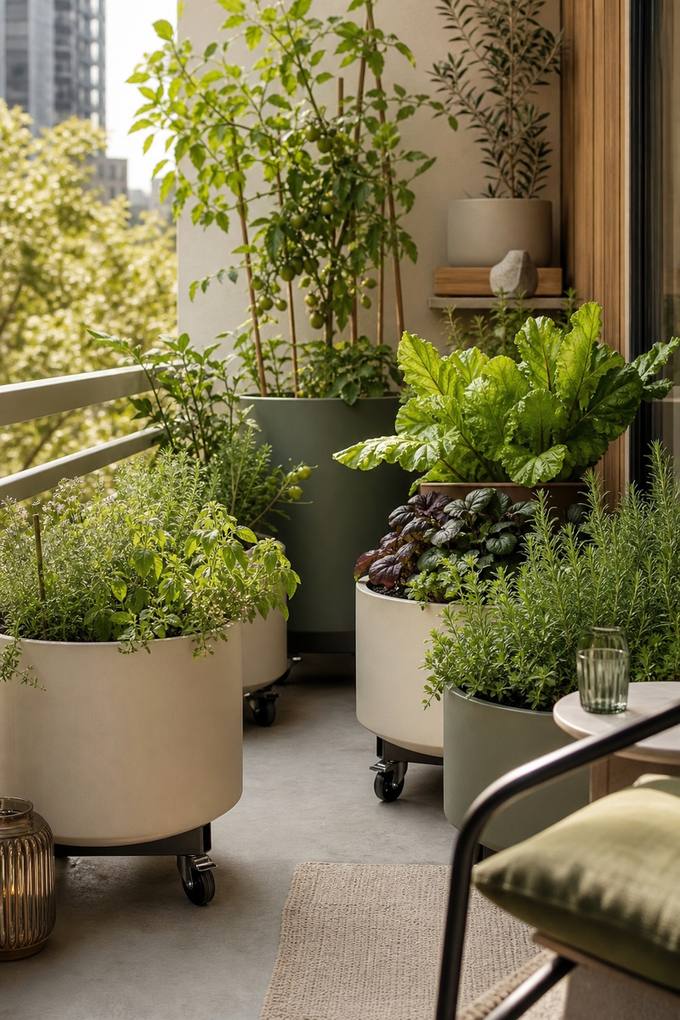
Large planters on locking casters let you reconfigure the whole balcony in minutes — push everything to one side for a party, spread it out the next morning. The tradeoff is cost and the casters' own weight, so it suits balconies where flexibility matters more than maximizing planting area.
Common questions
- What's the weight limit for a typical balcony?
- It varies a lot by building and age — many residential balconies are rated for roughly 150-400 kg/m², but this is genuinely building-specific. Check with your building management or a structural engineer before loading up multiple large, soil-filled planters, especially on older buildings.
- What are the best low-maintenance balcony plants?
- Succulents and sedums for full sun, ferns and hostas for shade, and herbs like rosemary and thyme (which tolerate some neglect) for anywhere in between. All of these tolerate missed waterings better than most flowering annuals.
- What happens to a balcony garden in winter?
- Most container plants need either moving somewhere frost-free or swapping to cold-hardy varieties rated for your zone. Terracotta pots are especially prone to cracking in a hard freeze — plastic or fiberglass containers handle winter better if plants are staying outside.