9 South-Facing Balcony Plants That Survive Full-Sun Afternoons
A south-facing balcony can deliver six or more hours of direct sun, plus reflected heat from glass, brick, and concrete. These nine container plants tolerate that exposure, with practical notes on pot size, watering, wind, and the drawbacks worth knowing before you buy.
This page contains affiliate links — we may earn a commission at no extra cost to you. See our disclosure.
1. Lantana for relentless heat and long bloom
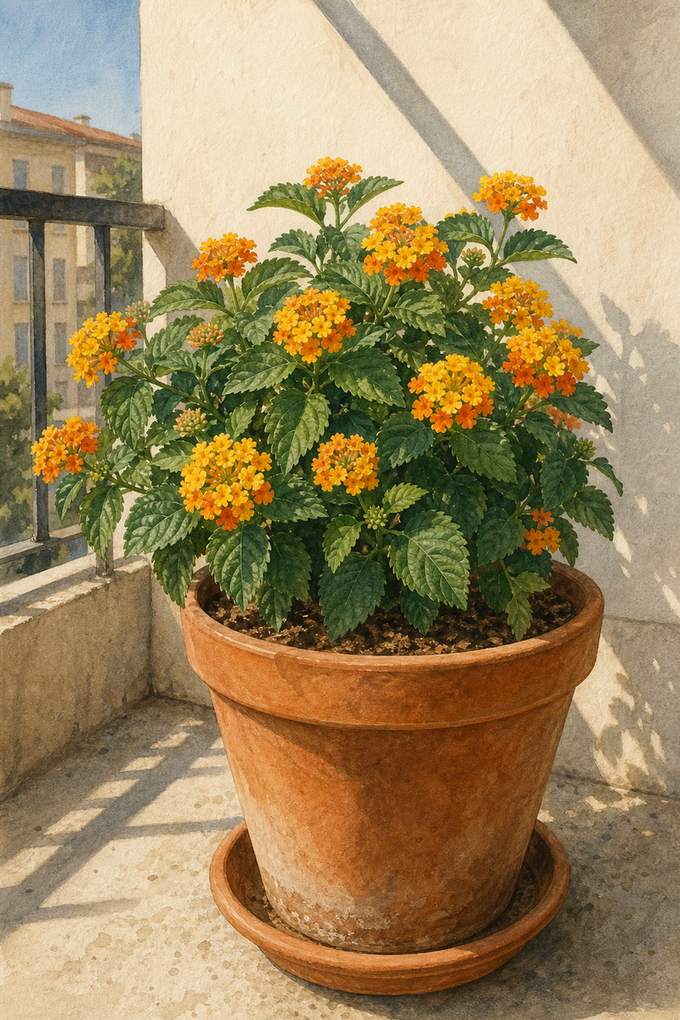
Lantana is one of the safer bets for a balcony that bakes from noon onward. A compact cultivar such as 'Bandana Yellow' fits a 10- to 12-inch pot and keeps flowering through heat that makes petunias sulk. Give it at least 6 hours of direct sun and let the top inch of potting mix dry before watering; constantly wet roots are more dangerous than a missed afternoon drink. Deadheading is optional, though a midsummer trim keeps stems from sprawling into the walkway. The trade-off is important: lantana berries and foliage are toxic if eaten, so skip it where pets or small children investigate plants. It can also become invasive in warm regions, so check local guidance and remove berries before they ripen.
2. Upright rosemary in a fast-draining clay pot
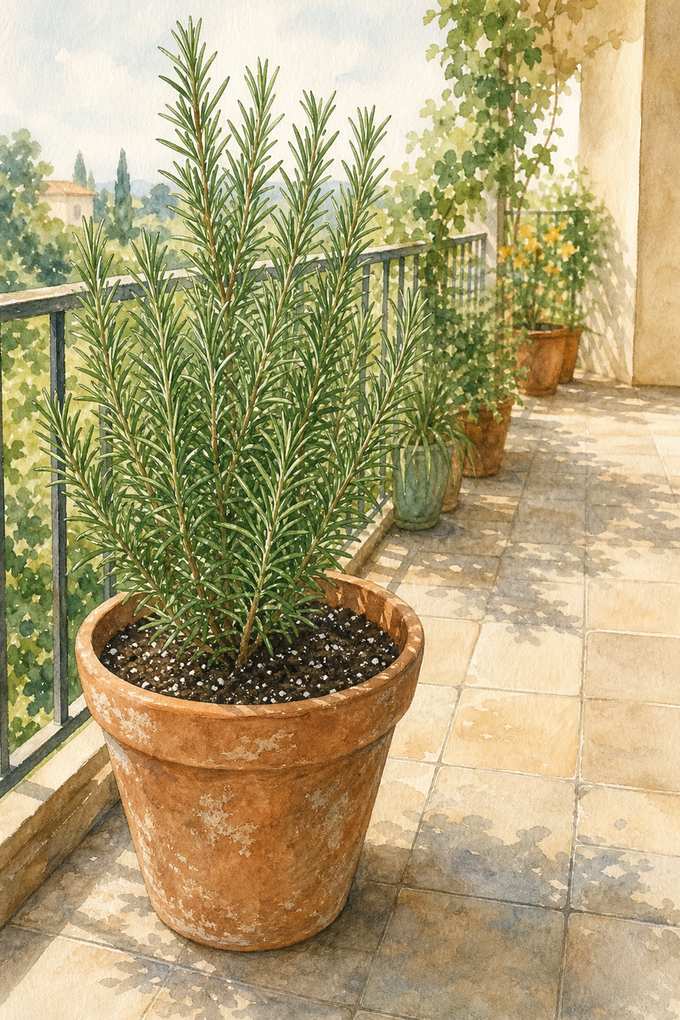
Upright rosemary earns its floor space by handling heat, feeding the cook, and staying narrow. Start with a 12-inch unglazed terracotta pot filled with potting mix amended with coarse perlite or fine pine bark; the porous pot helps excess water leave the root zone. A south-facing position supplies the 6 to 8 hours of sun rosemary prefers, but balcony wind can dry that clay pot surprisingly fast. Check the mix with a finger rather than watering on a schedule. Rosemary hates soggy roots, yet a small plant can still collapse if the entire root ball turns bone dry. Winter is the awkward part: many varieties suffer below roughly 20°F. In colder zones, move the pot to a bright, cool indoor spot before hard freezes.
3. Spanish lavender where summer air stays dry
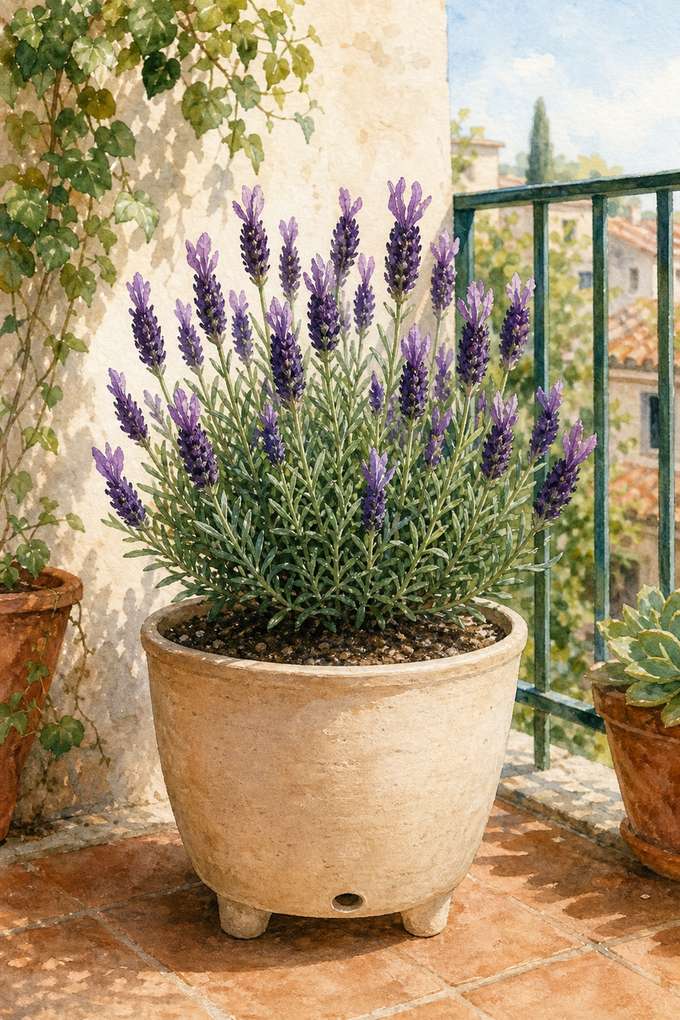
Spanish lavender, with its little flag-like flower bracts, takes stronger heat than many soft-leaved balcony flowers. Put one plant in a container at least 12 inches wide with an unobstructed drainage hole, and use a gritty mix rather than moisture-holding garden soil. It wants 6 or more hours of sun and good airflow around the crown. The catch is humidity: lavender can handle a hot dry afternoon, but hot, wet roots and muggy nights often lead to decline. Water deeply, empty the saucer, then wait until the upper 2 inches feel dry. Trim spent flowers without cutting far into old woody stems. In rainy climates, setting the pot on feet helps drainage, but gardeners in very humid regions may get only a season or two from it.
4. Zonal geraniums for color in compact pots
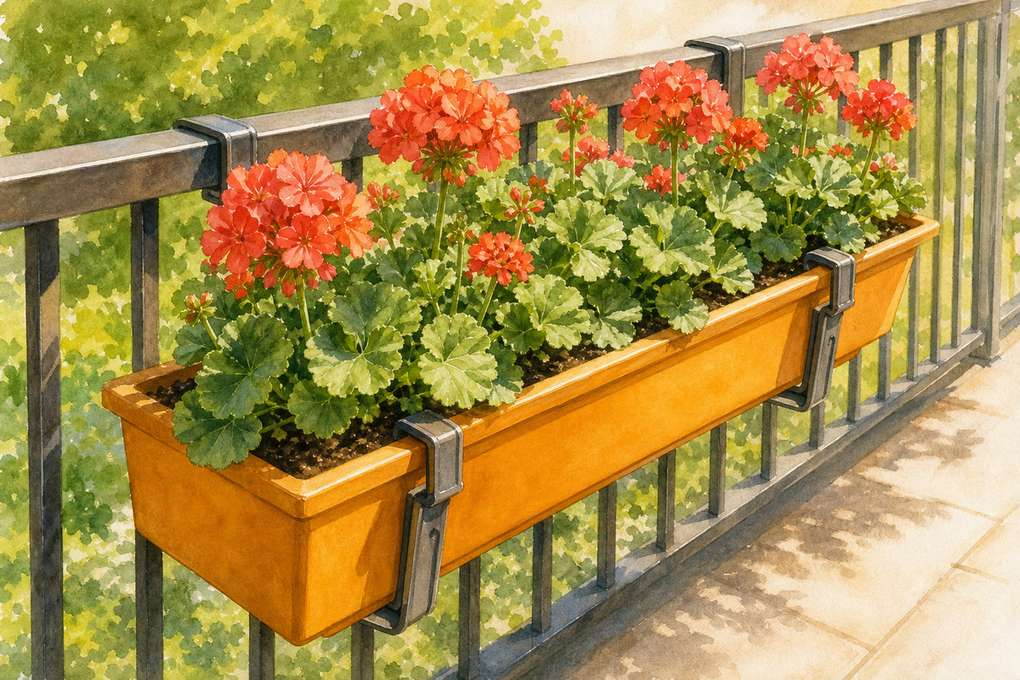
Zonal geraniums, technically Pelargonium, give a small balcony a solid block of red, coral, or pink without needing a deep planter. One plant fills an 8- to 10-inch pot, while two can share a 16-inch window box if the railing and bracket are rated for the wet weight. They flower best with at least 6 hours of sun, though blooms may pause during extreme heat above 95°F. Water when the top inch is dry and remove yellow leaves before they collect against the stems. Pinching spent flower stalks keeps the plant tidier near neighbors. Geraniums are forgiving, not maintenance-free: cramped roots and daily shallow watering produce weak growth. They are also toxic to cats and dogs, so place them beyond reach or choose a pet-safer plant.
5. Portulaca for a shallow, lightweight bowl
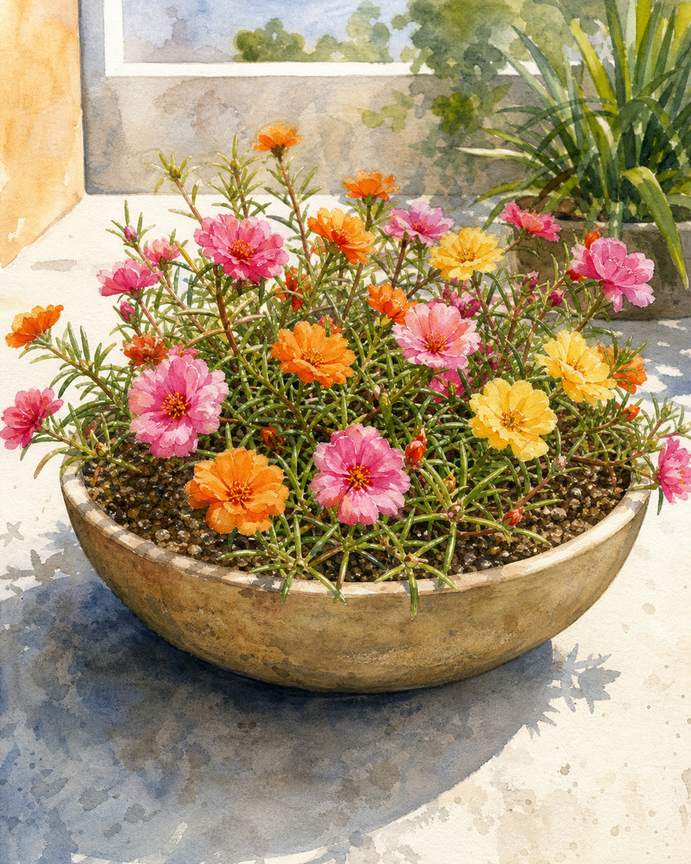
Portulaca, also called moss rose, is useful when the balcony has little spare load capacity. Its shallow roots are comfortable in a broad container only 6 to 8 inches deep, and a lightweight resin bowl weighs far less than an equally sized ceramic pot. The succulent leaves tolerate dry spells and reflected heat, while the flowers open best under direct sun. Use cactus mix or ordinary potting mix cut with extra perlite, then water only after the upper half has dried. Too much fertilizer creates floppy stems and fewer flowers. Portulaca's weakness is shade: blooms close at night and may stay shut on cloudy days, so it looks less impressive during a gray week. Most types are annuals where frost occurs, meaning this inexpensive display usually needs replacing each spring.
6. Dwarf bougainvillea in a stable floor planter
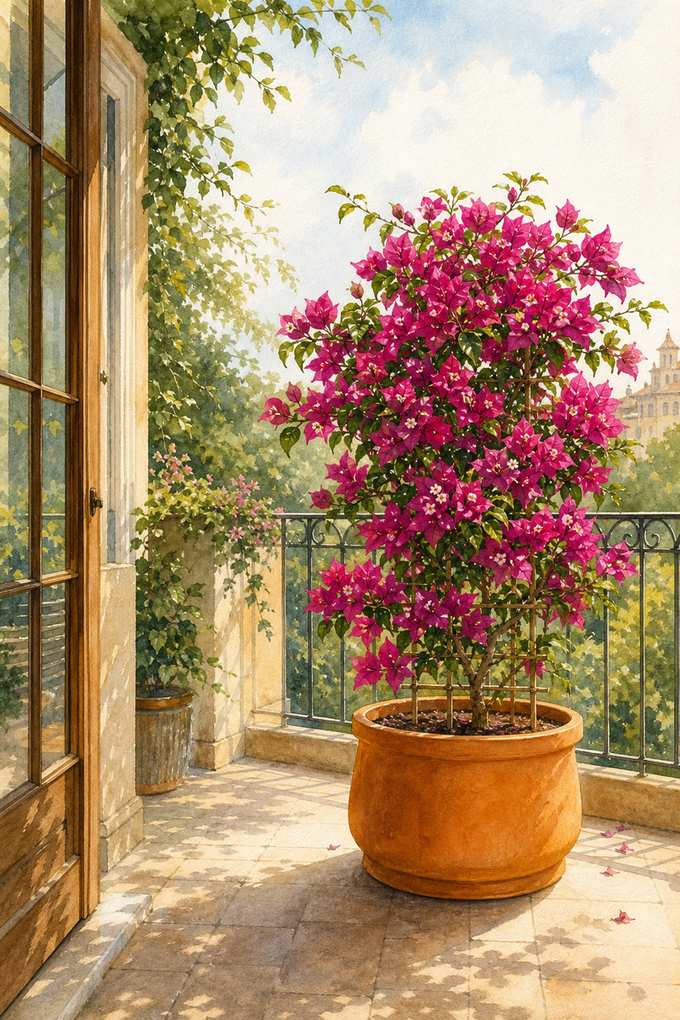
A dwarf bougainvillea such as 'Helen Johnson' brings saturated magenta bracts without sending a full-size vine across the neighbor's railing. Use a 14- to 16-inch floor pot with a broad base, because the top growth catches wind even when the plant stays compact. Bougainvillea blooms heavily with 6 to 8 hours of direct sun and slightly lean treatment; rich fertilizer produces leaves instead of color. Let the top 2 inches of mix dry, then soak the pot thoroughly and drain it. Wear gloves when pruning because even dwarf plants have thorns. This is also a poor choice for a fire-escape route or a narrow path where sleeves brush the branches. It cannot tolerate frost, so cold-climate renters need indoor winter space or must treat it as a seasonal plant.
7. Sedum 'Angelina' for the hottest railing edge
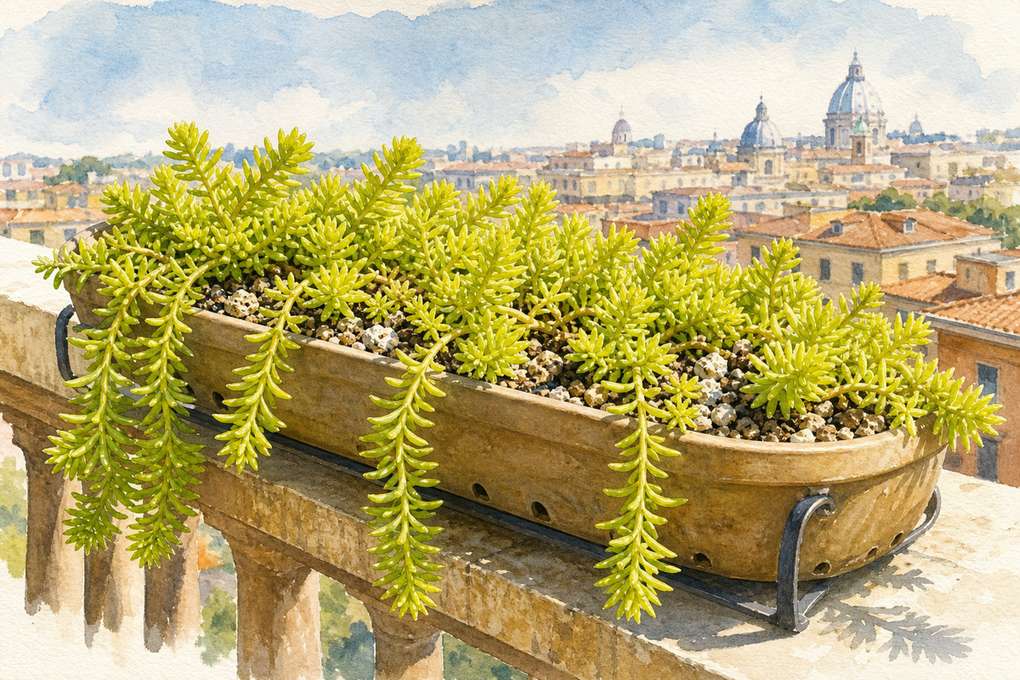
Sedum 'Angelina' handles the exposed outer edge of a balcony better than thirsty flowering annuals. Its chartreuse, needle-like foliage spreads across a container and turns orange in cooler weather. A trough 6 inches deep is enough, provided it has drainage holes and a gritty succulent mix. Plant it alone rather than pairing it with moisture-loving flowers; shared watering is where this combination usually goes wrong. Once established, water when most of the mix is dry, but check weekly because a shallow metal railing box can heat up quickly. 'Angelina' stays low, so it will not block a view or become a sail in strong wind. The downside is restrained summer flowering. Choose it for foliage and durability, not for a nonstop floral show.
8. Blanket flower for heat-tough pollinator color
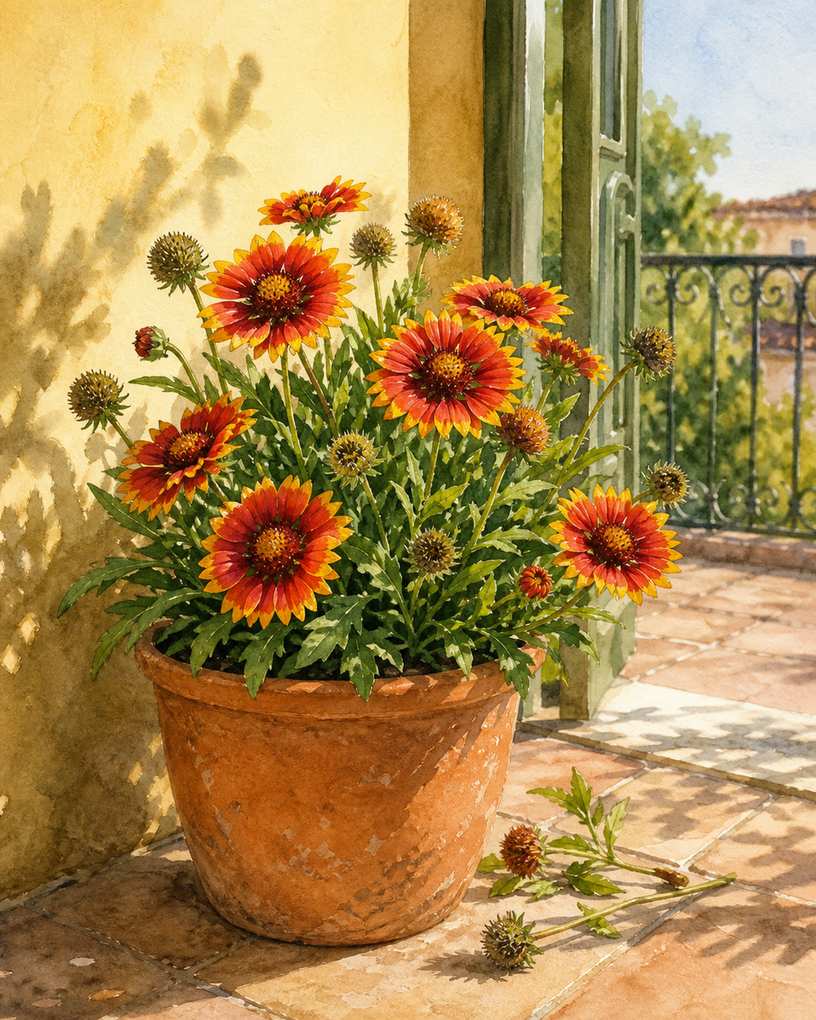
Blanket flower, or Gaillardia, keeps producing red-and-yellow daisylike blooms through dry, bright weather. A compact cultivar such as 'Arizona Sun' reaches roughly 12 inches tall and works in a 10- to 12-inch pot, making it less likely to lean into the walkway than taller perennial forms. Give it full sun, sharp drainage, and modest fertilizer. Rich soil creates soft growth that flops after watering or wind. Snip faded flowers if you want a longer bloom period, though leaving a few seed heads gives small birds something to investigate. The main drawback is lifespan: even perennial Gaillardia can be short-lived, especially in wet winter soil. Treat it as a two- or three-season plant rather than a permanent balcony fixture, and verify local hardiness before leaving the pot outdoors.
9. A dwarf kumquat for an edible sunny anchor
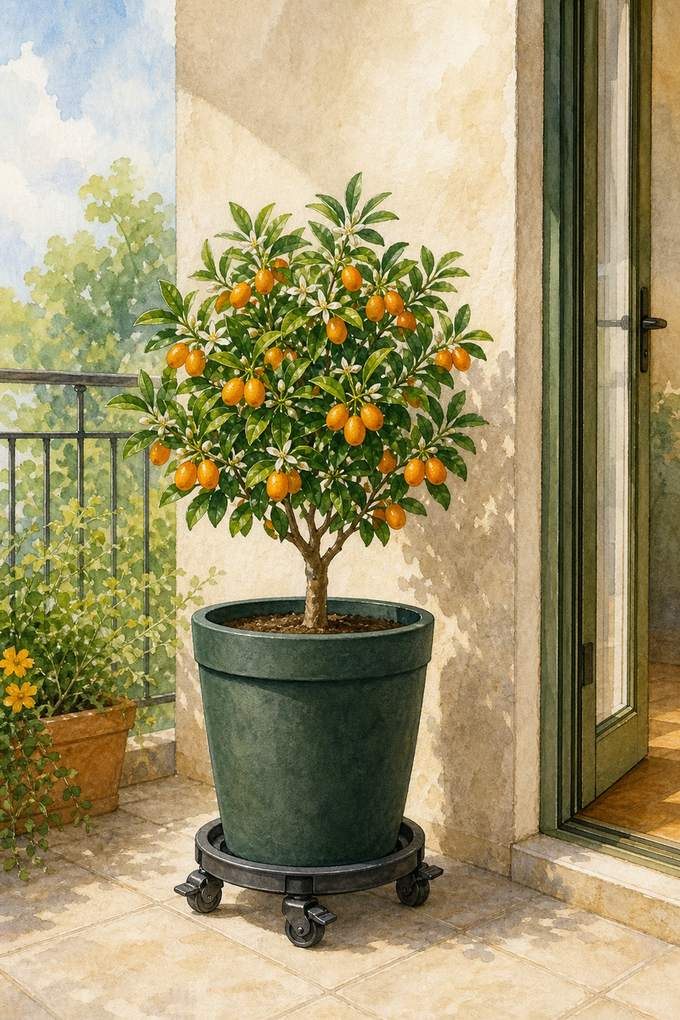
A grafted dwarf kumquat gives a sunny balcony one small tree that earns its footprint with fragrant flowers and edible fruit. Choose a container about 16 to 18 inches wide, ideally lightweight resin rather than stone, and confirm the balcony's load rules before filling it. Wet potting mix, fruit, and the container together can become difficult for one person to move. Kumquats want 6 to 8 hours of sun, regular feeding during active growth, and deeper watering than rosemary or sedum. A wheeled plant caddy helps with cleaning and winter moves, but lock the casters on windy days. The trade-off is cold protection: container roots are vulnerable even though mature kumquat trees tolerate light frost. In colder regions, overwinter it beside the brightest indoor window and watch closely for spider mites.
Product pick — a locking plant caddy sized for a large container
Common questions
- How many hours of sun counts as full sun on a balcony?
- Full sun generally means at least 6 hours of direct light per day. A south-facing balcony may receive 8 hours or more in summer, but an overhead balcony, neighboring tower, or deep recess can shorten that window. Check the space at 9 a.m., noon, and 3 p.m. before buying plants.
- How often should full-sun balcony pots be watered?
- There is no reliable fixed schedule. An 8-inch terracotta pot may need water daily during a 95°F heat spell, while a 16-inch resin pot may stay moist for several days. Push a finger 1 to 2 inches into the mix, water deeply when the plant's preferred depth is dry, and empty standing water from saucers.
- Are large planters too heavy for a balcony?
- They can be. Soil becomes much heavier when saturated, and ceramic or concrete adds substantial weight before the plant goes in. Check your lease, building rules, and balcony load information rather than relying on a generic limit. Lightweight resin pots and bagged potting mix reduce weight, but they do not replace building-specific guidance.
- Can these plants stay outside through winter?
- That depends on the plant, your USDA hardiness zone, and how exposed the balcony is. Rosemary, lavender, bougainvillea, and kumquat often need protection in cold regions, while sedum 'Angelina' is considerably hardier. Container roots experience colder temperatures than roots in the ground, so check the cultivar's rating and allow an extra margin.