9 Wind-Tough Plants for High-Rise Balconies That Won't Need Daily Rescue
High-rise wind dries potting mix quickly, snaps soft stems, and can turn tall containers into hazards. These nine compact, sturdy plants stay presentable in exposed conditions, with honest notes on pot weight, sunlight, drainage, and winter care.
1. Anchor the Corner With a Dwarf Mugo Pine
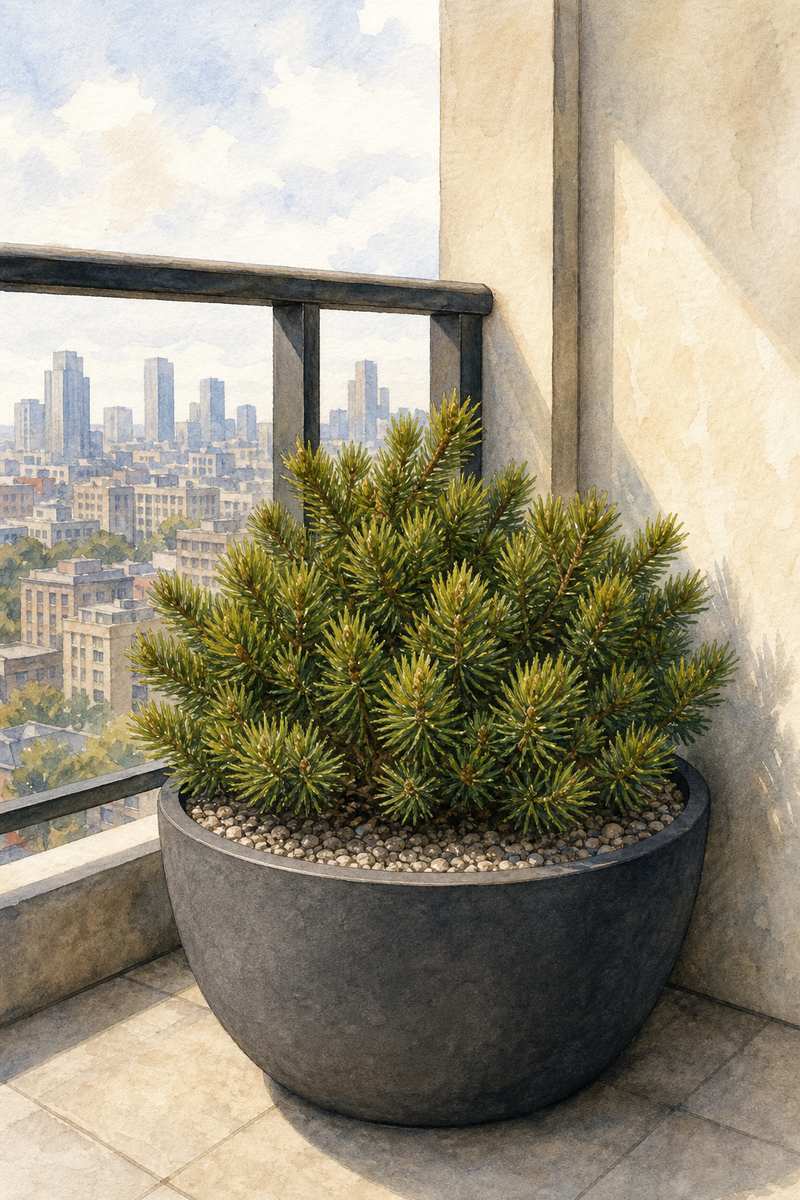
Dwarf mugo pine gives an exposed balcony a sturdy evergreen anchor without presenting a broad, sail-like canopy to the wind. Look for a slow-growing cultivar such as 'Mops' and start with an 18- to 20-inch-wide, low-profile planter placed against an interior wall. It wants at least 6 hours of sun and gritty, fast-draining mix. The honest drawback is weight: a properly sized container, wet soil, and mature shrub can become difficult to move. Check your lease and balcony load guidance before buying the largest pot you can find. Mugo pine tolerates cold better than many container shrubs, but exposed roots are less hardy than roots in the ground, so winter protection still matters.
2. Let Creeping Juniper Hug the Pot
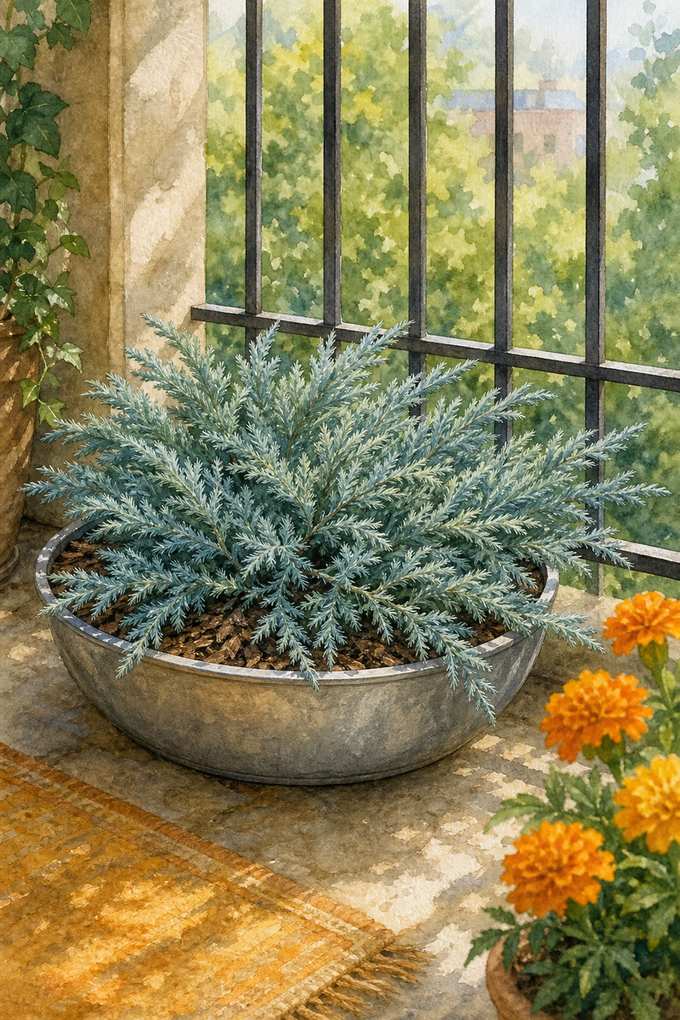
Creeping juniper stays low enough that strong gusts pass over it rather than catching tall stems. A cultivar such as 'Blue Rug' can spill across a 16-inch bowl planter, covering the soil and reducing how quickly the surface crusts in drying wind. Give it full sun and a mix amended with coarse perlite or fine pine bark; juniper resents waterlogged roots far more than a breezy afternoon. Its main trade-off is spread. Trailing branches may eventually reach 3 to 6 feet, so trim them before they cross a shared walkway or extend through the railing. The foliage can also feel prickly during maintenance. Keep the entire plant and container inside the balcony edge, never balanced on a rail.
3. Use Upright Sedum for Flowers Without Fragile Stems
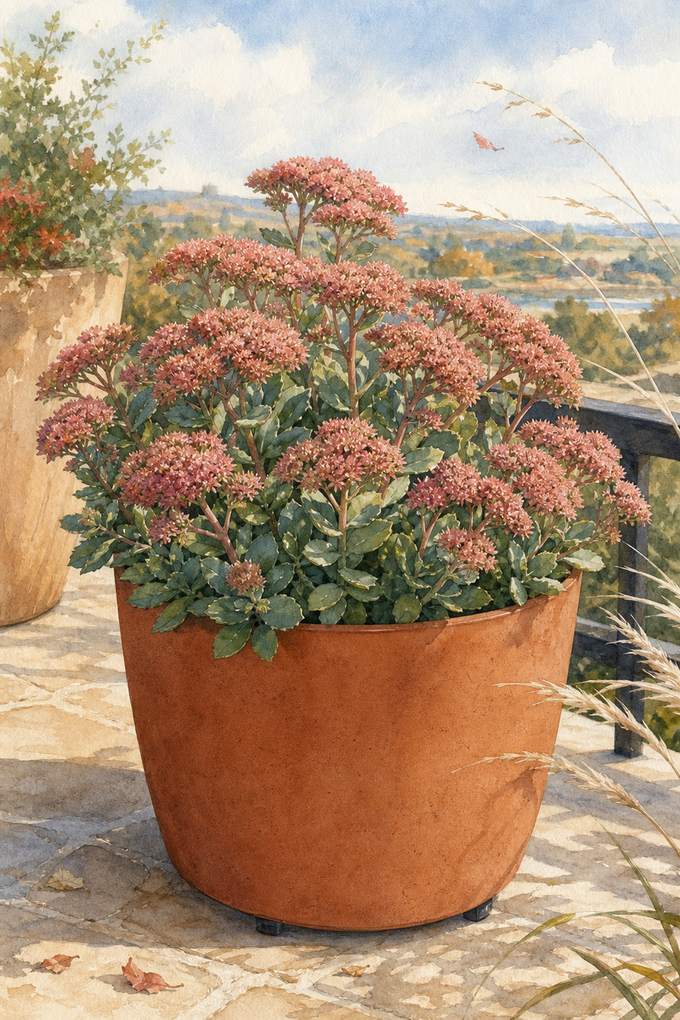
Upright sedum, especially compact forms such as 'Autumn Fire,' carries thick leaves and stout stems that cope better with gusts than petunias or tall cosmos. Plant one in a 12- to 14-inch pot with a drainage hole and give it 6 or more hours of direct sun. The succulent foliage stores some moisture, so a missed watering is less dramatic than it would be for a shallow-rooted annual. Still, drought tolerance does not mean no watering: check the mix 2 inches down during hot, windy spells. Rich fertilizer is the common mistake because it produces soft, floppy growth. Flower heads can remain for winter structure, though they may shed dry pieces across neighboring balconies if left standing through repeated storms.
4. Edge Sunny Pots With Sea Thrift
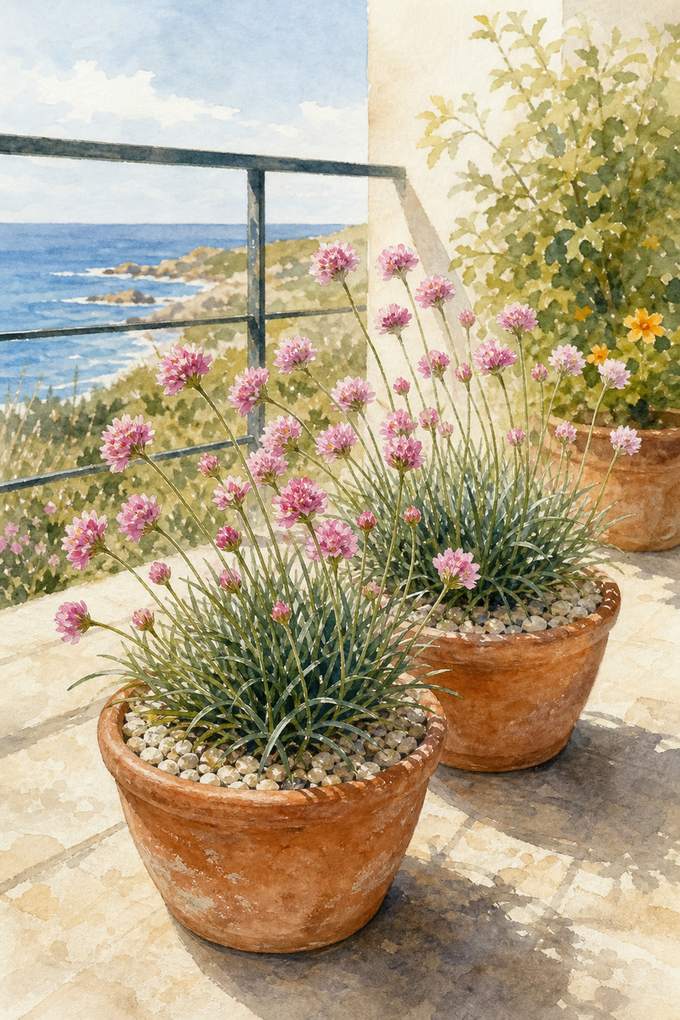
Sea thrift, or Armeria maritima, naturally grows in exposed coastal conditions, making its tight grassy clumps and short flower stems useful on a windy balcony. Most varieties stay roughly 6 to 12 inches tall and fit comfortably near the edge of a 10-inch pot. Choose full sun and sharply drained mix; a handful of fine gravel mixed into standard container soil helps prevent a soggy crown. Sea thrift handles wind and occasional salt exposure, but it struggles in humid heat and continuously wet soil. Its spring flower display is also relatively brief. Snip spent stems at the base and keep the evergreen tuft for texture. In very hot climates, afternoon shade may be kinder than all-day reflected heat from glass or concrete.
5. Choose Compact English Lavender Over Tall Types
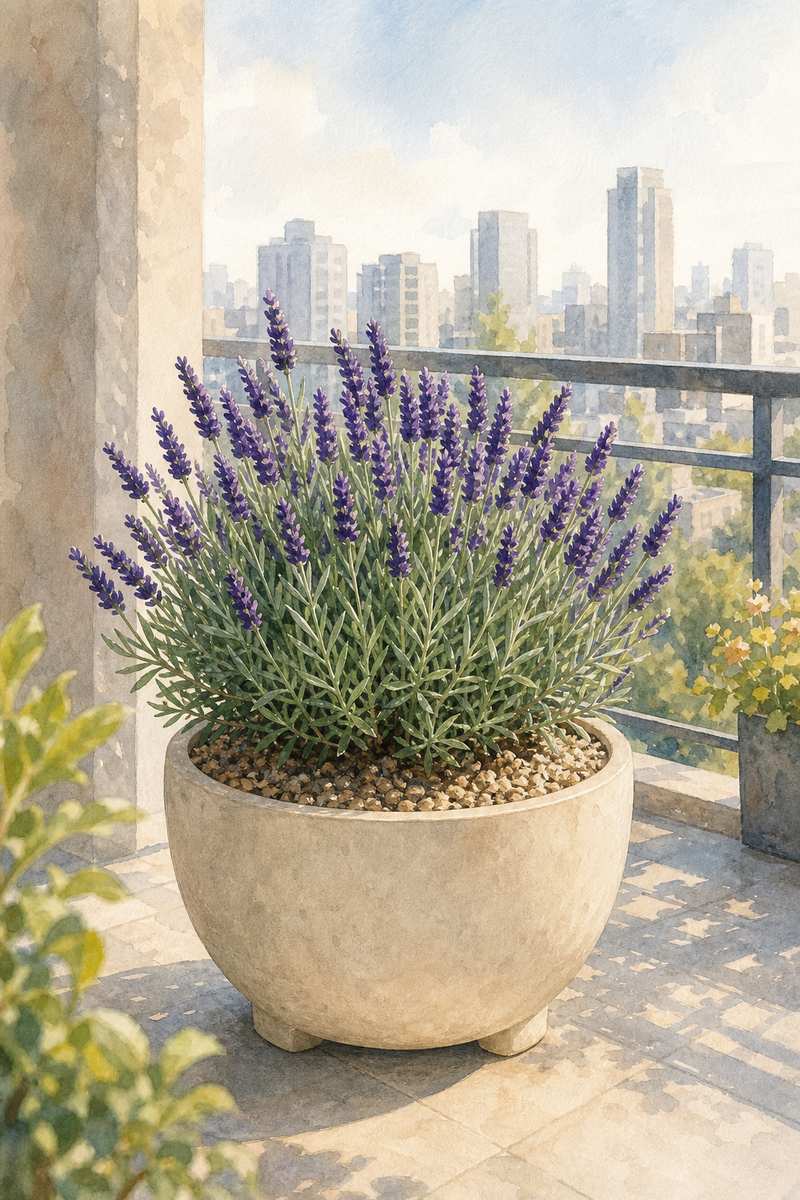
Compact English lavender has woody lower stems, narrow leaves, and a naturally restrained shape that fares better in wind than lanky flowering annuals. Try 'Hidcote' or 'Munstead' in a 12- to 16-inch pot receiving at least 6 hours of direct sun. Use a lean mix with extra perlite and elevate the container on pot feet so rain can escape freely. Lavender's weak point is not wind but wet roots, especially during cool weather. It may also decline in humid regions even when drainage is good. Avoid heavy feeding, which encourages soft growth, and shear no more than about one-third of the green growth after flowering. Do not cut hard into old leafless wood; many plants will not reliably resprout from it.
6. Grow Rosemary as a Low, Woody Herb
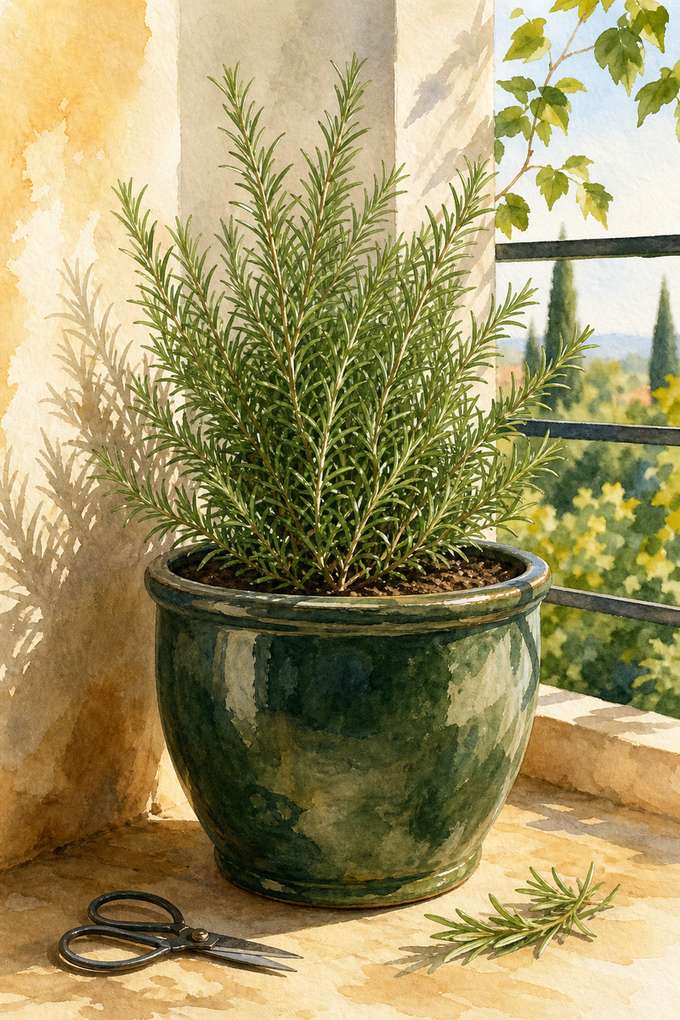
Rosemary brings useful kitchen harvests and woody stems that tolerate steady air movement better than tender basil. Pick an upright but compact cultivar such as 'Blue Boy,' or let trailing rosemary spill from a heavy floor planter rather than a railing box. It needs 6 to 8 hours of sun, excellent drainage, and a pot at least 10 to 12 inches wide. Wind can dry even rosemary quickly, so water when the top inch of mix is dry instead of following a fixed weekly schedule. Cold is the catch: container roots are vulnerable, and many cultivars will not survive a freezing high-rise winter. In colder zones, move it to a bright, cool indoor spot before hard frost or treat it as a seasonal plant.
7. Fill a Low Bowl With Blue Fescue
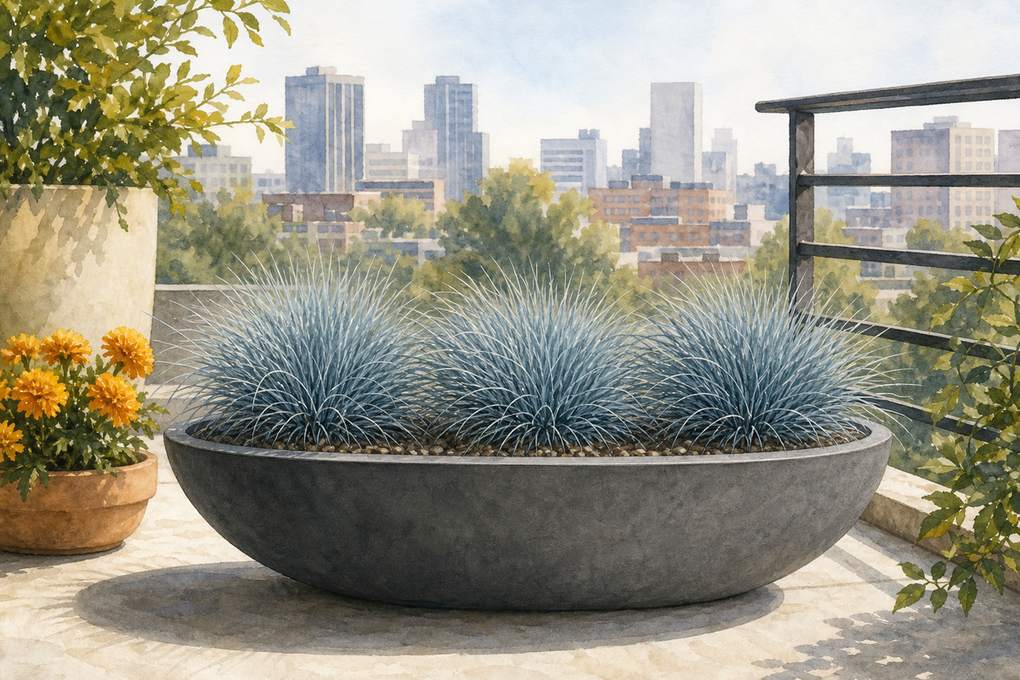
Blue fescue forms an 8- to 12-inch mound of fine steel-blue leaves, giving you movement without a tall grass that whips across the balcony. Three small plants can fill a broad 16-inch bowl, but leave several inches between crowns so air can circulate. Full sun keeps the foliage bluer and the growth compact; shade tends to produce greener, looser clumps. The plant handles dry conditions once established, although a shallow bowl loses moisture faster than a deep pot during windy weather. Blue fescue dislikes heavy, wet mix and may develop a bare center after a few years. Comb out dead blades with gloved fingers in spring, then divide an aging clump rather than trying to hide the hollow middle with extra fertilizer.
8. Pick a Short Yarrow That Will Not Need Staking
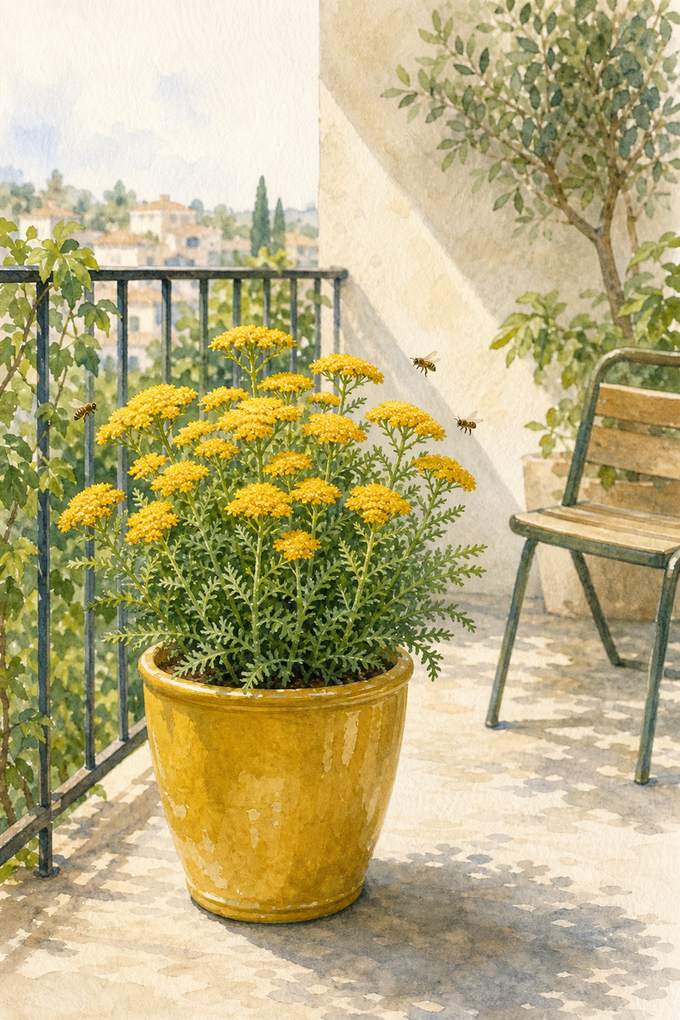
A compact yarrow such as 'Little Moonshine' supplies flat yellow flower clusters on stems around 12 to 15 inches tall, short enough to avoid the staking often needed by full-size varieties. Set it in a 12-inch container with lean, well-drained soil and at least 6 hours of sun. Once established, its ferny foliage copes with heat and brief dry spells, but newly planted yarrow still needs regular moisture while roots fill the pot. Too much fertilizer creates weak stems, so skip routine liquid feeding. Deadheading encourages a tidier second flush, although that adds a little maintenance. Yarrow attracts bees and other insects; that is useful for pollinators but worth considering if your only seating spot is directly beside the planter.
9. Rely on Compact Zonal Geraniums for Summer Color
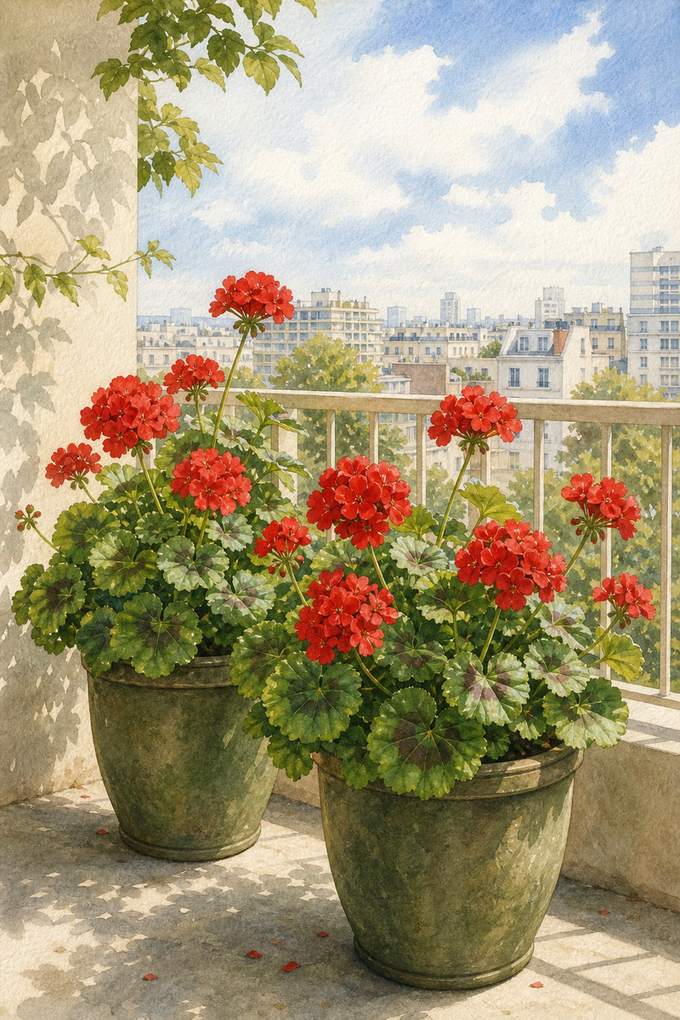
Compact zonal geraniums, technically Pelargonium, have thicker stems and tougher leaves than many basket annuals, so they recover well from ordinary balcony wind. Choose a dwarf series and plant one specimen per 10- to 12-inch pot rather than crowding three together. Give it 4 to 6 hours of sun and pinch off spent flower heads where the stem meets the main plant. A broad floor pot is safer than an exposed railing planter, especially above pedestrian areas. Geraniums are not invincible: severe gusts can still break flower stalks, and hot wind may mean checking moisture every morning. They are usually grown as annuals in cold climates, though healthy plants can overwinter indoors near a bright window after being inspected carefully for pests.
Common questions
- How do I keep balcony pots from tipping in strong wind?
- Use low, broad floor planters and place the tallest plants against an interior wall, not along the exposed railing. Group pots without blocking drains or exits, and never hang a container outside the rail. Added weight improves stability, but wet soil, ceramic pots, and stone ballast can become surprisingly heavy, so check your lease, building rules, and stated balcony load limit before adding weight.
- Do wind-tough balcony plants still need frequent watering?
- Yes. Wind pulls moisture from leaves and potting mix even when temperatures feel mild. Check the mix with a finger rather than watering by the calendar: rosemary and lavender can dry about 1 inch down, while larger woody plants should be checked roughly 2 inches down. During hot, sustained wind, small pots may still need daily inspection, though not necessarily daily watering.
- Can these plants grow on a shaded high-rise balcony?
- Most choices here perform best with at least 6 hours of direct sun. Zonal geraniums can flower with about 4 to 6 hours, but lavender, juniper, sedum, rosemary, yarrow, and blue fescue become weaker or less colorful in deep shade. For a balcony receiving little direct light, choose plants specifically suited to north-facing conditions rather than assuming wind tolerance also means shade tolerance.
- Can wind-tough perennials stay outside through winter?
- That depends on the plant, your USDA zone, and how exposed the balcony is. Roots in containers experience colder temperatures than roots in the ground, while high-rise wind increases dehydration. Choose plants rated at least one or two zones colder than your location when possible, use weather-resistant pots, water during dry winter thaws, and check building rules before adding insulation or moving containers.