9 Container Fruit Trees That Actually Fruit on a Small Patio
A patio fruit tree has to earn its floor space, and a standard nursery tree in a decorative pot usually will not. These nine compact choices can set usable fruit in containers, with honest notes on sun, pollination, winter care, and the weight under that pot.
1. Improved Meyer lemon in a 15-gallon pot
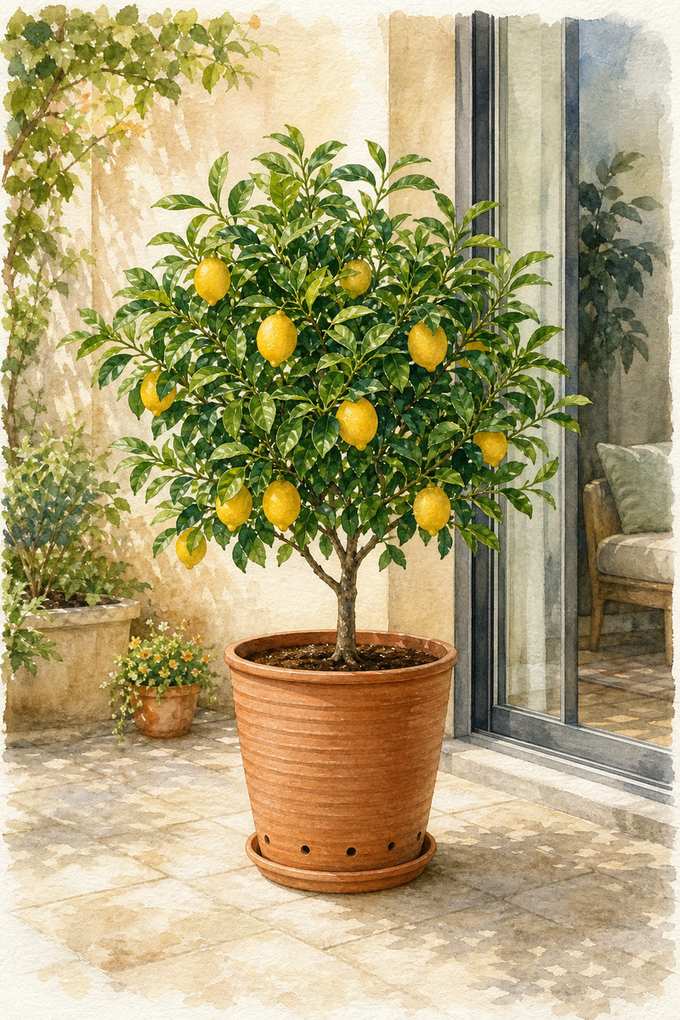
Improved Meyer lemon is the best first citrus for a sunny patio because one grafted tree can pollinate itself and stay about 4 to 6 feet tall with pruning. Give it at least 6 hours of direct sun and start with a 15-gallon pot that has several open drainage holes. The catch is cold: move it indoors before nights settle below about 40°F, and expect fewer flowers beside a dim window. Citrus also dislikes soggy roots, so skip the oversized cachepot with no drain. A ripe Meyer lemon turns deep yellow and feels slightly soft; harvesting too early gives you pretty fruit with disappointing juice.
2. Brown Turkey fig for hot, reflected sun
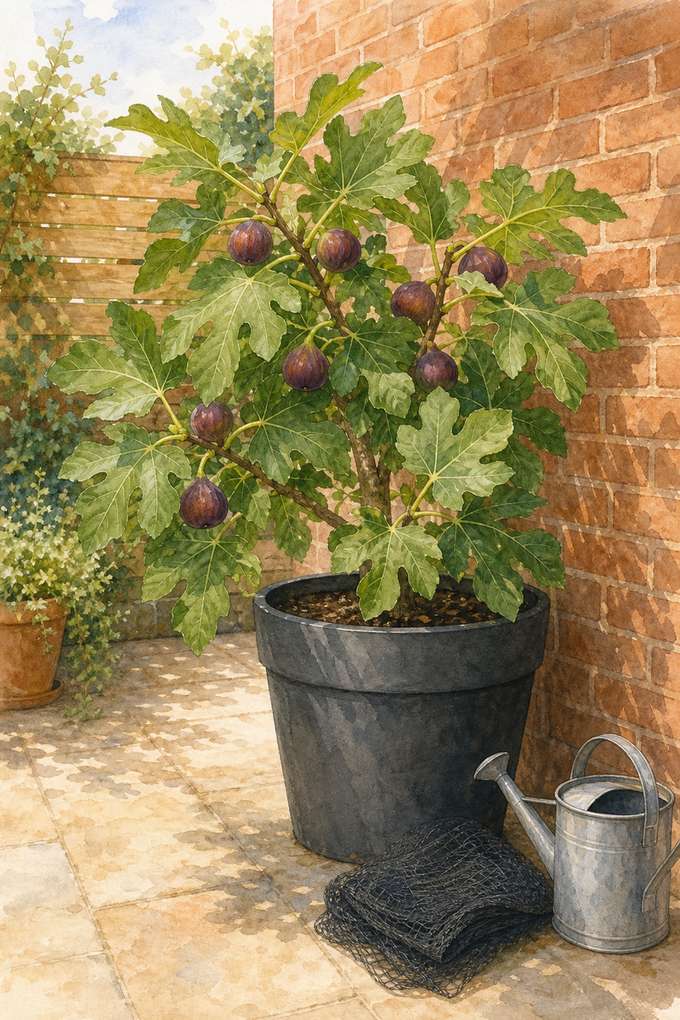
Brown Turkey fig handles the hot wall beside a patio better than many fruit trees, and its roots tolerate container life surprisingly well. Use a 15- to 20-gallon pot, give it 6 to 8 hours of sun, and water when the top inch dries; splitting fruit often follows a sudden soak after drought. It is self-fruitful, so one tree is enough. Winter is the awkward part. The roots are less cold-hardy in a pot than in the ground, so gardeners in colder zones need an unheated garage or heavy insulation around the container. Wear gloves while pruning because fig sap can irritate skin, and net ripening fruit before birds find it.
3. Bonanza genetic-dwarf peach
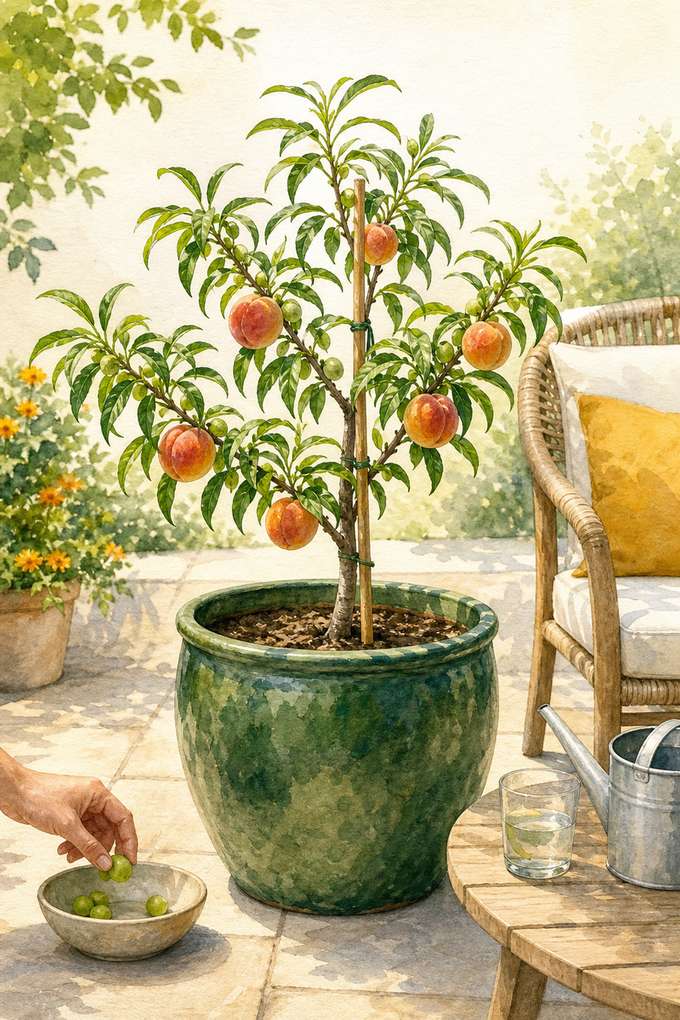
Bonanza is a true genetic-dwarf peach, not merely a standard peach sold young, and it usually tops out near 4 to 6 feet. Plant a grafted tree in a 20-gallon container and give it 6 or more hours of direct sun. It is self-fertile, which saves room, but fruit set still depends on enough winter chill and flowers that escape a late freeze. Thin marble-size peaches until they sit roughly 4 to 6 inches apart or the little branches can overload and snap. Peach leaf curl is the maintenance bill: remove fallen leaves and follow a dormant copper-spray schedule only if the disease is common in your area and the label permits container use.
4. Two columnar apples in a narrow footprint
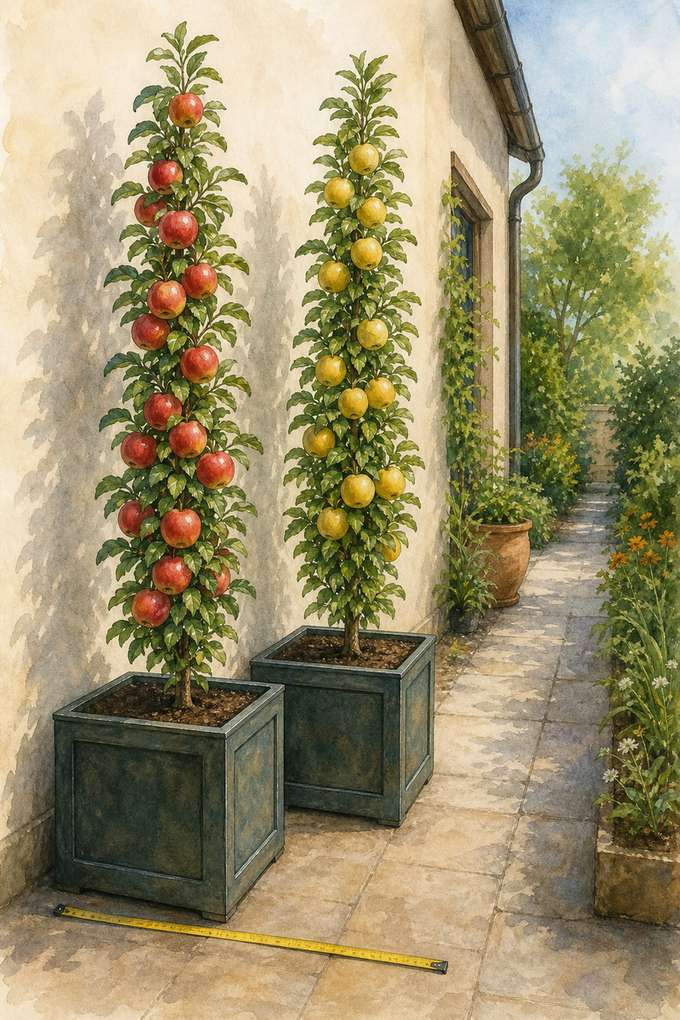
Columnar apples such as Northpole and Golden Sentinel grow upright instead of spreading, so two trees can fit along a 4-foot stretch of sunny wall. Plan on one 15- to 20-gallon pot per tree and 6 to 8 hours of sun. Two compatible cultivars that bloom together give more reliable pollination than a lone tree; the nursery should list bloom groups, and a crabapple nearby may also help. These narrow trees are not weightless. A watered container can be difficult to shift, and balcony load limits come before the harvest plan. Keep fruiting spurs rather than shearing the trunks into poles, and expect a modest crop rather than bushels.
5. Compact Stella cherry with one-tree pollination
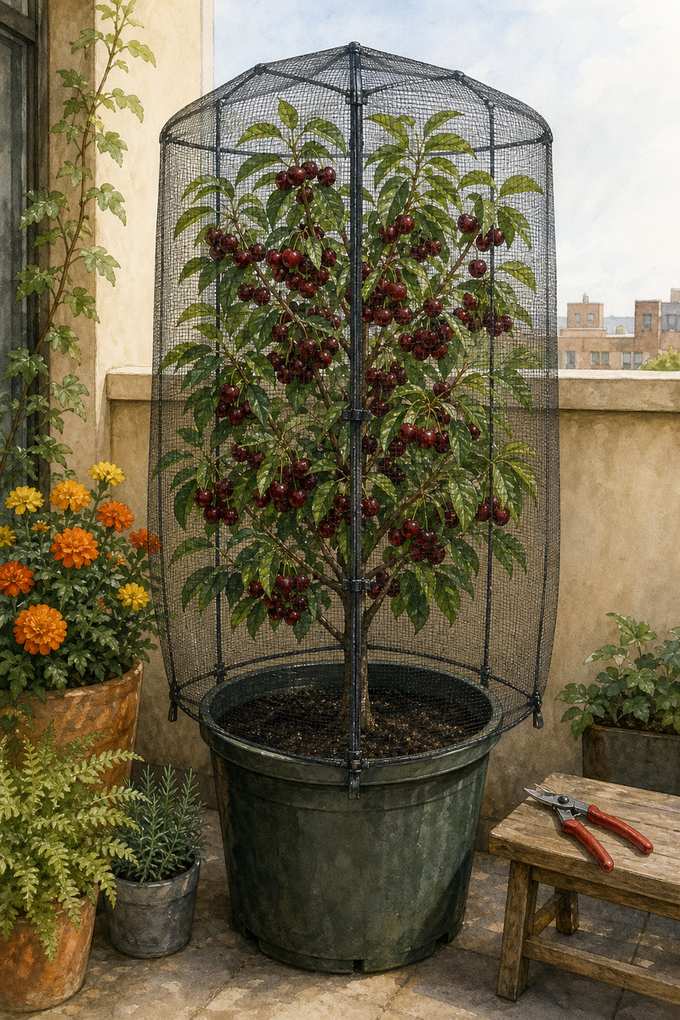
Compact Stella is a naturally smaller sweet cherry that can set fruit without a second cherry tree, a useful trait when the patio holds one large pot. Give a grafted tree a 20- to 25-gallon container, full sun, and the cold winter its cultivar needs; it is a poor match for very warm, low-chill climates. Cherries split when rain or heavy watering arrives near ripening, so keep soil moisture even rather than alternating dust-dry and soaked. Birds can clear a small crop in a morning. A lightweight fruit cage or fine net helps, but secure it so wildlife cannot become tangled. Even compact cherries may need annual pruning to stay around 6 to 8 feet.
6. Nagami kumquat for fruit that hangs well
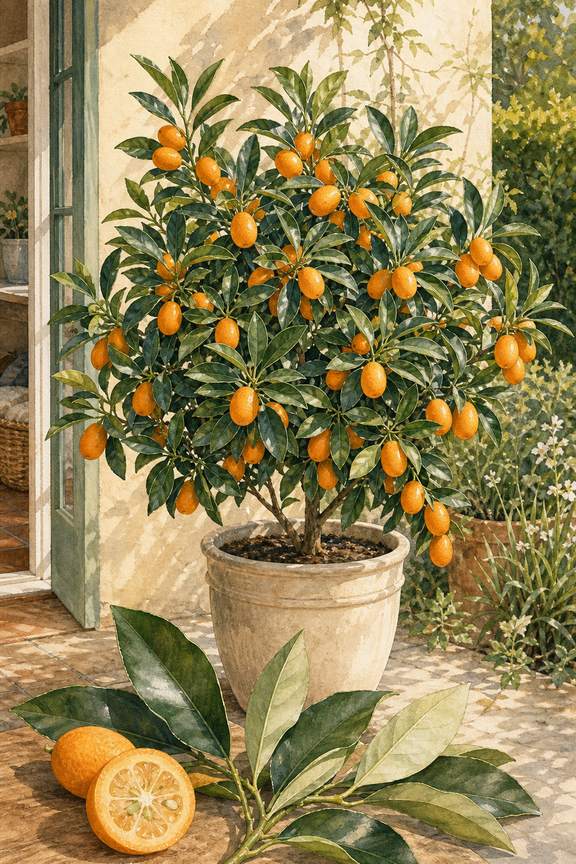
Nagami kumquat makes a tidy evergreen patio tree, and the small orange fruit can stay on the branches longer than lemons without becoming a rush harvest. A grafted, self-fertile tree works in a 15-gallon pot with 6 to 8 hours of sun. Eat the sweet peel with the tart center, or use the fruit for marmalade. The tree tolerates a little more cold than a lemon, but a container still leaves roots exposed; protect it when temperatures approach the mid-20s°F and follow local guidance for your zone. Scale insects and spider mites are the usual indoor-winter guests. Check leaf undersides weekly rather than discovering sticky leaves after the infestation spreads.
7. Wonderful pomegranate pruned as a small tree
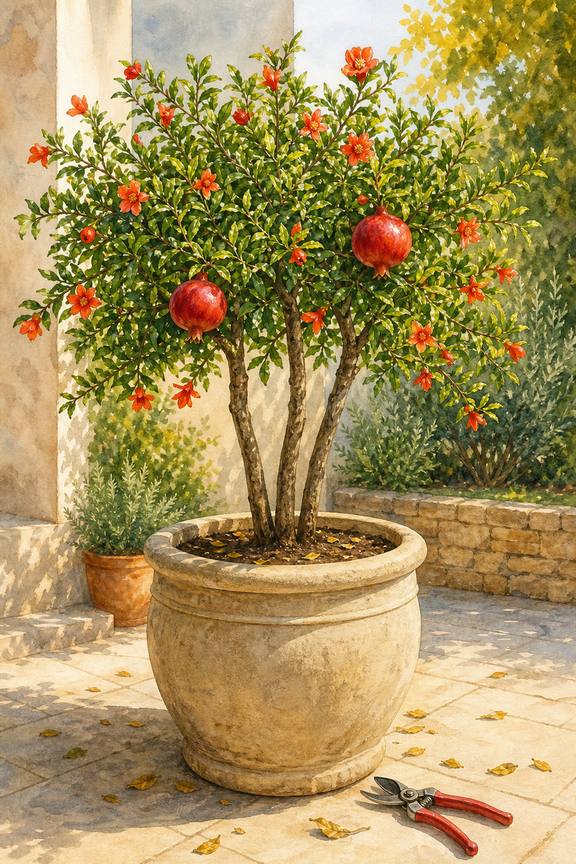
Wonderful pomegranate can live in a large container and pollinate itself, though it naturally wants to become a multi-stem shrub. Train one to three trunks and prune it to about 6 feet for a patio-size tree. It needs serious heat plus at least 6 to 8 hours of sun to ripen full-size red fruit, making it a better bet in hot, dry summers than cool coastal ones. Use a 20- to 25-gallon pot and do not panic if it drops leaves in winter; pomegranate is deciduous. The downside is patience. A young plant may flower before it can hold fruit, and uneven watering can contribute to cracked rinds near harvest.
8. Dwarf Everbearing mulberry for quick crops
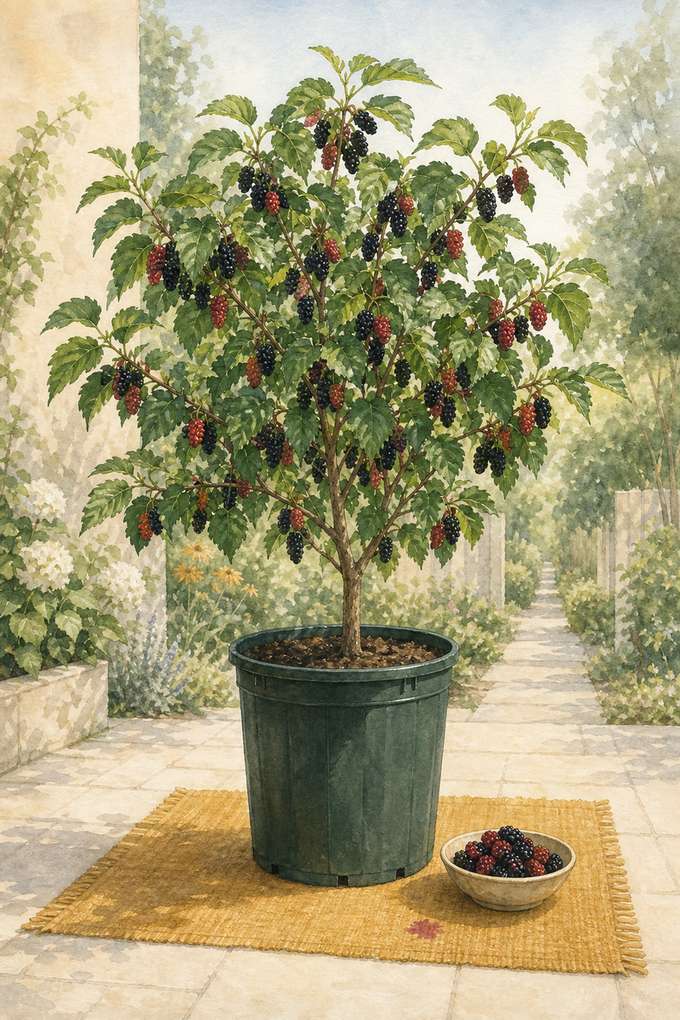
Dwarf Everbearing mulberry is self-fertile and often fruits while young, with berries forming on a plant that can be held near 6 feet by pruning. Give it a 20-gallon container and at least 6 hours of sun. The berries are soft, dark, and genuinely messy, so this is not the tree for white cushions or a landlord's pale concrete. Put a washable mat beneath the canopy, harvest every day or two, and keep the pot away from a shared walkway. Birds love mulberries as much as people do. Netting helps, but a small daily harvest is simpler. Prune after fruiting rather than repeatedly clipping off the shoots that carry your next crop.
9. Arbequina olive where summers stay hot
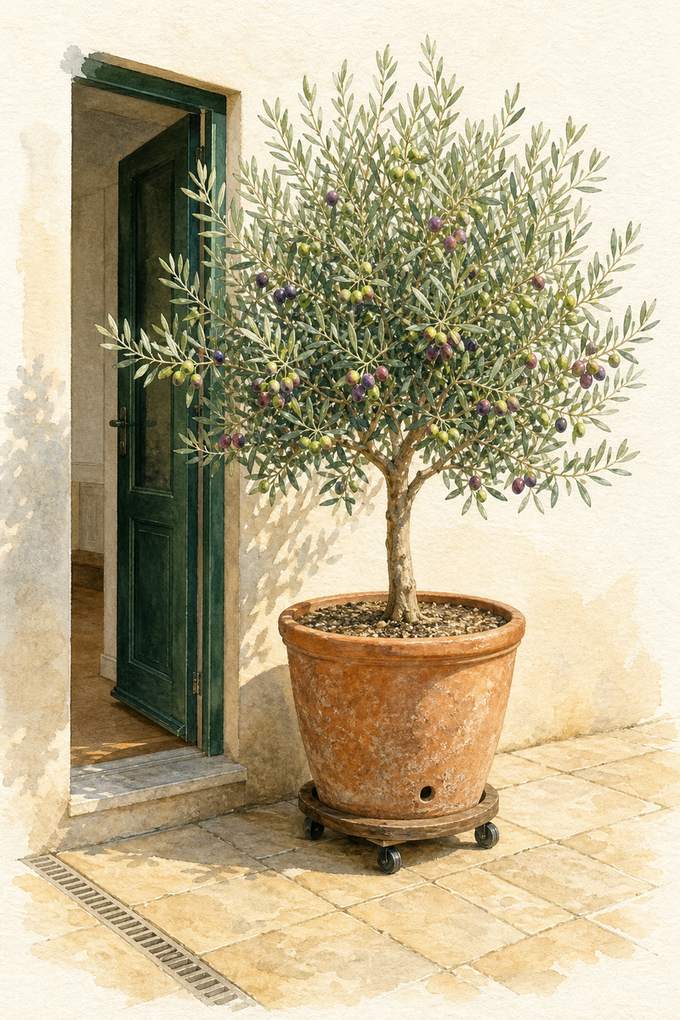
Arbequina is a compact, self-fertile olive that suits a hot, bright patio and can be maintained around 5 to 7 feet in a container. Start with a 15- to 20-gallon pot, gritty fast-draining mix, and 6 to 8 hours of direct sun. The silver leaves look good year-round, but edible olives are not a no-work snack: fresh fruit is intensely bitter and must be cured. Reliable cropping also varies with winter chill, summer heat, and whether the tree spends cold months indoors. Do not overwater it to encourage growth; wet roots are the faster way to lose an olive. Where winters are severe, a wheeled caddy makes moving this heavy pot less miserable.
Common questions
- How heavy is a potted fruit tree when watered?
- A 20-gallon container can easily exceed 100 pounds once it holds damp potting mix, the tree, and the pot itself; dense ceramic adds more. Balcony capacities are building-specific, so ask the landlord, HOA, or building manager for the permitted live load and place heavy pots where they approve, not simply against the railing.
- Can a fruit tree produce with only four hours of sun?
- Four hours may keep some trees alive, but peaches, apples, cherries, citrus, olives, and pomegranates usually crop better with at least 6 hours of direct sun. A fig may give a light crop with 5 hours. If the patio receives bright shade most of the day, choose leafy edibles rather than buying a fruit tree on hope.
- How do I overwinter a container fruit tree?
- Match the tree to your USDA zone, then remember that roots in pots get colder than roots underground. Tender citrus may need a bright indoor spot before nights reach about 40°F. Dormant figs and other hardy trees can use an unheated garage or an insulated pot, but do not let the root ball dry out completely.
- Do I need two trees for pollination?
- Not for Meyer lemon, Brown Turkey fig, Bonanza peach, Compact Stella cherry, Nagami kumquat, pomegranate, Dwarf Everbearing mulberry, or Arbequina olive. Most apples crop more reliably with a compatible second cultivar that flowers at the same time. Read the cultivar tag rather than assuming every dwarf tree is self-fertile.