9 Drought-Tolerant Container Plants That Survive a Week Without You
A seven-day trip should not mean hiring a plant sitter for every pot. These nine sun-loving plants can handle a short dry spell once established, with honest notes on pot size, drainage, heat, and the setup each one needs before you leave.
1. English lavender in a roomy terracotta pot
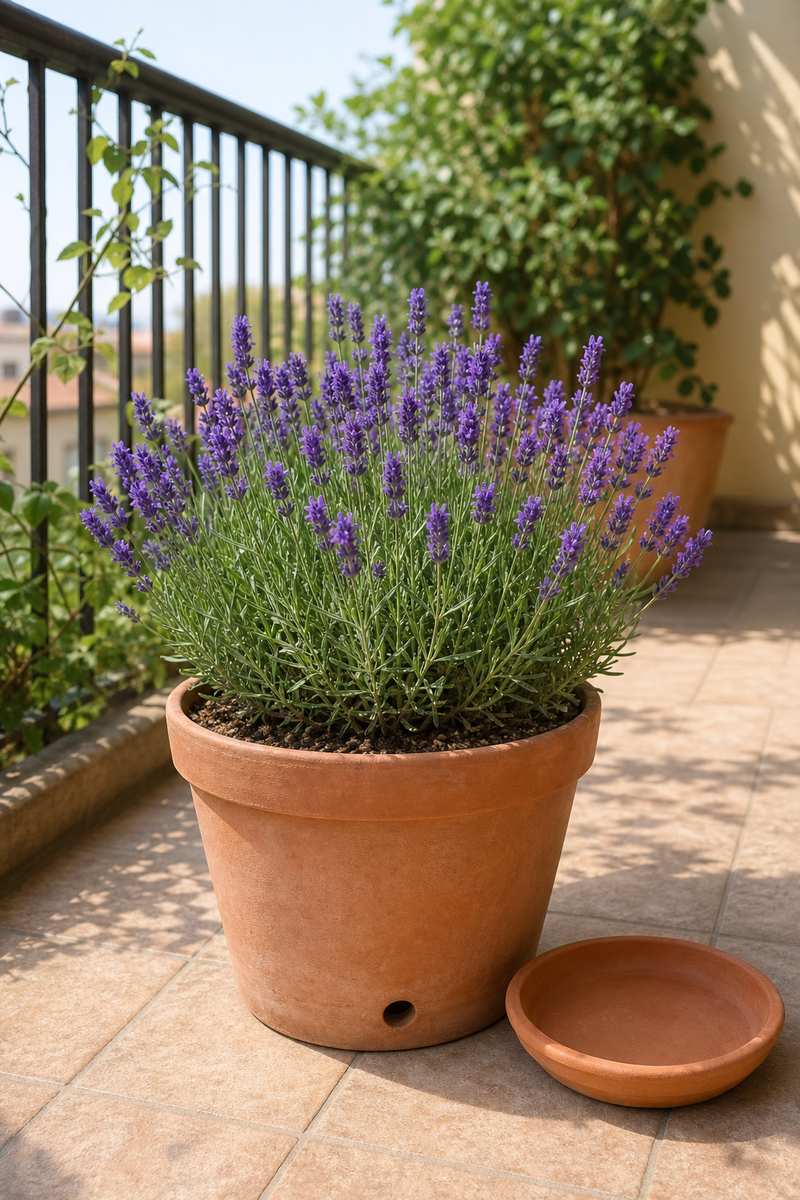
English lavender is the vacation pick for a balcony that gets at least 6 hours of direct sun. Put one plant in a 12- to 16-inch terracotta pot with a drainage hole, using gritty potting mix rather than moisture-holding garden soil. Once the roots fill in, lavender would rather dry slightly than sit wet. The catch is timing: a newly potted plant still needs regular watering for several weeks and should not be tested during its first heat wave. Water slowly until it drains the day you leave, then empty the saucer. Humid climates can be harder on lavender than a missed watering, so leave air between pots and skip a decorative cachepot that traps runoff.
2. Upright rosemary in a deep glazed container
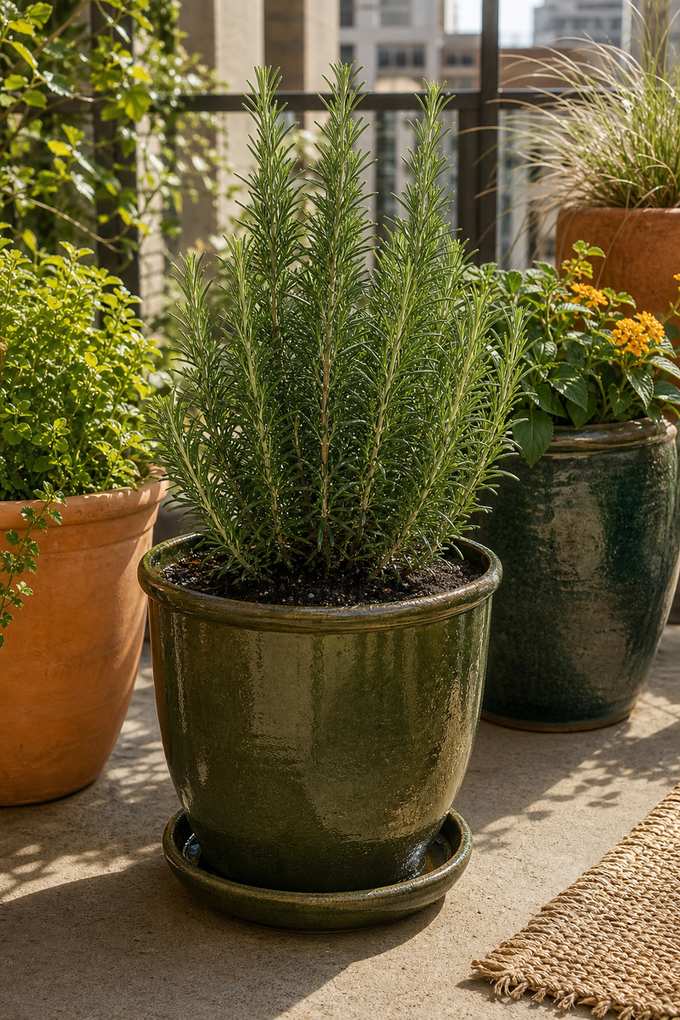
Upright rosemary gives you an edible plant without the daily thirst of basil. A 5-gallon glazed ceramic or resin pot slows evaporation better than a tiny clay herb pot, while a drainage hole keeps the woody roots from staying soggy. Give it 6 to 8 hours of sun and soak the whole root ball before departure; water racing down the pot's edge means the mix has gone hydrophobic, so soak once, wait 10 minutes, and water again. Rosemary dislikes sudden indoor moves, and a wind-baked balcony may still dry a small pot in three days. Group it beside larger containers for shelter, but do not leave the base standing in water. Trim lightly after the trip, not right before it.
3. Stonecrop sedum for the hottest ledge
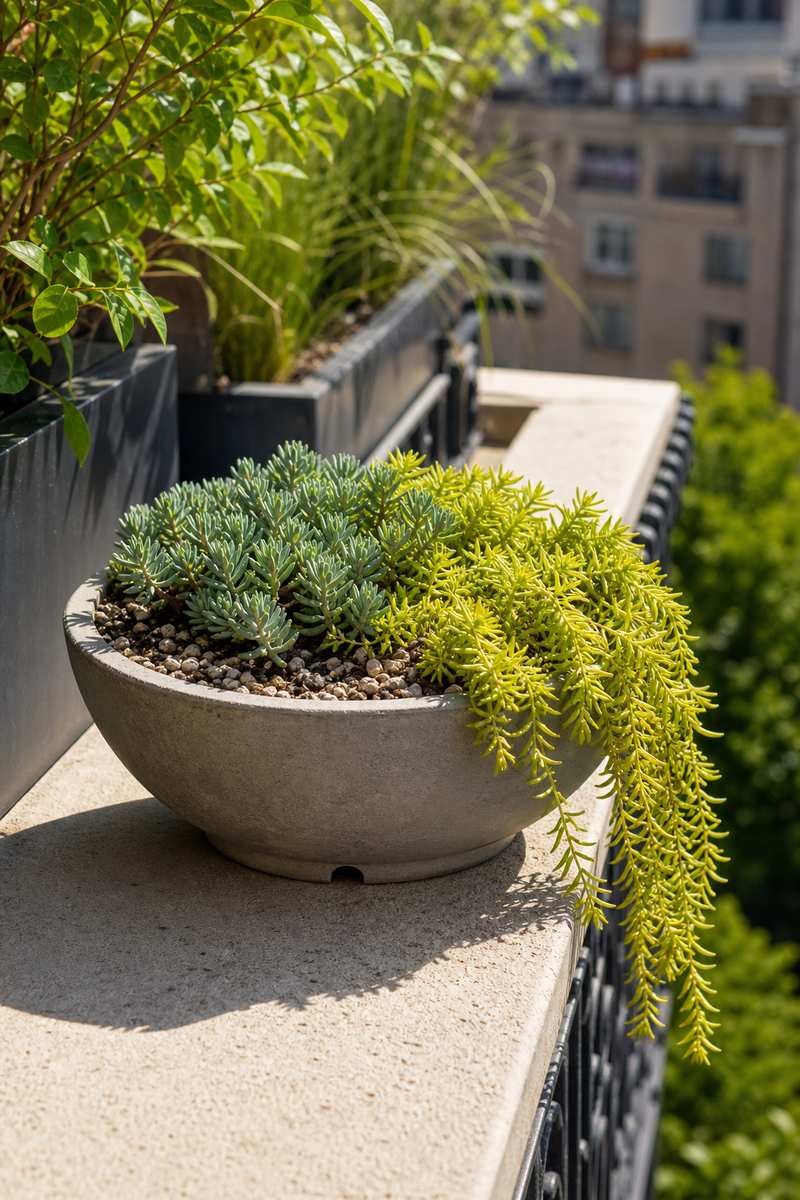
Stonecrop sedum stores water in its leaves, which makes it far more forgiving than a petunia on a hot ledge. Choose a hardy, clumping type such as 'Autumn Joy' for a 12-inch pot, or a low type such as 'Angelina' for a shallow bowl at least 6 inches deep. Full sun keeps growth compact, and a mix cut with roughly one part pumice or perlite to two parts potting mix drains fast after rain. Its main enemy is kindness: a reservoir full of water can rot sedum roots while you are away. Hardy varieties may overwinter outdoors in an appropriately rated pot, but container roots are less insulated than garden roots, so check your USDA zone before leaving the pot exposed all winter.
4. Zonal geranium in a 12-inch resin pot
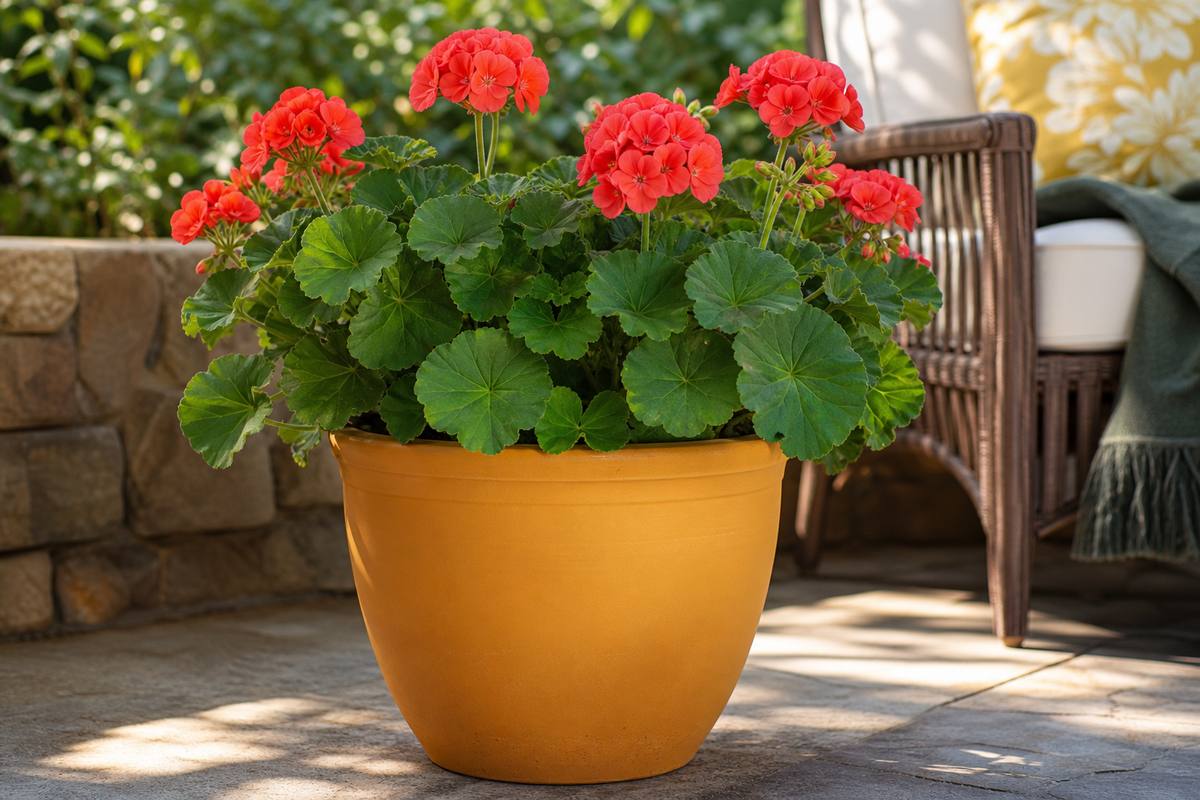
A zonal geranium, properly a Pelargonium, handles a missed watering better than most flowering annuals because its thick stems hold some reserve moisture. Use one plant per 12-inch resin pot so the roots have more buffer than they would in a crowded window box. Four to 6 hours of sun is enough for bloom, though afternoon shade helps in desert heat. Deadhead and water deeply before leaving, but skip fertilizer that week; fresh, soft growth is the first part to wilt. Expect fewer flowers after a dry spell, and do not count on survival in a tiny railing planter exposed to wind. Pelargoniums are frost tender, so this is a warm-season choice unless you have a bright indoor winter spot.
5. Lantana for a blazing south-facing corner
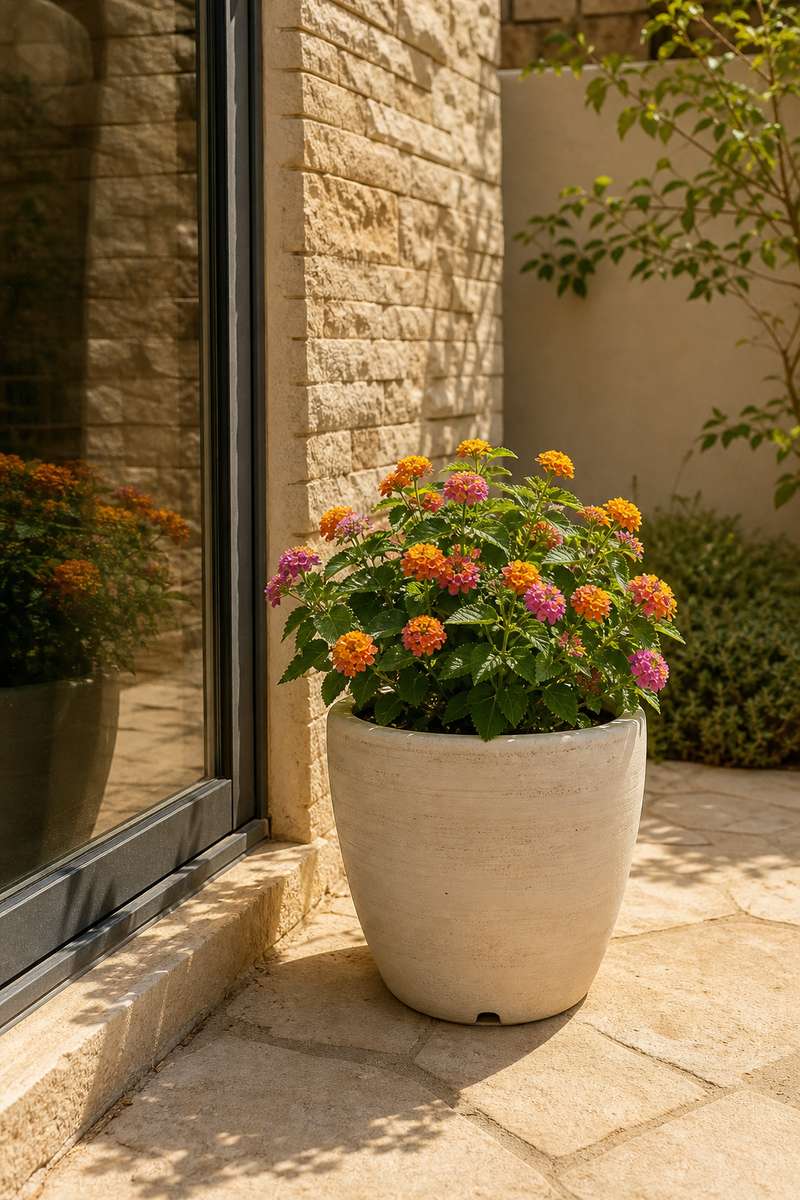
Lantana keeps flowering through heat that makes many container annuals sulk. Set one compact cultivar in a 14- to 16-inch pot with at least one open drainage hole, and reserve it for a spot receiving 6 or more hours of sun. An established plant can take a dry interval, but the flower count will dip if the root ball becomes bone dry. Deep-water it the morning you leave and move it a foot back from a heat-reflecting glass wall if temperatures are forecast above 95°F. Lantana can be toxic if eaten and its rough foliage is not friendly to curious pets or children, so place it out of reach. It is also frost tender in many US climates and may need replacing each spring.
6. Portulaca in a shallow balcony bowl
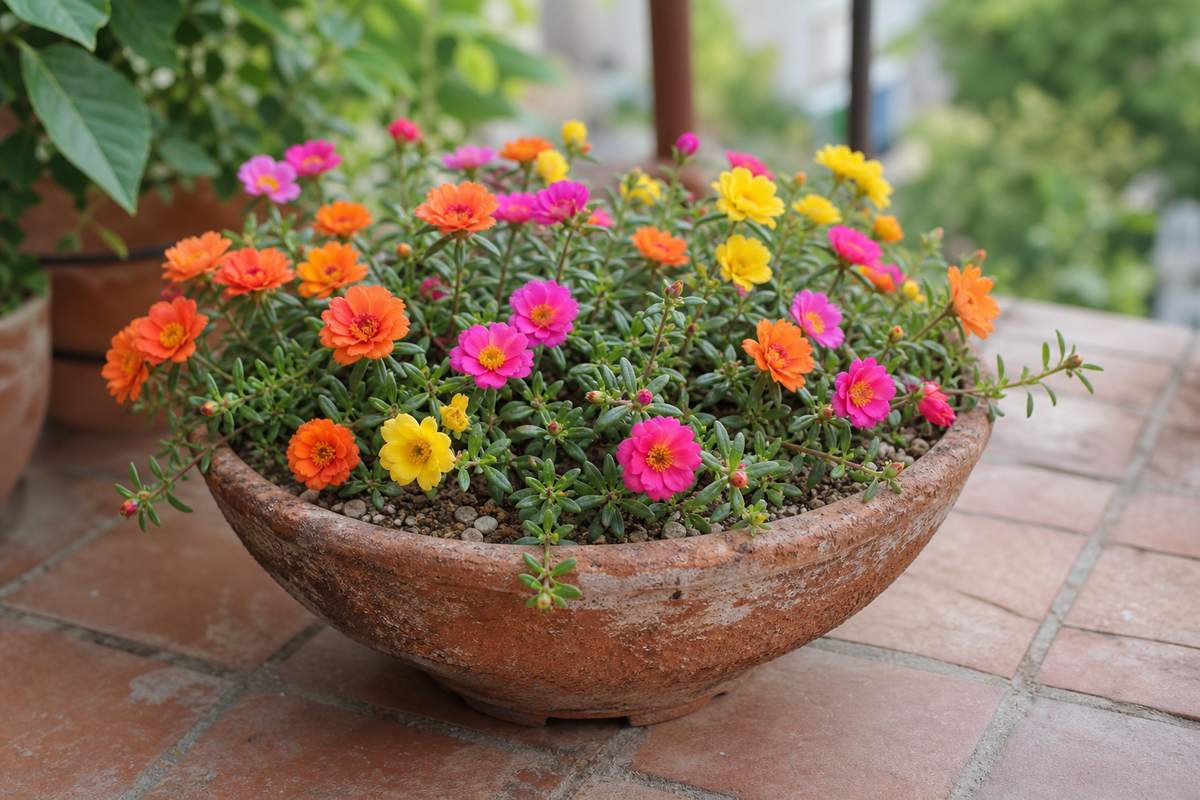
Portulaca, also called moss rose, is a low, succulent annual that fits where a tall plant would catch wind. A 10- to 12-inch bowl only 5 to 6 inches deep can hold several plants, provided the bowl has drainage and receives 6 to 8 hours of direct sun. Its fleshy leaves buy time during a dry week, and the flowers open best in bright light. The compromise is scale: shallow containers heat up quickly, so move the bowl off a metal railing and onto the floor before a midsummer trip. Water thoroughly, let it drain, and do not add a watering globe; constantly wet mix invites stem rot. Flowers may close on cloudy days, which is normal rather than a sign the plant is failing.
7. Dwarf agave as a one-pot focal point
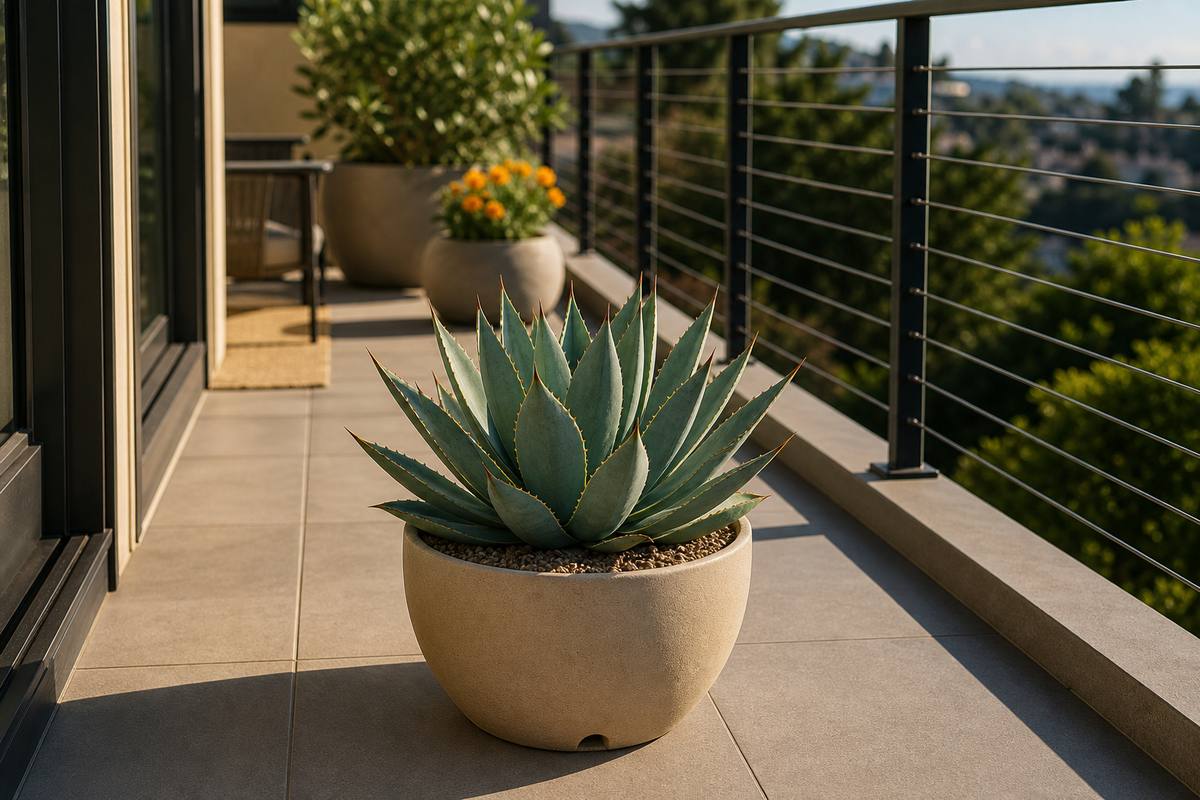
A dwarf agave such as 'Blue Glow' can ride out a week easily in bright sun because its leaves store water. Give it a heavy, wide-based pot around 14 inches across, cactus mix, and an unblocked drainage hole; the broad base matters on a windy balcony. That sturdy setup has two drawbacks. A ceramic pot plus wet mix may be heavier than your lease or balcony allows, and agave leaf tips can injure pets or brush bare ankles in a narrow walkway. Keep it at least 24 inches from the main path and check your building's weight rules before choosing stoneware. Water only if the mix is dry before departure. In cold-winter regions, confirm the cultivar's hardiness or plan an indoor spot with very bright light.
8. Common thyme in a wide clay pot
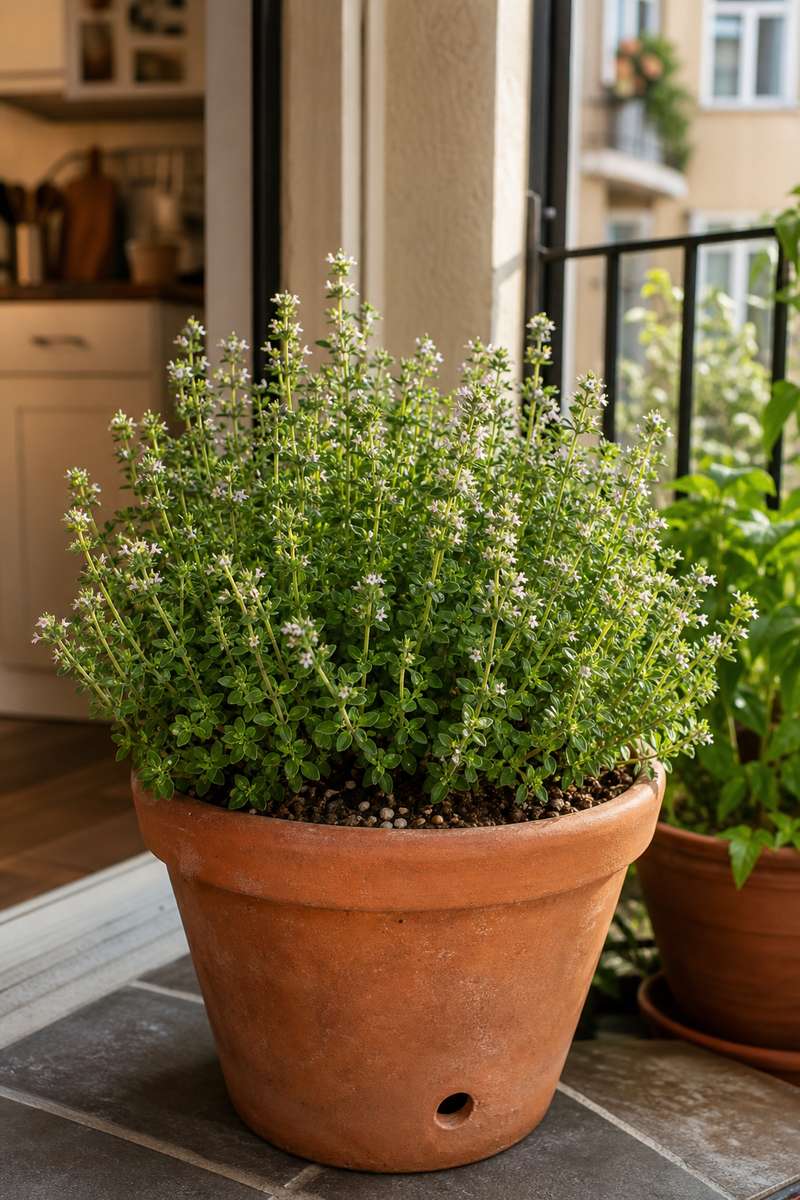
Common thyme earns its space by staying compact, feeding pollinators, and seasoning dinner after you return. Plant it alone in an 8- to 10-inch pot rather than beside thirsty parsley. A clay container and gritty mix suit its dry Mediterranean roots, but an 8-inch pot has little water reserve, so tuck it where it gets morning sun and a little late-afternoon relief during a heat advisory. Give the pot a slow soak before leaving and pinch off no more than one-third of the stems beforehand. Thyme often looks gray and sparse after prolonged wet weather, not drought; never plug the drainage hole to save water. The trade-off is winter reliability. A locally hardy variety may survive, but freeze-thaw cycles are tougher on roots in pots than in the ground.
9. Euphorbia 'Diamond Frost' for airy white flowers
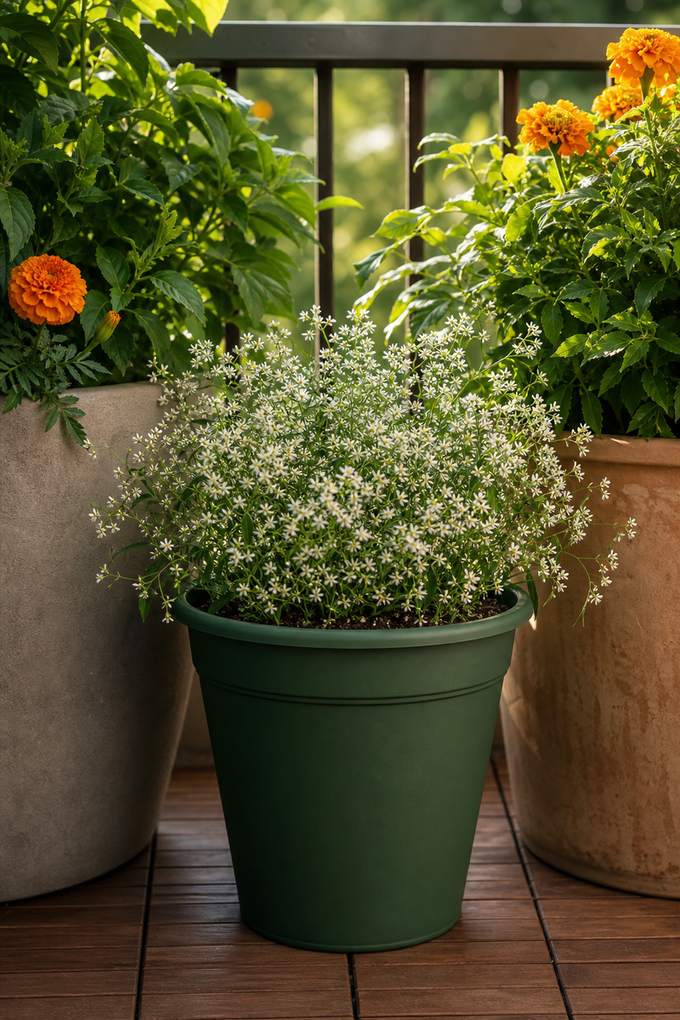
Euphorbia 'Diamond Frost' gives a small pot the look of baby's breath without collapsing as quickly in heat. One plant fills a 12- to 14-inch container, tolerates full sun to part sun, and rebounds from a short dry spell once established. Use regular potting mix with added perlite and water until runoff appears before your trip. Its airy stems can snap in hard wind, so set the pot below railing height or between two heavier containers. Wear gloves when pruning: the milky sap can irritate skin and eyes, and the plant should stay away from pets and children who chew leaves. It is frost tender, and a week without water is realistic only for a rooted-in plant, not one bought and repotted the day before departure.
Common questions
- Can any container plant safely go seven days without water?
- No plant comes with a seven-day guarantee. Established drought-tolerant plants in appropriately sized pots often manage a week, but a 100°F forecast, strong balcony wind, or a 6-inch pot can shorten that window sharply. Water deeply before leaving and ask someone to check once if extreme heat is expected.
- Should I move the pots into shade before vacation?
- Move sun lovers out of the harshest reflected afternoon heat, not into a dark room. A shift of 1 to 3 feet behind a railing or under 30% shade cloth can slow water loss while preserving useful light. Make the move two days early so you can see whether the spot works.
- Are bigger vacation-proof pots too heavy for a balcony?
- They can be. Wet potting mix, ceramic, and the plant all count toward the load, and building limits vary. Check your lease, HOA rules, or building manager rather than relying on a generic pounds-per-square-foot figure. Lightweight resin pots reduce container weight, but they do not change the balcony's approved load.
- Will these plants survive winter in their containers?
- Lavender, thyme, sedum, rosemary, and agave vary widely by cultivar and USDA zone; lantana, portulaca, Pelargonium, and 'Diamond Frost' are frost tender in much of the US. Container roots run colder than roots in the ground, so check the exact cultivar and your zone, then protect or move the pot before hard freezes.