9 Fall Container Vegetables for Zone 6 Gardeners With Limited Space
Zone 6 gives container gardeners a useful cool-weather window, but pots lose heat and moisture faster than garden soil. These nine vegetables earn their footprint on a balcony or patio, with practical sowing dates, container sizes, and frost protection.
1. Grow Dwarf Kale in a 5-Gallon Pot
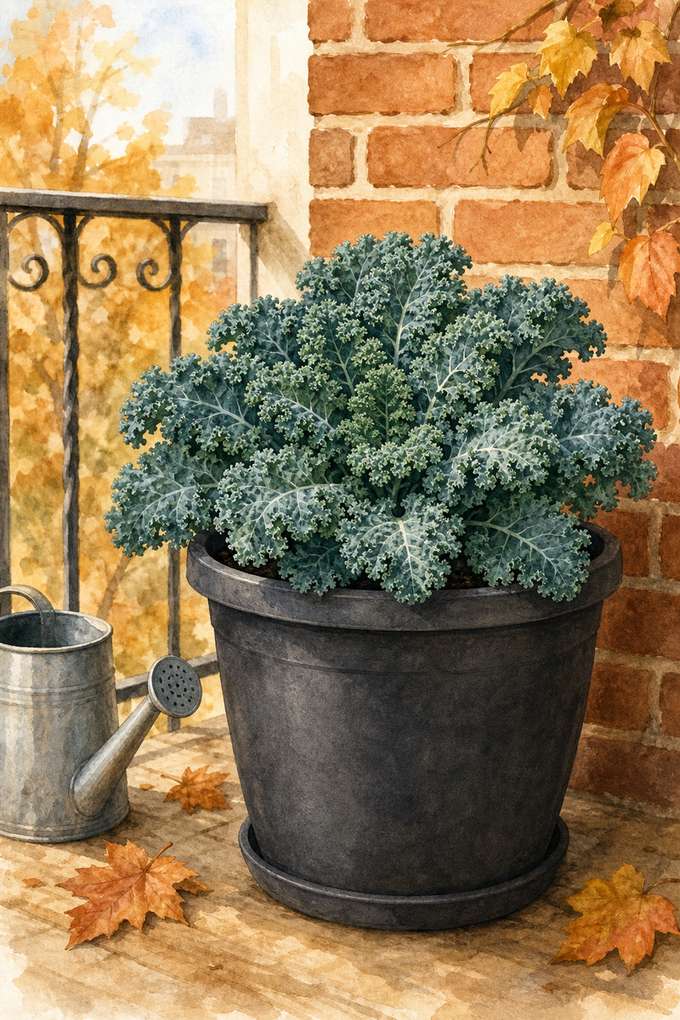
Dwarf Blue Curled kale gives you repeated harvests without swallowing a small balcony. Plant one kale in a 5-gallon pot at least 10 inches deep, or space two plants 12 inches apart in a long trough. Start seed roughly 10 to 12 weeks before your local first fall frost; nursery starts shorten the wait. Kale tolerates light frost and often tastes sweeter afterward, but its roots cannot take the same cold in an exposed pot as they can in the ground. Move the container beside a sheltered wall when nights turn hard-cold. The trade-off is patience: caterpillars may find young leaves before cool weather slows them, so inspect leaf undersides twice a week.
2. Sow Spinach in a 6-Inch-Deep Window Box
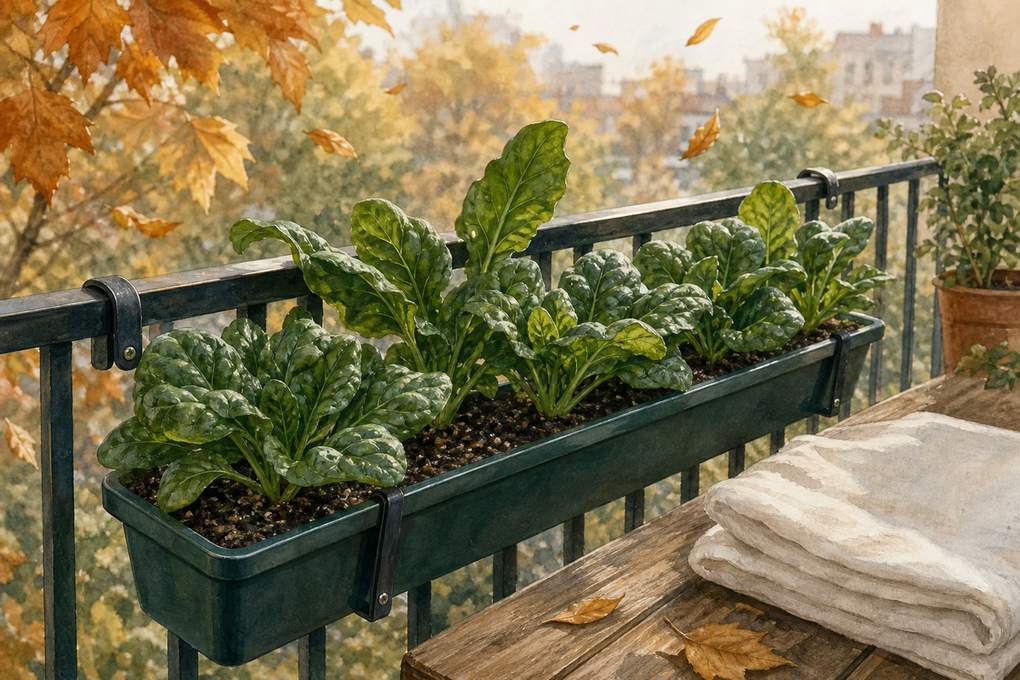
Spinach fits where deeper-rooted crops do not: a window box or railing-safe planter 6 to 8 inches deep. Sow Bloomsdale Long Standing seeds about 8 weeks before the expected first frost, spacing plants 3 inches apart for baby leaves or 5 inches for fuller rosettes. Give the box at least 4 hours of direct sun; bright shade can work, but growth will be slower as days shorten. Keep the mix evenly damp because a shallow box dries quickly in autumn wind. Spinach handles a light freeze, yet the container itself is the weak point. A loose layer of frost cloth can extend harvests, while heavy, waterlogged fabric draped over leaves may crush them. Expect smaller late-season leaves, not supermarket-size bunches.
3. Cut Baby Lettuce From a Wide Salad Bowl
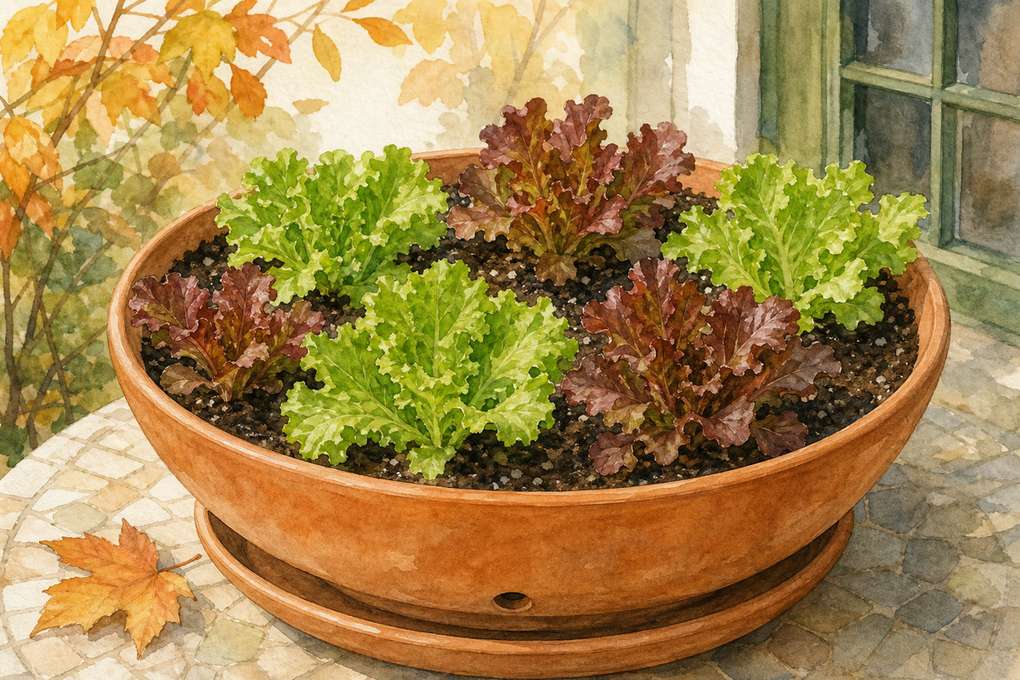
A 12- to 14-inch-wide bowl can supply looseleaf lettuce without committing floor space to a tall pot. Scatter a restrained pinch of Black Seeded Simpson and Red Salad Bowl seed, then thin seedlings to 3 inches apart for cut-and-come-again leaves. Sow 6 to 8 weeks before your first frost and harvest outer leaves once they reach about 4 inches. Lettuce prefers cool weather, but a shallow decorative bowl needs a drainage hole and a saucer that never sits full of water. Place it where it receives morning sun rather than a hot reflected afternoon blast. The honest limitation is longevity: repeated freezes will end the crop, and crowded seedlings invite mildew. One clean trim is better than nursing a soggy bowl into winter.
4. Harvest Fast Radishes From a Reused Nursery Pot
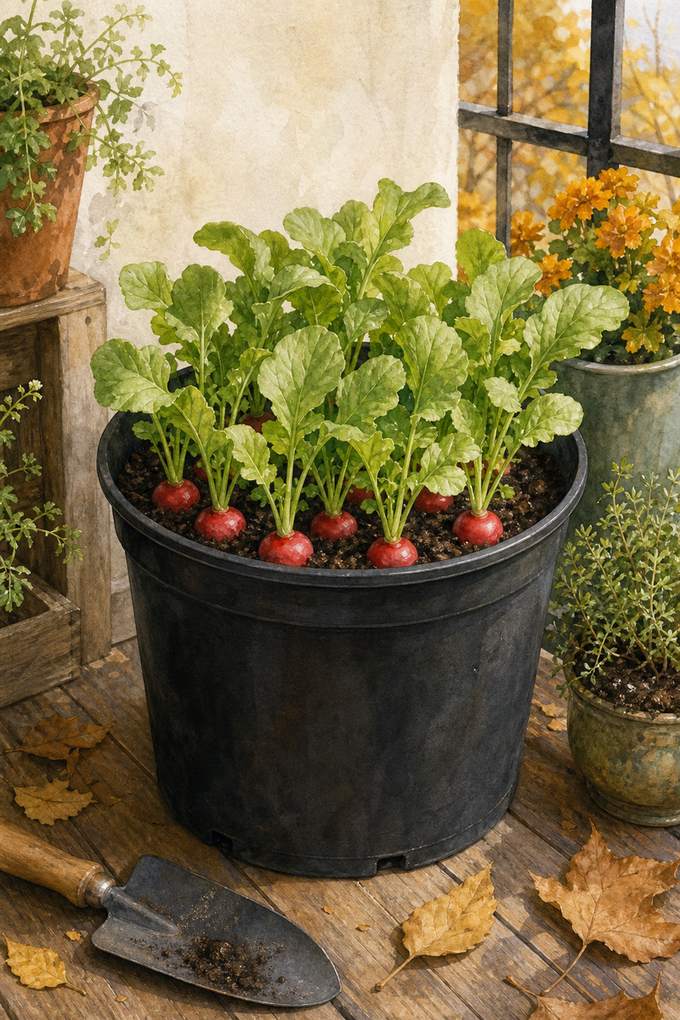
Cherry Belle radishes are the quick option when the frost calendar is already closing in. Reuse a clean 3-gallon nursery pot that is at least 6 inches deep, sow seeds 1 inch apart, and thin to 2 inches so roots can round out. Plant 4 to 6 weeks before your expected first frost, then make a second small sowing one week later rather than filling every pot at once. Radishes need steady moisture; alternating dry and soaked soil can split roots or make them sharply hot. Six hours of sun produces the best bulbs, though edible tops still grow with less. Check beneath the soil at day 25. Leaving mature radishes in the pot too long turns their texture pithy, especially during a warm spell.
5. Choose Short Carrots for a 12-Inch Pot
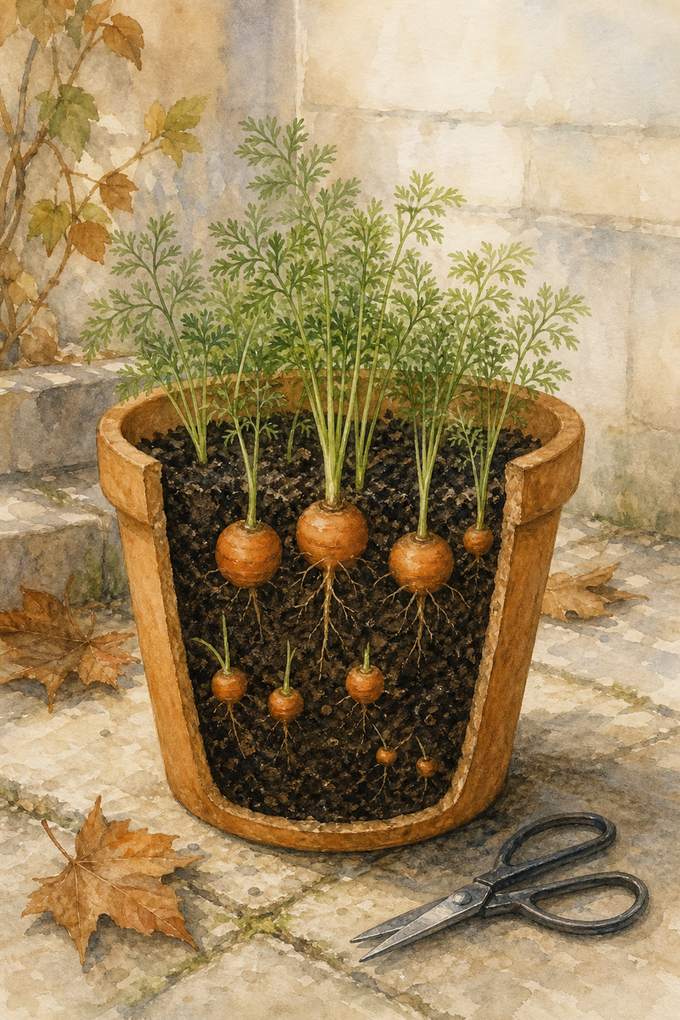
Parisian Market carrots produce round roots that suit containers better than long supermarket types. Use a pot 12 inches deep and at least 12 inches wide, filled with fresh, stone-free potting mix; garden soil packs too tightly and adds unnecessary weight. Sow about 10 to 12 weeks before the first frost, barely cover the seeds, and keep the surface moist until germination, which may take 1 to 3 weeks. Thin to 2 inches apart with scissors so you do not disturb neighboring roots. Carrots tolerate chilly weather, but fall growth slows sharply as daylight fades. The downside is uncertainty: a late sowing may give you sweet baby carrots rather than full rounds. Harvest before the potting mix freezes solid, because a frozen container is difficult to move or dig.
6. Grow Baby Beets in a Lightweight 5-Gallon Container
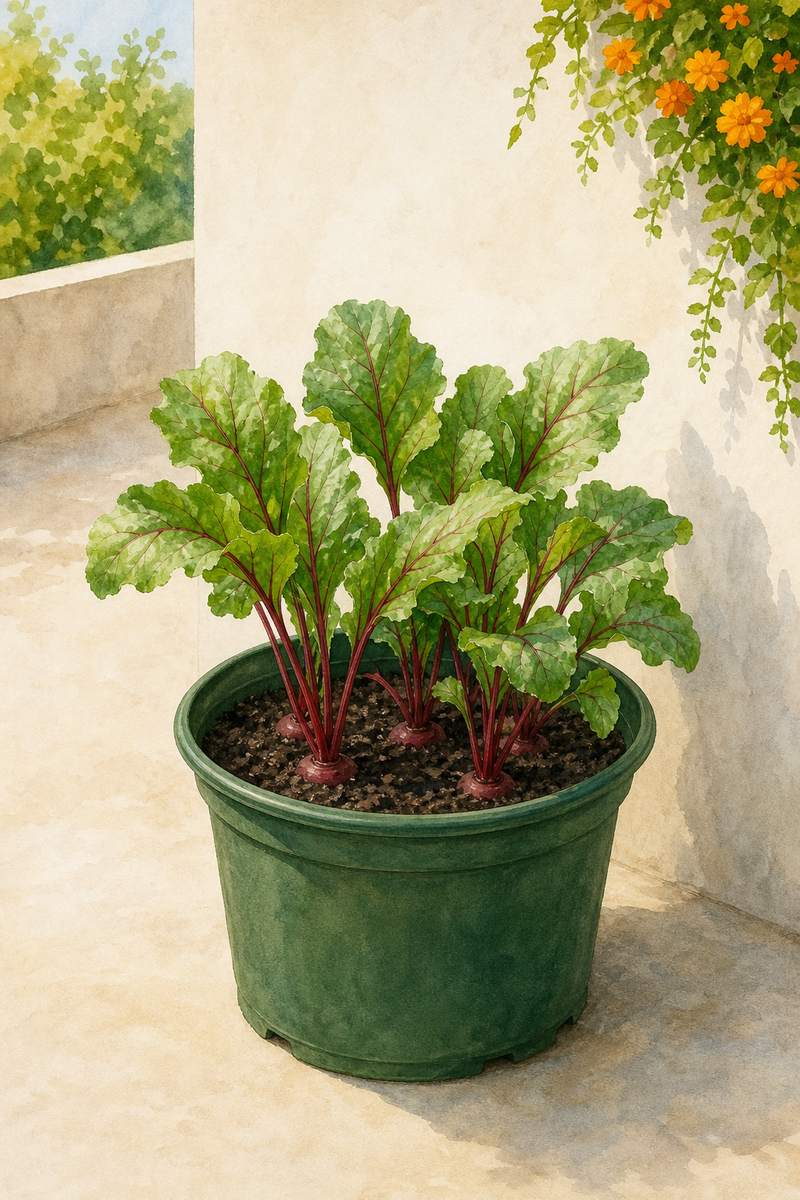
Detroit Dark Red beets give you two harvests from one compact pot: tender greens first, then small roots. Choose a lightweight 5-gallon resin container 10 to 12 inches deep, especially if balcony load is a concern, and confirm the filled weight is acceptable for your building. Sow clusters 3 inches apart about 8 to 10 weeks before first frost. Each wrinkled beet seed is usually a cluster, so snip extras rather than pulling them. Harvest a few outer leaves, never more than one-third of each plant, if you still want roots. Beets tolerate light frost but grow slowly in weak autumn sun. Their main trade-off is spacing: crowding creates plenty of greens and disappointingly narrow roots, so thinning is not optional even in a tiny garden.
7. Keep Swiss Chard Going in a Deep Single-Plant Pot
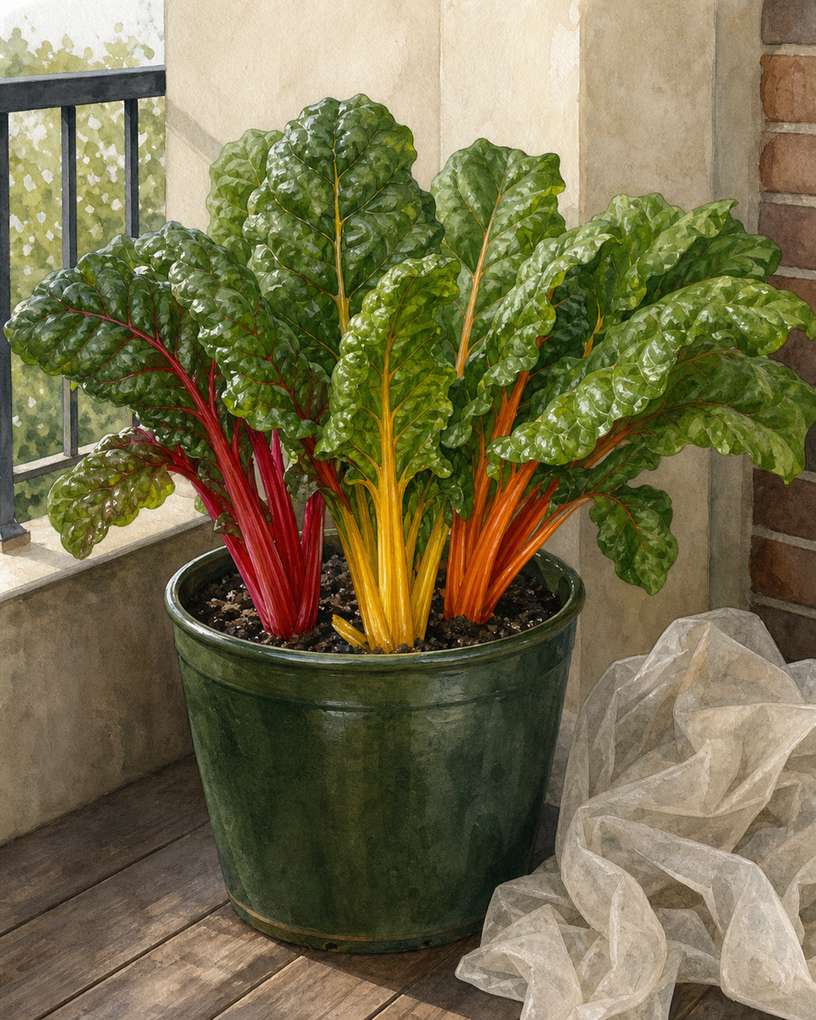
Bright Lights Swiss chard earns a place as both dinner and color, and one plant can fill a 3- to 5-gallon pot. Give it at least 10 inches of soil depth and 6 hours of sun for sturdy stalks; with 4 hours, expect smaller leaves. Start it 8 to 10 weeks before first frost, or use a transplant when summer is nearly over. Cut outside stems 1 inch above the soil and leave the center growing point intact. Mature chard often survives several light frosts, but exposed container roots are less forgiving than the leaves. A sheltered corner and frost cloth help on cold nights. The catch is scale: a happy plant can reach 18 inches across, so do not wedge it into the narrow side of a doorway or busy balcony route.
8. Plant Baby Bok Choy in a Rectangular Trough
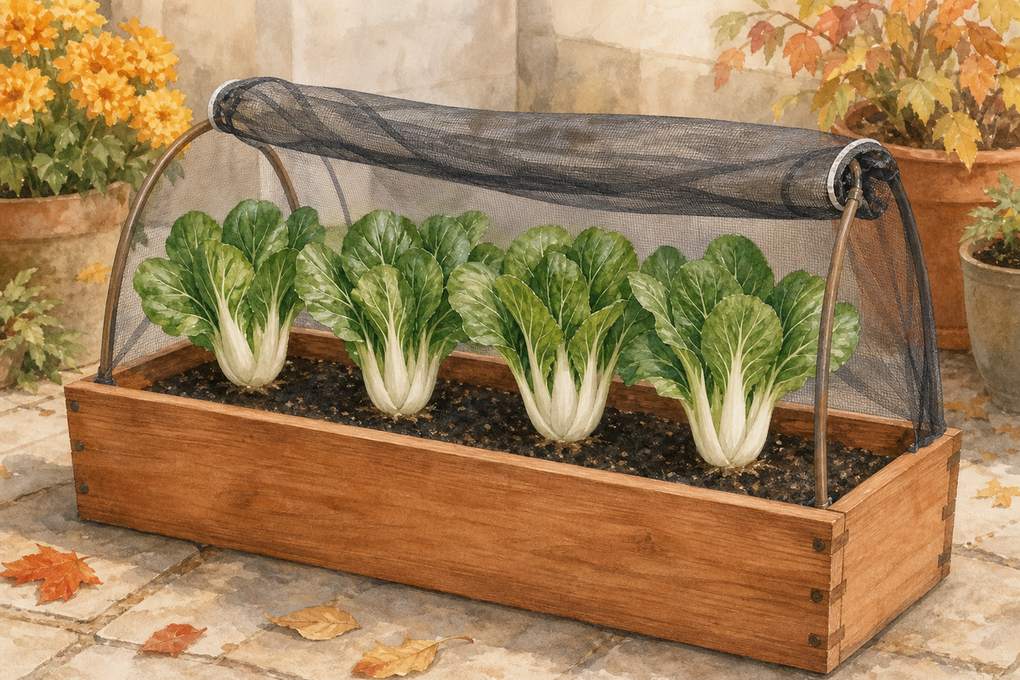
Toy Choy or another baby bok choy matures quickly and stays compact enough for a 24-inch rectangular trough. Use a container at least 8 inches deep and set plants 6 inches apart, which fits three or four heads without forcing them together. Sow 6 to 8 weeks before first frost; in early fall heat, start seeds in bright shade because hot soil can reduce germination. Bok choy appreciates 4 to 6 hours of sun and consistently moist mix. Flea beetles may pepper young leaves with holes, so a fine insect mesh is useful until cold weather arrives. The trade-off comes after frost: while mature plants tolerate a light freeze, repeated thawing can make thick white stems soft. Harvest whole heads promptly instead of treating them as winter ornaments.
9. Tuck Scallions Into a Narrow 8-Inch-Deep Planter
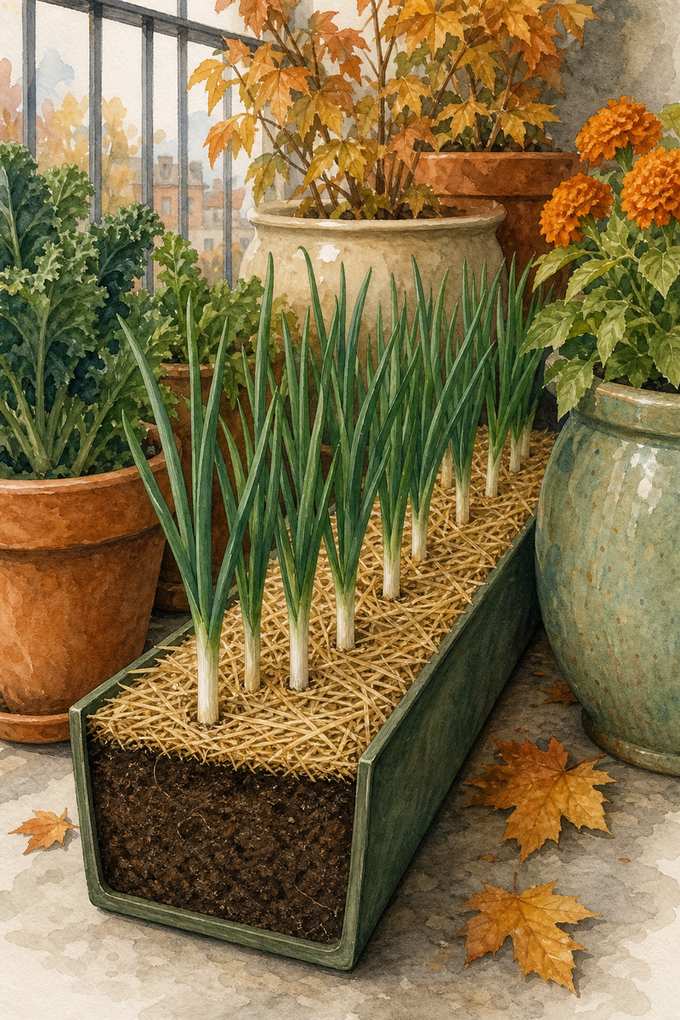
Evergreen Hardy White scallions use narrow strips of space that are awkward for larger vegetables. Fill an 8-inch-deep rectangular planter with potting mix, sow in rows 2 inches apart, and thin individual onions to about 1 inch. Start them 8 to 10 weeks before first frost for pencil-size fall harvests; smaller plants can wait under protection and resume growth in spring. Set the planter in your sunniest available spot, ideally 6 hours, because short days slow thickening. Scallions tolerate frost well, but repeated freezing can crack a brittle plastic box or heave roots upward. Group the planter beside larger pots for insulation and add an inch of clean straw after the soil surface chills. The downside is speed: in a north-facing space, expect slender greens rather than fat white shanks.
Common questions
- When should I plant fall vegetables in Zone 6 containers?
- Work backward from your local average first frost, not the Zone 6 label alone. Sow slow crops such as carrots and kale 10 to 12 weeks before that date; spinach, beets, chard, and scallions usually need 8 to 10 weeks; radishes and baby bok choy can go in 4 to 8 weeks beforehand. Add roughly one extra week if your patio gets fewer than 6 hours of sun.
- Can these containers stay outside after the first frost?
- Most of these leaves tolerate a light frost, but roots in pots cool faster than roots in the ground. Cluster containers against a sheltered wall, lift them off icy concrete on pot feet, and cover crops with frost cloth overnight. Harvest tender lettuce and mature bok choy before repeated hard freezes; never bring a dripping, frozen pot onto an unprotected indoor floor.
- How much sun do fall container vegetables need?
- Aim for 6 hours of direct sun for carrots, radishes, beets, and sturdy chard. Spinach, lettuce, scallions, and bok choy can produce with about 4 hours, although harvests will be smaller and slower as autumn days shorten. Watch the actual fall shadow line: a balcony that had summer sun may be shaded by the building when the sun sits lower.
- Are fall vegetable pots too heavy for a balcony?
- A wet 5-gallon container can weigh several dozen pounds depending on the pot and mix, so use lightweight resin rather than concrete and avoid clustering every large pot in one corner. The safe total load is building-specific; check your lease, building management, or a qualified professional rather than relying on a universal balcony number. Keep drainage water from creating a slip hazard below.