9 Layered Bulb Container Ideas for Months of Spring Blooms
One well-planned pot can flower from late winter into May without claiming more floor space. These layered combinations account for container depth, limited light, balcony wind, warm winters, and the awkward gap after the flowers fade.
1. Build a Classic Three-Deck Bulb Lasagna
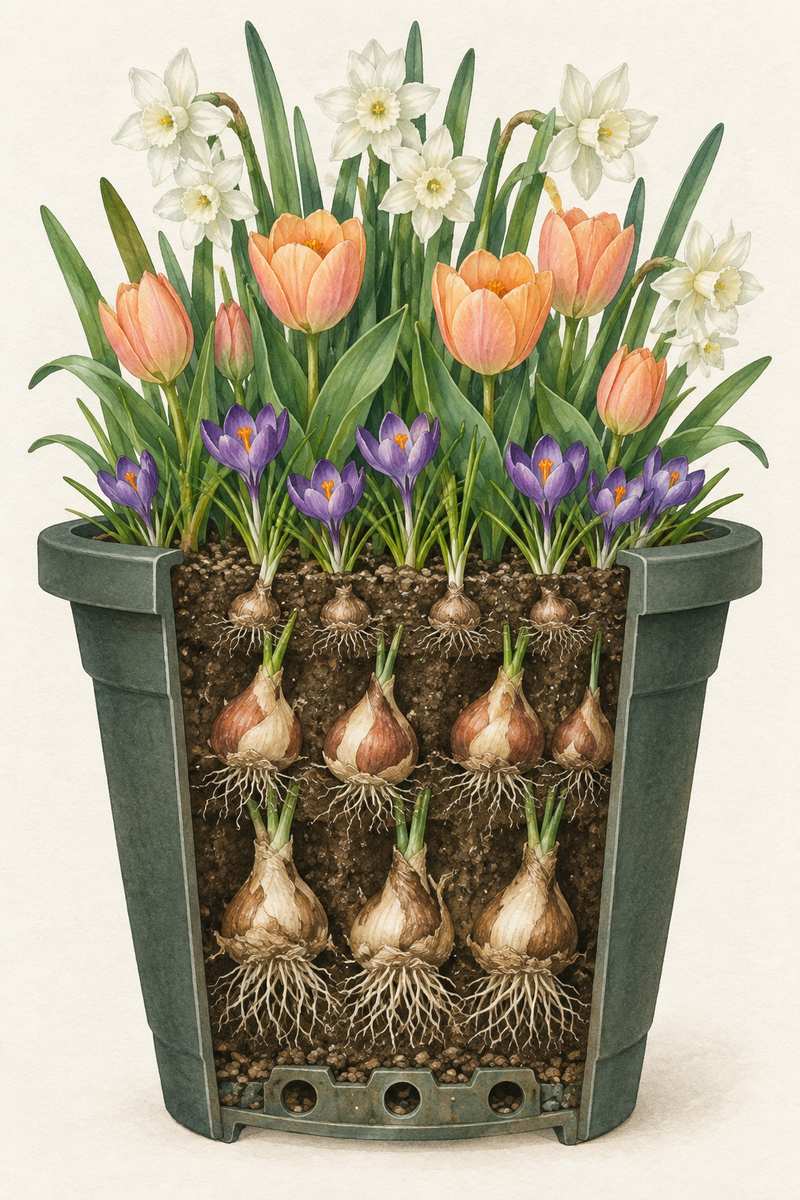
Start with a 14-inch-wide pot at least 16 inches deep: large 'Thalia' daffodil bulbs on the bottom, 'Apricot Beauty' tulips in the middle, and purple crocuses near the top. Set each layer at its normal planting depth, cover it with roughly 2 inches of potting mix, then offset the next bulbs so they are not sitting directly above the noses below. You can fit about 7 daffodils, 9 tulips, and 15 crocuses without packing them wall to wall. The trade-off is weight; a watered ceramic pot this size is awkward to move. Use a frost-resistant resin container and place it before filling, but do not skimp on drainage holes.
2. Stack Dwarf Bulbs in a 10-Inch Balcony Pot
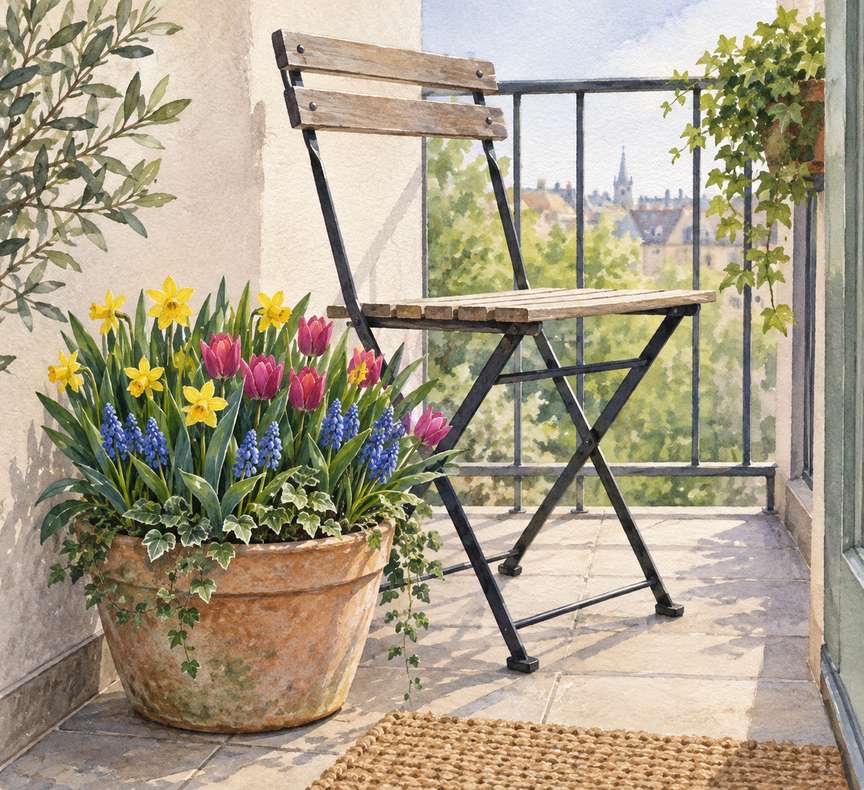
For a balcony where every inch counts, use a 10-inch pot that is 12 inches deep and stick to short varieties: five 'Tête-à-Tête' daffodils low, seven 'Little Beauty' species tulips in the middle, and nine grape hyacinths on top. The mature display stays mostly under 12 inches, so it will not swallow a chair or flop into the walkway. Leave 1 inch between the soil surface and rim because tightly planted bulbs push soil upward as they root. This is a dense, one-season show; crowded bulbs often bloom less strongly the following year. After flowering, move the whole pot out of sight while the leaves yellow, or plant the bulbs into a yard if you have permission.
3. Choose a Low, Wind-Smart Spring Mix
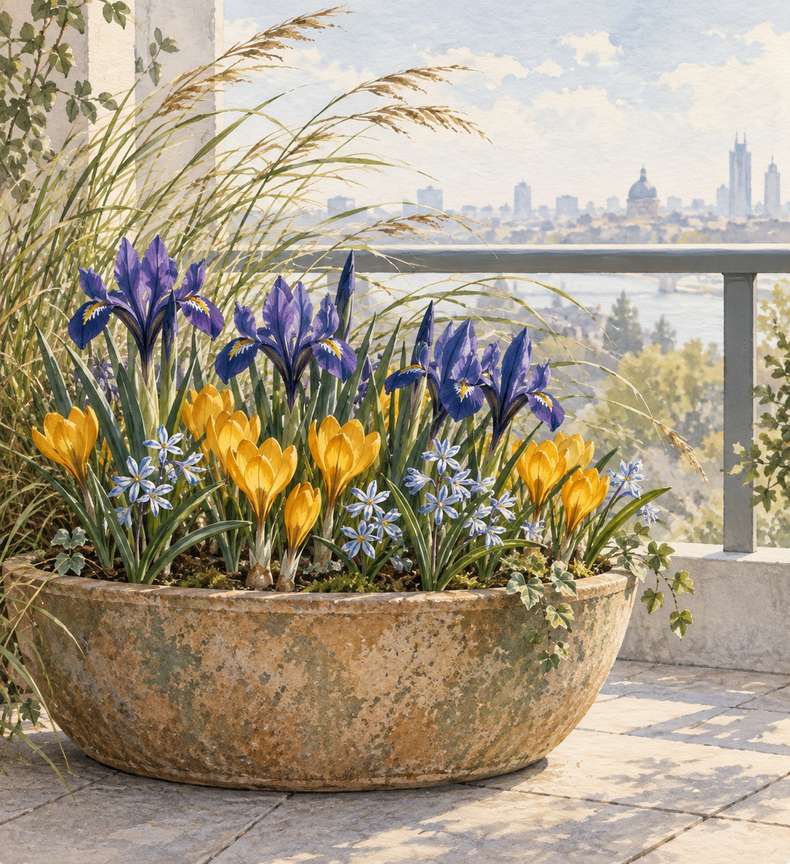
Skip tall tulips on an exposed balcony and layer sturdy bulbs that finish below about 10 inches. Plant Iris reticulata 4 inches deep, then add crocuses and striped squill closer to the surface in a heavy 12-inch-wide pot. Their short stems take gusts better than 24-inch Darwin hybrid tulips, and the bloom sequence runs from iris to crocus to squill. A broad-based container is safer than a narrow urn; check your railing and building rules before placing any pot near an edge. Wind still dries the mix quickly, even in cold weather, so test it weekly with a finger. Water when the top inch is dry, then empty the saucer so thawed water cannot refreeze around the roots.
4. Make a Bright-Shade Woodland Layer
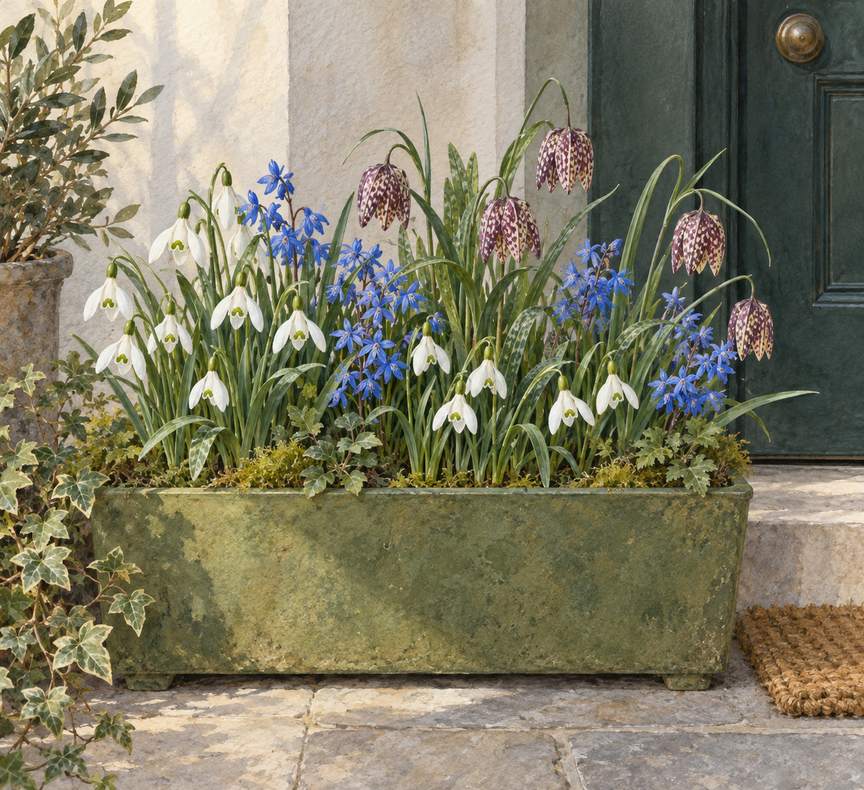
A north-facing entry can still host spring bulbs if it receives bright open sky rather than deep indoor gloom. In a 12-inch-deep pot, layer white 'S. Arnott' snowdrops below blue Siberian squill, then tuck small checkered snake's-head fritillaries between them at their label depths. These woodland-style bulbs bloom before nearby trees leaf out and tolerate cooler, gentler light better than sun-hungry late tulips. Keep the mix evenly damp but never waterlogged; fritillaries dislike baking dry during active growth. The honest limitation appears after bloom: leaves need several weeks of light to recharge the bulbs. If the spot gets less than roughly 3 hours of useful spring light, treat the planting as seasonal or move it to a brighter place while foliage ripens.
5. Plant a Fragrant Pot Beside the Door
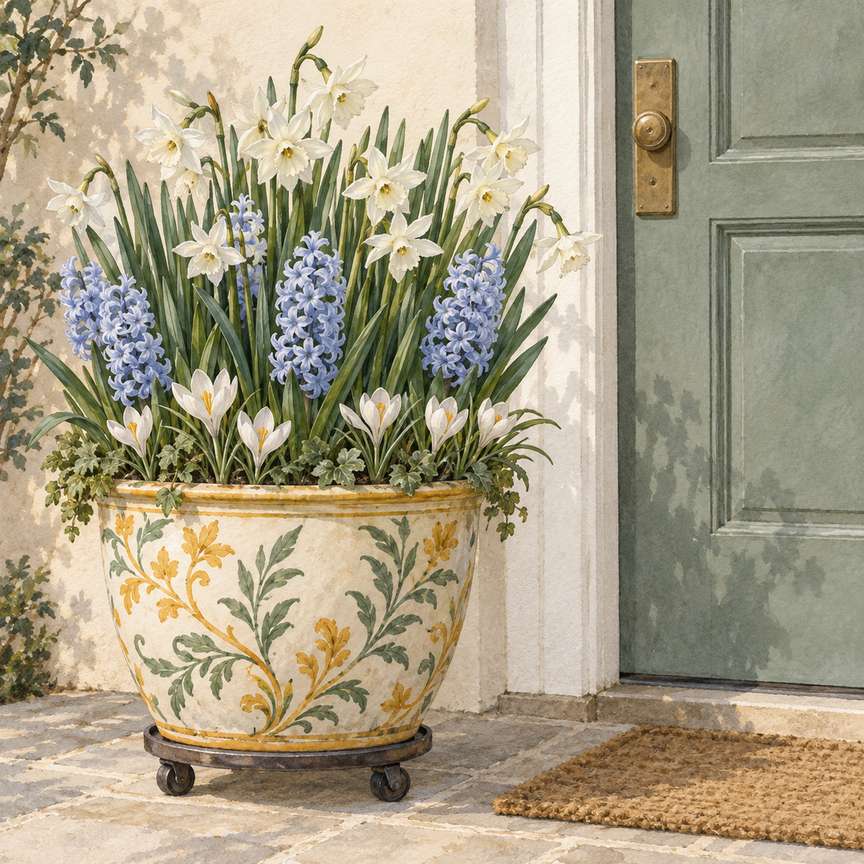
Put fragrance where you will actually pass it: layer five 'Thalia' daffodils beneath five pale-blue hyacinths, then edge the surface with ten white crocuses in a 13-inch pot. 'Thalia' has a lighter scent than many paperwhites, while hyacinths provide the strongest perfume at nose level near a doorway. Do not crowd this combination beside a tiny dining table if anyone is scent-sensitive; hyacinth fragrance can feel heavy in a sheltered alcove. All three bulbs are toxic if eaten, so choose another recipe where pets dig in pots. Set the container on a wheeled caddy before watering—the finished pot may be too heavy to shift easily—and rotate it a quarter turn weekly if light arrives mainly from one side.
6. Bridge the Hungry Gap for Early Pollinators
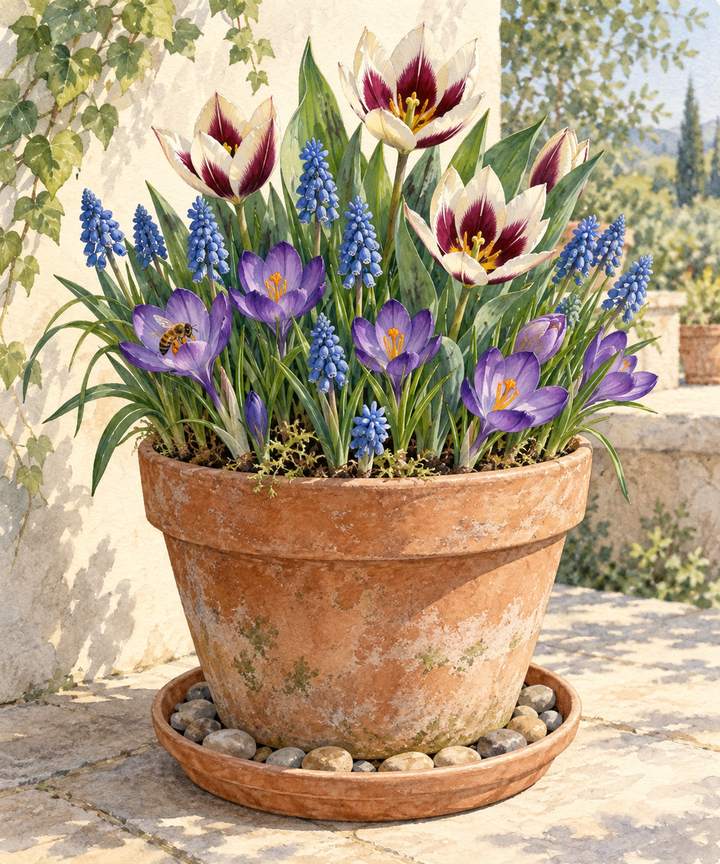
Layer blooms by feeding window rather than height alone: early violet crocuses near the surface, blue grape hyacinths beneath them, and 'Persian Pearl' species tulips at about 5 inches deep. In a sunny 12-inch pot, these flowers open in succession and offer pollen when a small patio has little else blooming. Choose single, open flowers; heavily doubled tulips are harder for insects to use. Avoid systemic insecticides on the bulbs or potting mix, and let a shallow dish of pebbles catch occasional drips rather than leaving standing water. The display will not buzz constantly—pollinator activity depends on temperature and local habitat—but even one compact pot is more useful than a sterile early-season arrangement of plastic greenery.
7. Use Prechilled Bulbs for a Warm-Winter Patio
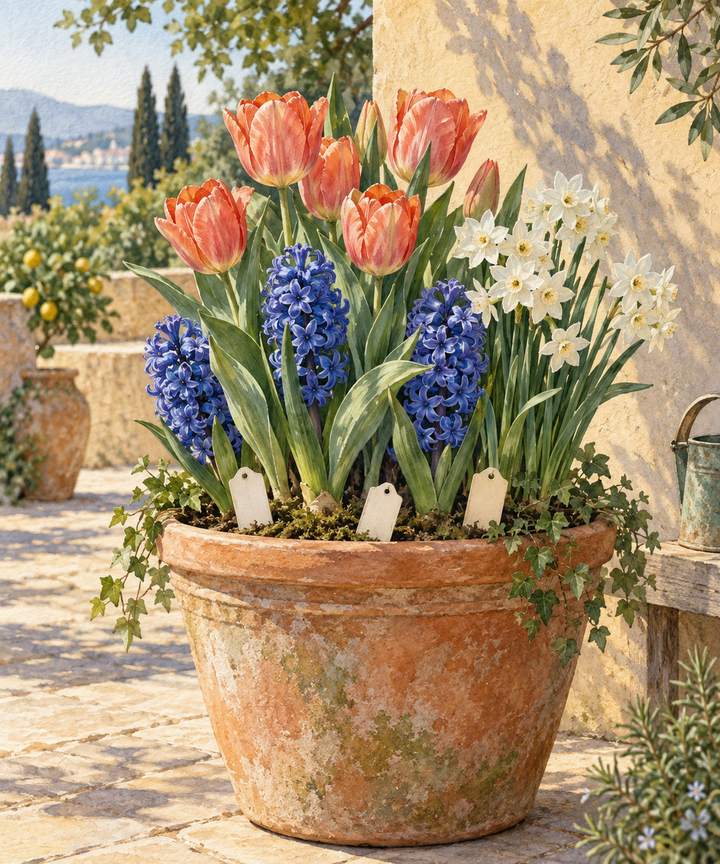
Gardeners in mild-winter regions can layer prechilled tulips and hyacinths over paperwhite narcissus for a spring display without relying on outdoor cold. Buy bulbs labeled prechilled, or refrigerate tulips and hyacinths for about 10 to 14 weeks away from apples and pears, whose ethylene can damage developing flowers. Plant seven tulips low, five hyacinths above them, and three paperwhites toward the center of a 14-inch pot. Timing is less predictable once warm spells arrive, and most forced tulips are not worth saving in Zones 9 and warmer. Treat them as a seasonal purchase; keep the pot in the coolest bright outdoor spot available and move it out of harsh afternoon sun when buds begin to color.
8. Extend the Show Into Late Spring With Alliums
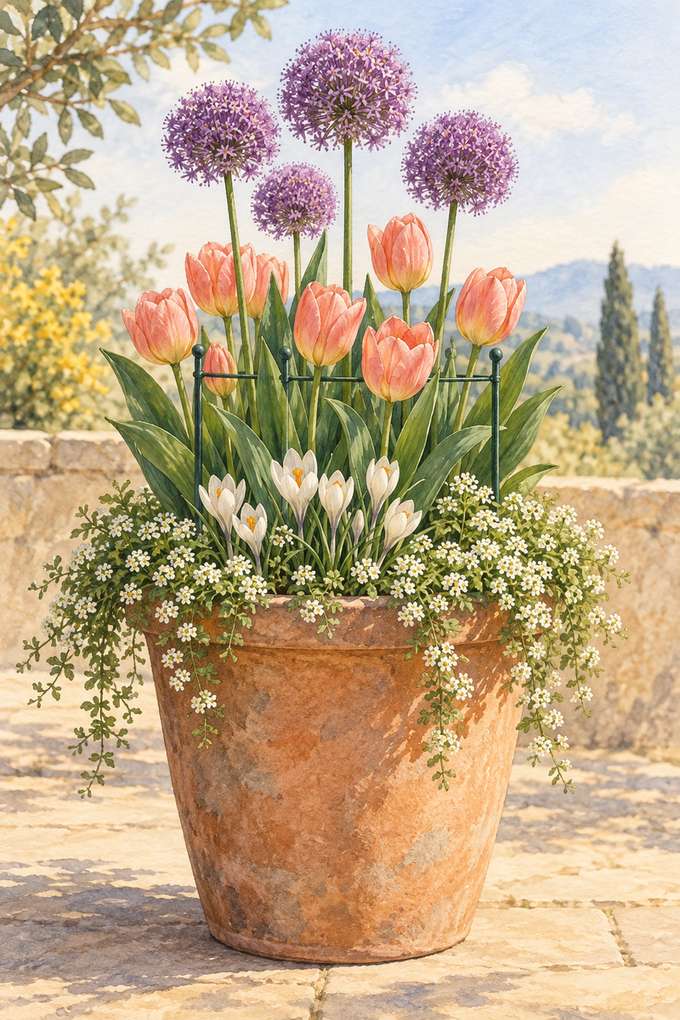
Let small alliums take over after the tulips finish. Place five 'Purple Sensation' alliums near the bottom of a 16-inch-deep pot, add seven midseason 'Menton' tulips above them, and finish with early white crocuses near the surface. The crocuses start the display; tulips fill the middle; 30-inch allium stems carry it toward late spring without using a second container. This needs at least 6 hours of sun and a spot protected from hard crosswinds, because the tall allium stems act like levers. A simple three-stake ring installed at planting is less conspicuous than emergency ties later. The pot will look sparse at soil level by May, so sow a thin surface patch of sweet alyssum only after the bulb shoots are clearly visible.
9. Build a Perennial Bulb Pot Worth Keeping
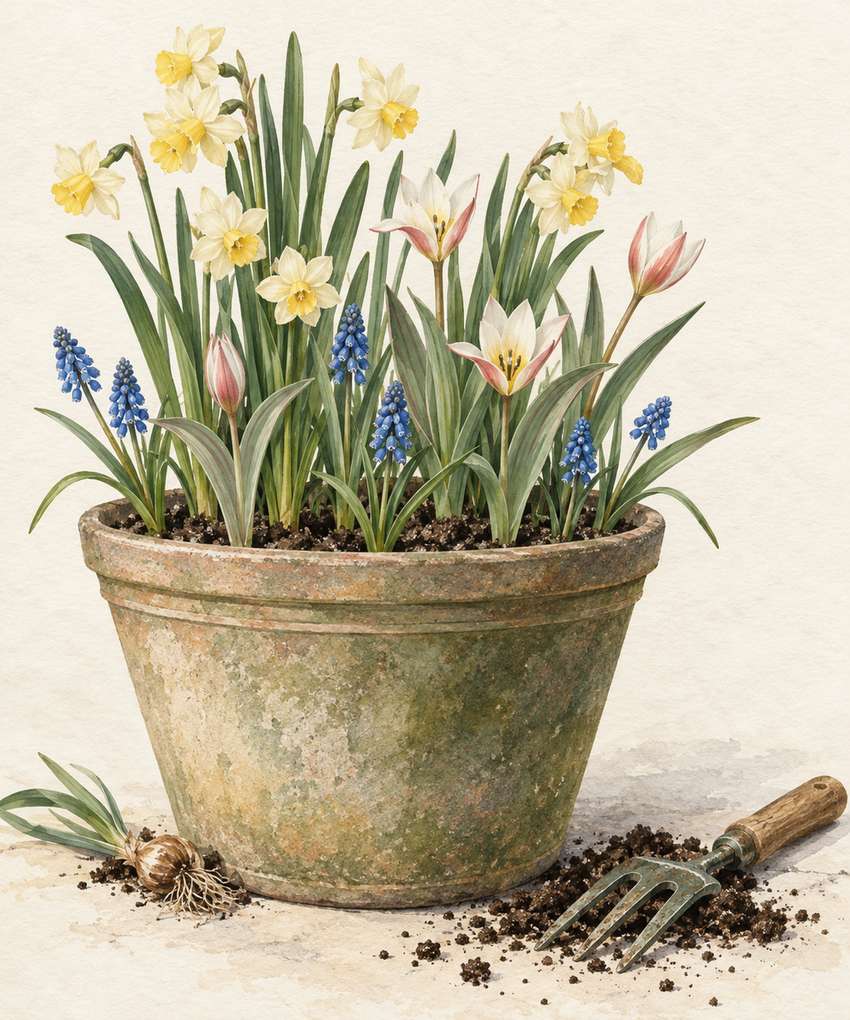
For a container that can return, choose bulbs that tolerate staying put: miniature 'Minnow' daffodils planted low, species tulip 'Lady Jane' above them, and grape hyacinths near the surface. Use a frost-proof pot at least 14 inches wide, fresh free-draining mix, and leave roughly 1 inch between bulbs instead of forcing in the maximum number. Feed once with a low-nitrogen bulb fertilizer as shoots appear, then keep watering until foliage yellows naturally. The first-year display will be looser than a show pot, and grape hyacinths may multiply faster than the tulips. Every 2 to 3 years, lift and divide the bulbs after dormancy, replacing exhausted mix; otherwise roots and offsets can turn the container into a solid, poorly draining mass.
Common questions
- How deep should a container be for layered bulbs?
- Use a pot at least 12 inches deep for dwarf bulbs and about 16 inches deep when layering standard daffodils, tulips, and crocuses. Follow each bulb's label depth, offset the layers, and preserve 1 to 2 inches of headspace below the rim. The container must have open drainage holes.
- Can a layered bulb pot stay outside all winter?
- Usually, if the bulbs suit your zone and the pot is frost-proof, but containers run colder than garden soil. In severe-winter areas, shelter the pot in an unheated garage or against a protected wall after the mix has chilled; keep it cold, barely moist, and never indoors beside a heater. Check your zone and the hardiness of each bulb.
- How much sun do layered spring bulbs need?
- Most tulips, daffodils, and alliums perform best with at least 6 hours of spring sun. Snowdrops, squill, and snake's-head fritillaries can manage bright partial shade, but their leaves still need light after flowering to replenish the bulbs. A dark covered balcony is not enough, even if the first year's stored energy produces flowers.
- What should I do with the container after blooming?
- Snip off spent flowers but leave every green leaf. Water normally until the foliage turns yellow, then reduce watering and keep the dormant pot from becoming soggy. Dense display pots often decline in year two; either replant with fresh bulbs in fall or lift, dry, and store suitable bulbs according to their needs.