9 Lightweight Container Trees Renters Can Move Without a Forklift
A potted tree gets surprisingly permanent once wet soil, ceramic, and roots add up. These nine compact trees pair with lighter containers and realistic pot sizes, so renters can get height and shade without creating something that cannot leave the patio.
1. Dwarf Meyer lemon in a 10-gallon resin pot
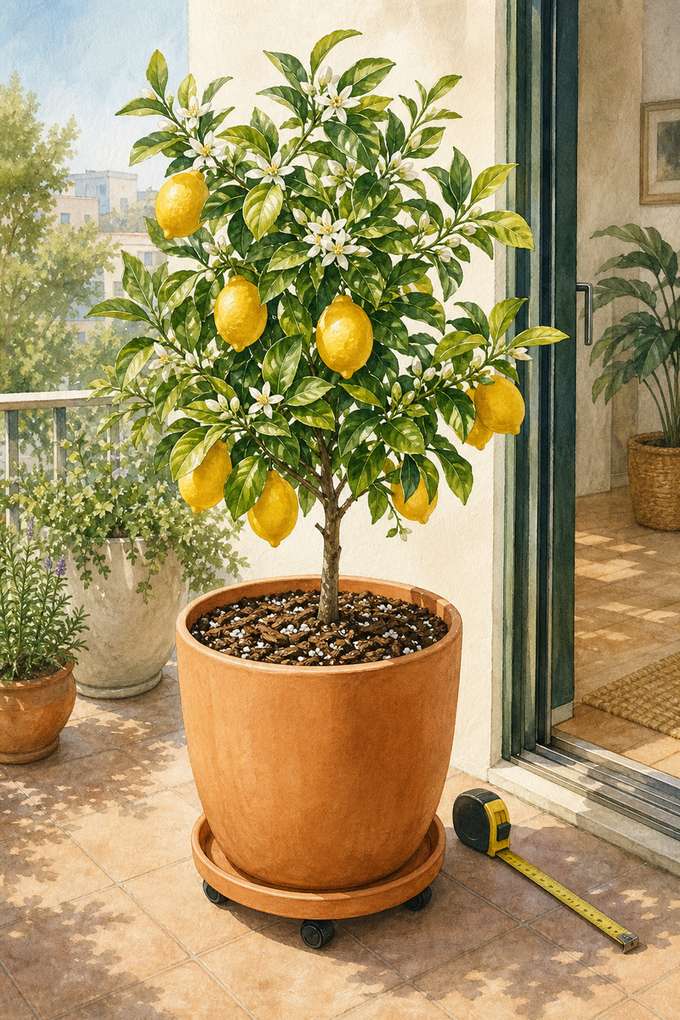
A grafted dwarf Meyer lemon gives you glossy leaves, fragrant bloom, and usable fruit without demanding a half-barrel. Start with a 7- to 10-gallon double-wall resin pot rather than glazed ceramic; the empty container may weigh under 8 pounds, though the watered tree and mix can still reach 45 to 60 pounds. Give it at least 6 hours of direct sun and use a chunky citrus mix, not dense garden soil. Renters in cold-winter areas need a bright indoor spot before nights fall below about 40°F. The catch is indoor cleanup: scale insects and dropped blossoms are common. Put the pot on a low rolling caddy before planting, and never trust a wheeled base on a sloped balcony.
2. Bay laurel kept clipped at 4 feet
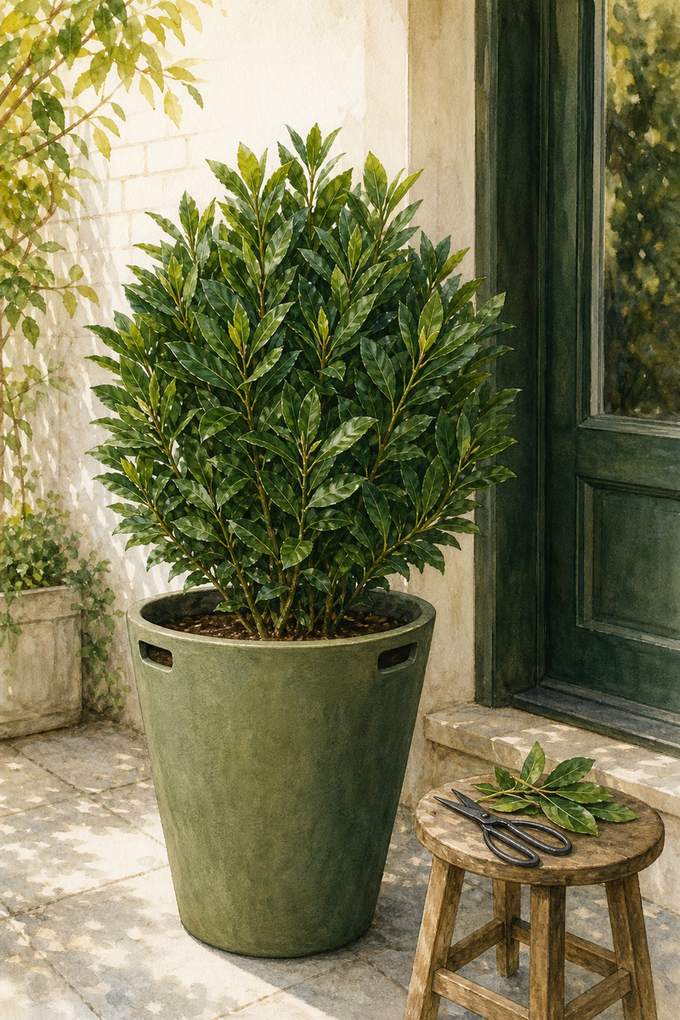
Bay laurel is a real evergreen tree that tolerates regular clipping, so one plant can stay around 3 to 4 feet tall for years. A 10-gallon fiberglass or resin planter provides enough root room without the dead weight of concrete; expect the complete setup to be awkward but movable by two people. Bay prefers 6 hours of sun, yet it handles bright partial shade better than an olive or citrus tree. Let the top inch of mix dry before watering, and use the leaves in cooking. The compromise is slow growth, especially indoors, plus cold sensitivity in pots. If temperatures routinely fall below about 25°F, move it into an unheated bright room or protected entry rather than counting on the in-ground hardiness listed on its tag.
3. 'Little Miss Figgy' fig in a fabric grow bag
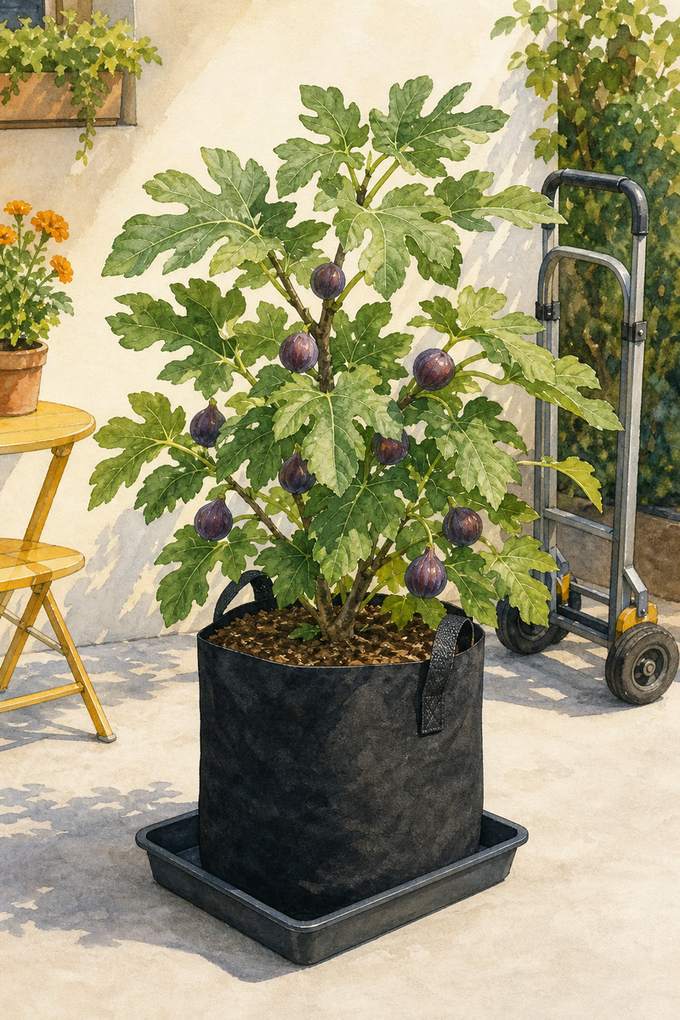
'Little Miss Figgy' is a compact edible fig, commonly kept about 4 to 6 feet, and a 10- to 15-gallon fabric grow bag makes the root ball far easier to grip than a slick urn. Fabric sides also release excess water, useful when a landlord worries about standing puddles. Give the tree 6 to 8 hours of sun and set the bag in a shallow, rigid tray so damp fabric does not stain concrete. A full bag is not featherlight; plan on two-person lifting when watered, and move it after the mix has partly dried. Figs drop leaves in winter, which surprises renters expecting year-round screening. In colder zones, wheel the dormant plant into a garage or sheltered space and check local guidance because container roots freeze sooner than roots in the ground.
4. Dwarf pomegranate 'Nana' in an 8-gallon pot
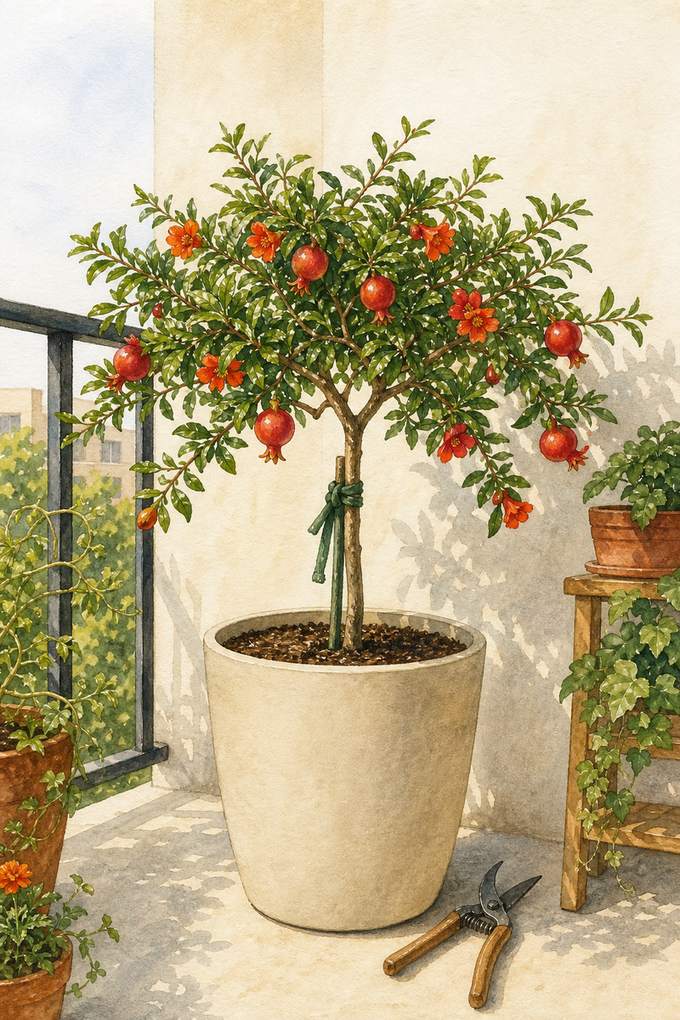
Dwarf pomegranate 'Nana' brings orange-red flowers and tiny ornamental fruit on a shrub that is easily trained into a 3-foot miniature tree. Its modest root system fits an 8- to 10-gallon lightweight nursery or resin pot, a noticeably easier load than most fruit trees require. Full sun, ideally 6 or more hours, produces the best flowering. Pinch lower shoots to keep one short trunk, but leave enough foliage to avoid a top-heavy lollipop shape in wind. The fruit is mostly decorative rather than a worthwhile harvest, and the deciduous plant can look bare for months. It also dislikes cold roots. Where winter lows fall well below freezing, move the dormant pot to a protected garage or treat it as a seasonal patio plant after checking the cultivar's local hardiness.
5. 'Arbequina' olive in a plastic nursery pot and cachepot
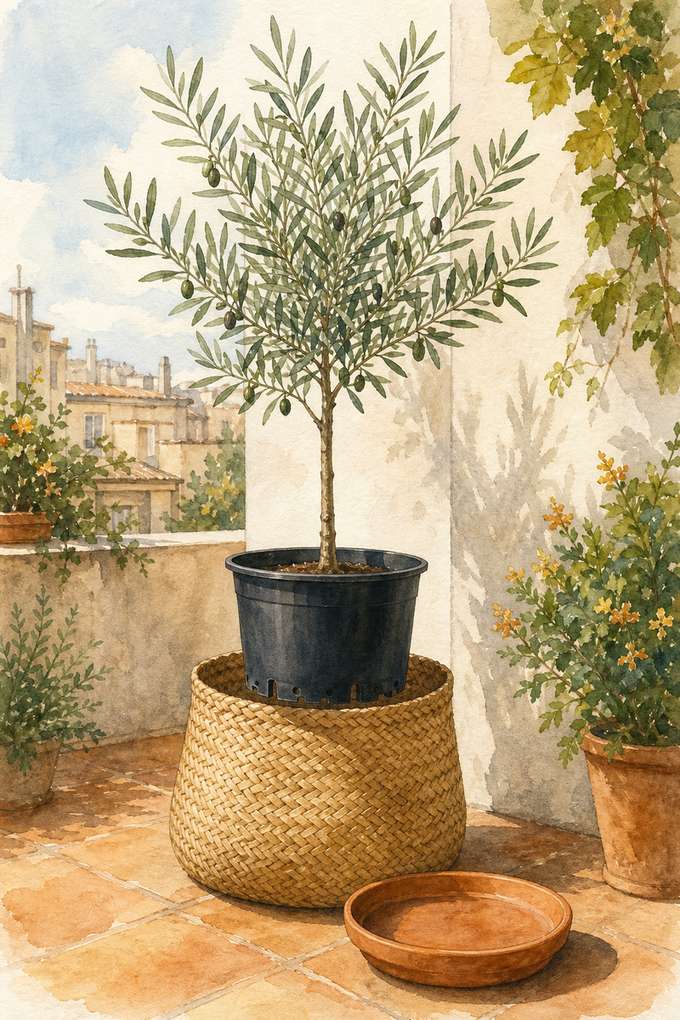
An 'Arbequina' olive has narrow gray-green leaves and a naturally airy canopy, so it adds tree form without a huge visual or physical footprint. Keep the functional container simple: a 7- to 10-gallon black nursery pot slipped inside a lightweight woven or fiberstone cachepot. When moving day comes, lift the nursery pot out and carry the two pieces separately. Olives need at least 6 hours of hard sun and sharply drained mix; a dim living room is not a winter solution. They also want a cool period and may never fruit reliably in a container, especially without strong light. Wind can tip the narrow canopy, so choose a broad-based outer pot and secure it according to building rules. Empty the cachepot after watering, since hidden standing water is the quickest route to root trouble.
6. Patio peach 'Bonanza' on a wheeled base
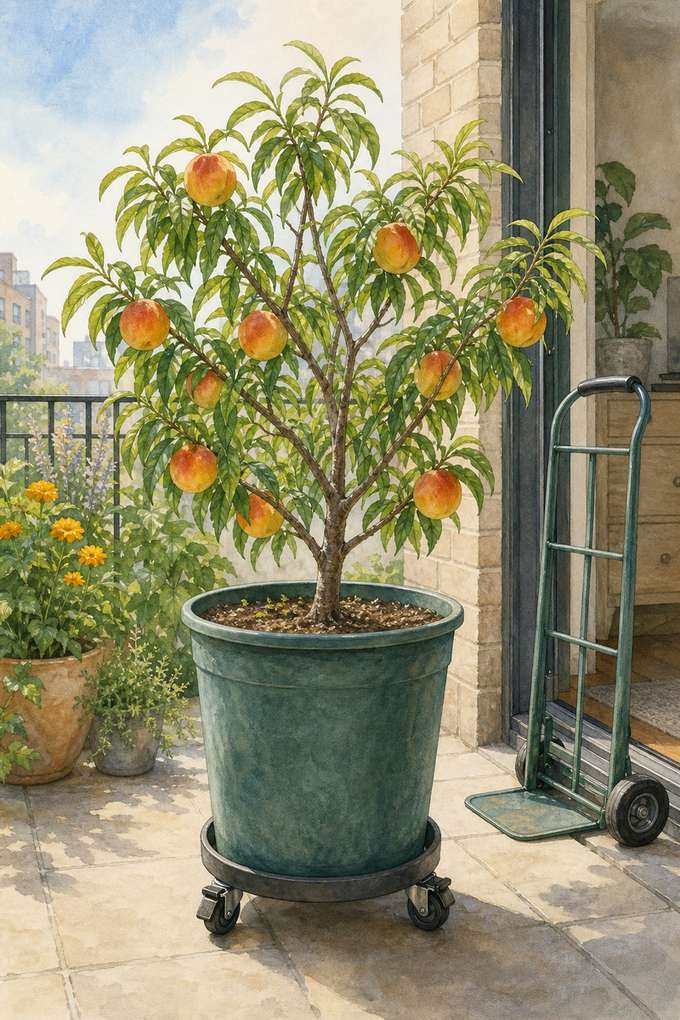
'Bonanza' is a genetic dwarf peach with full-size leaves and fruit on a plant often kept near 4 to 6 feet. Give it a 12- to 15-gallon lightweight resin pot, which is about the minimum practical volume for steady moisture and root insulation. That much wet mix is heavy, so assemble it on a locking, outdoor-rated caddy before the tree goes in. It needs 6 to 8 hours of sun plus winter chill; warm-climate renters should check whether local chill hours suit the cultivar. Peach leaf curl and aphids are real maintenance issues, and thinning young fruit prevents small branches from snapping. The tree is deciduous, not permanent privacy. Roll it only across a level patio, and use two people or a hand truck for thresholds rather than yanking the trunk.
7. Japanese maple 'Mikawa yatsubusa' in a squat resin bowl
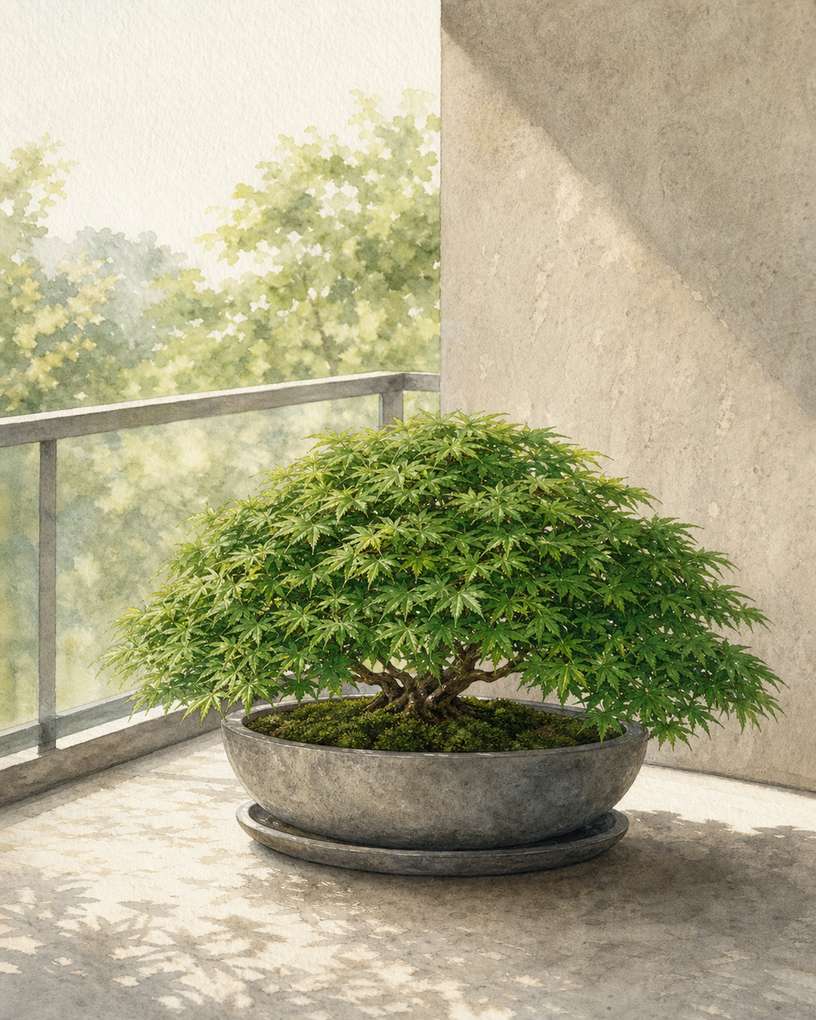
'Mikawa yatsubusa' Japanese maple grows slowly and stacks its leaves densely, making it a good small tree where afternoon shade matters more than fruit. A squat 10- to 12-gallon resin bowl keeps the center of gravity low and avoids the weight of a stone-look trough. Place it where it gets morning sun and protection from hot western exposure; reflected heat and dry balcony wind can scorch the leaf edges in a day. The trade-off is price, since named Japanese maple cultivars cost more than common nursery shrubs. It also needs even moisture without a waterlogged saucer. In cold regions, protect the container because roots are less insulated above ground. Before buying, check mature size and hardiness on the exact cultivar tag; generic "Japanese maple" labels cover trees with very different habits.
8. Tree-form rosemary in a 5-gallon handled planter
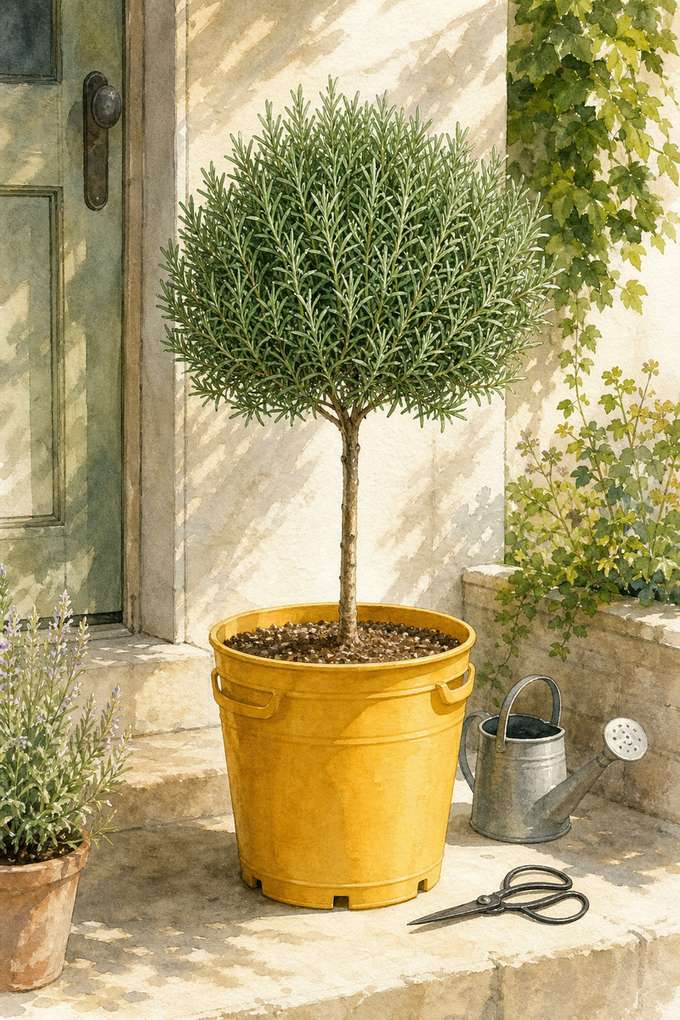
Tree-form rosemary is a woody herb trained onto one trunk, usually sold at 2 to 3 feet tall, and it delivers the silhouette of a tiny evergreen with a much smaller root ball. A 5-gallon lightweight plastic planter with molded handles can be carried by one strong adult after the mix dries slightly. Use gritty potting mix and give it 6 or more hours of sun; constantly damp roots kill rosemary faster than a missed watering. Shear the canopy lightly after flowering, but do not cut deep into leafless old wood because it may not resprout. The honest limitation is longevity: indoors, rosemary often declines from weak light, warm dry air, or spider mites. In climates colder than its hardiness allows, a cool bright room is better than a heated corner, though survival is never guaranteed.
9. Dwarf Alberta spruce in a lightweight nursery setup
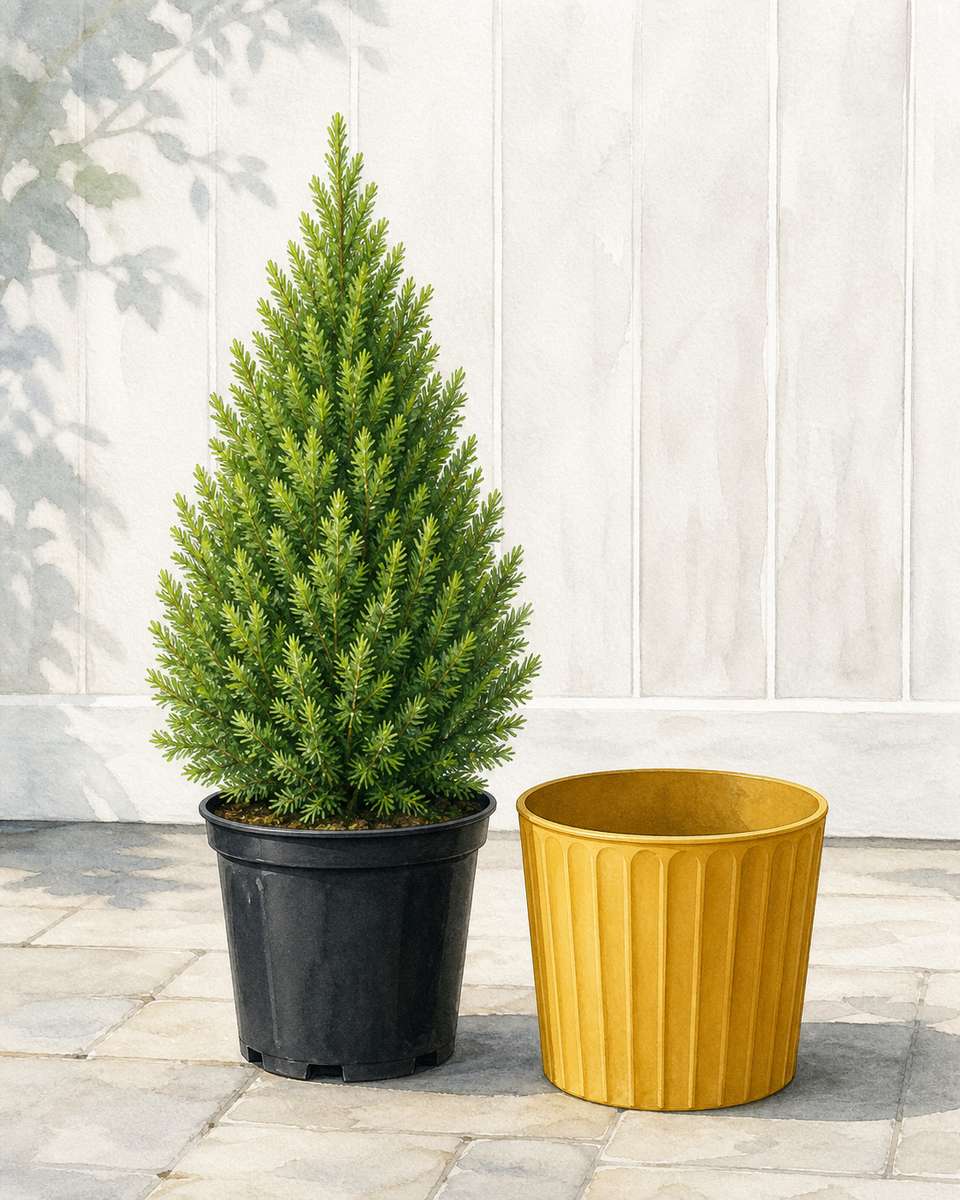
Dwarf Alberta spruce supplies a tidy evergreen cone and usually grows only a few inches per year, so a young specimen can live in a 7- to 10-gallon plastic pot for several seasons. Skip the heavy decorative urn. Instead, drop the nursery container into a weatherproof lightweight sleeve and separate them whenever you move it. This spruce wants bright sun in cool climates, consistent moisture, and good air circulation. Hot reflected walls, drying wind, and spider mites can turn the inner needles brown, making it a poor pick for a blazing south-facing balcony in the lower South. It is cold hardy in the ground, but an exposed pot has less root protection. Check your zone and shelter the container as needed; do not haul it into a warm apartment for winter, where heat can break dormancy.
Common questions
- How much does a planted 10-gallon tree container weigh?
- There is no dependable universal number because wet mix, root mass, and pot material vary. A 10-gallon setup can easily land around 45 to 70 pounds, even when the empty resin pot weighs only a few pounds. Weigh the finished pot on a bathroom or luggage scale if building limits matter, and ask management for the balcony's permitted load rather than relying on a generic online rating.
- What is the lightest safe container material for a small tree?
- UV-resistant nursery plastic, double-wall resin, fabric grow bags, and some fiberglass planters are lighter than terracotta, concrete, or glazed ceramic. A wide base matters as much as empty weight in windy spaces. Do not make a tall tree dangerously top-heavy just to save pounds; use a squat pot, keep the canopy pruned, and follow building rules instead of fastening it to railings.
- Can container trees stay outdoors through winter?
- Sometimes. Container roots are more exposed than roots in the ground, so a tree listed as hardy in your zone may still need a sheltered wall, an insulated pot, or an unheated garage. Citrus, bay, rosemary, and pomegranate are especially climate-dependent. Check the exact cultivar and your local extension guidance; avoid bringing truly dormant trees such as spruce into a warm apartment.
- How do I move a container tree without damaging it?
- Let the mix drain and become slightly drier, remove any cachepot, tie loose branches gently, and move the trunk only as a guide, never as a handle. Use a hand truck or a locking plant caddy on level ground. For stairs, thresholds, or pots above roughly 40 pounds, recruit another person and lift from the container base.