9 Raised-Bed Vegetable Garden Layouts for Small Yards
A raised bed can fit a tiny yard without swallowing the walking space, but its width, sun exposure, and crop placement matter. These nine layouts include practical spacing, companion plants, and the trade-offs to check before filling the bed.
1. Divide a 4-by-4 Bed Into a Simple Square-Foot Grid
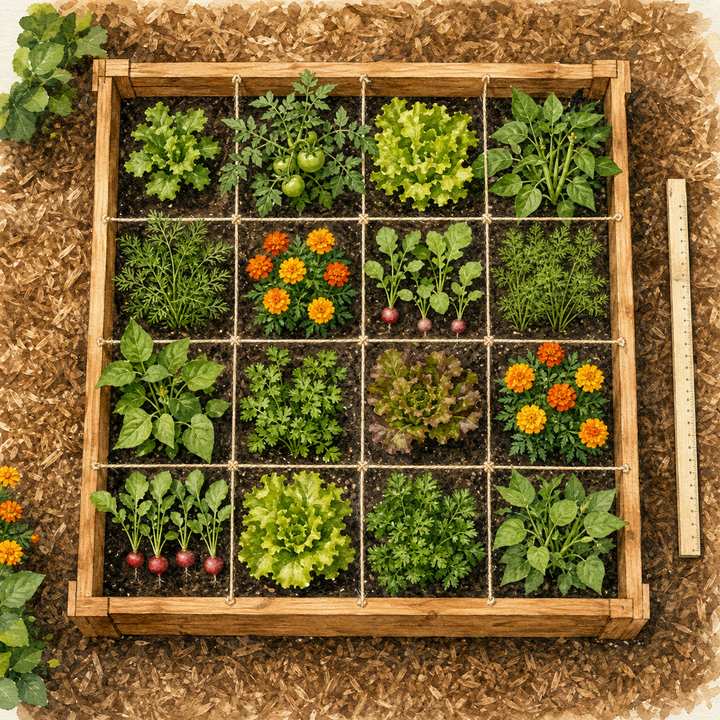
This compact layout divides a 4-by-4-foot bed into sixteen 12-inch squares, making spacing easier to see and succession planting easier to manage. Put one tomato in a square, four heads of leaf lettuce, nine bush beans, or sixteen radishes, adjusting for the seed packet’s mature spacing. A 4-foot width only works when you can reach the bed from both long sides; against a fence, keep it closer to 30–36 inches wide. Use thin wood lath or cotton string for the grid rather than plastic dividers that trap debris. The downside is that vigorous plants ignore neat boundaries, so give zucchini at least four squares or grow it elsewhere.
2. Run a 2-by-8 Trellis Bed Along a Sunny Fence
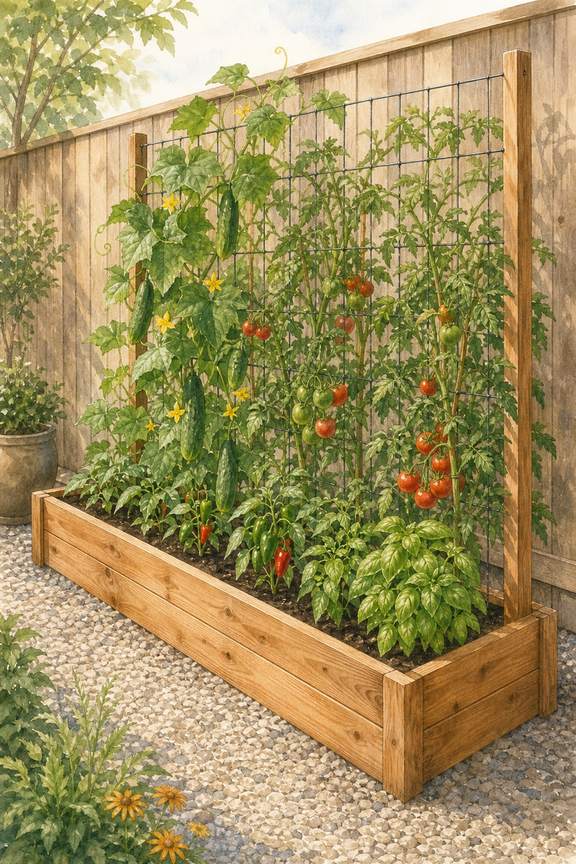
A 2-by-8-foot bed turns a narrow fence line into a productive strip without leaving an unreachable middle. Install a 6-foot trellis along the bed’s north side, then grow cucumbers or indeterminate tomatoes vertically at roughly 12–18-inch spacing. Place peppers or bush beans in front, with shallow-rooted basil near the corners. The north-side position keeps the trellis from shading shorter crops when the yard receives southern sun; reverse the plan if a building changes your light pattern. Leave 6–12 inches between a wooden fence and the bed for airflow and repairs. Trellising saves ground space, but vines need weekly tying and can act like a sail in windy yards.
3. Build an L-Shaped Bed Around a Tiny Patio Corner
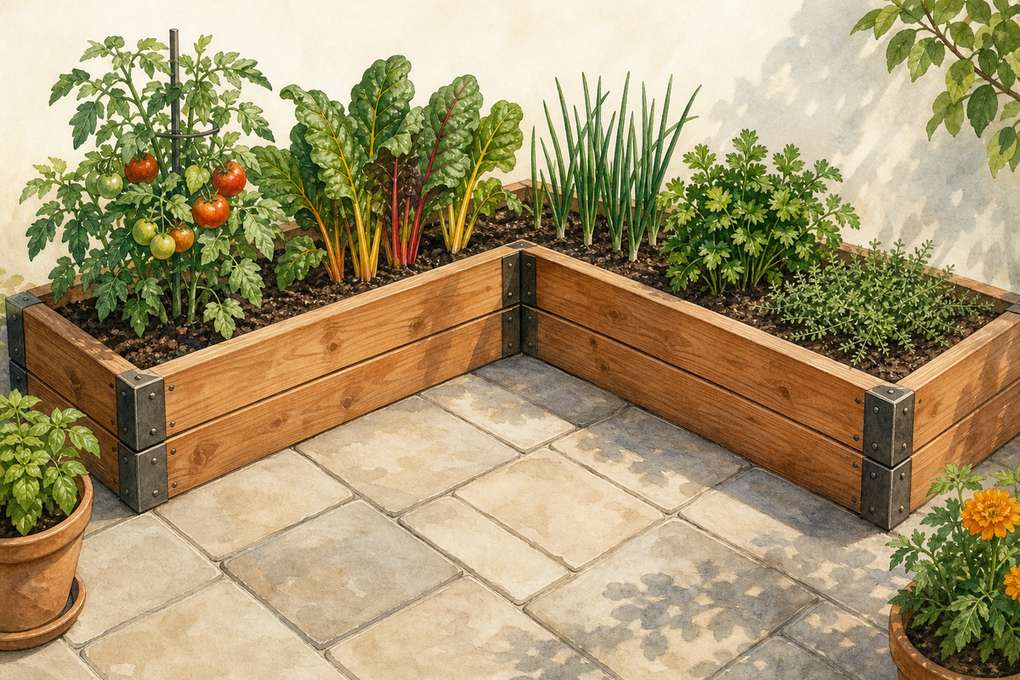
An L-shaped bed uses a dead patio corner while keeping vegetables within arm’s reach. Make each leg 6 feet long and 24–30 inches wide, with the inside corner open to the paving rather than packed into a deep, unreachable triangle. Grow one compact tomato at the outer end, a row of Swiss chard at 8–12-inch spacing, and parsley, scallions, or thyme closer to the seating area. Check that the remaining walkway stays at least 30 inches wide; allow about 36 inches if a gate or wheelbarrow passes through. The shape needs more lumber and careful leveling than a rectangle, and the inside joint is prone to bowing unless it has a solid corner brace.
4. Use a 3-by-6 Bed for Cut-and-Come-Again Salads
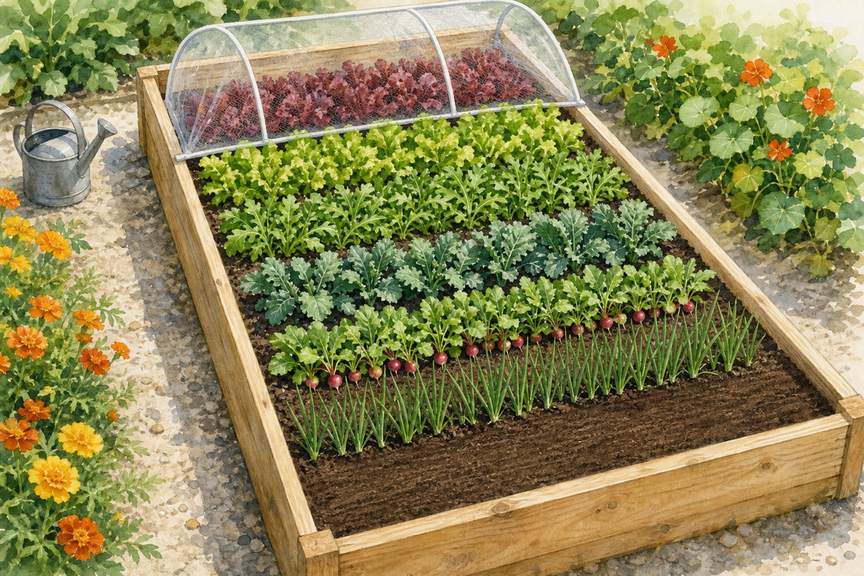
This 3-by-6-foot layout is devoted to quick greens, arranged in short bands across the bed so one section can be harvested without trampling another. Sow 12-inch bands of loose-leaf lettuce, arugula, baby kale, and radishes, leaving one band empty for the next sowing 10–14 days later. Tuck scallions between rows because their upright leaves use little horizontal room. The bed performs best with morning sun and some afternoon relief once temperatures climb; lettuce often turns bitter or bolts in sustained heat. A light hoop of insect mesh can deter flea beetles, but it must be lifted for harvesting. This layout supplies frequent small bowls, not large storage harvests.
5. Plant a 4-by-6 Salsa Bed With Tomatoes at the Back
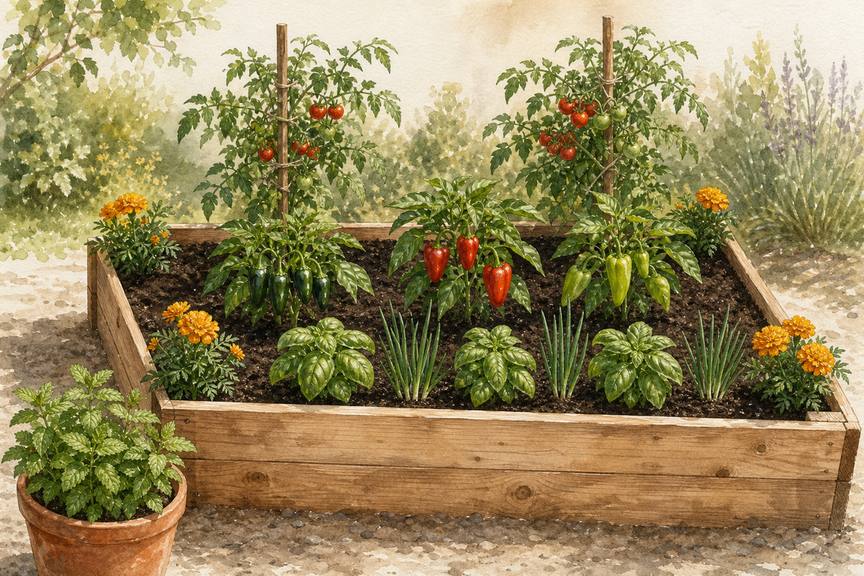
A salsa bed groups warm-season ingredients in one 4-by-6-foot rectangle: two staked tomatoes along the north edge, three peppers spaced about 18 inches apart, and basil tucked near the front corners. Add a short row of bunching onions, but keep spreading mint in a separate pot. Cilantro can occupy open soil in spring, then come out when heat makes it bolt and the tomatoes need more room. This is convenient companion planting, not guaranteed pest control; basil and marigolds do not create a force field around tomatoes. The bed needs at least 6–8 hours of direct sun and consistent watering. Crowding extra tomatoes in will reduce airflow and make leaf disease harder to manage.
6. Give Climbing Beans the Center of a Keyhole Bed
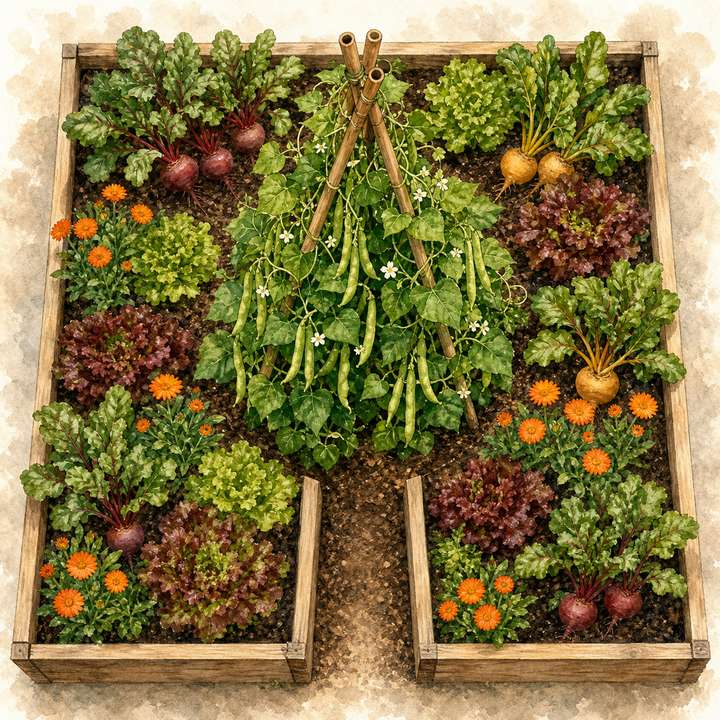
A small keyhole layout wraps a narrow bed around a central access notch, letting you reach more soil without stepping into it. Keep the overall footprint around 6 by 6 feet, the planted arms no wider than 30 inches, and the entry path at least 24 inches wide. Set a tripod of 7-foot bamboo poles near the back of the center curve for pole beans, then plant compact beets, lettuce, and calendula around the outer edges. Position the bean support where it will not shade the whole bed during peak afternoon sun. The curved form looks efficient, but it takes more cuts and edging material than a rectangle, and a 24-inch notch may feel cramped for gardeners with limited mobility.
7. Interplant Slow Carrots With Quick Radishes
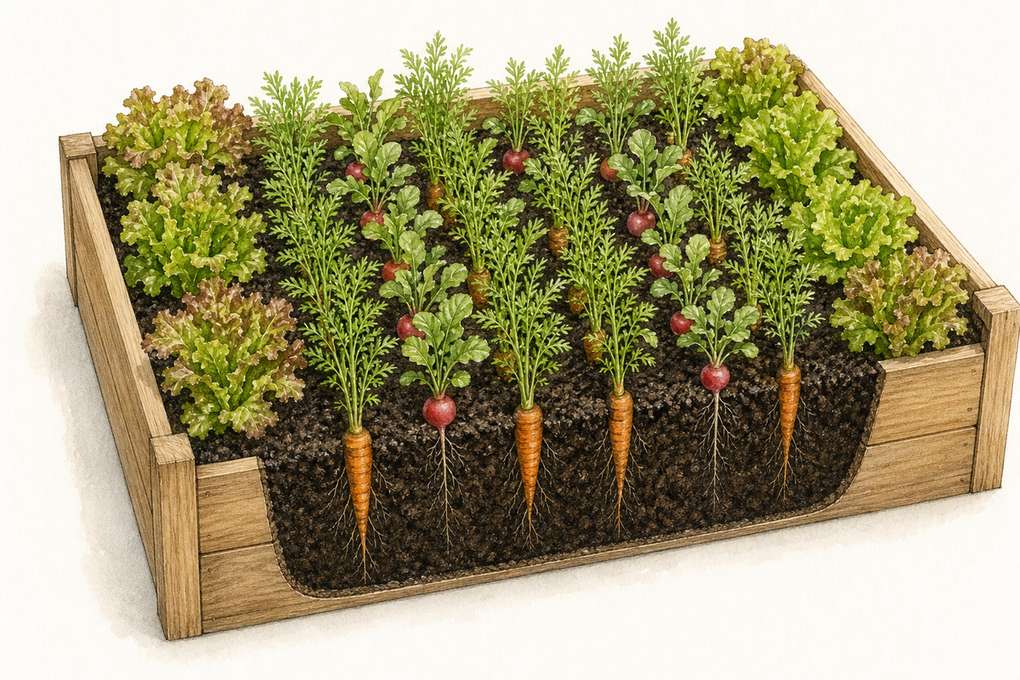
Use a 3-by-4-foot root-crop bed as a timing puzzle rather than giving every vegetable a permanent row. Sow carrots in lines 6–8 inches apart and place radish seeds between them; most radishes can be pulled before the slower carrots need their final 2–3-inch spacing. Edge the bed with leaf lettuce, which can also be harvested young as roots expand. Choose a soil mix free of stones and uncomposted wood chunks, and aim for at least 10–12 inches of loose soil for straight carrots. Radishes help mark the rows, but they do not eliminate carrot thinning. The main drawback is moisture management: the soil surface must stay evenly damp during germination without remaining waterlogged below.
8. Reserve One Sunny Edge for Flowers and Beneficial Insects
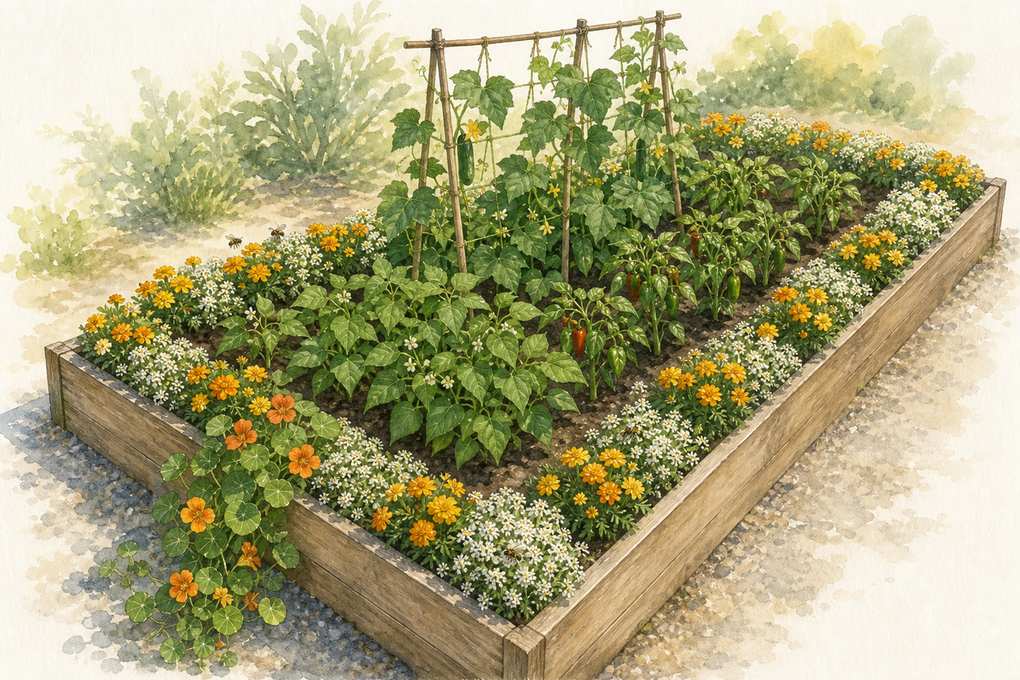
This layout gives a 12-inch strip along one edge of a 4-by-8-foot vegetable bed to compact flowers instead of squeezing blooms randomly between crops. Plant sweet alyssum near the corners, dwarf French marigolds about 8–10 inches apart, and one nasturtium where it can trail over the side. Use the remaining space for bush beans, peppers, and a single trellised cucumber. Flowers provide forage and make pollinators easier to spot, but they cannot guarantee fewer pests; inspect leaves and handpick problems anyway. Choose the edge that receives strong sun without shading vegetables. The honest trade-off is yield: the flower strip occupies roughly one-eighth of the bed, and nasturtiums may need trimming when they sprawl.
9. Pair Two 3-by-6 Beds for Easier Crop Rotation
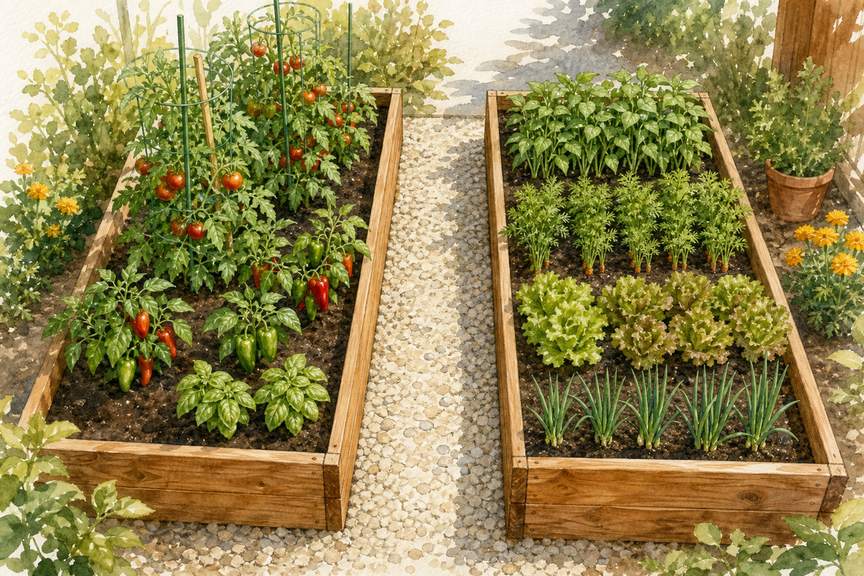
Two 3-by-6-foot beds separated by a 30–36-inch path make rotation more practical than trying to reorganize one crowded box. In year one, place tomatoes, peppers, and basil in the sunnier bed; use the other for bush beans, carrots, lettuce, and scallions. The following year, swap the main crop groups and refresh each bed with 1–2 inches of finished compost. Rotation can reduce repeated pressure from some soilborne problems, but two small beds are not enough for a textbook four-year system, so resistant varieties and good cleanup still matter. This arrangement needs roughly a 9-by-6-foot footprint including the path. It also costs more to build and fill than one equivalent bed.
Common questions
- How wide should a raised vegetable bed be?
- Keep a bed accessible from both sides no wider than about 4 feet. If it sits against a fence or wall, 24–36 inches is more realistic because you must reach everything from one side. Avoid designing any spot that requires stepping on the soil.
- How much sun does a raised-bed vegetable garden need?
- Tomatoes, peppers, cucumbers, and beans generally perform best with 6–8 hours of direct sun. Lettuce, kale, radishes, and many herbs can manage with about 4–6 hours, especially where summers are hot. Watch the actual site for a day because fences and buildings can create moving shade.
- Can I put a raised bed on a deck or rooftop?
- Only after confirming the structure’s load limit with the owner, building manager, or a qualified professional. Wet soil is extremely heavy, and a standard raised bed holds far more volume than a planter. Also plan for drainage so runoff cannot stain surfaces, reach neighbors, or damage the building.
- What happens to a raised bed in winter?
- Hardy crops such as kale, spinach, and mâche may overwinter with a low cover, depending on your USDA zone. Otherwise, remove diseased plants, leave healthy roots or add mulch, drain irrigation lines, and protect untreated wood as needed. Raised soil freezes faster than in-ground soil during cold, windy weather.