9 Self-Watering Container Garden Ideas for Hot Summers and Busy Renters
Small containers can dry out before dinner when summer sun hits a balcony or patio. These nine reservoir and wicking setups stretch the time between waterings while accounting for weight, drainage, mosquitoes, and renter rules.
This page contains affiliate links — we may earn a commission at no extra cost to you. See our disclosure.
1. Put one patio tomato in a 5-gallon reservoir planter
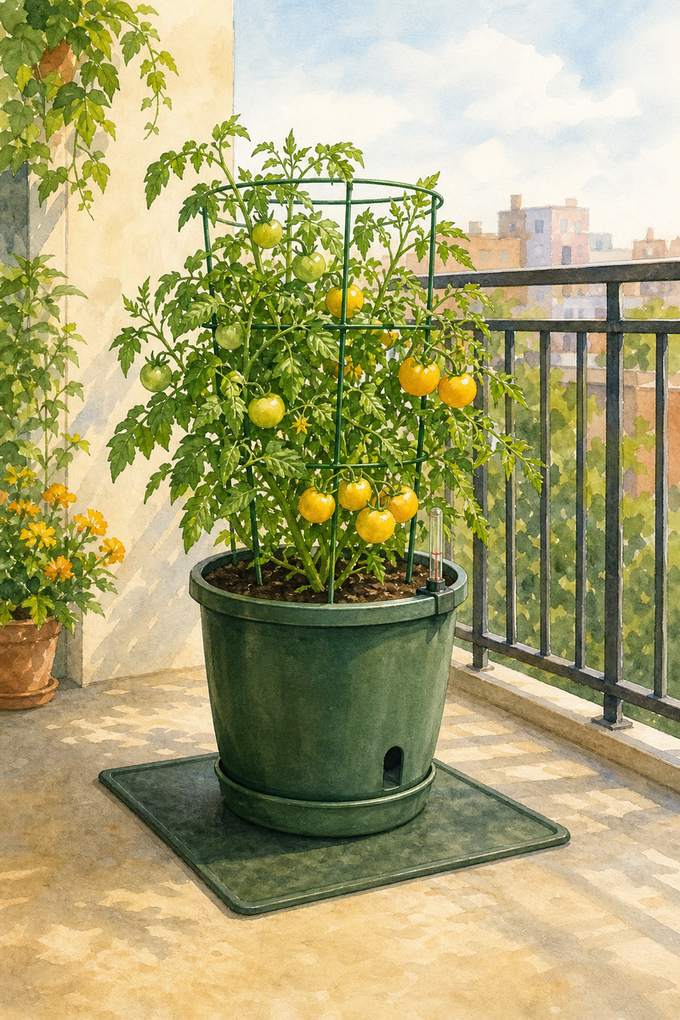
A 5-gallon self-watering planter gives one compact tomato, such as 'Patio Choice Yellow' or 'Tidy Treats,' a reservoir beneath the potting mix. Choose a model with an overflow hole and a visible fill tube, then use fresh container mix rather than dense garden soil. A mature fruiting plant may still empty a 1-gallon reservoir in a day during a windy heat wave, so this is not permission to leave for a week. Water from the top for the first 10 to 14 days while roots reach the wicking zone. The full planter can weigh 45 pounds or more; confirm your balcony rules and place it where overflow cannot drip onto a neighbor.
Product pick — a 5-gallon self-watering tomato planter with a fill tube
2. Build a two-bucket reservoir for one pepper plant
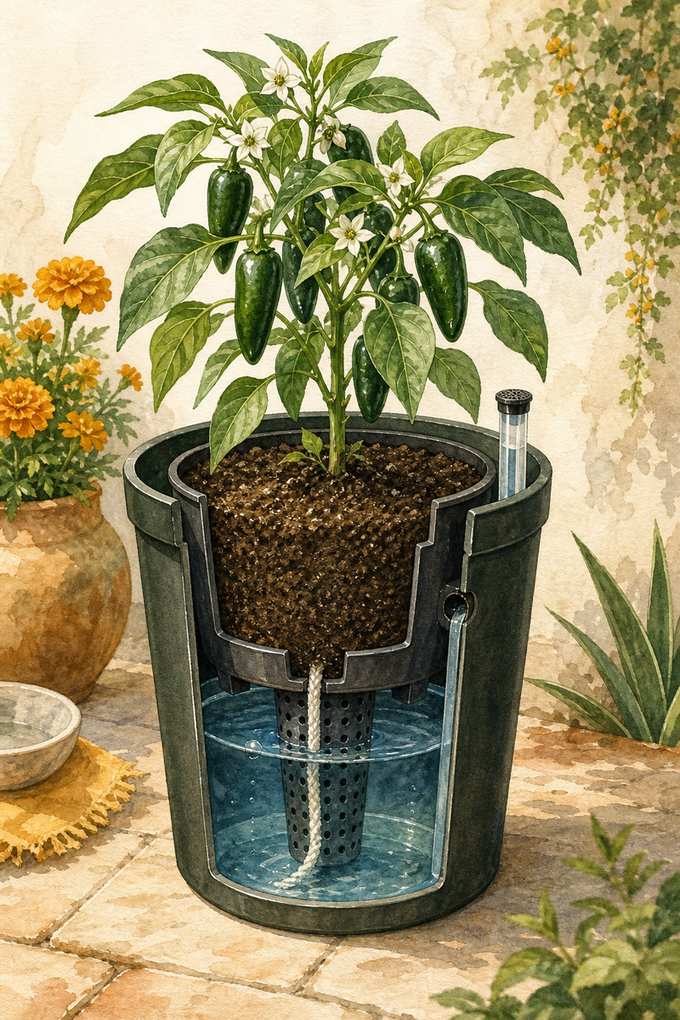
Two nested food-grade 5-gallon buckets make a sturdy sub-irrigated planter for a jalapeño or compact sweet pepper. The upper bucket holds potting mix and a perforated wicking cup; the lower one holds roughly 2 gallons of water. Drill the overflow hole about 2 inches below the upper bucket's base so roots do not sit in a completely flooded mix. This setup is inexpensive and easier to repair than a molded planter, but it looks utilitarian and becomes awkward to move once filled. Expect a planted pair to weigh 40 to 55 pounds. Use an opaque outer bucket because sunlight encourages algae, and cover the fill tube opening with mesh to keep mosquitoes out.
3. Wick fabric grow bags from a shallow covered tray
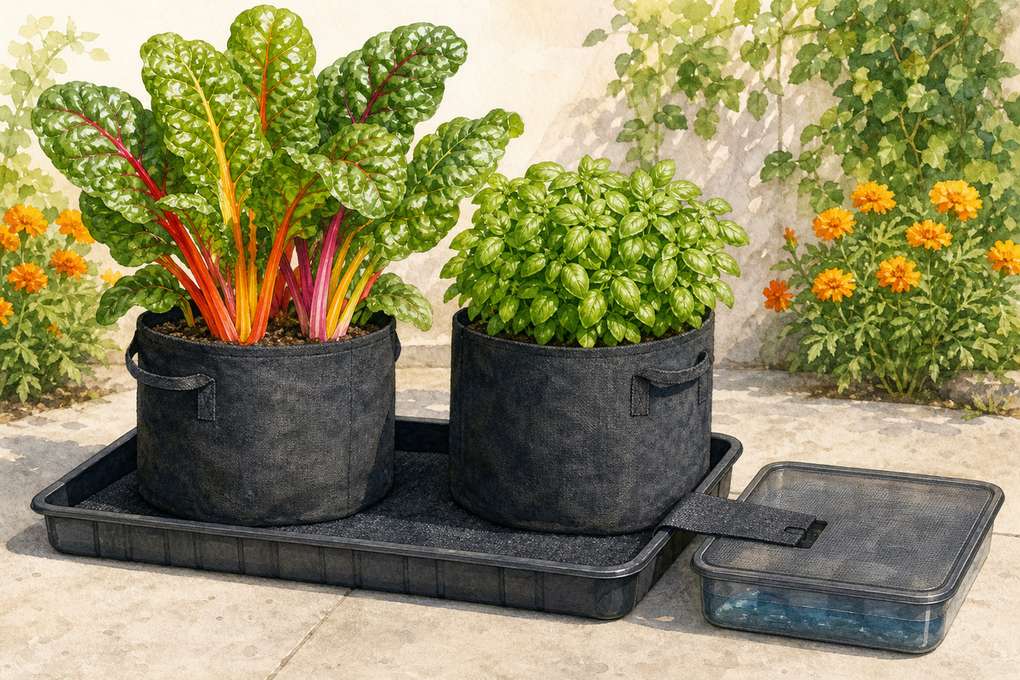
Set two 3-gallon fabric grow bags on a capillary mat that dips into a nearby covered water tray. The mat pulls moisture toward shallow-rooted crops such as bush beans, chard, or dwarf basil without leaving the entire bag submerged. Keep the tray only 1 to 2 inches deep and cut a fitted lid around the mat; an open tray becomes a mosquito nursery and loses water quickly in hot wind. Fabric bags evaporate through their sides, so this arrangement buys time rather than matching the efficiency of a sealed reservoir planter. It works best on level concrete with a waterproof boot tray underneath. Test it for several days before relying on it during a weekend away.
4. Use a locking self-watering railing box for summer flowers
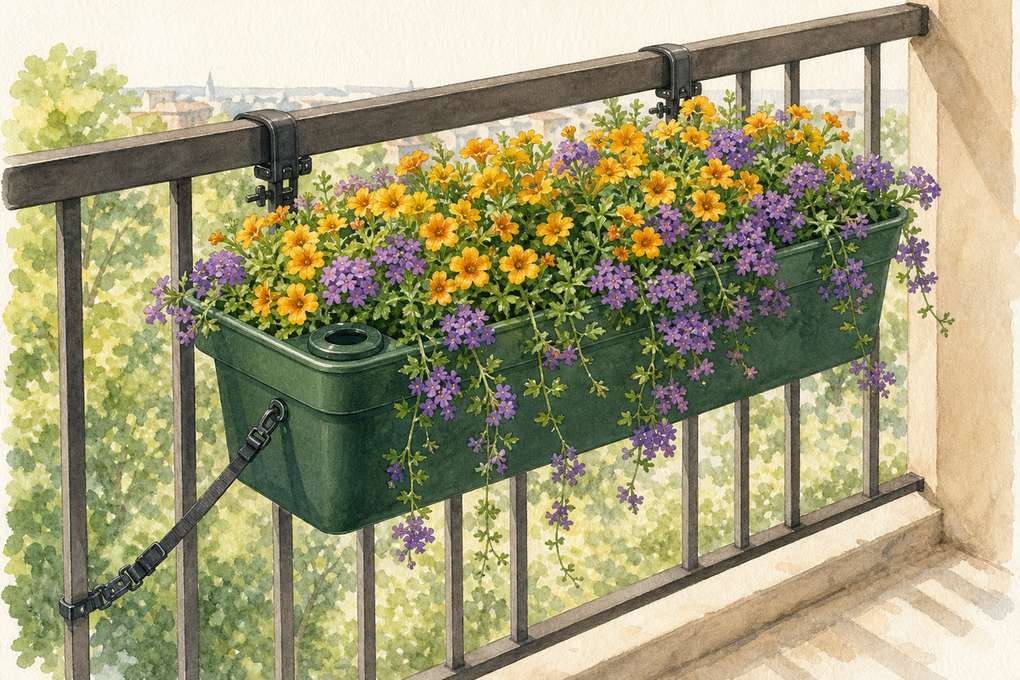
A 24-inch self-watering railing box can support heat-tough flowers without taking up floor space. Plant two calibrachoas with one trailing verbena, leaving room for air circulation, and look for a reservoir of at least 0.75 gallon. The mounting hardware matters more than the color: use the manufacturer's brackets, tighten every clamp, and add a secondary safety strap if your building permits one. Never balance a planter loose on the rail. Wet mix, water, and plants can push a box past 30 pounds, so check the rail's condition and your lease before installing it. West-facing boxes may still need daily reservoir checks in July because flowers and constant wind use water fast.
Product pick — a locking self-watering railing planter
5. Bury a small terracotta olla among Mediterranean herbs
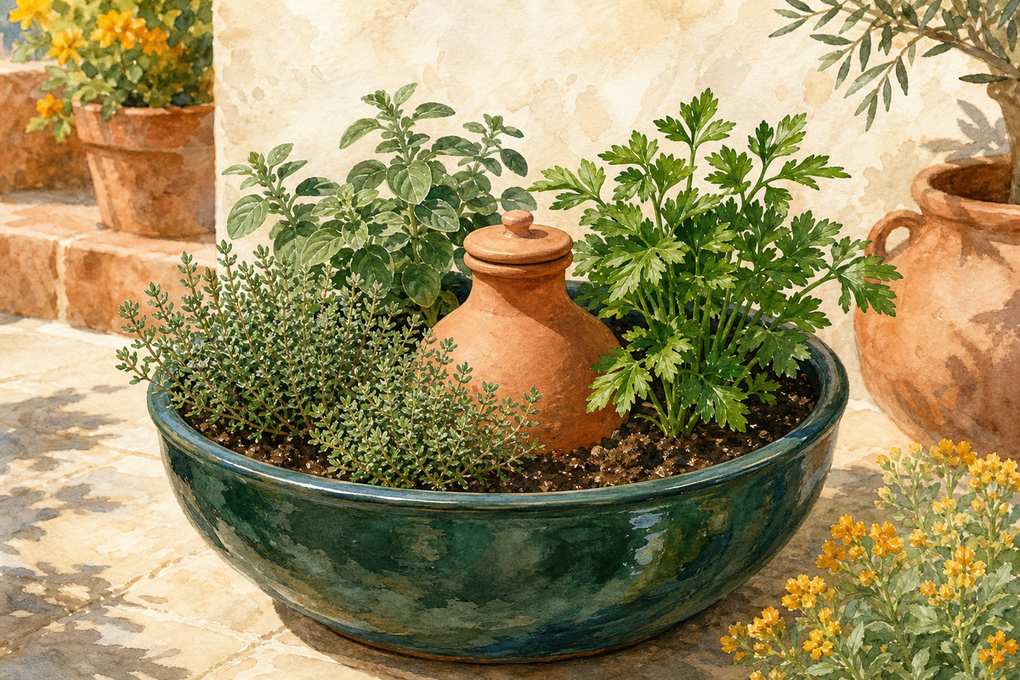
A 1-quart unglazed terracotta olla slowly releases water into a wide herb pot as the surrounding mix dries. Bury it to the neck in a 16-inch container, then plant thyme, oregano, and flat-leaf parsley several inches from the vessel. Keep the lid on so water does not evaporate or attract insects. This method has no overflow reservoir and gives less consistent moisture than a commercial sub-irrigated planter, but the simple clay vessel is easy to lift and replace. Check it every two or three days at first; parsley drinks faster than thyme in full sun. Remove the olla before a hard freeze because water trapped in porous clay can crack it, and do not mistake a full olla for proof that the outer edges are moist.
6. Make a lidded wicking tote for heat-protected salad greens
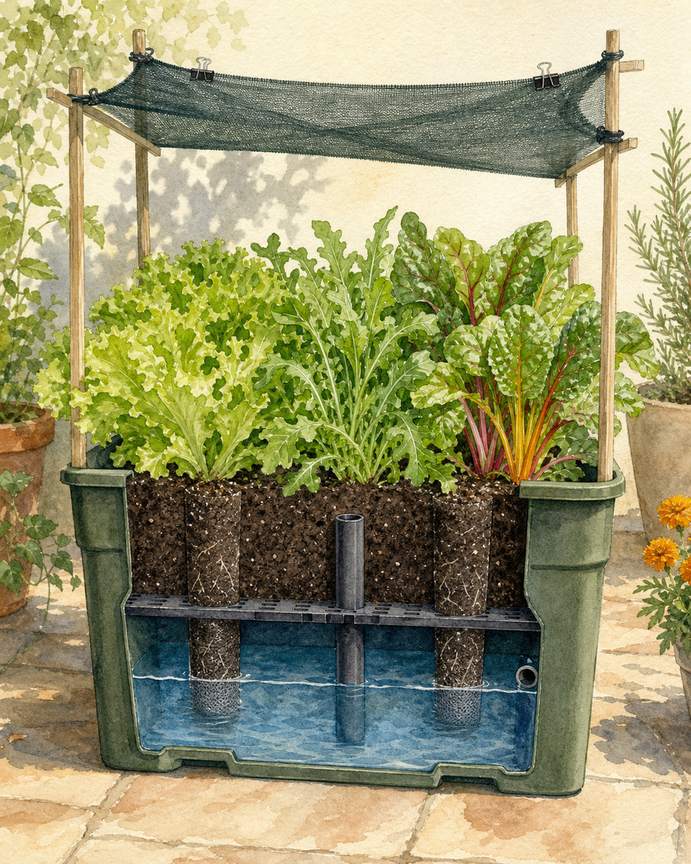
A 10-gallon opaque storage tote can become a shallow wicking bed for loose-leaf lettuce, arugula, and baby chard. Install a false bottom above a 2- to 3-inch reservoir, add two soil-filled wicking columns, and drill an overflow hole just below the platform. Greens will bolt in sustained heat even with perfect watering, so place the tote where it receives morning sun and afternoon shade, or clip 40 percent shade cloth above it. A filled tote may weigh 65 to 80 pounds and should stay in one permanent spot. Use a UV-resistant, food-safe tote rather than a clear indoor bin, and inspect the lid and sidewalls each season because cheap plastic grows brittle outdoors.
7. Convert a 12-inch pot with a bottle-and-cord wick
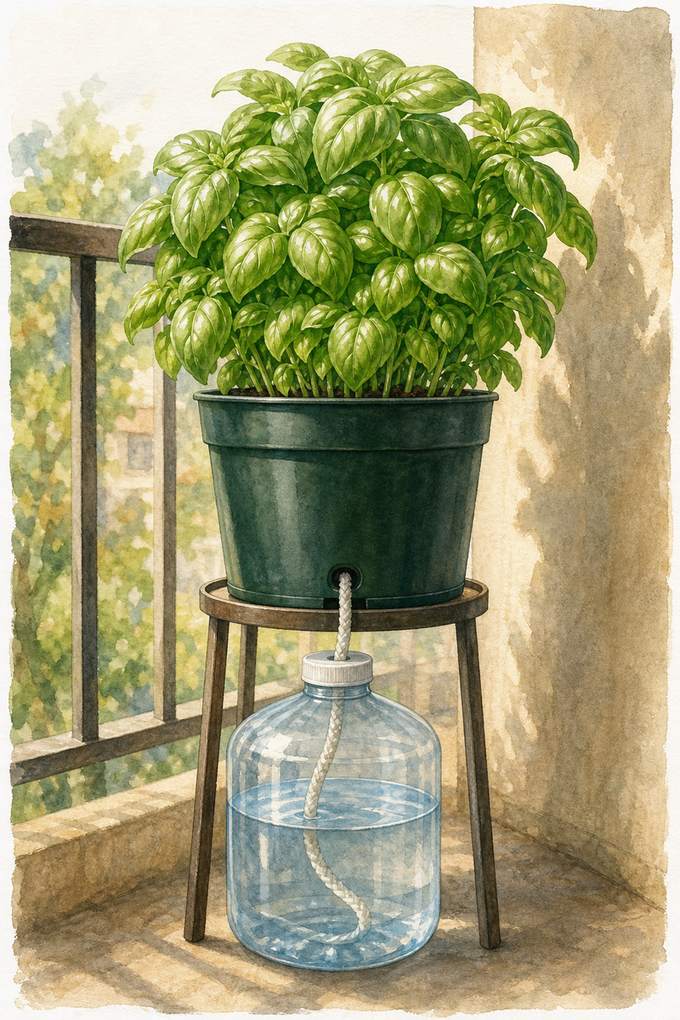
For one basil or mint plant, thread a 0.25-inch synthetic cord through the drainage hole of a 12-inch plastic pot and let the loose end sit in a covered 1-gallon jug below. The cord should run several inches into the potting mix, not merely touch the bottom. This low-cost conversion is useful for a two- or three-day absence, but flow varies with cord material, pot height, and heat. Cotton rots, while untreated nylon or polyester lasts longer. Test the assembled wick for a full week before trusting it; a dry cord can fail to restart after the jug empties. Keep the reservoir shaded and capped around the cord so algae and mosquitoes do not move in.
8. Plant dwarf cucumbers in a deep sub-irrigated box
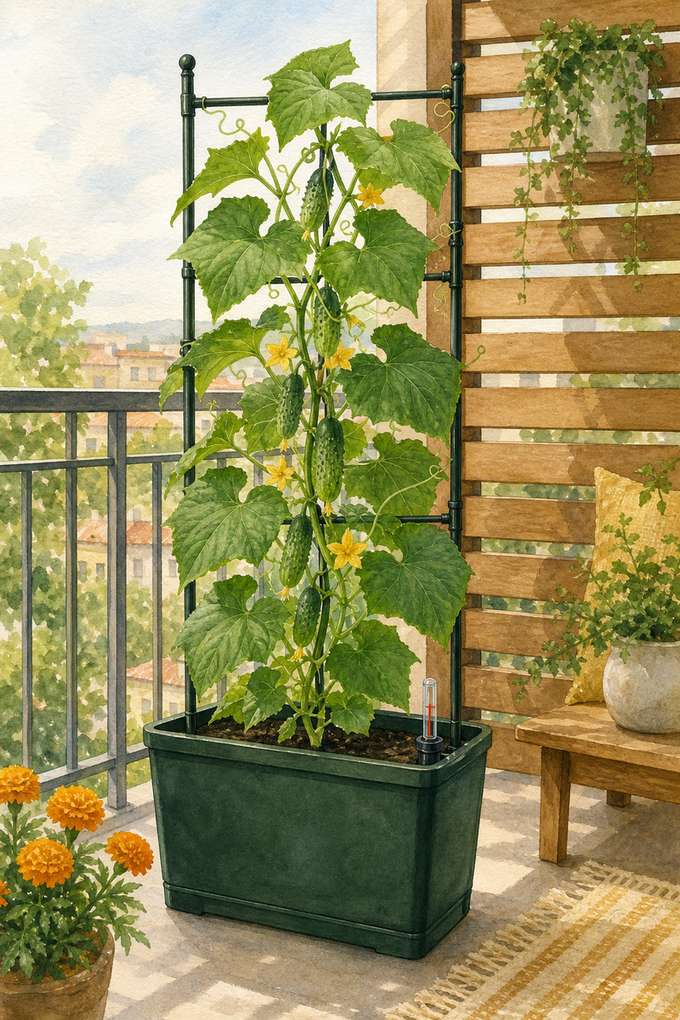
A 20-inch-deep sub-irrigated planter gives one dwarf cucumber, such as 'Patio Snacker,' steadier moisture than a small hanging pot. Add a freestanding 36-inch trellis directly to the container so no wall drilling is needed, and tie the frame to the planter rather than the balcony rail. Cucumbers have thirsty roots and broad leaves; in 90°F weather, a 2-gallon reservoir may last only one or two days. Refill after checking the water-level indicator instead of topping it off automatically, since continuously saturated mix can encourage root trouble. The combined planter and trellis can be top-heavy in gusts, so choose a broad rectangular base and position it behind a wind screen rather than at the balcony edge.
9. Connect matching planters to one elevated reservoir
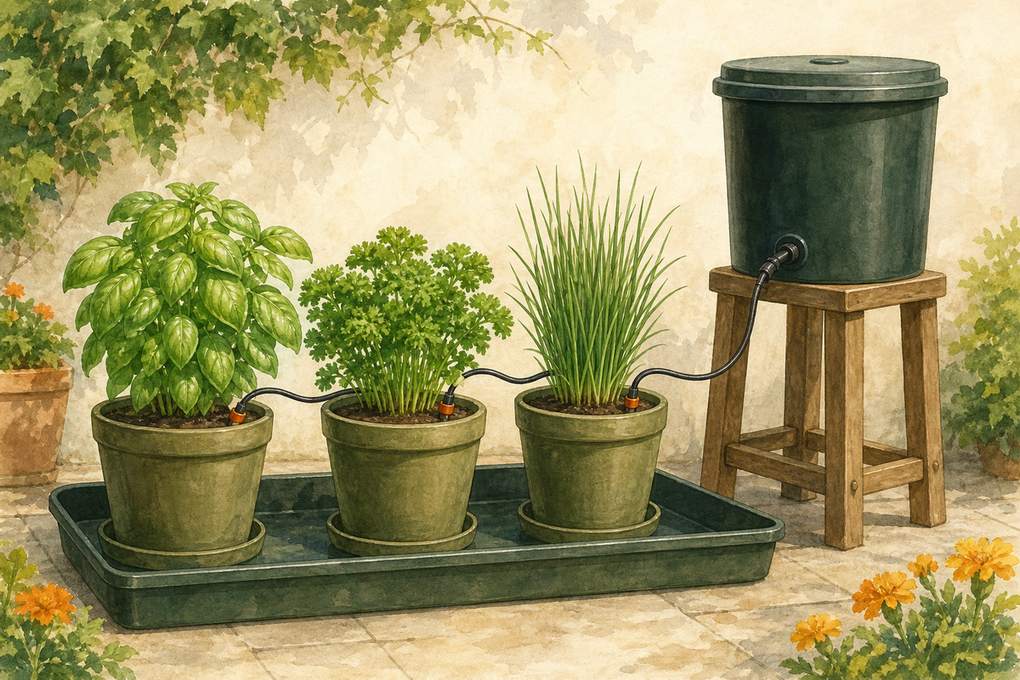
Three small planters can share a covered 5-gallon reservoir through gravity-fed drip lines, reducing the number of pots you refill by hand. Use matching 2-gallon containers planted with crops that drink at similar rates, such as basil, parsley, and chives, then fit each line with an adjustable emitter. Raise the reservoir 12 to 18 inches on a stable stand and put the whole system inside a spill tray. Uneven tubing lengths, clogged emitters, or a tilted floor can leave one pot soaked and another dry, so measure output into cups before planting and recheck weekly. This setup has more parts than a wicking pot and is a poor choice where leases forbid unattended irrigation or water could reach the balcony below.
Common questions
- How long can a self-watering container go without a refill?
- It depends on reservoir size, plant maturity, wind, and temperature. A 1-gallon reservoir under basil might last three or four mild days, while a fruiting tomato can empty it within a hot, windy day. Track the water level for one normal week and one heat-wave day before leaving plants unattended.
- Are self-watering planters too heavy for an apartment balcony?
- They can be. Water weighs about 8.3 pounds per gallon, before adding the container, wet potting mix, trellis, and plant. Keep heavy planters near structurally supported areas when permitted, spread rather than cluster them, and check your lease, building management, or a qualified professional for limits specific to your balcony.
- Will a water reservoir attract mosquitoes?
- An open tray can. Use fitted lids, mesh over fill tubes, and intact overflow screens so adult mosquitoes cannot reach standing water. Empty and scrub exposed saucers at least weekly. Do not add pesticides or oils to a reservoir that supplies edible plants unless the product label specifically allows that use.
- What happens to self-watering containers in winter?
- Drain reservoirs before freezing weather. Trapped water can split thin plastic, crack terracotta, and damage internal platforms. Wash removable parts, store clay ollas indoors, and keep empty fill tubes covered. Perennial plants have separate cold-hardiness needs, so choose varieties rated for your USDA zone and the extra exposure of an above-ground pot.