9 Shade-Tolerant Container Plants for Porches and Balconies
A porch or balcony without direct sun can still hold colorful, full-looking pots. These nine plants tolerate shade, fit containers, and come with the practical details that matter in a small space: pot size, watering, wind, and winter care.
1. Hang a Boston fern out of the wind
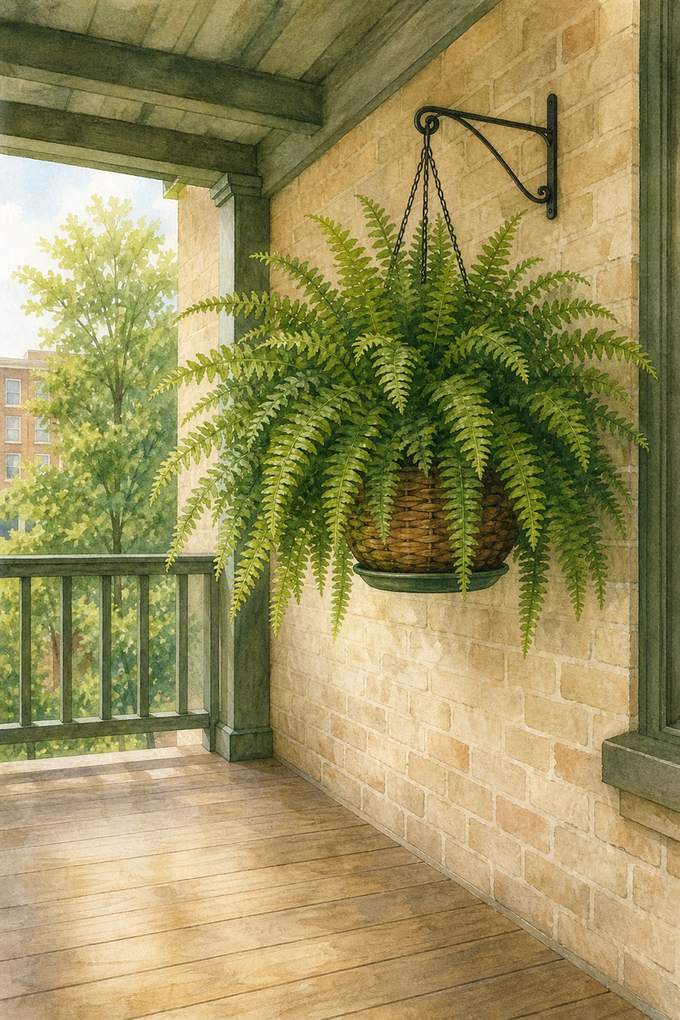
A Boston fern gives a shaded porch one generous mound of green without using floor space. Choose a 10- to 12-inch hanging basket and place it where it receives bright, indirect light rather than the darkest corner. Ferns dry surprisingly fast in hanging pots, so check the mix with a finger every two or three days during warm weather. Water when the top half-inch feels dry, then let the basket drain before rehanging it. The trade-off is maintenance: dry air and strong balcony wind turn the frond tips brown. A self-watering basket helps, but it still needs a drainage hole and occasional flushing so fertilizer salts do not build up.
2. Use cast iron plant for the darkest corner
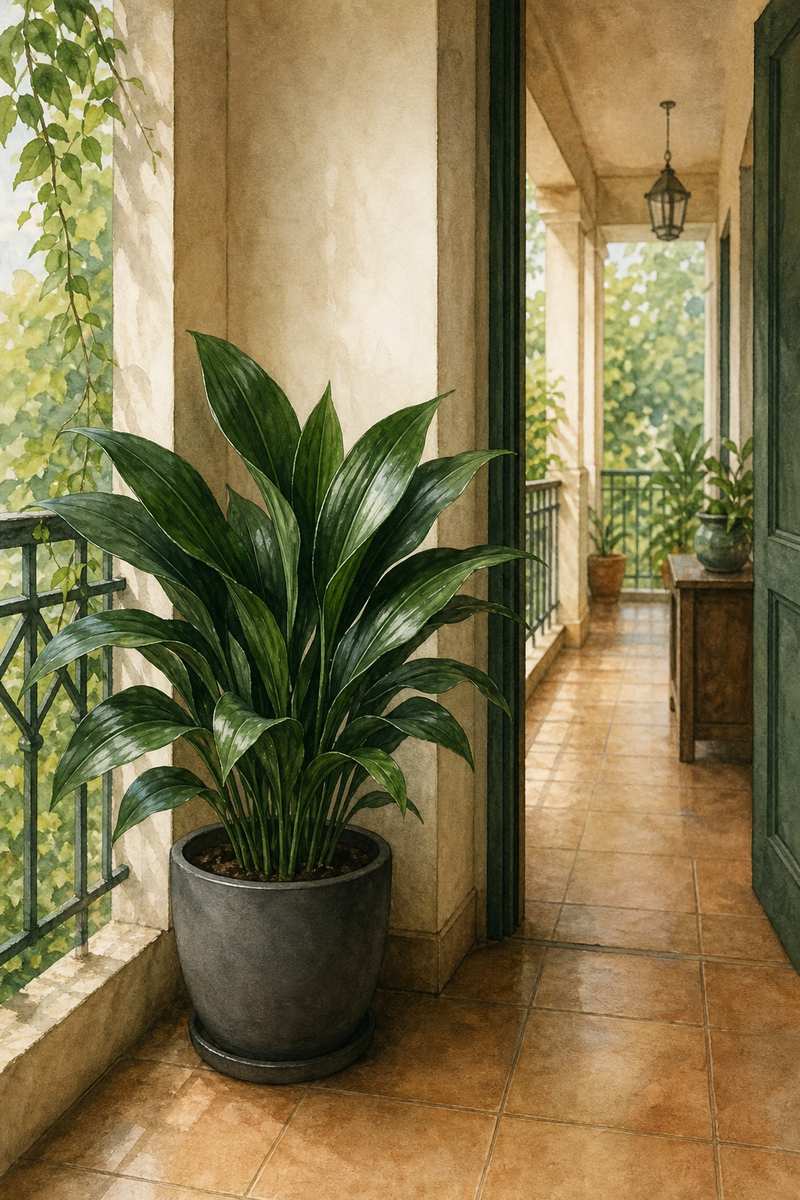
Cast iron plant, Aspidistra elatior, is a sensible choice for a floor pot several feet back from the porch opening. It tolerates low light better than most flowering plants and grows slowly enough that it will not swallow a narrow walkway. Start with a container about 10 inches wide, using potting mix rather than dense garden soil. Let the top 2 inches dry before watering; constantly wet roots are a bigger threat than shade. Its broad leaves do collect dust, especially beside a street or parking lot, so wipe them monthly. Expect foliage rather than flowers, and expect patience: a new leaf may take weeks to unfurl. In cold-winter regions, bring the pot indoors before frost.
3. Fill a window box with wax begonias
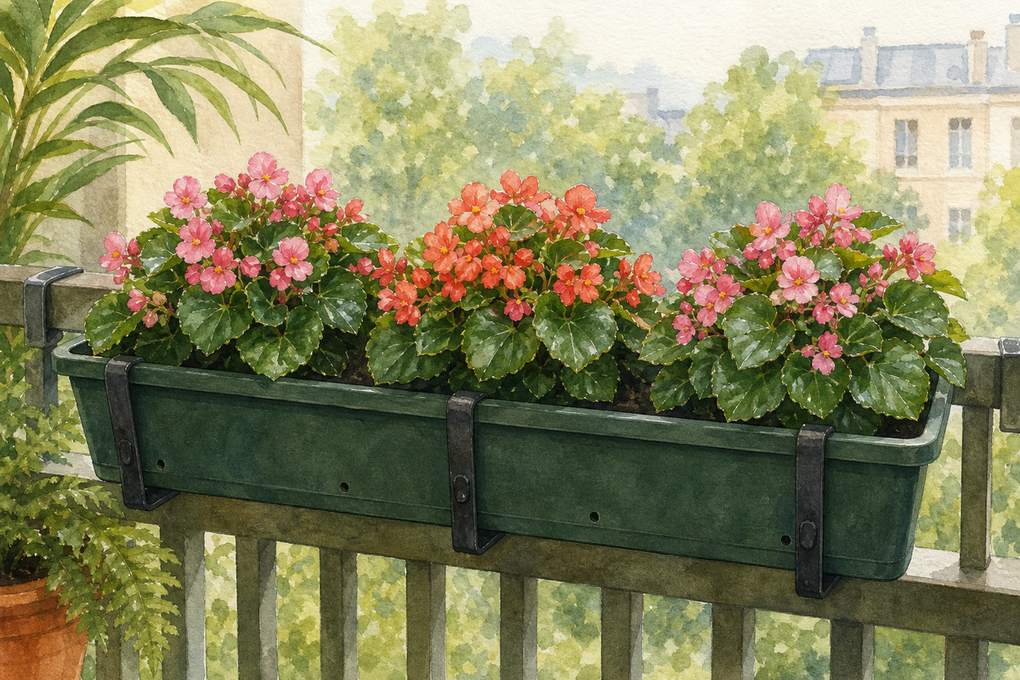
Wax begonias bring reliable color to a shaded railing or porch ledge, especially where there are two or three hours of gentle morning sun. Space three compact plants across a 24-inch window box so air can move between them. Bronze-leaf varieties usually want a little more light, while green-leaf types cope better with shade. Use a box with drainage holes and secure it with brackets rated for the combined wet weight, not just the empty planter. Begonia stems snap in hard wind, so a sheltered inside railing is safer than an exposed outer edge. Remove spent blooms when convenient, but do not keep the mix soggy. These are frost-tender plants and are usually treated as annuals.
4. Grow coleus for color without relying on flowers
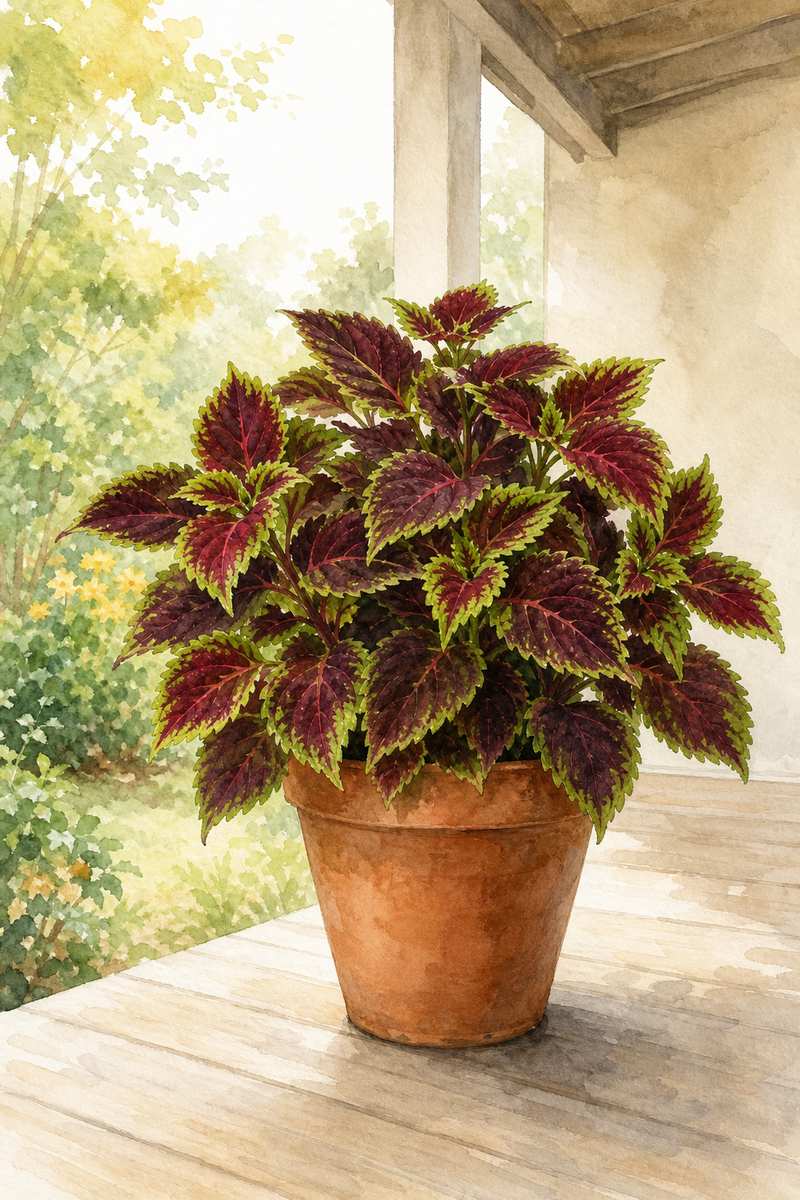
Coleus supplies burgundy, lime, copper, or pink foliage even when shade keeps flowering plants quiet. One medium cultivar fits comfortably in a 12-inch pot; pinch the growing tips every couple of weeks if you want a bushier plant under 2 feet tall. Color is strongest in bright shade, such as near the open edge of a covered balcony. Deep shade can make patterned leaves turn greener, while hot afternoon sun may scorch them. Coleus wilts dramatically when dry, so check smaller pots daily during summer heat. It usually recovers after watering, but repeated wilting causes leaf drop. Flower spikes can be removed to favor foliage. Treat coleus as an annual unless you have indoor space before temperatures fall below 50°F.
5. Plant heuchera in a year-round foliage pot
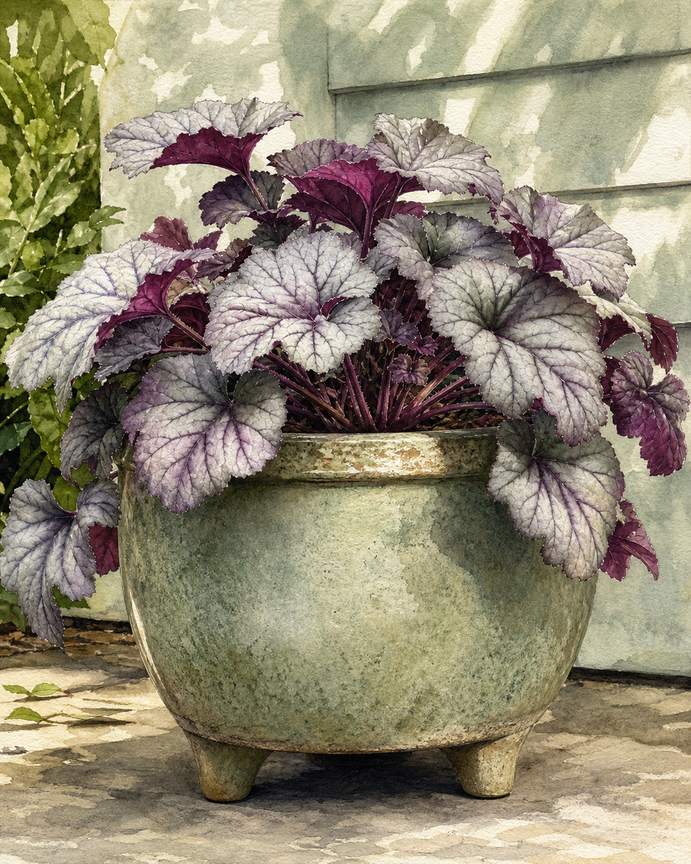
Heuchera, often called coral bells, makes a tidy container plant where summer shade is paired with cold winters. Choose a cultivar suited to your USDA zone and set one plant in a pot 12 to 14 inches wide. Purple, caramel, and silver leaves provide color long after the slender flower stems finish. Morning sun is useful, but dark-leaved varieties can scorch against a hot west-facing wall. Good drainage matters in winter: elevate the pot on feet so rain cannot pool around the crown. The catch is that roots in containers experience colder temperatures than roots in the ground. A locally hardy plant may still need an insulated pot or sheltered winter position. Check your zone before expecting it to return.
6. Let fuchsia spill from a sheltered basket
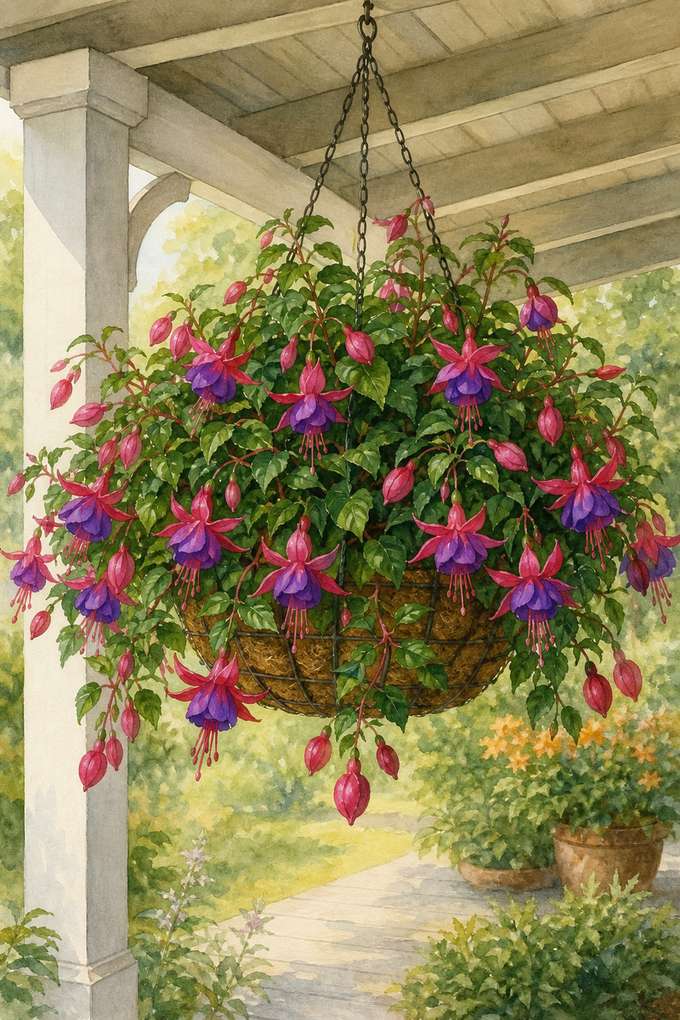
Trailing fuchsia earns its space with dangling pink, purple, or white flowers that are easy to see from below. Use one plant in a 10- to 12-inch hanging basket near the porch opening, where it gets bright shade and perhaps an hour of cool morning sun. Fuchsia dislikes reflected heat, drying wind, and neglected watering, so it is a poor match for an exposed upper-floor balcony. During hot weather, test the mix daily and water thoroughly when the surface feels dry. Deadheading keeps the basket neater, though many newer varieties shed flowers on their own. The downside is heat sensitivity: flowering may pause above roughly 80°F. Most types also need frost-free indoor storage if you plan to keep them another year.
7. Make one caladium the centerpiece
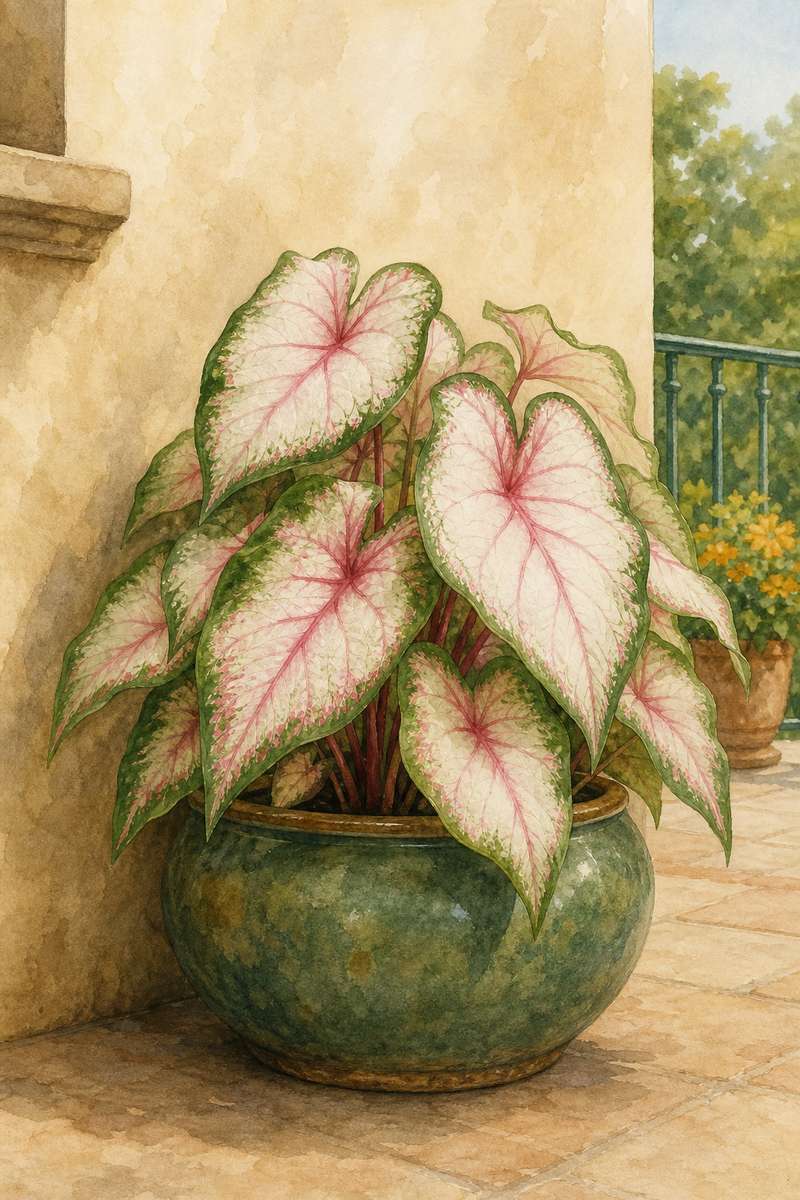
Caladium turns a single pot into a focal point with heart-shaped leaves marked in white, rose, red, or green. Plant one full-size tuber or nursery plant in a container 10 to 12 inches wide and keep it in bright shade. White-leaved cultivars are especially visible on a dim porch, though some need more light to keep strong markings. Caladium likes evenly moist mix and warm conditions; cold soil can stall growth or rot the tuber. Wait until nights stay above about 60°F before moving it outside. The leaves are thin and tear in wind, so use a heavy, low pot beside a sheltered wall rather than on a railing. In fall, either treat it as an annual or lift and store the dormant tuber.
8. Pack a shallow bowl with New Guinea impatiens
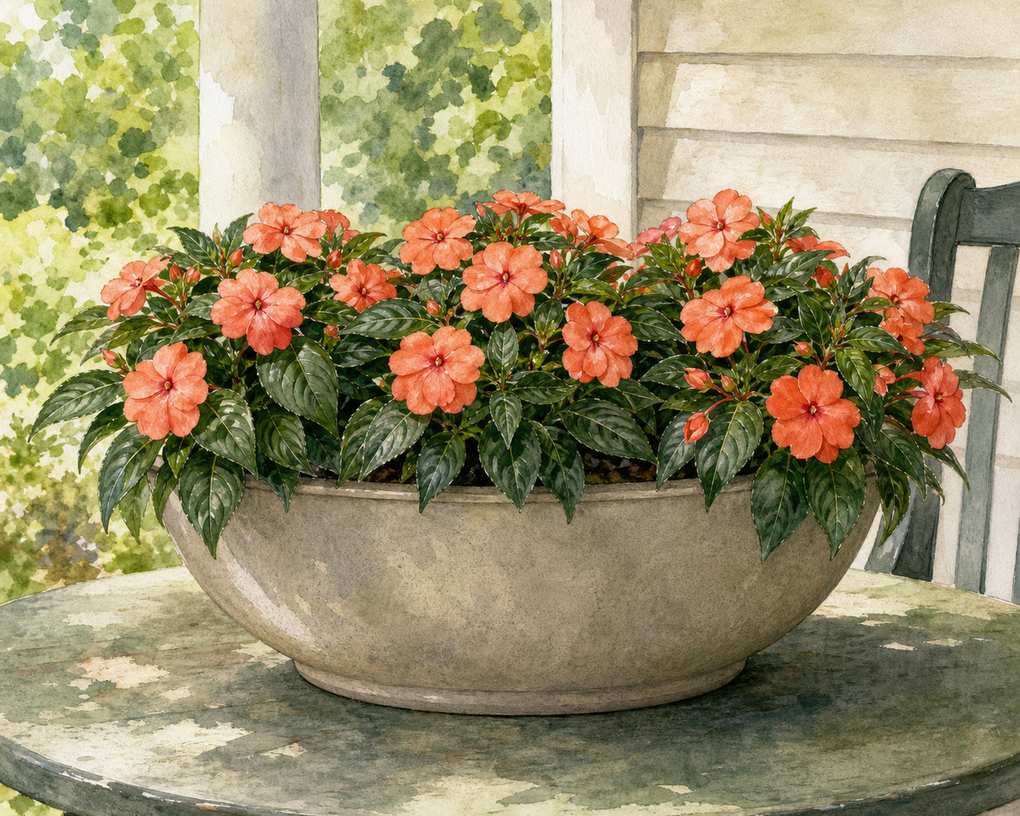
New Guinea impatiens make a compact flowering bowl for a porch table or broad step with bright, indirect light. Three plants will fill a container about 14 inches across, but use a lightweight resin bowl if you expect to move it for storms or cleaning. Unlike traditional impatiens, these plants have thicker leaves and larger flowers, yet they still need regular moisture. Check the mix daily in hot weather because shallow containers dry from the edges inward. Too much shade reduces flowering, while harsh afternoon sun bleaches leaves and raises water demand. Their brittle stems can snap if the bowl tips, so choose a wide base. They will not survive frost and are generally replaced each spring rather than overwintered.
9. Soften a pot edge with Japanese forest grass
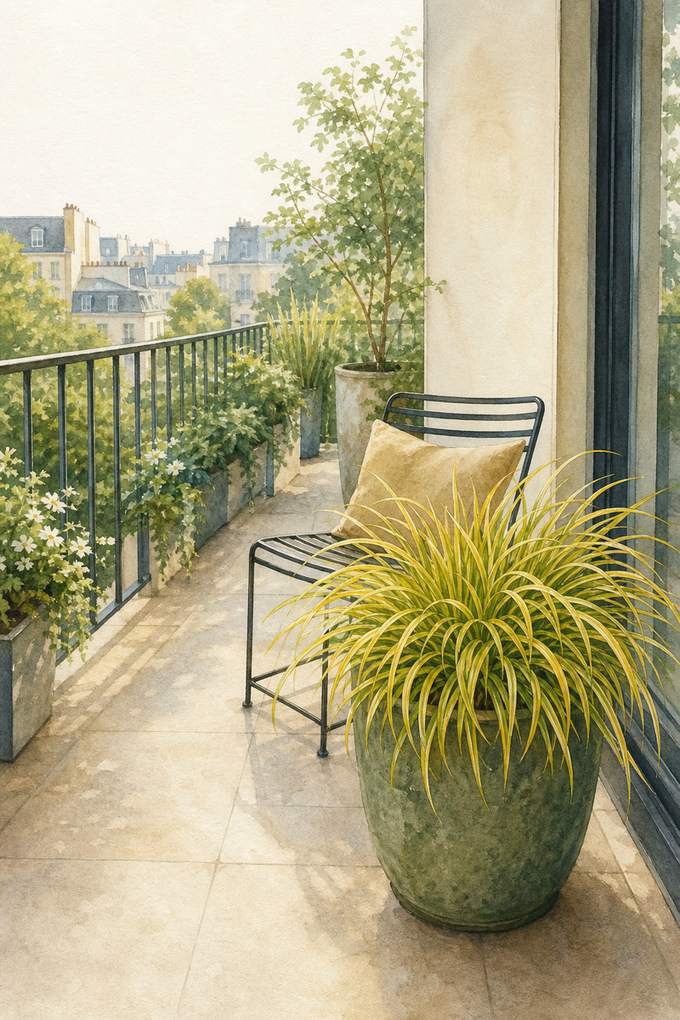
Japanese forest grass, Hakonechloa macra, adds arching texture without blocking a railing view or crowding a chair. One plant fits a 12- to 16-inch pot, where its green or gold-striped blades spill gently over the rim. It performs best in bright to moderate shade; intense afternoon sun can brown golden cultivars, while very deep shade may make them sparse. Use a moisture-retentive potting mix, but keep the drainage hole open because winter waterlogging can kill the crown. This grass grows slowly, which is useful in a small space but makes large nursery plants relatively expensive. It is perennial in many regions, yet container roots are less insulated. Check the cultivar's zone and protect the pot during hard freezes.
Common questions
- How much light does a shade-tolerant container plant still need?
- Most shade plants still need several hours of usable daylight. Bright shade near an open porch edge is different from a windowless corner. If you can comfortably read there at midday without turning on a light, plants such as coleus, begonia, and heuchera have a reasonable starting point. Sparse growth, leaning stems, or fewer flowers usually mean the pot needs to move closer to the opening.
- How do I check whether my balcony can hold heavy pots?
- Ask your landlord, HOA, or building manager for the balcony's permitted load rather than guessing. Wet potting mix, plants, water, and ceramic containers all count. A large glazed pot can weigh well over 50 pounds when watered. Lightweight resin or fiberglass pots reduce the load, and several smaller containers are easier to move, but keep exits and drainage paths clear.
- Do shaded containers need less water?
- Usually, but pot size, wind, and material matter as much as light. A hanging fern in a 10-inch basket may dry faster than a floor pot that receives some sun. Check the mix with a finger instead of watering on a fixed schedule. Water when the depth recommended for that plant feels dry, then let excess water leave through the drainage hole.
- Can these plants stay outside through winter?
- Begonias, coleus, fuchsia, caladium, and New Guinea impatiens are frost-tender. Heuchera, Japanese forest grass, and cast iron plant may overwinter outdoors in suitable climates, but roots in pots get colder than roots in the ground. Check your USDA zone and the plant's label, then use an insulated container or sheltered location where local winters require it.