9 Vertical Garden Ideas That Fit on a Tiny Patio
A tiny patio can hold a surprising number of plants when containers go up instead of spreading across the walking space. These nine layouts prioritize freestanding, renter-friendly structures while accounting for sun, wind, drainage, weight, and the daily work of watering.
This page contains affiliate links — we may earn a commission at no extra cost to you. See our disclosure.
1. Lean a Freestanding Ladder Garden Against the Wall
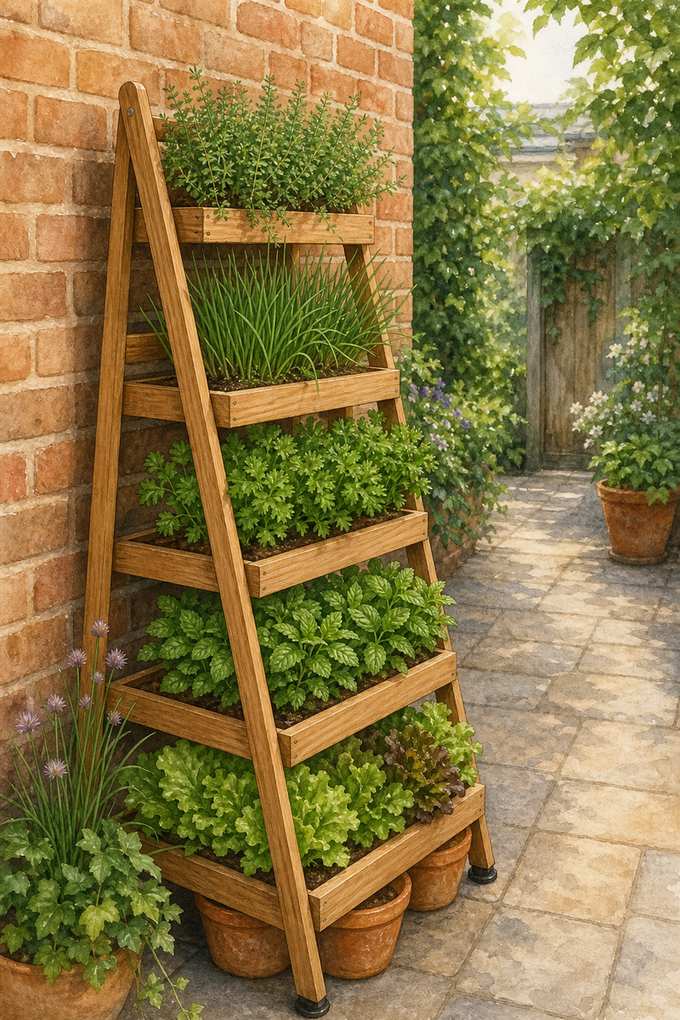
Use a 5- to 6-foot freestanding ladder shelf to hold plants above one another without drilling into siding or masonry. Put heavier 10- to 12-inch pots on the bottom shelf and lightweight herbs such as thyme, chives, and parsley higher up. A-frame models are more stable than decorative leaning ladders, especially where wind funnels between buildings. Check that the feet sit fully on the patio rather than across uneven pavers, and add rubber pads to prevent sliding. The drawback is shade: each shelf can block light from the one below, so reserve the lower level for mint or leafy lettuce. Leave at least 30 inches of clear walking space in front.
2. Build a Narrow Trellis Planter for Climbing Crops
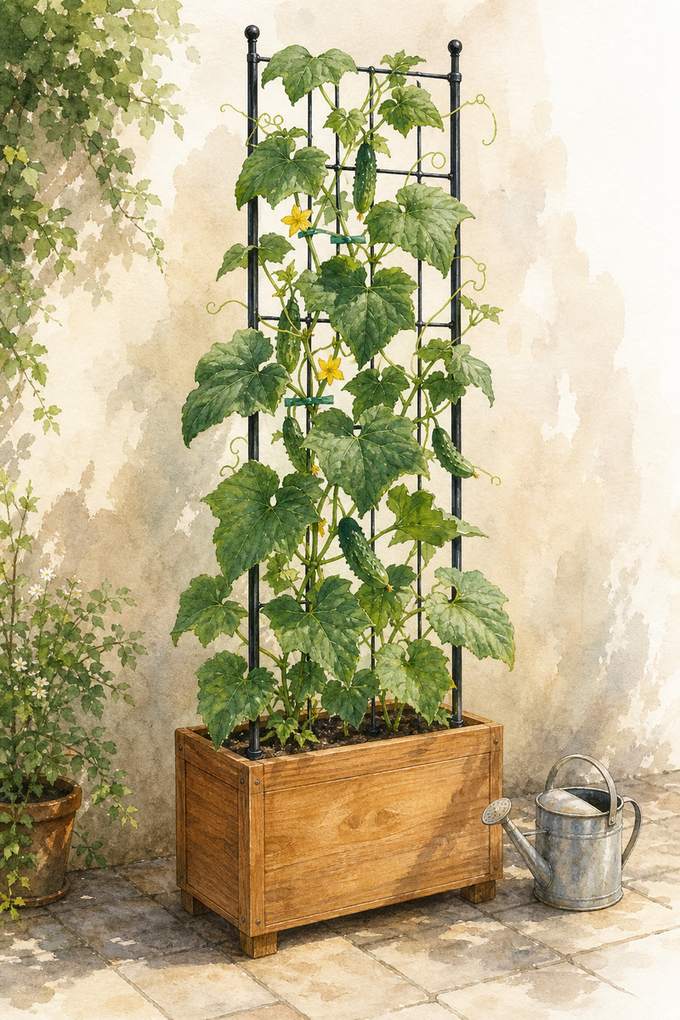
A planter with an attached 5-foot trellis gives cucumbers, pole beans, or compact clematis a vertical route without fastening anything to the house. Choose a box at least 12 inches deep for beans and 16 to 18 inches deep for cucumbers, then secure the trellis directly to the planter frame. Filled soil makes even a modest box heavy, so position it before planting and confirm that the patio surface can handle the load. Place the broad face perpendicular to strong wind rather than using it like a sail. Cucumbers also need six or more hours of sun and frequent summer watering. In shade, swap the crop for climbing nasturtium, accepting fewer flowers.
3. Stack Herbs in a Three-Tier Corner Planter
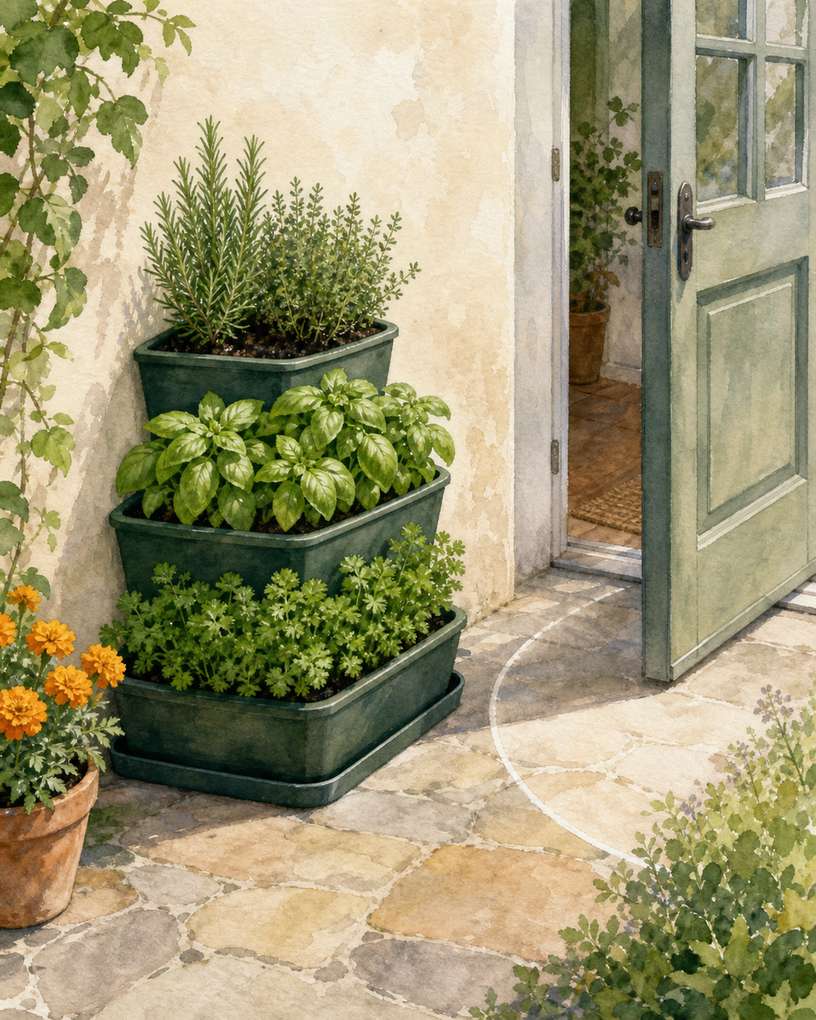
Fit a three-tier planter into an unused patio corner and give each level a different watering zone. Rosemary and thyme belong in the fast-drying top tier, basil can take the middle, and moisture-loving parsley fits best at the bottom. Keep the overall footprint near 24 inches square so it does not crowd the door swing. Water moving through stacked pockets can carry fertilizer and soil onto the paving, so use a broad catch tray and confirm that drainage cannot stain stone or run toward a neighbor's space. These planters also dry unevenly; the exposed upper tier may need water daily during a hot week while the bottom remains damp. Rotate the unit weekly if light comes from one side.
Product pick — a compact three-tier herb planter
4. Train Espalier Fruit in a Freestanding Trough
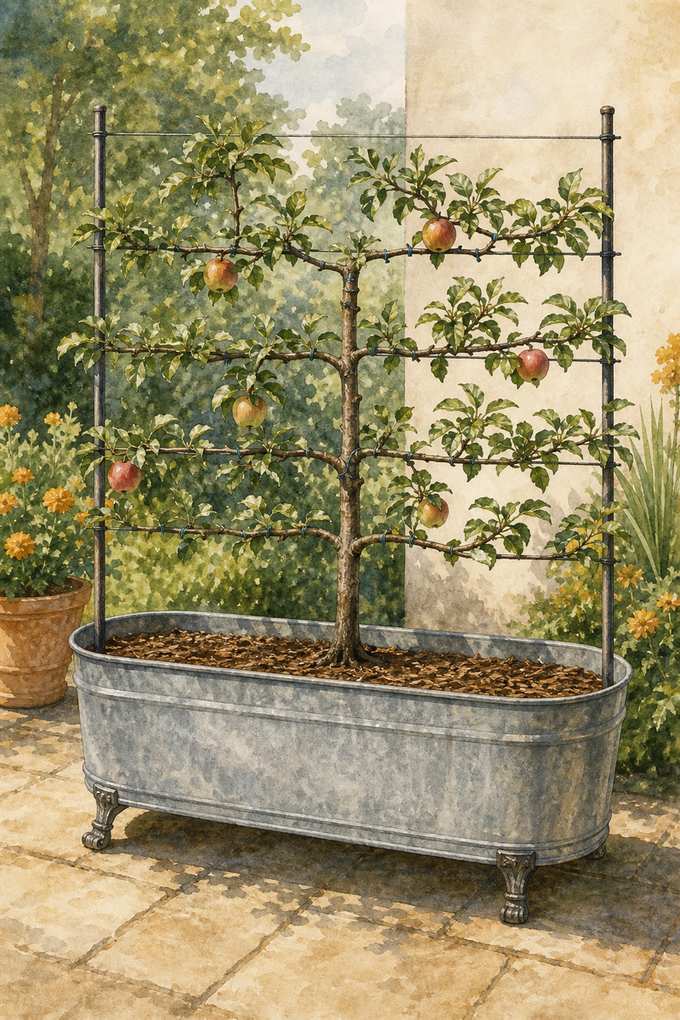
Grow a dwarf apple or pear as a flat espalier against a freestanding wire frame, keeping the canopy only 12 to 18 inches deep. Start with a 20-gallon trough and a tree labeled dwarf rather than semi-dwarf; rootstock matters more than the picture on the tag. Most apples need six hours of direct sun and a compatible pollination partner, although a nearby neighborhood tree may do the job. The container will be difficult to move once filled, and fruit trees require annual pruning to preserve the flat shape. In colder regions, exposed roots are less hardy than roots in the ground, so check your USDA zone and plan winter insulation before buying the tree.
5. Turn a Utility Cart Into a Rolling Plant Wall
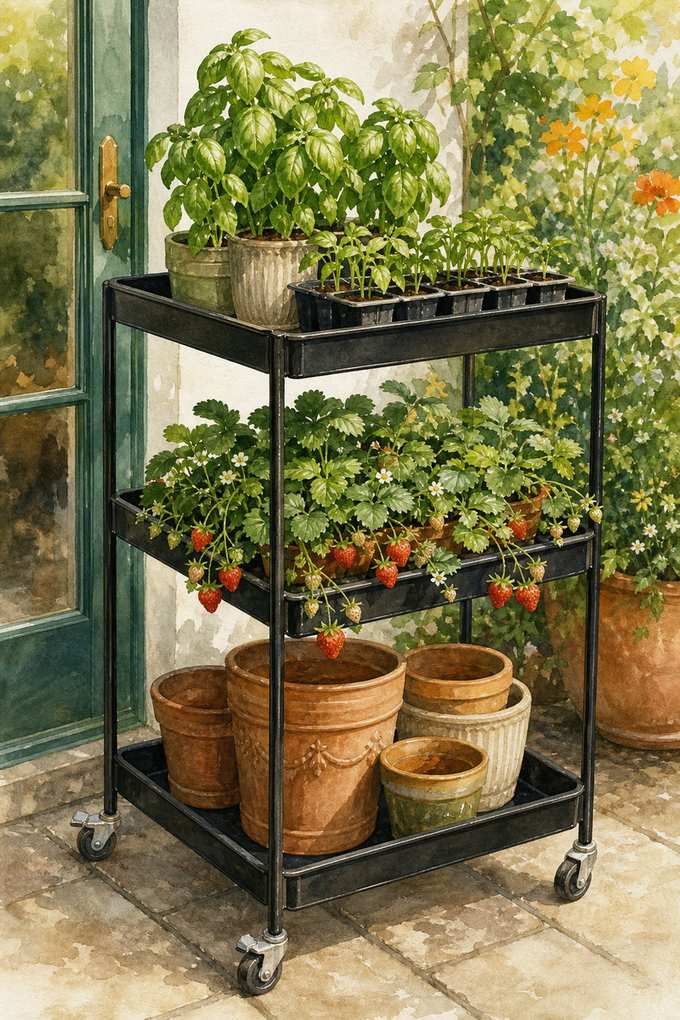
Park a narrow three-shelf utility cart beside the patio door and roll it toward better light as the sun shifts. A cart about 18 inches deep can hold seedling trays, 6-inch herb pots, and trailing strawberries while preserving more floor space than separate containers. Choose locking casters rated for the combined weight of wet soil, pots, and the cart itself; small decorative wheels often catch in paver joints. Keep heavy pots low so the cart does not tip, and never move it by pulling on a shelf full of plants. Mobility is useful, but it adds maintenance because each level dries differently. A waterproof tray on every shelf prevents dirty runoff from dripping onto plants below.
6. Suspend Plants From a Weighted Garment Rack
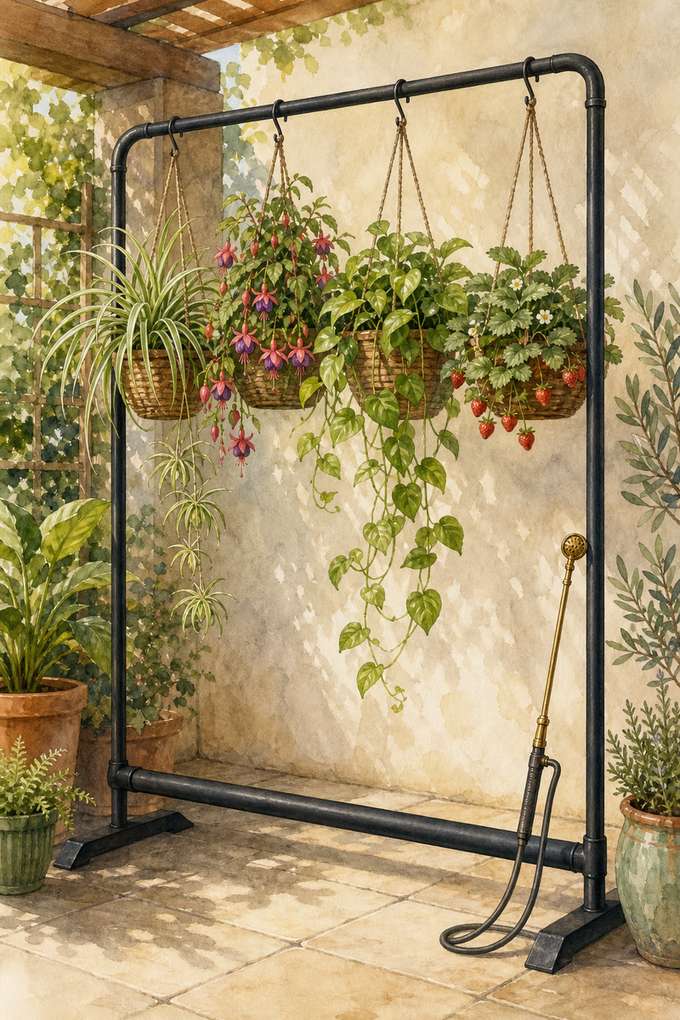
Repurpose a sturdy commercial garment rack as a no-drill hanging garden for pothos, spider plants, trailing fuchsia, or strawberries. Limit the display to several lightweight 6- to 8-inch pots, and compare their wet weight with the rack's stated capacity rather than judging them dry. Set the height so the lowest basket clears your head but remains reachable with a watering wand. Outdoors, the real concern is wind: hanging pots swing, spill soil, and can turn the rack over. Use a wide-base model, add weight at the bottom, and move it indoors before severe weather. This layout works best on a sheltered patio; an exposed courtyard needs a rigid structure anchored according to property rules.
7. Make a Freestanding Gutter Garden for Shallow-Rooted Greens
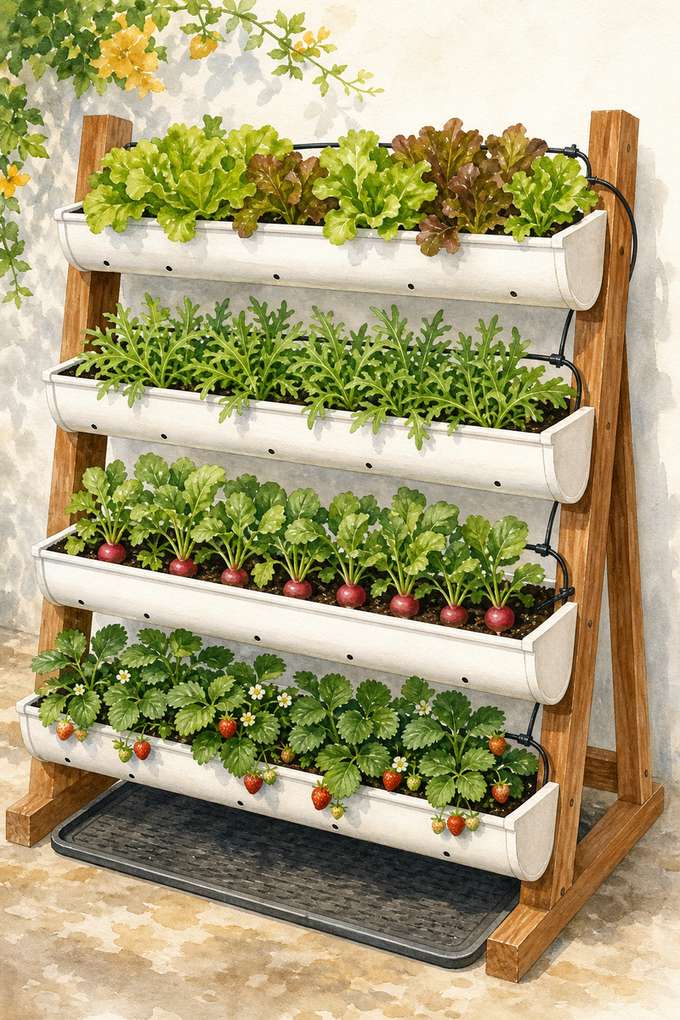
Mount three or four lengths of vinyl gutter on a freestanding wood frame for lettuce, arugula, radishes, and alpine strawberries. Space the rows about 12 inches apart so mature leaves receive light and you can reach each channel. Drill generous drainage holes before adding potting mix, then place the whole frame over a washable mat or gravel strip because runoff will fall from several levels. Gutters hold little soil, which keeps the structure relatively slim but makes roots heat up and dry quickly. They are poor homes for tomatoes, peppers, or full-size carrots. In midsummer, morning sun with afternoon shade is kinder to lettuce, and a simple drip line can reduce twice-daily hand watering.
8. Use a Tension-Rod Trellis Under a Covered Patio

Fit a vertical tension pole between a solid patio floor and a structurally sound ceiling to support light vines without drilling. Run coated wire or garden twine between two poles for sweet peas, black-eyed Susan vine, or a compact mandevilla. Measure the floor-to-ceiling distance carefully and buy a system designed for that span; an ordinary shower rod is not strong enough for wet foliage. This approach only suits covered patios with flat, durable surfaces above and below, and it should not press against soft soffit panels. Check the tension monthly because temperature changes and watering can loosen the feet. Keep total plant weight modest, and remove the setup if strong wind can reach beneath the roof.
9. Frame the Door With Two Slim Column Planters

Place matching vertical column planters on either side of a patio door to use narrow strips that are often left empty. Keep each base under 14 inches wide and confirm that neither planter enters the door's required swing or emergency path. Fill the lower pockets with compact plants such as dwarf mondo grass, the middle with wax begonias, and the top with trailing bacopa for a layered look in part shade. Tall plastic towers are lighter than ceramic, but they can become top-heavy after watering or when upper plants catch wind. Choose broad bases, add ballast only if the manufacturer allows it, and turn each column every week. Expect lower pockets to stay wetter than the exposed top.
Product pick — a broad-base vertical column planter
Common questions
- How do I know whether my patio can hold a vertical garden?
- Add up the wet weight of every pot, the structure, and any ballast; waterlogged potting mix is much heavier than an empty planter. Ground-level concrete patios usually tolerate ordinary containers, but raised decks, rooftop patios, and suspended slabs have property-specific limits. Ask the owner, HOA, or building manager for the approved load rather than guessing, and spread heavy containers out instead of clustering them in one corner.
- What grows well in a vertical garden with only four hours of sun?
- Try parsley, chives, mint, lettuce, arugula, wax begonias, coleus, or alpine strawberries. Four hours of morning sun is gentler than four hours of late-afternoon sun, so watch the actual light pattern before planting. Fruiting crops such as cucumbers, peppers, and most tomatoes generally perform better with at least six hours of direct sun.
- How often will a patio vertical garden need watering?
- Small upper pockets may need water every day during hot or windy weather, while shaded lower containers may remain damp for several days. Check moisture with a finger 1 inch below the surface rather than watering every tier on one schedule. Drip tubing helps, but each emitter still needs occasional inspection because narrow lines clog and upper planters can receive less water.
- Can a vertical patio garden stay outside through winter?
- The frame often can, but plant roots in containers are more exposed to cold than roots in the ground. Check your USDA zone and the hardiness of each plant, then empty brittle vinyl components, protect terracotta from freeze-thaw cracking, and move tender plants such as mandevilla indoors. Freestanding racks and tension systems should also come down if winter storms could overturn them.