9 Ways to Winter-Proof a Container Garden in a Small Space
Containers expose roots to colder temperatures, drying wind, and freeze-thaw damage that in-ground plants rarely face. These nine practical fixes help balcony and patio gardeners protect pots, plants, and limited floor space without drilling or building a permanent shelter.
1. Group Pots Against a Sheltered Wall
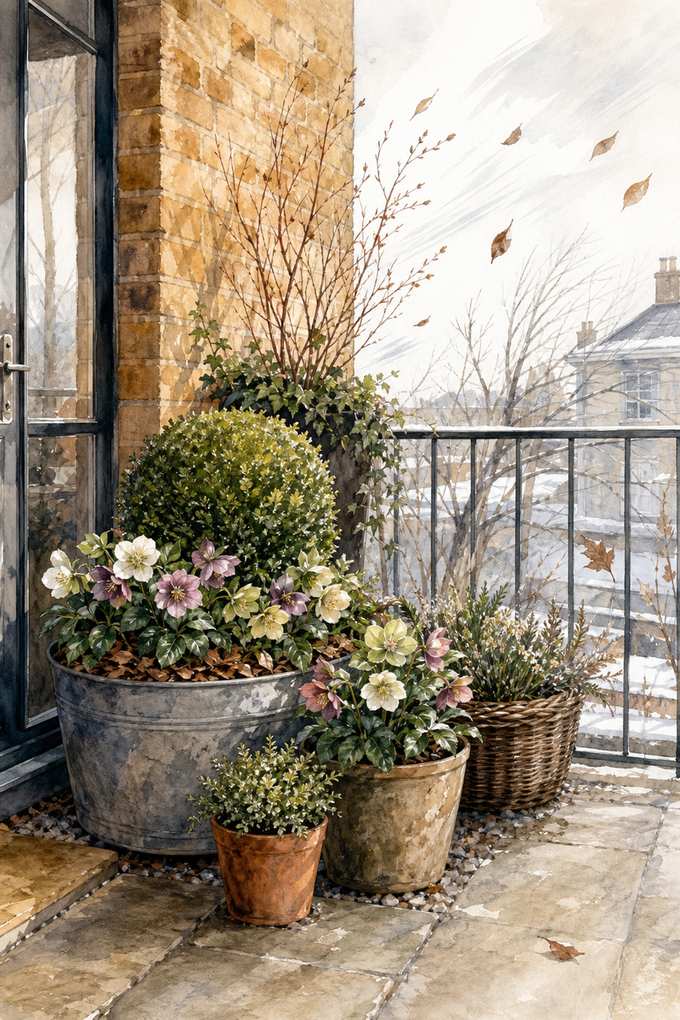
Move surviving perennials and shrubs into a tight cluster beside the warmest protected wall, ideally one that avoids prevailing winter wind. Put the largest pots on the outside and tuck 8- to 12-inch containers into the middle, where they lose heat more slowly. Leave a narrow gap behind the group so moisture does not sit against siding, and keep vents, doors, and fire-escape routes clear. A south- or east-facing wall can help, but reflected midday sun may trigger repeated thawing and freezing. That cycle is hard on roots and ceramic pots. Renters should also check whether balcony rules require an unobstructed path or prohibit items against exterior walls.
2. Insulate Pots Without Blocking Drainage
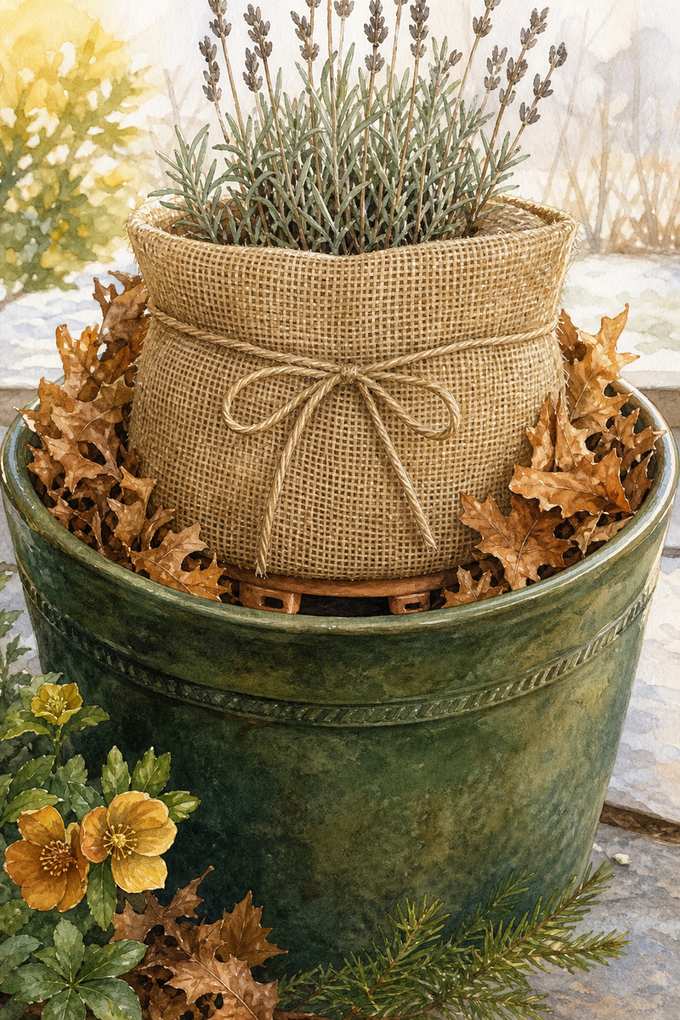
Wrap vulnerable containers with two layers of burlap around a sleeve of bubble wrap, keeping both materials above the drainage holes. This is especially useful for pots under 16 inches wide, because their smaller soil mass freezes faster. Secure the wrap with jute twine rather than tape that can leave residue on glazed finishes. The wrapping protects roots more than top growth, so it will not rescue a plant that is not hardy enough for your climate. Avoid wrapping waterlogged pots: trapped moisture and freezing temperatures can still split ceramic. For a cleaner look, place the insulated pot inside a larger weatherproof planter and fill the 1- to 2-inch gap with dry leaves.
3. Raise Every Container Off the Floor
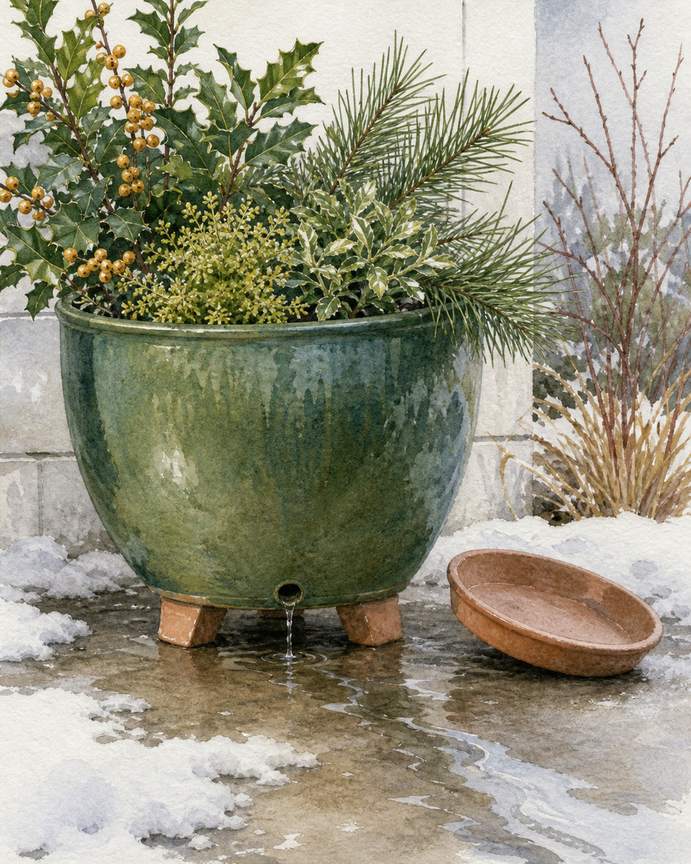
Set each outdoor pot on three terracotta feet, rubber risers, or a slatted plant caddy so meltwater can escape before it refreezes. Even a 1/2-inch lift helps prevent drainage holes from sealing against a concrete balcony or icy patio. Remove saucers unless your building requires them to catch runoff; if saucers must stay, empty them after rain and place the pot on risers inside the tray. This step matters most for terracotta and ceramic, which can crack when saturated. The trade-off is stability: narrow pots become easier to tip when raised. Use low, evenly spaced feet, and do not put a top-heavy evergreen on a lightweight rolling stand in an exposed corner.
4. Move Crack-Prone Pots Under Cover
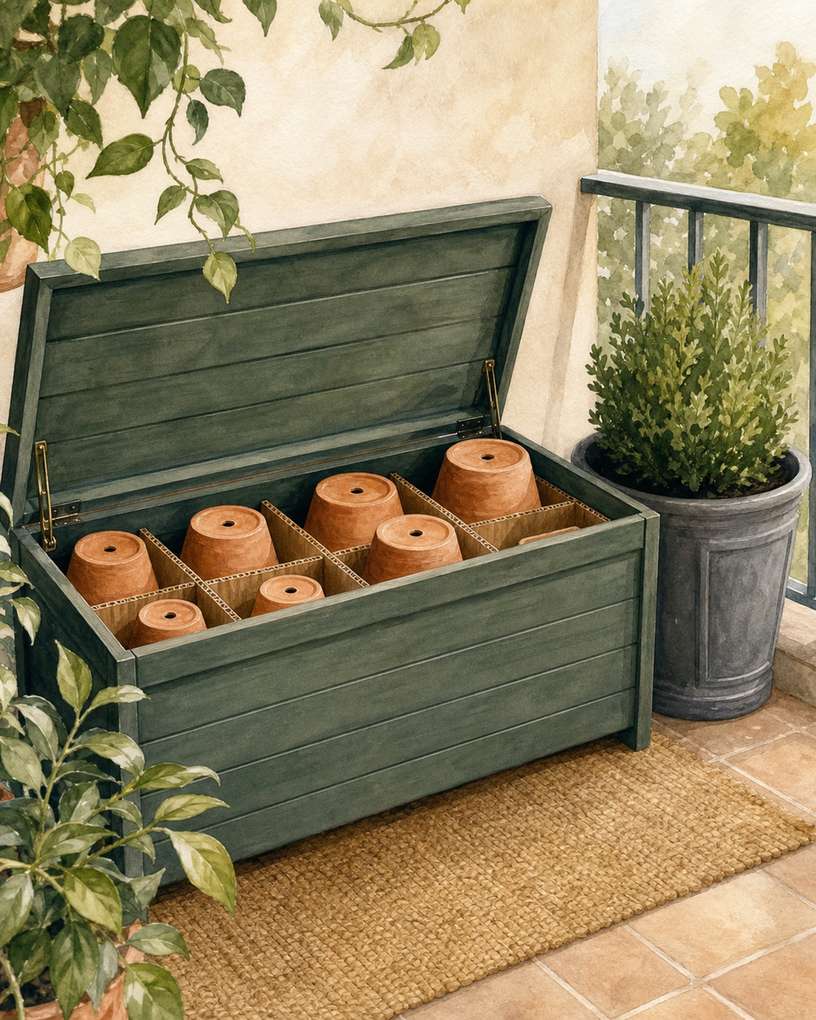
Empty porous terracotta and any ceramic pot labeled non-frost-resistant before the first hard freeze. Brush off loose soil, let the container dry completely, and store it upside down beneath a covered balcony corner, in a shed, or inside a ventilated storage bench. Do not stack bare rims directly together; separate them with cardboard or folded burlap to prevent chips. If a pot must remain planted, moving it beneath an overhang reduces saturation but does not make it frost-proof. Plastic, fiberglass, and resin containers generally tolerate freezing better, though thin plastic becomes brittle. Limited indoor storage is the obvious downside, so reserve protected space for handmade, glazed, or expensive pots rather than every nursery container.
5. Add a Two-Inch Mulch Blanket
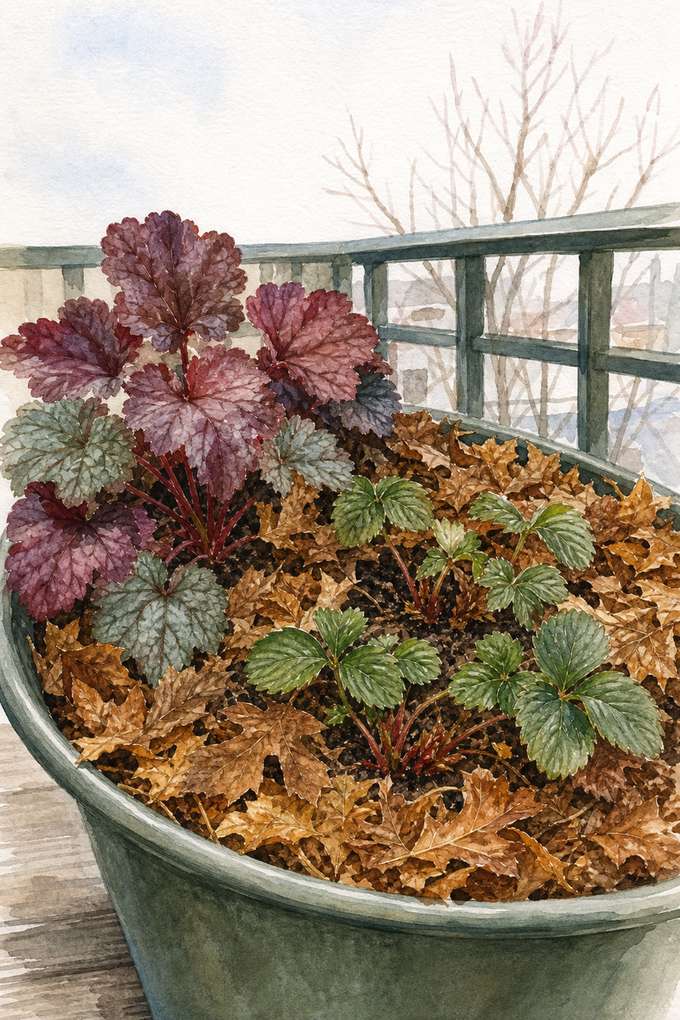
Cover exposed potting mix with 2 inches of shredded leaves, fine pine bark, or clean straw after the soil has cooled. Mulch slows rapid temperature swings and reduces evaporation from winter wind, which is useful for shallow-rooted plants such as strawberries and heuchera. Keep the material about 1 inch away from woody stems and perennial crowns; wet mulch packed against them can encourage rot. Skip heavy decorative stones in lightweight balcony containers because they add unnecessary load and are awkward to remove in spring. Mulch will not stop a small pot from freezing solid, but it gives roots a steadier transition. Check it after storms, since straw and dry leaves can blow into neighboring balconies.
6. Anchor Tall Pots Before Winter Winds
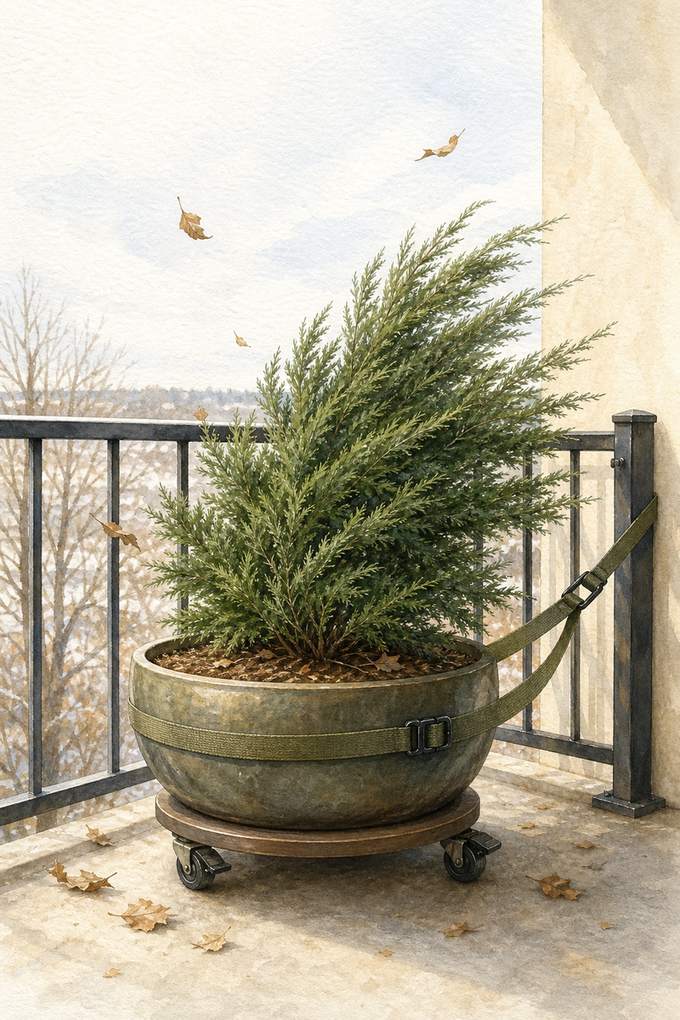
Lower the center of gravity before the first wind advisory. Move tall planters into corners, prune only dead or damaged top growth, and place a brick inside an empty outer cachepot rather than on wet soil. For a renter-friendly tie-down, loop soft plant webbing around the container and attach it to an existing railing post only if building rules allow it; never drill into the facade. A 24-inch conifer can act like a sail, especially when its compost is dry. Added ballast improves stability but counts toward the balcony's total load, so check your lease or building guidance before adding masonry. Wheels should lock, and lightweight railing planters are safer removed than merely tightened for winter.
7. Water During Thaws, Not by the Calendar
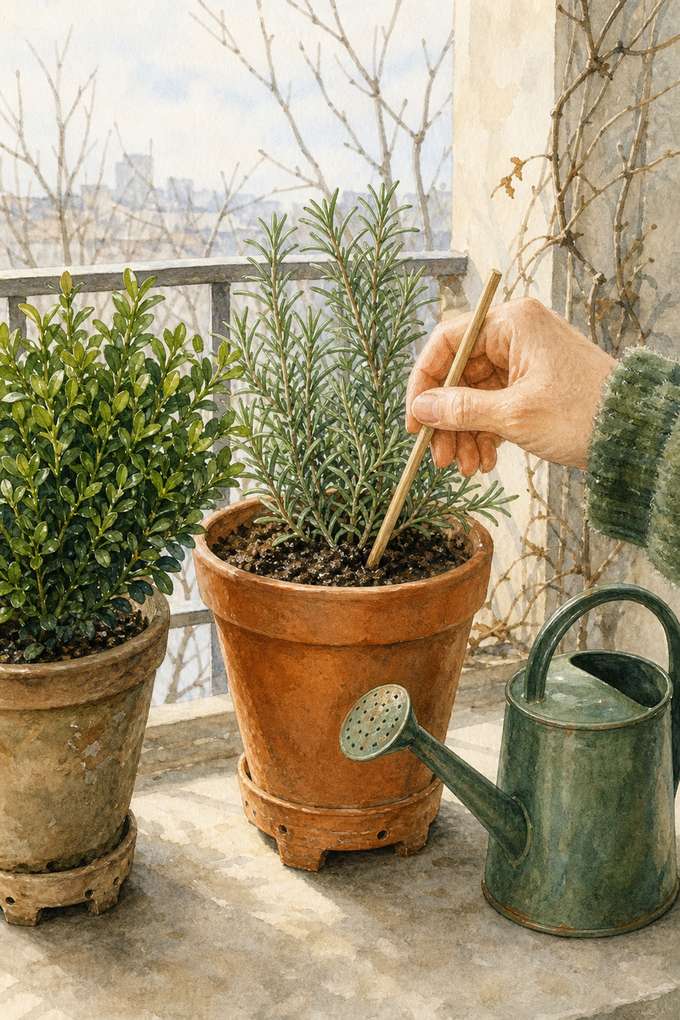
Check overwintering pots every 10 to 14 days instead of following a summer watering schedule. Push a finger or wooden chopstick 2 inches into the mix; water only when that layer feels dry and the soil is not frozen. Apply water around midday when temperatures are above 40°F, giving excess time to drain before night. Evergreen boxwood, rosemary, and dwarf conifers still lose moisture through their leaves, while dormant hostas need much less. The risk is overwatering: cold, saturated compost excludes air and can rot roots. Disconnect and drain outdoor hoses before freezes, then use a small watering can so you can control runoff on shared balconies and avoid creating ice below.
8. Build a Removable Wind Screen
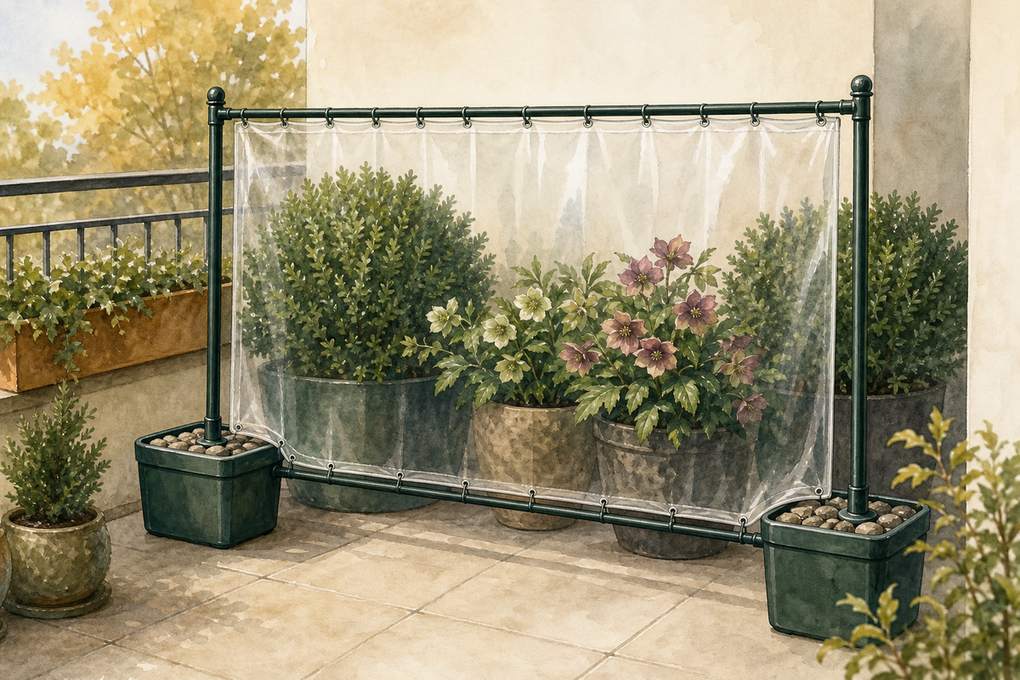
Fasten clear greenhouse plastic or woven burlap to a freestanding 3- to 4-foot frame to reduce wind around tender containers. A weighted garment rack or simple lumber frame can work without drilling, provided it cannot topple or blow over the railing. Leave several inches open at the top and bottom for airflow; fully enclosing plants traps condensation and encourages gray mold. Clear plastic preserves light for evergreens, while burlap breathes better but casts shade, a real drawback on north-facing balconies. Position the screen on the windward side rather than wrapping individual branches tightly. Check HOA or landlord rules first, because some buildings treat any visible balcony screening as an exterior alteration.
9. Bring Tender Plants Inside in Stages
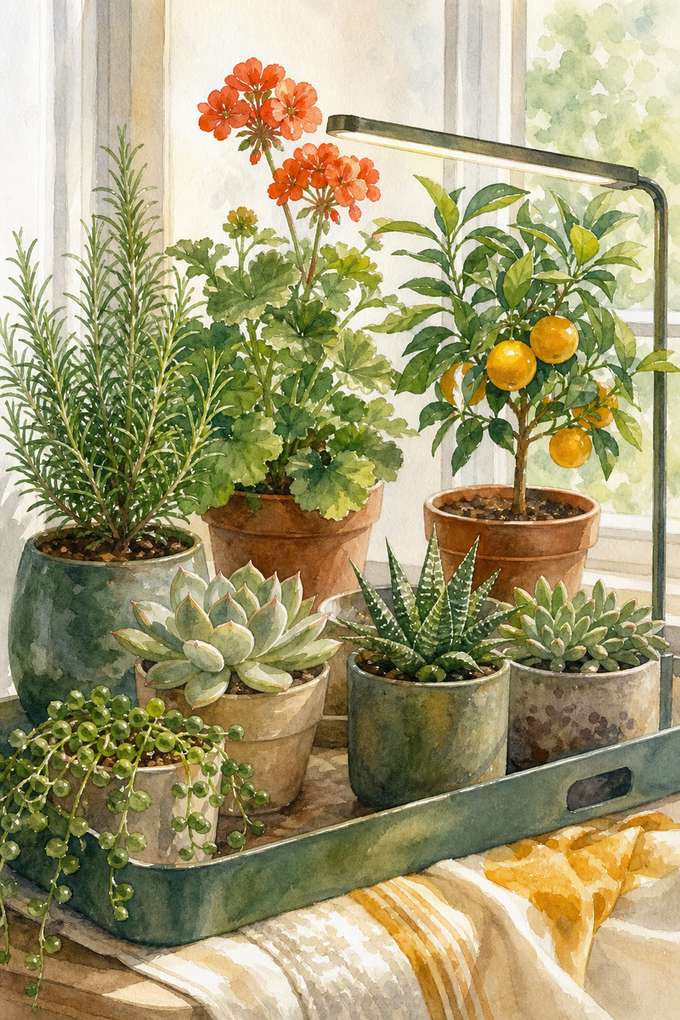
Move tender rosemary, citrus, geraniums, and succulents indoors before nights consistently fall below their tolerance, rather than waiting for frost. Inspect leaf undersides, rinse foliage, and quarantine plants away from houseplants for 10 to 14 days to catch aphids, scale, or spider mites. A bright south-facing window suits citrus, while many succulents need a grow light kept roughly 6 to 12 inches above the leaves. Indoor heat dries pots unevenly, so check soil rather than watering weekly. The trade-off is space and pest risk: a crowded windowsill can be worse than taking cuttings and composting the parent plant. Never bring a container inside if its combined size and weight make safe lifting doubtful.
Common questions
- How much colder are roots in containers than roots in the ground?
- Container roots have far less surrounding soil to buffer temperature swings, so they may experience repeated freezing and thawing even when the same plant survives in a garden bed. A practical rule is to choose perennials rated at least one USDA hardiness zone colder than your location, and two zones colder for small or exposed pots.
- Can I leave potting soil in containers all winter?
- Yes, if the container is frost-resistant, drains freely, and remains raised off the floor. Empty terracotta or non-frost-rated ceramic pots because wet mix expands when frozen and can crack them. Do not reuse soil from plants that had root rot, vine weevils, or other persistent pests.
- Will insulated pots become too heavy for a balcony?
- Burlap, bubble wrap, and dry leaves add little weight; wet soil, masonry ballast, and large cachepots add much more. Building-specific balcony limits vary, so check your lease, HOA guidance, or property manager rather than relying on a generic pounds-per-square-foot figure. Keep the heaviest containers near structurally supported edges only when your building permits it.
- Should I fertilize container plants during winter?
- Usually not. Dormant outdoor perennials cannot use much fertilizer, and salts can accumulate in slowly draining winter soil. Stop routine feeding in late summer or early fall, then resume when active growth appears in spring. Indoor citrus under strong light may need limited feeding, but follow the plant's label rather than a summer-strength schedule.