9 Renter-Friendly Balcony Herb Garden Setups That Need No Drilling
A balcony herb garden has to clear more hurdles than sunlight: rail safety, wind, drainage, and landlord rules all matter. These nine no-drill setups use secure railing planters and freestanding racks while keeping herbs within easy picking reach.
This page contains affiliate links — we may earn a commission at no extra cost to you. See our disclosure.
1. Face Two Railing Planters Inward
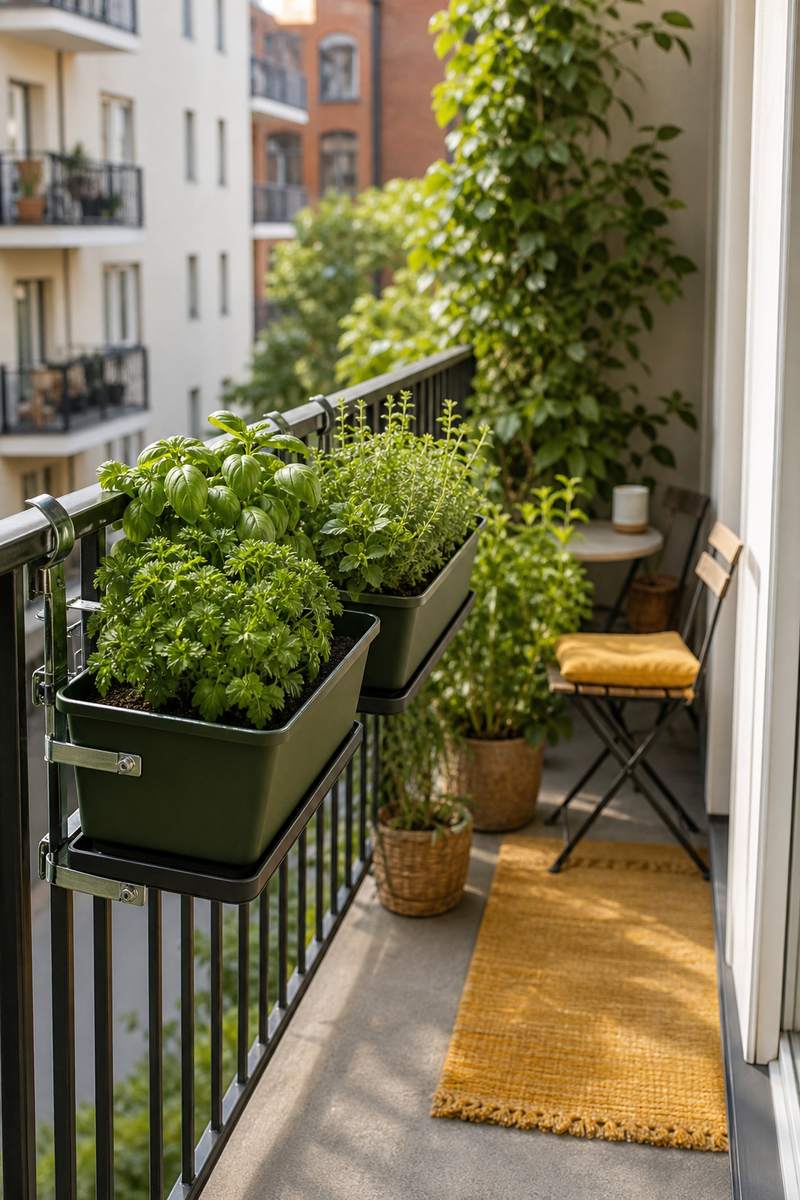
Hang two 24-inch railing planters on the balcony side of the rail, not over the street or a neighbor’s patio. Fill one with compact Genovese basil and flat-leaf parsley; use the sunnier box for thyme and oregano. Choose adjustable brackets that match the rail’s exact width, then add a secondary safety strap around each planter. The trade-off is floor space: inward-facing boxes may steal 8 to 10 inches from a narrow balcony, but they are easier to water and less risky in wind. Use lightweight potting mix rather than garden soil, and confirm that your lease allows attached planters. A drip tray or reservoir matters because runoff can stain concrete and bother the unit below.
2. Use a Slim Three-Tier Rack as a Sun Ladder
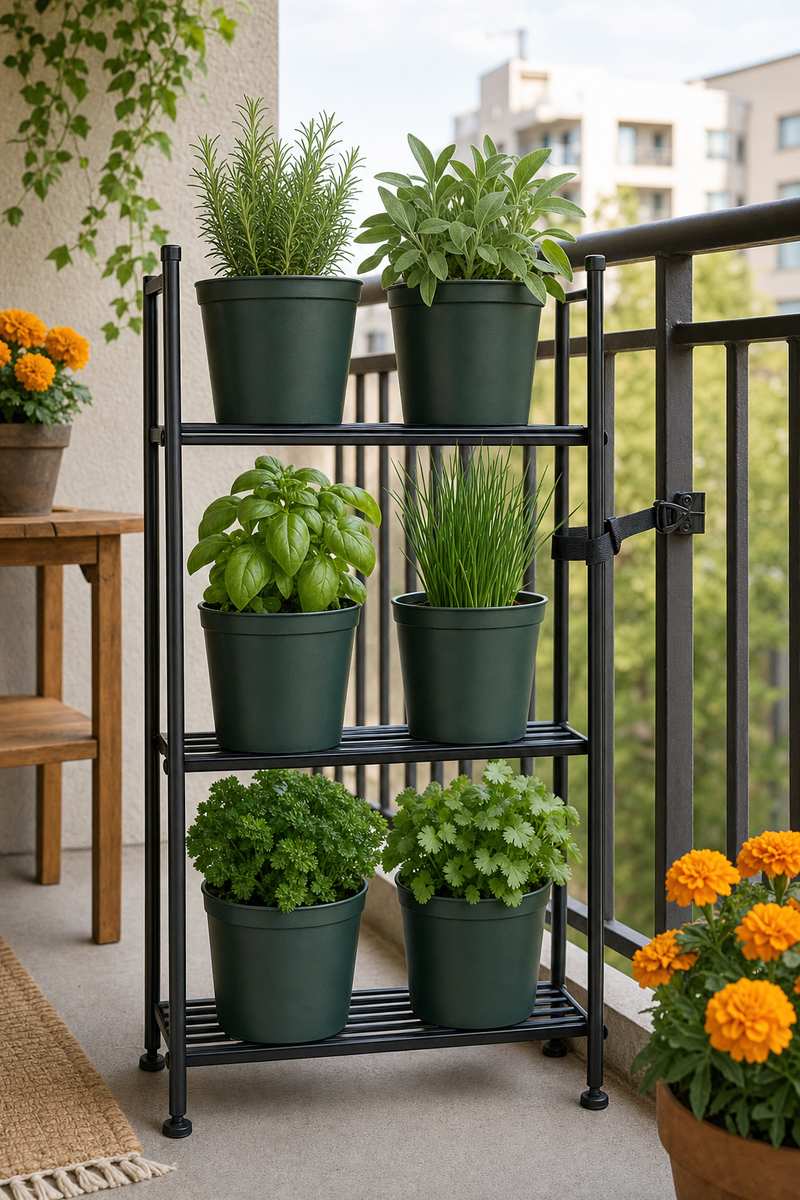
A freestanding rack about 30 inches wide and 12 inches deep can hold six herb pots without touching the wall. Put sun-hungry rosemary and sage on top, basil and chives in the middle, and parsley or cilantro where the lower shelf gets afternoon shade. This arrangement works best when the shelves are slatted, so water cannot pool around pot bases. Check the rack’s load rating and count wet soil, not empty pots; six 8-inch containers can become surprisingly heavy after watering. Wind is the weak point. Place the rack against the building-side wall, level its feet, and secure the frame to the railing with removable outdoor-rated straps if permitted. Rotate pots weekly because the back row will lean toward the light.
3. Clamp Herb Pots to a Wide Top Rail
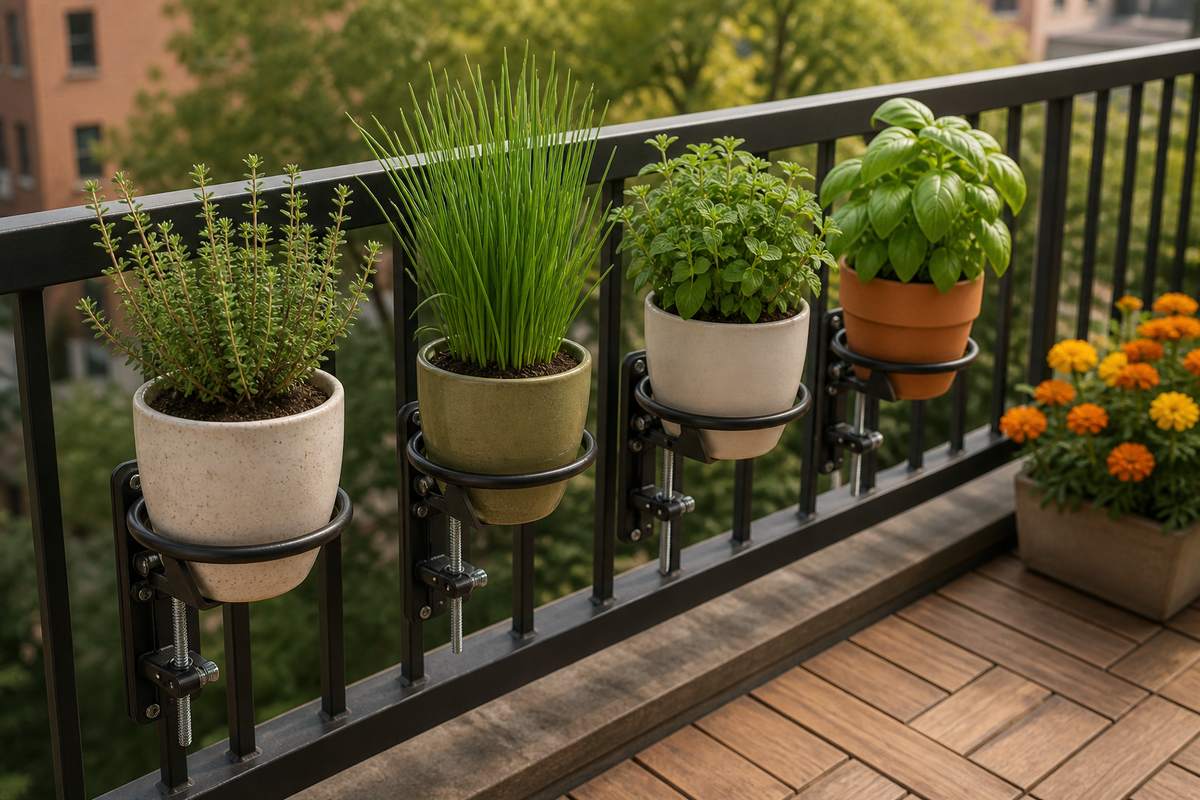
Individual clamp-on holders let you arrange three or four herbs along a sturdy top rail while leaving the floor open. Use 6-inch pots for thyme, chives, Greek oregano, or a compact basil; mint needs a larger container and dries too quickly here. Measure the rail before buying because clamps made for a 2-inch metal bar will not fit a broad wooden cap. Each holder should tighten mechanically and include a pot-retaining ring, not merely hook over the edge. The exposed position means daily moisture checks during hot, windy weather, and lightweight nursery pots may tip inside oversized rings. Keep every pot on the inside face of the balcony and follow building rules; some landlords ban rail-mounted objects regardless of how securely they clamp.
4. Roll a Narrow Herb Cart to Follow the Sun
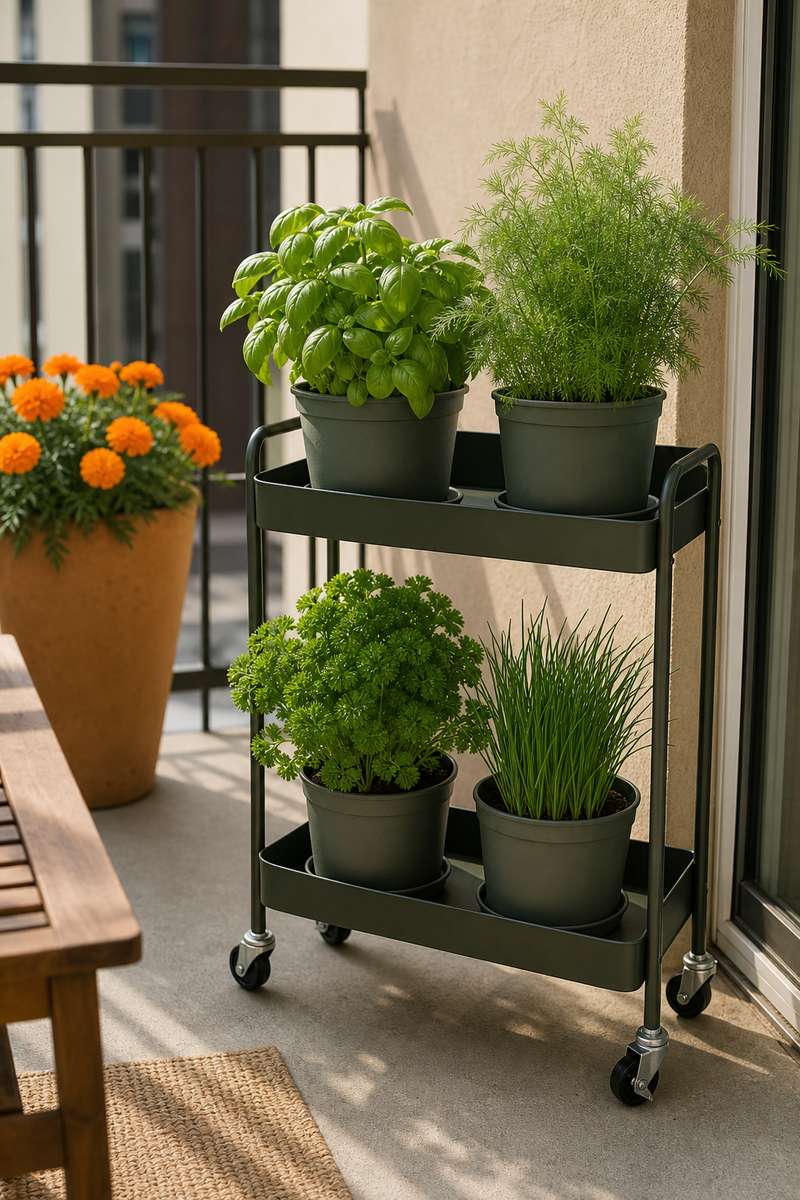
A two-tier utility cart turns a patchy-light balcony into a movable herb bed. Start the morning near the east rail, then roll it back beside the wall before strong afternoon wind or heat arrives. A cart roughly 18 by 30 inches fits four 8-inch pots: basil and dill on top, parsley and chives below. Locking casters are essential; tiny indoor wheels catch in balcony grooves and can drift on a sloped slab. Choose powder-coated steel or outdoor-rated resin, and place saucers under every pot so rusty water does not trail across the floor. Mobility is the advantage, but the cart only helps if you actually move it. Fully loaded, it may weigh 50 pounds or more, so check both shelf capacity and balcony rules.
5. Reserve One Deep Rail Box for Mediterranean Herbs
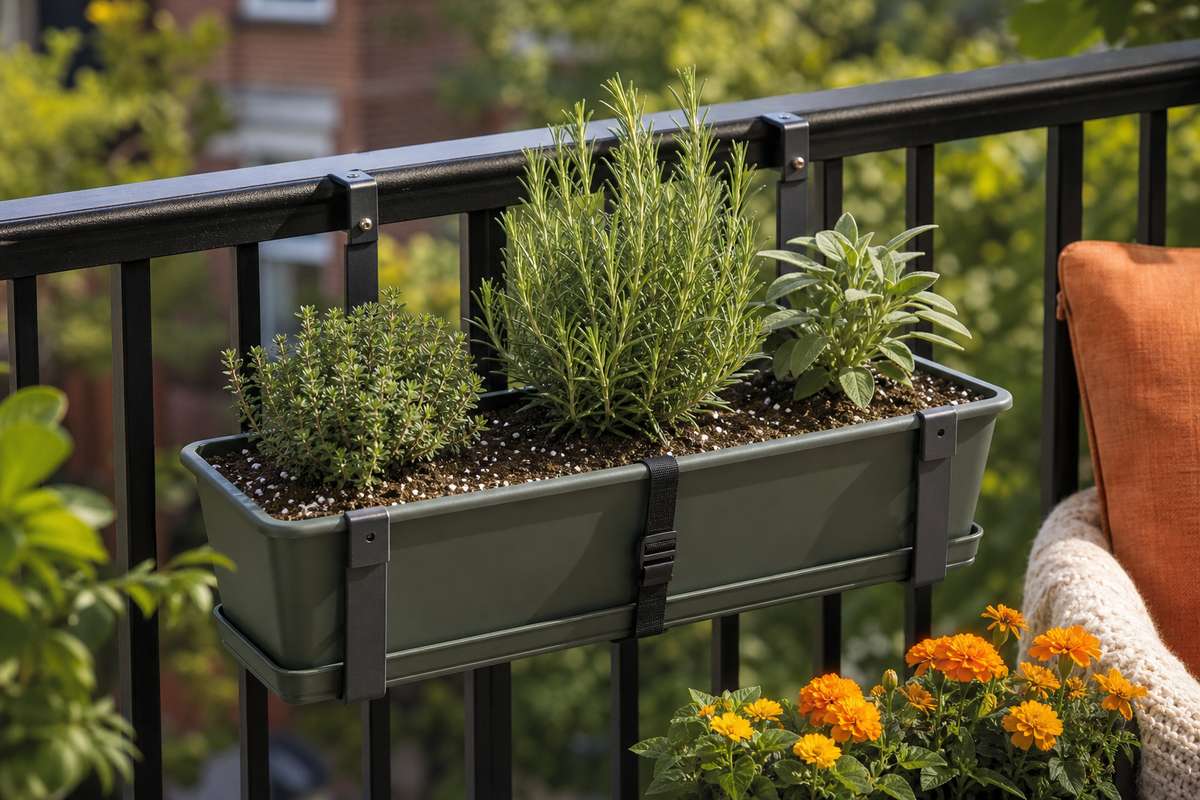
Group rosemary, common thyme, and dwarf sage in one 10- to 12-inch-deep railing box where they can share lean soil and less frequent watering. Mix potting soil with extra perlite or fine pine bark, and make sure the box has several open drainage holes. These herbs want at least 6 hours of direct sun; on a shaded balcony, parsley will be a better use of the space. Do not add basil to this box, since its thirstier routine encourages overwatering around rosemary roots. A deep planter also carries more wet weight than a standard window box, so verify the bracket rating and your building’s railing rules before filling it. Trim rosemary regularly rather than letting one woody plant shade its slower-growing neighbors.
6. Make a Shaded Lower Shelf for Tender Herbs
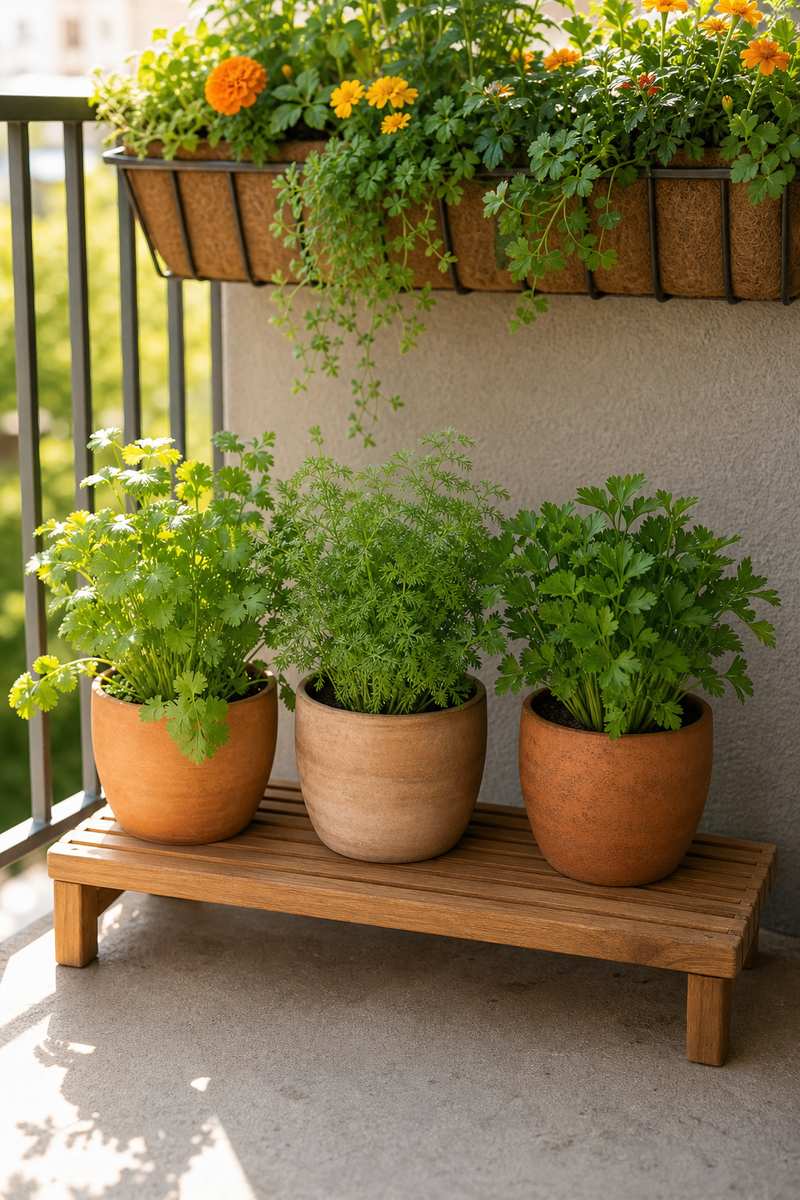
Use the shadow cast by an upper railing planter to shelter cilantro, chervil, and flat-leaf parsley on a low freestanding shelf. These herbs tolerate 3 to 5 hours of sun and often last longer when protected from a hot west-facing afternoon. Keep them in separate 8-inch pots because cilantro finishes quickly while parsley can stay productive for months. The shelf should stand at least 2 inches above the slab so drainage can dry instead of collecting underneath. Shade slows evaporation, so test the soil with a finger rather than watering on the basil’s schedule. The downside is visibility: low pots are easy to forget and easy to kick. Set the shelf at a closed end of the balcony, not along the main route to the door.
7. Give Mint Its Own Heavy Floor Pot
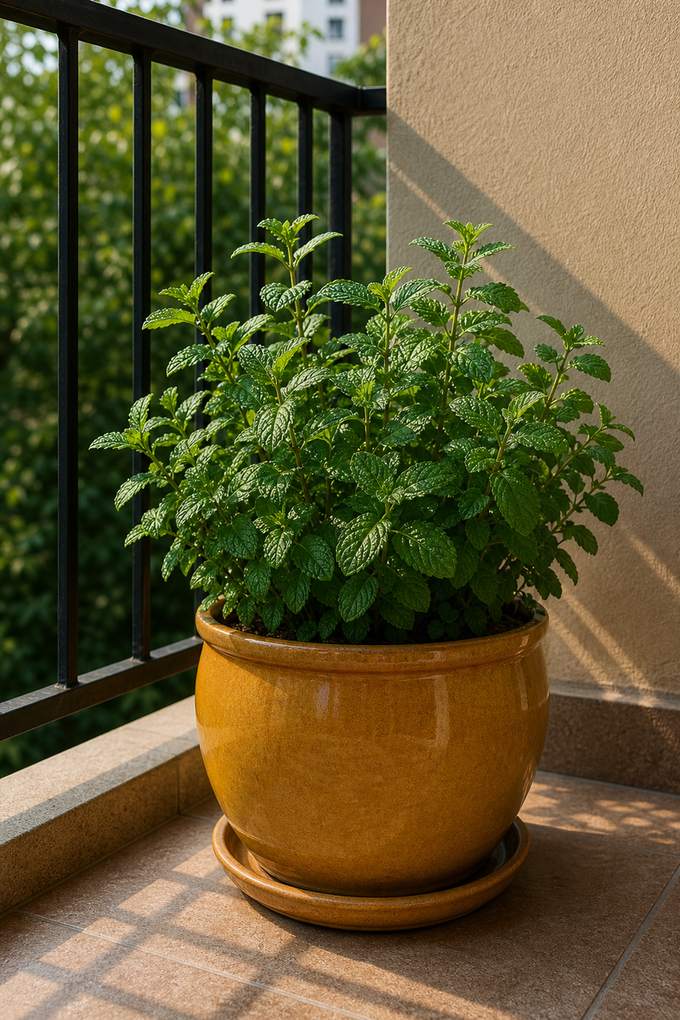
Keep spearmint in a single 10- to 12-inch pot on the floor beneath the railing, where the container cannot become a wind sail. Mint’s roots spread aggressively, so combining it with basil or parsley turns into a season-long competition. A glazed ceramic pot adds stability and holds moisture better than thin plastic, but it may be difficult to lift once wet; a broad resin pot with a brick tucked beneath the inner nursery pot is a lighter compromise. Give mint 4 to 6 hours of light and pinch stems above a leaf pair to keep growth bushy. Set the pot in a saucer, then empty standing water after storms. Even contained mint can root through drainage holes if stems reach another planter.
8. Add a Self-Watering Box for Thirsty Basil
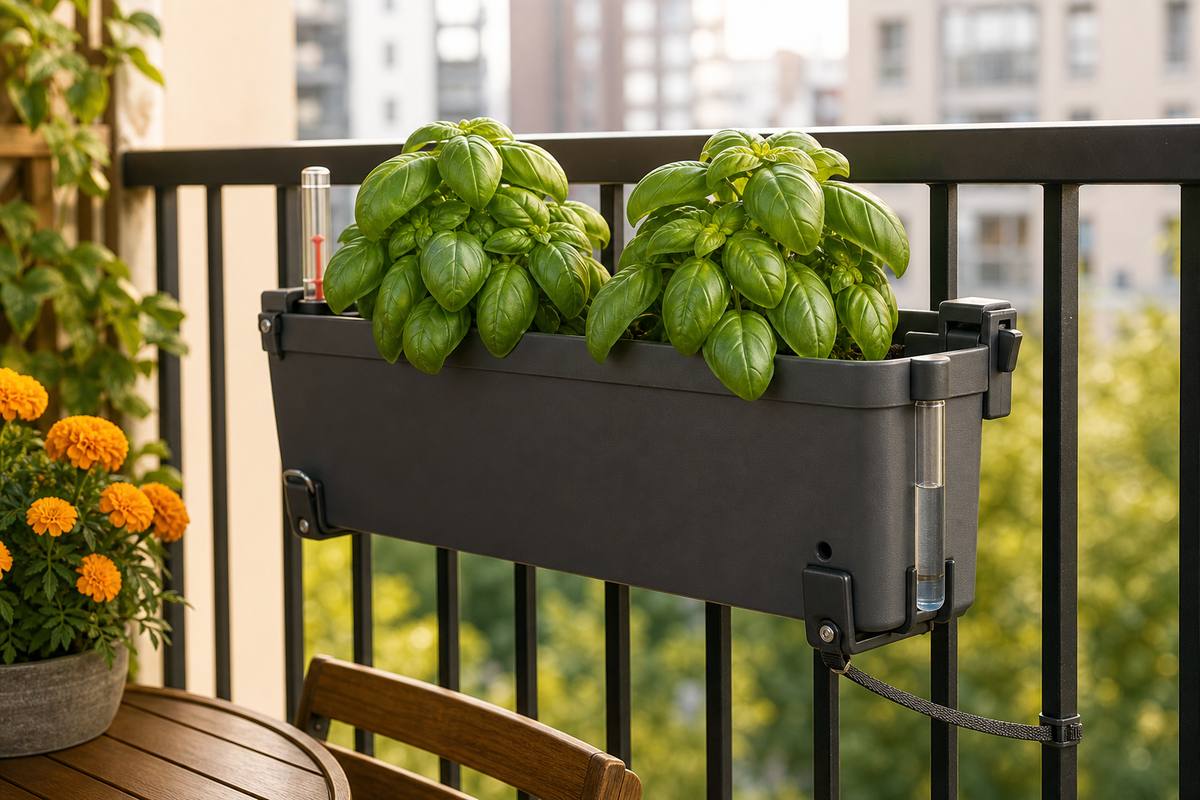
Plant two basil plants in an 18- to 24-inch self-watering rail box to buffer the rapid drying that happens several floors above ground. A reservoir is especially useful on south- or west-facing balconies, where ordinary boxes may need water every day in midsummer. Look for a fill tube, overflow opening, secure adjustable brackets, and a water-level indicator you can read without leaning over the rail. The reservoir adds weight, so confirm the planter’s filled weight and mount it inward. It also is not set-and-forget: flush the box from the top every few weeks to reduce fertilizer-salt buildup, and do not keep it permanently full during cool, rainy weather. Pinch Genovese basil often and remove flower buds for a longer harvest.
Product pick — an adjustable self-watering rail planter
9. Anchor a Corner Rack for Windy Balconies
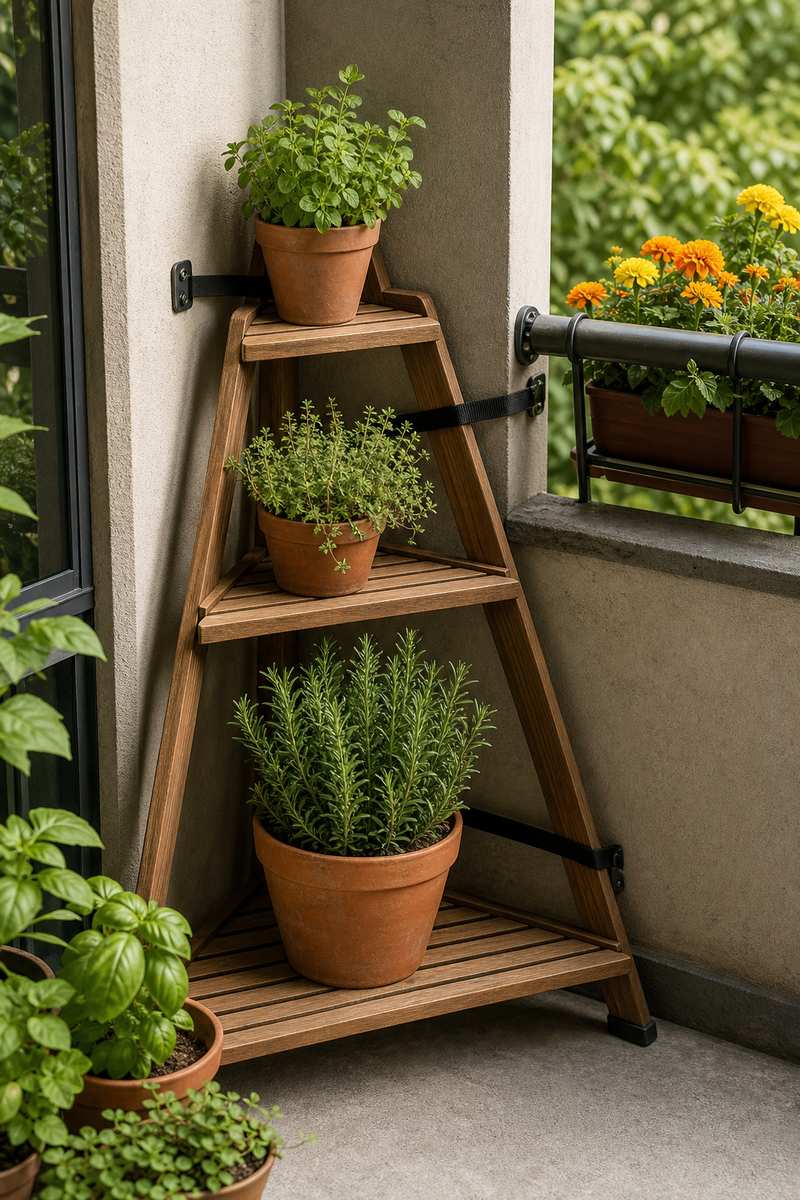
Tuck a triangular three-tier plant stand into the building-side corner, where two solid surfaces offer more protection than the exposed rail. Place the heaviest 10-inch pot on the bottom shelf—rosemary is a good candidate—and keep lighter thyme and oregano pots below the top of the railing. A perforated or slatted stand catches less wind than a solid shelving unit. Add nonslip rubber feet, then join the frame to an approved fixed point with two removable outdoor straps; never rely on pot weight alone during gusts. The compromise is uneven light, so swap shelf positions every 7 to 10 days. If your balcony regularly gets strong wind warnings, move the entire rack indoors rather than trying to engineer around severe weather.
Common questions
- How do I know whether my balcony can hold herb planters?
- Ask your landlord or building manager for the balcony load and railing rules; do not estimate from appearance. Include containers, saturated potting mix, water reservoirs, furniture, and people in the total. Spread pots across the slab rather than clustering every heavy container in one corner, and never attach a planter to a loose or decorative rail.
- How much sun do balcony herbs need?
- Basil, rosemary, thyme, oregano, and sage are most productive with about 6 or more hours of direct sun. Parsley, chives, cilantro, mint, and chervil can manage with roughly 3 to 5 hours, though growth may be slower. Track direct sun at planter height for one clear day; the railing and balcony above can change the result.
- How often should I water herbs on a windy balcony?
- Check small pots daily in warm, windy weather, but water only when the top inch of mix feels dry; rosemary and thyme should dry farther between drinks than basil or mint. Water until excess reaches the saucer, then empty it. Reservoir planters extend the interval, but they still need weekly checks and occasional top watering to flush salts.
- Can balcony herbs stay outside through winter?
- That depends on the herb, pot size, and USDA zone. Annual basil dies with frost, while potted rosemary is less cold-hardy than rosemary in the ground. Mint, chives, thyme, and oregano may overwinter in a sheltered larger pot, but freeze-thaw cycles can crack containers and damage roots. Check your zone, then move tender herbs indoors before the first expected frost.