9 Cat-Safe Herbs for Sunny Windowsills That Earn Their Tiny Footprint
A sunny sill can grow useful herbs without putting a curious cat beside known hazards such as chives or oregano. These nine compact choices are considered non-toxic to cats, fit ordinary pots, and offer enough flavor, fragrance, or repeat harvests to justify the space.
1. Keep Genovese Basil in a 6-Inch Pot
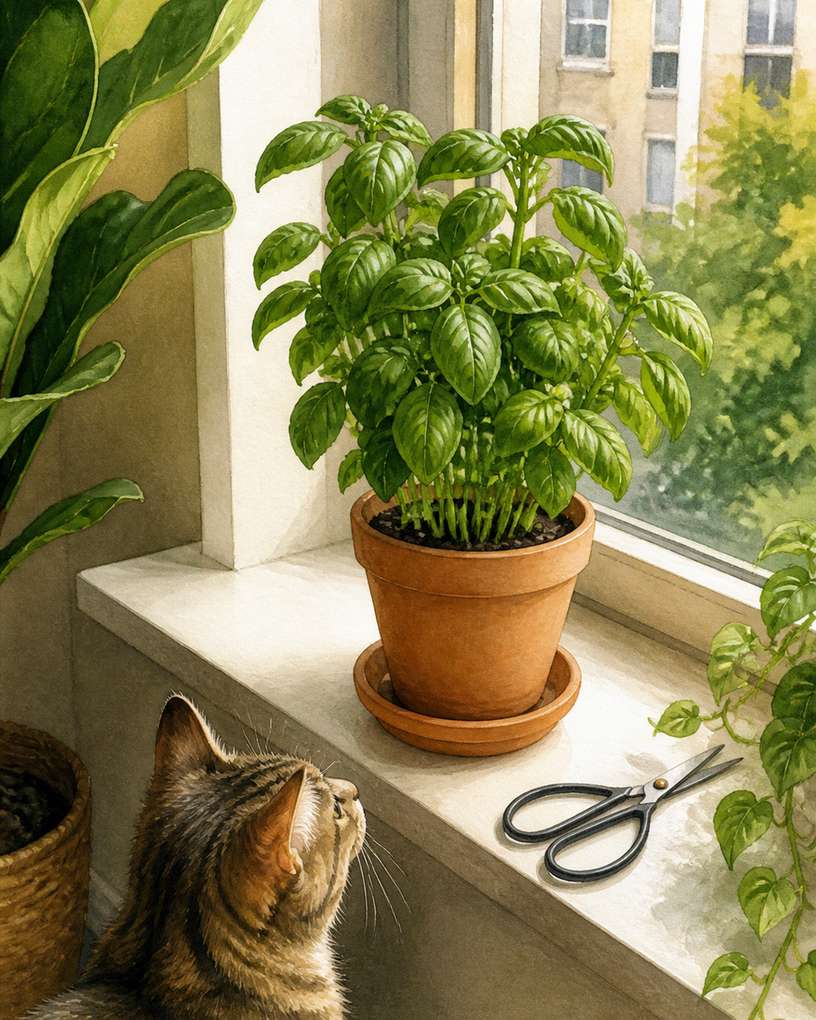
Genovese basil earns its sill space with leaves for pesto, sandwiches, and tomato dishes. Give one plant a 6-inch pot with a drainage hole and at least 6 hours of direct sun; crowded grocery-store clumps should be divided rather than left as 10 or more stems in one tiny pot. Pinch just above a leaf pair once the plant reaches about 8 inches tall, and remove flower buds to prolong leaf production. Basil is considered non-toxic to cats, but repeated nibbling can still cause stomach upset. Its main drawback indoors is thirst: a small sunny pot may need water every 2 or 3 days, and cold window glass can damage leaves.
2. Sow Cilantro as a Short-Lived Succession Crop
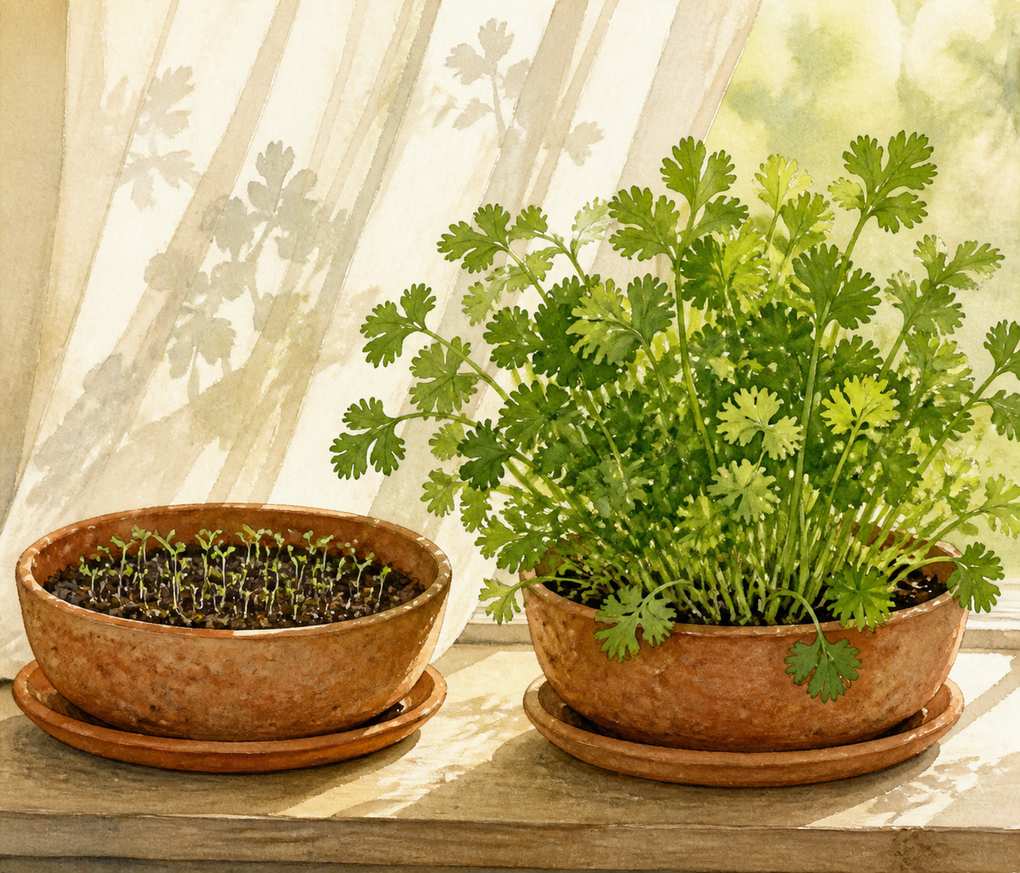
Cilantro works best as a rotating crop rather than a permanent houseplant. Sow a small pinch of seed in a pot 6 to 8 inches deep, then start a second pot about 3 weeks later so one is producing while the other recovers or bolts. A sunny sill helps, but hot glass and indoor temperatures above roughly 75°F push cilantro toward flowers quickly; midday sheer curtains can slow that decline. Harvest the outer stems when they reach 4 to 6 inches. Cilantro is considered non-toxic to cats, though large mouthfuls are still unwise. The honest trade-off is longevity: even with careful watering, each sowing may provide only a few worthwhile cuts.
3. Grow Compact Dill for Frequent Small Harvests
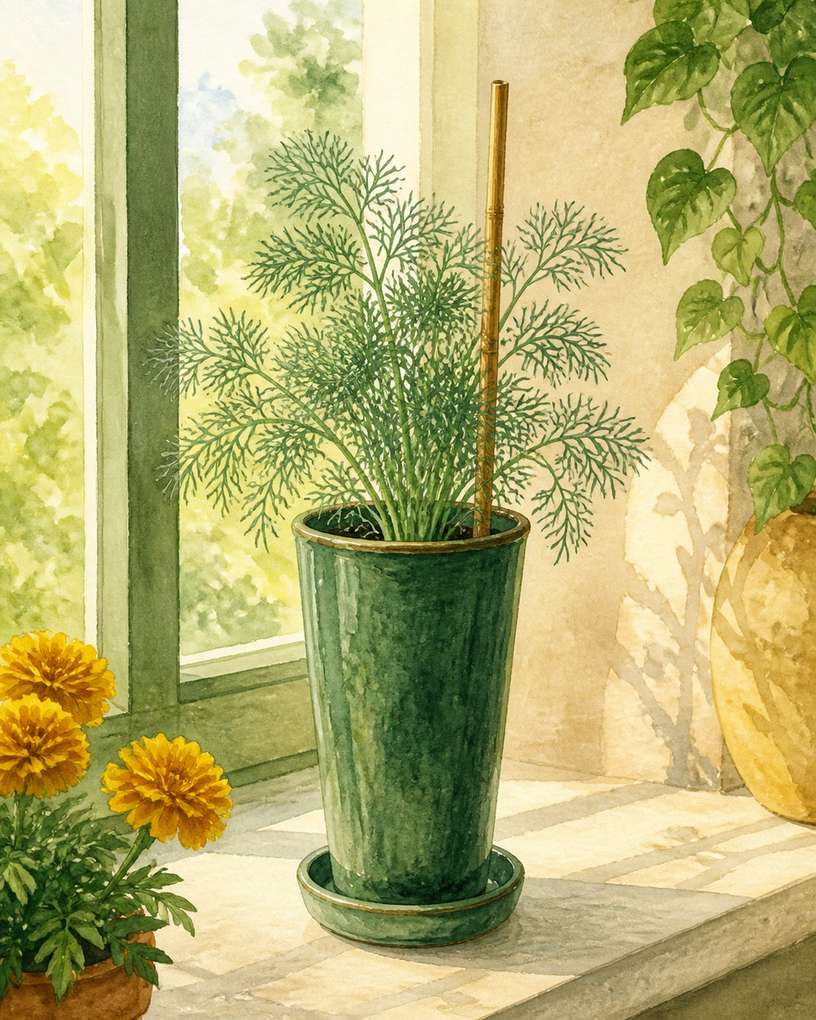
Choose a compact dill such as 'Fernleaf' instead of a 3-foot garden variety. Its fine foliage adds useful flavor to potatoes, yogurt sauces, pickles, and fish while staying closer to 12 to 18 inches tall. Dill forms a taproot, so use a pot at least 8 inches deep even if the container is only 6 inches wide, and sow directly because seedlings dislike root disturbance. Aim for 6 hours of sun and rotate the pot weekly to limit leaning. Dill is considered non-toxic to cats, but fragile stems will not survive a paw landing. It also bolts eventually, so expect to reseed rather than keep one plant indefinitely.
4. Let Common Thyme Fill One Small Clay Pot
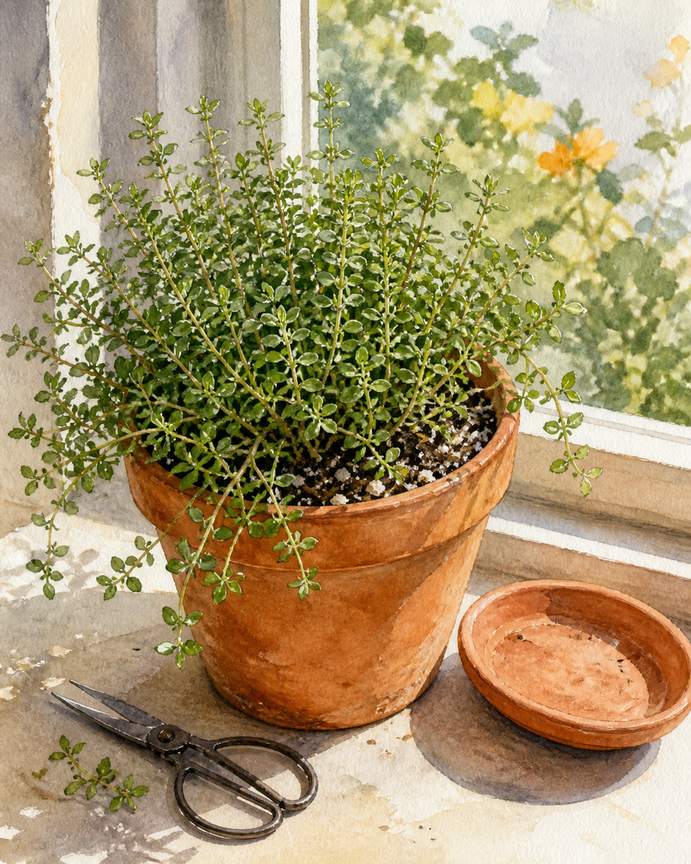
Common thyme, Thymus vulgaris, delivers strong flavor from a plant that can stay under 10 inches tall. A 5-inch unglazed clay pot is usually enough for one plant, provided the mix drains quickly; combine regular potting mix with roughly one-third perlite or fine pumice. Let the top inch dry before watering, because soggy roots are a greater threat than brief dryness. Thyme is considered non-toxic to cats, but concentrated thyme essential oil is a different product and should not be treated as pet-safe. The plant grows slowly indoors, so harvest only the top inch or two at first. Its woody stems also become sparse without 6 or more hours of bright light.
5. Train Rosemary as a Narrow Upright Plant
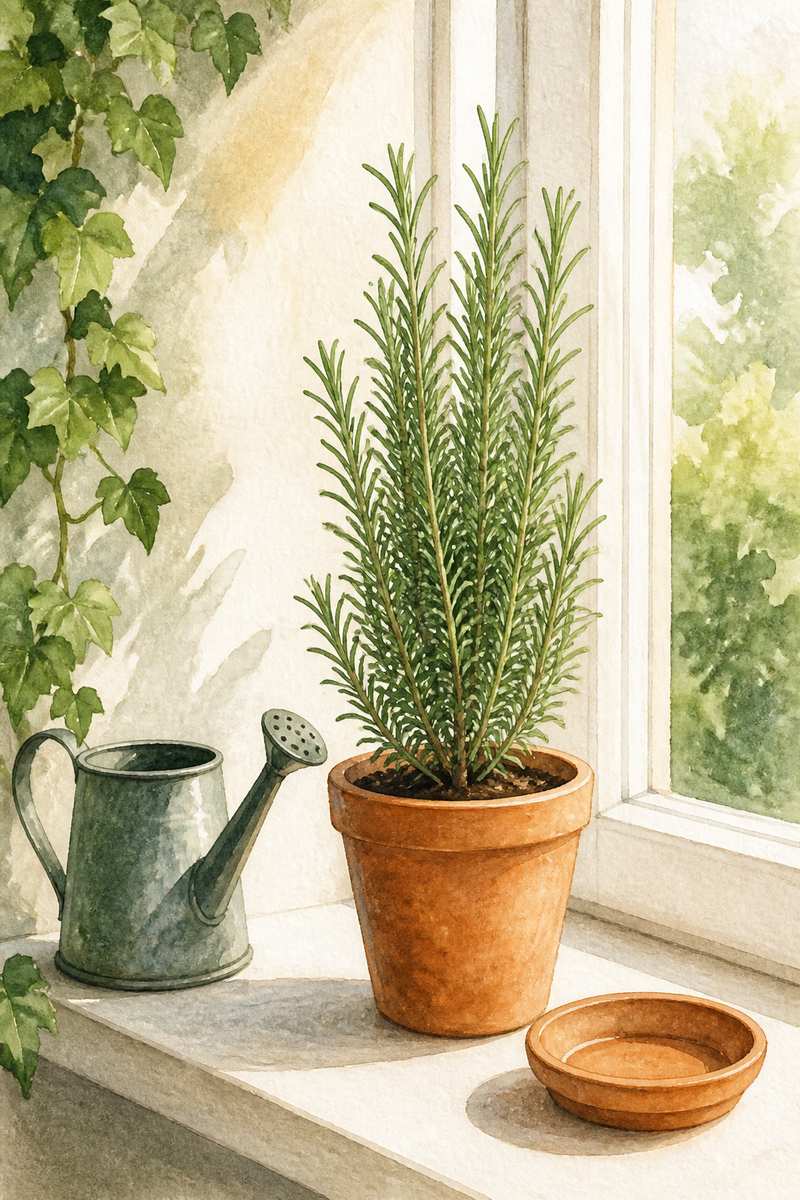
An upright rosemary cultivar gives a renter plenty of flavor without sprawling across neighboring pots. Start with a 6- to 8-inch clay container and place it at the brightest point on the sill, where it can receive 6 to 8 hours of direct light. Water thoroughly, empty the saucer, and wait until the upper inch or two feels dry; alternating swampy soil and bone-dry roots is what commonly finishes indoor rosemary. Rosemary is considered non-toxic to cats, although chewing a large amount may still upset digestion. The downside is that it is less forgiving than basil: dim winter light, dry heating vents, and poor airflow can cause needle drop or spider mites.
6. Prune Garden Sage to Stay Stocky
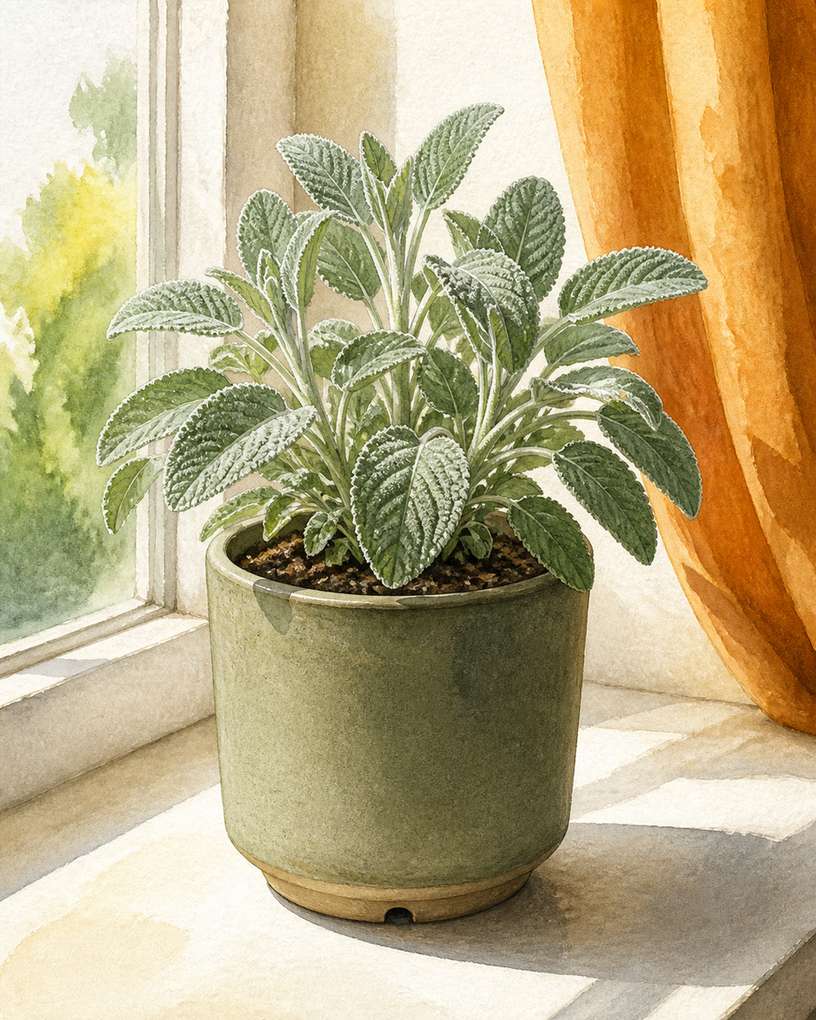
Garden sage, Salvia officinalis, supplies a lot of flavor from just a few leaves, making it a sensible choice when the sill holds only three or four pots. Give it a 6-inch container, gritty potting mix, and at least 6 hours of sun. Once several shoots are established, pinch the soft tips to encourage a stockier plant, but avoid cutting deeply into bare woody stems. Garden sage is considered non-toxic to cats; concentrated essential oils and smoke from burning sage are separate concerns and should stay away from pets. Sage dislikes wet feet, yet its fuzzy leaves can trap dust indoors. Wipe the sill instead of routinely misting, which can encourage mildew.
7. Give Catnip Its Own Heavy, Low Pot
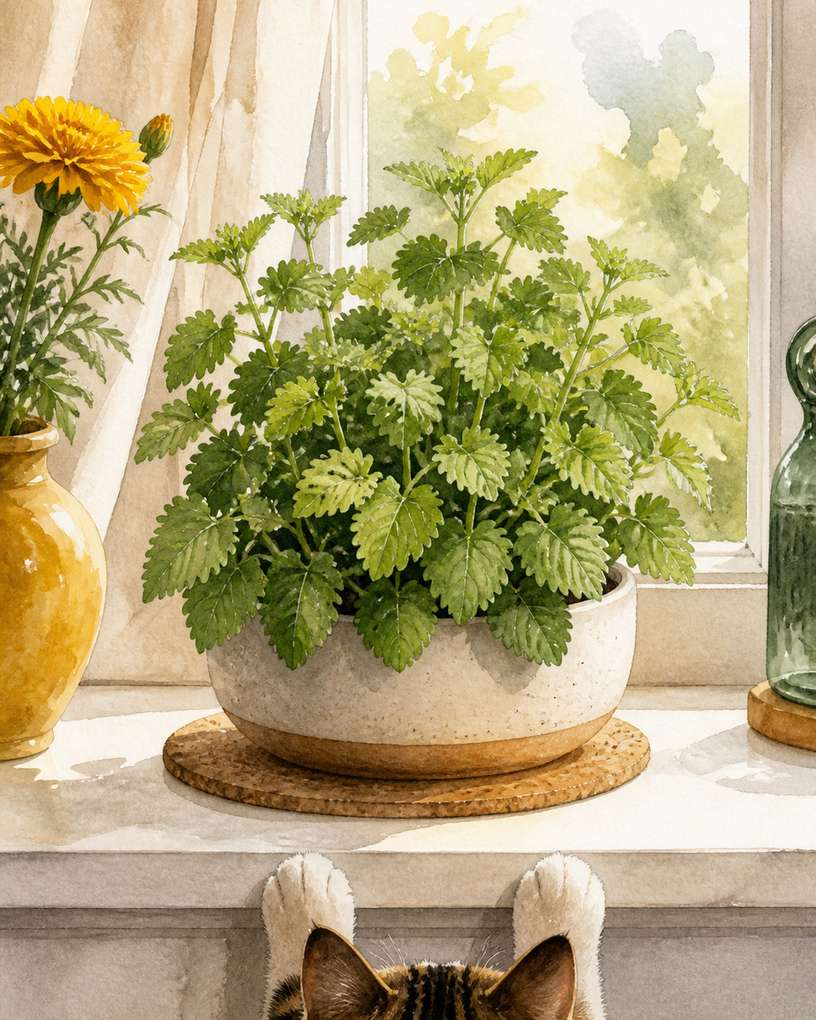
Catnip, Nepeta cataria, is the one herb here your cat may actively seek, so design for contact rather than hoping the plant goes unnoticed. Use a low 8-inch ceramic pot with a broad base and set it on a non-slip cork mat; a lightweight nursery pot is easy to overturn. Six hours of sun keeps growth compact, while regular trimming limits the lanky stems that invite pulling. Catnip is considered non-toxic, but eating a large helping can lead to vomiting, diarrhea, or sleepiness, so offer brief access and remove the pot if your cat grazes compulsively. Expect cosmetic damage. This is a pet-enrichment plant first and a tidy windowsill specimen second.
8. Use Stevia for a Slow, Sweet-Leaved Crop
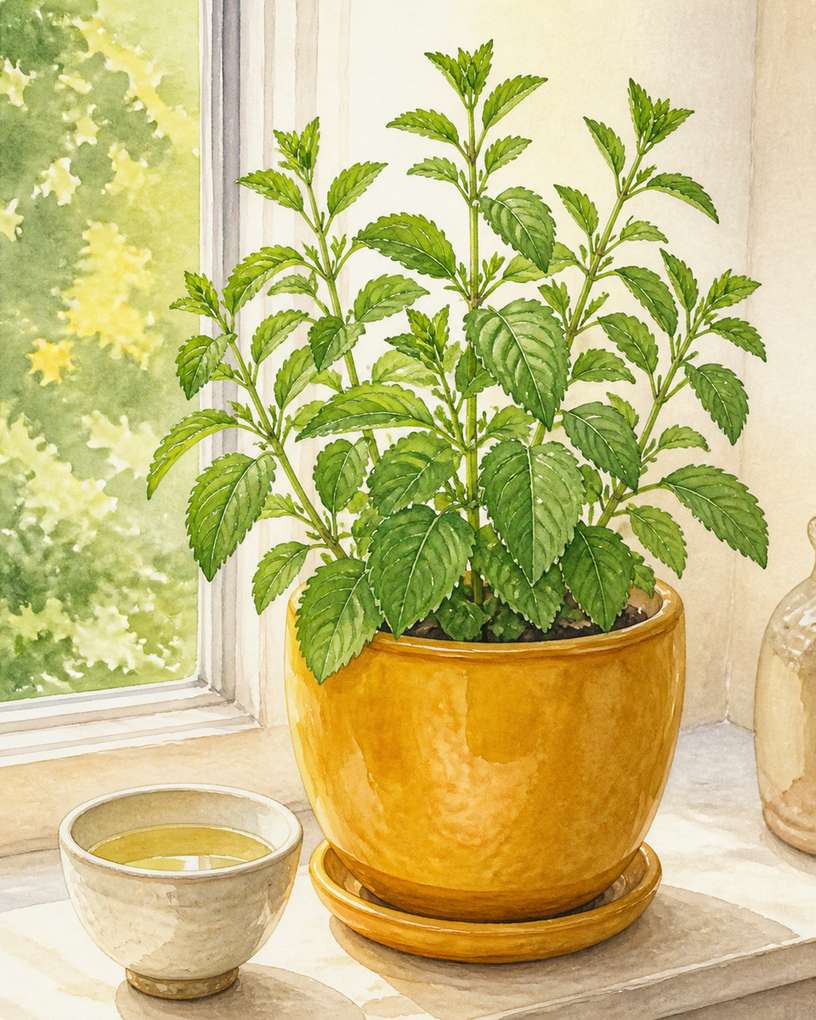
Stevia, Stevia rebaudiana, offers sweet leaves for tea without demanding the repeated sowing that cilantro does. One plant fits a 6-inch pot initially, although it may need an 8-inch container after a season. Give it 6 to 8 hours of sun and pinch the tips when stems reach about 6 inches to encourage branching. Stevia is considered non-toxic to cats, but that does not make unlimited chewing a good habit; keep culinary foliage out of reach if it becomes a target. The trade-off is flavor and speed: fresh leaves have a noticeable herbal aftertaste, and indoor growth can stall during short winter days. Harvest lightly until the plant has several sturdy branches.
9. Add Calendula for Edible Petals and Color
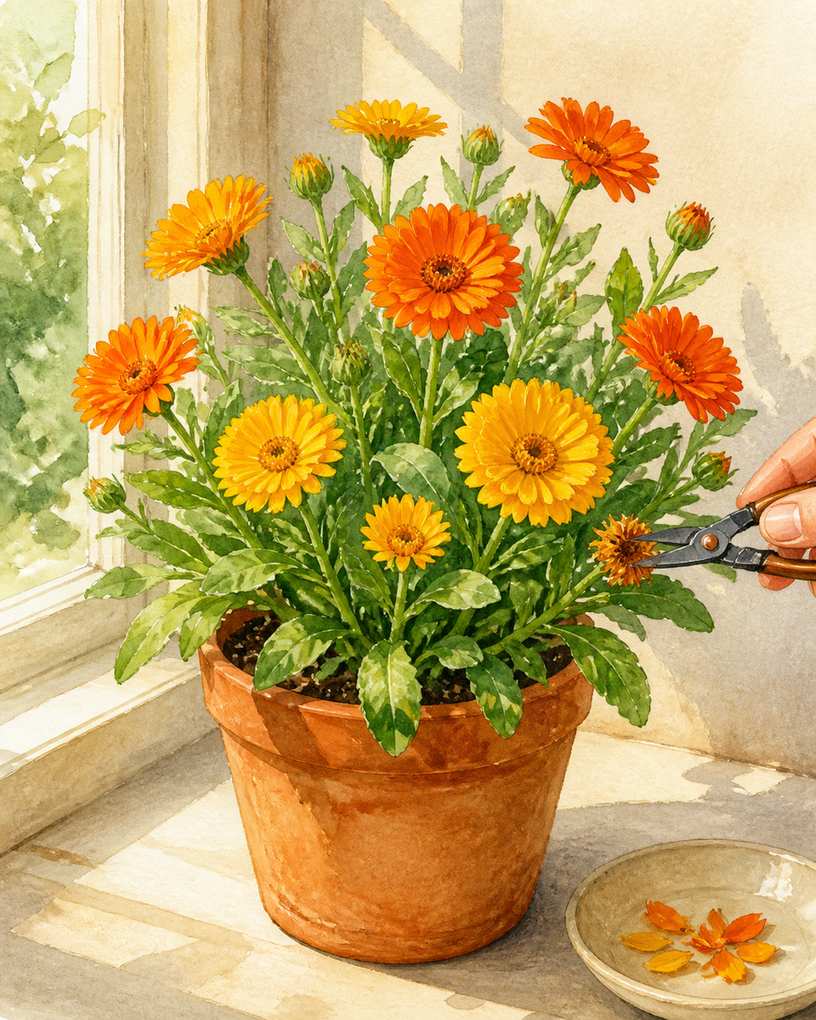
Pot marigold, Calendula officinalis, is an edible herb whose petals brighten salads, rice, and compound butter, and it is considered non-toxic to cats. Choose a compact cultivar such as 'Calypso' and grow one plant in a 6-inch pot so air can move around its leaves. It wants 6 or more hours of direct sun; without that, stems stretch and powdery mildew becomes more likely. Snip faded flowers at their base to keep buds coming, and use only unsprayed petals in food. Calendula takes more vertical room than thyme and drops an occasional dry petal, so it is not the neatest choice. In a hot window, flowering may also pause until temperatures moderate.
Common questions
- Does non-toxic mean my cat can eat as much of these herbs as it wants?
- No. Non-toxic means the plant is not expected to cause poisoning, not that a cat can digest a salad-sized serving. Fibrous leaves or a large amount of catnip can still cause vomiting or diarrhea. Move the pot temporarily if chewing becomes persistent, and contact your veterinarian if symptoms are repeated, severe, or accompanied by unusual behavior.
- How much light counts as a sunny windowsill?
- For these herbs, aim for at least 6 hours of direct sun on the leaves, usually at an unobstructed south- or west-facing window. Brightness across the room does not count as direct light. If stems lean, gaps widen between leaves, or growth stops in winter, add a full-spectrum grow light positioned according to its manufacturer’s directions for 12 to 14 hours daily.
- Which common kitchen herbs should stay out of a cat-accessible window?
- Do not assume every culinary herb is pet-safe. Alliums such as chives, garlic, and onion are hazardous to cats, and oregano can also cause problems. Plant labels matter because common names can refer to different species. Check the exact botanical name against a veterinarian-reviewed poison-control database before bringing an unfamiliar herb home.
- How do I stop pots from becoming a tipping hazard?
- Choose broad ceramic or terracotta pots, place them on non-slip cork or silicone mats, and keep foliage from dangling over the edge. Every pot still needs a drainage hole and a fitted saucer. If the sill is narrower than the pot base, use another location; adhesive tape is not a reliable substitute for full support when a cat jumps against the container.