9 Cut-and-Come-Again Herbs for Apartment Gardeners Who Cook Often
A small apartment herb garden has to earn its window space. These nine herbs tolerate repeat harvesting in containers, with realistic notes on light, pot size, watering, and the point when each plant needs a rest.
1. Basil: Pinch Above a Leaf Pair for Bushier Regrowth
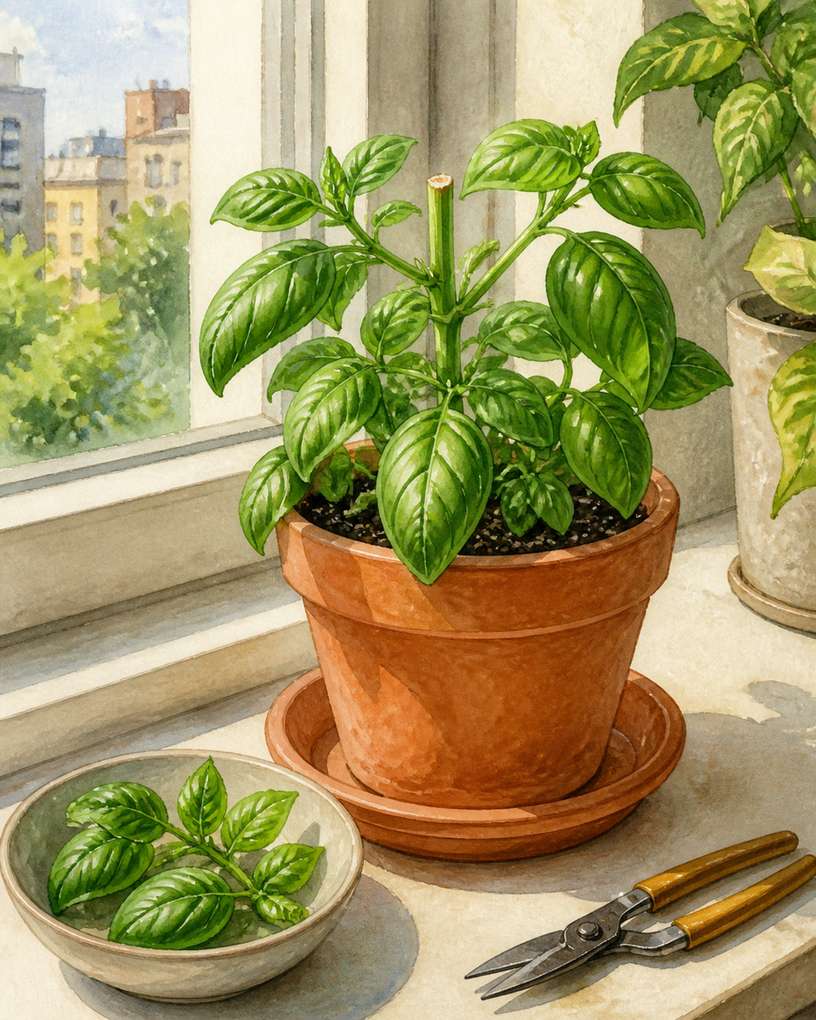
Basil is the quickest payoff for a sunny kitchen window: pinch a stem just above a pair of leaves, and two side shoots usually take over. Give one plant a 6- to 8-inch pot, at least 6 hours of strong sun, and evenly moist—not soggy—mix. Harvest the top 2 to 4 inches rather than stripping large lower leaves; that keeps the plant branching and delays flowers. A south- or west-facing window is usually the workable apartment spot, though a small grow light helps in winter. The honest catch is that basil is short-lived and sulks below about 50°F, so keep it away from cold glass. Once stems turn woody or flowering outruns your pinching, root a healthy cutting in water and start its replacement.
2. Flat-Leaf Parsley: Take the Outer Stems First
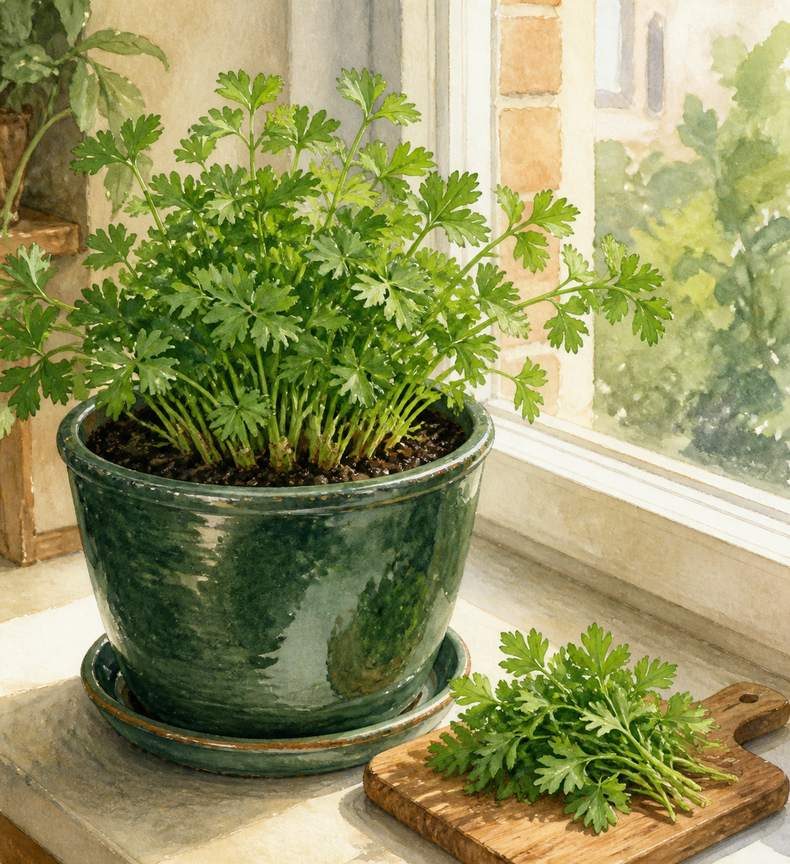
Flat-leaf parsley keeps producing when you cut whole outer stems at soil level and leave the small center growth intact. Use a pot at least 8 inches deep because parsley makes a substantial taproot; one healthy plant can fill a 6- to 8-inch-wide container. It accepts 4 to 6 hours of bright light, making it more forgiving than basil in an east-facing window. Water when the top half-inch of mix feels dry, since repeated wilting yellows the older leaves. Do not give it a haircut across the top—stubby, leafless stems will not provide a useful second crop. Parsley is biennial, but apartment growers usually treat it as an annual: after winter, it may send up a tough flower stalk and produce fewer tender leaves. Replace it when regrowth becomes sparse or bitter.
3. Chives: Cut Clumps Two Inches Above the Soil
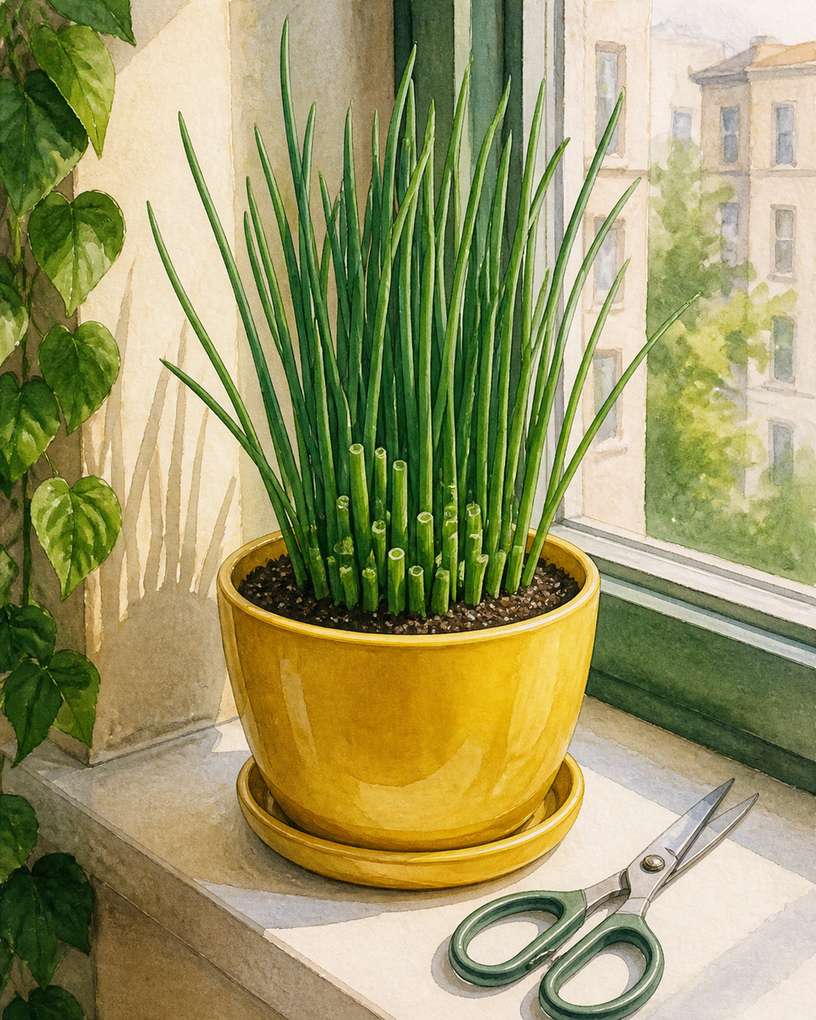
Chives regrow from their bulbs, so a clump can supply baked potatoes, eggs, and soups without occupying much sill space. Set a nursery clump in a 6-inch pot with drainage, then snip leaves about 2 inches above the soil; take only one-third to one-half of the plant at a time if you want a steady weekly supply. Four to 6 hours of sun is workable, although thin, floppy leaves signal that the window is too dim. Rotate the pot weekly so the clump does not lean hard toward the glass. Chives prefer consistent moisture, but a permanently wet saucer invites root rot. Their downside is slower indoor regrowth in winter. If the plant looks tired, stop cutting for 2 to 3 weeks, or divide an overcrowded clump in spring and refresh the potting mix.
4. Spearmint: Contain the Roots and Harvest Hard
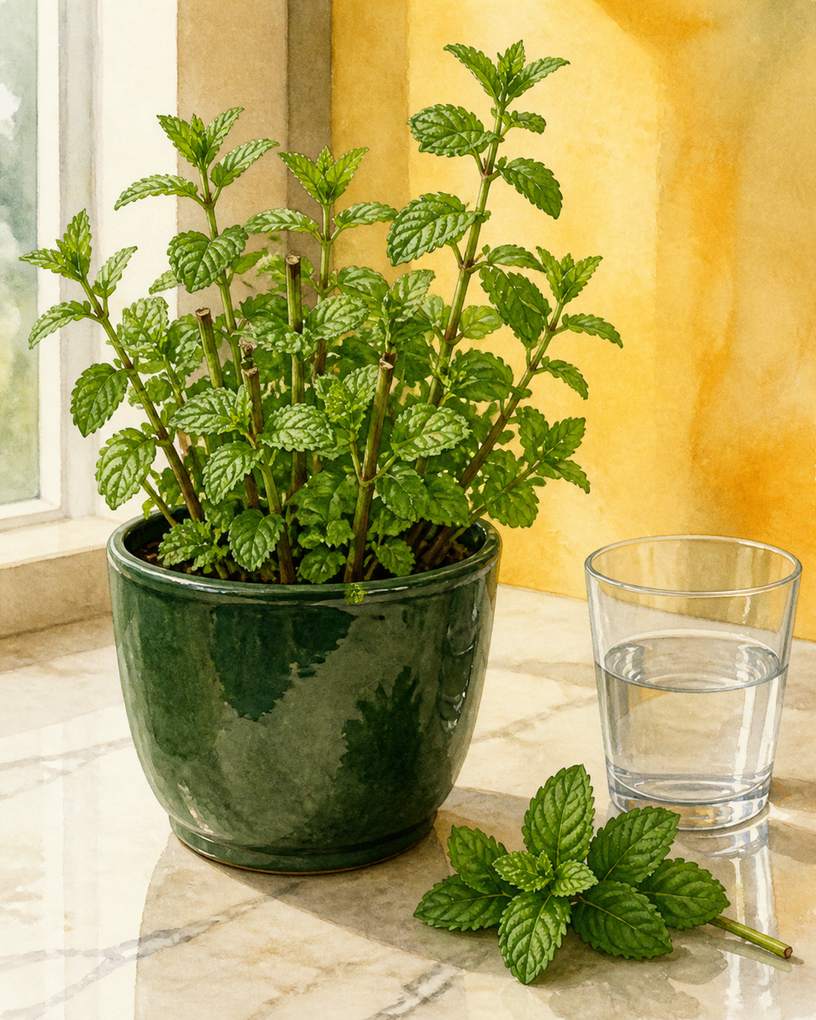
Spearmint is a generous choice for tea, salads, and sauces, especially where the window gets only 3 to 5 hours of sun. Keep it alone in an 8-inch pot; runners crowd neighboring herbs quickly, even in a shared indoor planter. Cut stems just above a leaf node, taking the top 3 to 5 inches, and the remaining nodes will branch. Mint tolerates a substantial harvest, but leave roughly one-third of the leafy growth so the roots can recharge. It also wants more water than Mediterranean herbs, so pairing it with thyme usually means one plant suffers. Check the soil every couple of days near a warm radiator. The trade-off is maintenance: roots can circle the pot within a season. Divide the plant, trim the root mass, and repot in fresh mix when water races down the sides.
5. Cilantro: Sow Short Rows for a Rolling Harvest
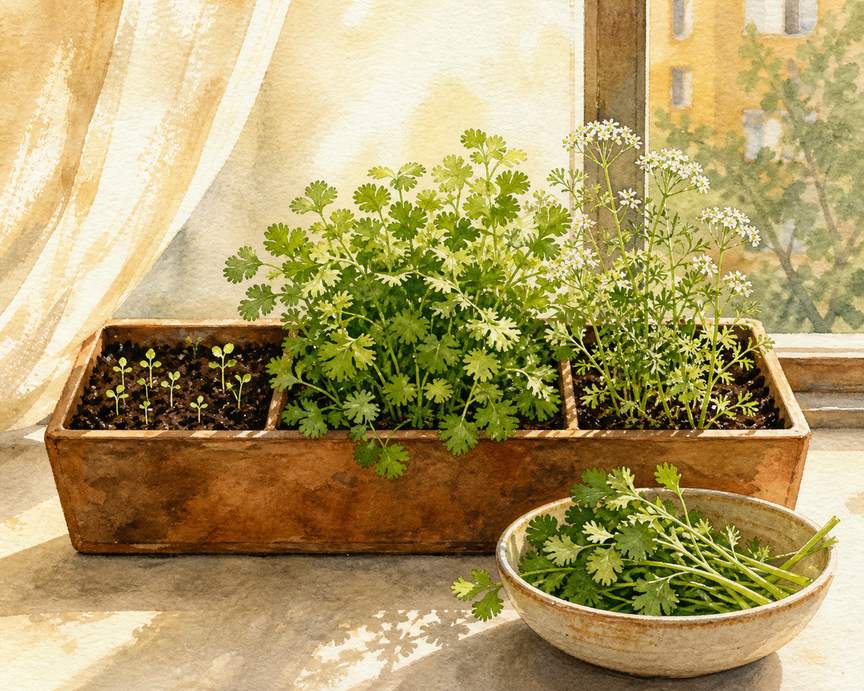
Cilantro can be cut more than once, but it is not a long-lived indoor herb; the reliable strategy is a rolling sowing rather than expecting one plant to last all summer. Scatter seeds in a window box at least 6 inches deep, spacing small batches every 2 to 3 weeks. When plants reach about 6 inches tall, cut outer stems near the base and leave the center. Bright light for 4 to 6 hours supports leafy growth, while hot west-window glass pushes plants to bolt. Move the box a foot back during heat waves or use a sheer curtain at midday. Once a flower stalk rises, the leaves become finer and often taste sharper. Let one section make coriander seed if you cook with it, but resow the leafy section instead of repeatedly cutting a plant that has already bolted.
6. Greek Oregano: Trim the Soft Tips, Not Bare Wood
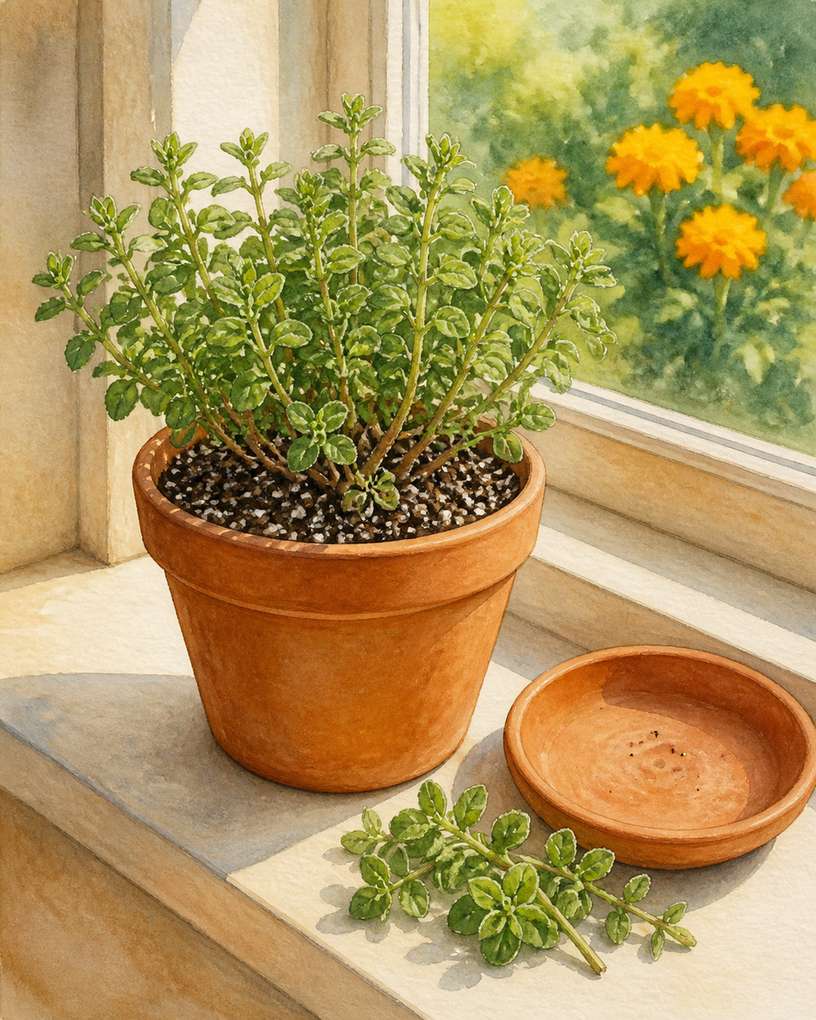
Greek oregano gives the strongest kitchen flavor from compact, sun-grown stems, and regular tip cutting keeps the plant from sprawling across a narrow sill. Choose a 6- to 8-inch terracotta pot and a gritty mix amended with perlite. Clip 2- to 3-inch sprigs just above leafy nodes, never cutting all the way into old bare wood, which may not reshoot. It needs roughly 6 hours of direct light for dense growth and good flavor; in a dim window, stems stretch and the leaves taste mild. Let the top inch of mix dry before watering, then empty the saucer. Oregano grows more slowly than basil, so avoid removing more than one-third at once. If flowers appear, pinch most of them for continued leaves, but leaving a few tiny blooms is harmless and attractive near an open screened window.
7. Thyme: Snip Green Stems and Keep the Crown Dry
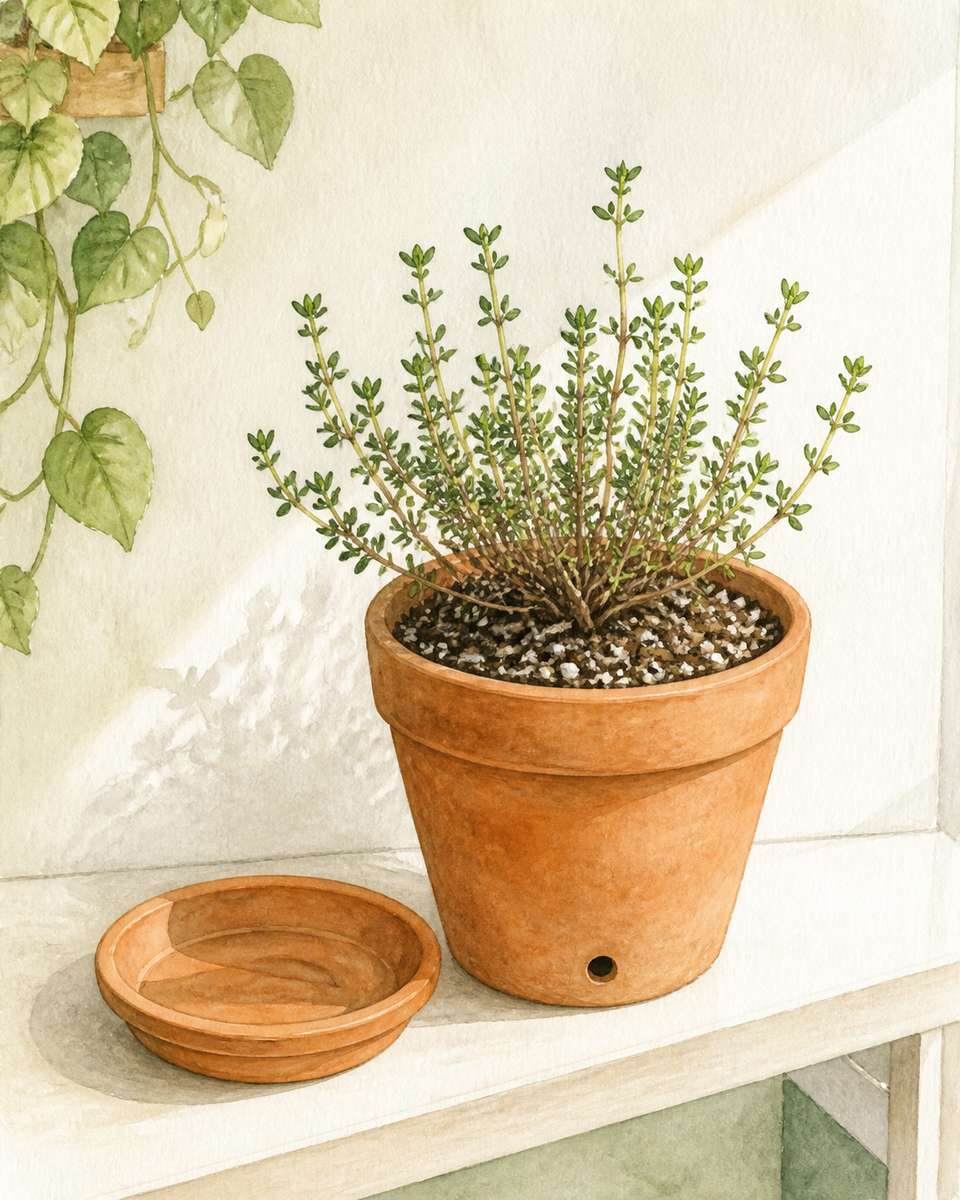
Thyme earns its space because a small amount seasons a whole pan, but its repeat harvest is slower than mint or basil. Put one plant in a 5- to 6-inch unglazed clay pot with a drainage hole and mix extra perlite into the potting soil. Snip green, flexible stems just above leaves, taking no more than one-third of the plant; avoid the leafless woody base because it may not regrow. Thyme wants at least 6 hours of direct sun and dislikes damp roots, especially in a cool apartment. Water thoroughly only when the top inch or two feels dry, and never leave water in the saucer. The main failure is kindness: frequent little splashes keep the crown wet. If stems spread outward, set the pot where air can move around it rather than wedging it tightly between larger herbs.
8. Common Sage: Pick Young Leaves and Prune Lightly
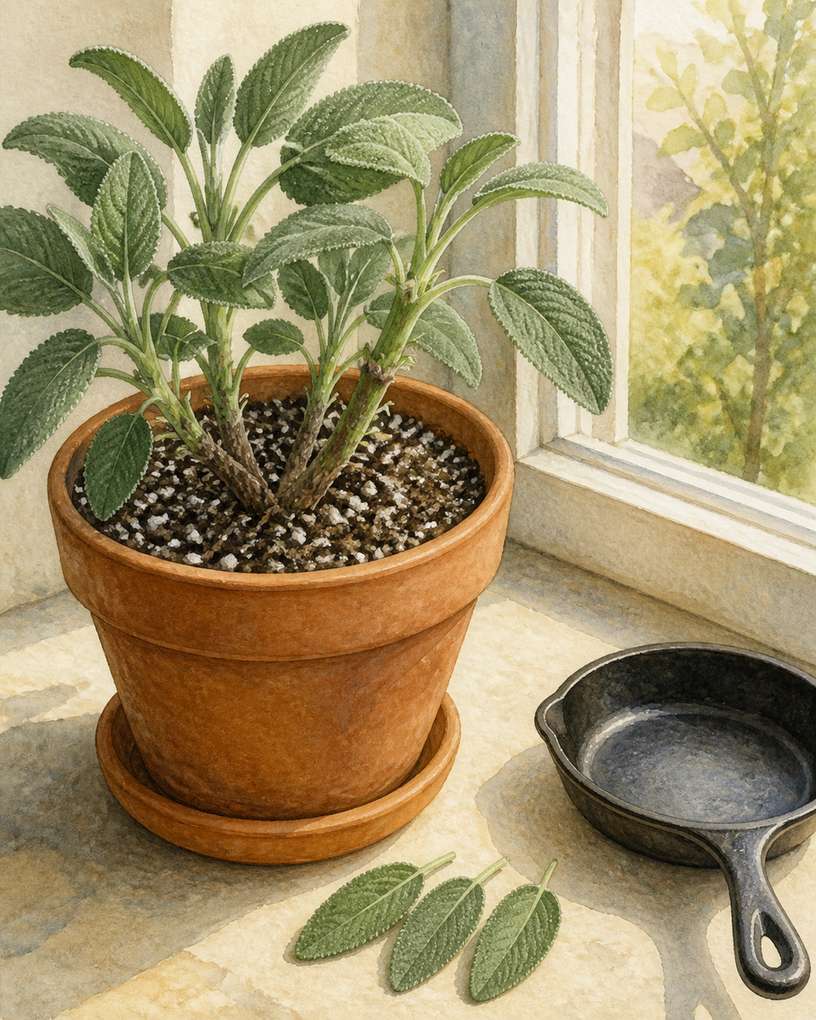
Common sage suits cooks who use a few leaves at a time for beans, poultry, or brown butter. A single plant needs an 8-inch pot and 6 or more hours of direct sun; gray, soft new growth usually means it needs brighter light. Pick individual young leaves or trim a 2- to 4-inch green tip just above a node, keeping at least two-thirds of the plant intact. Sage resents wet feet, so use a clay pot, add perlite, and wait until the upper 1 to 2 inches are dry before watering. Unlike basil, it will not bounce back quickly from a severe haircut, and cuts into old woody stems may remain bare. Indoor leaves also collect dust—rinse them before cooking, but avoid routinely misting the plant. Replace a lanky, woody specimen with a rooted soft-tip cutting when useful growth shifts to the ends.
9. Lemon Balm: Use Frequent Cuts to Keep It Compact
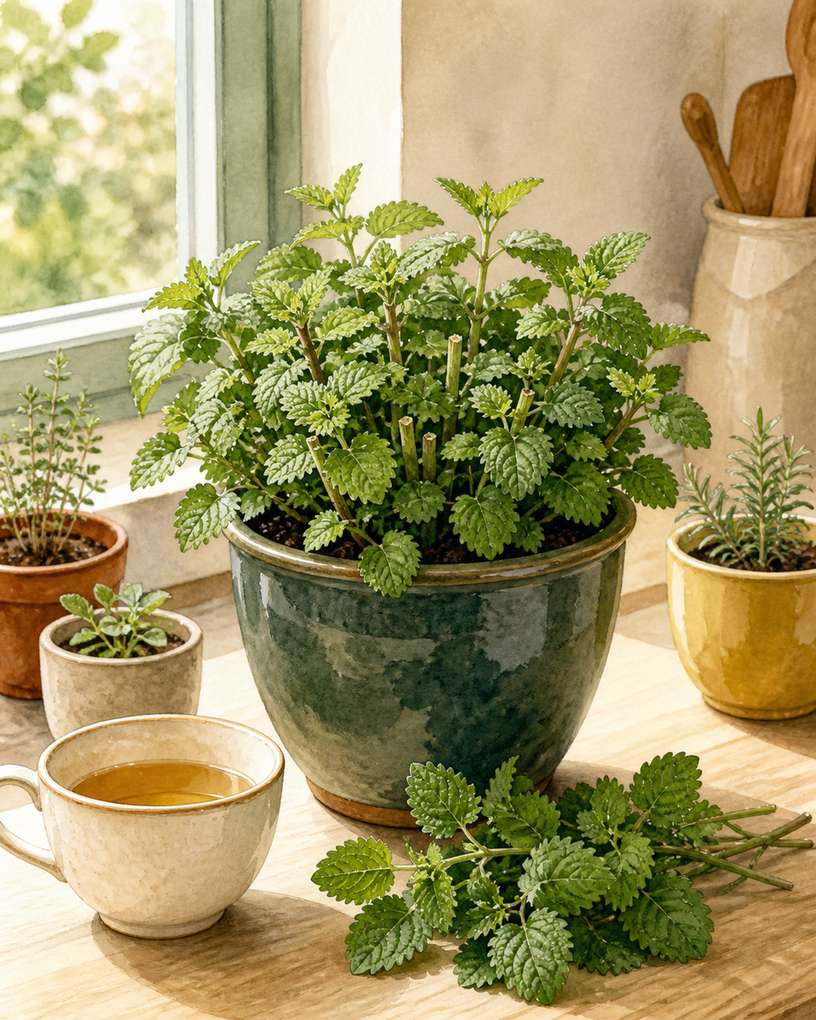
Lemon balm makes repeat harvests of citrus-scented leaves for tea, fruit, and quick syrups, even with 4 to 5 hours of sun. Give it its own 8-inch pot because it widens rapidly and can shade smaller neighbors. Cut stems back by 3 to 4 inches just above a leaf pair, leaving at least one-third of the plant; fresh shoots will form below the cut. Harvesting every week or two also prevents the floppy, top-heavy shape that develops on a warm windowsill. Keep the mix lightly moist, checking more often than you would for oregano or sage. The drawback is speed: roots eventually pack the container, and neglected stems may flower and self-sow into nearby pots. Divide the crown in spring or root a tender cutting, then discard the woody center if the plant stops making full-size leaves.
Common questions
- How much light do cut-and-come-again herbs need indoors?
- Basil, oregano, thyme, and sage are most productive with about 6 hours of direct sun. Parsley, chives, mint, cilantro, and lemon balm can manage around 4 to 6 hours, though growth will slow. If stems lean, stretch, or make small pale leaves, add a grow light 6 to 12 inches above the foliage for 12 to 14 hours daily, following the fixture maker's distance guidance.
- How much can I harvest without weakening the plant?
- For most established herbs, remove no more than one-third of the leafy growth in one session. Mint and chives can tolerate a heavier cut once they are vigorous, while thyme and sage need more restraint. Newly potted or rooted plants should grow for at least a couple of weeks before their first meaningful harvest.
- Do apartment herbs need fertilizer after repeated cutting?
- Yes, but more is not better. During active growth, use a balanced liquid fertilizer at half the label strength about every 3 to 4 weeks for basil, parsley, chives, mint, cilantro, and lemon balm. Feed oregano, thyme, and sage less often; excess nitrogen can make them floppy and dilute their flavor. Always fertilize damp soil, not a bone-dry root ball.
- Will these herbs keep growing through winter?
- Mint, chives, parsley, oregano, thyme, sage, and lemon balm may persist indoors, but short days slow regrowth. Basil often declines near cold glass, and cilantro eventually bolts regardless of care. Keep foliage from touching a freezing window, reduce harvests, and supplement weak daylight rather than overwatering. Outdoor balcony pots need winter care based on your USDA zone and the container's exposure.