9 Small-Kitchen Herb Garden Ideas for Windowsills and Counters
A tiny kitchen can grow useful herbs without surrendering the prep area. These nine setups work around narrow sills, weak daylight, splash-prone counters, and rental rules, with the maintenance catch called out before you plant.
This page contains affiliate links — we may earn a commission at no extra cost to you. See our disclosure.
1. Fit a 6-Inch Trough on the Windowsill
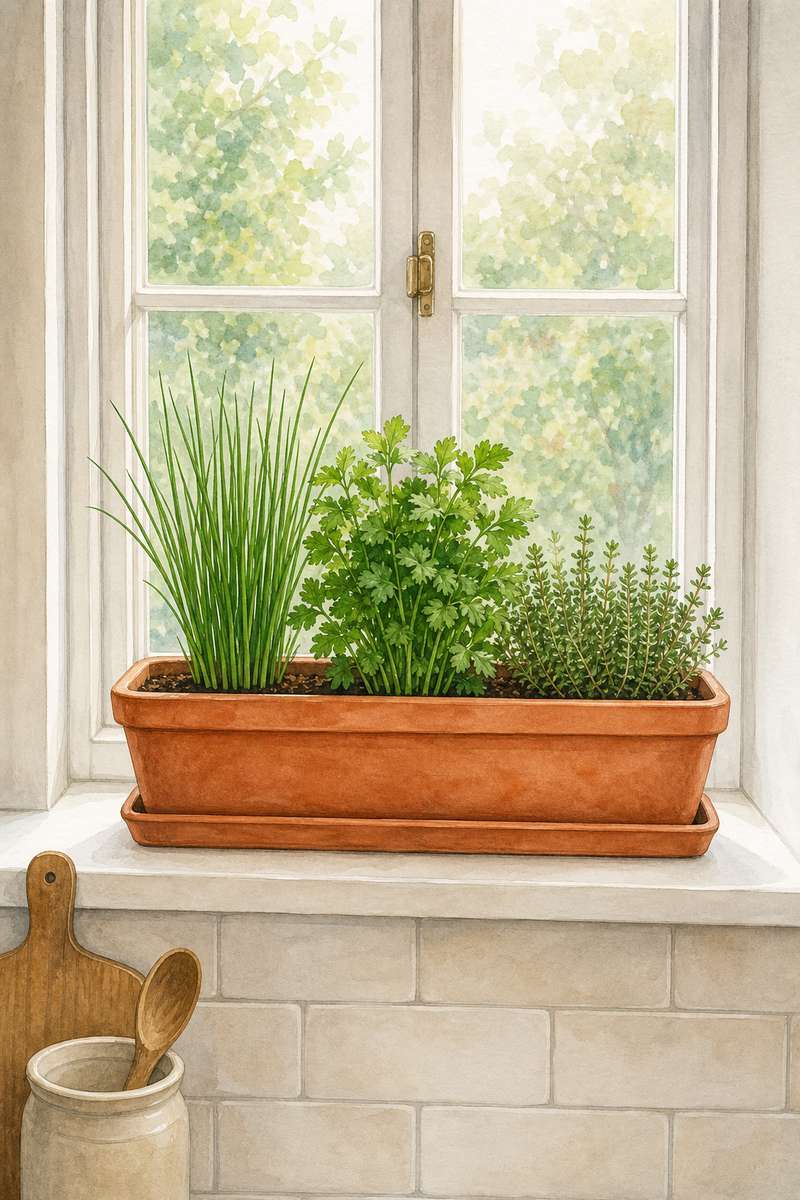
Use one narrow trough for chives, flat-leaf parsley, or thyme instead of lining up several round pots. Measure the sill with the window fully closed; many apartment sills are only 4 to 6 inches deep, and foliage should not press against cold glass. Choose a planter with drainage holes plus a watertight tray, then leave half an inch around the tray so drips are easy to spot. A 16-inch trough holds two or three small plants without becoming awkward to lift. The catch is uneven light: rotate it a quarter-turn every few days. Skip basil here if the glass gets chilly at night, because basil sulks below about 50°F and may blacken against a winter window.
2. Build a One-Foot Countertop Grow-Light Station
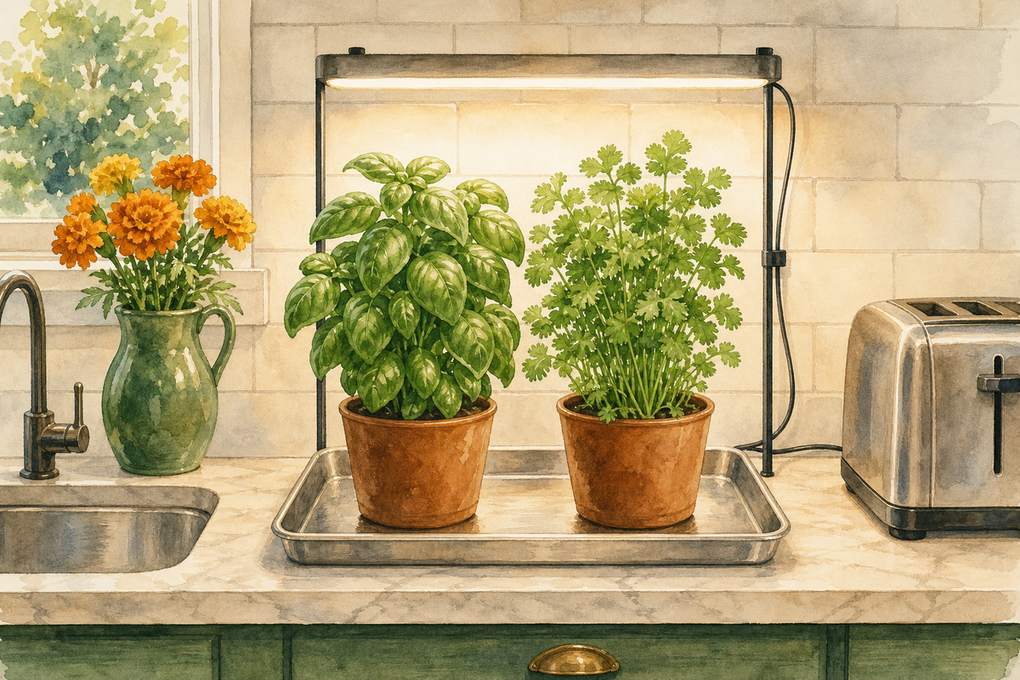
Set a 12-inch LED grow-light bar over two compact pots when the kitchen window gives less than four hours of direct sun. Basil and cilantro stay sturdier with roughly 12 to 14 hours of supplemental light, so plug the lamp into a simple outlet timer rather than remembering it nightly. Keep the leaves 6 to 10 inches below the fixture, following the lamp maker's distance guidance, and place the entire station on a boot tray or rimmed baking sheet. This setup claims reliable counter space and adds a cord, which can be annoying in a one-outlet kitchen. Keep both safely away from the sink and toaster. A warm-white full-spectrum lamp is easier to live with than a purple one in a room you use every day.
Product pick — a compact full-spectrum grow-light bar with a timer
3. Give Basil a Small Self-Watering Pot
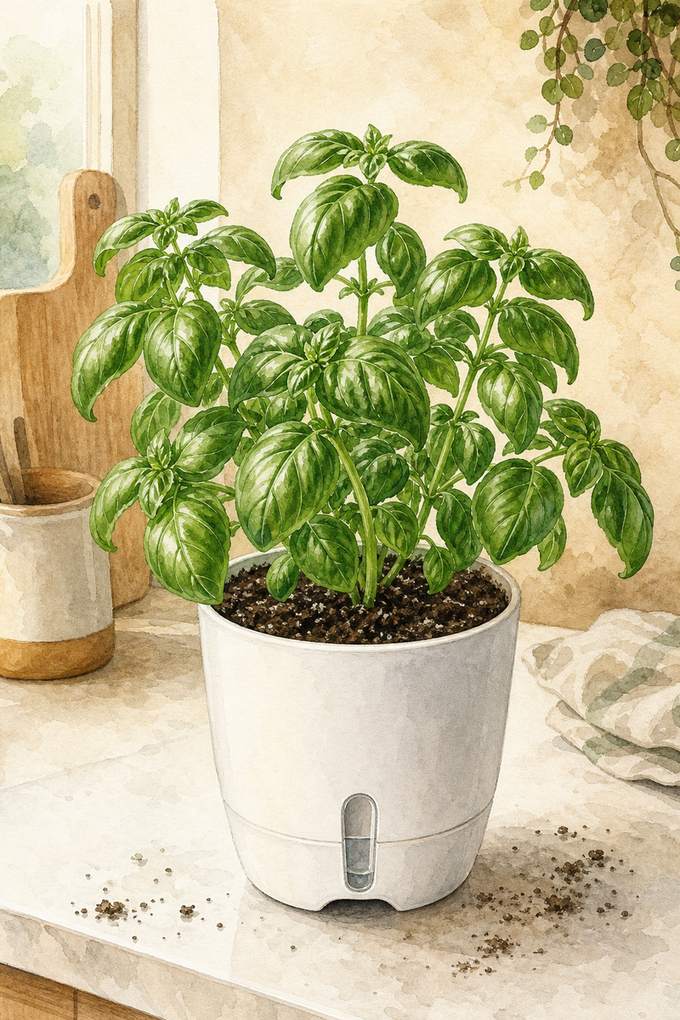
Plant one supermarket basil division in a 5- or 6-inch self-watering pot to reduce the wilt-and-flood cycle common on hot counters. Separate the crowded grocery-store clump into two or three sections first; twenty seedlings packed together compete fast and rarely last. Fill the reservoir only to its marked line, use indoor potting mix rather than garden soil, and empty any overflow after watering. This works best for thirsty basil or parsley, not drought-tolerant rosemary, which resents constantly damp roots. The reservoir also hides problems, so lift the insert weekly and check for odor, algae, or fungus gnats. Expect to refill every few days in summer, but never assume the gauge is accurate until you have watched one full wet-to-dry cycle.
Product pick — a 6-inch self-watering herb planter
4. Grow Micro Herbs in a Shallow Produce Tray
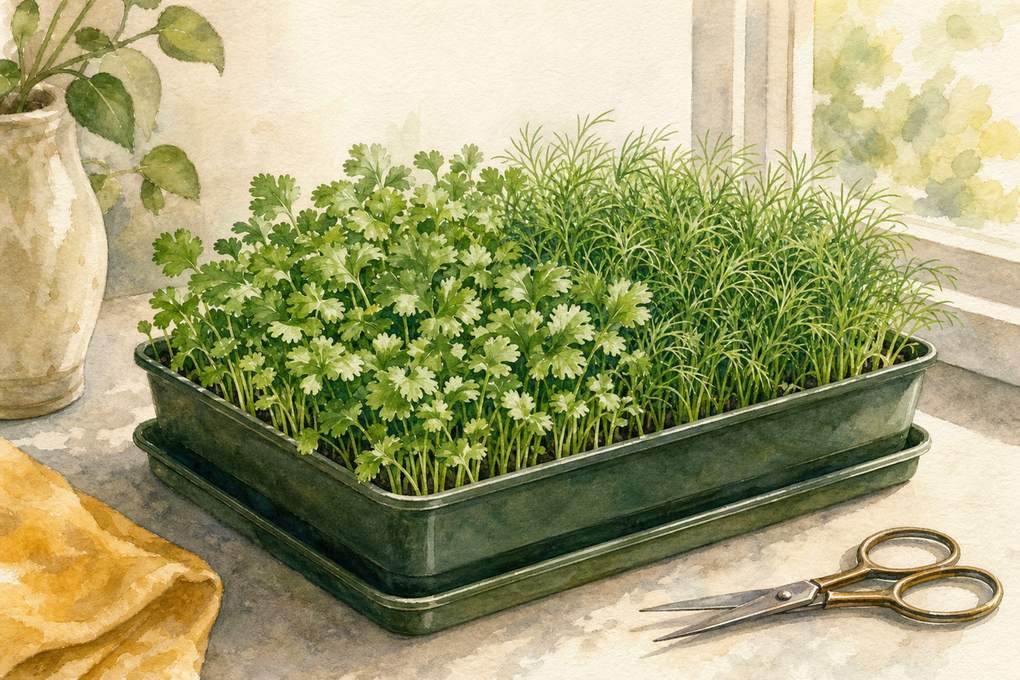
Turn a 10-by-6-inch food-safe tray into a quick crop of cilantro, dill, or basil microgreens when there is no room for mature plants. Add about 1.5 inches of seed-starting mix, sow thickly, and use a second tray underneath to catch water. After germination, give the seedlings bright light and harvest with scissors when they are roughly 2 to 3 inches tall, usually before they need much root depth. The trade-off is that this is a repeat harvest, not a permanent herb garden; most trays will not regrow well after cutting. Dense, wet seedlings can also mold, so water from below and allow air movement. Use untreated seed sold for sprouting or microgreens, and scrub the tray between batches rather than continually topping up old soil.
5. Corral Nursery Pots on One Waterproof Tray
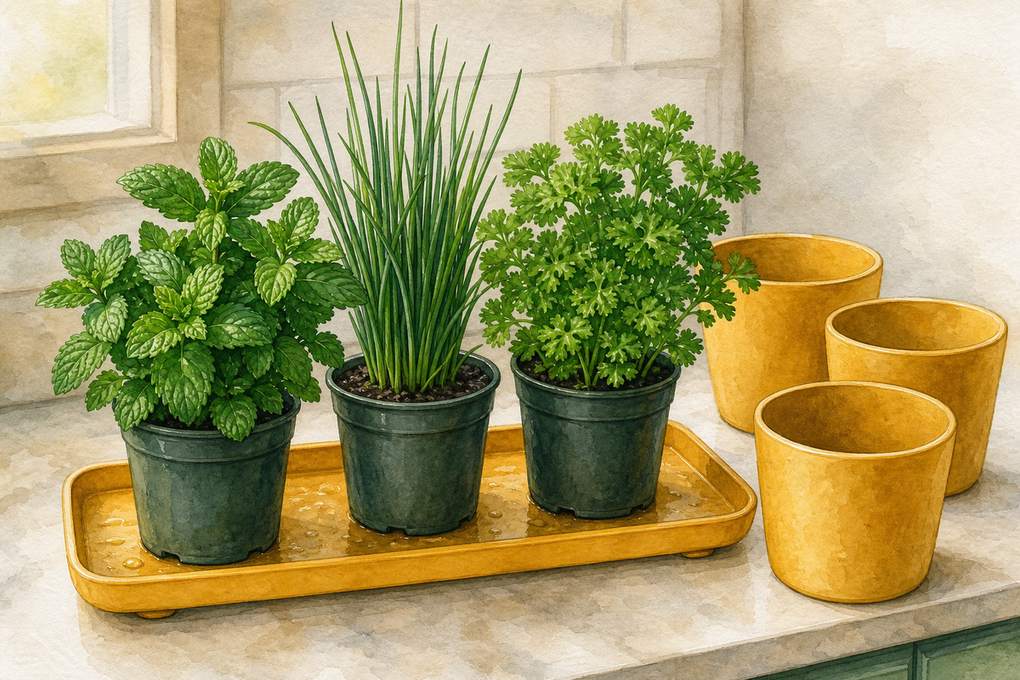
Keep herbs in their individual 4-inch nursery pots, but group three of them on one 14-inch waterproof tray. Mint, chives, and parsley can then be lifted to the sink for watering without dragging soil across the prep surface. Individual pots also let you replace one struggling plant without disturbing the others, and mint cannot overrun its neighbors. Add cork or silicone feet beneath the tray if the counter is wood or laminate; trapped moisture can cloud a finish surprisingly quickly. Nursery pots dry faster than decorative crocks, so check them every two days by lifting each pot rather than watering on a calendar. The look is less polished, but matching cachepots can hide the plastic as long as you pour out standing water 15 minutes after irrigation.
6. Start a Sink-Side Herb Cutting Station
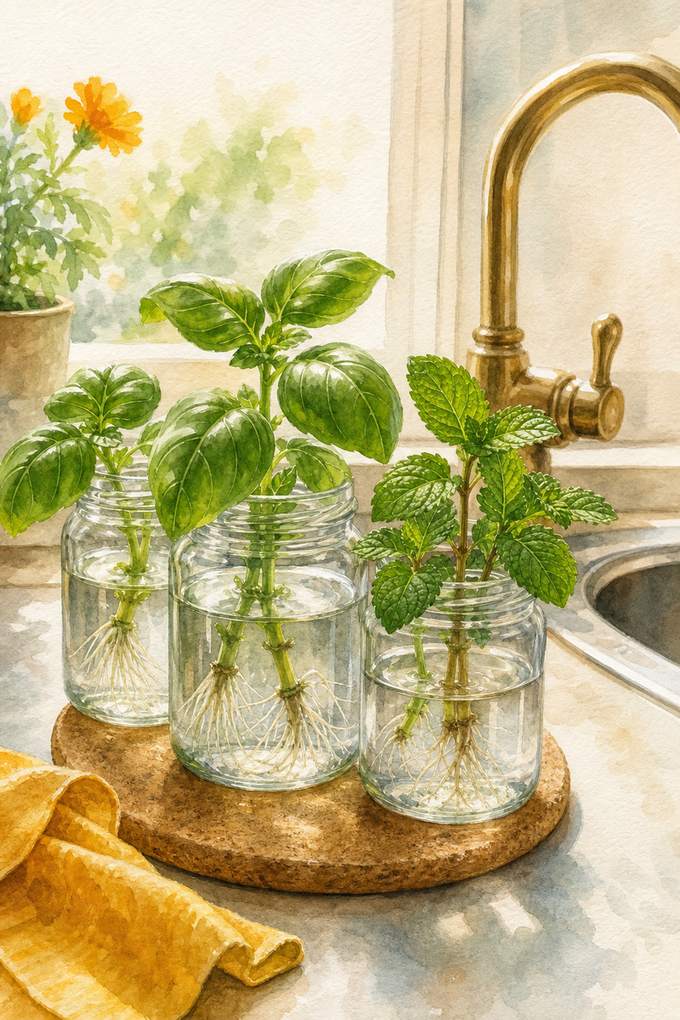
Root mint, basil, or lemon balm cuttings in two or three slim glass jars instead of buying more potted plants. Snip a 4- to 6-inch stem just below a node, remove leaves below the waterline, and change the water every three days. Set the jars near bright indirect light, not against scorching west-facing glass. Roots often become visible within a couple of weeks, after which each cutting needs potting mix if you want a long-lived plant. This station is cheap and occupies barely a few inches, but jars tip easily and stagnant water develops slime. Use heavy-bottomed spice jars on a small coaster, away from the faucet's sweep. Rosemary can root this way too, although it is slower and less dependable than soft-stemmed basil or mint.
7. Use a Handled Caddy for a Moveable Herb Garden
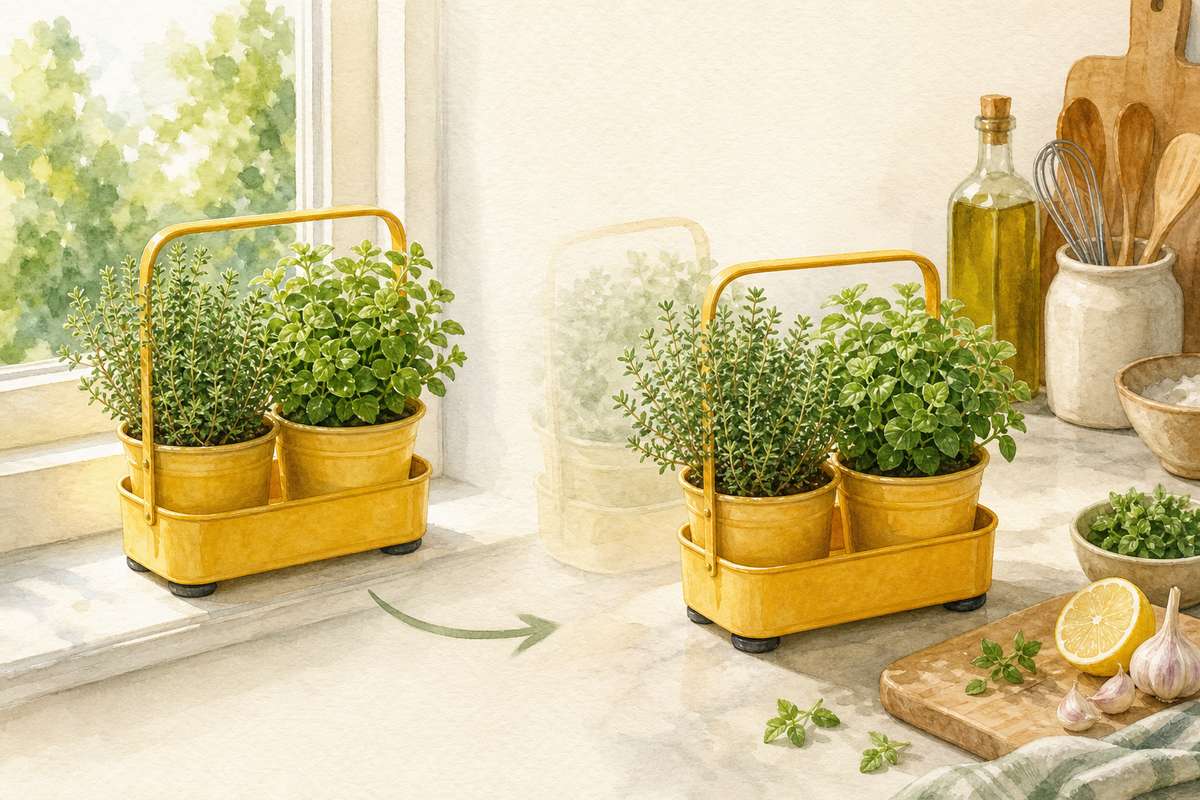
Place two 5-inch herb pots in a handled metal or plastic caddy so the whole garden can leave the counter during meal prep. Park it in the brightest window for the day, then move it to the table when you need chopping room; felt pads underneath prevent scratches. Pair plants with similar needs, such as thyme and oregano, rather than putting moisture-loving parsley beside dry-loving rosemary. Before buying, check that the loaded caddy clears the faucet and any upper cabinets. Two freshly watered ceramic pots can weigh several pounds, making a narrow handle uncomfortable and a flimsy basket unstable. Plastic nursery pots inside the caddy keep weight down. The moving routine is the maintenance cost: if the caddy habit lasts only a week, choose a permanent sill location instead.
8. Mount an Adhesive Light Beneath a Cabinet
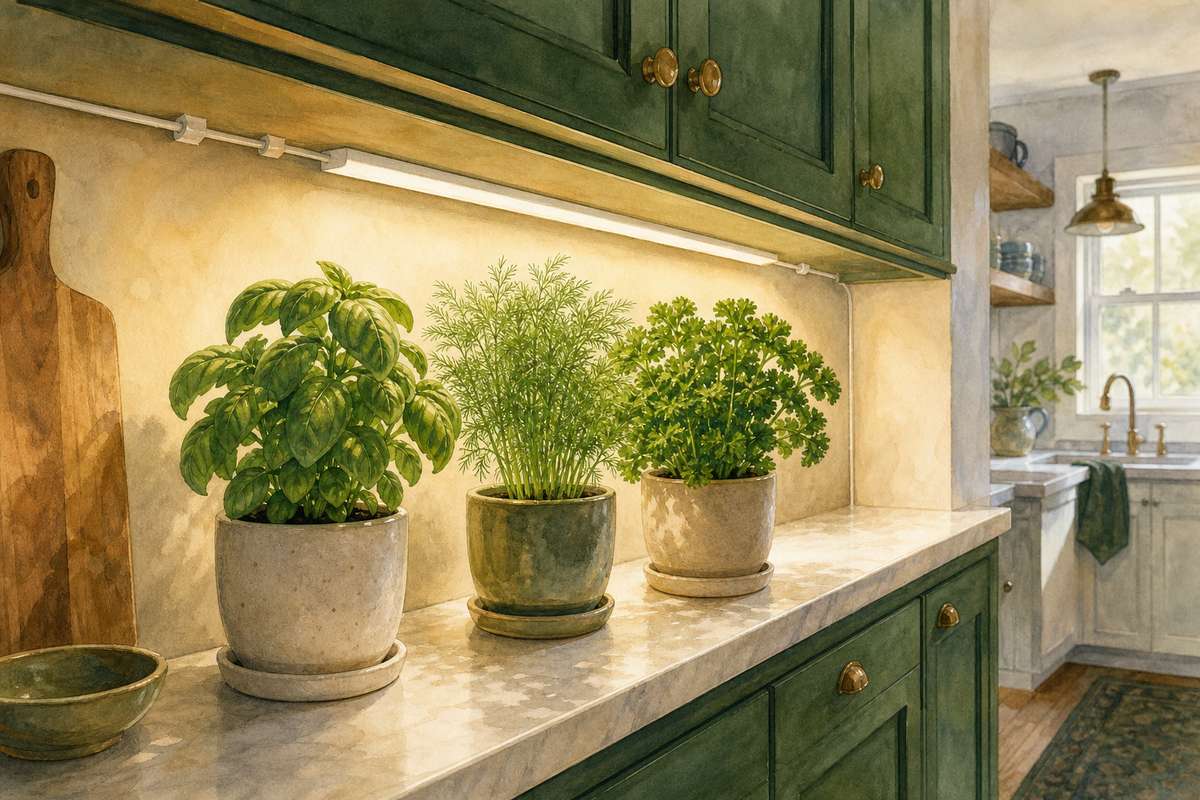
Use a slim adhesive LED grow light under an upper cabinet to turn an otherwise dim 18-inch counter strip into a herb shelf. This is renter-friendlier than drilling, but clean the cabinet underside with rubbing alcohol and confirm the finish can tolerate removable adhesive; old paint or veneer may peel anyway. Run the light 12 to 14 hours for basil, dill, or parsley, keeping mature leaves several inches from the diodes so they do not scorch. Route the low-voltage cord along the cabinet back with removable clips and keep every connection well away from steam and splashes. The downside is visual clutter and possible adhesive failure in a greasy kitchen. Use a secondary safety tether only if it can be installed without damaging the cabinet, and inspect the strip weekly.
Product pick — a slim adhesive grow light for under-cabinet use
9. Share One Pot Between Mediterranean Herbs
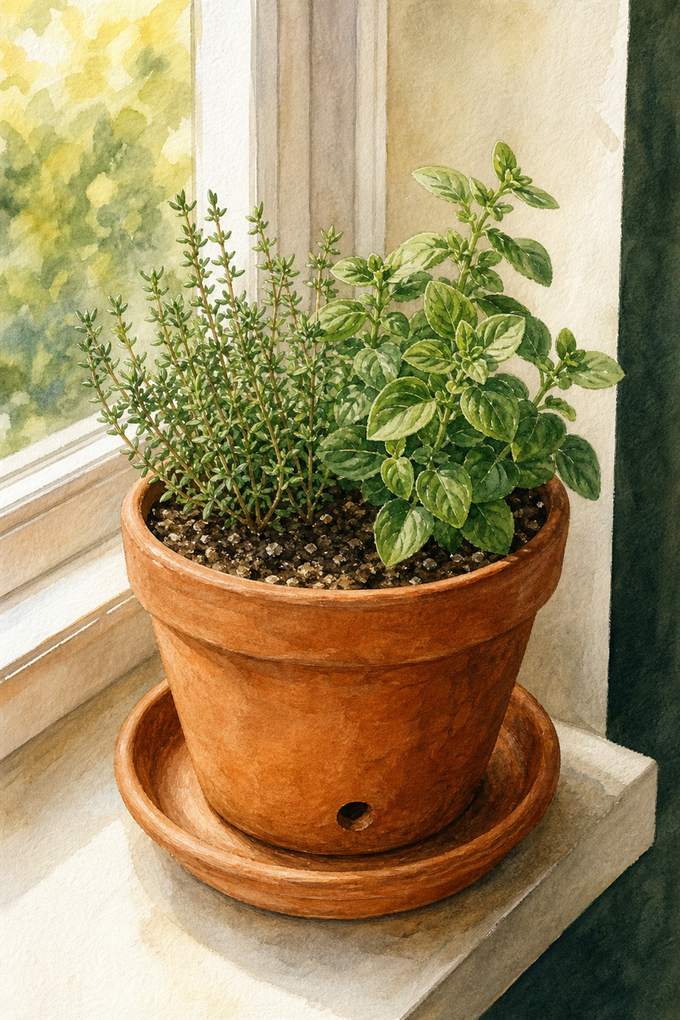
Combine thyme and oregano in one 8-inch terracotta pot when you have space for only a single container. Both prefer strong light and soil that dries slightly between waterings, so they make more compatible roommates than basil and rosemary. Use a pot with a real drainage hole, a gritty indoor potting mix, and a saucer wide enough to catch runoff. Position one plant on each side rather than adding a crowded third herb. Terracotta breathes and helps prevent soggy roots, but it also dries quickly near a sunny pane; check moisture with a finger two inches down. Trim often so oregano does not shade the slower thyme, and plan to divide or replace the planting when roots fill the pot. One container saves surface area, not maintenance forever.
Common questions
- How much light do kitchen herbs actually need?
- Basil, rosemary, thyme, and oregano generally need at least 6 hours of strong light to stay compact. Parsley, mint, and chives tolerate somewhat less, but a bright-looking room is not the same as direct sun. If stems lean or leaf spacing stretches, add a full-spectrum LED for about 12 to 14 hours daily and keep adjusting its height as plants grow.
- How do I water herbs without damaging the counter or sill?
- Use pots with drainage holes inside a rimmed, waterproof tray. Water at the sink until excess drains, wait about 15 minutes, then return the pots and empty any collected runoff. Cork protects against scratches but can stay damp, so silicone feet are safer over wood or laminate. Check beneath every tray weekly for condensation or stains.
- Which herbs are easiest in a very small kitchen?
- Chives, thyme, mint, and flat-leaf parsley stay useful with regular trimming and fit 4- to 6-inch pots. Keep mint alone because its roots spread aggressively. Basil grows quickly but needs warmth and strong light; cilantro is better treated as a short crop because it bolts. Rosemary needs the brightest, driest position and is less forgiving indoors.
- Can kitchen herbs survive winter beside a window?
- Many can, but cold glass and short days are the problem. Move basil away from panes that drop near 50°F, and keep leaves from touching the glass. Hardy thyme and chives tolerate cooler conditions, though growth slows. Reduce watering when growth stalls, add a timer-controlled grow light if needed, and check for drafts before assuming the sill temperature matches the room thermostat.