9 Herbal Tea Garden Ideas for Small Spaces and Daily Harvests
A useful tea garden does not need a raised bed—just containers matched to your light, floor load, and watering habits. These nine setups keep vigorous herbs contained and give established plants enough foliage for small, regular harvests.
1. Plant a 24-Inch Chamomile Window Box
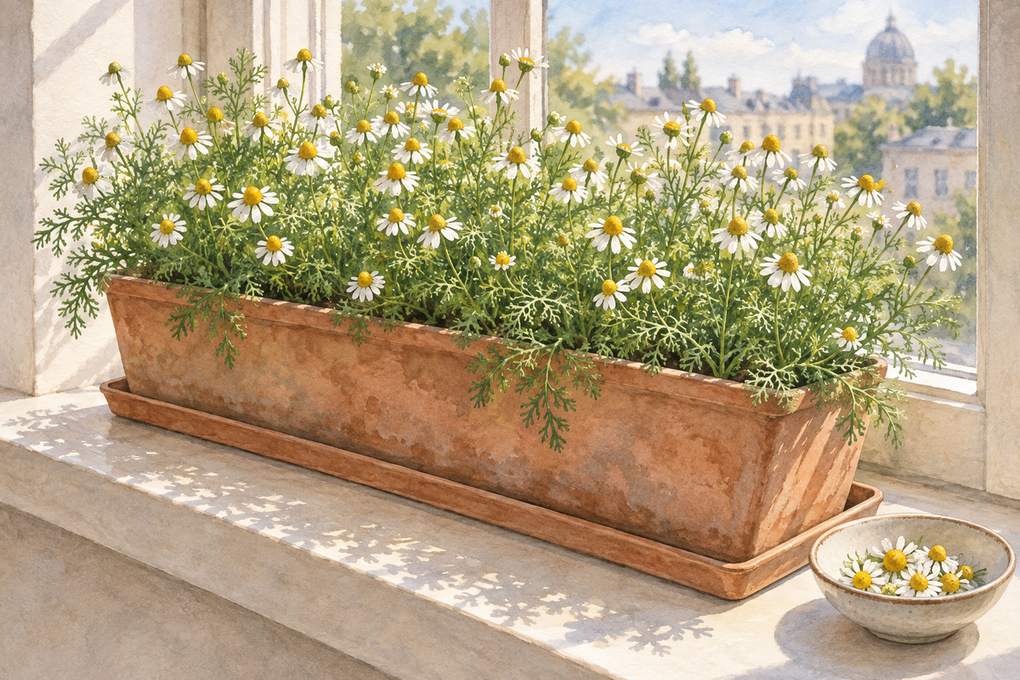
Turn one sunny ledge into a low, harvestable strip with German chamomile, the annual species Matricaria chamomilla. Use a box at least 8 inches deep with drainage holes, then thin seedlings to roughly 6 inches apart; crowding invites floppy growth and makes flower picking fiddly. Chamomile blooms best with about 6 hours of sun, though harsh reflected afternoon heat can dry a narrow box by dinner. Pick fully open flower heads in the morning and leave plenty behind for the next round. A 24-inch box becomes surprisingly heavy after watering, so place it on a sill or certified bracket rather than balancing it on a rail. Expect reseeding, not guaranteed winter survival.
2. Give Peppermint Its Own 10-Inch Pot
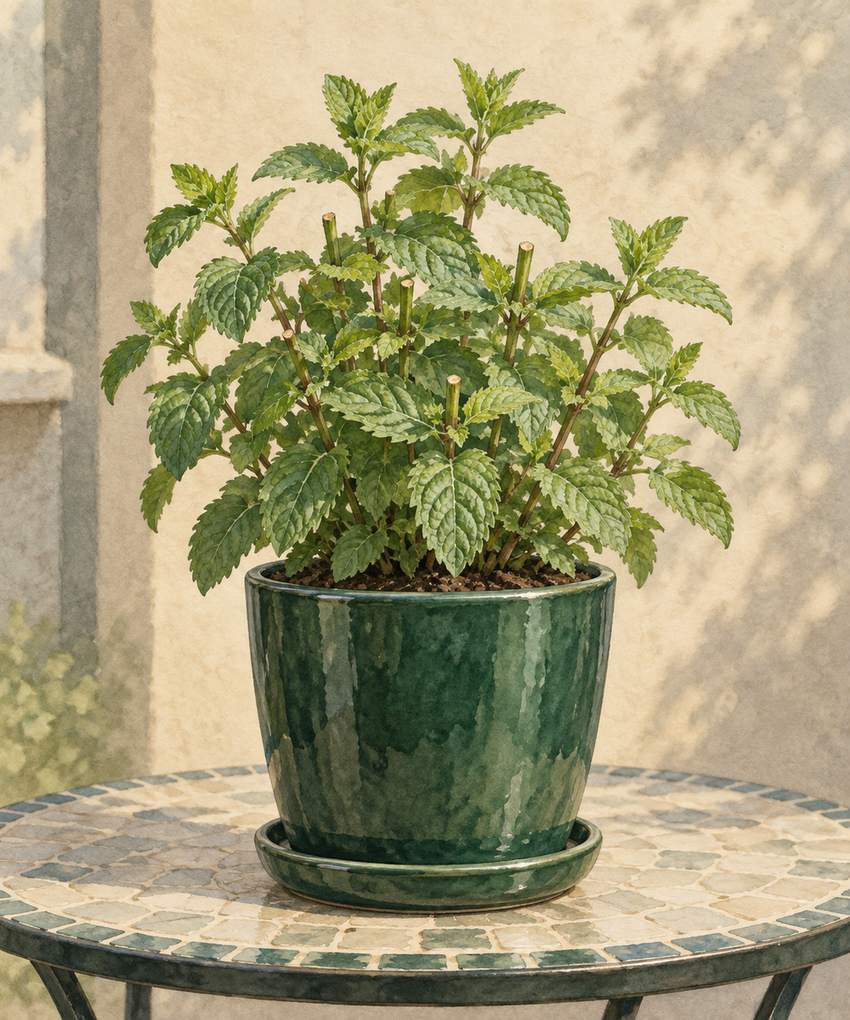
Make a dedicated mint station rather than mixing peppermint with polite neighbors. One plant in a 10- to 12-inch-wide pot provides plenty of tips once established, and the container stops its underground runners from colonizing every planter nearby. Choose plastic or glazed ceramic to slow moisture loss; mint wilts quickly in small terracotta pots during hot wind. Four to six hours of sun is workable, with afternoon shade helpful in very warm climates. Snip stems just above a leaf pair, taking no more than about one-third of the plant at once. The catch is vigilance: roots can escape through drainage holes, and flower stalks reduce tender leaf production, so check the saucer and pinch buds weekly.
3. Use a Self-Watering Pot for Thirsty Lemon Balm
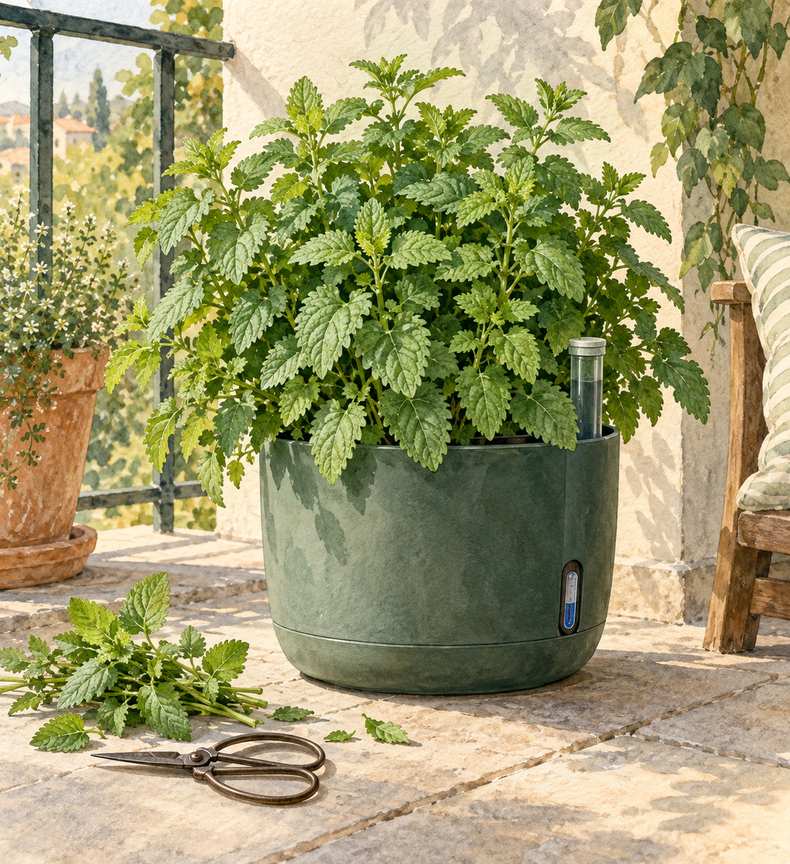
A 12-inch self-watering planter makes lemon balm easier to keep leafy on a hot balcony or bright patio. Its reservoir evens out the wet-dry swings that turn a small container limp, but it does not eliminate maintenance: refill only after checking the indicator or potting mix, and flush the soil from above monthly so fertilizer salts do not build up. Give one plant 4 to 6 hours of light and pinch stems at 6 to 8 inches tall to encourage branching. Harvest the upper few inches before flowers open for the freshest lemony flavor. Lemon balm can self-seed and eventually outgrow the pot, so remove blooms and divide the root ball every year or two rather than upsizing indefinitely.
4. Stagger Two Small Pots of Tulsi
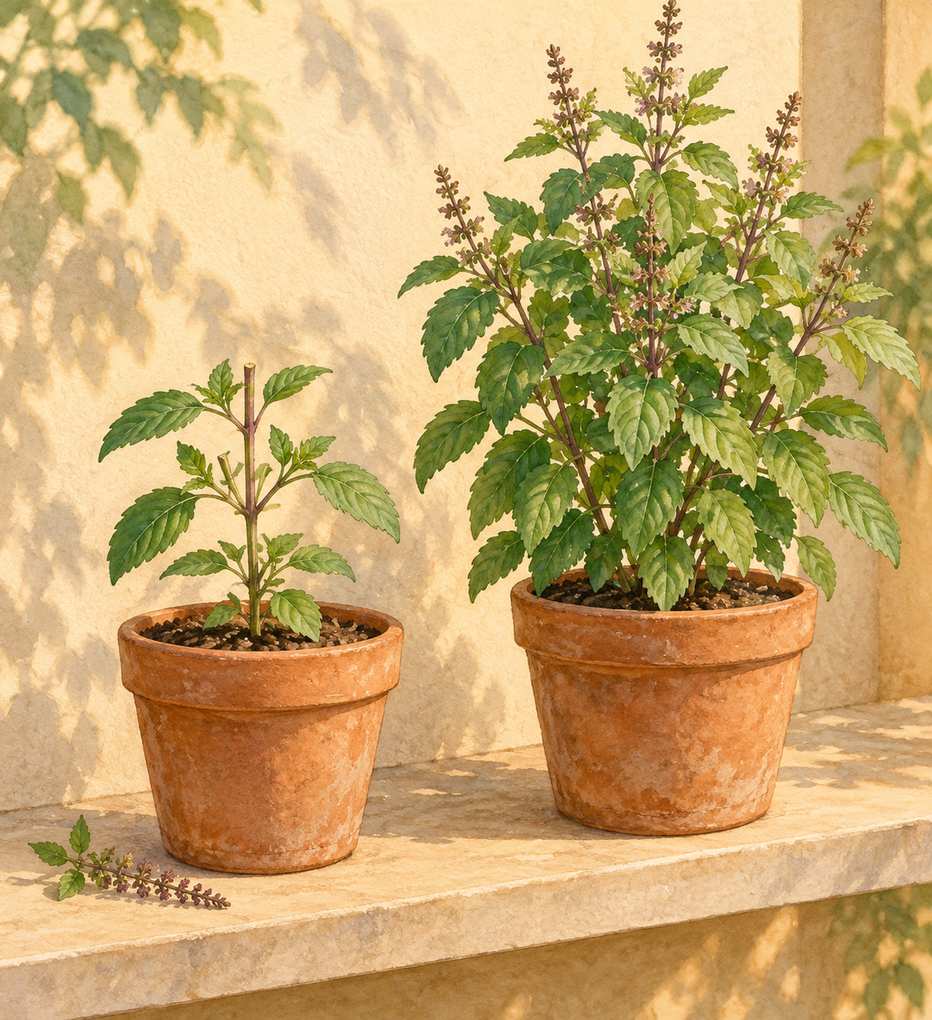
Grow tulsi, also called holy basil, in two 8- to 10-inch pots started three or four weeks apart. The stagger keeps one plant producing while the other recovers from pruning, which is more reliable than stripping a single small plant for daily cups. Tulsi wants warmth and at least 6 hours of strong light; below roughly 50°F, growth slows and cold damage becomes likely. Pinch above a leaf node once each plant has several sets of leaves, and remove flower spikes if leaf yield matters more than seed. Two pots take more shelf width and dry independently, so check both rather than watering on one schedule. Treat tulsi as a warm-season annual unless you can provide a genuinely bright indoor winter position.
5. Tuck Lemongrass Into a Five-Gallon Corner Pot
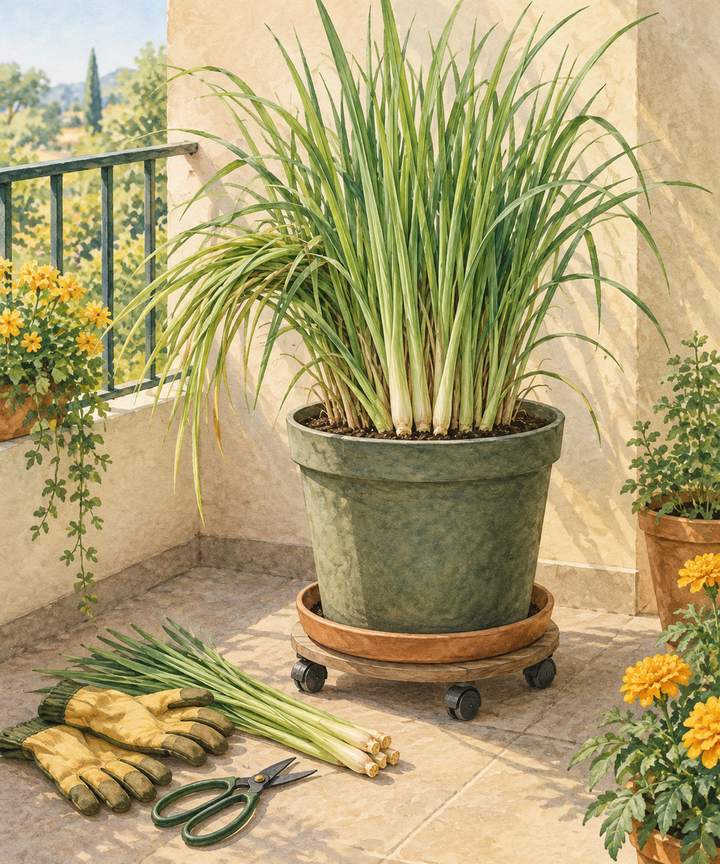
Use an awkward sunny corner for one clump of lemongrass in a container holding about 5 gallons. The upright leaves supply citrusy cuttings without sprawling across a table, but a mature, freshly watered pot can be cumbersome; confirm your balcony load rules and use a lightweight resin container if you expect to move it. Full sun and steady moisture produce the best growth. Cut outer leaves near the base with gloves—the edges can be sharp—and leave the central shoots to continue growing. Lemongrass is tropical, so bring it inside before nights settle below about 50°F or plan to replace it. Indoors, a south-facing window or grow light is usually needed, and spider mites can become the winter nuisance.
6. Grow Anise Hyssop as the Tall Back Plant
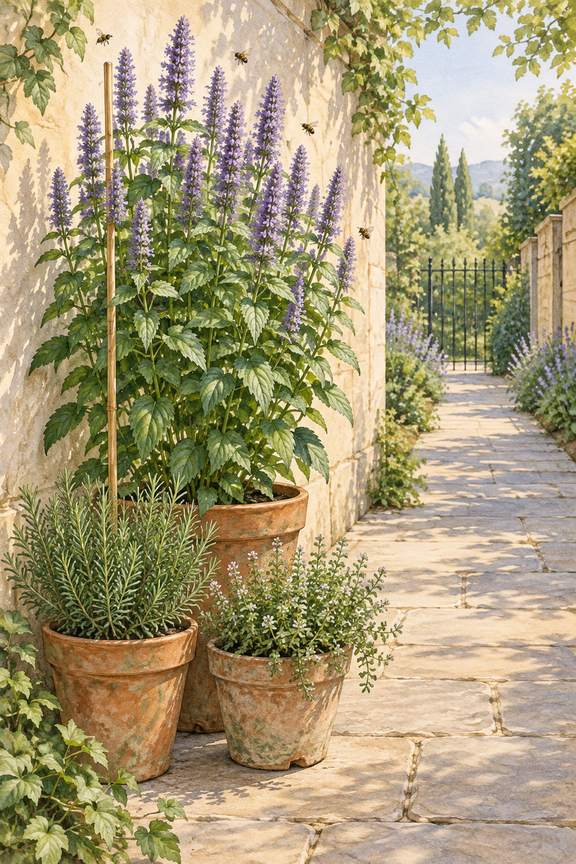
Anchor a narrow container grouping with one anise hyssop plant in a pot at least 12 inches deep and wide. Its licorice-mint leaves work in infusions, while the purple flower spikes feed pollinators; placing it behind shorter pots preserves walking room. Give it 6 or more hours of sun and free-draining mix. Once established, it tolerates missed waterings better than mint, but a pot still dries faster than garden soil. Pinch young stems to keep the plant bushier, then harvest modestly before or during bloom. The trade-off is height: many cultivars reach 2 to 4 feet and may lean in balcony wind. Choose a compact cultivar or add a discreet bamboo stake before roots fill the pot.
7. Pair Sage and Thyme in a Dry-Side Trough
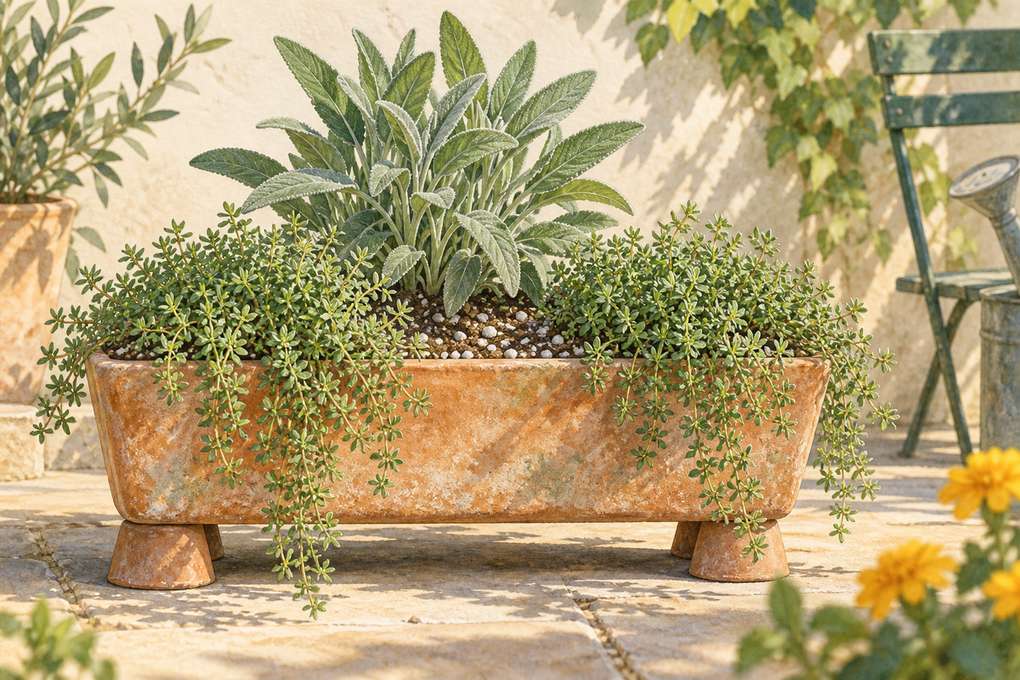
Reserve a 20-inch terracotta trough for common sage and English thyme, two infusion herbs that prefer sharper drainage than mint or lemon balm. Mix potting soil with extra perlite, keep the drainage hole clear, and give both plants 6 to 8 hours of sun. Set one young sage at the back and two thyme starts near the front, leaving airflow around the sage's fuzzy leaves. Water thoroughly, then wait until the top inch or two feels dry. This pairing saves space, but neither plant enjoys the frequent watering used for lush leafy herbs. Clip lightly and rotate harvests; woody sage recovers slowly after a severe cut. In humid summers, elevate the trough on pot feet to keep the base from staying wet.
8. Build a Removable Three-Mint Shelf
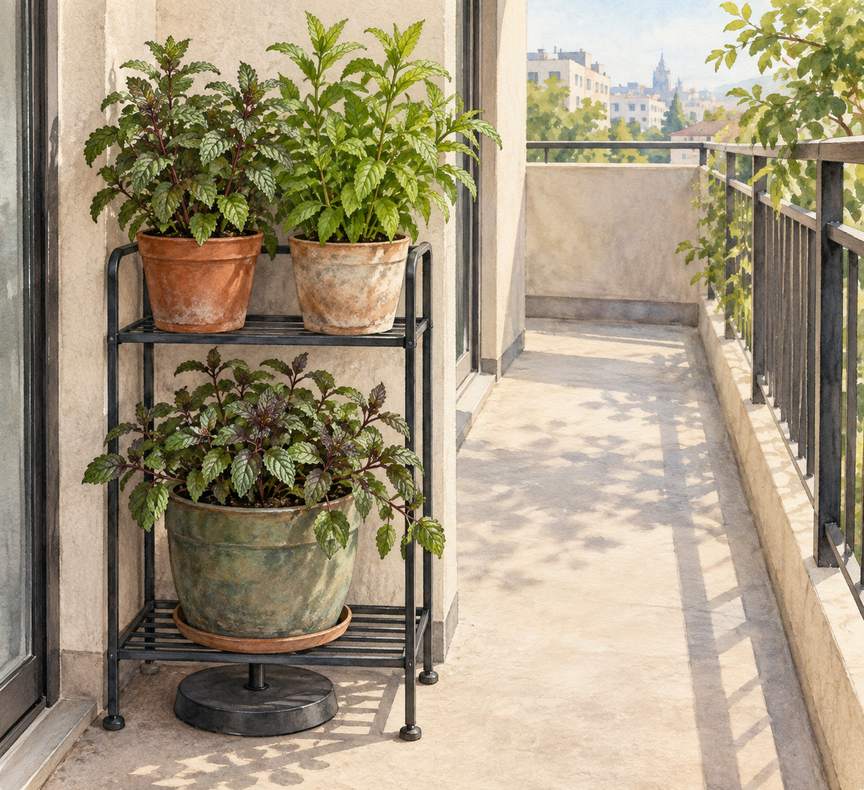
Set peppermint, spearmint, and chocolate mint in three separate 6- to 8-inch nursery pots on a freestanding two-tier shelf. Separate pots preserve their distinct flavors and stop one cultivar's runners from swallowing the others; removable containers also make sink watering and seasonal rearranging easier. Put the heaviest pot on the lower tier, secure the unit against tipping without violating lease rules, and keep a clear path around it. Mint handles 4 to 6 hours of light, but small pots may need daily checks in summer. Rotate which plant you clip so each keeps at least two-thirds of its foliage. The downside is root congestion: inspect every few months and move vigorous plants into 10-inch pots when water rushes straight through.
9. Keep a Winter Tea Pot Under a Grow Light
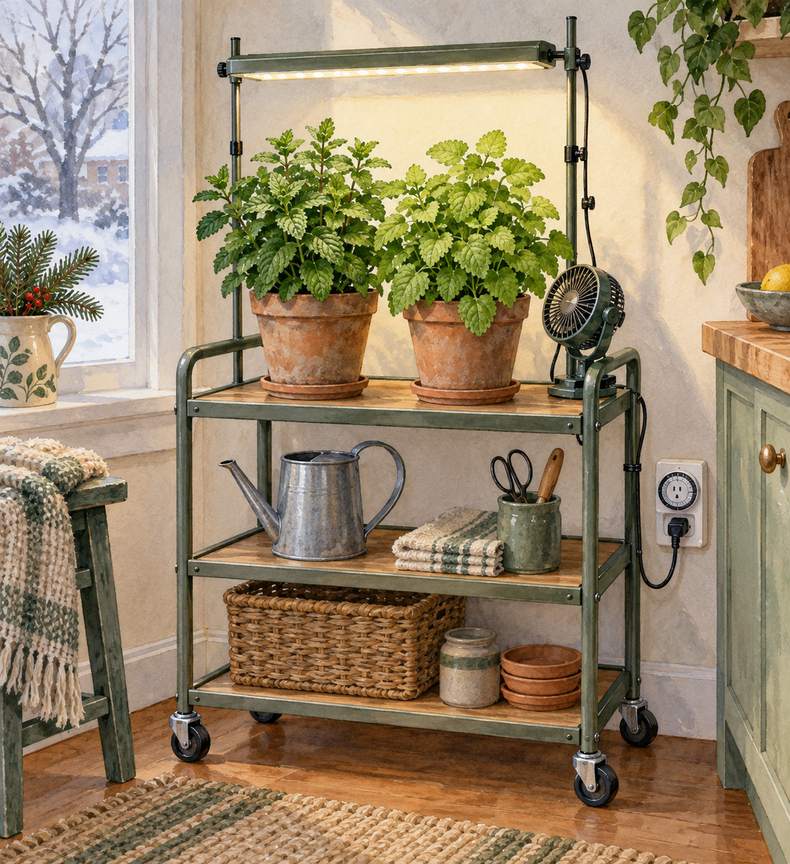
Create a cold-season backup with one peppermint cutting and one lemon balm cutting in separate 6-inch pots beneath an adjustable LED grow light. A bright window alone often produces thin winter growth, so position the lamp according to its maker's guidance and run it about 12 to 14 hours daily on a timer. Keep leaves from touching the fixture, water when the top inch dries, and use a small fan nearby if still air encourages fungus gnats or mildew. This setup supports occasional cups, not summer-size harvests; alternate plants and take only a few tips at a time. Electricity, glare, and pest checks are the honest costs. Quarantine outdoor plants before bringing them beside clean indoor pots, or start fresh cuttings instead.
Common questions
- How much light does a small herbal tea garden need?
- Chamomile, tulsi, thyme, sage, anise hyssop, and lemongrass are most productive with roughly 6 or more hours of direct sun. Mint and lemon balm can manage about 4 to 6 hours, though growth will be looser in deep shade. Indoors, use a grow light when stems stretch toward the window.
- Can I harvest tea herbs every day?
- Only from several healthy, established plants. Never remove more than about one-third of a plant at once; rotate among pots and allow new leaf pairs to form. A tiny winter plant may supply only an occasional cup, while vigorous summer mint can handle much more frequent clipping.
- How do I check whether the containers are too heavy for my balcony?
- Ask your landlord, HOA, or building manager for the balcony's permitted load and rules for railing planters; do not rely on a generic online limit. Include wet soil, the container, water reservoir, shelf, and people in your estimate, and keep heavy pots close to structurally supported areas if approved.
- Are all homegrown tea herbs safe to drink?
- No. Confirm the plant's botanical identity and use only unsprayed material known to be edible. Herbal infusions can trigger allergies or interact with medicines, and pregnancy or health conditions may change what is appropriate. Ask a qualified clinician or pharmacist about your specific situation; gardening advice is not medical guidance.