9 Indoor Herb Propagation Ideas Using Grocery Store Cuttings
Turn a few fresh grocery-store stems into a windowsill herb supply without buying nine new plants. These methods fit jars, mugs, and 4-inch pots, with honest notes on weak winter light, rot, and which cuttings are a gamble.
1. Root basil stems in a jam jar
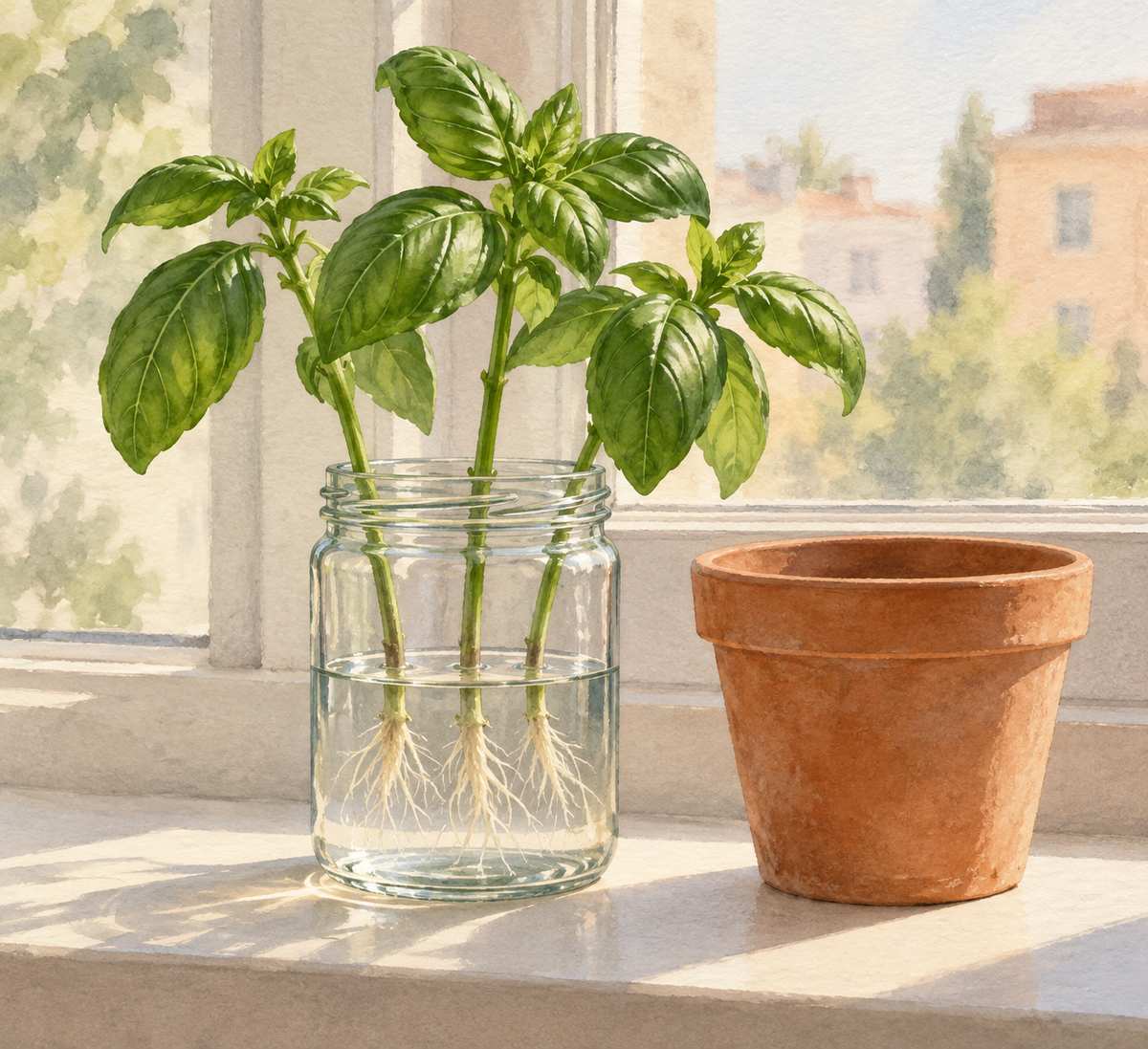
Basil is the quickest confidence builder: choose a fresh 4- to 6-inch stem, snip just below a leaf node, and strip off every leaf that would sit underwater. Stand two or three stems in a clean jam jar with about 2 inches of water, then give them bright indirect light. Change the water every 2 days; submerged leaves turn slimy fast in a warm kitchen. Roots often appear within 7 to 14 days. Pot the cutting in a 4-inch container once several roots reach roughly 2 inches long. Supermarket basil that has been refrigerated hard may collapse instead of rooting, so start with crisp, unwilted bunches and expect an occasional loss.
2. Give mint its own water glass
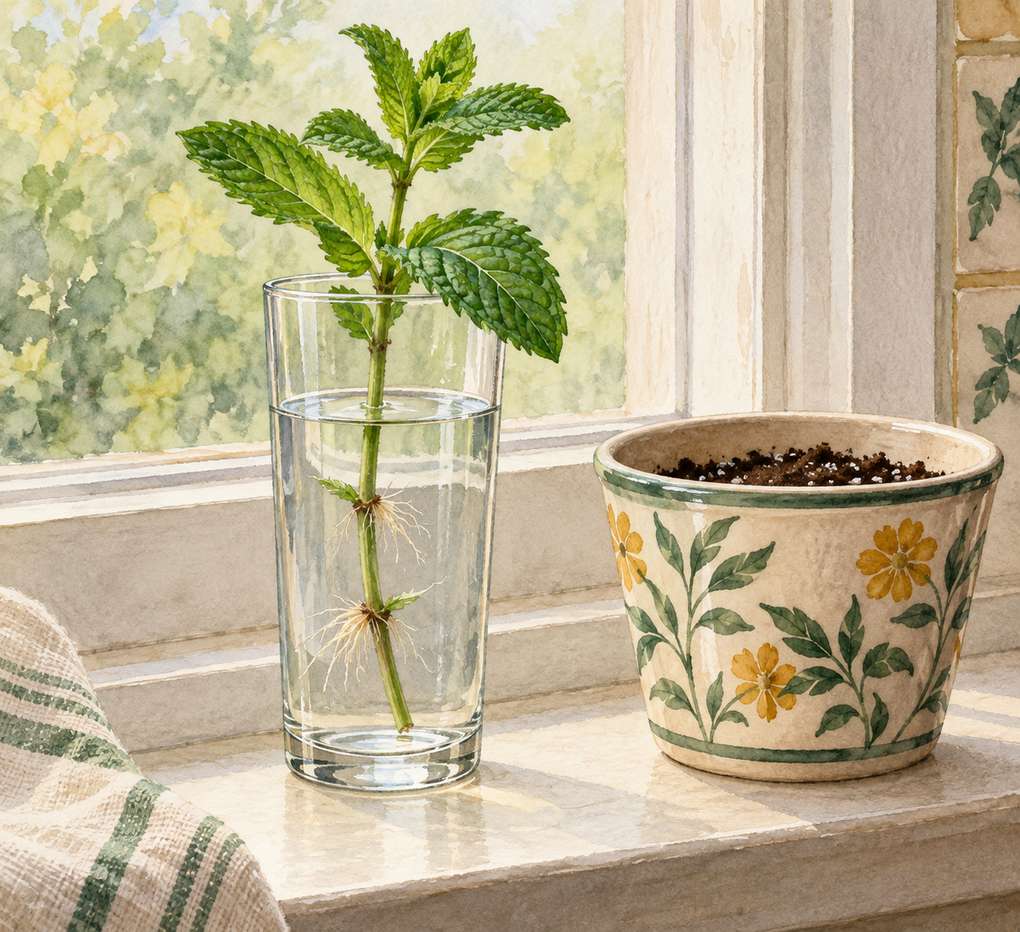
Mint roots so readily that one healthy grocery stem can become a useful countertop plant. Cut a 5-inch tip below a node, remove the bottom two pairs of leaves, and place it in a narrow glass so the stem stays upright. A north- or east-facing window is usually enough while roots form; harsh afternoon sun through glass can cook the leaves. Refresh the water every 3 days and pot up when roots are 1 to 2 inches long, often after 1 to 2 weeks. Keep mint in its own 5-inch pot rather than sharing with basil because its roots crowd neighbors quickly. The trade-off is thirst: a small mint pot can wilt within a day beside a hot window.
3. Start rosemary in a covered nursery pot
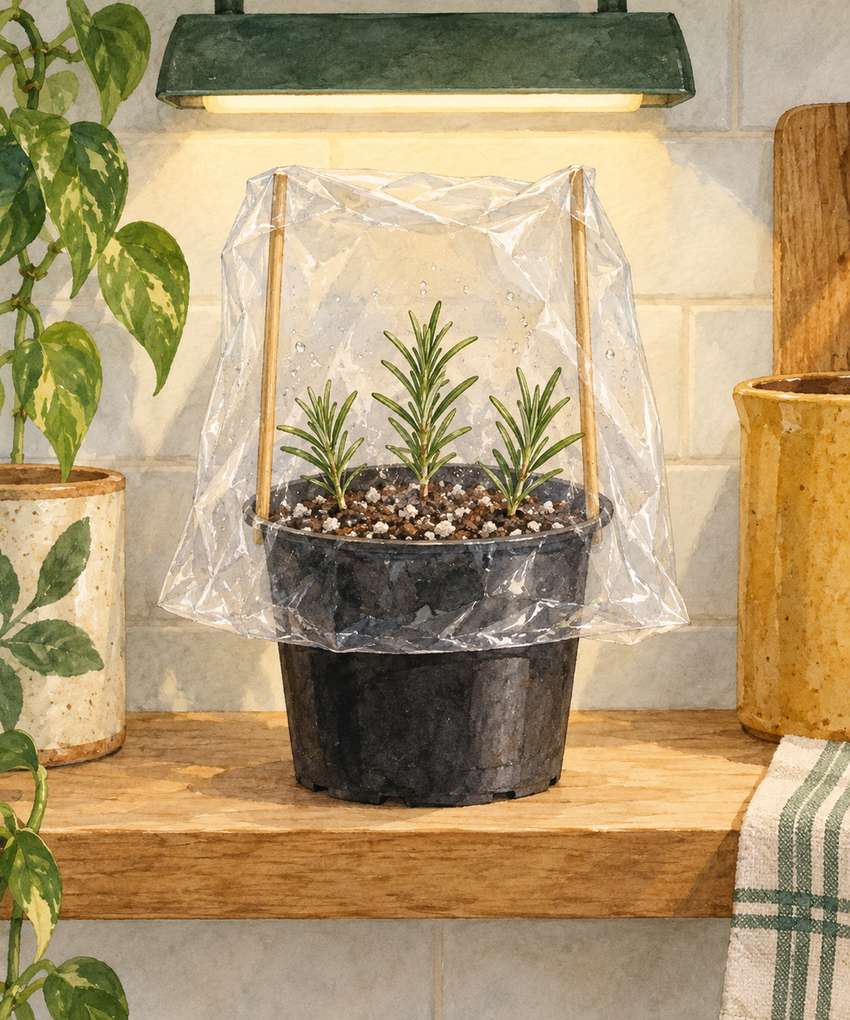
Rosemary is slower and less forgiving than basil, but soft green tips from a fresh bunch can root. Take 3- to 4-inch nonwoody cuttings, pull needles from the lower inch, and insert three stems around the edge of a 3-inch nursery pot filled with equal parts damp perlite and potting mix. Cover loosely with a clear produce bag held above the foliage by two chopsticks. Open it for 10 minutes daily and keep the mix barely moist; soggy rosemary blackens at the base. Rooting may take 4 to 8 weeks under a bright grow light. Woody stems sold for roasting often fail, so treat this as a low-cost experiment rather than a sure thing.
4. Peg oregano stems onto damp mix
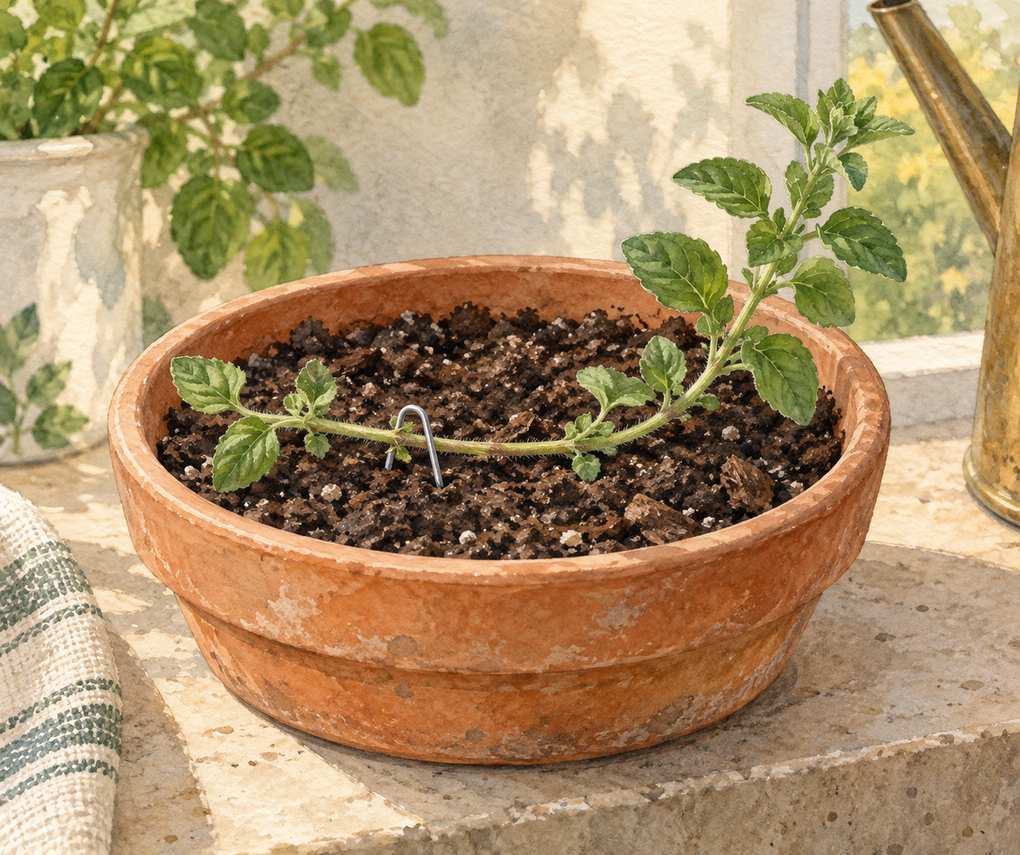
Oregano can root where a node touches soil, which avoids balancing tiny stems in water. Lay a flexible 4-inch grocery-store sprig across a shallow pot of damp seed-starting mix and pin one bare node down with a bent paper clip. Leave the leafy tip above the surface. Set the pot in bright indirect light and mist only when the top half-inch feels dry. After about 2 to 4 weeks, a gentle tug should meet resistance; cut the rooted section free from the original stem once new growth appears. This method occupies more counter width than a jar, but the cutting skips the water-to-soil adjustment. Thick, old oregano stems root poorly, so choose pliable green growth without dark spots.
5. Root thyme under a vented cup
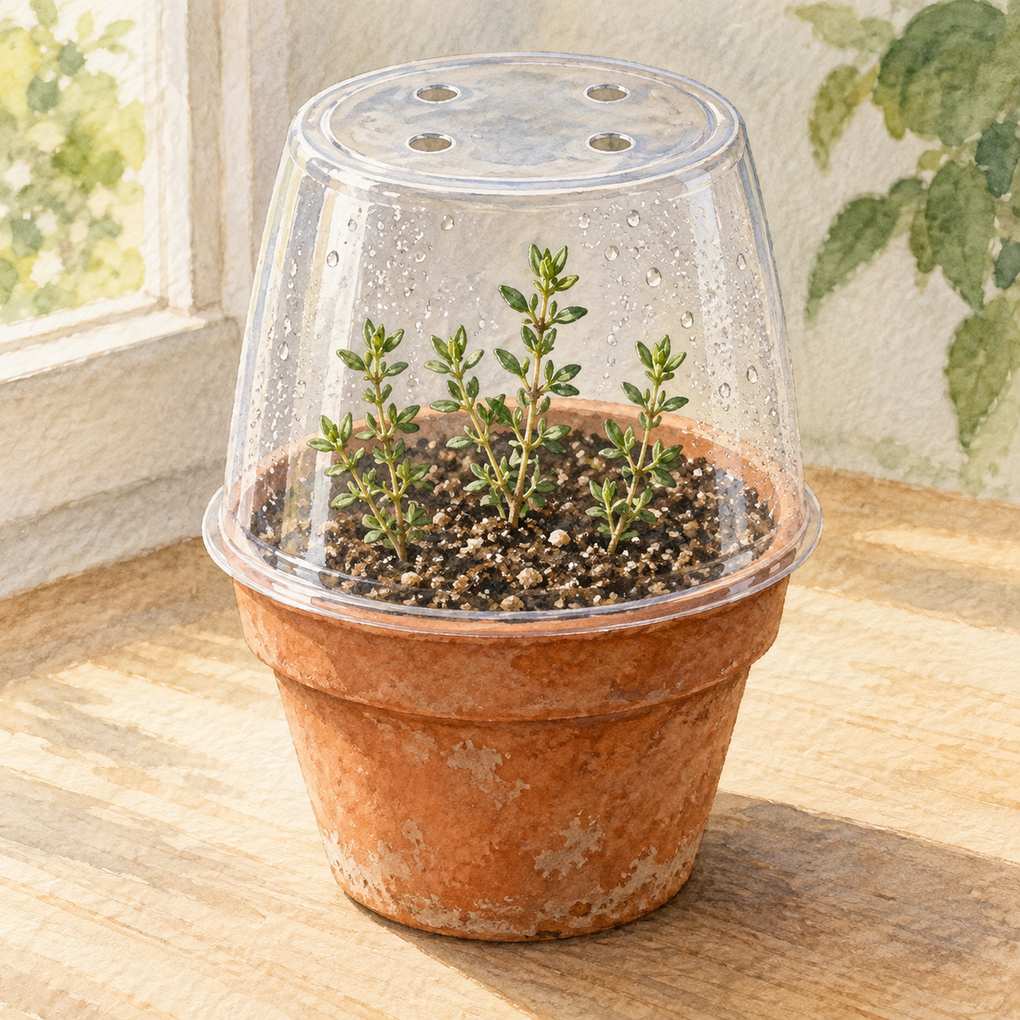
Use the tender ends of thyme sprigs rather than the brown, woody base. Strip the lower half of a 3-inch cutting, poke it into premoistened seed-starting mix, and settle a clear deli cup over the pot as a humidity cover. Punch 3 or 4 small holes in the cup so condensation does not soak the foliage. Thyme needs bright light but very little water; let the surface begin to lighten before adding a spoonful around the pot edge. Roots generally take 3 to 6 weeks. Several cuttings can share one 4-inch pot at first because they are narrow. The nuisance is mold: discard any stem that turns gray, and wash reused food containers before they touch the mix.
6. Try sage tips in gritty soil
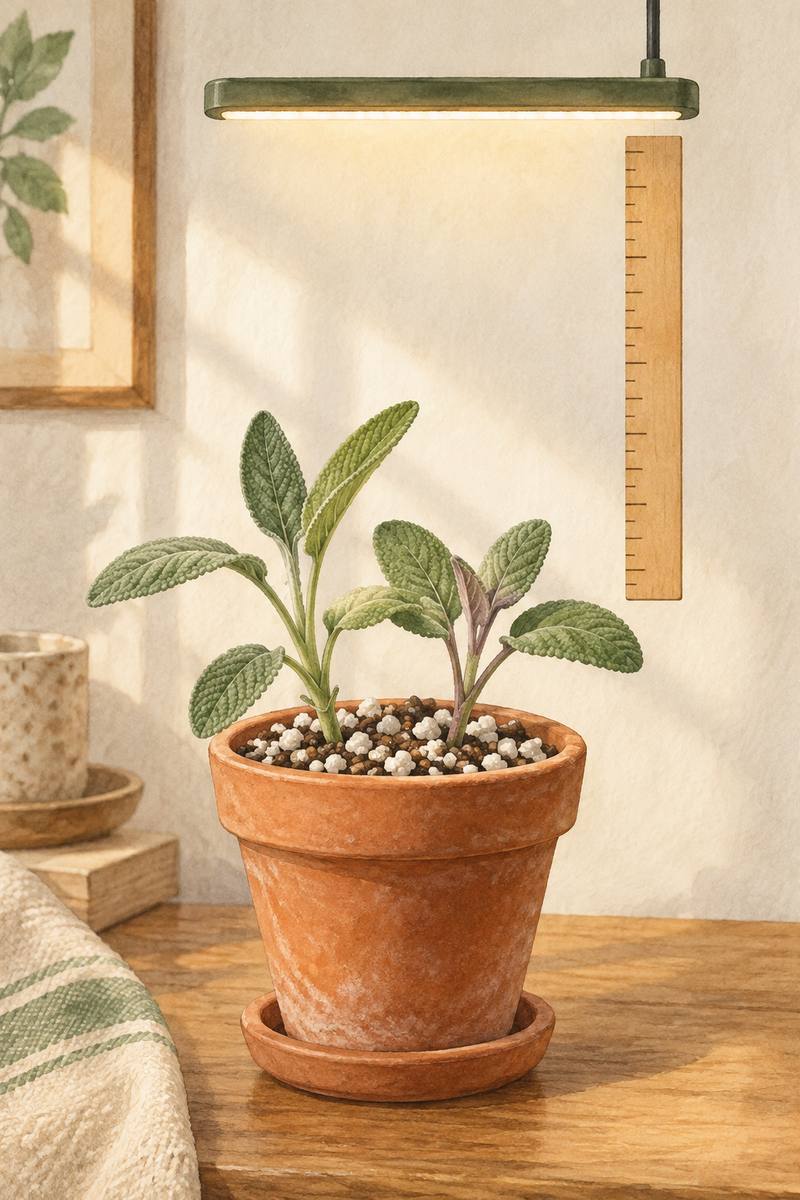
Fresh sage tips can become compact potted plants if the stems are still green. Cut 3 to 5 inches below a node, remove the lower leaves, and tuck each stem into a 4-inch pot filled with two parts potting mix and one part perlite. Keep it beside a bright east window or 6 inches below an LED grow light for about 14 hours daily. Water once, then wait until the top inch feels nearly dry; constant dampness is the usual reason sage cuttings rot. New resistance may take 3 to 5 weeks. Large supermarket leaves without a stem node will not produce a plant, and heavily refrigerated bundles have mixed odds, so inspect the package before buying.
7. Re-sprout cilantro with roots attached
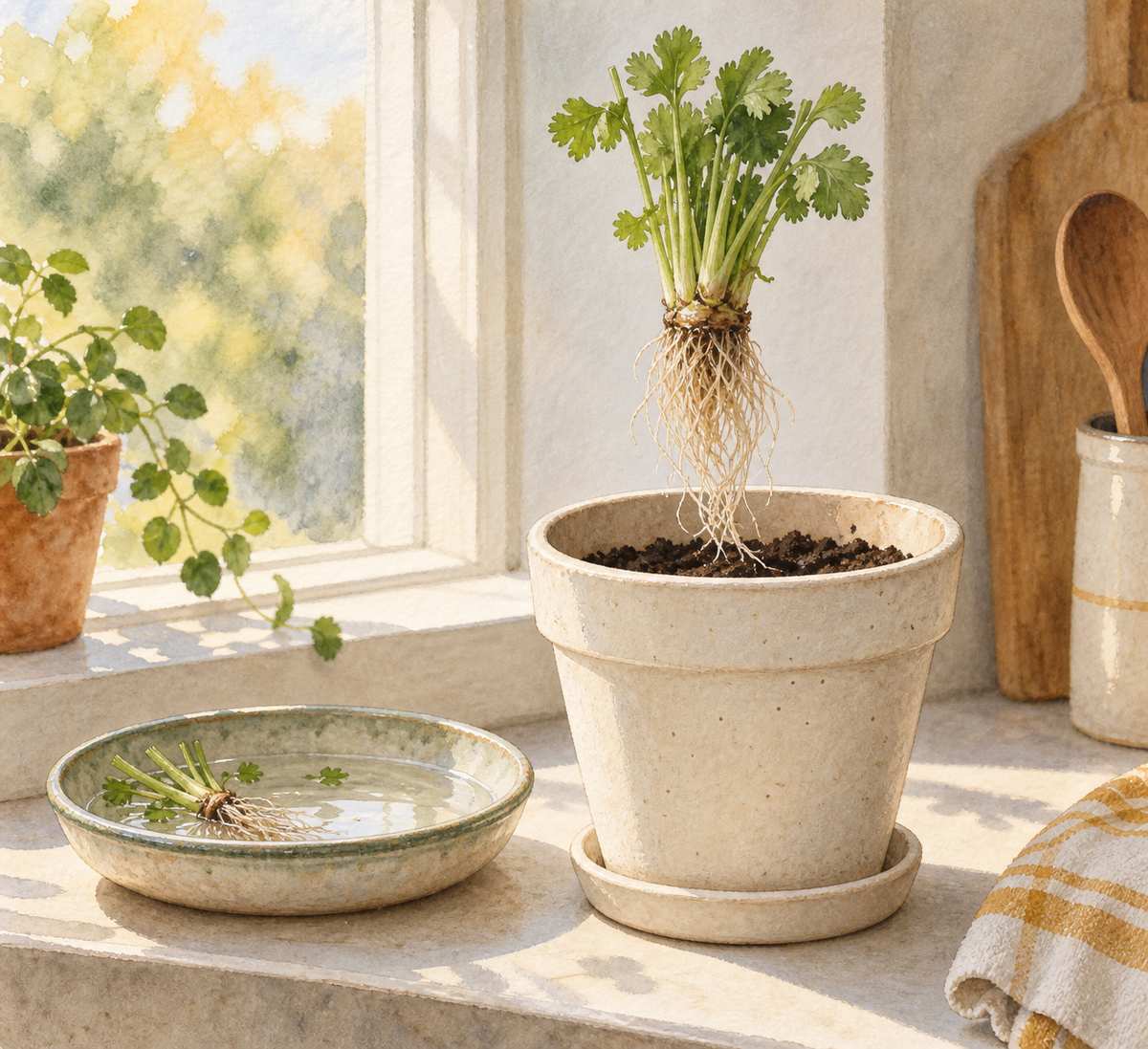
Cilantro leaf cuttings rarely make a new plant, so look for grocery bunches sold with pale roots still attached. Trim the tops to about 4 inches, rinse the roots gently, and stand the crown in only half an inch of water for 2 days. Then move it into a 5-inch-deep pot, keeping the crown level with the soil. Give it 4 to 6 hours of sun or 12 to 14 hours under a grow light. Harvest lightly while new leaves form. This is a short extension, not an endless supply: cilantro often bolts once indoor temperatures stay above 75°F, and a cut bunch without roots cannot be rescued by a water glass.
8. Regrow lemongrass bases in a tall jar
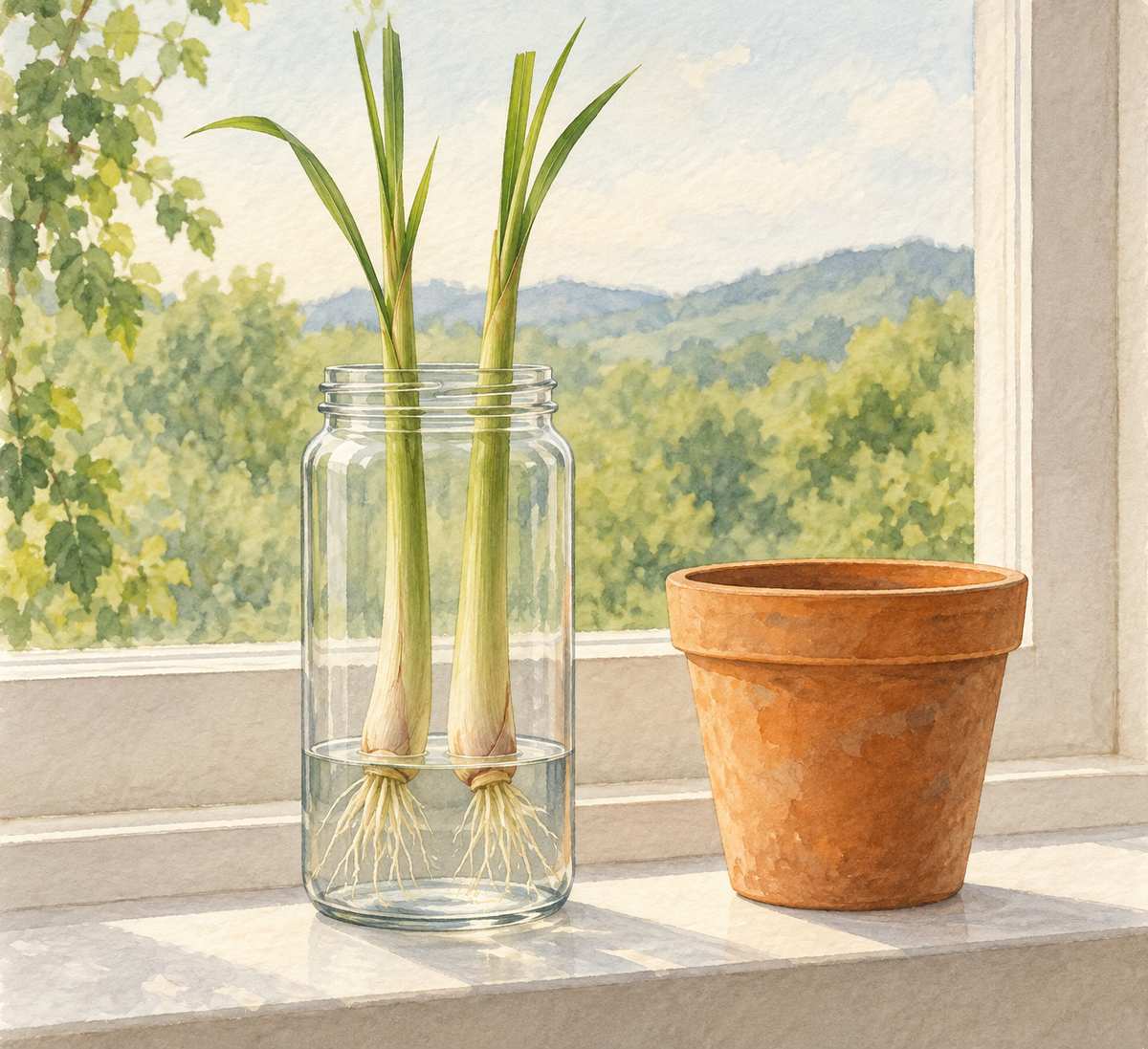
Lemongrass stalks with firm, intact basal plates will often send out roots even after their leafy tops are trimmed. Choose two stalks that are pale and solid at the bottom, remove any loose outer layer, and stand the lowest 2 inches in a tall jar. Replace the water every other day and keep the jar warm, ideally 70°F or above. Roots and fresh center leaves may appear within 2 to 3 weeks. Transfer both stalks to a sturdy 6-inch pot once roots reach 1 inch. Lemongrass eventually gets top-heavy and wants strong light, so this is better for a broad sill than a cramped shelf. Soft or split bases usually rot before they root.
9. Keep green onion stubs in a countertop mug
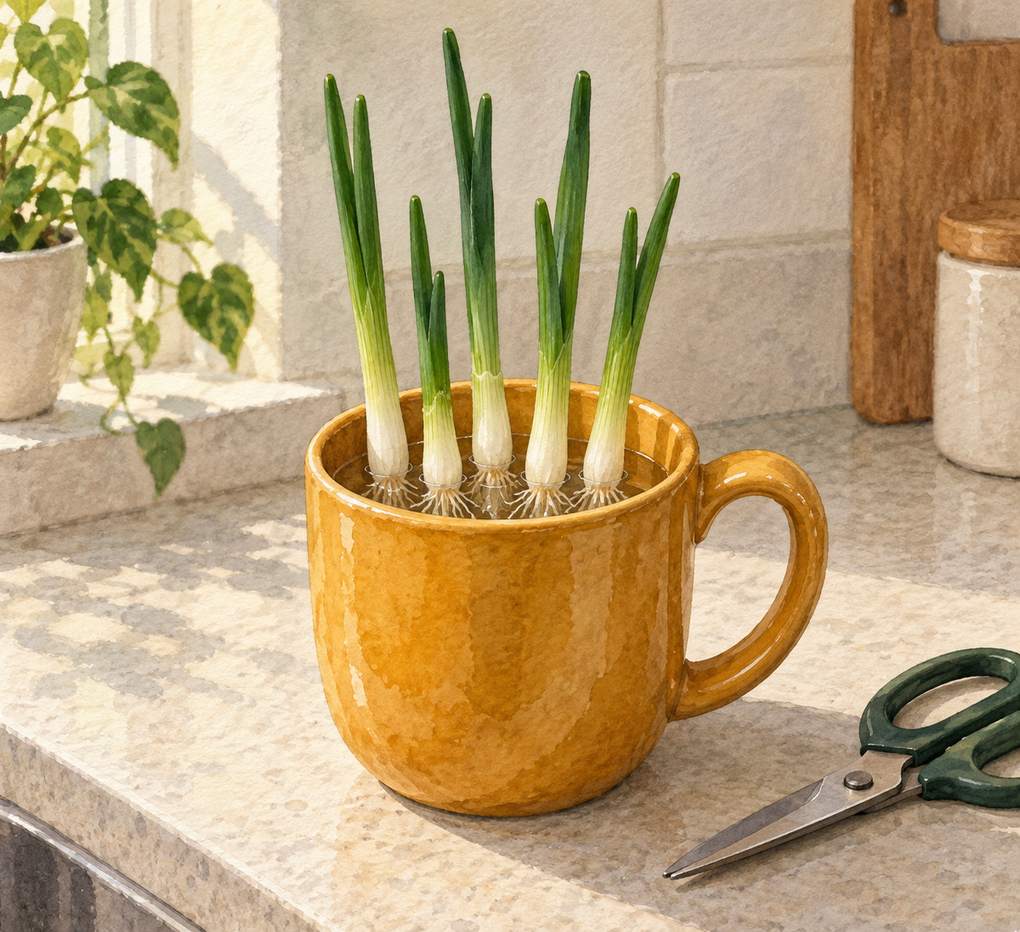
Green onions are the useful stopgap when the windowsill has almost no spare room. Save 2-inch white bases with roots attached, cluster four or five in a heavy mug, and add just enough water to cover the roots, not the whole bulb. Fresh green shoots can reach cutting size in roughly 5 to 7 days. Rinse the mug and replace the water daily because crowded bases become sour-smelling quickly. Snip above the white section and expect two or three modest harvests, then compost them or move them to a 4-inch-deep pot. Water-only regrowth weakens each round because the bulb has limited stored energy; soil gives better long-term results but takes more counter space.
Common questions
- Can every grocery-store herb be rooted from a cutting?
- No. Basil, mint, oregano, thyme, sage, and tender rosemary stems can root from nodes. Cilantro and parsley usually need roots or seed; a detached leaf bunch will not regrow into a full plant. Lemongrass needs an intact basal plate, and green onions need the white base with roots.
- How much light do cuttings need indoors?
- Most cuttings do best in bright indirect light while roots form. After potting, basil and other sun-loving herbs need about 6 hours of direct sun or 12 to 14 hours under an LED grow light. Keep an ordinary LED roughly 6 to 12 inches above the leaves, following its heat and coverage instructions.
- Why are my herb cuttings rotting in water?
- Leaves may be submerged, the water may be stale, or the stem may have been damaged by cold storage. Use a clean container, keep only bare nodes underwater, and replace the water every 2 to 3 days. Discard black or mushy stems rather than letting them foul the whole jar.
- When should rooted cuttings move into soil?
- Move basil and mint when several roots are 1 to 2 inches long; lemongrass can move at about 1 inch. Use a pot with a drainage hole and keep the mix lightly moist for the first week. A cutting may droop for a day while water-grown roots adjust, but ongoing collapse usually means the soil is too wet or the light is too harsh.