9 Low-Light Herbs That Grow on a Shady Kitchen Counter
A kitchen counter with bright indirect light can grow more than basil's sad leftovers. These nine herbs tolerate shade, fit in compact pots, and come with honest expectations about slower growth and smaller harvests.
1. Keep mint contained in a 6-inch pot
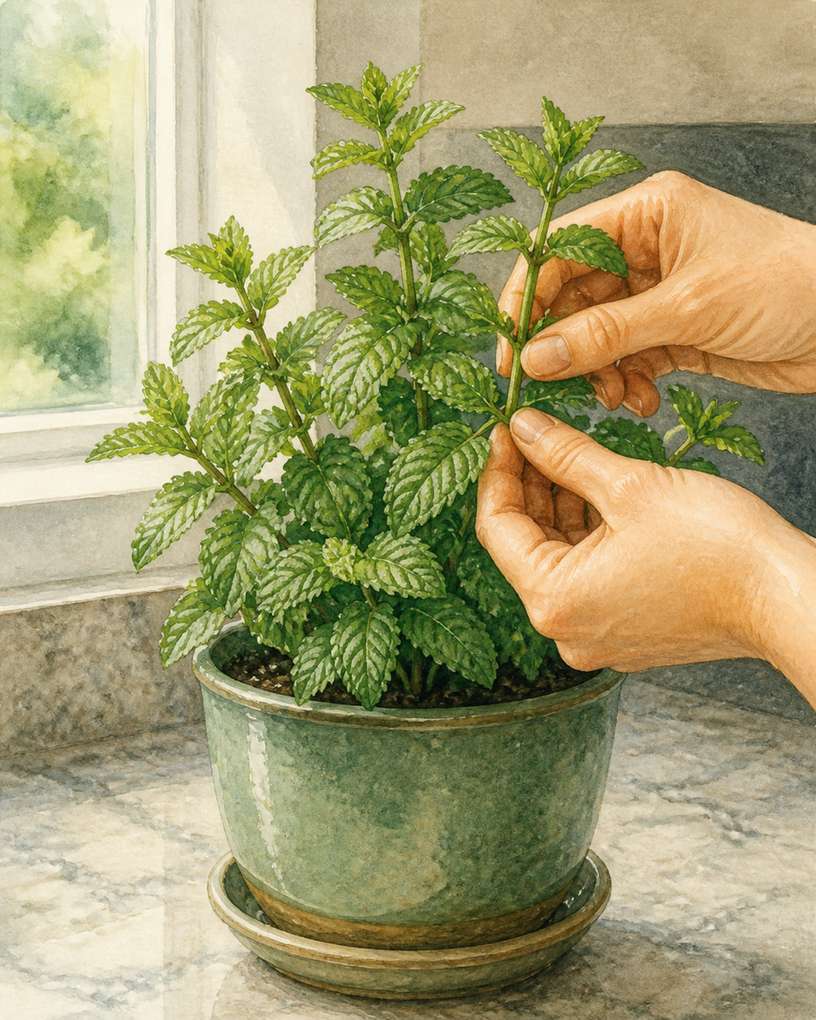
Mint is the safest first pick for a counter receiving bright indirect light or roughly 3 hours of weak morning sun. Peppermint and spearmint both stay usable in shade, though their stems stretch farther between leaves than plants grown outside. Give one plant its own 6-inch pot with a drainage hole; mint roots spread quickly and crowd neighboring herbs in shared containers. Water when the top half-inch of mix feels dry, then empty the saucer so the roots do not sit in runoff. Pinch just above a leaf pair to encourage branching. The downside is flavor: deeply shaded mint can taste milder, so harvest several small leaves rather than expecting one leaf to carry a whole drink.
2. Grow flat-leaf parsley where temperatures stay cool
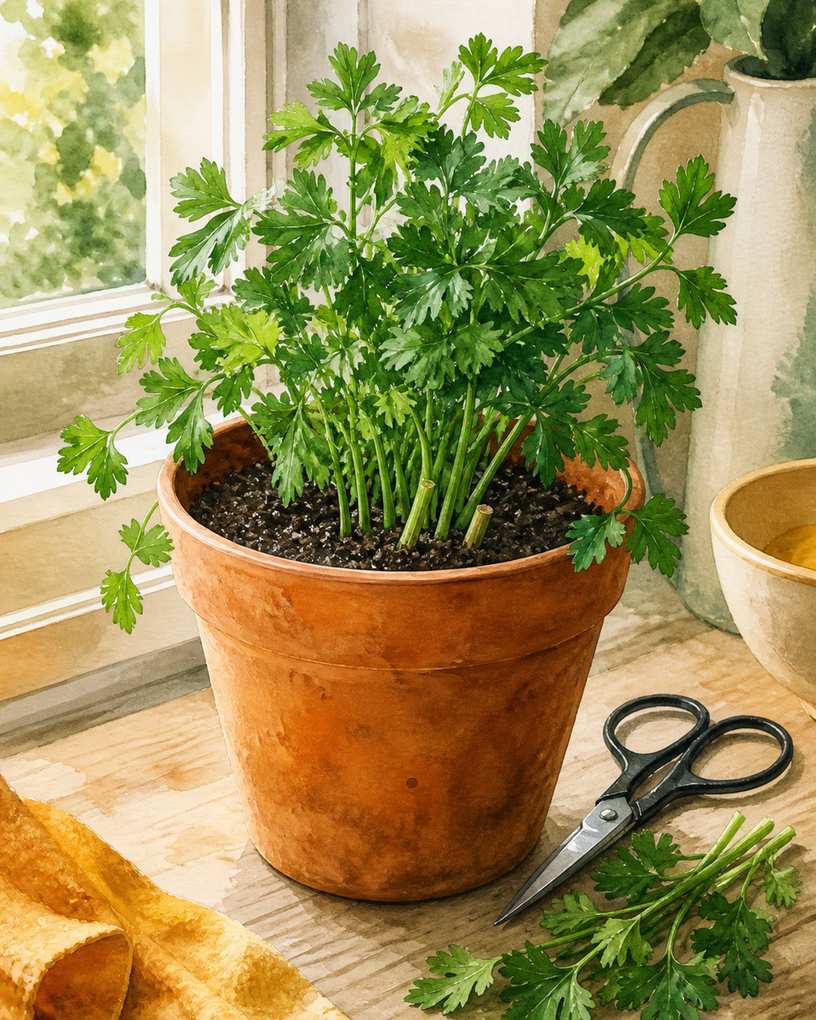
Flat-leaf parsley handles a dim counter better than Mediterranean sun lovers such as rosemary. Place it near the brightest window available, ideally where it gets 3 to 4 hours of gentle morning light, and rotate the pot a quarter-turn every few days. A 6-inch-deep container gives its taproot enough room without taking over the counter. Keep the mix lightly moist, not swampy, and cut outside stems at the soil line once they reach about 6 inches. Parsley germination is famously slow, often taking 2 to 4 weeks, so a nursery transplant saves frustration. Growth will also slow in winter. Do not strip the center leaves; that is where the plant produces its next round of stems.
3. Snip chives lightly instead of giving them a buzz cut
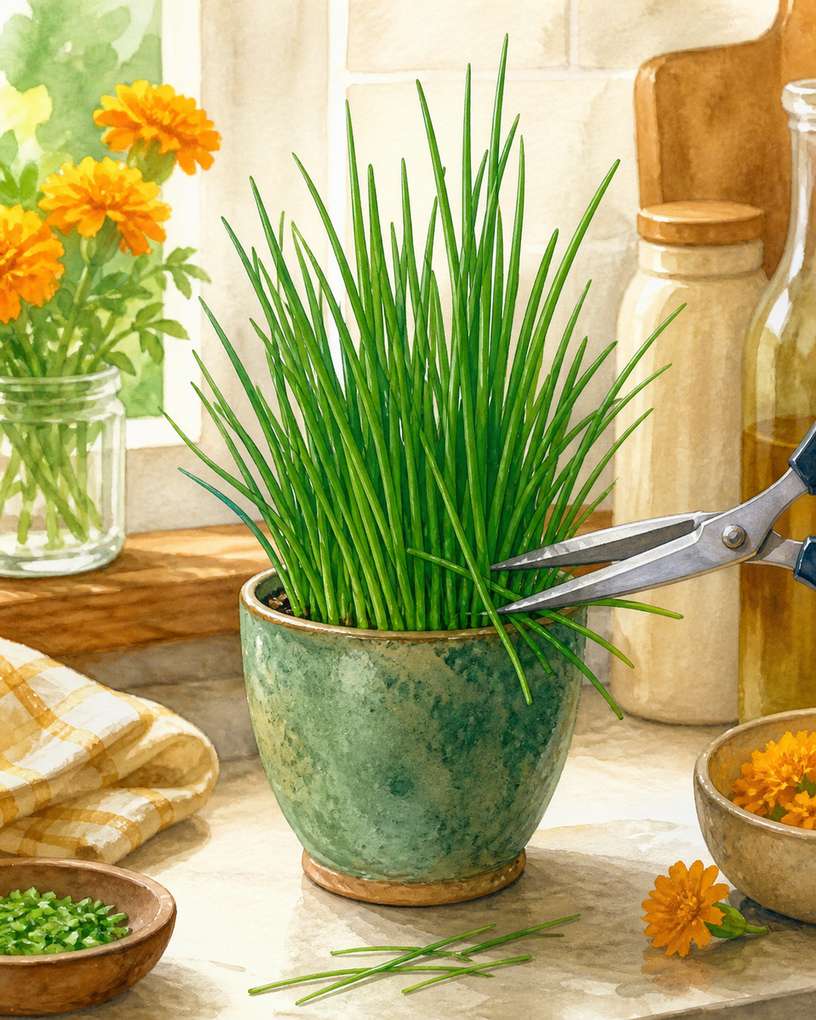
Common chives fit a narrow counter because their upright leaves stay within a 5- to 6-inch pot. They tolerate bright shade, but expect thinner leaves and slower regrowth unless the window supplies at least 4 hours of gentle light. Start with a divided nursery clump rather than a crowded supermarket pot, then leave about 1 inch between the smaller sections. Water when the top inch of mix dries. For a usable harvest, cut only the outer third of the leaves and leave at least 2 inches standing. Removing the whole top repeatedly can exhaust a low-light plant. Chives may also go semi-dormant during short winter days; pale, floppy growth is a sign they need a brighter sill or a small grow light.
4. Sow cilantro in short batches for steady leaves
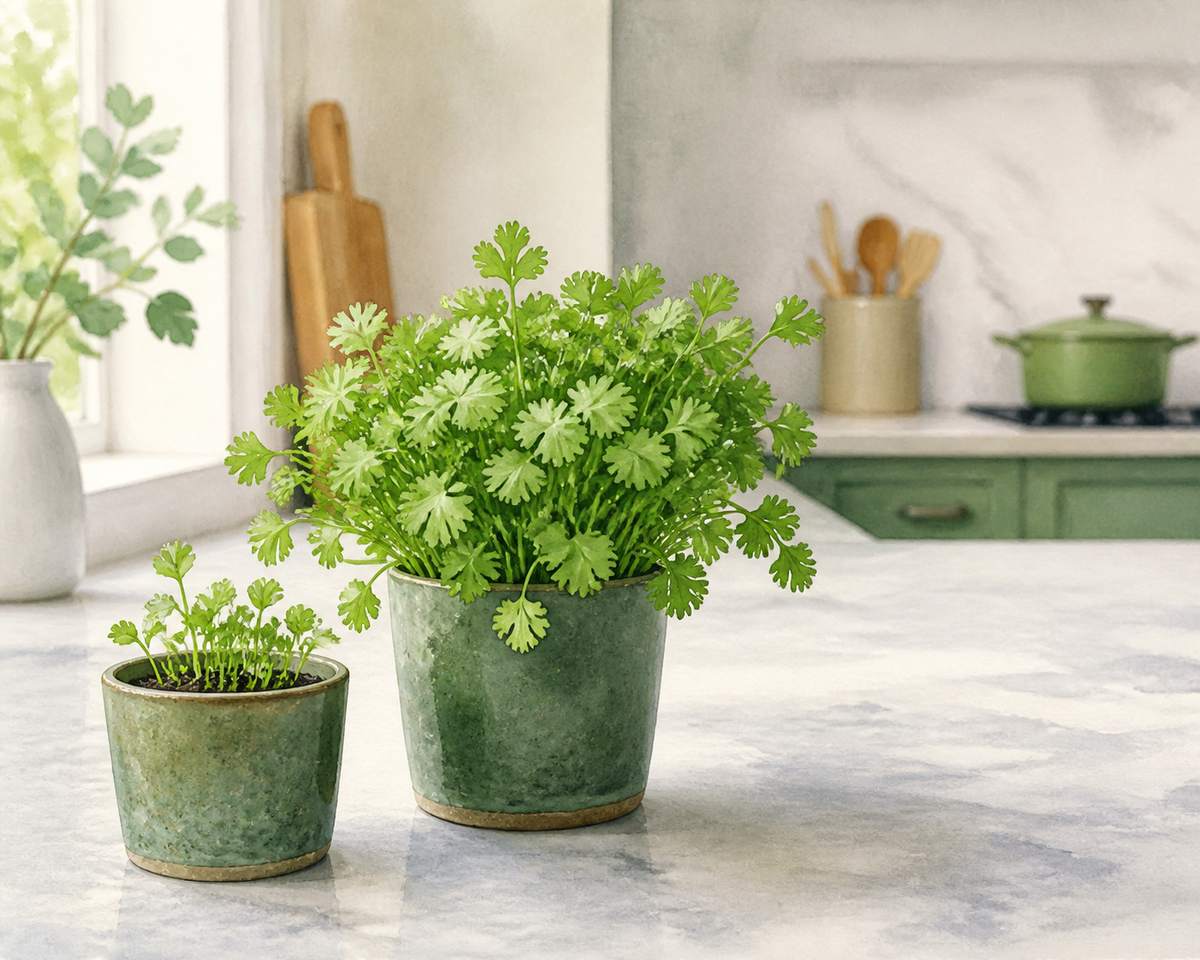
Cilantro accepts partial light, but it is not a permanent countertop houseplant. Sow 8 to 10 seeds in a 6-inch pot, keep the mix evenly moist, and harvest the young leaves before the plant stretches or bolts. A cool spot between about 55 and 70°F buys more time; heat from a stove, radiator, or dishwasher shortens the crop. Rather than cutting every stem, take the outer leaves once plants reach roughly 4 inches tall. Start a second pot 2 weeks later so one batch can replace the other. Shade slows growth, which can be useful, but very weak light produces floppy stems. If the seedlings lean sharply toward the window, move them closer or rotate the pot daily.
5. Choose chervil for a cool north-facing window
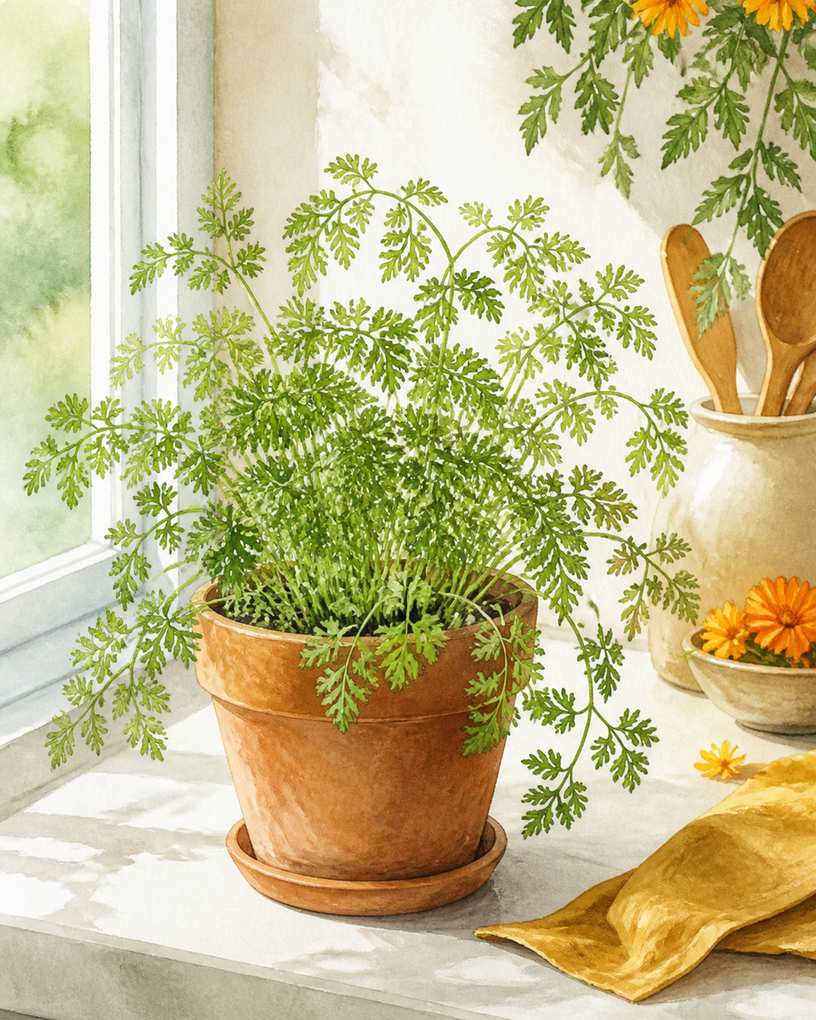
Chervil is a delicate, parsley-like herb that often performs better in cool shade than on a hot sunny sill. Use a pot at least 6 inches deep because its fine roots dislike transplanting, and sow seed directly on moist mix with only a light covering. A north-facing window can work if the counter stays bright enough to cast a soft daytime shadow. Keep temperatures near 60 to 70°F and harvest outer sprigs when plants stand 4 to 6 inches tall. Chervil's mild anise flavor suits eggs, soups, and butter, but cooking it for long periods erases much of the taste. Its main drawback is shelf life: the cut leaves wilt quickly, and the plant usually needs reseeding after it flowers.
6. Put lemon balm in its own compact container
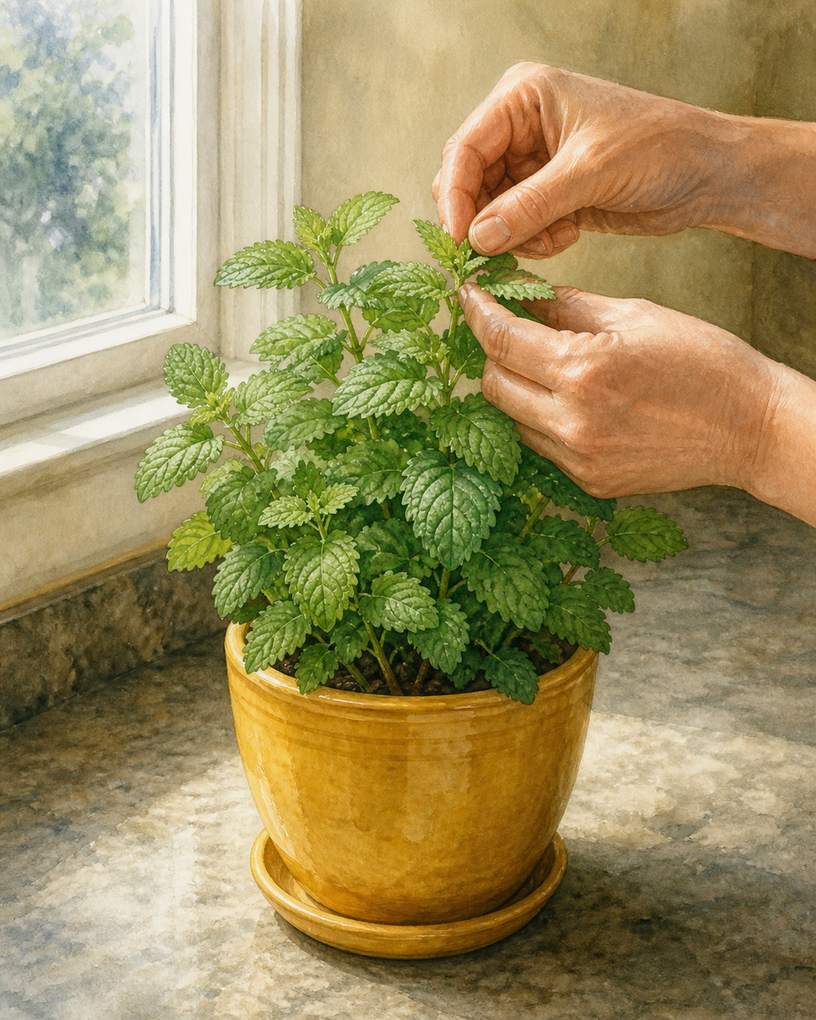
Lemon balm grows willingly in bright shade and gives a useful citrus scent without demanding a sunny south window. One plant fits a 6-inch pot at first, though its roots may need an 8-inch container after a season. Pinch the top inch whenever stems reach 5 or 6 inches; regular trimming keeps a low-light plant from turning into a loose tangle. Let the surface of the potting mix dry slightly between waterings, and keep the pot away from cold window glass in winter. Lemon balm is vigorous outdoors but noticeably slower inside. The trade-off is a smaller harvest and less intense flavor. Use the tender tips fresh, because older shaded leaves can become coarse without tasting especially lemony.
7. Harvest baby sorrel from a deeper pot
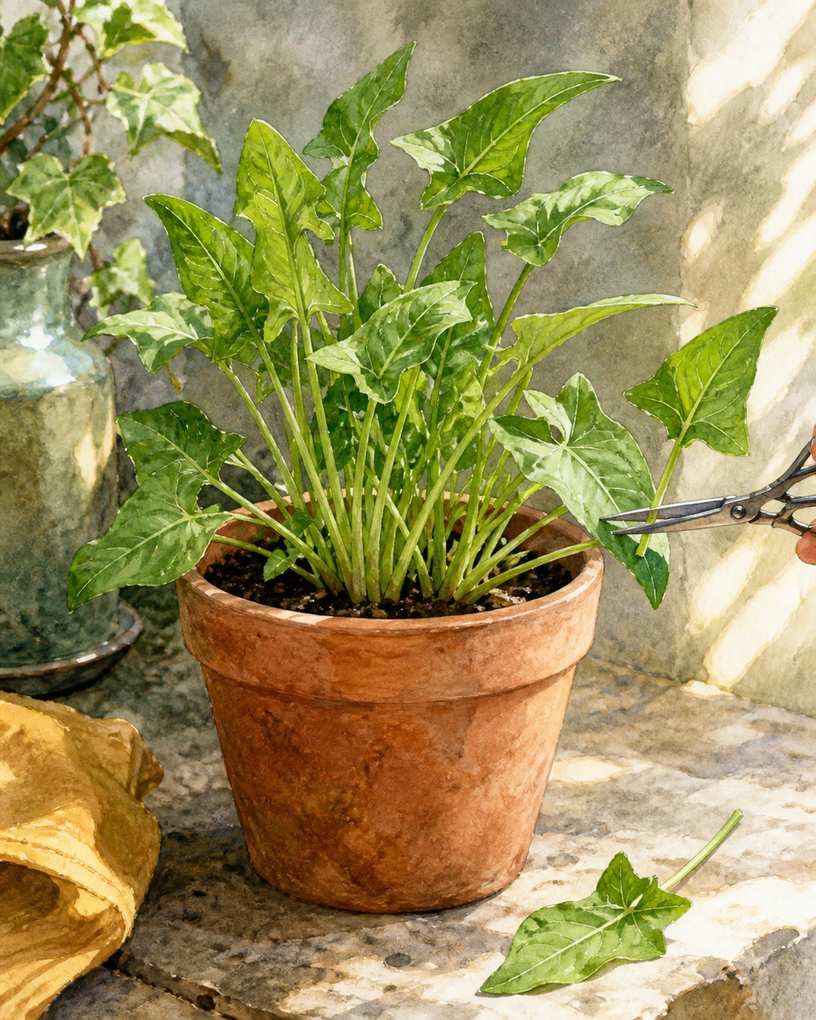
French sorrel supplies tart, lemony leaves from a counter that receives bright indirect light. Its roots want more room than the foliage suggests, so choose a container about 8 inches deep and 6 inches wide, with a real drainage hole. Harvest leaves young, around 3 to 5 inches long, for salads, sauces, or a sharp accent in soup. Older leaves become tougher, and shade does not prevent that. Keep the mix consistently damp but never waterlogged. Sorrel is perennial outdoors in many climates, yet an indoor plant can lose vigor after repeated cutting. It also contains oxalic acid, so it is better used as a seasoning than as a daily bowlful, especially for anyone advised to limit high-oxalate foods.
8. Try Vietnamese coriander in a warm, humid kitchen
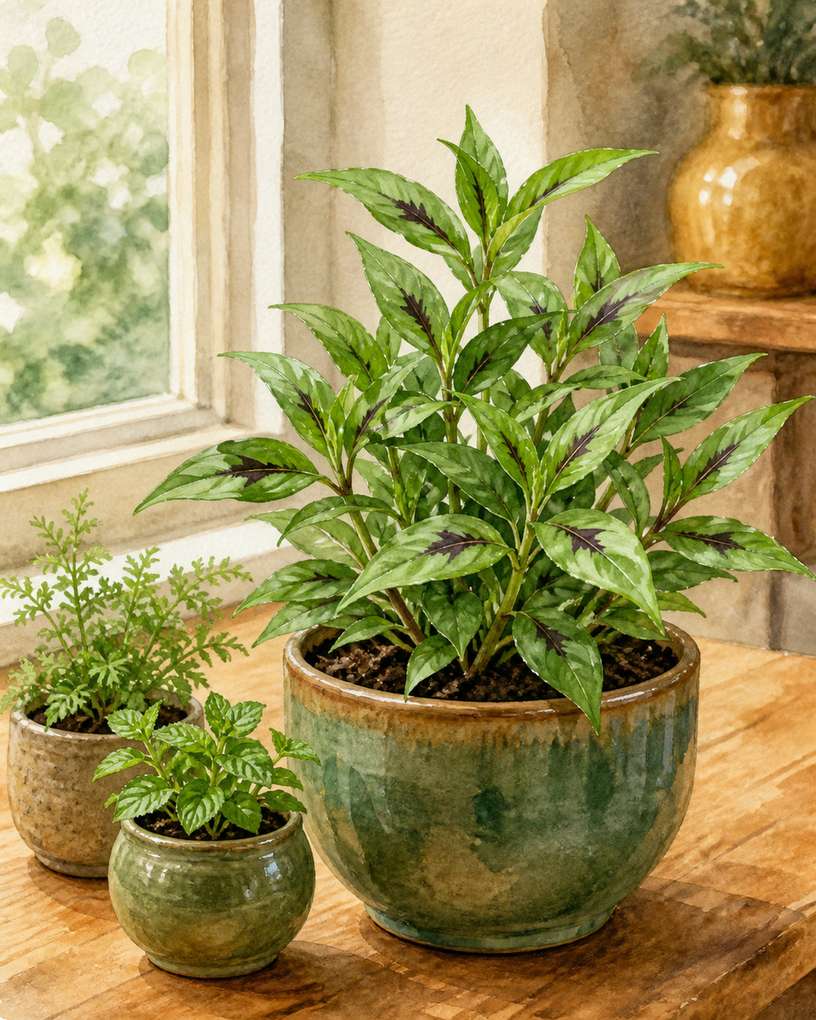
Vietnamese coriander is a good alternative when regular cilantro bolts in a warm apartment. The pointed leaves carry a cilantro-like bite, and the plant tolerates bright indirect light as long as the room stays above roughly 60°F. Give it a 6- to 8-inch pot and keep the mix more consistently moist than you would for rosemary or thyme. A pebble tray will not fix truly dry air, but grouping it with other plants can slow moisture loss. Pinch stem tips after they produce 4 or 5 sets of leaves to keep growth compact. This tropical herb dislikes cold drafts and can become lanky in deep shade. Its flavor is stronger than cilantro, so start with half as much in fresh rolls or salads.
9. Grow culantro as a compact cilantro substitute
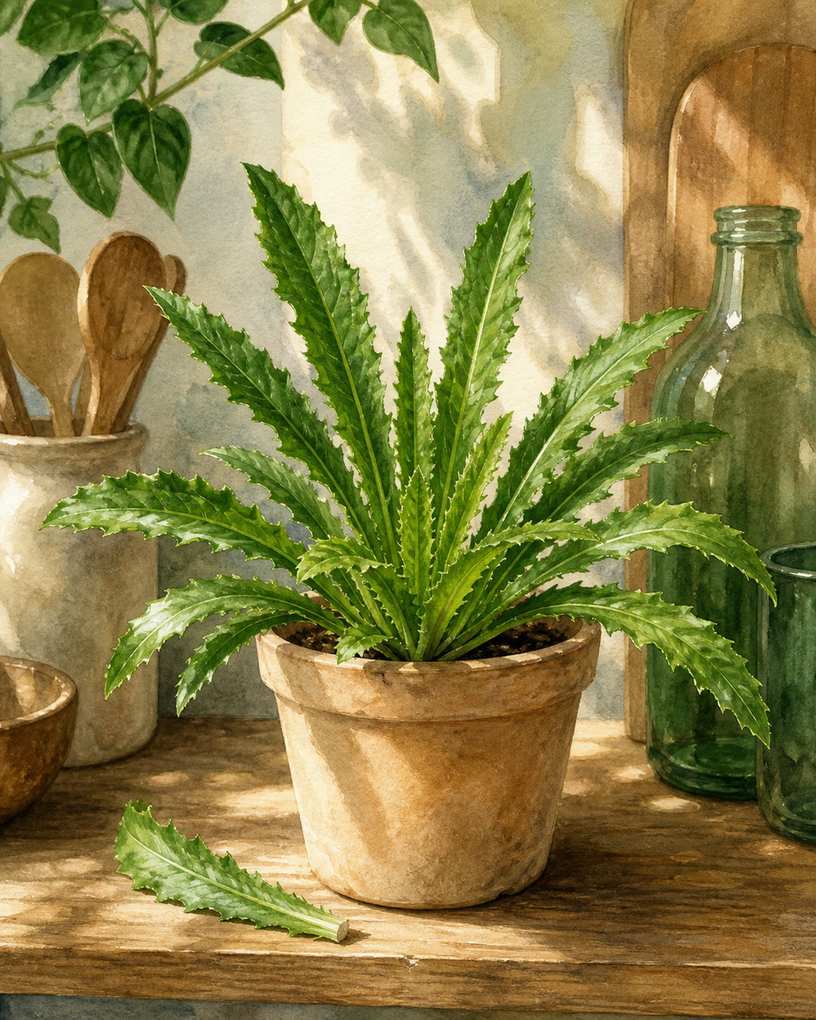
Culantro forms a low rosette instead of cilantro's tall, feathery stems, which makes it useful on a shelf or counter with limited headroom. It prefers warmth, moisture, and filtered light; harsh sun can scorch its long serrated leaves. Start one plant in a 6-inch pot, keep temperatures above about 65°F, and water when the top half-inch begins to dry. Cut the oldest outside leaves near the base while leaving the center rosette intact. Culantro grows slowly from seed, so a transplant is easier if a Caribbean, Latin American, or Asian nursery carries it. The flavor is much stronger than cilantro and can dominate mild dishes. It also stalls in a chilly kitchen, even when the available light is adequate.
Common questions
- Can herbs grow in a kitchen with no window?
- Not well without added light. A room that needs its ceiling light during the day is too dark for sustained herb growth. Use a small full-spectrum LED for 12 to 14 hours daily, positioned according to the maker's distance guidance, or treat supermarket herbs as short-lived cuttings rather than permanent plants.
- How can I tell whether my counter has enough indirect light?
- Check it around midday with the electric lights off. Bright indirect light should produce a soft but visible hand shadow. If there is no shadow, stems lean hard toward the window, or new leaves emerge pale and widely spaced, move the herbs closer to the glass or add a grow light.
- How often should low-light kitchen herbs be watered?
- Use the potting mix rather than a fixed calendar. For mint, parsley, cilantro, chervil, and culantro, check when the top half-inch feels dry. Low light slows water use, so a pot that needed water every 3 days in summer may take 7 days or longer in winter. Always empty the drainage saucer.
- Which familiar herbs should not go on a shady counter?
- Rosemary, thyme, oregano, sage, and most basil varieties usually become weak or flavorless without strong light. They are better near a sunny south- or west-facing window or under a grow light. No herb truly thrives in darkness, and even the shade-tolerant choices here grow more slowly during short winter days.