9 Low-Mess Pollinator Plants for Small Patios and Close Neighbors
Pollinator pots can attract bees and butterflies without scattering berries, soggy petals, or sticky sap across a shared patio. These nine tidy plants fit containers, stay reasonably contained, and come with honest notes about sun, cleanup, and neighbor-friendly placement.
1. Compact English lavender in a fast-draining pot
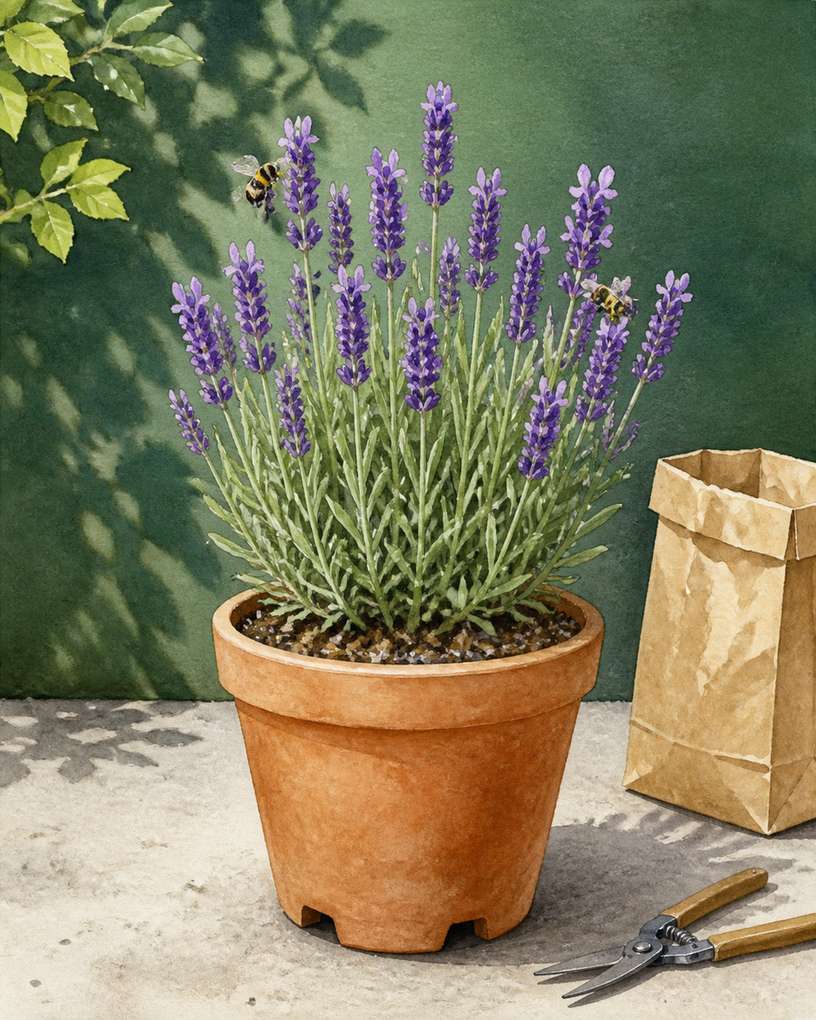
Compact English lavender keeps its flowers on upright stems instead of flopping across a shared walkway. Try 'Hidcote' or 'Munstead' in a 12- to 14-inch terra-cotta or resin pot with a drainage hole and gritty potting mix. Give it at least 6 hours of direct sun, and let the top 2 inches dry before watering. Bees work the blooms for weeks, while the spent heads stay attached until you clip them into a paper bag. The catch is humidity: lavender often declines in wet summers or constantly damp soil. It also will not forgive a saucer left full after rain. One plant per pot is enough; crowding three into a bowl looks full briefly, then traps moisture around the crowns.
2. Lesser calamint for a contained cloud of flowers
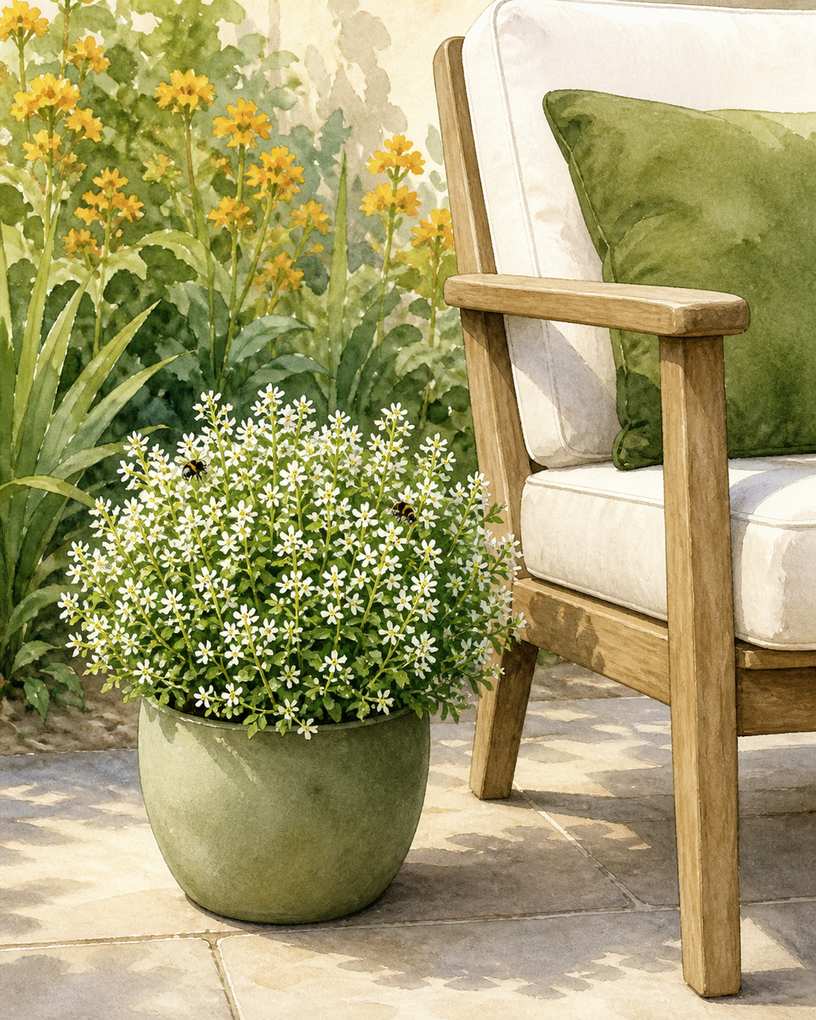
Lesser calamint, Calamintha nepeta, makes a soft cloud of tiny white flowers without producing fleshy fruit, sticky sap, or heavy petals. A single plant fills a 12-inch pot and usually stays around 12 to 18 inches tall, so it will not lean into a neighbor's chair. Set it where it gets 5 or more hours of sun and shear the whole mound by one-third if it opens up in midsummer. Small native bees are especially fond of it. The honest downside is abundance: in some regions it drops enough seed to make volunteers in nearby containers. Snip the flower stems before seeds ripen if that would cause friction, and check local guidance because its self-seeding behavior varies by climate.
3. 'Junior Walker' catmint kept back from the walkway
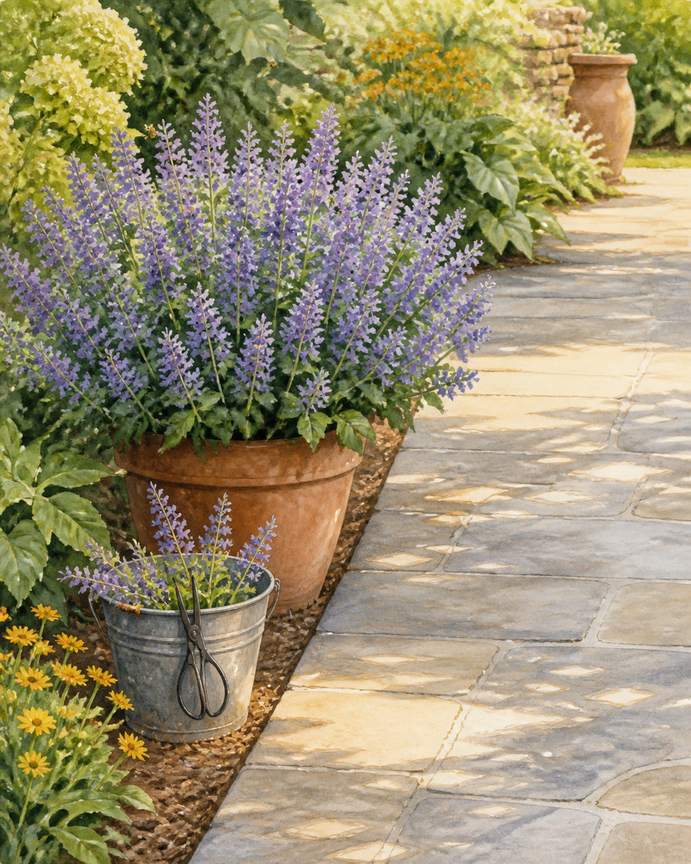
'Junior Walker' catmint gives bees the long lavender-blue bloom of catmint in a mound roughly 16 inches tall, not a sprawling hedge. Use one plant in a 14-inch-wide pot and place it 6 inches back from the patio edge so stems remain out of the traffic lane. After the first flush fades, gather the stems and cut them back by half; doing it over a bucket catches nearly all the dry flower bits. Full sun produces the firmest growth, though 5 hours can work. Cats may roll on or chew Nepeta, which is the real nuisance on a shared patio. Skip it if neighborhood cats visit regularly, and do not confuse ornamental catmint with culinary catnip, which grows taller and reseeds more freely.
4. Dwarf meadow sage with clip-clean flower spikes
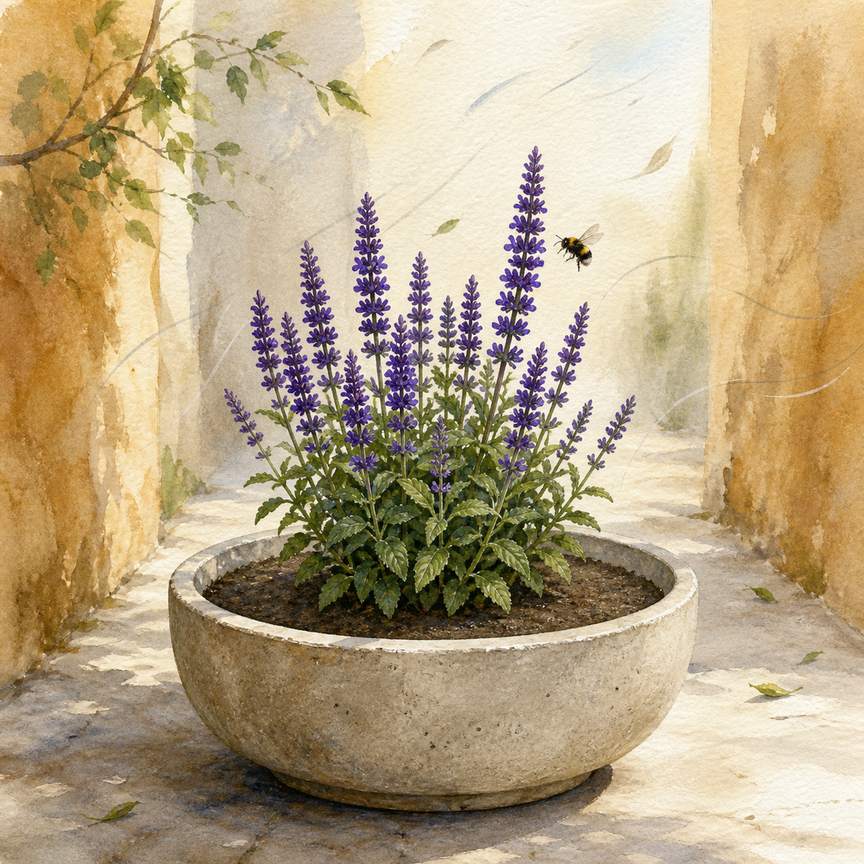
A compact meadow sage such as Salvia nemorosa 'Marcus' holds its violet flowers on 10- to 12-inch spikes that bumblebees can land on easily. It fits a 10- to 12-inch pot, but choose a heavy-bottomed container if wind funnels between buildings. The blooms dry in place rather than turning into juicy berries; clip each spike when the lower two-thirds has browned to prevent loose seed and encourage a smaller second flush. Plan on 6 hours of sun and regular water during the first month, then let the surface dry slightly. Its drawback is powdery mildew when air stalls between crowded pots. Leave 4 inches of breathing room around the foliage and water the mix, not the leaves, early in the day.
5. Creeping thyme around the rim of a shallow bowl
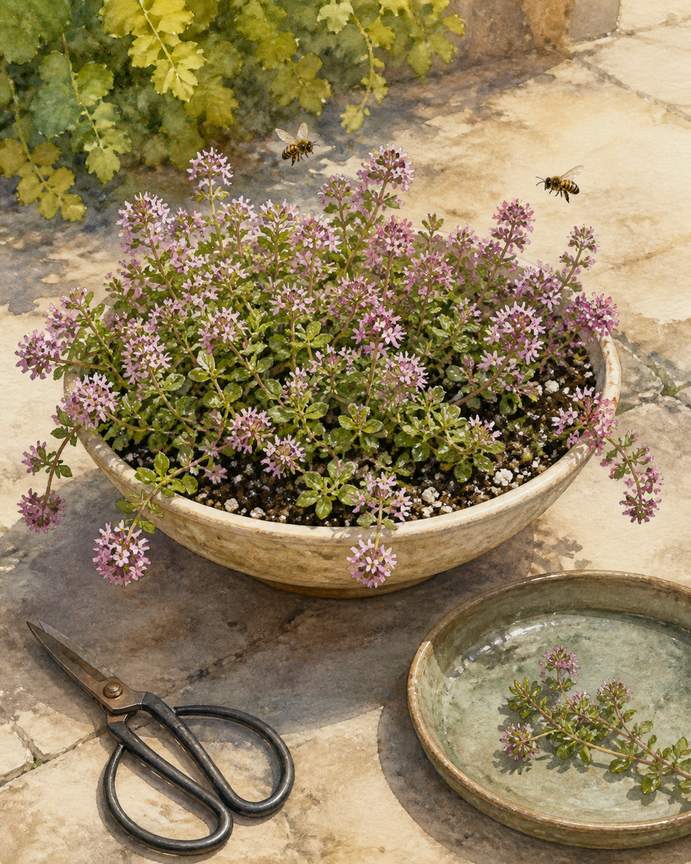
Creeping thyme turns the rim of a shallow bowl into a low feeding patch for tiny bees, with no tall stems to brush against passing legs. Plant Thymus serpyllum in a 10- to 12-inch pot that is at least 6 inches deep, using potting mix cut with perlite or fine grit. It wants 6 hours of sun and much less water than petunias, which is useful where dripping onto the downstairs patio is forbidden. Trim the flowered tips with kitchen shears once blooming slows; the clippings are dry and easy to catch on a tray. Thyme resents wet winter soil and may die in the center after a few years. It is also only lightly useful for cooking, so choose common thyme instead if harvest matters more than the carpeted shape.
6. 'Autumn Joy' stonecrop for tidy late-season nectar
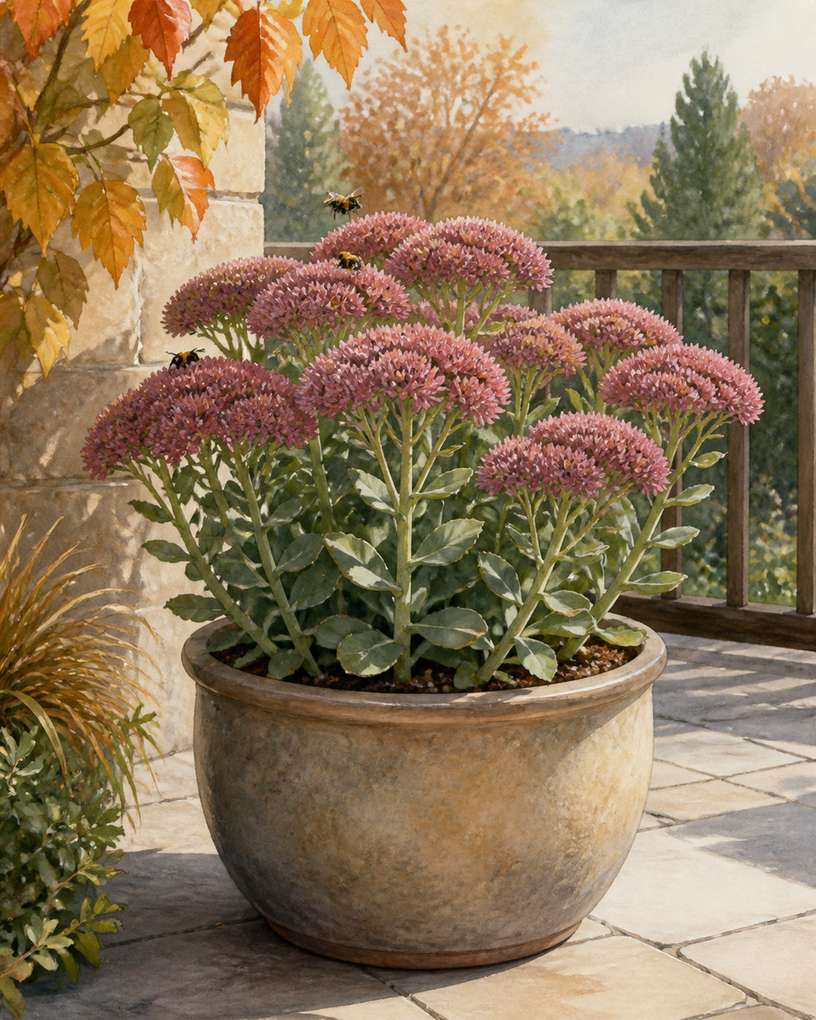
'Autumn Joy' stonecrop gives late-season bees a broad landing pad when many patio flowers are finished. Its succulent leaves and sturdy 18- to 24-inch stems stay put through heat, and the flower heads dry intact rather than dropping soft fruit. One plant needs a 12- to 14-inch pot with a fast-draining mix and at least 6 hours of sun. Leave the brown heads for winter structure, then cut them directly into a bag in early spring before new shoots reach 2 inches. The pot can become top-heavy once the heads mature, so a wide base matters near a railing. Too much fertilizer makes the stems split and flop; use fresh potting mix, but skip weekly bloom food. In humid areas, watch for crown rot after long rainy spells.
7. Compact hyssop with upright hummingbird flowers
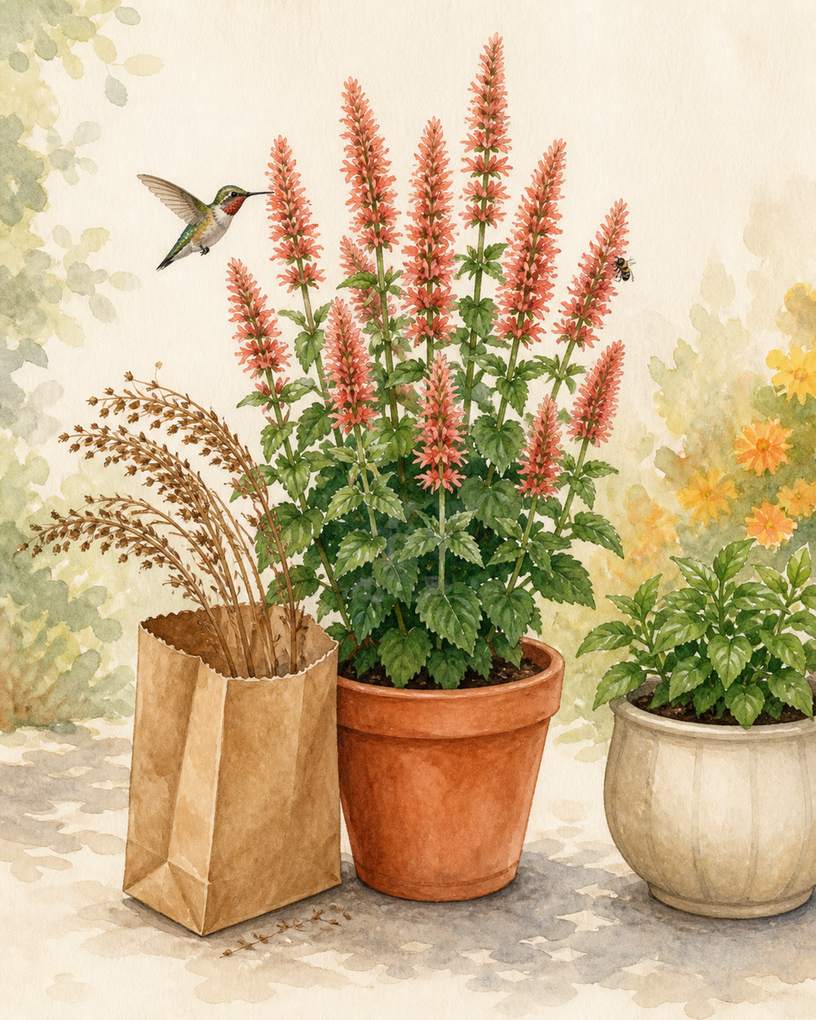
Compact hyssop such as Agastache 'Kudos Coral' feeds bees and hummingbirds from upright flower spikes while staying about 20 inches tall. Give one plant a 12-inch pot, 6 or more hours of sun, and a mix that drains quickly after a storm. The leaves smell faintly of mint when brushed, but they are not sticky, and spent blossoms remain clustered on the spike until you snip it. Cut stems into a bag before the seed turns dark if seedlings in neighboring pots would be unwelcome. Agastache is drought tolerant only after its roots fill in; a new plant can still wilt fast in a hot container. Winter survival is less reliable in a pot than in the ground, especially below USDA Zone 6, so treat it as seasonal unless you can shelter the container.
8. Coral bells for patios with only morning sun
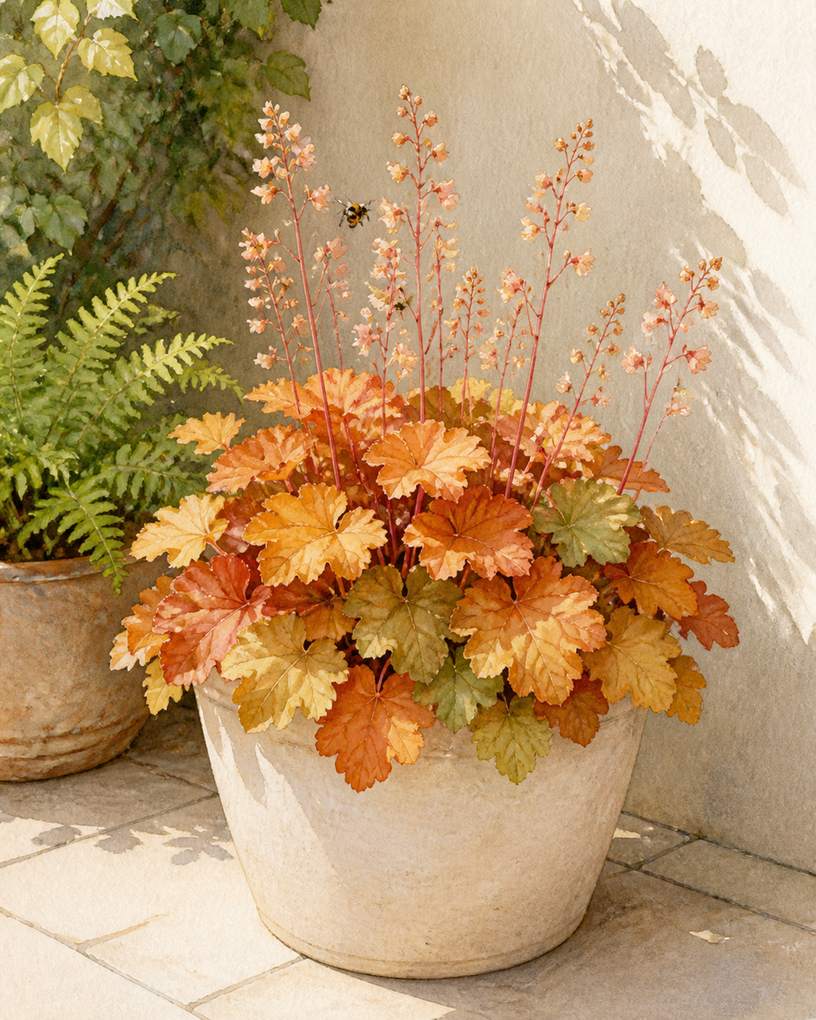
Coral bells are the tidy choice for a patio that gets morning light but misses the 6-hour sun mark. Heuchera 'Fire Alarm' or 'Caramel' forms a neat 10- to 14-inch leaf mound, then sends up narrow flower wands visited by small bees and hummingbirds. One plant fits a 10-inch pot; use a 12-inch pot if you want a moisture buffer during summer. Give it 3 to 5 hours of gentle sun, and clip each wand at the base when flowering ends so no brittle stems break loose. The trade-off is heat: dark containers and western exposure can scorch the leaf edges even when the soil is damp. A light-colored pot and afternoon shade help. Check the crown after winter, too, because freeze-thaw cycles can lift it above the potting mix.
9. Dwarf globe amaranth with papery blooms
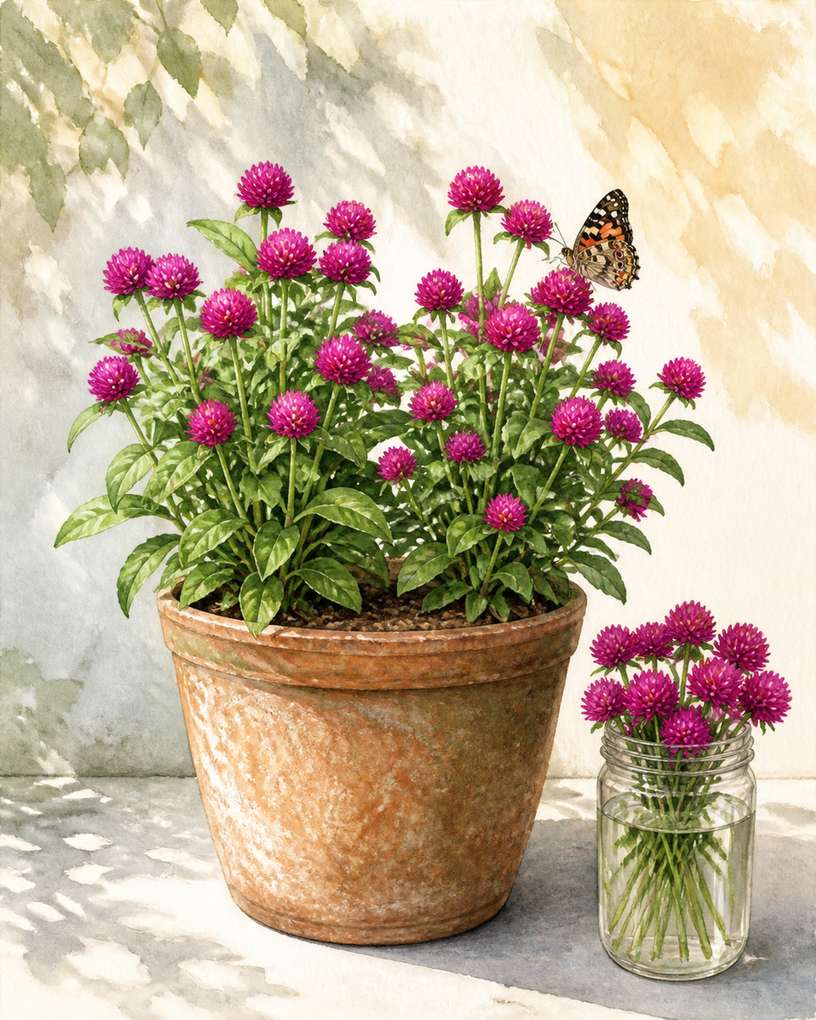
Globe amaranth, Gomphrena globosa, makes papery clover-shaped blooms that butterflies visit and that do not collapse into wet petals on concrete. Two dwarf 'Buddy' plants fit a 12-inch pot and stay roughly 8 to 10 inches tall; taller 'QIS' types need more room and may lean. Set the pot in 6 to 8 hours of sun, water when the top inch feels dry, and avoid rich fertilizer that produces leaves at the expense of flowers. The heads hold together so well that you can cut them straight into a jar or paper bag for drying. This is an annual, so it means buying or sowing plants each spring. It may also self-seed in warm climates; harvest heads before they turn tan if volunteers would cross a shared patio boundary.
Common questions
- Which pollinator plant makes the least mess on concrete?
- Globe amaranth and stonecrop are especially tidy because their mature flower heads stay firm instead of collapsing into wet petals. Lavender, catmint, and salvia also remain manageable if you cut spent stems directly into a bucket or paper bag. No flowering plant is completely debris-free, but avoiding fleshy berries and deadheading before seed ripens prevents most neighbor complaints.
- Can these plants work on a patio with only four hours of sun?
- Coral bells are the best fit for 3 to 5 hours of morning sun. Lesser calamint and catmint may bloom with about 5 hours, though they can grow looser and produce fewer flowers. Lavender, thyme, stonecrop, globe amaranth, hyssop, and meadow sage are better with at least 6 hours of direct sun.
- How do I keep water from dripping onto a downstairs neighbor?
- Use a watertight saucer or boot tray sized at least 1 inch wider than the pot base, then empty it after watering so roots do not sit in water. Water slowly with a narrow-spout can and stop as soon as moisture reaches the saucer. Thyme, lavender, stonecrop, and established hyssop usually need less frequent watering than thirsty annuals, but every container still needs a working drainage hole.
- Will these container plants survive winter outdoors?
- That depends on the plant, your USDA zone, and how exposed the patio is. Roots in pots experience colder temperatures than roots in the ground. Lavender, catmint, thyme, salvia, stonecrop, calamint, and coral bells may overwinter in a large, well-drained container when rated at least one or two zones colder than your area. Globe amaranth is annual, and container-grown hyssop can be unreliable below Zone 6.