9 Mosquito-Repelling Patio Container Combinations for Seating Areas
Aromatic plants can add useful scent around a small seating area, but no container creates a mosquito-proof bubble. These nine combinations pair compatible plants with practical details such as drainage, mature size, sun exposure, and standing-water prevention.
This page contains affiliate links — we may earn a commission at no extra cost to you. See our disclosure.
1. Rosemary, Lavender, and Thyme in a Dry, Sunny Trough
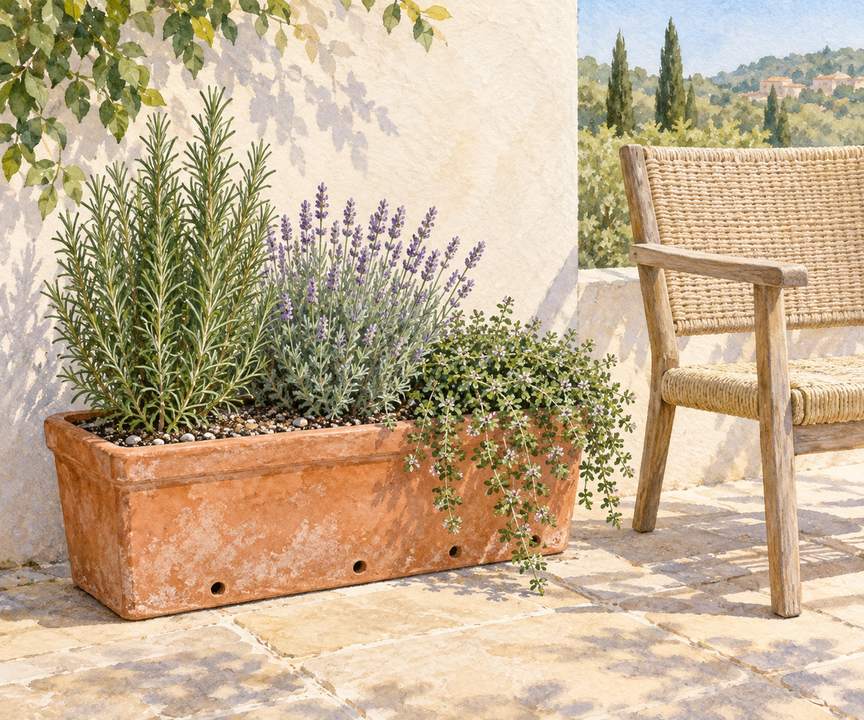
Plant upright rosemary, compact English lavender, and creeping thyme together in a 24-inch trough beside a sunny chair. All three prefer at least 6 hours of direct sun, sharp drainage, and soil that dries slightly between waterings, so they are easier to manage than a mixed planter with conflicting needs. Their aromatic oils become noticeable when leaves are brushed, but the pot will not create a mosquito-free bubble; treat it as one layer alongside a fan and removing standing water. Use a container with drainage holes and a gritty potting mix, not garden soil. Lavender resents wet roots, while rosemary can outgrow the arrangement after a season or two. Trim lightly, and replace the lavender if humid summers make it decline.
2. Lemongrass and Dwarf Zinnias in a 16-Gallon Pot
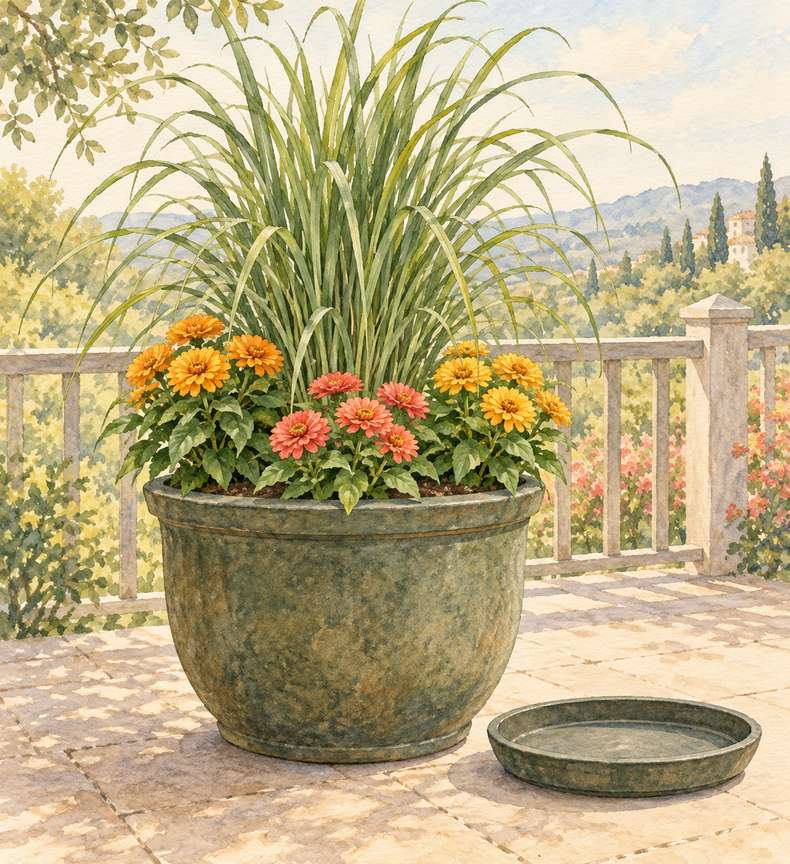
Anchor a 16-gallon pot with one lemongrass plant and ring it with three dwarf zinnias for a sunny seating corner. Lemongrass supplies tall, citrus-scented foliage that releases more fragrance when touched; the zinnias add color without competing at the same height. Give the combination 6 to 8 hours of sun and steady moisture, because a mature clump drinks more than rosemary or lavender. Choose a heavy-bottomed resin pot if wind funnels across the patio, but confirm the filled weight is acceptable for a balcony. The main drawback is scale: lemongrass can reach 4 feet and crowd its companions by midsummer. Divide or thin the clump, deadhead the zinnias, and empty the saucer after watering so it never becomes mosquito habitat.
3. Basil, Lemon Thyme, and Nasturtium by the Dining Table
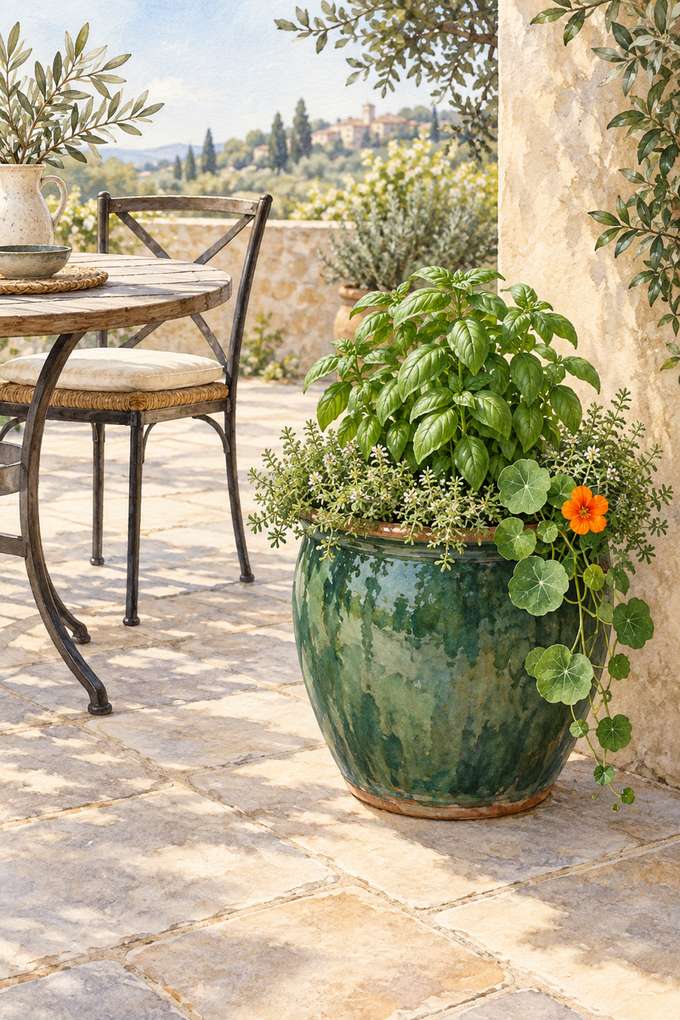
Set sweet basil in the center of a 14-inch pot, tuck lemon thyme near the rim, and let one nasturtium trail over the side. This edible combination belongs within arm's reach of an outdoor dining table, where brushing or harvesting the leaves releases their scent. It needs roughly 6 hours of sun, though afternoon shade helps basil on patios that bake above 90°F. Use fresh potting mix and a pot at least 12 inches deep; basil wilts quickly in a shallow bowl. Pinch flower buds if leaf harvest matters, and cut the nasturtium back before it smothers the thyme. None of these plants replaces EPA-registered repellent on exposed skin. The honest payoff is a useful herb pot with fragrant foliage, not an invisible mosquito barrier.
4. Mint and Lemon Balm in Separate Pots Inside One Basket
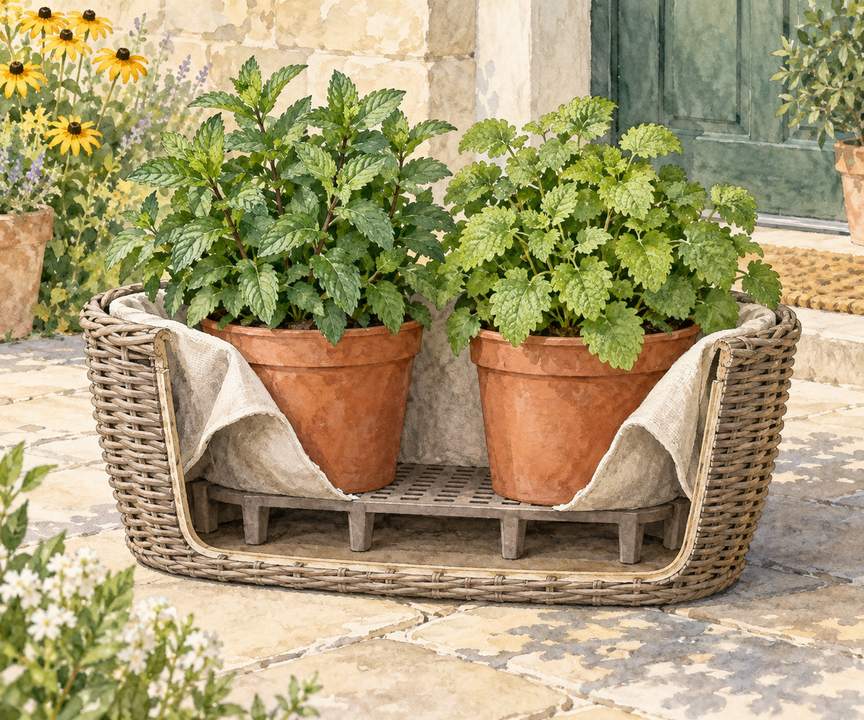
Group mint and lemon balm visually without letting their roots meet: keep each herb in its own 8-inch nursery pot, then slip both into a wide woven-look resin basket. The double-pot method matters because both plants spread aggressively and one will eventually dominate a shared container. Place the grouping where it receives 3 to 5 hours of morning sun, and rotate the inner pots weekly so growth stays even. Their leaves smell strongest when rubbed or clipped, so position the basket near a walkway rather than expecting passive fragrance to repel mosquitoes across the patio. Check moisture every day during hot weather, but lift out each liner to water and drain it fully. Hidden cachepots can collect water; tip out any puddle after rain.
5. Citronella Geranium, Sweet Alyssum, and White Bacopa
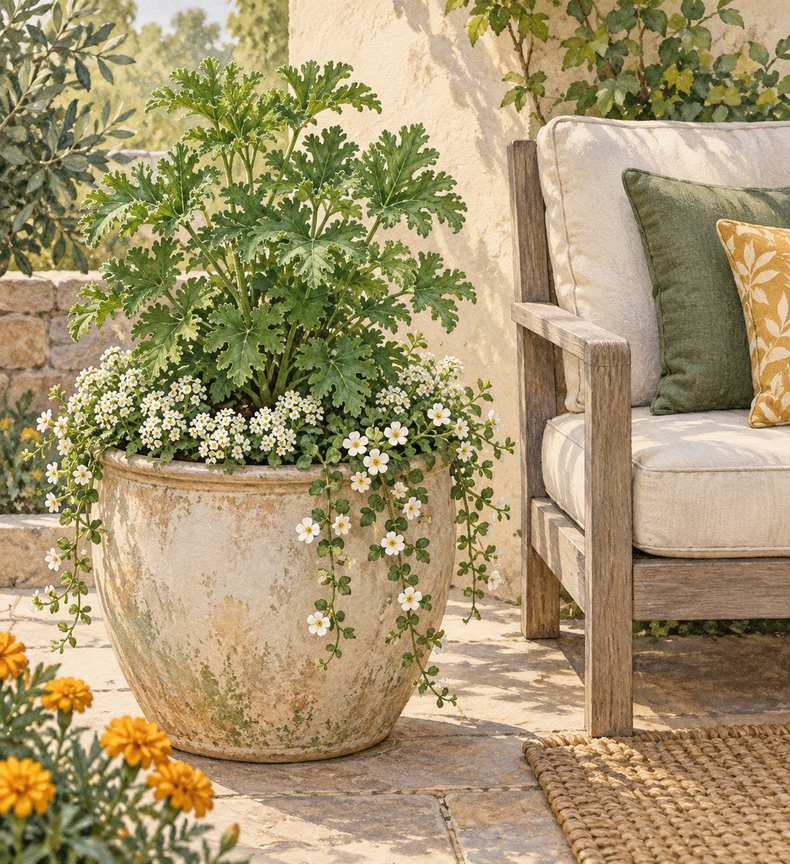
Build a compact flowering pot around one citronella-scented geranium, with sweet alyssum and white bacopa softening the rim of an 18-inch container. The geranium's lemony foliage is strongest when brushed, while the two trailers make the arrangement look finished near a loveseat. Give it 5 to 7 hours of sun and good airflow; bacopa wants more consistent moisture than the geranium, so check the mix before watering rather than following a rigid schedule. Despite its common name, citronella geranium is not the same plant used to produce commercial citronella oil, and an untouched plant is not reliable mosquito control. Bacopa may pause flowering in severe heat, and alyssum can get leggy. Shear both back by about one-third when the pot starts looking tired.
6. Catnip, Calendula, and Creeping Thyme in a Low Bowl
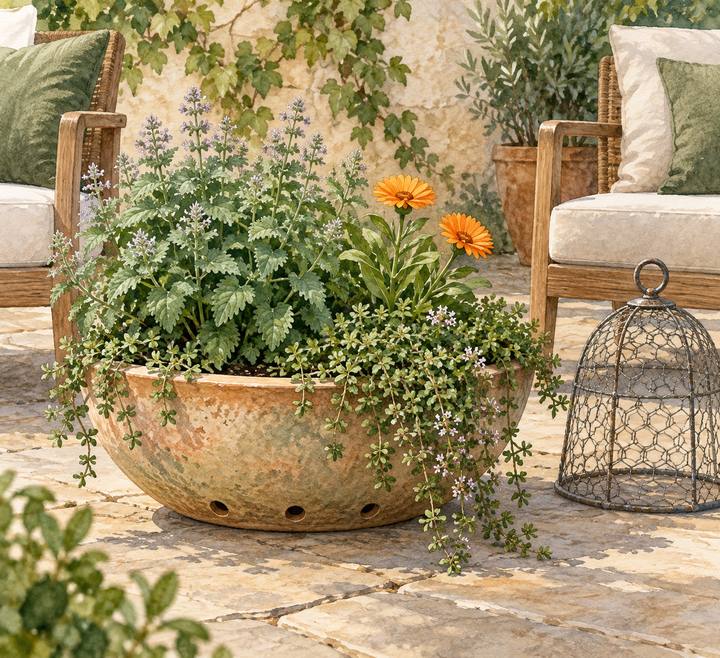
Fill a 20-inch-wide, 8-inch-deep bowl with one compact catnip, two calendulas, and creeping thyme around the edge. The low profile fits beside lounge chairs without blocking conversation, and occasional brushing releases scent from the catnip and thyme. Full sun is best, but the bowl needs close attention because shallow containers can dry in a single hot afternoon. Add drainage holes if the bowl lacks them, and skip a permanently filled saucer. Catnip can flop after flowering, so cut it back by half to trigger tidier growth; calendula often fades when summer heat arrives. This is a poor choice where neighborhood cats roam, because catnip may invite rolling or digging. Use a small wire cloche temporarily if your own cat treats the planter like a bed.
7. Rosemary, Scented Geranium, and Sage in a Rolling Planter
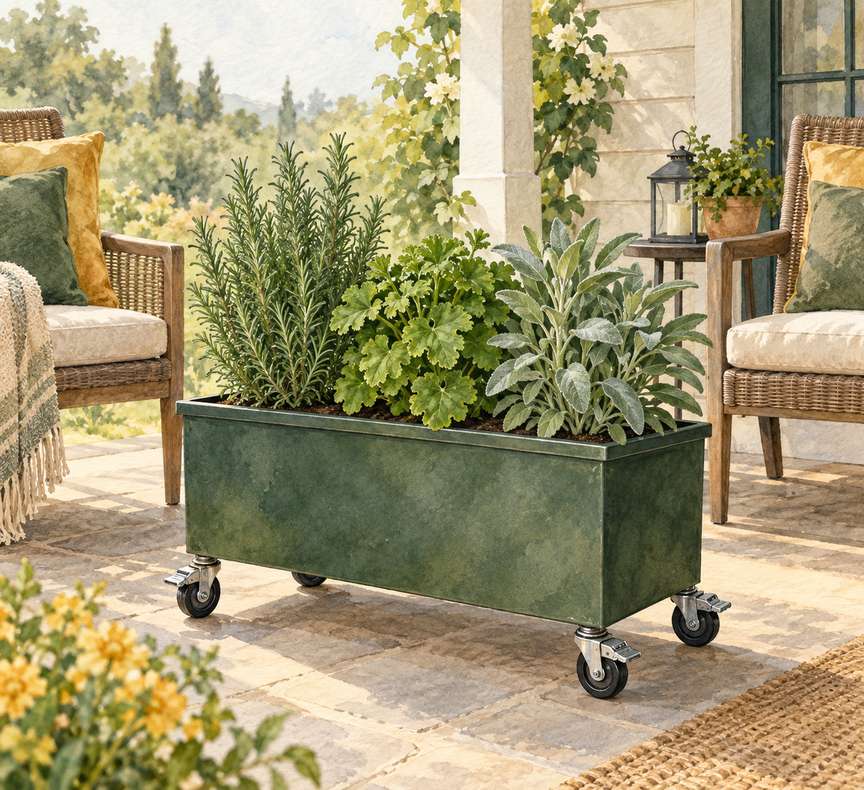
Combine a compact rosemary, a lemon-scented geranium, and culinary sage in a 20-inch rolling planter that can follow the seating area. Mobility is the useful feature: roll the pot close enough for people to brush the foliage, then move it under cover during pounding rain. All three need 6 or more hours of sun and fast-draining mix, and the planter should have locking casters rated for its wet weight. Do not leave water in a drip tray after moving it. Sage and rosemary tolerate drying better than scented geranium, so water when the top 1 to 2 inches of mix feels dry rather than letting the whole root ball bake. The trade-off is winter care: in cold climates, the geranium must come indoors before frost, while rosemary hardiness varies by cultivar.
8. Bee Balm, Lemon Balm, and Dwarf Marigolds for Morning Sun
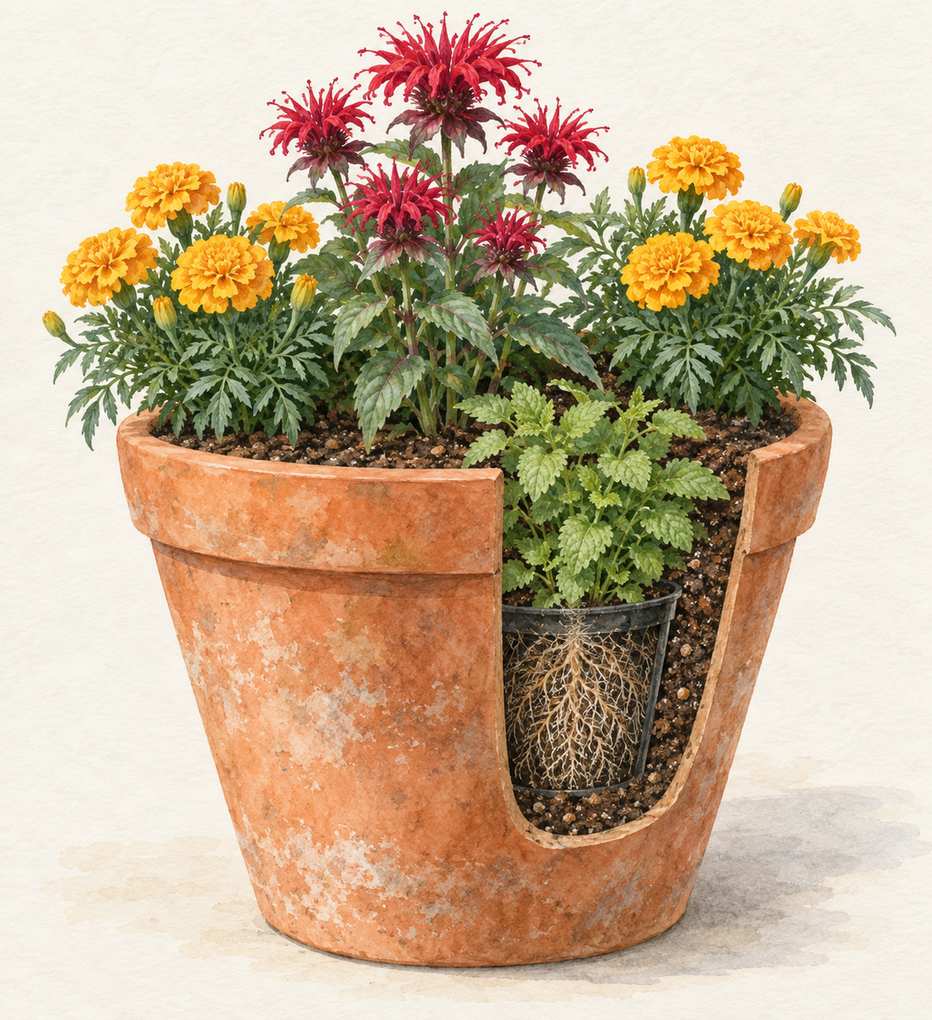
Use a dwarf bee balm cultivar as the centerpiece, add one lemon balm kept inside a buried 6-inch liner pot, and edge the container with two dwarf marigolds. This combination suits a patio with 4 to 6 hours of morning sun, where full-sun Mediterranean herbs may struggle. Choose a pot at least 18 inches wide and allow air around the bee balm, which can develop powdery mildew when foliage stays crowded or wet overnight. The buried liner restrains lemon balm's roots, but its stems still need trimming before they seed. Marigolds provide durable color; do not rely on them as proven mosquito control. Water at soil level, remove spent flowers, and divide the bee balm when the center thins. Expect more maintenance than a rosemary pot, especially in humid weather.
9. Four-Pot Aromatic Cluster Around a Box Fan
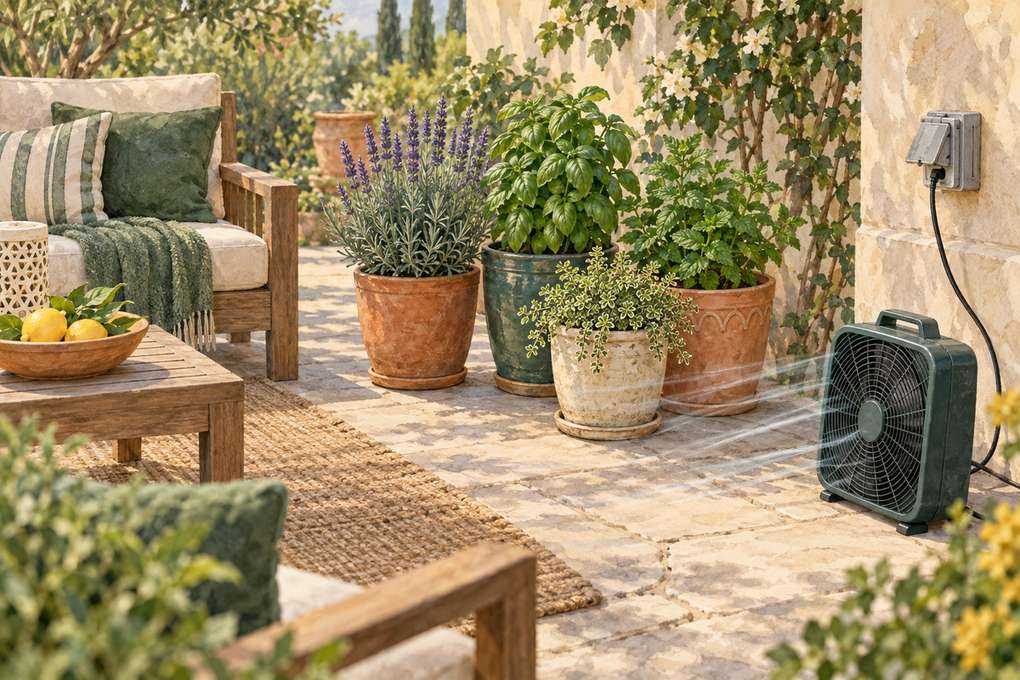
Arrange four separate 10- to 12-inch pots—lavender, basil, mint, and lemon thyme—around the downwind side of a small outdoor-rated box fan. Separate pots let you water mint and basil more often while keeping lavender and thyme comparatively dry, avoiding the biggest flaw in an all-in-one herb planter. The fan does the practical work near ankles because mosquitoes are weak fliers; use only a model approved for outdoor use, plugged into a GFCI-protected outlet, and bring it inside after use. Set the cluster where it receives at least 6 hours of sun, or move mint to brighter shade if leaves scorch. This setup takes more floor space, roughly a 3-by-2-foot patch, but every plant remains replaceable and no saucer needs to hold standing water.
Product pick — an outdoor-rated portable fan
Common questions
- Do mosquito-repelling plants actually keep mosquitoes away?
- Not reliably just by sitting in pots. Many aromatic plants contain oils used in formulated repellents, but an intact rosemary, mint, or citronella-scented geranium releases too little oil to protect an entire seating area. Use containers for fragrance and occasional leaf contact, while relying on an outdoor fan, screened areas, standing-water removal, and an EPA-registered skin repellent when mosquitoes are active.
- How do I stop patio containers from becoming mosquito breeding sites?
- Use pots with open drainage holes and empty saucers, cachepots, and watering cans after rain or irrigation. Mosquito larvae need standing water, so inspect hidden trays and self-watering reservoirs at least weekly. A reservoir designed to stay filled should be tightly screened or treated according to its manufacturer's directions with a product labeled for mosquito larvae.
- Which combination works with less than six hours of sun?
- Mint and lemon balm can manage with about 3 to 5 hours of morning sun, while the bee balm combination is better with 4 to 6 hours. Rosemary, lavender, lemongrass, basil, and thyme become sparse in deep shade. On a north-facing patio, prioritize airflow and water management rather than forcing full-sun aromatic plants into low light.
- Can these containers stay outside during winter?
- That depends on the plant, pot, and USDA hardiness zone. Basil, lemongrass, and scented geranium are frost-tender; take cuttings or bring healthy plants indoors before the first frost. Mint, thyme, bee balm, and some lavender or rosemary cultivars may overwinter, but roots in containers are less insulated than roots in the ground. Check your zone and cultivar, and protect breakable pots from freeze-thaw damage.