9 North-Facing Patio Plant Ideas for Low-Light Small Spaces
A north-facing patio can support more than a few lonely ferns, but reflected light, damp soil, and limited floor space matter. These nine plant-and-layout ideas use shade-tolerant choices, renter-friendly containers, and realistic maintenance plans.
This page contains affiliate links — we may earn a commission at no extra cost to you. See our disclosure.
1. Map the Bright and Dim Zones Before Buying Plants
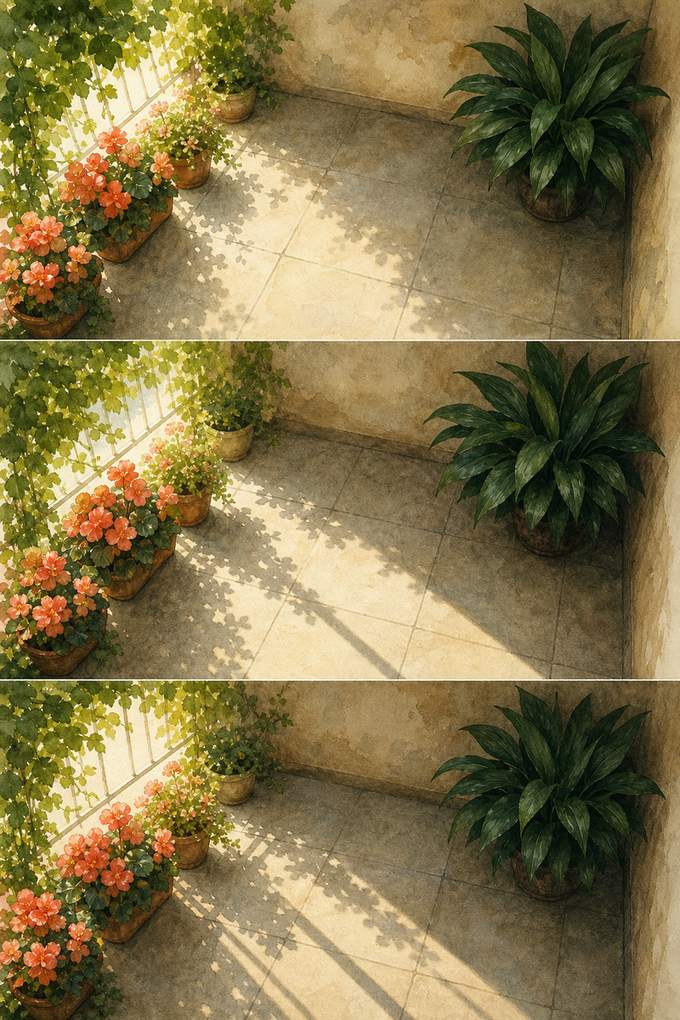
Start with a one-day light map rather than a cart full of plants. Check the patio at 9 a.m., noon, and 3 p.m., marking where the sky is visible and where walls or railings create permanent gloom. A north-facing space may receive no direct sun yet still have bright reflected light near the outer edge. Put flowering begonias in that brighter strip and reserve the darkest corner for cast-iron plant or a bird's-nest fern. Repeat the check in spring and midsummer because neighboring trees and roof overhangs change the pattern. The downside is waiting before planting, but a $10 light meter—or careful phone photos taken at each check—can prevent expensive mismatches.
2. Use One Tall Fatsia as the Leafy Backdrop
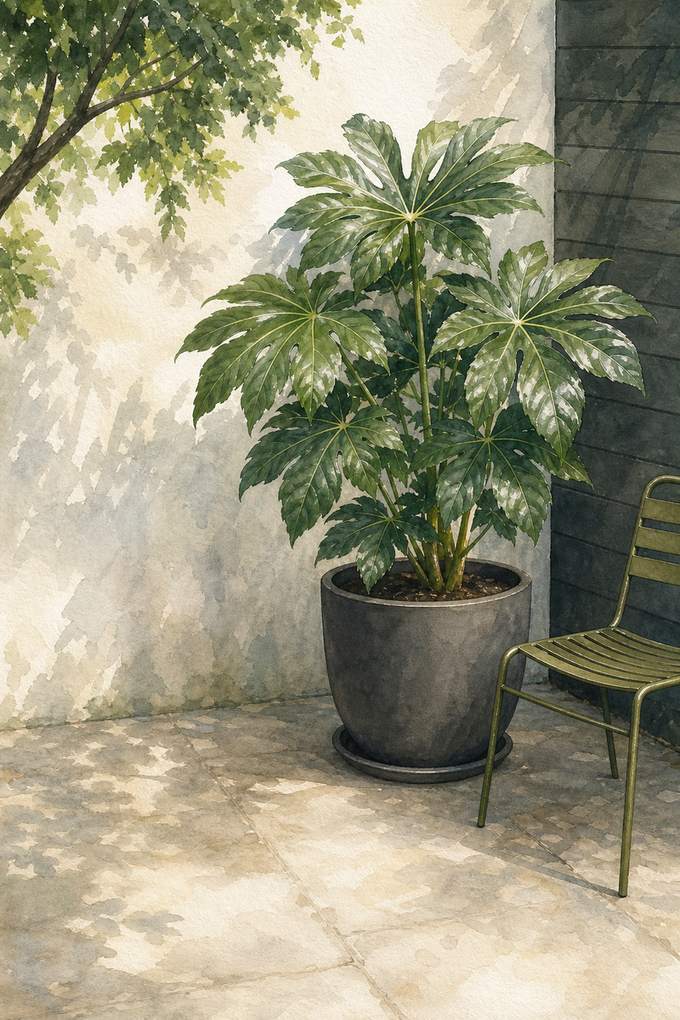
Anchor the rear corner with one Japanese aralia, or Fatsia japonica, instead of crowding the patio with several medium plants. Its broad leaves create height in shade, and a container about 16 to 20 inches wide gives the roots useful room without swallowing the seating area. Fatsia is best where winters are mild; container roots are less cold-hardy than plants in the ground, so check your zone and move the pot into protection before a hard freeze. A mature specimen, wet soil, and a ceramic pot can also become surprisingly heavy. Use lightweight fiberglass or resin, keep the drainage hole open, and confirm any building weight restrictions before choosing an oversized container.
3. Group Ferns in a Moisture-Sharing Trough
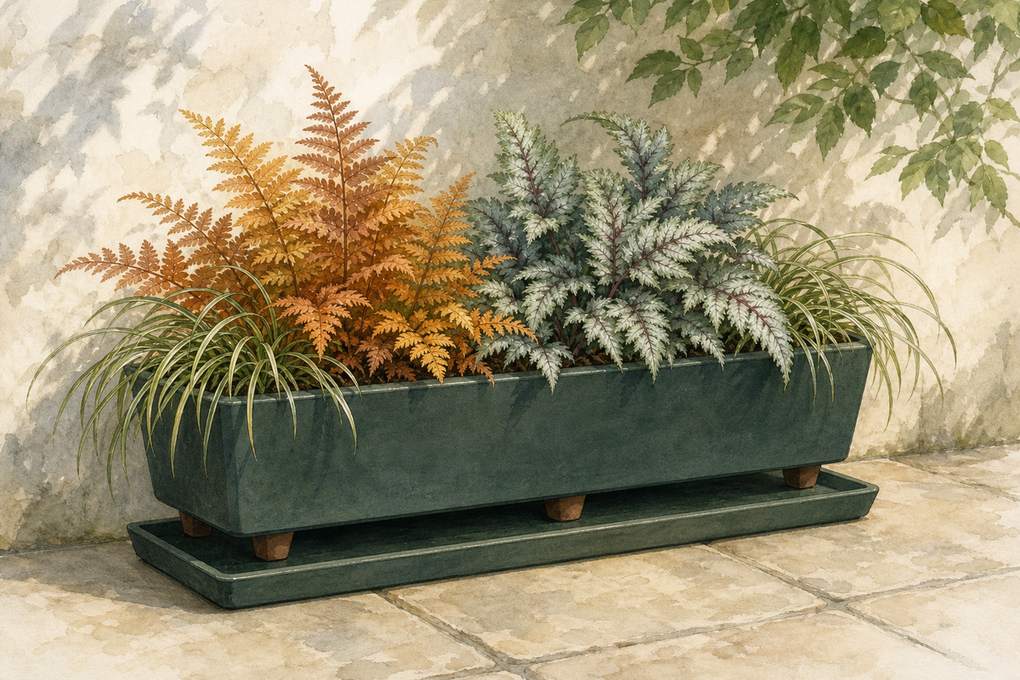
Plant a woodland-style trough with autumn fern, Japanese painted fern, and compact Carex rather than maintaining three tiny pots that dry at different speeds. A rectangular planter roughly 30 inches long and 10 to 12 inches deep fits neatly along a wall while leaving the center open. Use a peat-free container mix with added fine bark, then water when the top inch begins to feel dry. The grouping raises local humidity slightly and makes watering simpler, but it does not excuse poor drainage. Fern crowns can rot in a trough that holds rainwater, especially beneath a roof drip line. Elevate the planter on half-inch pot feet and empty any solid catch tray after storms.
4. Put Begonias Where Reflected Light Is Strongest
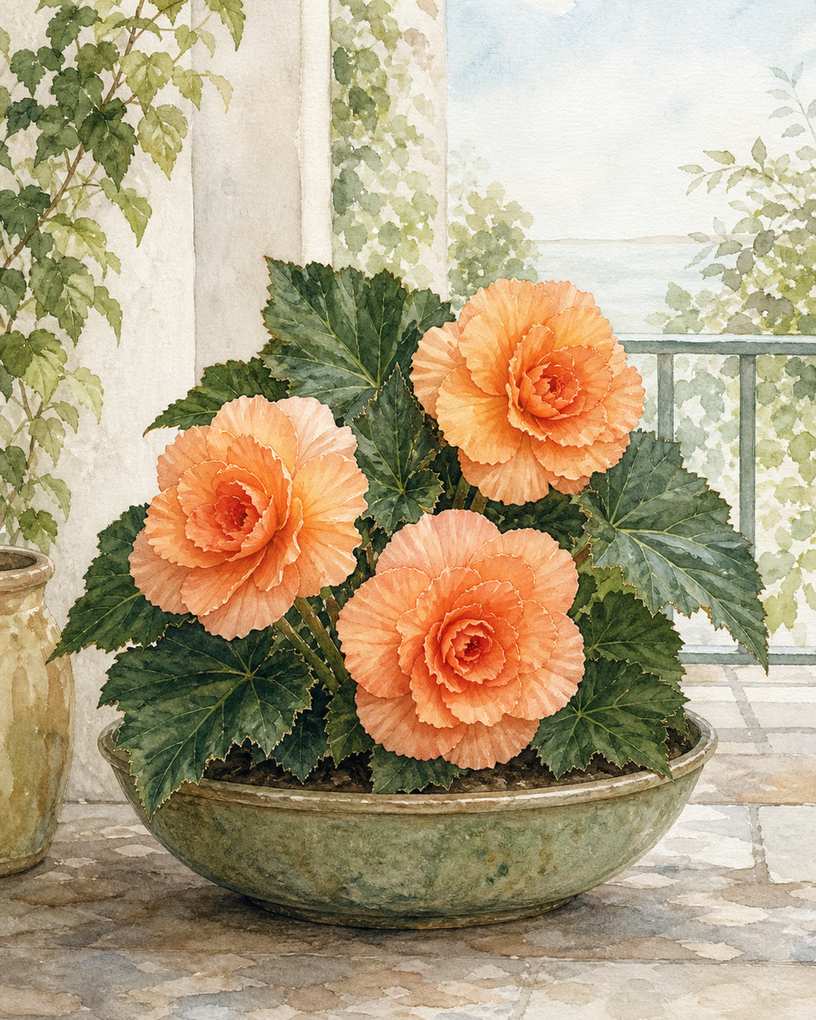
For flowers, place tuberous begonias or wax begonias near the patio's open edge, where reflected daylight is brightest even without direct sun. Three plants usually fill a 14-inch bowl, creating a stronger color block than scattered single pots. Coral, apricot, or warm yellow blooms also stand out against dark foliage without making the arrangement visually busy. Begonias dislike waterlogged roots and cold nights; wait until temperatures stay above about 50°F, and use a container with at least one unobstructed drainage hole. Tuberous types need deadheading and may require overwintering indoors, while wax begonias are generally easier but less dramatic. If stems stretch and flowering slows, the spot is too dim rather than underfed.
5. Build Color With Heuchera and Coleus Foliage
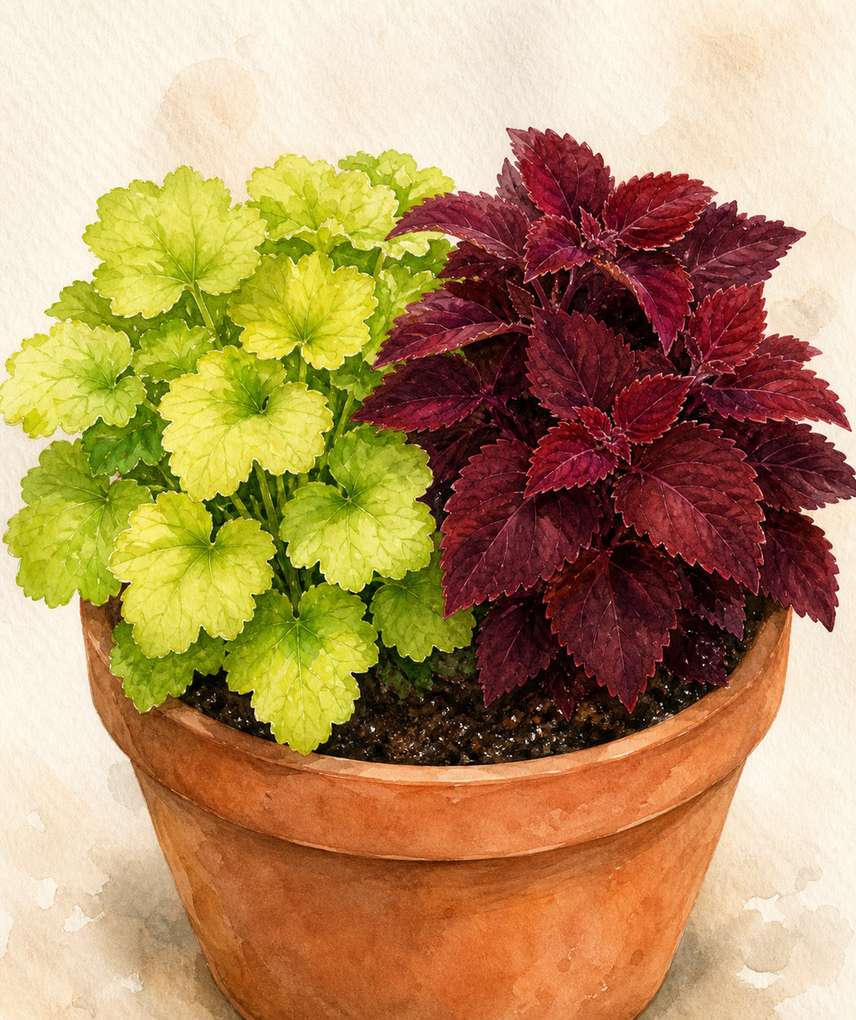
Treat foliage as the main color source by pairing a lime heuchera with a burgundy coleus in a 16-inch pot. Unlike a flower-only display, the leaves keep the composition readable during cool or cloudy stretches when bloom is sparse. Give coleus bright indirect light and pinch its tips every 2 to 3 weeks if you want a compact mound instead of tall, bare stems. Heuchera prefers a slightly drier crown, so avoid burying it beneath wet mulch. The trade-off is seasonal: coleus is tender and usually grown as an annual, while container-grown heuchera may need winter protection in cold regions. If the burgundy leaves turn green or growth becomes thin, move the pot closer to the patio edge.
6. Brighten a Dark Wall With a Pale Container Row
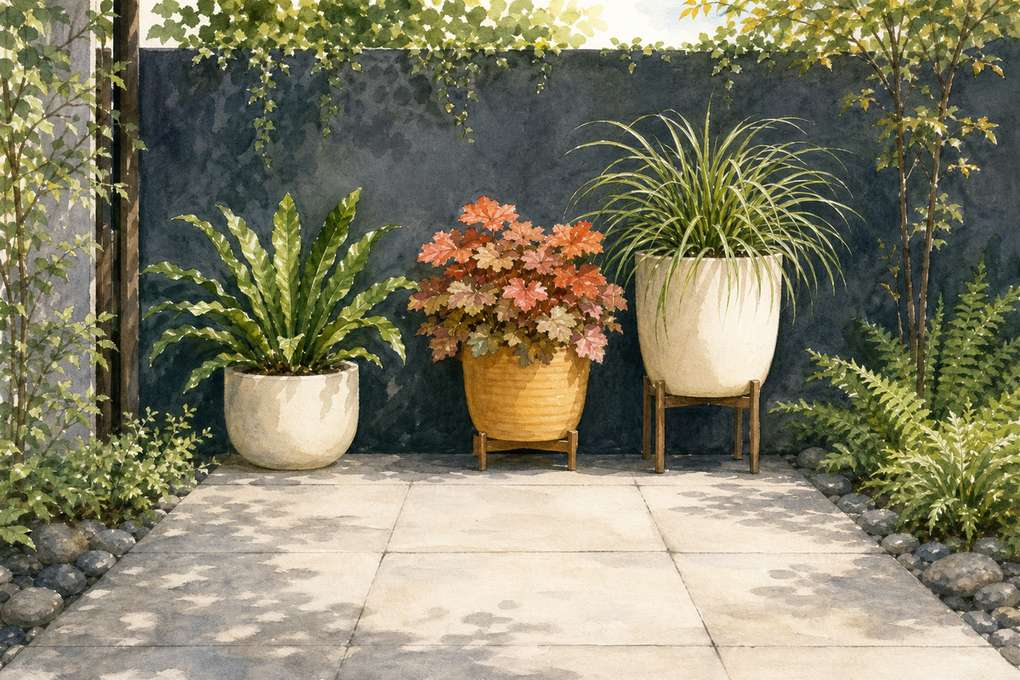
Line the darkest wall with three pale, matte containers rather than black pots that disappear into the shade. Cream, sand, or muted marigold finishes bounce a little available light and make green plants easier to see from indoors. Use an odd-numbered row with pots around 12, 16, and 20 inches tall, then repeat one plant family—such as hart's-tongue fern, heuchera, and compact Japanese forest grass—for a calm layout. Keep at least 30 inches of clear walking width if the patio is also an exit route. Pale pots show algae and soil splashes sooner, and glazed ceramic can be heavy. Lightweight resin gives a similar effect, but secure tall pots if wind funnels between buildings.
7. Keep Seasonal Pots on Locking Plant Caddies
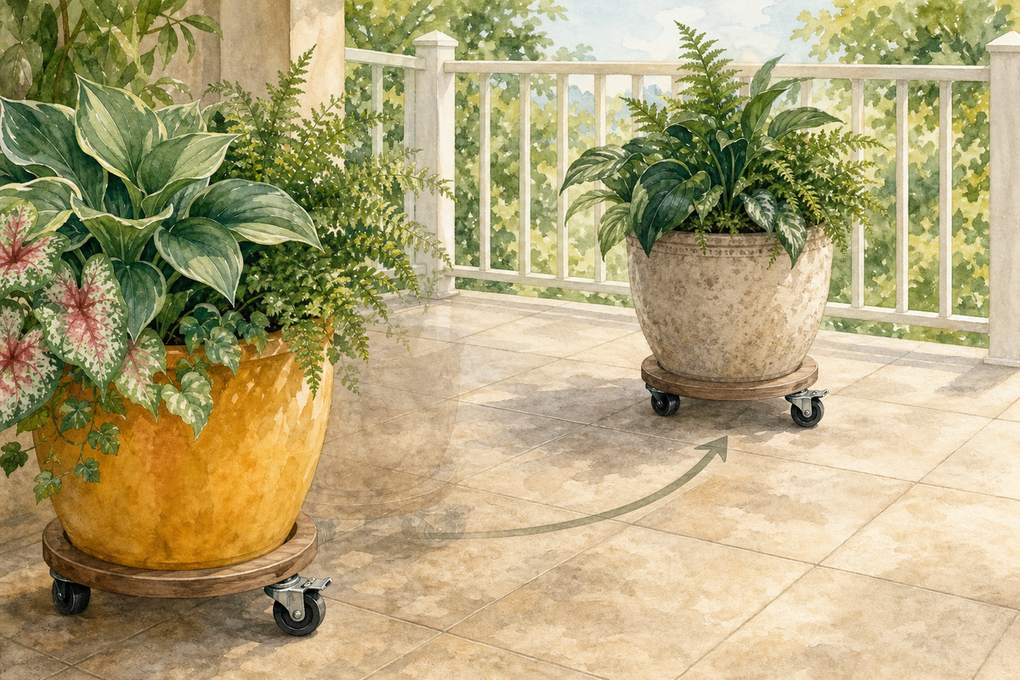
Set the two heaviest containers on low, locking plant caddies so you can follow the patio's shifting reflected light and clear the floor for cleaning. A pot that struggles in a dim May corner may perform well 3 feet closer to the railing in July. Choose a caddy rated above the combined weight of the wet pot, soil, and plant; a 16-inch container can exceed 50 pounds after watering. Locking wheels matter on a sloped slab, and wide casters roll across grout lines more reliably than tiny plastic ones. The compromise is added height and visible hardware. Check beneath the caddies monthly because trapped leaves and water can stain concrete or encourage slugs.
Product pick — a weight-rated locking plant caddy
8. Fill the Damp Corner With Astilbe and Carex
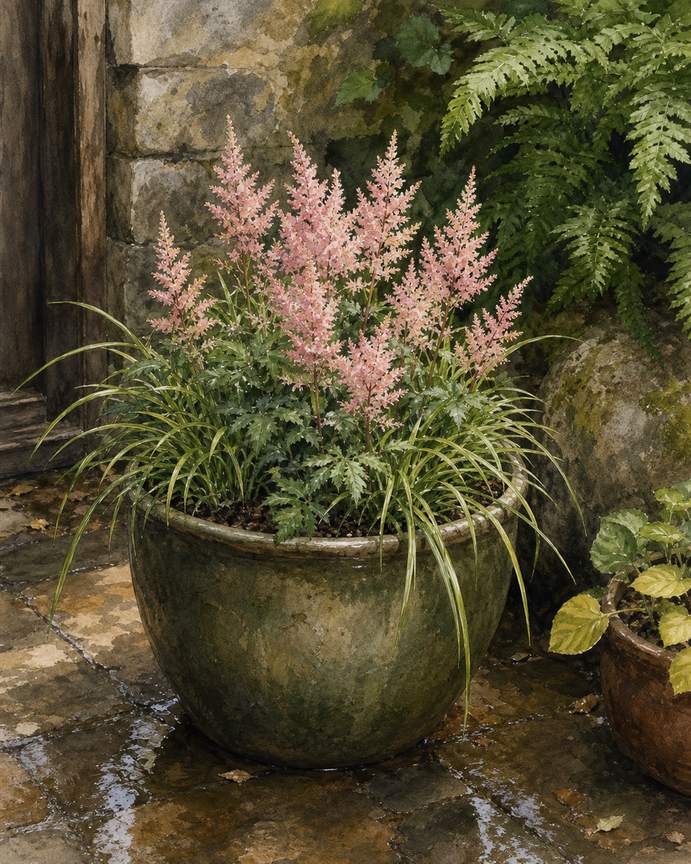
Use the naturally cool, damp corner for a 20-inch mixed container of dwarf astilbe and evergreen or semi-evergreen Carex. Astilbe adds feathery flowers in early to midsummer, while the sedge keeps the pot useful after the blooms fade. Both prefer evenly moist soil, making this combination better beside a sheltered wall than at a breezy patio edge. Check the mix every 2 days during hot weather because a north-facing position slows drying but does not stop it. Astilbe will crisp if repeatedly allowed to wilt, and flowering may be sparse in very deep shade. Choose a compact cultivar under about 24 inches and divide crowded roots every 3 years.
9. Add a Winter Backbone With Cast-Iron Plant
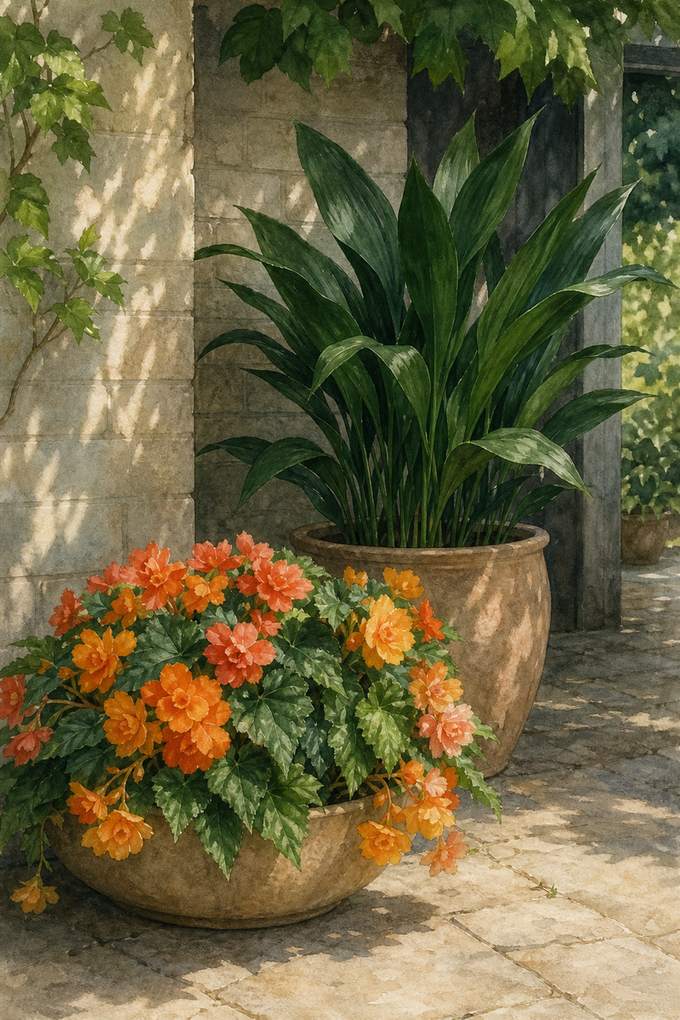
Finish the layout with a cast-iron plant, Aspidistra elatior, in the most consistently shaded position. Its upright leaves provide a simple evergreen-looking backbone behind seasonal begonias and coleus, and it tolerates lower indoor-style light better than most flowering patio plants. Use a pot only 1 to 2 inches wider than the root ball; an oversized container stays wet too long on a cool north side. Let the top 2 inches of mix dry before watering, and wipe dust from the leaves occasionally so they can use the available light. The catch is cold tolerance: Aspidistra can handle cool conditions, but exposed container roots need protection in freezing climates. Check your zone or overwinter it indoors.
Common questions
- How can I tell whether my north-facing patio has bright shade or deep shade?
- Stand in each planting spot around noon and look upward. A broad view of open sky usually means bright shade; a roof, solid fence, or nearby building that blocks most of the sky creates deeper shade. Watch the space at 9 a.m., noon, and 3 p.m. before buying flowering plants. Begonias and coleus generally need the brighter outer area, while cast-iron plant and many ferns accept dimmer corners.
- Do north-facing patio pots need less water?
- Usually, but do not water by the calendar. Cool shade slows evaporation, while wind and small containers can still dry quickly. Push a finger 1 to 2 inches into the mix and water only when the plant's preferred depth feels dry. Empty solid saucers after rain; prolonged standing water is a more common north-side problem than one missed watering.
- How much weight can a patio safely hold?
- There is no universal safe number because slab design, age, and building rules differ. Ask the landlord, HOA, or building manager for the rated load before adding large ceramic pots. Include the weight of wet soil and water, not just the empty container; even a 16-inch planted pot can weigh more than 50 pounds. Spread containers along structural edges rather than clustering every heavy pot in one corner unless your building approves it.
- Which north-facing patio plants can stay outside in winter?
- That depends on your USDA zone, wind exposure, and container size. Potted roots experience colder temperatures than roots in the ground, so a plant nominally hardy in your zone may still need insulation or shelter. Heuchera, Carex, and some ferns can overwinter in suitable regions, while coleus, begonias, and cast-iron plant generally need indoor protection where temperatures freeze. Check the cultivar's hardiness and your local zone before leaving it outside.