9 Patio Border Planting Ideas That Soften Hard Edges Without Taking Over
A bare concrete or paver edge can make a small patio feel boxed in, but a wide border can steal the space you use most. These nine narrow, contained planting ideas add a softer finish while keeping roots, mess, and mature spread in check.
1. Line the Edge With a 12-Inch Clumping Sedge Ribbon
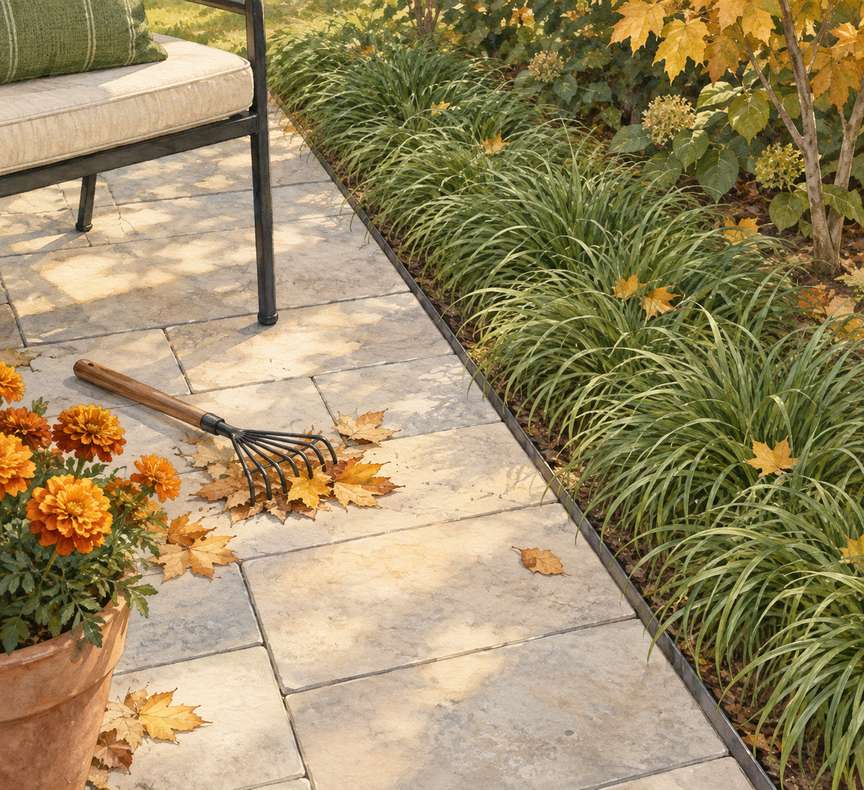
Plant a single ribbon of clumping sedge where paving meets soil; it hides the hard line without leaning far into the seating area. Pennsylvania sedge works in part shade, while blue grama suits dry, sunny patios. Keep the bed about 12 inches wide and space plants according to their mature width, usually 10 to 18 inches. The important word is clumping: avoid running grasses such as ribbon grass, which can travel under edging. A 4-inch-deep steel or aluminum edge keeps mulch off the pavers. Sedges need a trim only once in late winter, but fallen blades can catch leaves, so expect a quick hand-rake in autumn.
2. Use Narrow Troughs as a Renter-Friendly Living Border
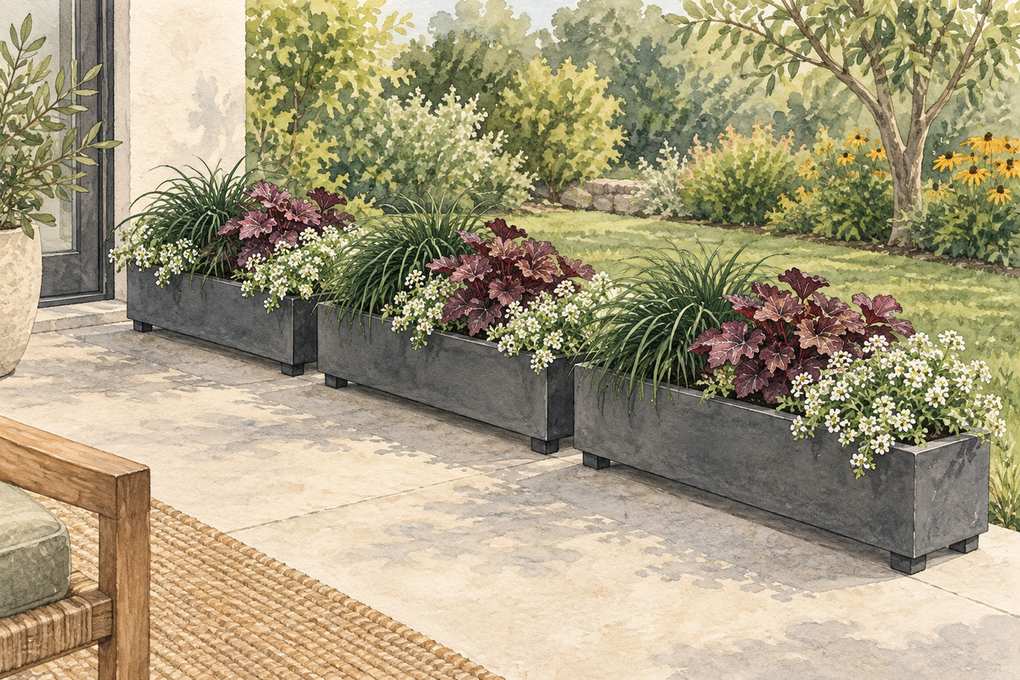
Set a row of slim trough planters along the exposed patio edge when digging is forbidden or the lease may change. Containers 8 to 10 inches deep and no more than 12 inches wide can hold compact plants such as dwarf mondo grass, coral bells, or annual sweet alyssum. Leave a 2-inch gap between troughs so water can drain instead of pooling against walls or pavers. Choose fiberglass or resin over concrete if you may need to move them; wet soil makes even a small trough surprisingly heavy. The compromise is watering: this shallow soil can dry in a day during hot weather. Group pots on risers and use saucers only where runoff staining is a concern.
3. Tuck Creeping Thyme Into a Controlled Paver Margin
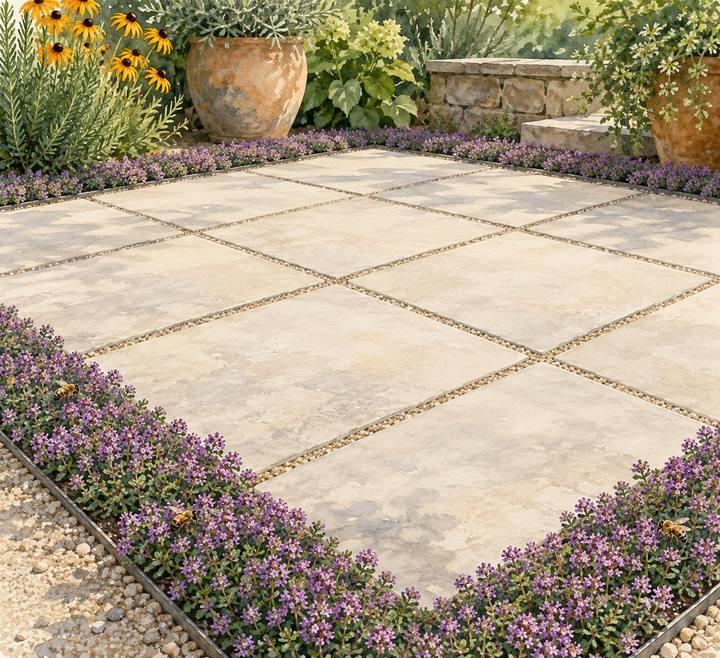
Replace only the outermost strip of joints with creeping thyme to blur a rigid paver boundary while preserving the main walking surface. A 6- to 8-inch-wide margin is enough; woolly thyme and ‘Elfin’ thyme stay lower than many spreading groundcovers and handle occasional foot traffic. They need full sun, sharp drainage, and joints at least 1 inch wide with gritty soil. Install metal edging on the garden side, then shear stray stems twice during the growing season. Thyme will not tolerate a constantly wet patio edge, and flowers attract bees, so do not place it beside a barefoot route or a toddler’s play spot. In cold climates, check the cultivar’s hardiness for your zone.
4. Frame a Hot Patio With Compact Lavender Mounds
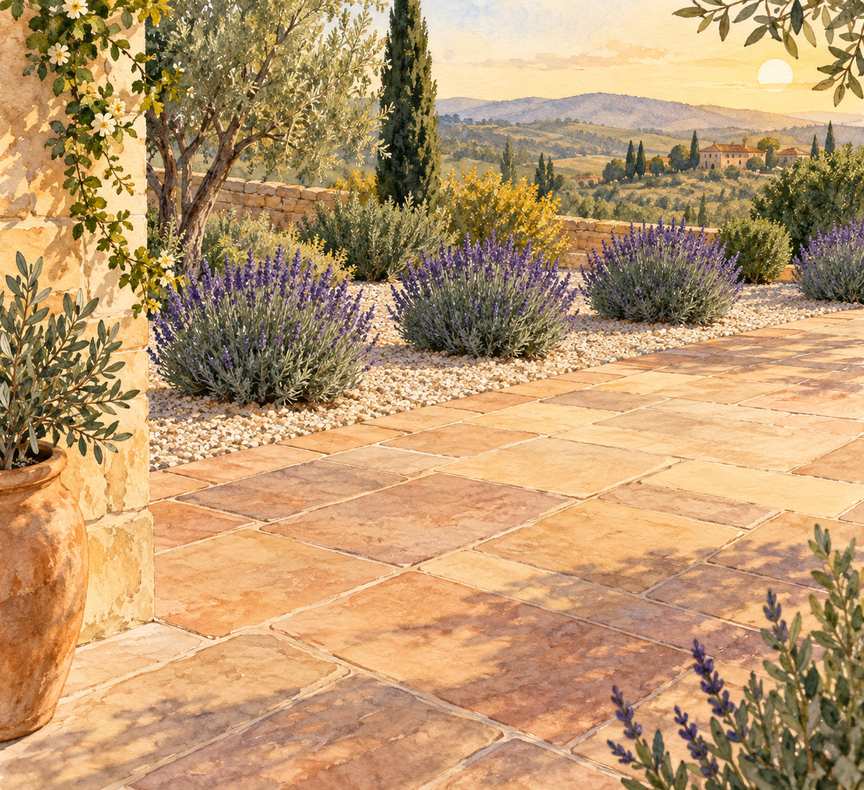
For a south- or west-facing edge, repeat compact English lavender rather than planting one large shrub that will swallow the path. ‘Munstead’ and ‘Hidcote’ generally mature around 18 to 24 inches wide, so allow that full diameter and position centers at least 12 inches back from the paving. Gravel mulch and a slightly raised crown help where summer rain is frequent. Skip lavender beside automatic sprinklers or heavy clay; root rot is a bigger risk than drought. Trim lightly after flowering, never cutting into old leafless wood. This border brings fragrance and pollinators close to a chair, but it can look sparse in winter and is not reliably evergreen in colder regions.
5. Brighten a Shady Edge With Coral Bells and Black Mondo
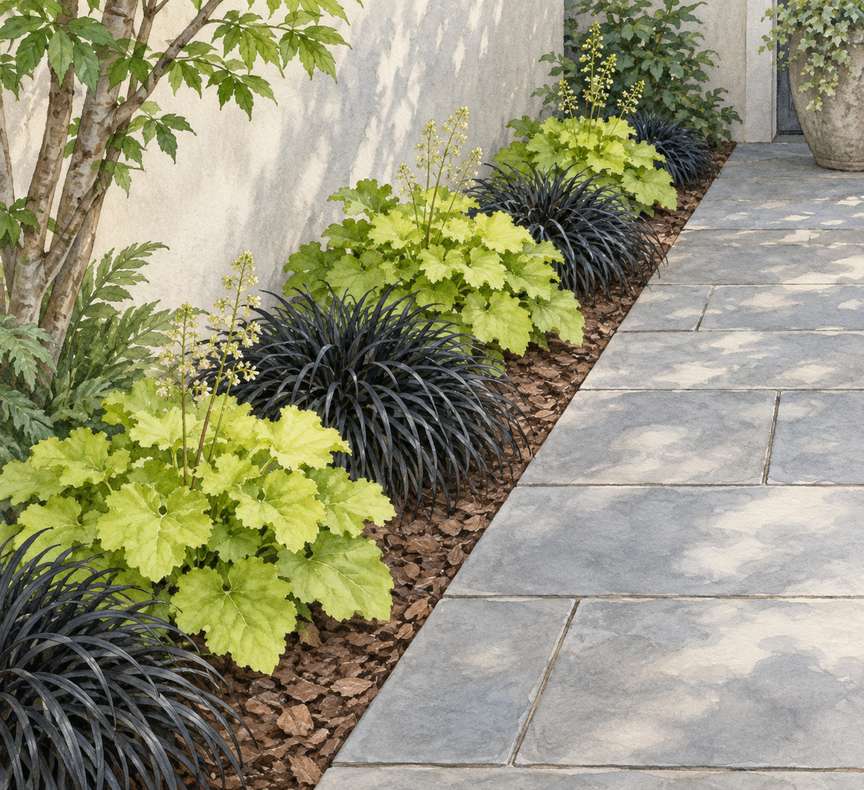
A two-plant foliage border can soften a north-facing patio without relying on flowers. Alternate caramel or lime coral bells with black mondo grass in a bed 14 to 18 inches wide; the color contrast reads clearly even from inside the house. Both prefer drainage, but coral bells need more consistent moisture than established mondo grass, so mix compost into the planting pockets rather than the entire strip. Check labels because coral bell heights vary from 8 inches to nearly 2 feet. Remove tired heuchera leaves in spring and divide crowded crowns every three or four years. The catch is climate: black mondo grows slowly and may struggle below roughly USDA Zone 6, while deer may browse coral bells.
6. Build a Gravel Pocket Border for Small Succulents
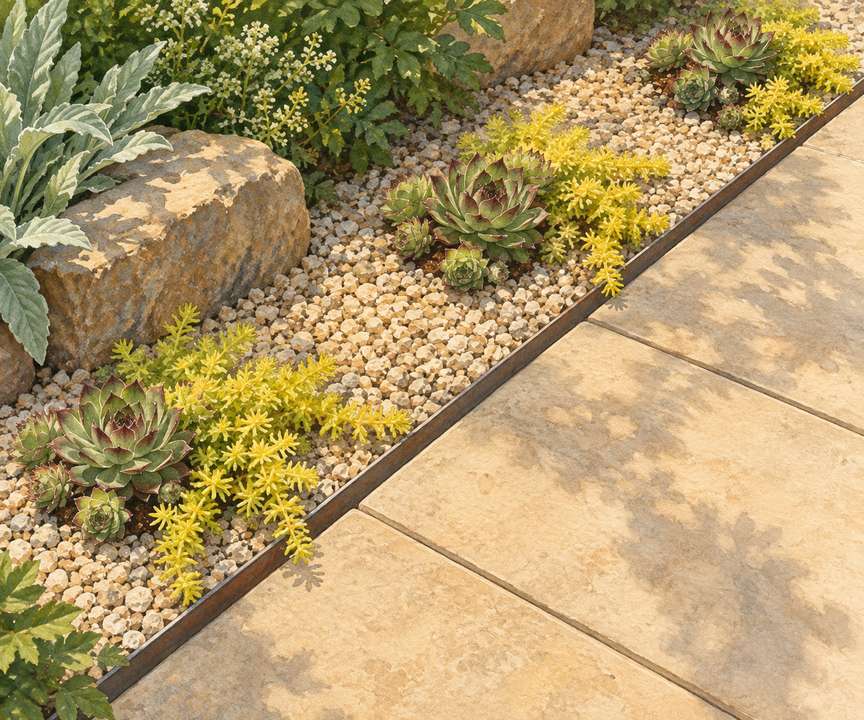
Cut several planting pockets into a narrow gravel strip instead of filling the entire edge with foliage. In a sunny, dry climate, 8-inch pockets can hold hens-and-chicks, ‘Angelina’ sedum, or small echeverias, with 3/8-inch gravel covering the gaps. The open mineral surface keeps the patio visually calm and makes wandering stems easy to spot and pull. Use a gritty planting mix and keep irrigation emitters off succulent crowns. Hardy sempervivum tolerates much colder winters than echeveria, which usually needs frost protection, so match the plant to your zone. Gravel also reflects heat; beside dark masonry, test the spot during a hot afternoon before committing. Loose stones can migrate onto pavers without a raised edge.
7. Repeat Low Herb Domes Along the Dining Side
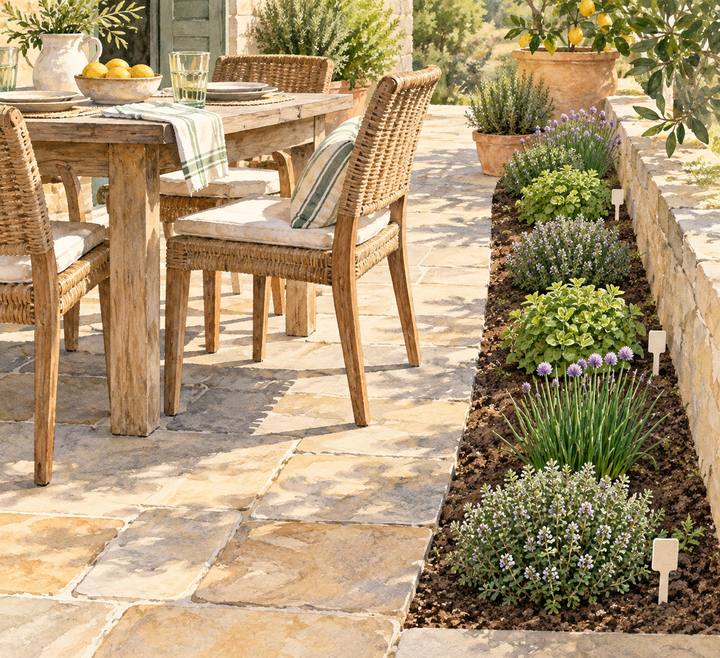
Use edible, compact herbs as a low border near an outdoor table, where brushing a plant releases scent without blocking conversation. Common thyme, Greek oregano, and chives can be repeated in separate 10- to 12-inch pockets; separation matters because oregano spreads faster than thyme. Give them at least six hours of sun and keep the crowns level with the soil rather than buried under mulch. Harvest or shear after flowering to hold a tidy outline, and remove chive seed heads if you do not want seedlings in paver joints. This is not a no-work edge: woody thyme develops bare centers after a few years, and flowering herbs draw bees. Keep them 18 inches from chair legs and barefoot traffic.
8. Soften One Corner With a Dwarf Evergreen Anchor
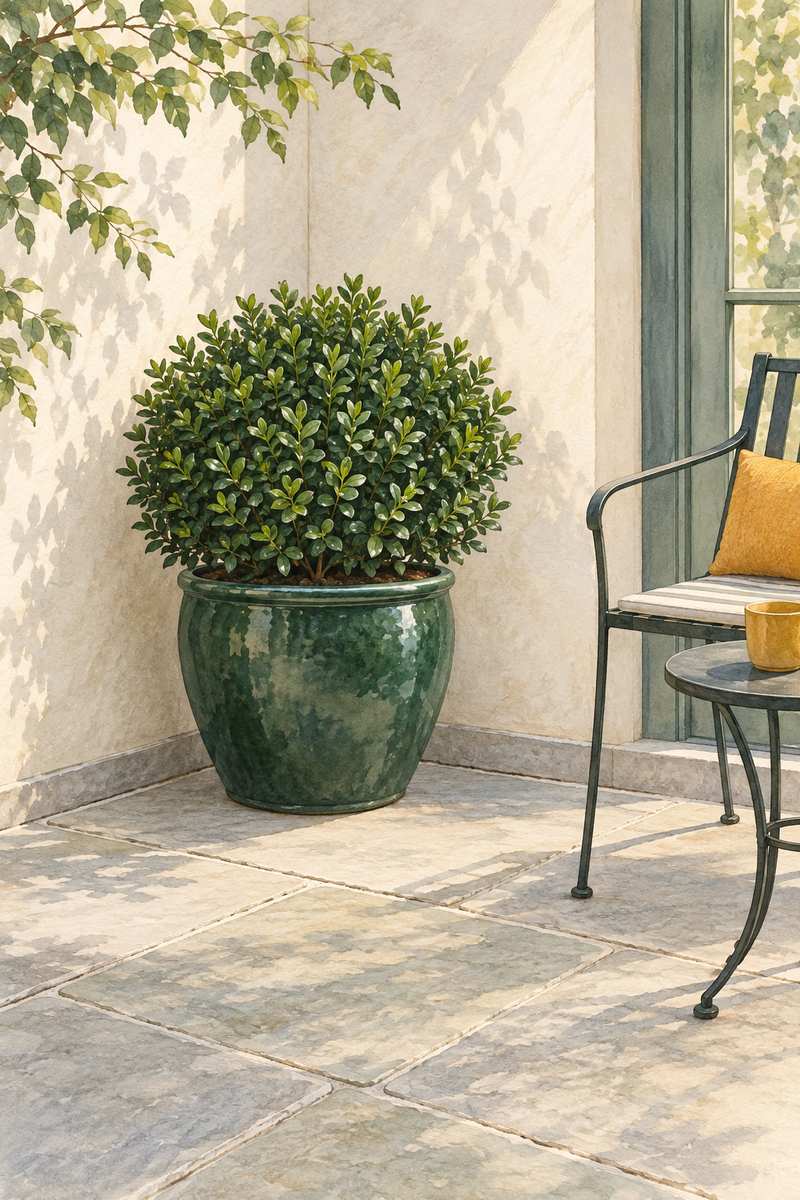
One compact evergreen at a patio corner can interrupt two hard lines without creating a hedge that demands constant clipping. Dwarf inkberry holly cultivars such as ‘Gem Box’ mature around 2 to 3 feet, offering a rounded outline and small leaves that suit tight spaces. Measure from the plant’s center, not the pot rim, and preserve at least 30 inches of clear passage around nearby furniture. Inkberry prefers acidic, evenly moist soil and may yellow in alkaline conditions; a soil test is worth doing first. In very small spaces, a glazed 18- to 20-inch pot keeps roots contained, though winter survival becomes less reliable. Occasional renewal pruning is safer than shearing it into a dense ball.
9. Float a Seasonal Flower Strip Behind Crisp Edging
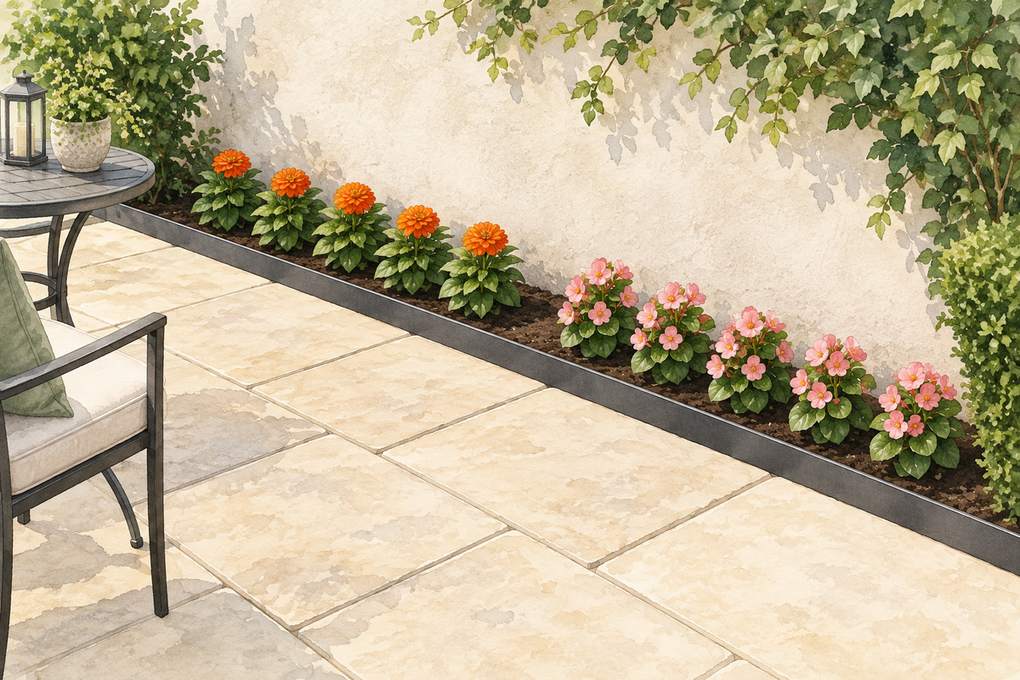
For maximum color in minimum soil, reserve an 8- to 10-inch strip for annuals and keep the paving side sharply edged. Dwarf zinnias work in full sun; wax begonias are more dependable with morning sun or bright shade. Plant in blocks of three to five rather than mixing every color, which makes a tiny border look busy. A removable plastic or steel edge sunk about 4 inches limits soil spill and makes the strip easy to change next season. Annuals need more feeding and deadheading than sedges or herbs, and they leave bare soil after frost. That reset is also the advantage: you can test colors for a year without committing to a shrub’s mature spread.
Common questions
- How wide should a border be around a small patio?
- A useful minimum is about 8 to 12 inches for thyme, annuals, or a single row of compact plants. Clumping sedges and coral bells are more comfortable in 12 to 18 inches. Always size the bed to the plant’s labeled mature width, then protect at least 30 inches for a main walking route.
- Can I add a patio border without digging or upsetting a landlord?
- Yes. Use freestanding troughs 8 to 10 inches deep, set on pot feet with drainage gaps between them. Fiberglass and resin are easier to move than concrete, but wet mix is still heavy; check a balcony or raised deck’s load rules and use the lightest container that remains stable in your wind.
- Which border plants need the least maintenance?
- A ribbon of zone-appropriate clumping sedge is usually lower work than annual flowers or herbs: cut it back once in late winter and remove trapped leaves. Dwarf evergreens avoid seasonal replanting but need correct soil and more root room. No border is maintenance-free; spreading groundcovers require occasional trimming at the pavers.
- How do I keep a narrow border looking good in winter?
- Build around one persistent element, such as sedge foliage, black mondo grass, a hardy dwarf inkberry, or attractive gravel. Hardiness varies by cultivar and exposed containers run colder than in-ground soil, so check your USDA zone and local conditions. Leave sound seed heads only if they will not blow debris across a shared patio.