9 Patio Privacy Screen Planting Ideas for Close Neighbors
A useful patio screen blocks the seated sightline without swallowing your floor space or irritating the people next door. These nine planting plans account for roots, wind, light, pruning, and the awkward fact that privacy plants still have to live in containers.
1. Line up clumping bamboo in narrow troughs
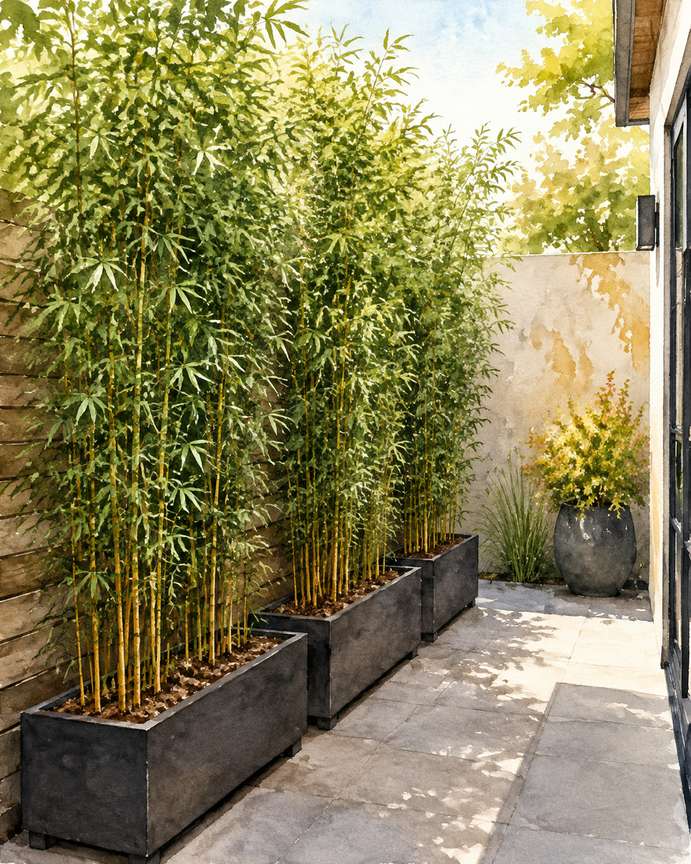
Use three 36-inch rectangular troughs planted with compact clumping bamboo, such as Fargesia rufa, to make a leafy screen without a deep bed. Choose containers at least 18 inches deep and confirm the mature height on the tag; many Fargesia settle around 6 to 10 feet in pots. Clumping bamboo is better behaved than running bamboo, but roots still pack a container quickly, so expect division or root pruning every two to three years. It also dislikes hot reflected afternoon sun in much of the South. Set the troughs on pot feet for drainage and leave a few inches between foliage and the property line so wet leaves do not slap your neighbor's chair.
2. Train star jasmine on a freestanding cedar trellis
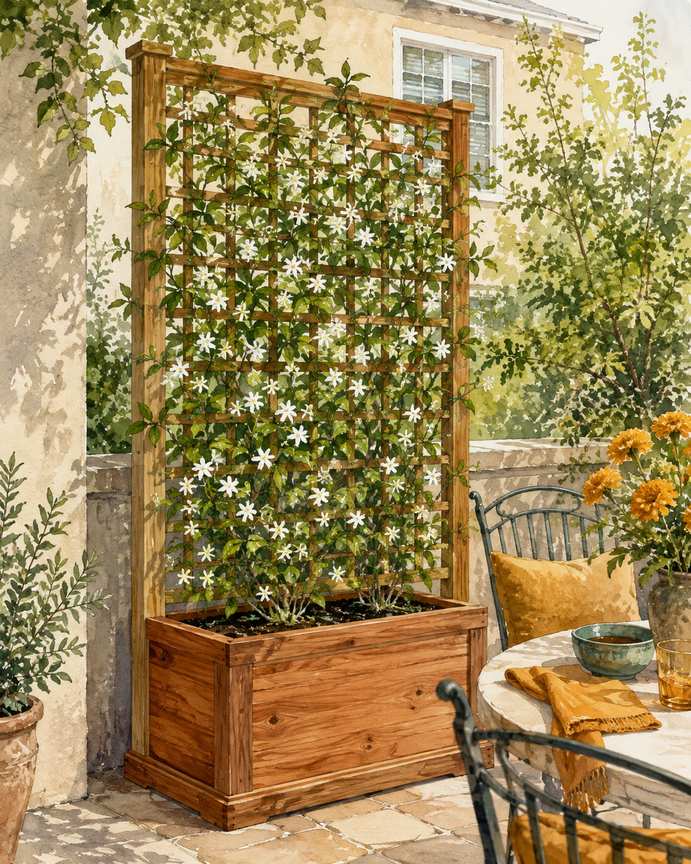
A freestanding cedar trellis turns one 24-inch planter into a narrow living wall. Plant star jasmine (Trachelospermum jasminoides) and tie new stems to the lattice with soft reusable ties until they begin twining on their own. A 6-foot trellis usually blocks a seated neighbor's view while keeping the screen below many fence-height limits, but check HOA rules before buying lumber. Star jasmine flowers smell sweet, sometimes too sweet beside a dining table, and it is reliably evergreen only in warmer climates, roughly USDA zones 8 to 10. In colder areas, treat it as seasonal or move the container into protected winter quarters. Brace the planter base because a leaf-covered trellis catches wind like a sail.
3. Use columnar junipers where winter privacy matters
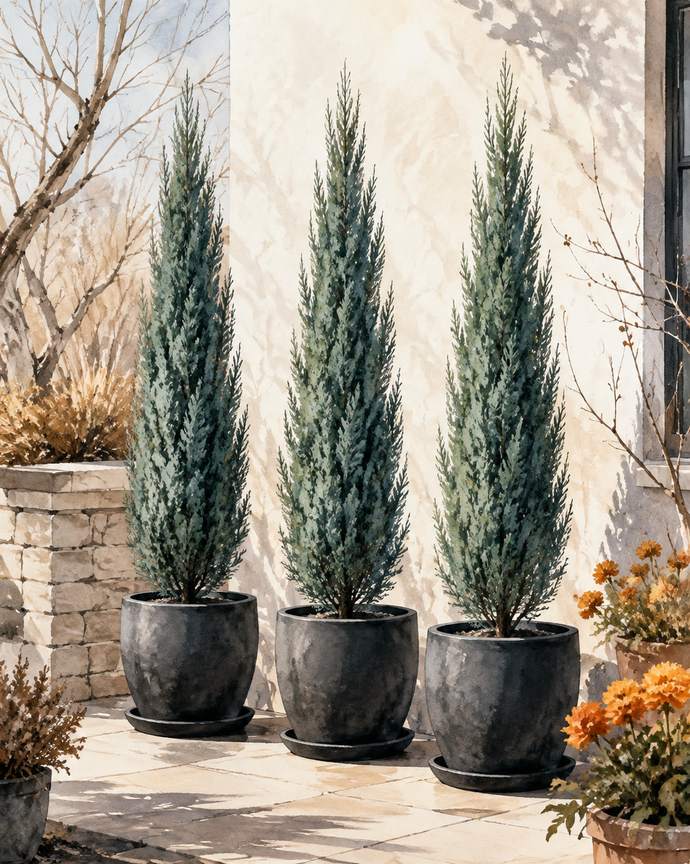
For a screen that still works in January, group three narrow evergreens such as 'Blue Arrow' juniper in separate 20- to 24-inch pots. Their upright shape takes less patio width than a sheared hedge, and the blue-green foliage looks finished without weekly clipping. Give them at least six hours of direct sun and use a gritty, fast-draining mix; juniper roots decline in saucers that stay full after rain. The drawback is weight. A large planted ceramic pot can become difficult to shift and may crack during freeze-thaw cycles, so fiberglass or frost-rated resin is more forgiving. Space the crowns for air movement rather than forcing an instant solid wall, which invites spider mites and dead inner growth.
4. Make a movable screen with grasses on casters
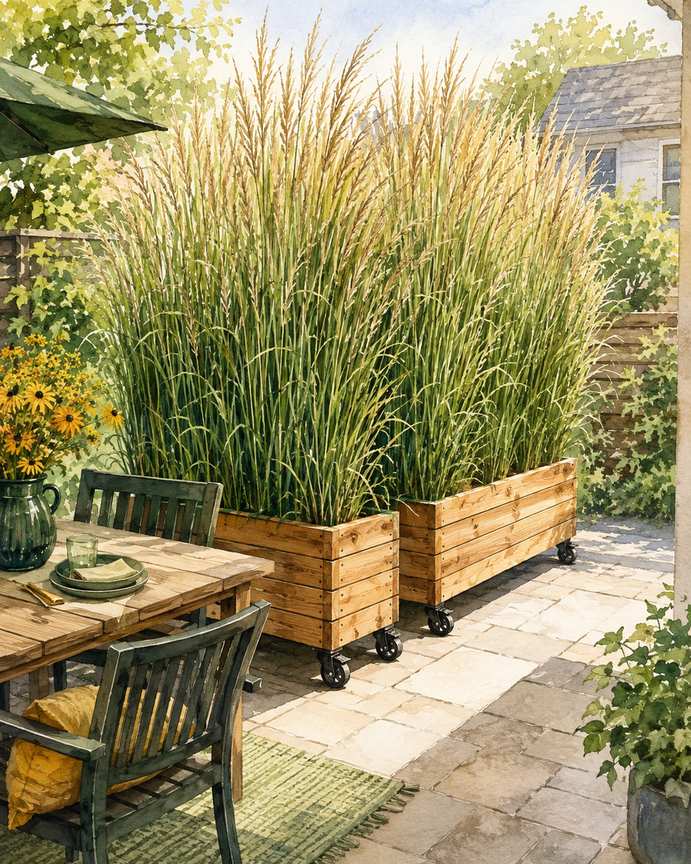
Plant switchgrass cultivars such as 'Northwind' in two long planters mounted on locking casters, then roll the screen beside the dining table only when you need it. 'Northwind' stays unusually upright and reaches about 4 to 5 feet in bloom, so it filters faces without creating a dark green wall. Each planter needs enough soil to resist tipping, which means the finished box may be far heavier than expected; use casters rated for the full wet weight, not the empty container. Grasses also shed blades and seed heads, and they disappear as a screen after you cut them back in late winter. This works best for seasonal privacy on a level patio, not year-round concealment or a sloped paver surface.
5. Espalier a dwarf apple against a wire frame
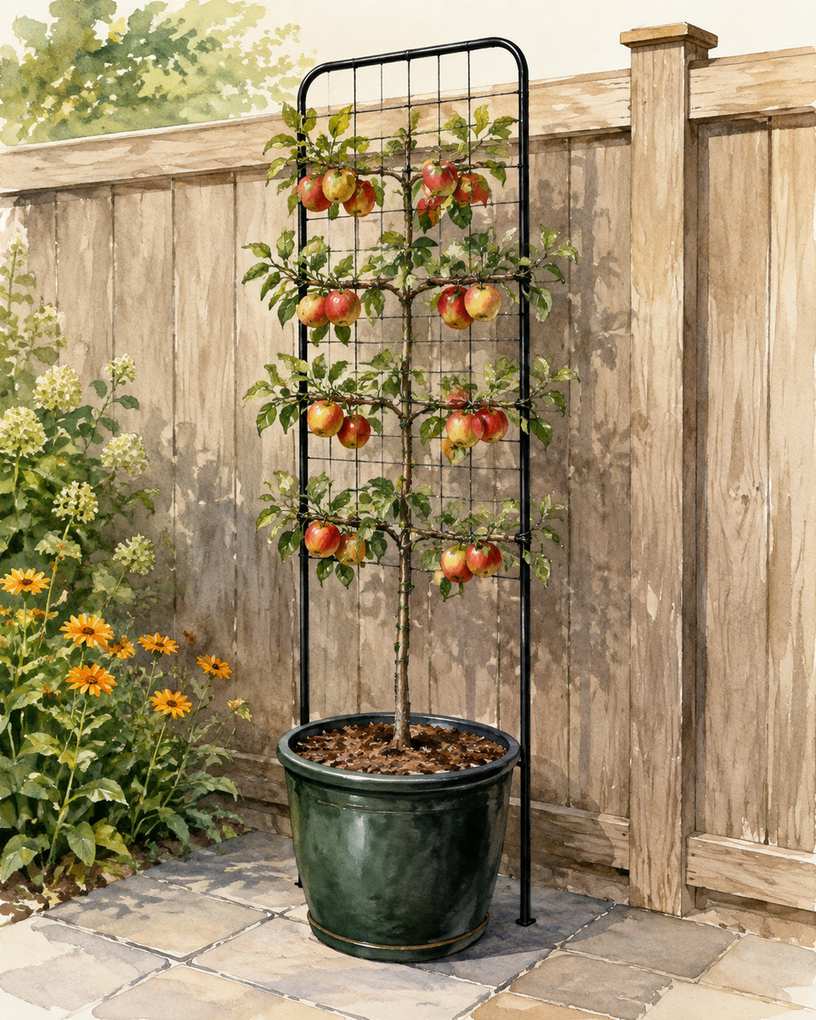
A dwarf apple trained as a flat espalier gives partial privacy plus fruit while using about 18 inches of patio depth. Start with a young tree on dwarfing rootstock in a sturdy container at least 24 inches wide, then tie branches horizontally to a freestanding wire frame at roughly 16-inch intervals. Apples need six to eight hours of sun, regular pruning, and usually a compatible pollination partner nearby; a self-fertile cultivar reduces that complication but does not erase it. Bare branches offer little winter screening, and fallen fruit can annoy close neighbors or attract yellowjackets. Pick fruit promptly and keep the frame entirely freestanding if you cannot drill into a shared fence. This is a patient project, not instant coverage.
6. Layer dwarf holly with trailing ivy
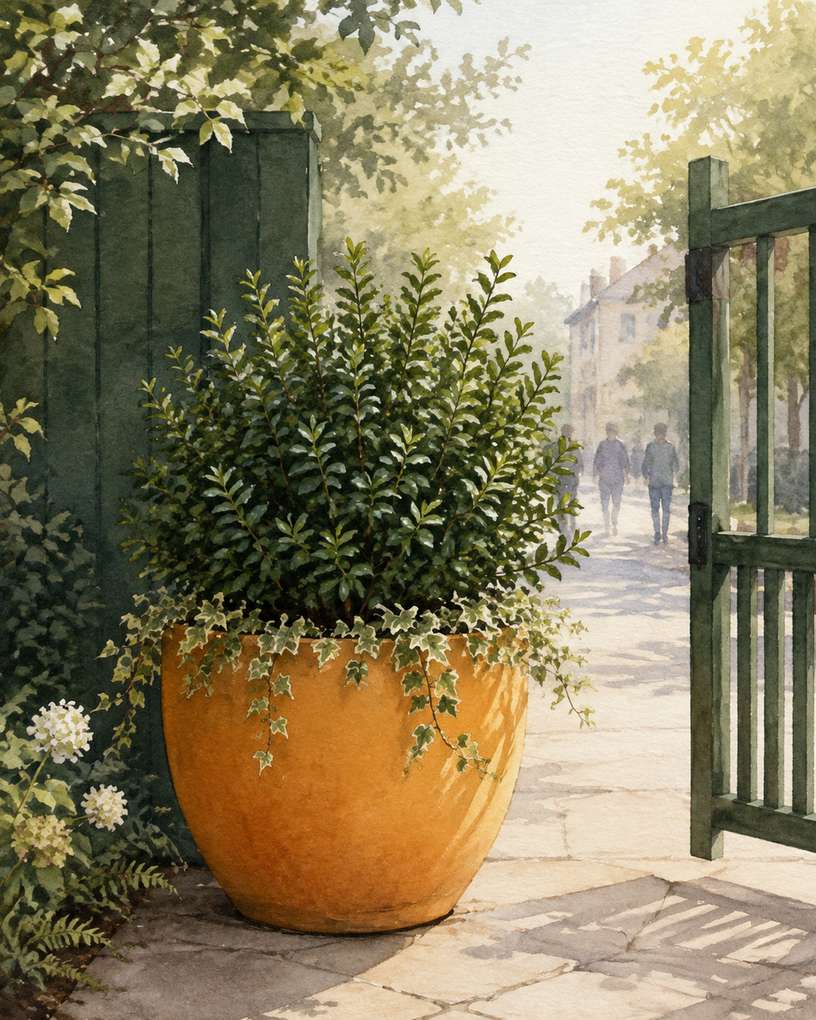
Build privacy at two heights by placing compact 'Soft Touch' holly behind a spill of variegated English ivy in a 30-inch planter. The holly forms a rounded 2- to 3-foot mass that blocks the view beneath a railing or open fence, while the ivy softens the hard rim. This is a lower screen, suited to hiding knees and neighboring foot traffic rather than second-story windows. Morning sun with afternoon shade keeps both plants tidier in hot climates. English ivy can escape and is invasive in parts of the United States, so never let stems reach open soil; substitute native foamflower or trailing heuchera where ivy is restricted. Holly also needs even moisture in a container, and dense layering makes checking the soil with a finger essential.
7. Grow an annual vine curtain for summer
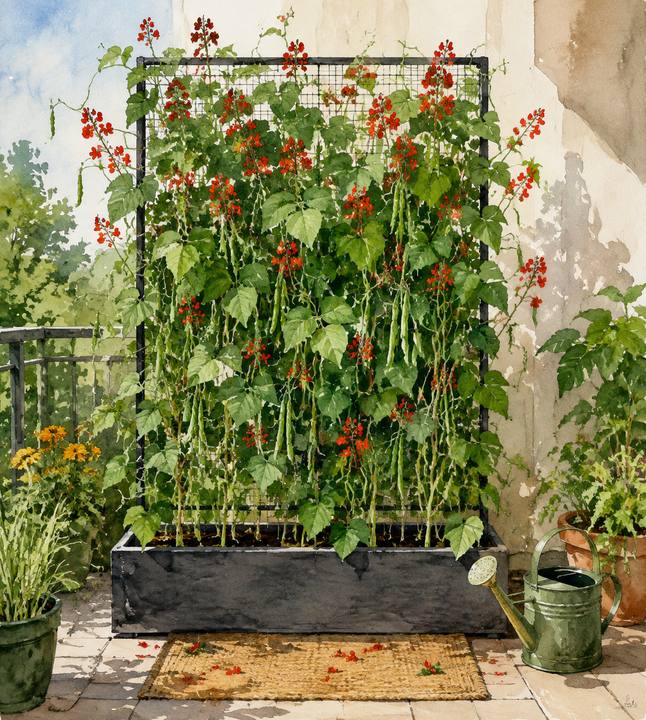
For fast warm-season coverage, sow scarlet runner beans at the base of a freestanding mesh panel after nights stay above about 50°F. Six to eight vines can cover a 4-foot-wide panel by midsummer in good sun, and the red flowers feed hummingbirds before edible pods appear. The screen is inexpensive and easy to remove at lease-end, but it needs frequent watering once the container fills with roots. Harvest beans young so heavy pods do not pull down the mesh, and sweep dropped flowers before they blow next door. Coverage ends with the first hard frost. In very hot, humid regions, Malabar spinach is a more heat-tolerant edible vine, though its fleshy purple berries can stain pale paving.
8. Stagger large-leaved shade plants in half barrels
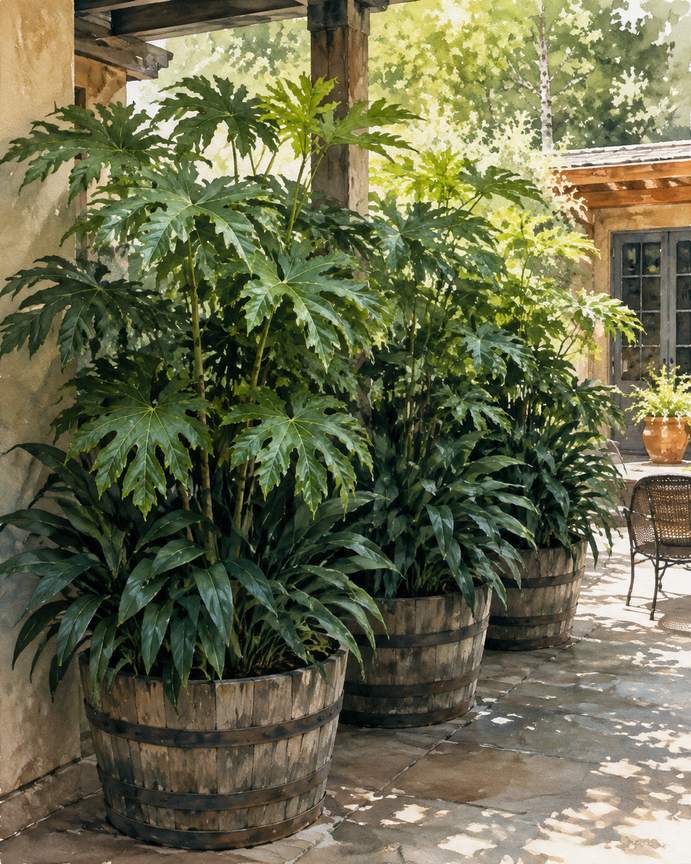
On a patio with only dappled light, stagger three half-barrel planters with Fatsia japonica and cast-iron plant (Aspidistra elatior). Fatsia's broad leaves interrupt sightlines better than fine foliage, while Aspidistra fills the lower gaps and tolerates deep shade. Keep the containers about 30 inches wide so roots have room and the tall leaves are less likely to tip in wind. Fatsia can reach 5 to 8 feet in mild climates, but hard freezes damage it and indoor overwintering takes real space. Both plants prefer drainage and steady moisture, not a permanently soggy barrel. This combination suits protected patios in roughly zones 8 to 10; colder-climate gardeners can use it as a summer screen and plan the winter move before buying three large pots.
9. Frame one sightline with a mixed corner screen
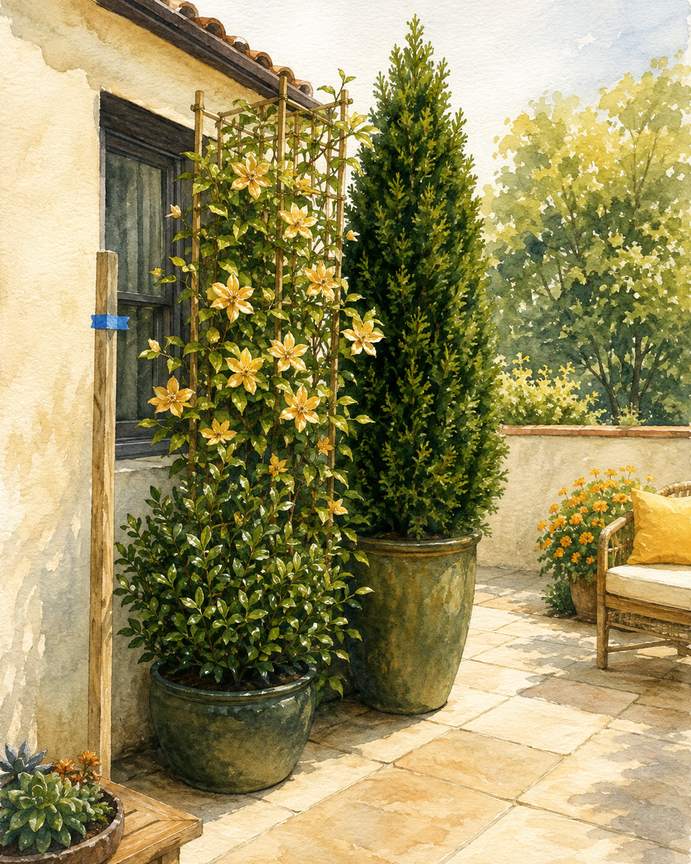
Instead of enclosing the whole patio, block the single awkward view with an L-shaped cluster: one 7-foot 'Emerald Green' arborvitae, one 5-foot trellis of clematis, and a 3-foot pot of inkberry holly. The stepped heights screen a neighbor's window while leaving the rest of the patio open to light and air. Mark the seated eye line with painter's tape before arranging anything; you may need only a 4-foot-wide cluster. Match plants to the exposure, since arborvitae wants more sun than many clematis roots prefer. Three large containers also create a demanding watering schedule and a concentrated load on one patch of paving. Rotate pots monthly for balanced growth, but do not drag them across waterproof membranes or shared deck surfaces.
Common questions
- How tall should a patio privacy planting be?
- Measure from where you sit, not from the patio floor. A screen around 5 to 6 feet often blocks a seated sightline, while an upstairs window may require 7 feet or more. Check local HOA, lease, and fence-height rules before buying tall plants or trellises.
- How do I keep tall privacy planters from blowing over?
- Use a broad container, keep the heaviest material low, and place the screen out of the strongest wind corridor. Do not add rocks just for ballast unless the patio can carry the wet weight. Trellises act like sails, so lock casters and follow the manufacturer's anchoring directions.
- Which privacy plants work on a shady patio?
- Fatsia, cast-iron plant, and some clumping Fargesia bamboo handle shade better than juniper or apple trees. Bright indirect light is still different from a truly dark corner. Watch the site for a full day and count direct-sun hours before choosing.
- Can container privacy plants stay outside through winter?
- It depends on the plant, your USDA zone, and the container. Roots in pots are less insulated than roots in the ground, so choose plants hardier than your local minimum and use frost-rated pots. Evergreens also need occasional winter water whenever the mix is thawed and dry.