9 Small Patio Furniture Layouts That Leave Room to Walk
A tiny patio can hold real seating without turning the door-to-yard route into an obstacle course. These nine layouts protect a clear walking lane while accounting for door swings, narrow dimensions, wind, storage, and the furniture you already own.
1. Set a bistro pair diagonally in one corner
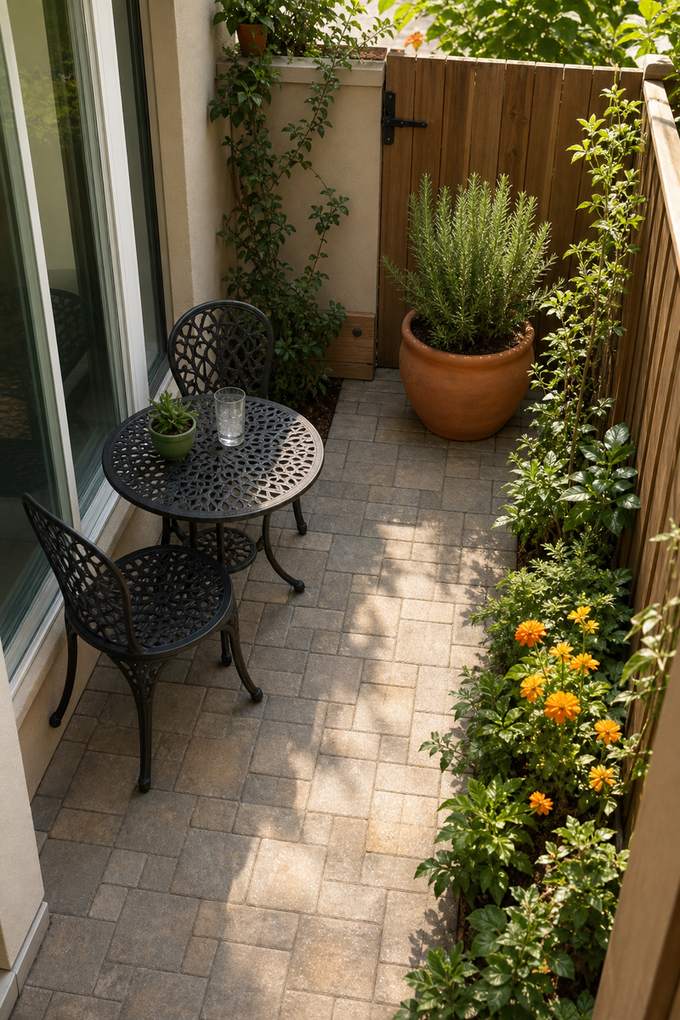
Start with a 24-inch round table and two armless chairs turned about 45 degrees into a corner. The diagonal placement keeps chair backs out of the main route and feels less cramped than centering the set on a narrow slab. Preserve at least 30 inches between the occupied chairs and the door or gate; 36 inches is kinder if someone regularly carries laundry or a watering can through. Measure with both chairs pulled out, not tucked neatly under the table. A cast-aluminum set is easier to shift than steel, but very light chairs can skitter in gusty spots. Add one heavy terracotta pot of rosemary near the exposed table leg rather than cluttering the walkway with several small pots.
2. Push a backless bench against the long wall
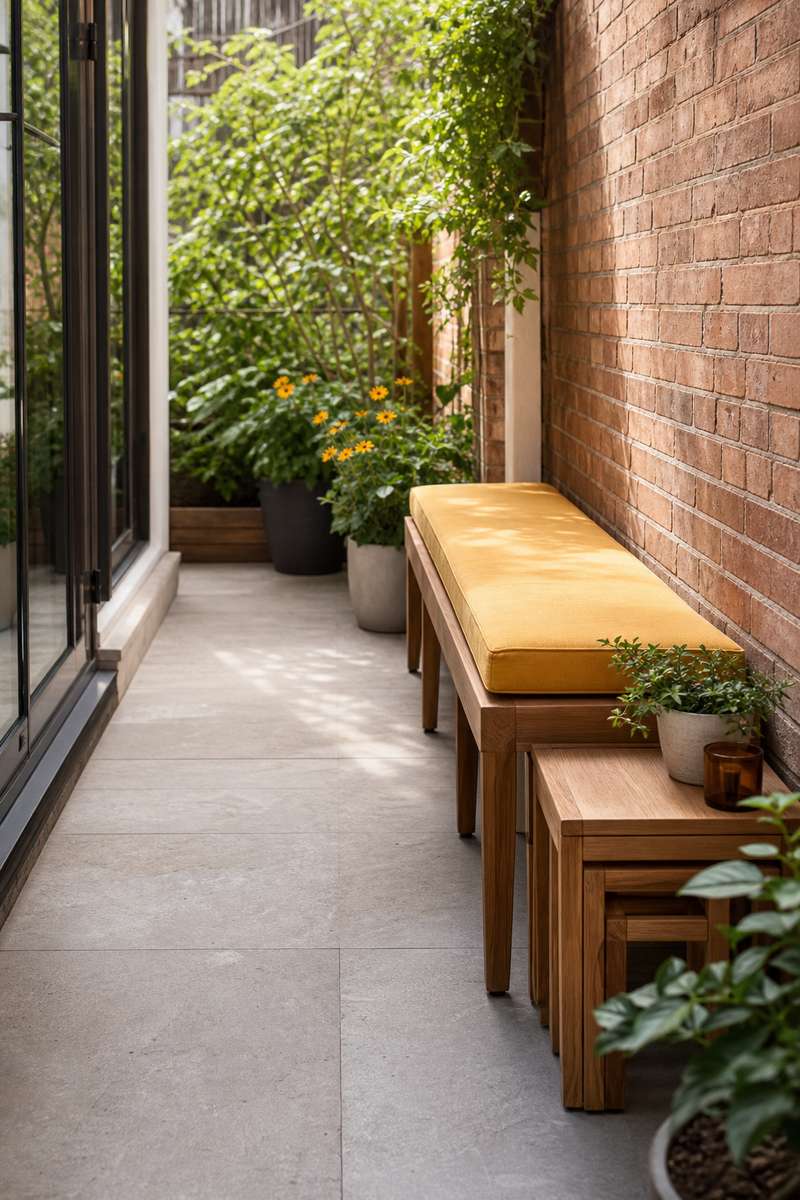
A 48- to 60-inch backless bench gives two people a place to sit without spending precious depth on a tilted backrest. Put it flush against the longest solid wall, then use a nesting table that can slide partly underneath when nobody needs a drink surface. This works especially well on patios only 5 or 6 feet deep. Check the wall first: rough brick can snag cushions, and reflected afternoon heat may make the seat uncomfortable. Leave a 32- to 36-inch lane opposite the bench, measured from the bench's front edge. Choose a seat about 16 inches deep rather than a lounge bench closer to 24 inches. The trade-off is comfort, so add one thin outdoor cushion and bring it inside after rain.
3. Build an L-shaped corner with two compact seats
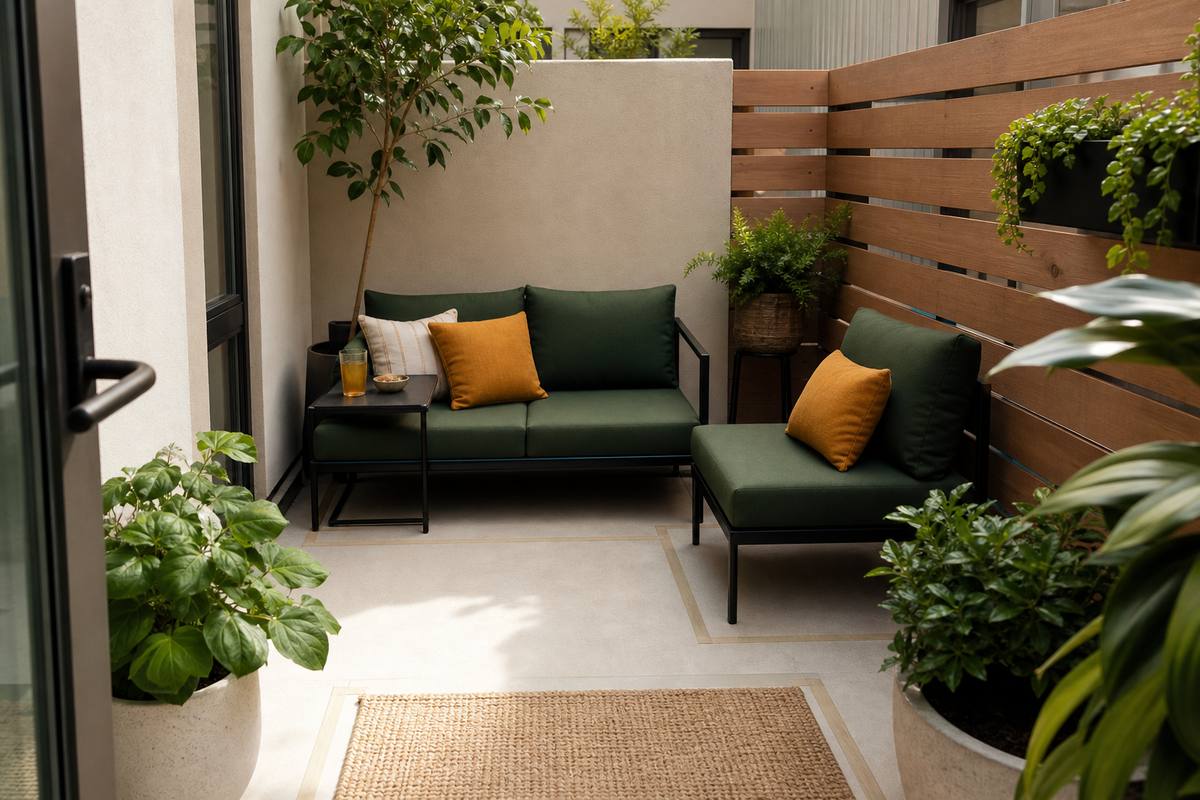
Use a 48-inch loveseat and one matching armless chair to make an L in the far corner, instead of buying a bulky sectional that may be impossible to reconfigure. Their outside edges stay against the perimeter, leaving the center and doorway clear. Before ordering, tape the full footprints on the floor and include the loveseat's arms; compact models still range from roughly 28 to 34 inches deep. Keep 30 inches open between the chair corner and your main route. A small C-table can tuck over a seat and replace a coffee table altogether. The downside is that the person in the corner may need the other sitter to move. For renters, separate pieces are also much easier to carry through tight stairwells than a one-piece sectional.
4. Run a narrow counter table along the railing
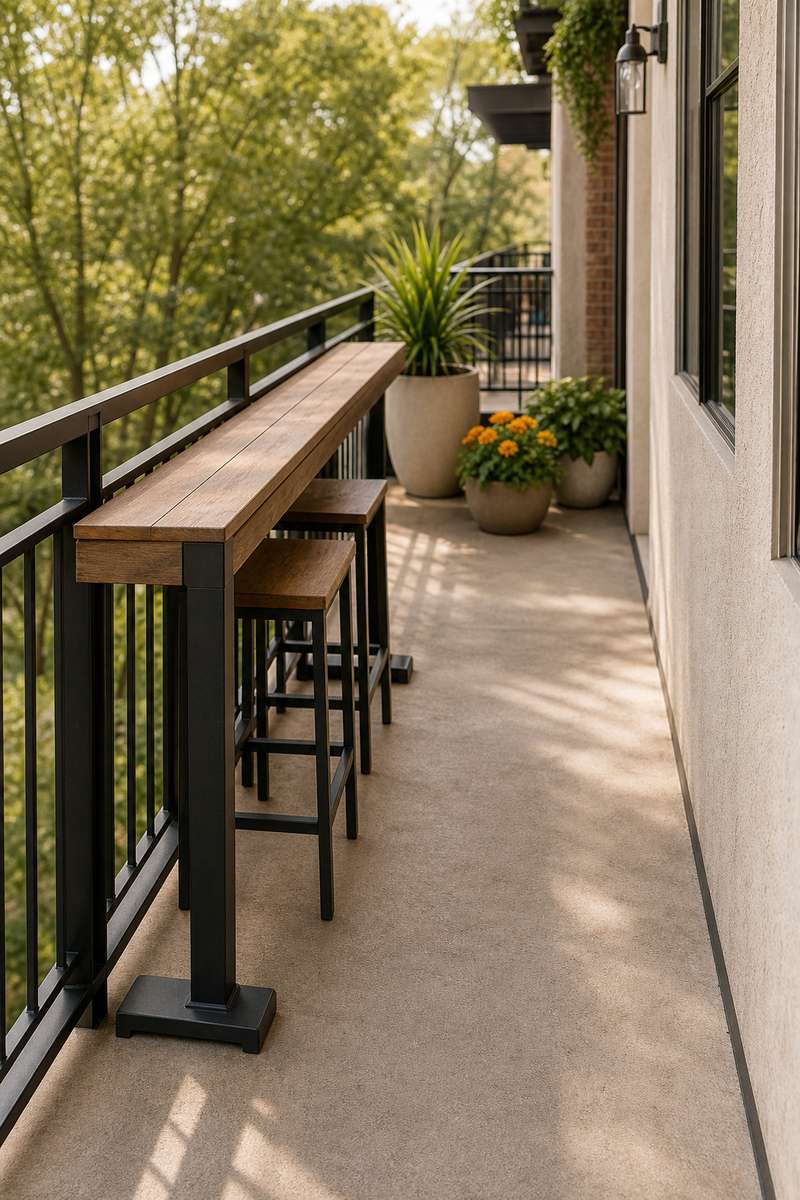
A freestanding counter-height table, 12 to 16 inches deep, turns a railing edge into a breakfast spot without filling the patio center. Pair it with two stools that slide completely underneath, and keep the opposite side open as the walking lane. This layout suits a long, narrow patio, but avoid anything that hooks over a shared railing unless your lease and building rules allow it. Counter-height pieces also catch more wind; choose a table with a broad, weighted base and do not leave lightweight stools out during storms. Allow about 24 inches per seated person and at least 30 inches behind the stools when occupied. Skip tall planters beside the table if they would tempt children to climb near the rail.
5. Float one loveseat with its back to the garden
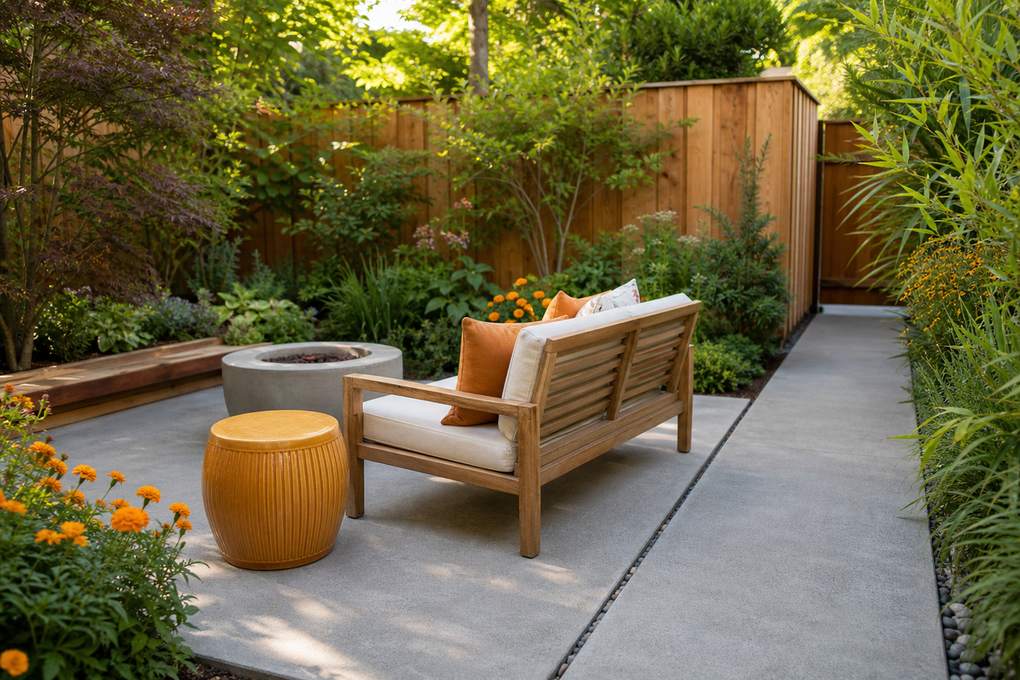
On a wider patio, place a shallow loveseat across one end with its back toward the yard, creating a small sitting zone while keeping a straight lane beside it. This is useful when every wall has a door, hose bib, or window that furniture would block. Pick a loveseat no deeper than 30 inches and leave a 36-inch passage between one arm and the patio edge. The back will be visible from indoors, so a simple slatted frame looks tidier than loose cushions and straps. Check that the legs sit fully on the slab; sinking one pair into soil makes the seat wobble. A single 18-inch drum stool works as both table and spare seat, though anyone sitting there temporarily narrows the route.
6. Use a freestanding gateleg table against the house
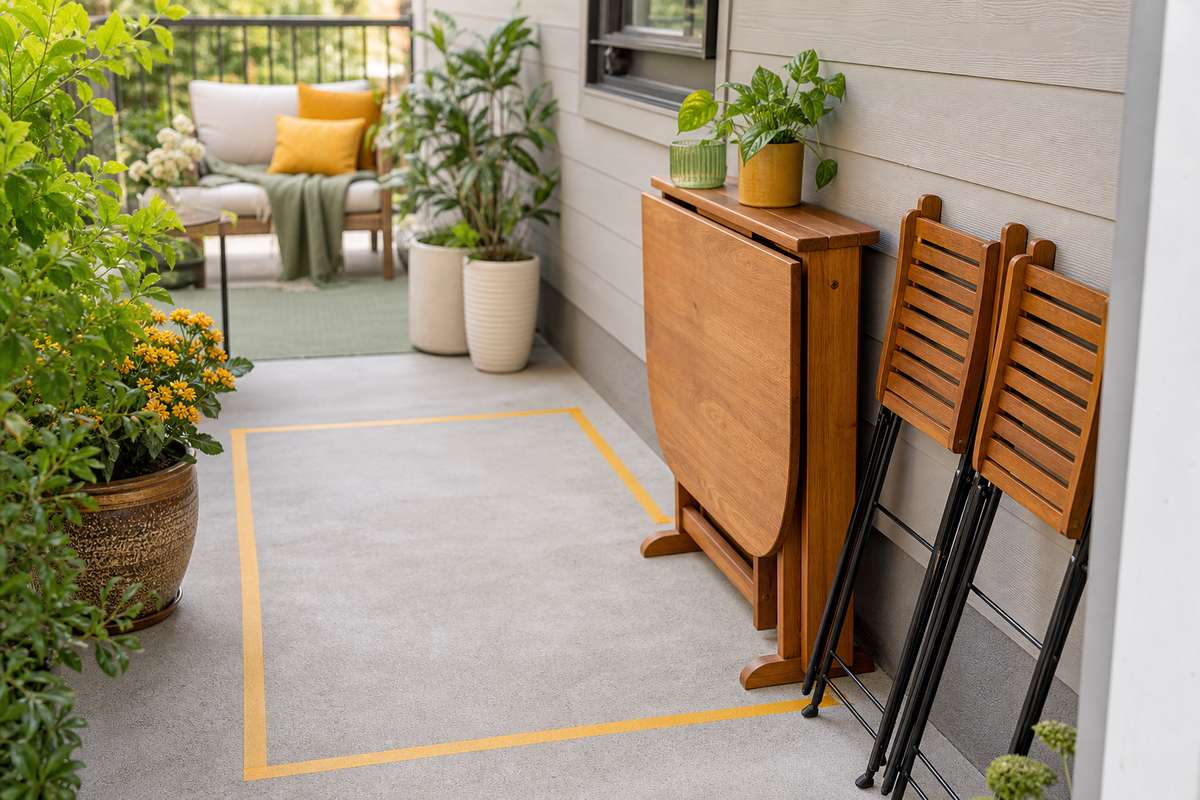
A gateleg table parked against the house can stay just 10 to 14 inches deep on ordinary days, then open for dinner when the walkway is not in use. Choose a freestanding model so a renter does not need to drill into siding or masonry. Two folding chairs can hang from an over-door rack indoors or stand folded behind the table. Before buying, map the open tabletop and chair pullout with painter's tape; a 36-inch table often needs a footprint closer to 7 feet once people are seated. Watch the door swing too. Wood gatelegs need periodic sealing, while powder-coated steel is lower maintenance but heavier to move. This layout is best for occasional meals, since the passage effectively closes while both table leaves are up.
7. Pair a pedestal table with stackable chairs
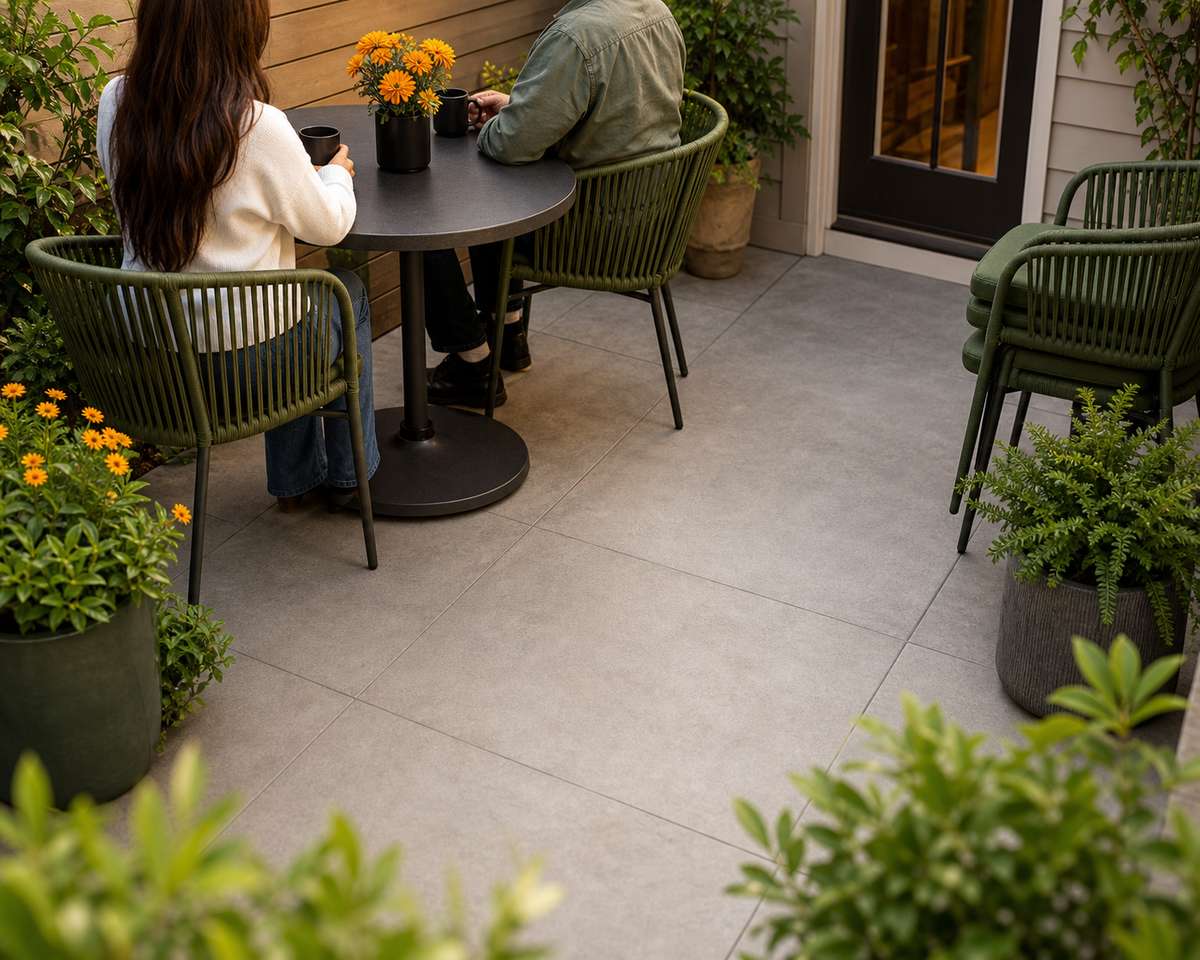
Center a 30-inch pedestal table only if your patio is wide enough to keep a walking lane around one side. The single central base lets chair legs tuck closer than a four-legged table does, which matters on a roughly 8-by-8-foot slab. Use two everyday chairs and keep two matching stackable chairs at the edge for guests. Measure 30 inches from the occupied chair back to the nearest wall or planter; aim for 36 inches on the route to the door. A pedestal can tip if someone leans hard on its edge, so look for a broad cast-iron or concrete-filled base and confirm the tabletop is firmly attached. The heavy base improves stability but makes winter storage a two-person job.
8. Put a storage bench beside the door, not opposite it
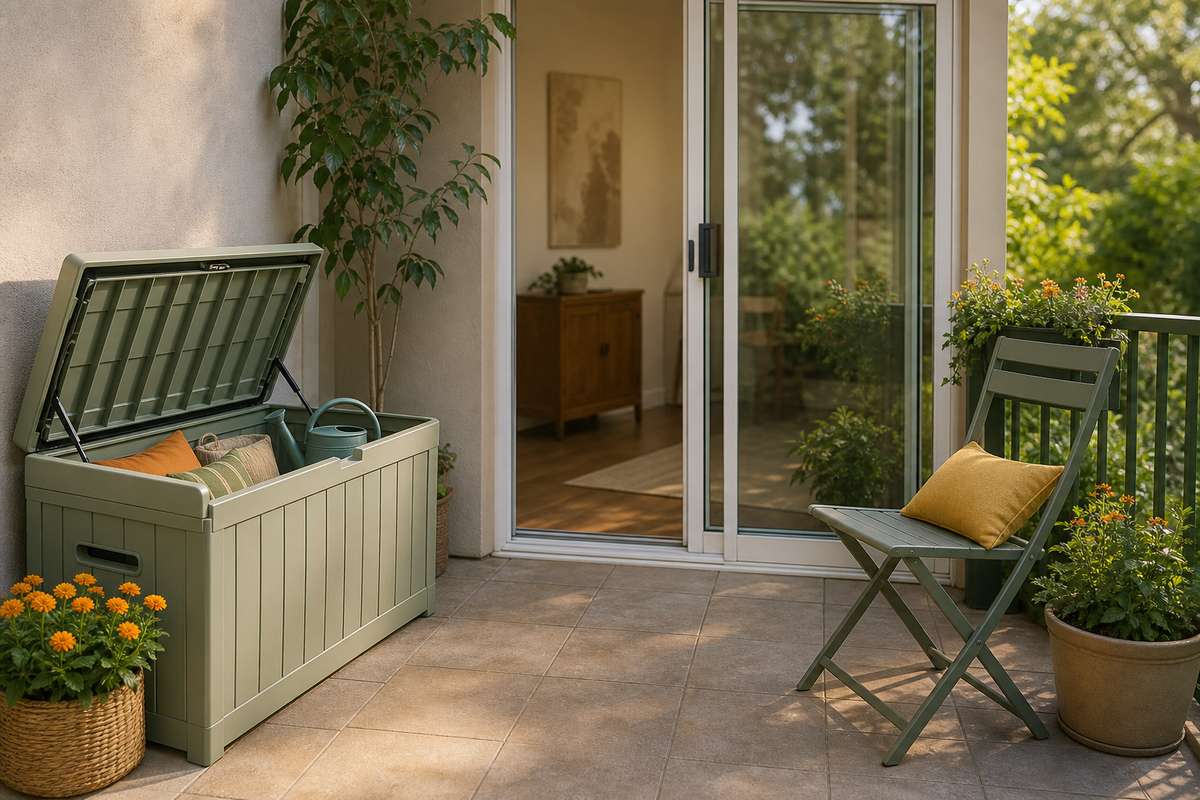
Place a compact storage bench on the same wall as the patio door, beyond the handle side, so the seat does not confront people as they step outside. A 42-inch resin or aluminum bench can hold two seat cushions and a small watering can while replacing separate storage. Open the door fully and mark its swing before positioning anything; sliding doors still need access to the fixed panel for cleaning and repairs. Keep the bench lid below nearby window trim and test whether it can open without scraping the wall. Resin is light and weather resistant, but it needs ballast in windy locations and can look tired after years of strong sun. Pair the bench with one folding chair rather than filling the opposite wall.
9. Make a movable layout with two chairs and a rolling cart
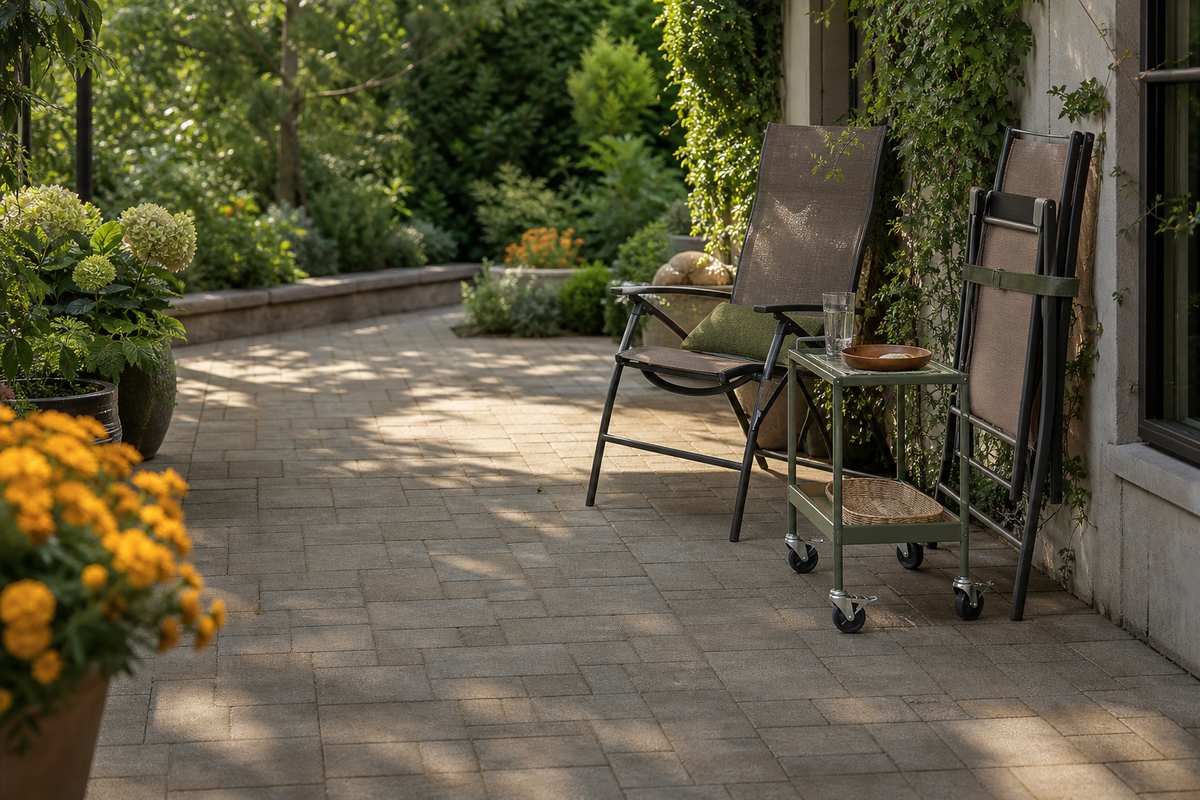
Two lightweight lounge chairs and a locking two-tier cart can shift between morning coffee, plant care, and an open path for hauling trash bins. Park the chairs along the perimeter when they are not in use, then roll the 16- to 20-inch-wide cart beside whichever seat needs a table. Use outdoor-rated powder-coated steel or acacia rather than an indoor utility cart that will rust at the wheel sockets. Casters should be at least 2 inches wide enough to cross paver joints, and two wheels should lock. Mobility is the advantage and the nuisance: strong wind can move every piece. In exposed patios, tether folded chairs with a reusable strap and bring the cart inside before a storm instead of relying on wheel locks.
Common questions
- How much walking space should I leave around patio furniture?
- Keep the main route at least 30 inches wide, measured with chairs occupied or pulled out. A 36-inch lane is more comfortable for carrying groceries, moving a trash bin, or passing with a mobility aid. Door swings and gate arcs need their own clear space in addition to that lane.
- What furniture shape works best on a very narrow patio?
- Start with shallow pieces against one long edge: a 16-inch-deep bench, a 12- to 16-inch counter table, or a folded gateleg table. Armless chairs and round tables remove corners from the route. Tape each footprint on the ground before buying, including the space a seated person takes up.
- How do I keep lightweight patio furniture from blowing around?
- Choose broad bases, lock cart casters, and secure folded chairs together with a reusable strap. Heavy terracotta planters can shelter a furniture leg, but do not tie furniture to railings or fire escapes without permission. For severe weather, bringing pieces indoors is safer than adding improvised weights that may become hazards.
- Where should small patio furniture go for winter?
- Fold or stack chairs and store dry cushions indoors. Clean and fully dry furniture before covering it; trapped moisture encourages mildew and can damage wood finishes. If pieces must remain outside, use breathable fitted covers and keep legs out of standing water. Freeze-thaw exposure varies, so follow the material maker's guidance for your climate.