9 West-Facing Patio Plants That Handle Blazing Afternoon Heat
West-facing patios can go from pleasant to oven-hot after 2 p.m., especially when concrete and brick throw heat back at the pots. These nine plants tolerate that hard afternoon sun, with realistic container sizes, watering needs, and drawbacks to check before you buy.
1. Lantana in a 14-inch pot
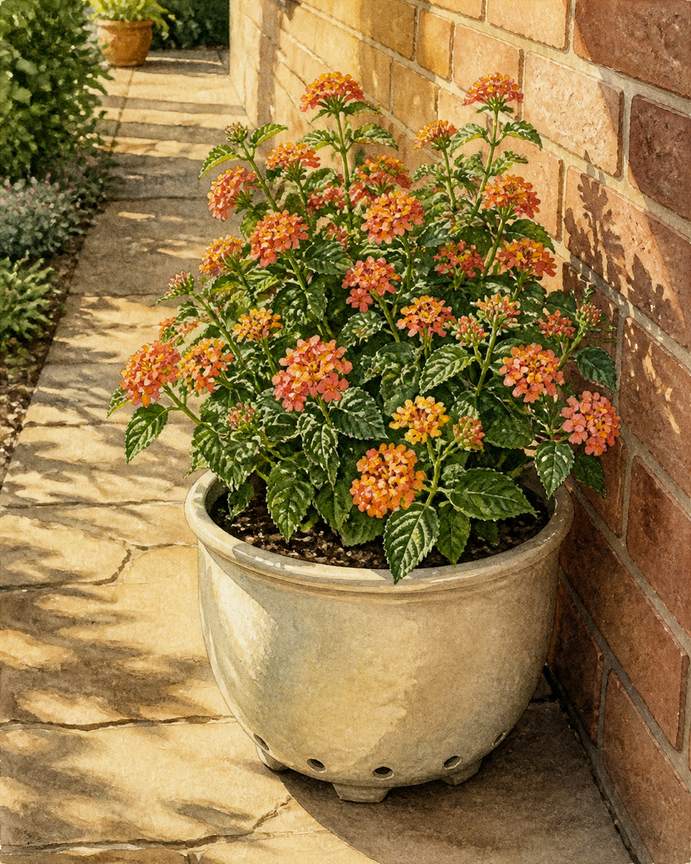
Lantana is the workhorse for a patio that gets six or more hours of sun, including the fierce stretch after 2 p.m. Choose a compact cultivar such as 'Bandana' rather than a trailing type if floor space is tight, and start with a 14-inch-wide pot with several drainage holes. It flowers better when the mix dries slightly between soakings, but a small black nursery pot can cook its roots against a west wall. Slip that pot into a pale cachepot or repot it in glazed ceramic. The trade-off is housekeeping: spent berries and petals drop, and lantana is toxic if eaten, so it is a poor choice where pets or toddlers sample plants.
2. Upright rosemary by the hot wall
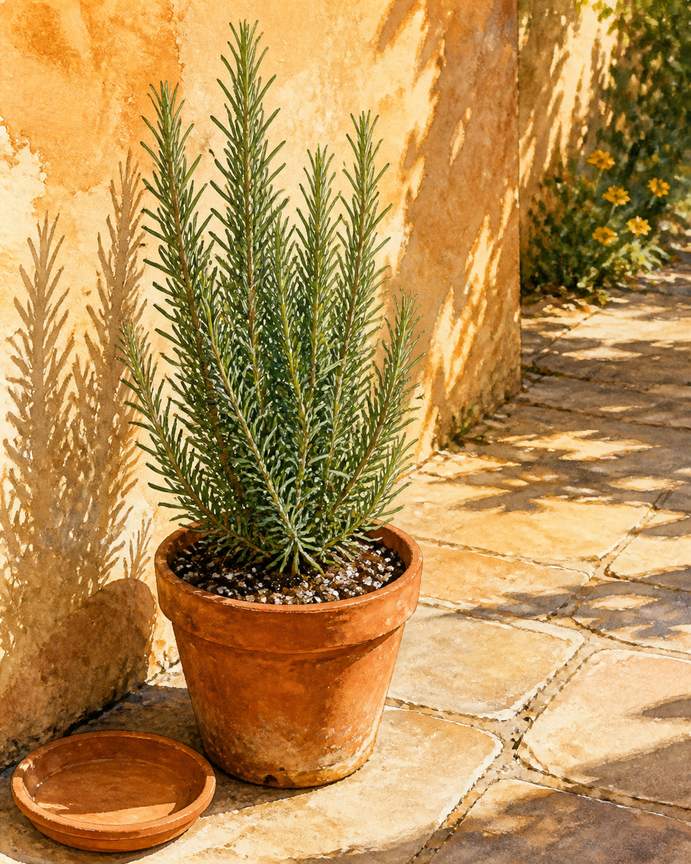
An upright rosemary such as 'Arp' or 'Tuscan Blue' makes good use of a hot wall without spilling into the walkway. Give one plant a terracotta pot at least 12 inches across and use a gritty mix amended with perlite or fine pine bark. Rosemary handles reflected heat far better than constantly wet roots, so empty the saucer after watering and wait until the top 2 inches feel dry. A pot still needs a deep drink more often than an in-ground shrub, sometimes every two or three days during a heat wave. The catch comes in humid summers and cold winters: poor airflow invites decline, and gardeners below roughly 10°F should move the pot to a protected, bright place.
3. English lavender with extra drainage
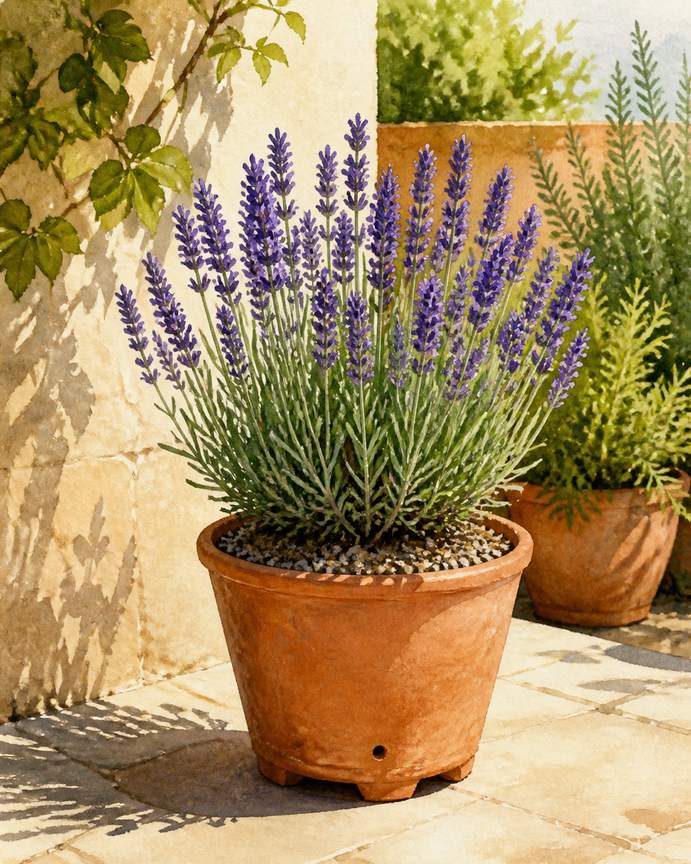
English lavender earns its spot with fragrant foliage and a narrow, upright shape, but only if the container drains fast. Put a compact cultivar such as 'Hidcote' in a 12- to 16-inch terracotta pot rather than a self-watering planter, and keep the crown slightly above the soil line. Six hours of direct sun is useful; wet mix and humid, still air are the bigger threats. Water thoroughly, then let the upper few inches dry instead of giving daily sips. In hot, humid parts of the Southeast, Spanish lavender may perform better, though it is less cold hardy. Expect to replace plants that sit through rainy summers, and prune lightly after bloom without cutting into old, leafless wood.
4. Sedum 'Autumn Joy' for missed waterings
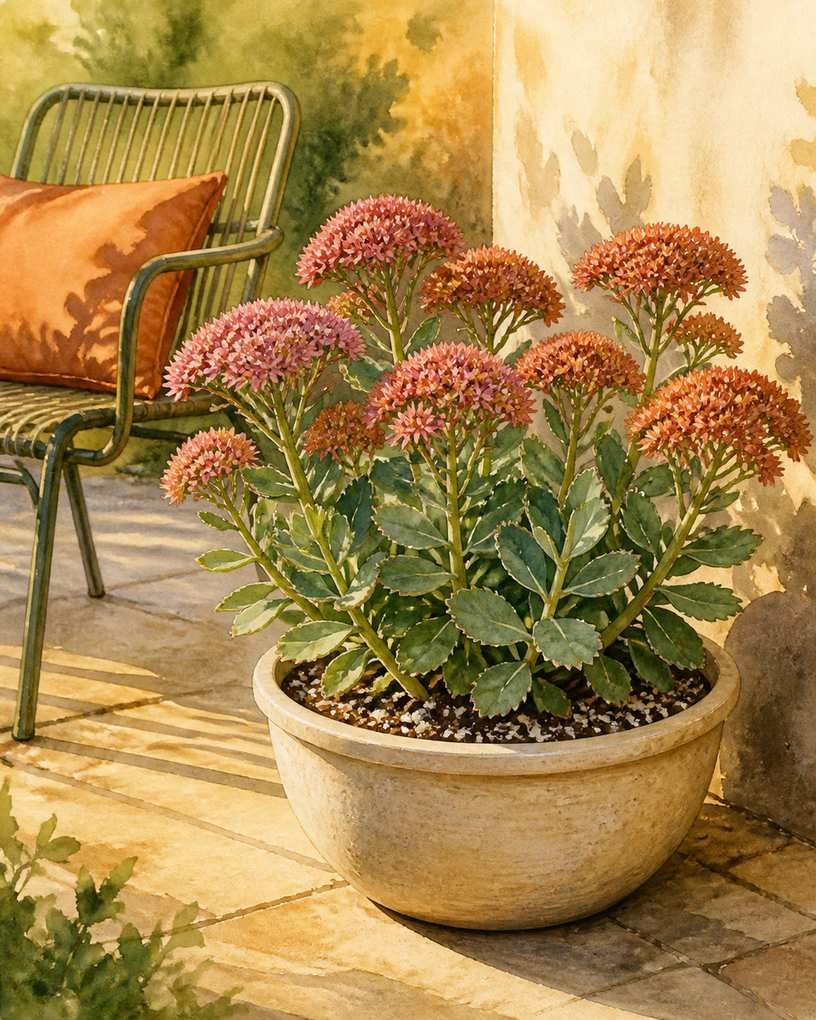
Sedum 'Autumn Joy' stores water in its fleshy leaves, which buys breathing room when a west-facing patio dries faster than expected. One plant fits a pot about 12 inches wide and develops sturdy flower heads that shift from pink to copper late in the season. Use cactus mix or add coarse perlite to regular potting mix, then water only when the top 2 inches are dry. Too much fertilizer makes the stems flop, especially in partial sun. This perennial is cold hardy in many US regions, but the pot itself needs winter protection where repeated freezes are severe. The bare winter stems are not pretty; leave them for structure or cut them after frost and accept an empty-looking container until spring.
5. Dwarf bougainvillea on a rolling base
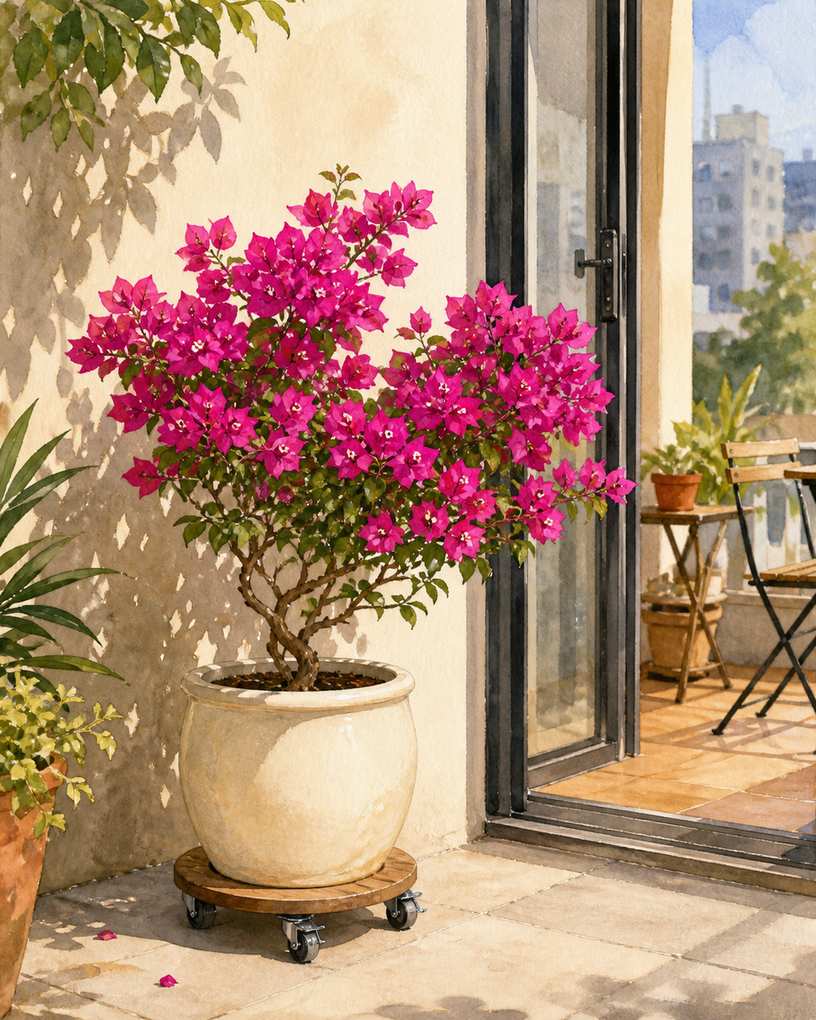
A dwarf bougainvillea such as 'Helen Johnson' turns relentless sun into color and stays more manageable than a full-size vine. Set it in a 15- to 18-inch pot on a locking plant caddy so you can move the heavy container before cold nights. Let the mix approach dry between deep waterings; consistently damp soil produces leaves instead of bracts. Bougainvillea blooms best with at least six hours of direct light and does not enjoy abrupt moves from nursery shade, so acclimate it over 7 to 10 days. This is a warm-climate choice, not a carefree annual everywhere. Its thorns catch sleeves, and temperatures near freezing can damage it, making a narrow doorway or a patio used by children a bad location.
6. Portulaca along the sunniest edge
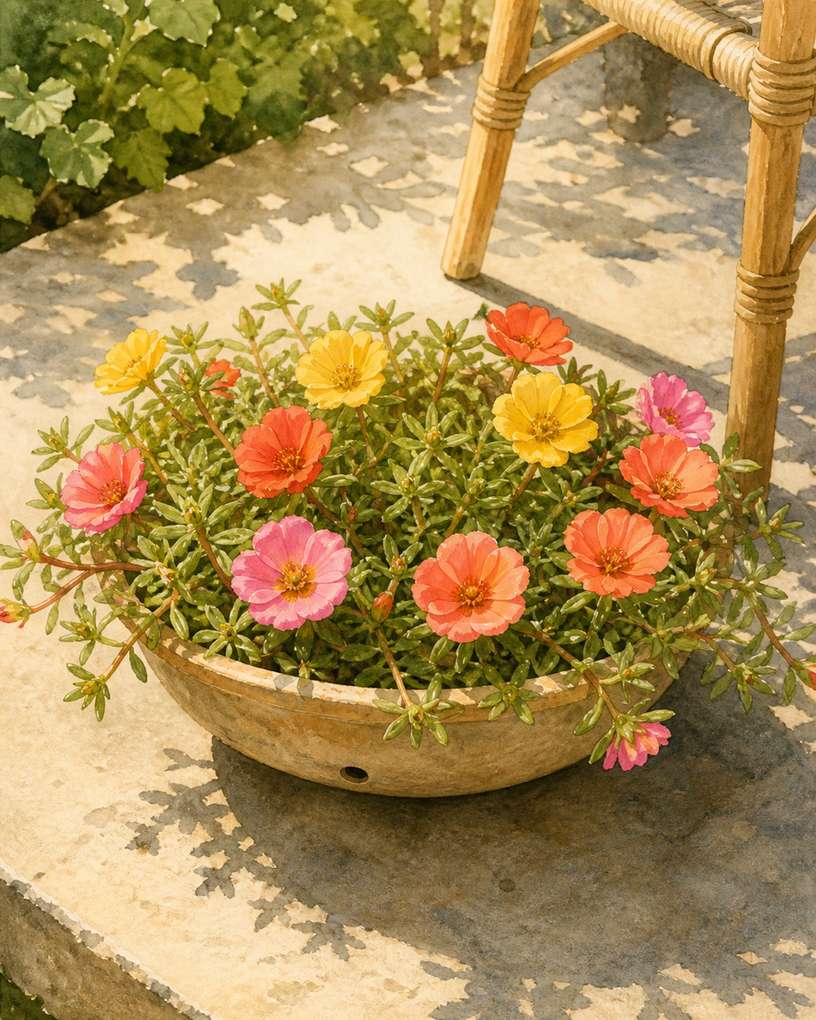
Portulaca, often sold as moss rose, is useful where the patio edge gets both direct sun and heat reflected from concrete. Its stems stay roughly 4 to 8 inches tall, so a shallow 10-inch bowl can add color without blocking a view or crowding chair legs. Use a container with a real drainage hole and lean potting mix; soggy roots end this plant faster than a dry afternoon. Single-flowered types are easier for pollinators to reach, while many blooms close at night and on cloudy days. Portulaca is usually grown as an annual and may self-sow into nearby pots. It is also toxic to dogs and cats if eaten, so raise the bowl or choose another plant around curious pets.
7. Angelonia for upright summer color
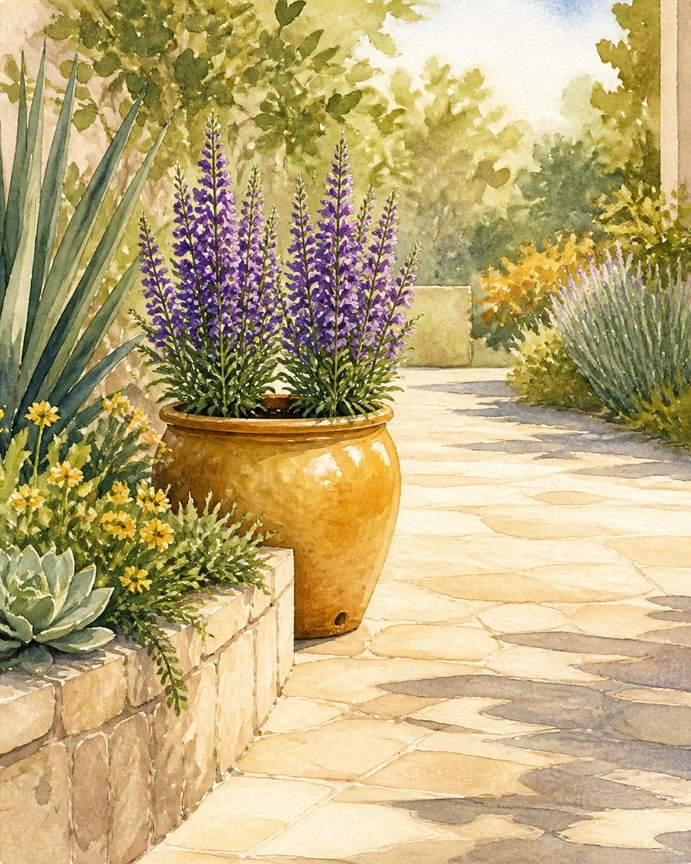
Angelonia gives you snapdragon-like flower spikes without collapsing when summer afternoons turn hot. A compact series such as 'Serenita' reaches about 12 to 16 inches, a useful height behind low bowls without swallowing a tiny patio. Plant one or two in a 12-inch pot with standard potting mix and unobstructed drainage. Unlike lavender or portulaca, angelonia should not stay bone dry; water when the top inch dries, and expect more frequent checks during windy 95°F weather. It flowers in six or more hours of sun and usually needs little deadheading. The honest downside is lifespan: it is perennial only in very warm zones and is treated as an annual in much of the US, so budget for replacement each spring.
8. Texas sage as a compact patio shrub
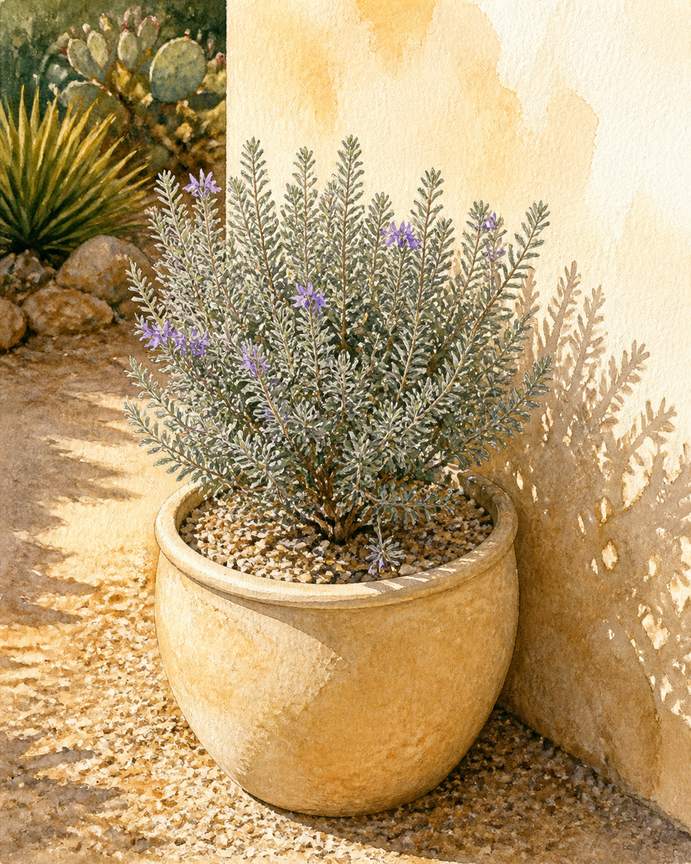
Texas sage is built for dry air, reflected heat, and intense western light, with silvery leaves that stay handsome between its purple bloom flushes. Look for a compact cultivar such as 'Thunder Cloud' and give it a sturdy 18- to 20-inch container filled with sharply draining mix. The mature pot can become too heavy to shift casually, so check your balcony or deck load rules and place it before filling. Water deeply, then allow much of the mix to dry; frequent shallow watering encourages weak growth and root trouble. Texas sage struggles in persistently humid, rainy climates and needs pruning to remain narrow. It is best for warm regions because a container exposes roots to more cold than the same shrub would face in the ground.
9. Dwarf Meyer lemon with a moisture plan
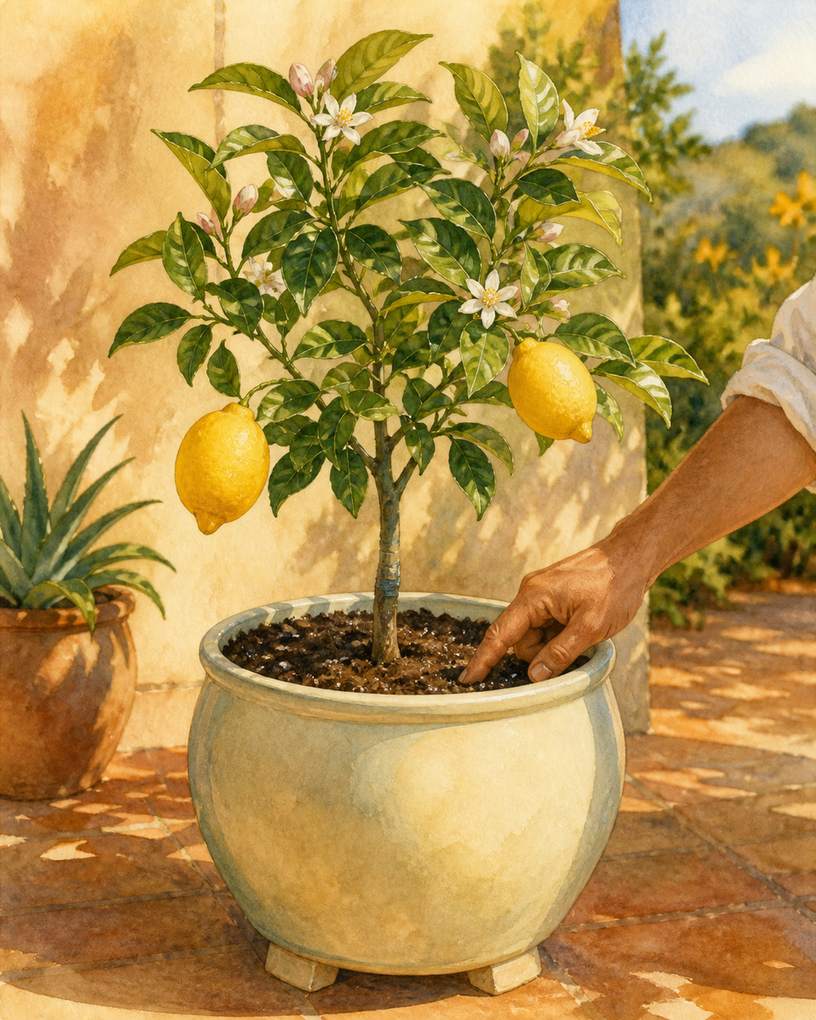
A grafted dwarf Meyer lemon can handle strong afternoon sun and earn its floor space with fragrant flowers and fruit. Start with a 16- to 20-inch pot, preferably a pale resin or glazed container that does not heat as quickly as black plastic. Citrus wants even moisture rather than desert treatment: check the top 2 inches daily during hot spells, water deeply when dry, and never leave the base submerged in a saucer. Acclimate nursery-grown foliage to full western exposure over about a week to prevent scorch. The compromises are weight, feeding, and winter care. A mature wet container is awkward to move, citrus needs regular fertilizer, and gardeners in freeze-prone areas need a bright indoor spot before nights fall below roughly 40°F.
Common questions
- How many hours of sun does a west-facing patio usually get?
- Many west-facing patios receive 4 to 6 hours of direct sun, concentrated from early afternoon to sunset. Buildings, railings, and trees can shorten that window, so check the space every hour on a clear summer day before buying plants. Reflected heat from brick or concrete can make 4 hours feel harsher than a longer exposure in an open yard.
- How often should patio pots be watered during a heat wave?
- Check them daily rather than watering by a fixed calendar. Angelonia and citrus may need water when the top 1 to 2 inches are dry, while rosemary, lavender, sedum, and portulaca should dry farther between soakings. Water until excess runs out, then empty saucers. Tiny pots under 10 inches dry so fast that moving up one container size often helps more than another light watering.
- Will these plants survive winter outdoors?
- It depends on the plant, your USDA zone, and how exposed the patio is. Sedum and some rosemary cultivars tolerate considerable cold, while bougainvillea, angelonia, portulaca, and Meyer lemon need frost protection or seasonal replacement. Container roots can be colder than roots in the ground, so check your zone and the cultivar's rating, then allow an extra margin for an elevated balcony.
- Are large plant pots safe on an apartment patio or balcony?
- A wet 20-inch ceramic pot can weigh far more than it looks, especially with a shrub inside. Ask your landlord, HOA, or building manager for the permitted balcony load and any rules about placement; do not rely on a generic online number. Use lightweight resin where possible, spread containers apart, keep drains clear, and avoid concentrating several heavy pots along one small section of railing.