9 Colorful Foliage Plants That Brighten a Small Shade Garden
A shaded patio or tiny yard does not have to read as one flat block of green. These nine foliage plants bring silver, burgundy, lime, and cream into low-light spaces, with realistic notes on spread, winter survival, watering, and container size.
1. Edge a small bed with amber 'Caramel' coral bells
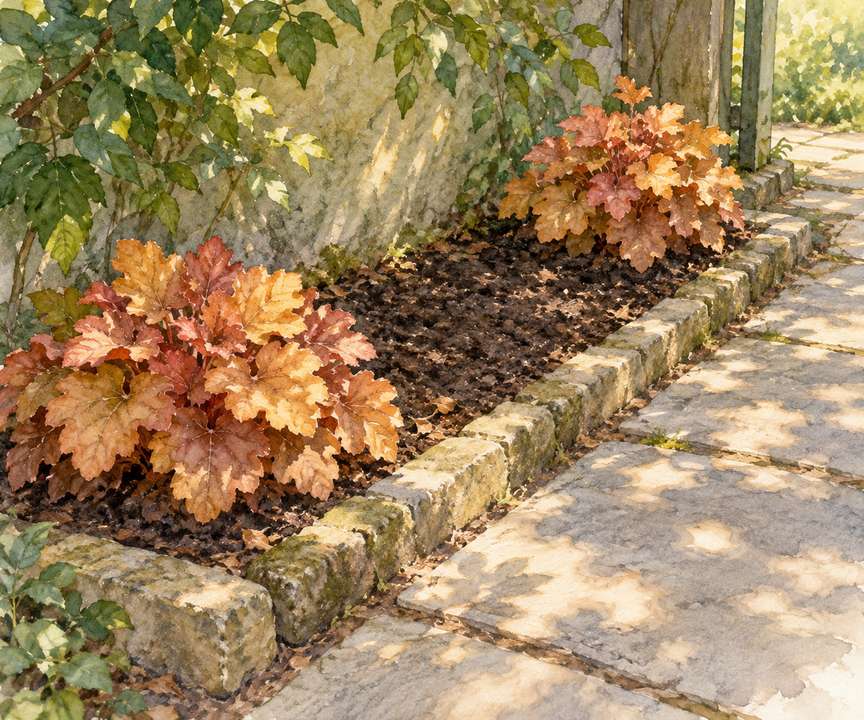
'Caramel' coral bells puts apricot and amber leaves into a space where flowers may be scarce. One plant forms a mound roughly 12 to 18 inches wide, so two are usually enough for the front of a 3-foot bed. Give it bright shade or a little morning sun; deep, all-day shade can turn the color greener. Heuchera needs drainage more than constant moisture, and its crown can rot in a pot that sits in a saucer of water. In cold-winter areas, freeze-thaw cycles may lift the shallow crown, so add an inch of mulch without burying it. The trade-off is tidiness: older leaves look rough by late winter and need a quick spring trim.
2. Use one Japanese painted fern as a silver focal point
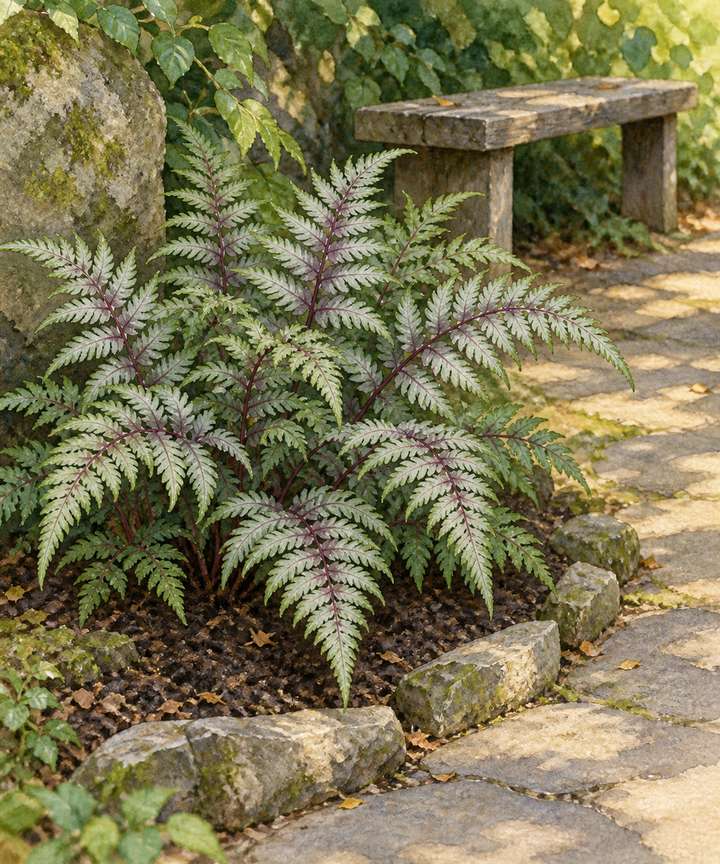
Japanese painted fern brings silver-gray fronds brushed with green and burgundy, and one mature clump can fill a 12- to 18-inch gap. Place it where you can see the leaf pattern up close, beside a bench or at a path turn, rather than losing it at the back of a bed. Soil should stay evenly moist but not swampy; a tree-root-filled pocket that dries every afternoon will leave crisp brown tips. This fern is deciduous in cold climates, so mark its spot before the fronds disappear in fall. It also emerges later than many spring plants. That temporary bare patch is the downside, but a low pot or a few small stones can hold the composition until new fronds unfurl.
3. Cool a dark corner with 'Jack Frost' brunnera
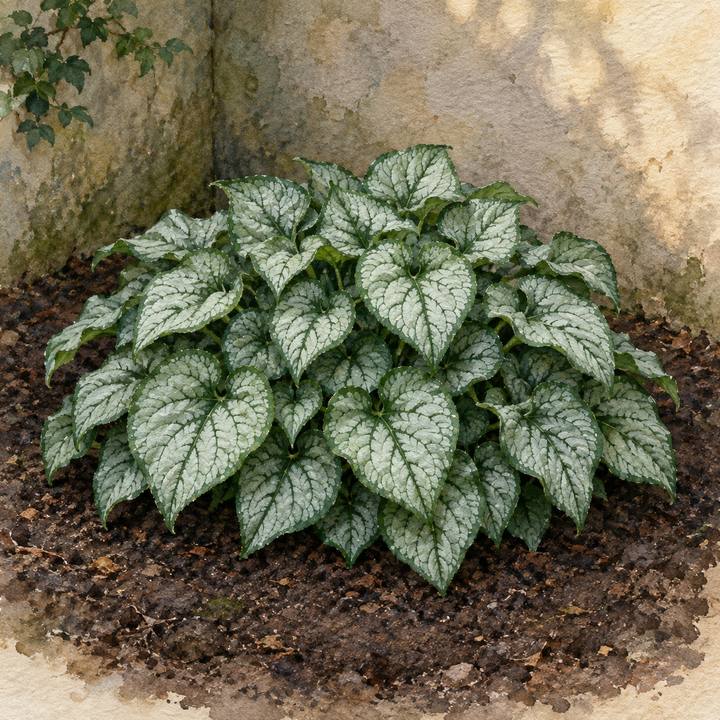
'Jack Frost' brunnera has heart-shaped silver leaves traced with green veins, which stay readable in a dim corner long after its small blue spring flowers finish. A clump generally reaches 12 to 18 inches across; allow that full width instead of squeezing three plants into a tiny bed. It prefers cool, moisture-retentive soil and may scorch where hot afternoon sun bounces off a pale wall. In warmer parts of the US, use it in morning light with dependable irrigation and accept that summer leaves can look tired. It is a deciduous perennial, not year-round silver. Remove battered foliage at the base rather than shearing the whole mound, and watch for self-sown seedlings, which may not keep the same crisp leaf pattern.
4. Keep burgundy coleus compact in a 10-inch pot
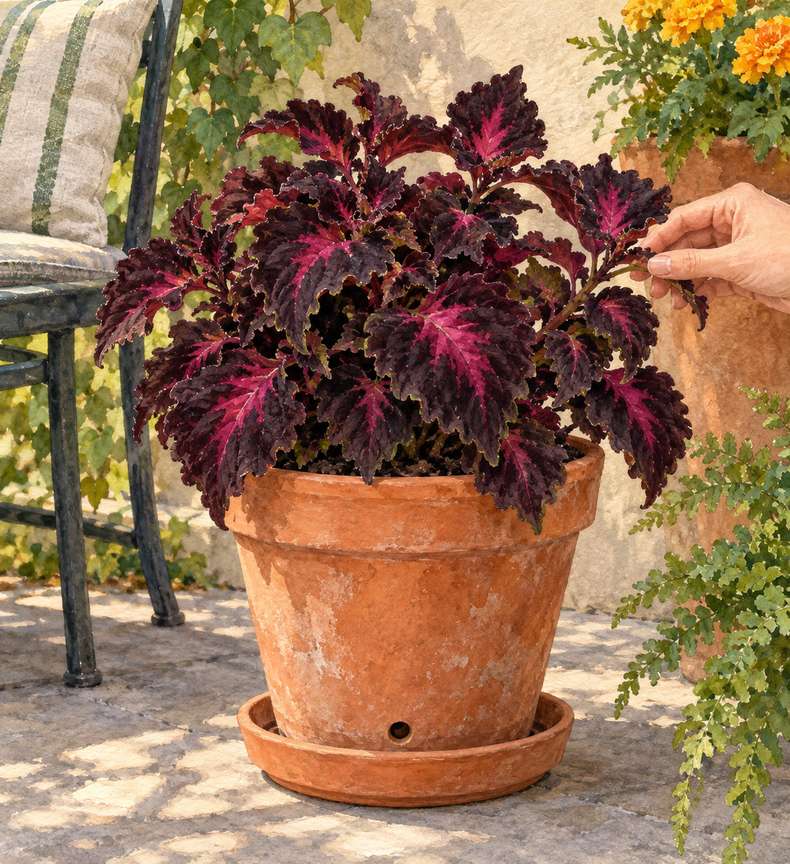
A burgundy coleus such as 'Black Dragon' gives near-black leaves and a magenta center without taking permanent bed space. Start with one plant in a pot about 10 inches wide, then pinch the top pair of leaves every few weeks to keep it bushy and under roughly 18 inches. Bright indirect light produces better color than a cave-like corner; one or two hours of gentle morning sun is useful. Coleus wilts quickly when a small pot dries, though constantly soggy mix can rot the roots. It is tender and usually grown as an annual outdoors, so frost ends the display. Before cold weather, take 4-inch cuttings to root indoors if you want to keep it without hauling in the whole plant.
5. Add pink-veined caladium for one warm season
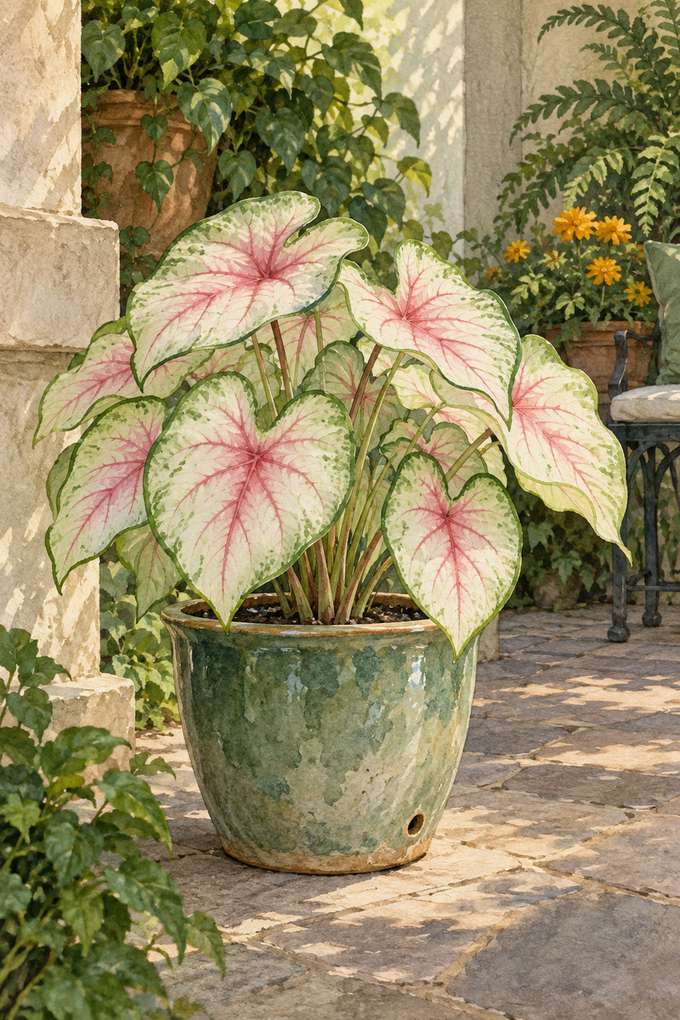
A pink-veined caladium turns a shaded summer container into a strong color patch with only one or two tubers. Choose a compact cultivar such as 'Strawberry Star' and use a pot at least 8 inches wide with drainage holes. Caladiums want warmth: planting into cold, wet mix encourages rot, so wait until nights stay around 60°F or warmer. Shade protects the thin leaves, but very dark placement can weaken stems and mute the pattern. Keep the mix lightly moist and shelter the pot from hard wind, which tears the broad leaves. The catch is winter. Caladium goes dormant as temperatures fall; in cold regions, either treat it as an annual or lift and store the dry tubers indoors. All parts are toxic if chewed.
6. Let golden Hakone grass spill over one edge
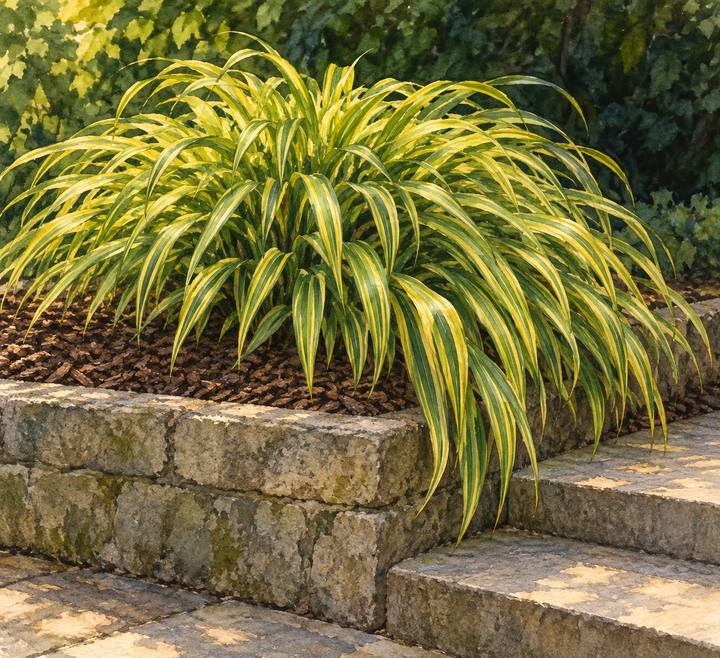
'Aureola' Japanese forest grass makes a soft gold-and-green cascade that brightens the edge of a step or raised bed. It grows slowly into a clump about 18 to 24 inches wide, so buy one plant and give it time instead of crowding the space. Morning sun can strengthen the gold, while harsh afternoon light may bleach or scorch the blades. This grass prefers moist, well-drained soil and looks ragged during drought; a 2-inch mulch layer helps where tree roots compete for water. It dies back in winter, leaving a flat gap until spring, and it is not a good choice if you need evergreen screening. Cut the old foliage to a few inches before fresh shoots appear, not in autumn when the dry blades still add texture.
7. Tuck spotted lungwort into a cool front corner
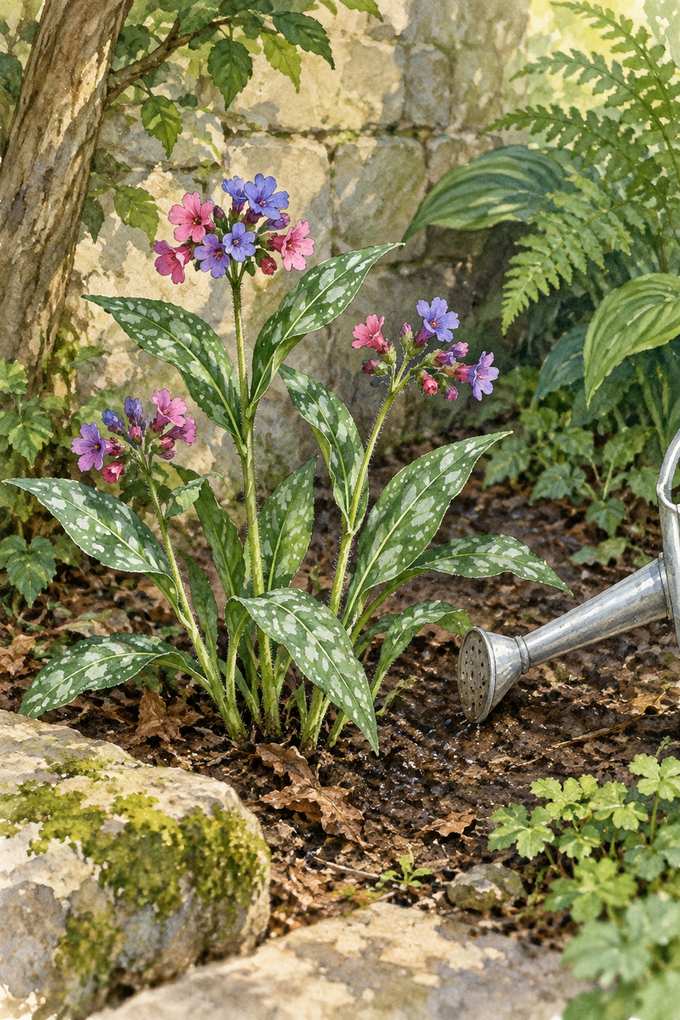
'Raspberry Splash' lungwort carries long green leaves scattered with silver spots, making it useful at the front of a shaded bed after its spring flowers fade. A mature plant occupies roughly 18 to 24 inches, and it can seed around when happy, so one is plenty for a small corner. Give it humus-rich soil that stays cool; reflected heat and dry tree roots lead to scorched edges and summer dormancy. Older cultivars are prone to powdery mildew, while good airflow and watering at soil level reduce the mess. Trim badly marked leaves rather than reaching for a spray. The foliage can look worn after flowering, but a light cutback and regular water often prompt cleaner new growth. Lungwort is deciduous or semi-evergreen depending on winter conditions.
8. Choose one small hosta with blue and gold leaves
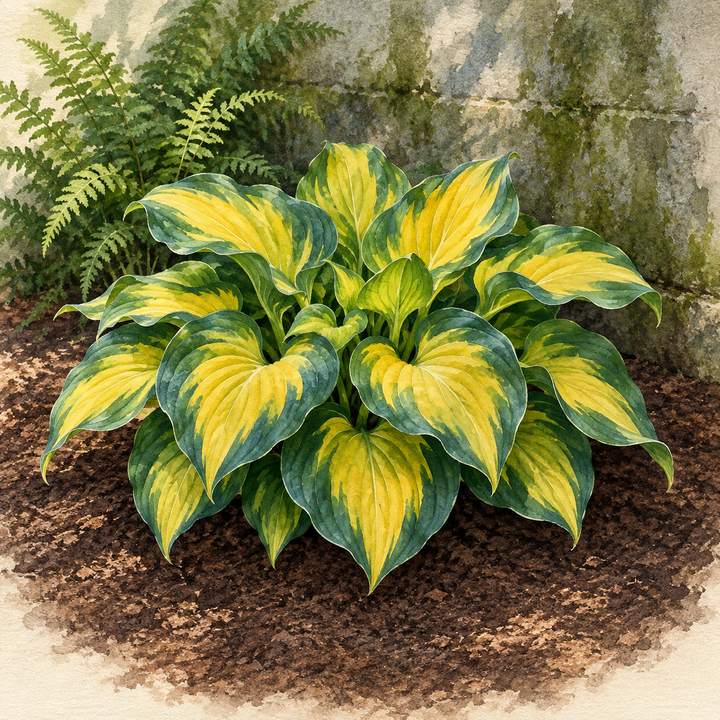
A small hosta such as 'June' combines blue-green margins with a chartreuse-gold center, giving more contrast than a row of plain green hostas. Site one specimen in a 16- to 20-inch-wide pocket and check the nursery tag, since hosta sizes range from teacup miniatures to 4-foot giants. A little morning sun sharpens the center color; hot afternoon sun burns it. Hostas also need steady moisture, yet wet crowns invite rot. Slugs and snails are the unglamorous problem, especially beside damp walls. Inspect under the leaves and remove hiding places such as stacked pots or thick, wet debris. The plant disappears completely after frost, so pair it with an evergreen fern if a winter bare spot would bother you.
9. Display rex begonia where rain cannot soak it
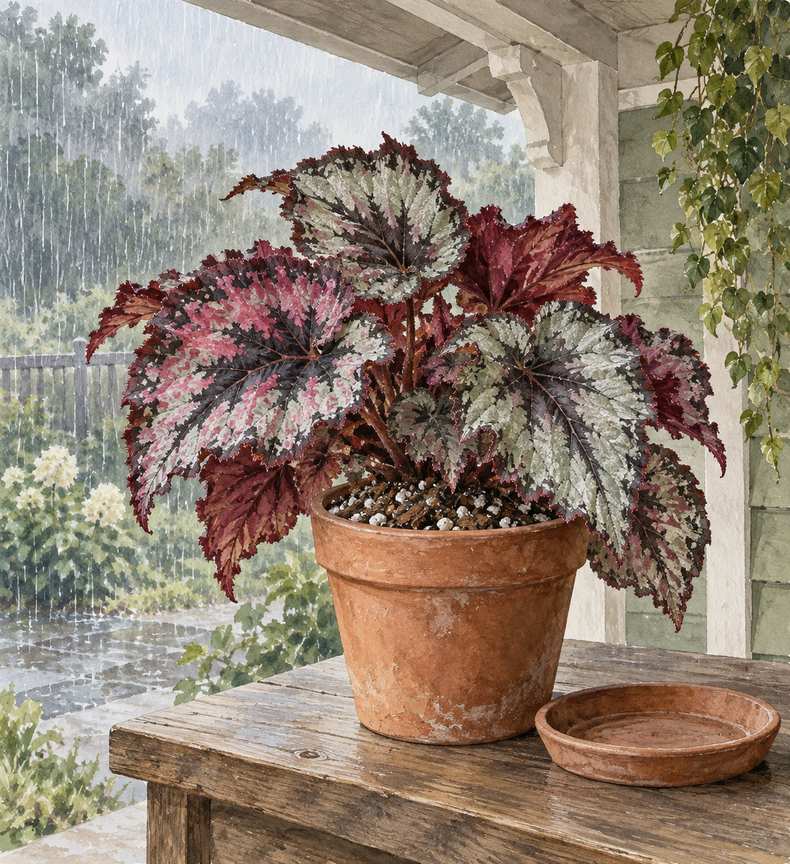
Rex begonia delivers silver, plum, pink, and charcoal patterning in a plant small enough for a tabletop. Put one in a 6- to 8-inch pot with a loose mix containing perlite, then set it under an eave or covered porch where heavy rain cannot saturate the crown. Bright filtered light keeps the colors distinct; direct midday sun can scorch a leaf in an hour. Water when the top inch of mix feels dry and empty the saucer afterward. Crispy edges usually point to dry air or irregular watering, while soft stems suggest excess moisture. Rex begonias are frost-tender and commonly overwintered indoors. They are also toxic to pets, so skip this one on a low table if a cat or dog chews plants.
Common questions
- How much light do colorful foliage plants need in shade?
- Most hold their best color in bright shade or 2 to 4 hours of gentle morning sun. Dense shade beneath an evergreen or under a deep roof may turn gold and burgundy leaves greener. Watch the site for a full day before planting, and avoid reflected afternoon heat from pale walls.
- Can these foliage plants grow in containers?
- Yes, but match the pot to the mature plant. A rex begonia can live in a 6- to 8-inch pot, while a small hosta needs closer to 16 to 20 inches. Every container needs a drainage hole, and renters should use pot feet or a saucer they empty promptly to prevent stains and root rot.
- Which plants keep their leaves through winter?
- That depends on climate. Brunnera, hosta, caladium, Hakone grass, and Japanese painted fern lose their top growth or go dormant. Coral bells and lungwort may stay partly evergreen in mild winters. Coleus, caladium, and rex begonia are frost-tender, so bring them inside or replace them; check your USDA zone for local hardiness.
- What is the lowest-maintenance combination for a tiny shade bed?
- Try one 'Caramel' coral bells, one Japanese painted fern, and one clump of 'Aureola' Hakone grass in a bed about 3 by 4 feet. They give amber, silver, and gold without seasonal replanting. The mix still needs weekly moisture checks during the first year and a late-winter trim; dry tree-root shade will require more water.