9 Deer-Resistant Plants for Shady Side Yards That Stay Presentable
A narrow, shaded side yard can become an easy deer buffet, especially when it sits along a regular browsing route. These nine plants tolerate limited sun and are usually left alone, while still looking tidy enough for a visible walkway.
1. Hellebores for Evergreen Structure and Late-Winter Flowers
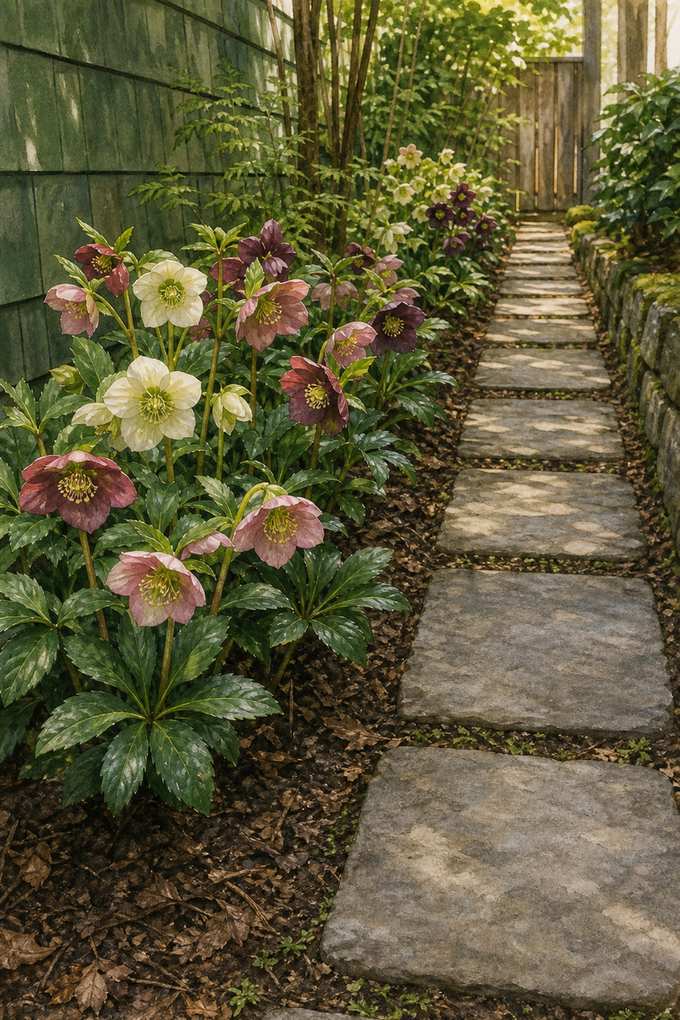
Hellebores give a shaded side yard leathery foliage and flowers when little else is happening, often from late winter into early spring. Their bitter, toxic leaves make them unappealing to deer, although no plant is completely browse-proof. Space plants about 18 to 24 inches apart in humus-rich soil that drains after rain; soggy winter ground can rot the crowns. Mature clumps commonly reach 18 to 24 inches wide, so keep them back from a narrow gate swing or stepping-stone edge. Remove flattened old leaves before new blooms open to keep the planting presentable. The downside is price: named cultivars can cost more than ordinary shade perennials, and seedlings may take several years to reach a substantial size.
2. Epimedium as a Neat, Tough Ground Layer
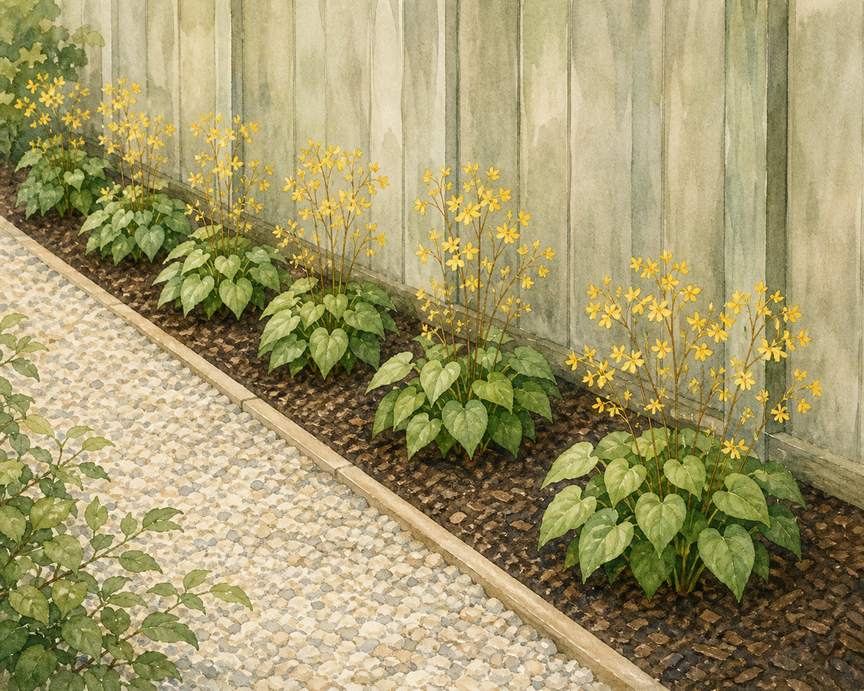
Epimedium forms a low, weed-suppressing layer beneath shrubs or along the dim edge of a side-yard path. Once established, its wiry stems and slightly tough leaves generally discourage deer, while small spring flowers hover above the foliage. Choose a clumping cultivar for tight quarters and set plants 12 to 18 inches apart; running types can travel beyond their allotted strip. Most handle ordinary shade, and some tolerate dry soil after their first full growing season, but new plants still need roughly 1 inch of water weekly when rain is scarce. Shear last year's foliage to about 3 inches before flowers emerge. That cleanup is easy but time-sensitive—wait too long and you will cut off the delicate bloom stems along with the old leaves.
3. Japanese Painted Fern for Color Without Flowers
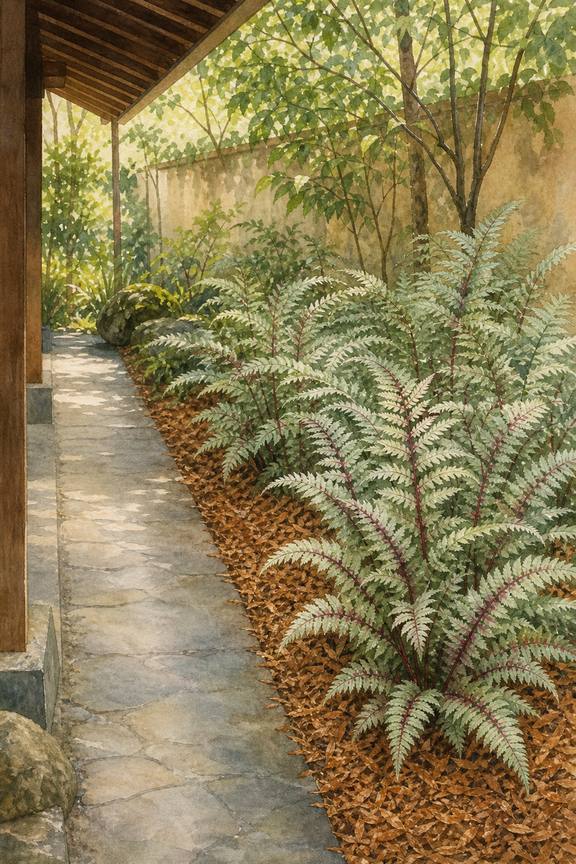
Japanese painted fern brings silver, pewter, and burgundy tones into deep shade without relying on blooms. Deer usually avoid the textured fronds, making it useful where hostas are repeatedly chewed down. A typical cultivar grows about 18 inches tall and 18 to 24 inches wide; place it where arching fronds will not brush ankles along a narrow walkway. The soil should remain evenly moist but not waterlogged, especially beside roof overhangs where rainfall may miss the bed entirely. Add a 2-inch layer of shredded leaves or fine bark to slow moisture loss without burying the crown. This fern is deciduous, so expect bare ground in winter and plan to cut collapsed fronds down after frost rather than expecting year-round screening.
4. Brunnera for Silver Leaves in Low Light
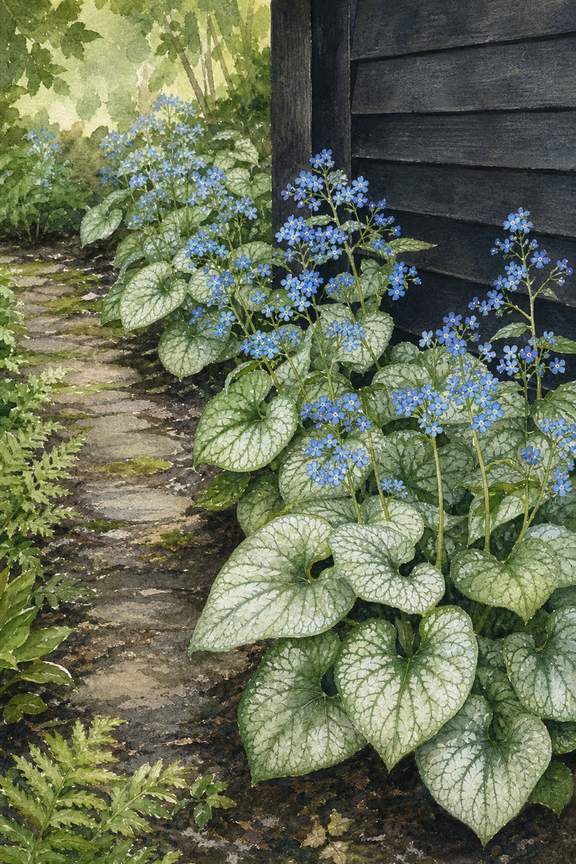
Brunnera, especially silver-leaved cultivars such as 'Jack Frost,' brightens a dark side yard long after its small blue spring flowers fade. The coarse foliage is generally low on a deer's menu, and established clumps stay around 12 to 18 inches tall. Give each plant roughly 18 to 24 inches of width and use moist, well-drained soil; hot afternoon sun can scorch the pale leaves, while prolonged drought leaves them ragged. Snip out damaged foliage at the base instead of trimming halfway across a leaf, which makes the clump look worse. Brunnera may self-seed, but seedlings from named cultivars often lose the strong silver pattern. It also goes dormant in cold climates, so pair it with a sedge if the bed needs winter presence.
5. Pennsylvania Sedge for a Soft, Mow-Free Edge
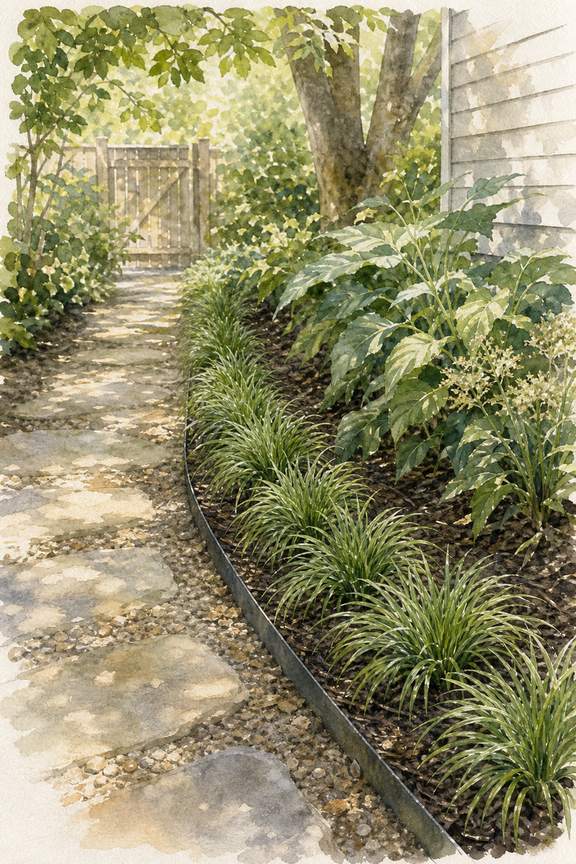
Pennsylvania sedge creates a fine-textured, grasslike edge that suits a shady passage better than struggling lawn turf. Its narrow leaves are not a favorite deer food, and established plants form loose colonies about 8 to 12 inches tall. Install plugs 8 to 12 inches apart if you want them to knit together within two or three growing seasons. This native sedge prefers dry to moderately moist, well-drained soil and can flop or thin in heavy, constantly wet clay. It does not need weekly mowing; one cutback to about 3 inches in late winter removes tired foliage before fresh growth starts. The trade-off is its informal habit: runners can cross crisp edging, so use a steel edge or pull stray shoots twice a year.
6. Golden Japanese Forest Grass for a Bright Path Accent
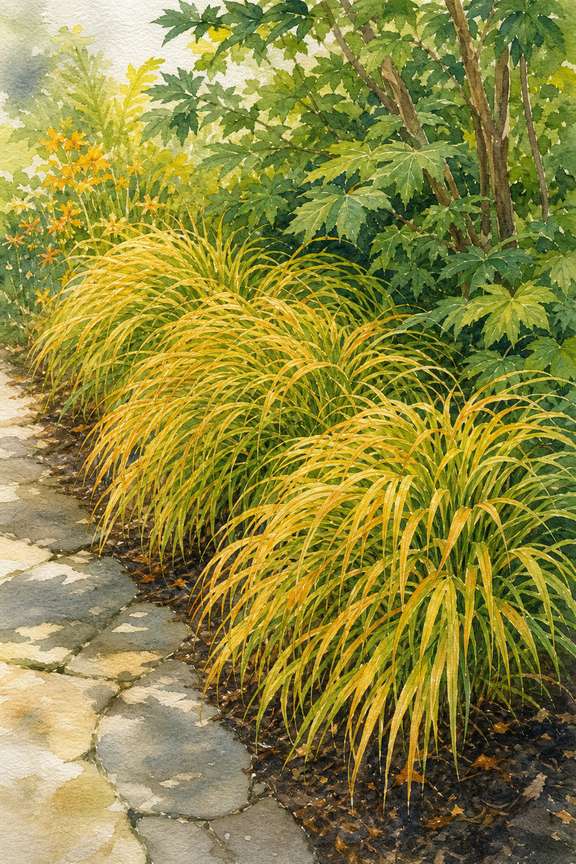
Golden Japanese forest grass, or Hakonechloa macra, makes a dark passage feel lighter with arching yellow-green blades rather than tall, space-hungry flowers. Deer tend to pass it over, though hungry animals may sample new growth. Most cultivars reach 12 to 18 inches tall and slowly widen to about 24 inches, so one clump can mark a corner without blocking a 30-inch path. It performs best in moist, well-drained soil with morning sun or bright shade; deep shade produces greener leaves, while hot afternoon sun can bleach them. Cut the old blades to 2 or 3 inches in late winter. Growth is famously slow, and nursery pots are not cheap, so use three well-placed clumps rather than budgeting for an instant mass planting.
7. Solomon's Seal for Height Along a Fence
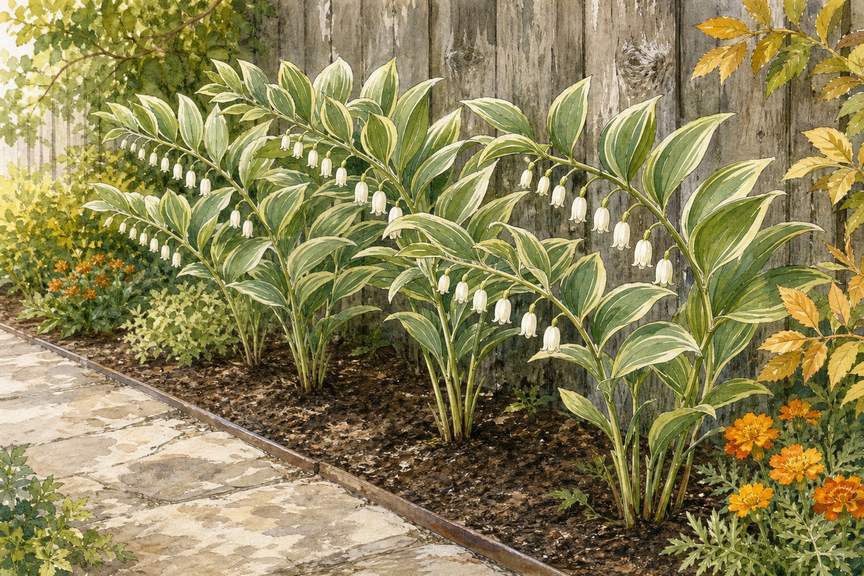
Solomon's seal adds upright structure without becoming a bulky shrub, sending arching stems 2 to 3 feet high along a shaded fence. Small white bells hang beneath the stems in spring, followed by clean green or variegated foliage. Deer usually avoid it, but fresh shoots can still be sampled where browsing pressure is severe. Plant rhizomes about 18 inches apart in loose soil enriched with compost, then allow several seasons for a colony to develop. The stems lean outward, so leave 12 inches between the crowns and a frequently used walkway. Solomon's seal disappears completely after frost, and spreading rhizomes may wander into neighboring plants. A buried edging strip can limit expansion, but choose a clumping variety if the bed is less than 3 feet wide.
8. Japanese Pieris for a Narrow Evergreen Anchor
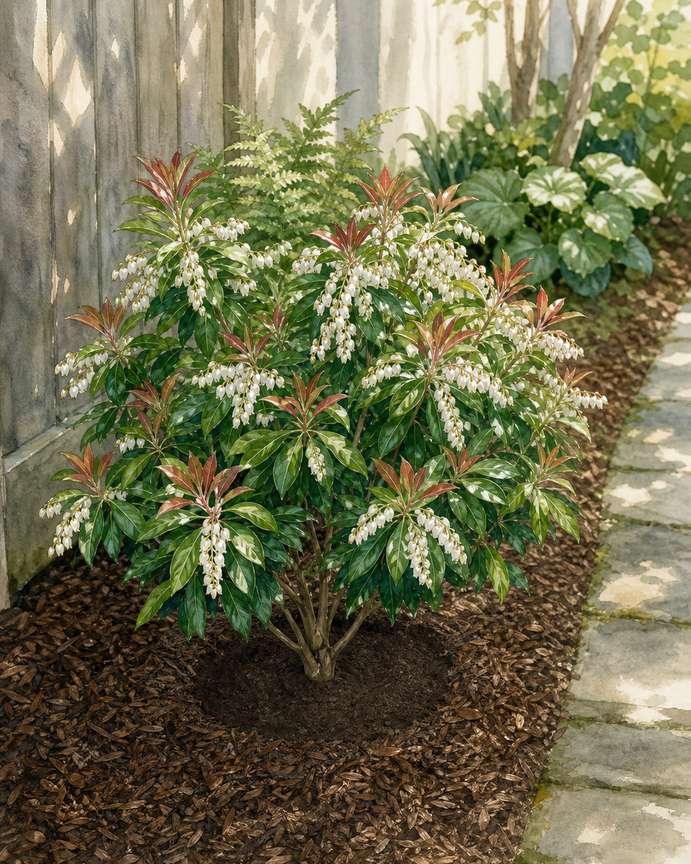
A compact Japanese pieris supplies evergreen leaves, spring flower clusters, and reddish new growth where a side yard needs one permanent anchor. Deer generally avoid its toxic foliage, but the plant is also toxic if eaten by pets or children, so it is not suitable beside a play route. Select a dwarf cultivar such as 'Cavatine,' which matures around 2 to 3 feet tall and wide, rather than a standard form that can exceed the available bed. Pieris needs acidic, well-drained soil and shelter from winter wind; test the soil before assuming an azalea fertilizer will solve a high-pH site. Keep mulch 3 inches away from the trunk. Lace bugs can stipple leaves in warm, exposed locations, making deep but airy shade preferable to a hot reflected wall.
Common questions
- Are any shade plants completely deer-proof?
- No. Deer preferences change with hunger, season, and local plant availability. Hellebores, ferns, epimedium, and pieris are commonly passed over because of toxic, bitter, bristly, or tough foliage, but new growth may still be sampled. Protect fresh plantings with temporary mesh or repellent until roots establish, especially along a known deer route.
- How much light counts as shade in a side yard?
- Full shade usually means fewer than 3 hours of direct sun, while part shade receives roughly 3 to 6 hours. Reflected heat matters too: a west-facing wall can scorch brunnera or lungwort even if direct sun is brief. Watch the bed at 9 a.m., noon, and 3 p.m. before choosing plants.
- Which choices stay visible during winter?
- Hellebores and Japanese pieris are the strongest evergreen anchors in suitable climates. Epimedium may remain semi-evergreen, while ferns, brunnera, lungwort, forest grass, and Solomon's seal can die back. Pennsylvania sedge often keeps some color but looks best after a late-winter cutback. Confirm evergreen performance for your USDA zone.
- How do I keep plants from narrowing an already tight walkway?
- Measure the mature width, not the nursery pot, and preserve at least a 30-inch clear route where people regularly pass. Set arching plants such as Solomon's seal and forest grass 12 inches back from the edge. Use clumping cultivars, steel edging for spreading sedges, and annual division rather than repeatedly shearing plants into unnatural shapes.