9 Dry-Shade Plants for Tiny Yards Under Thirsty Mature Trees
Mature tree roots take the first drink, while overhead branches block both rain and sun. These nine plants can handle that double constraint once established, with realistic notes on root competition, watering, spread, and the small patches where each one works best.
1. Edge the Root Zone With Barrenwort
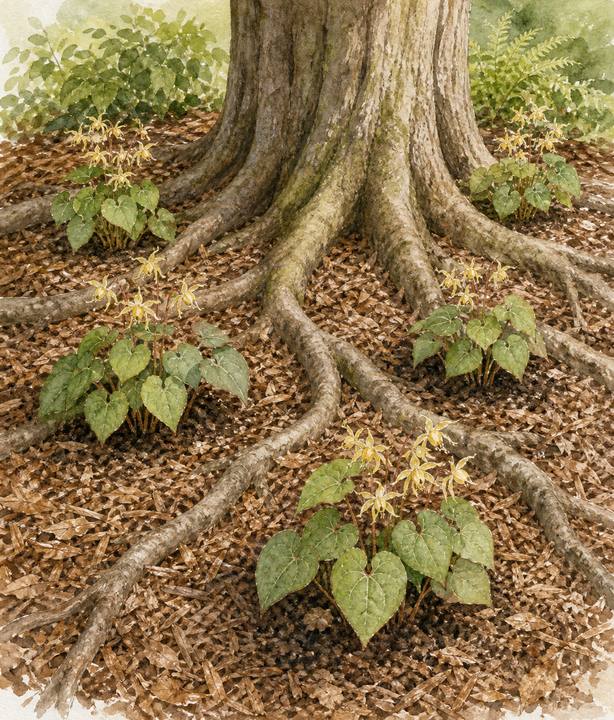
Barrenwort (Epimedium) makes a low, knitted layer of heart-shaped leaves where tree roots leave little digging room. Space small plants 12 to 15 inches apart and tuck them into pockets between major roots rather than cutting through roots thicker than a finger. It tolerates dry shade after its first full growing season, but new divisions still need roughly 1 inch of water weekly when rain misses the canopy. Many varieties hold foliage through mild winters; colder gardens may see leaves brown and collapse. The trade-off is speed: barrenwort can take two or three seasons to close gaps, and named cultivars cost more than common groundcovers. A 2-inch layer of shredded leaves helps while it settles in.
2. Replace Thin Turf With Pennsylvania Sedge
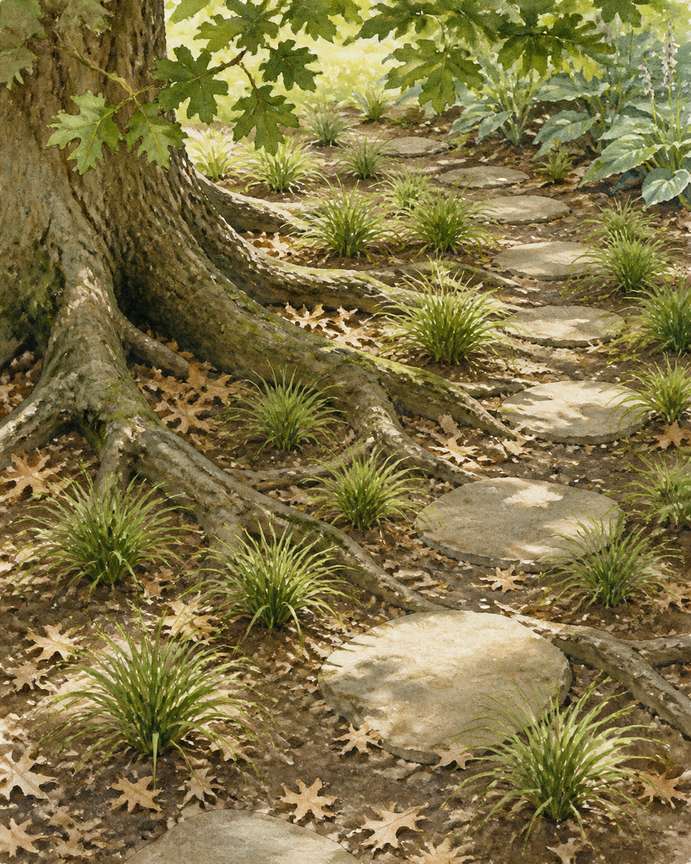
Pennsylvania sedge (Carex pensylvanica) gives a soft, grassy look without asking dry shade to support lawn. Set plugs about 8 to 12 inches apart for a loose meadow under an established oak or maple; the fine leaves usually stay around 8 inches tall and need only an optional late-winter trim. It spreads by short rhizomes, so it fills steadily without forming a tall wall in a tiny yard. The catch is regional fit: this sedge is native mainly to eastern and central North America and dislikes soggy, compacted soil. Water plugs through their first summer, especially where branches shed rainfall. It handles foot traffic poorly, so add flat stepping stones instead of expecting it to survive the route to the hose bib.
3. Use Bigroot Geranium for Fast, Fragrant Cover
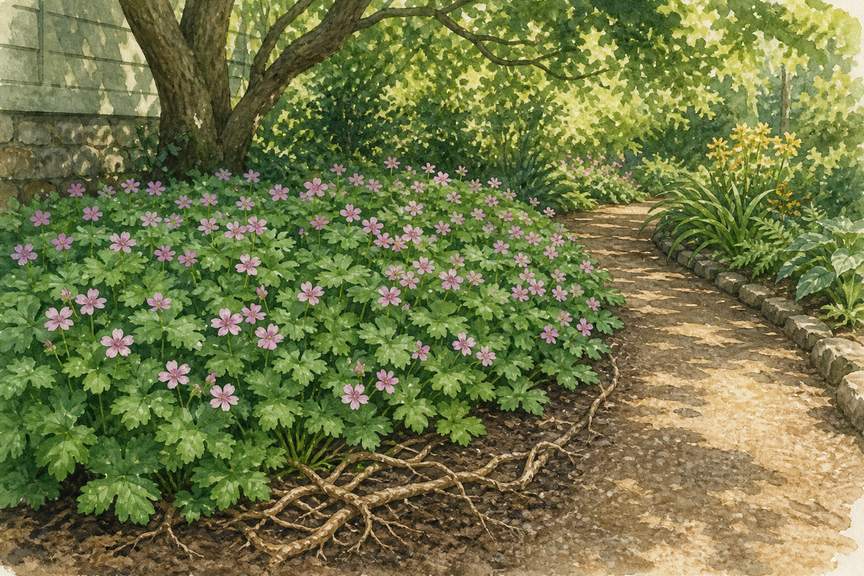
Bigroot geranium (Geranium macrorrhizum) is the practical choice when you want coverage sooner: aromatic, fuzzy leaves spread by surface-level rhizomes and can knit together from plants set 15 to 18 inches apart. It flowers pink or white in late spring, then carries the bed with foliage that often colors in fall. Once rooted, it copes with lean soil and missed watering better than showier cranesbills. That vigor is also the warning. In a 6-foot-wide side yard, edge it once or twice a year so it does not swallow a path or smaller epimedium. Some gardeners dislike the leaf scent, and humid southern sites can look tired by August. Water during the first season, then reserve irrigation for extended drought.
4. Tuck Christmas Ferns Into Deeper Root Pockets
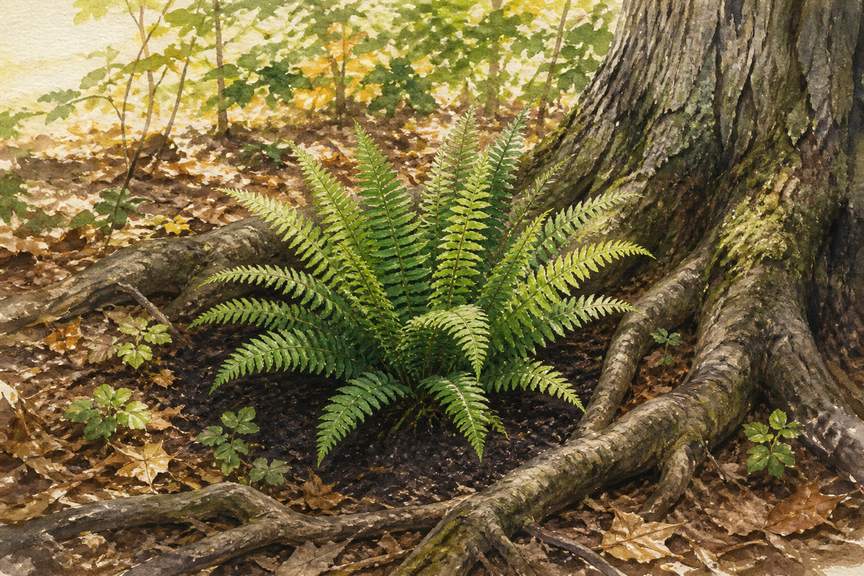
Christmas fern (Polystichum acrostichoides) adds upright evergreen structure without running across a tiny bed. A mature clump is commonly 18 to 24 inches wide, so one fern can anchor a pocket between roots while lower groundcovers handle the edges. It is native across much of eastern North America and tolerates dry shade better than moisture-loving maidenhair fern, although “tolerates” does not mean no water: soak it during prolonged summer drought and throughout its first year. Plant the crown level with the soil, never buried under a mulch mound. Old fronds can flatten by late winter and need cutting before new fiddleheads rise. It will not solve the driest spot directly against a trunk; place it nearer the canopy's drip line where occasional rain reaches.
5. Add Winter Color With Lenten Rose
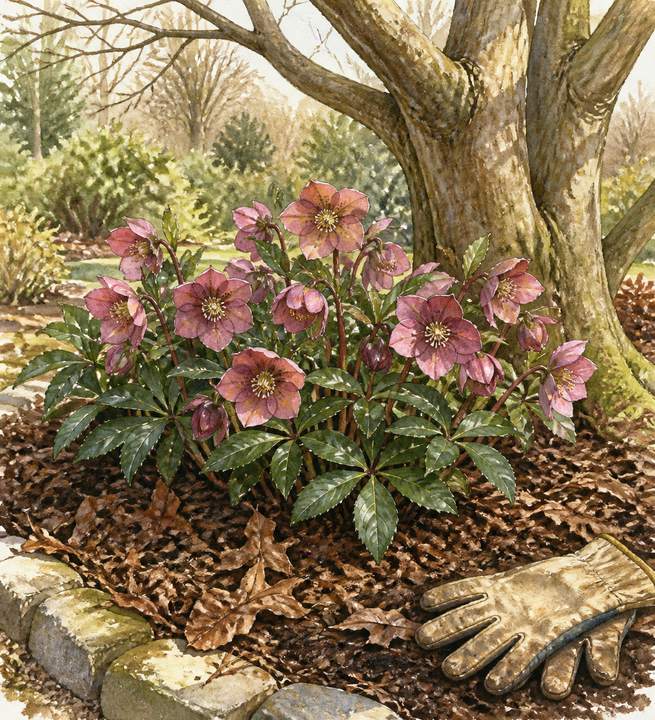
Lenten rose (Helleborus × hybridus) earns its square foot with leathery foliage and late-winter flowers, a useful lift before the tree leafs out. Give each plant roughly 18 to 24 inches of width and site it where winter sun can reach beneath deciduous branches. Established hellebores endure dry spells, but flowering and leaf quality suffer in powder-dry soil, so water deeply during long rainless stretches and mulch with 2 inches of leaf mold. The honest downsides are important: plants are relatively expensive, seedlings vary in color, and every part is toxic if eaten. Skip hellebores where pets or young children chew garden plants. Remove battered old leaves carefully; the sap can irritate sensitive skin, so gloves are sensible.
6. Brighten the Front Edge With Barren Strawberry
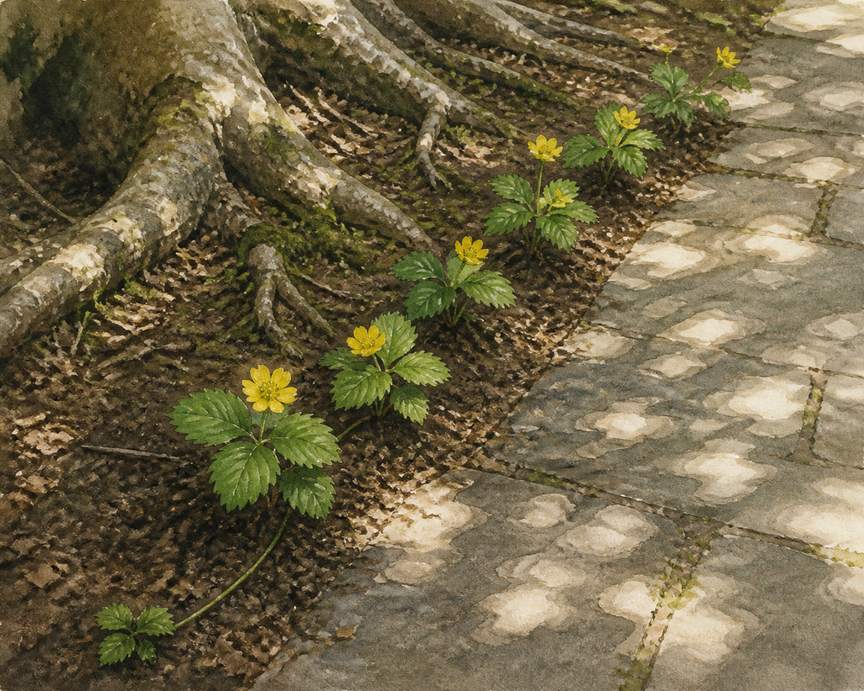
Barren strawberry (Waldsteinia fragarioides) makes a tidy front edge with three-part leaves and small yellow spring flowers, but no edible fruit. Plants stay roughly 4 to 6 inches high and spread into a low mat, useful beside a narrow walk where flopping foliage would be annoying. Start them 10 to 12 inches apart in loose pockets amended with leaf mold, then water regularly for the first growing season. Once established, they manage periodic dryness and root competition, especially in dappled rather than pitch-black shade. Watch the boundary: runners can creep into neighboring pockets, although they are easy to pull. In hot southern climates, harsh afternoon sun and severe drought can scorch the leaves, so this is not the spot for reflected heat from a wall.
7. Plant Coral Bells Where the Canopy Opens
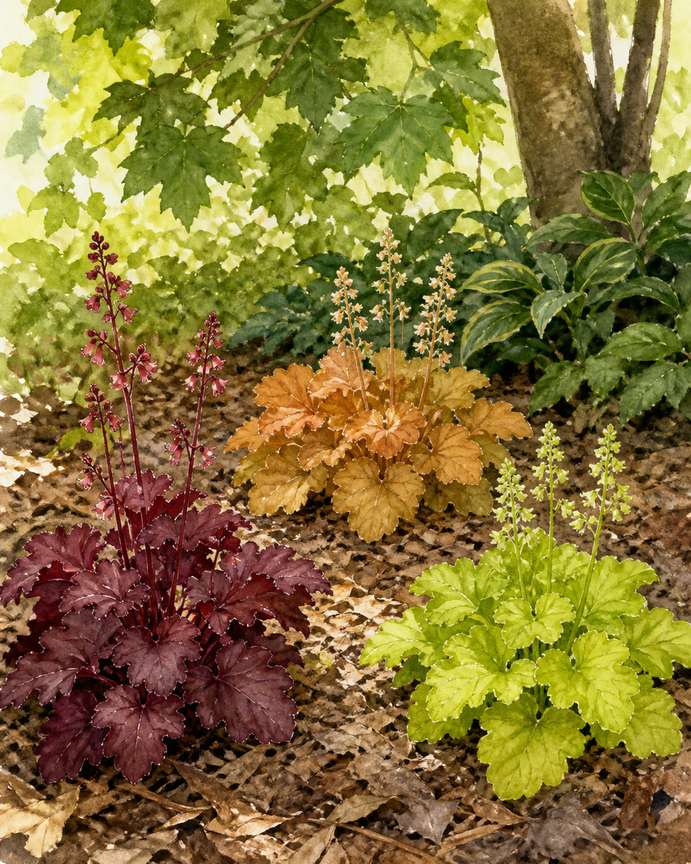
Coral bells (Heuchera) bring burgundy, caramel, or lime foliage to the brighter outer edge of a tree canopy, where two or three hours of filtered morning sun can improve color. Choose a locally hardy cultivar and allow about 12 to 18 inches per crown. Thick-leaved selections generally cope with dry spells better than delicate, heavily ruffled ones, but none appreciate months of dust-dry soil. Their shallow crowns can heave after freeze-thaw cycles, so check them in early spring and reset any exposed roots. The bigger limitation is climate: some cultivars fade in southern heat, while others rot in wet winter clay. Buy one plant first, watch it for a season, and repeat only if its color and crown remain strong in your exact pocket.
8. Try Appalachian Sedge in a Narrow Native Strip
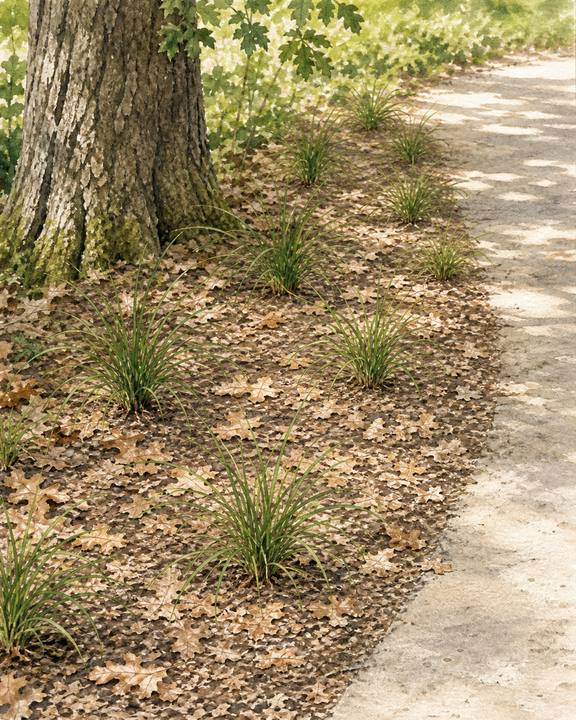
Appalachian sedge (Carex appalachica) forms fine, arching clumps that soften a narrow bed without the mowing or thirsty roots of turf. The foliage usually reaches about 12 inches, and plugs spaced 10 to 12 inches apart create a loose, natural ribbon rather than a solid carpet. It suits dry, wooded conditions in much of its native eastern US range and looks especially convincing with fallen oak leaves left as light mulch. Expect gaps: this clumping sedge does not race sideways, so weeds may appear between plants for the first two seasons. It also dislikes heavy foot traffic and standing winter water. Before buying a full flat, confirm the species is appropriate for your region; western gardeners should ask a native nursery for a local dry-shade Carex equivalent.
9. Use Dwarf Fragrant Sumac at the Sunny Fringe
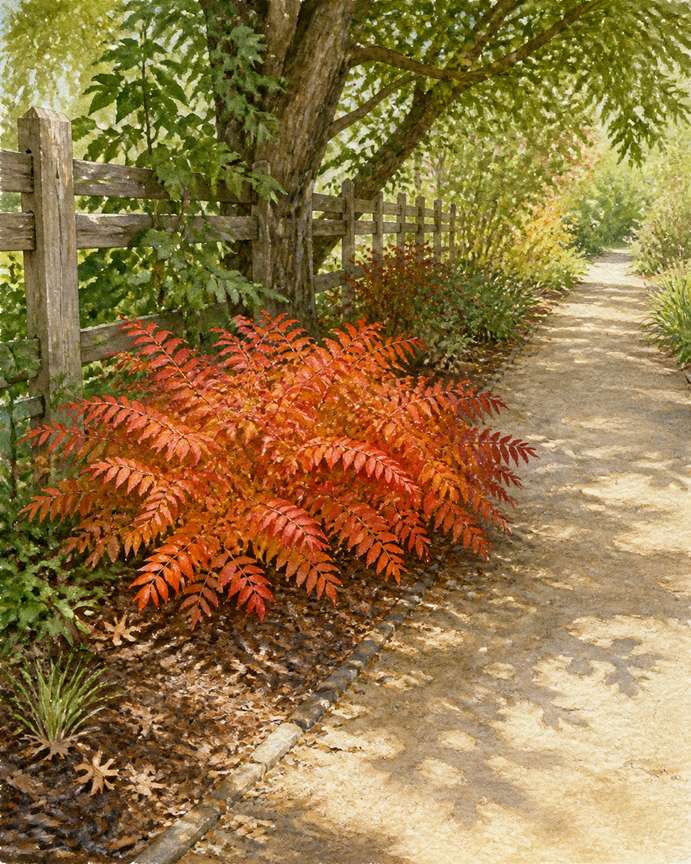
Dwarf fragrant sumac such as ‘Gro-Low’ (Rhus aromatica) can cover the tough transition from tree shade to a sunnier fence line. It grows about 2 feet tall but may spread 6 to 8 feet, so use a single plant—not a row—in a tiny yard, and give it room away from paving. Once established, it handles dry soil, tree-root competition, and several hours of sun, with red-orange fall color as the payoff. The trade-off is scale: arching stems root where they touch and can outgrow a 4-foot bed unless pruned or lifted. It also looks looser and flowers less in deep shade. Check mature dimensions on the cultivar tag, water through the first year, and do not confuse fragrant sumac with poison sumac.
Common questions
- How do I plant under a mature tree without damaging its roots?
- Use small plugs or 1-quart plants and open pockets between roots with a hand trowel. Do not cut roots thicker than a finger, raise the soil level over the root zone, or pile mulch against the trunk flare. If the ground is a solid web of large roots, shift the planting outward rather than forcing a hole.
- Do dry-shade plants need watering under trees?
- Yes, especially while establishing. Give new plants a deep drink when the top 1 to 2 inches of soil are dry through their first growing season; a tree canopy can divert light rain. Established plants on this list tolerate dry periods, but even they may need water during prolonged heat or drought.
- Can I add topsoil to make planting under a tree easier?
- Avoid burying the existing root zone under several inches of new soil, which can reduce oxygen around tree roots. Work with small planting pockets instead, then top-dress with about 2 inches of shredded leaves or leaf mold, keeping the trunk flare clear. Ask a certified arborist before changing grade around a valuable tree.
- Which choices stay green in winter?
- Christmas fern and many barrenworts or hellebores remain evergreen or semi-evergreen in milder climates, but snow, wind, and zone change the result. Pennsylvania and Appalachian sedges may stay partly green before needing a late-winter trim. Check the cultivar's hardiness zone and expect some battered foliage by spring.