9 Flowering Shade Perennials That Actually Bloom in Low Light
A small, shady yard can still carry flowers from late winter into fall—you just need plants matched to the kind of shade you have. These nine perennials earn their space with reliable blooms, manageable footprints, and honest trade-offs.
1. Hellebore for Flowers Before the Trees Leaf Out
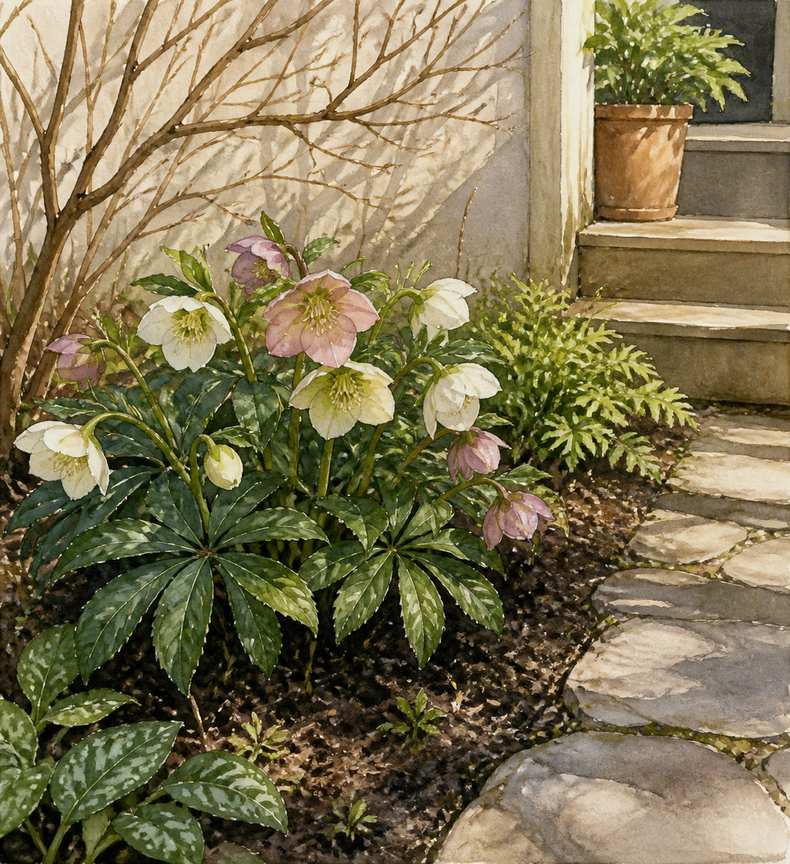
Hellebore is the early-season anchor for a shady border, opening nodding white, pink, or plum flowers when much of the yard is still bare. A mature plant usually occupies about 18 to 24 inches, so one is often enough beside a small path or back step. It handles summer shade well because flowering happens before deciduous trees fully leaf out. Plant it in humus-rich soil that drains rather than staying soggy, and keep the crown at soil level. The downside is patience: nursery plants can be expensive, and young hellebores may take a season or two to look substantial. All parts are toxic if eaten, so place them away from pets and curious children.
2. Epimedium for Dry Shade Along a Fence
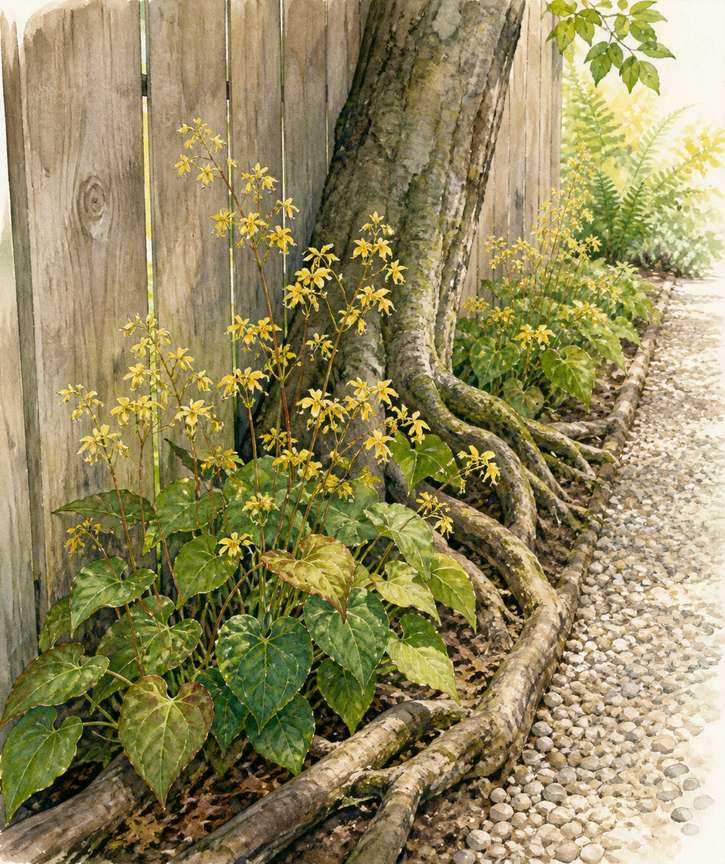
Epimedium fits the awkward strip where a fence and nearby tree roots leave both shade and dry soil. Its wiry spring stems carry tiny yellow, white, or rose flowers above heart-shaped leaves, while a clump generally stays around 12 to 18 inches tall. Once established, it needs less supplemental water than astilbe or foamflower, making it useful where dragging a hose is inconvenient. Give a new plant regular water through its first growing season; “drought tolerant” does not apply immediately after planting. Some varieties spread slowly, while vigorous types such as Epimedium × versicolor can form a wider patch. Check the cultivar label and allow roughly 18 inches of room rather than squeezing it against paving.
3. Brunnera for Blue Spring Flowers and Bright Leaves
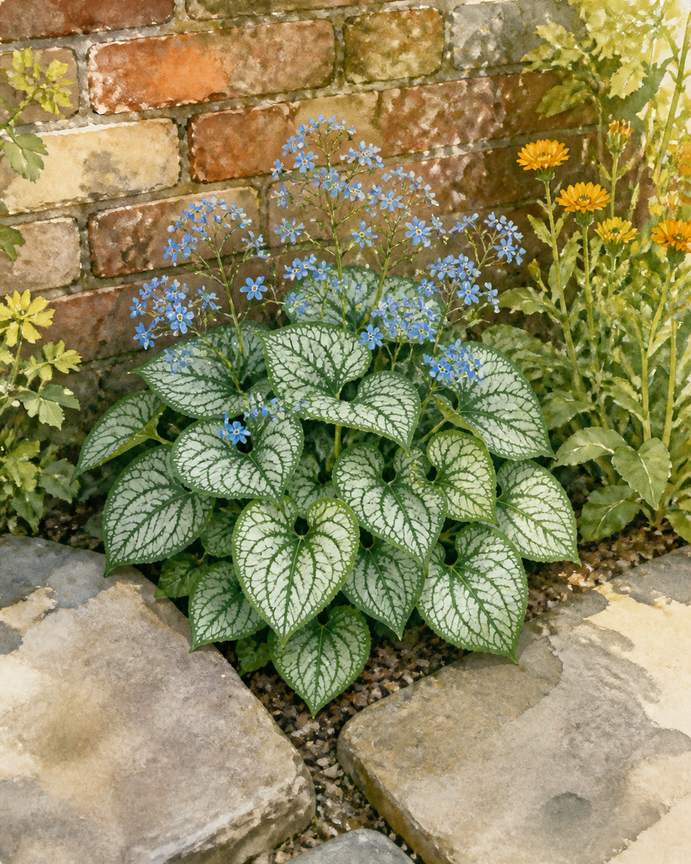
Brunnera macrophylla brings sprays of forget-me-not-blue flowers in spring, followed by broad leaves that keep a dim corner from looking empty. Silver-leaved cultivars such as ‘Jack Frost’ are especially useful beside a north-facing wall because the foliage reflects limited light. Expect a clump about 18 inches tall and 24 inches wide, and give it moist, well-drained soil rather than a cramped pocket that dries every afternoon. In warmer regions, strong late-day sun can scorch the leaves even when the plant receives only a few hours of light. Brunnera may self-seed, although named seedlings will not always retain silver markings. Remove unwanted volunteers while they are small, or leave a few to soften the edge of a stepping-stone path.
4. Old-Fashioned Bleeding Heart for a Spring Focal Point
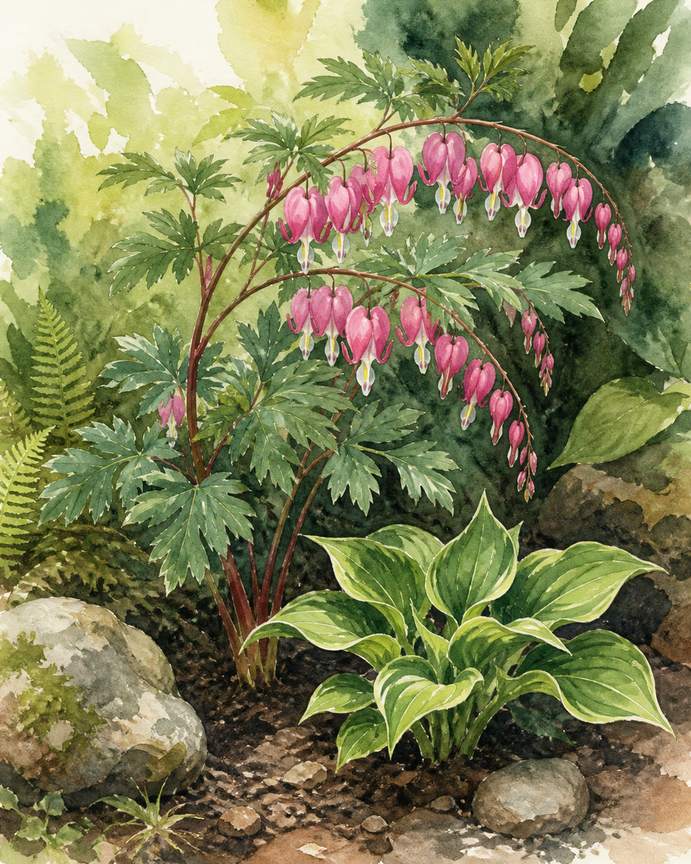
Old-fashioned bleeding heart, Lamprocapnos spectabilis, earns a focal spot with arching stems of pink-and-white heart-shaped flowers. It can reach about 30 inches tall and wide, so use one plant rather than a row in a tiny yard. Morning light or bright dappled shade supports better flowering than the black shade beneath an evergreen. Its main trade-off arrives after the show: foliage often yellows and disappears by midsummer, especially when soil dries. Place a later-emerging companion such as a compact hosta nearby to cover the gap without crowding the crown. Keep the soil evenly moist in spring, but avoid a low spot that holds standing water. The plant is also toxic if eaten, which matters in pet-used yards.
5. Astilbe for a Moist, Shady Low Spot
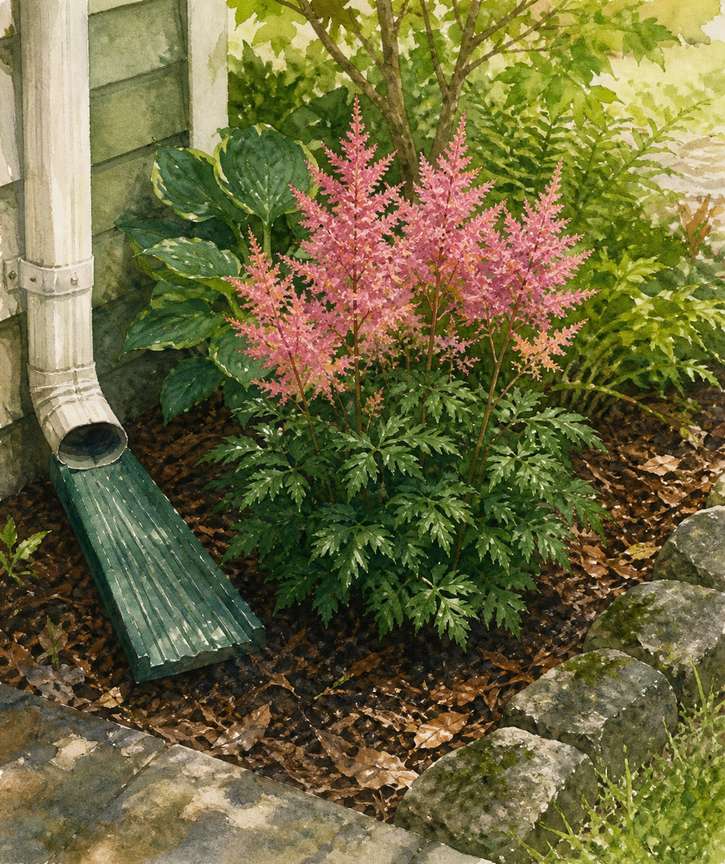
Astilbe supplies upright flower plumes where shade comes with consistently moist soil, such as the lower edge of a gently sloped yard. Compact cultivars including ‘Visions’ stay near 18 inches tall, while larger types can exceed 3 feet, so read the mature-size tag before buying. The feathery pink, red, or white blooms are far more dependable with two to four hours of filtered light than in dense, all-day darkness. Astilbe is not forgiving about drought: crispy brown leaf edges are often a watering problem, not a disease. Add 2 inches of leaf mold or fine bark mulch, keeping it off the crown, and water during dry spells. Skip this plant if tree roots make the site powder-dry by June.
6. Foamflower for a Narrow Woodland-Style Edge
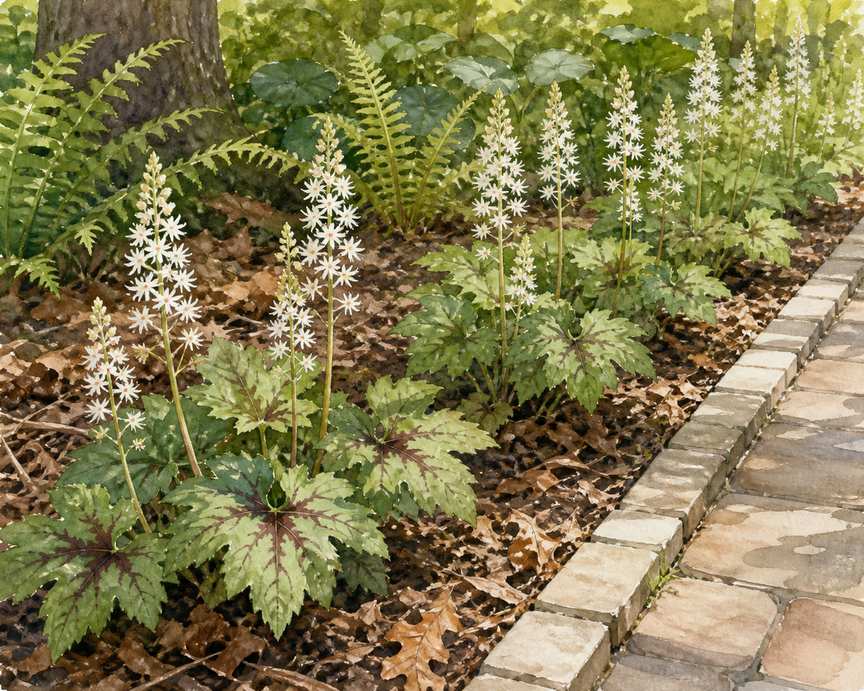
Foamflower, or Tiarella cordifolia, makes a neat flowering edge without swallowing a narrow walkway. Slender white or pale-pink flower spikes rise roughly 10 to 15 inches above maple-shaped leaves in spring, and the foliage often develops burgundy markings in cool weather. It prefers dappled shade and soil that stays lightly moist but drains after rain. In a 2-foot-wide bed, space plants about 12 inches apart and let their short runners knit together gradually. Native range and performance vary by species and cultivar, so choose one recommended for your region rather than assuming every tiarella behaves identically. Hot, dry wind can brown the leaf margins, and dense evergreen shade may reduce flowering to only a few spikes.
7. Coral Bells for Small Footprints and Airy Blooms
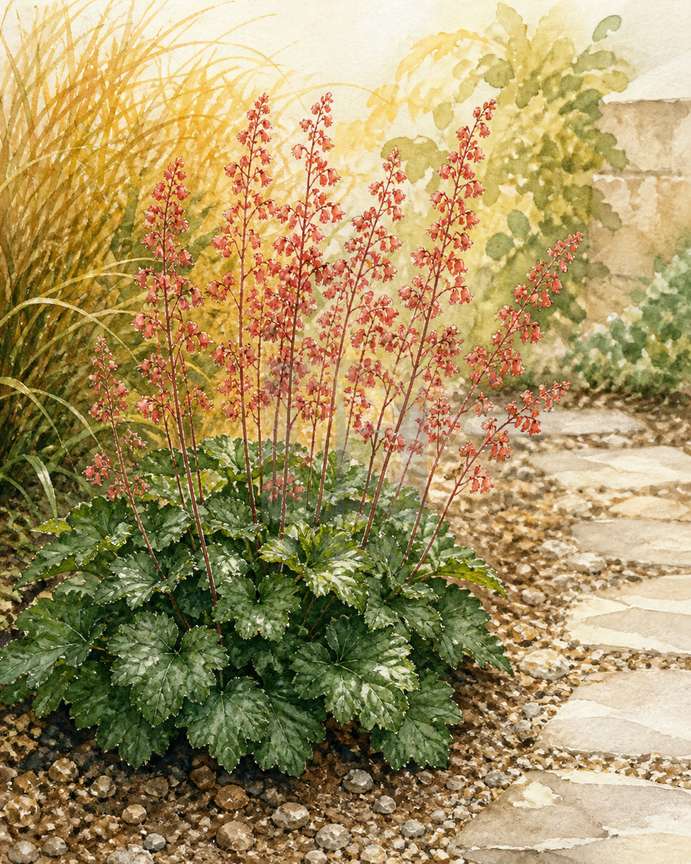
Coral bells, or Heuchera, tuck flowers into small gaps where a broad, floppy perennial would block the path. Most form a foliage mound 12 to 18 inches across, then send wiry flower stems up to 2 feet tall. Green-leaved cultivars generally tolerate shade better than very pale yellow ones, which can scorch or lose vigor depending on climate. For a stronger floral display, look for bloom-focused selections such as ‘Paris’ rather than choosing by leaf color alone. Heuchera needs drainage; winter-wet clay can rot the crown, and freeze-thaw cycles may push it above the soil line. Check the crown each spring, replant it level if necessary, and divide an older woody clump every three or four years.
8. Japanese Forest Grass With Woodland Poppy
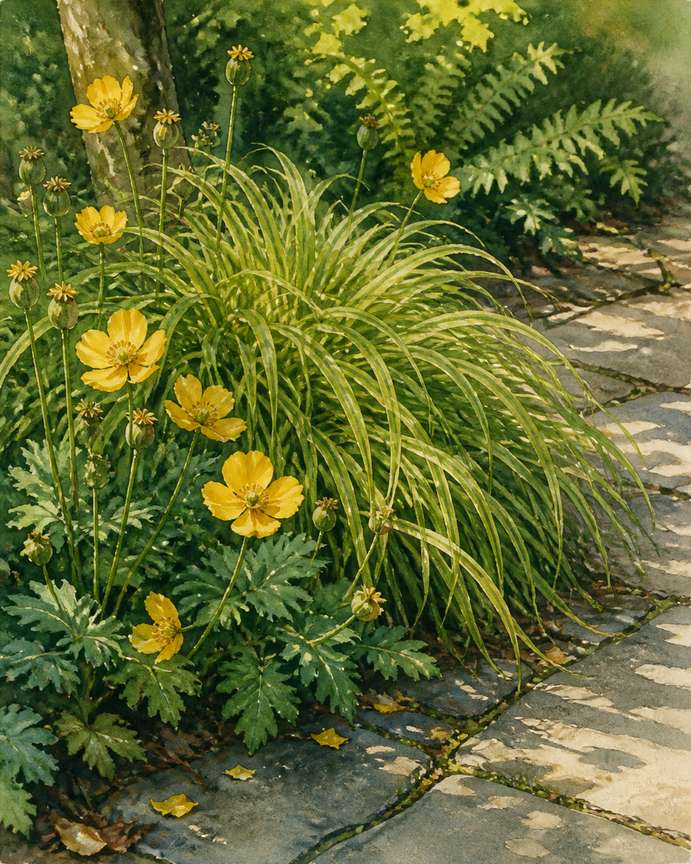
Pair Japanese forest grass with woodland poppy when a tiny shaded corner needs both structure and flowers. Hakonechloa macra forms a soft, arching mound about 18 inches wide, while Stylophorum diphyllum adds clear yellow blooms above lobed foliage in spring. The grass is the quieter partner, but it keeps the planting intentional after the poppy’s main show ends. Both appreciate humus-rich soil and bright or dappled shade; deep shade produces fewer poppy flowers and slower grass growth. Woodland poppy can self-seed enthusiastically in moist soil, so remove seedpods before they split if the bed borders paving or a neighbor’s yard. Verify that it is appropriate for your region, as native status and garden behavior differ across the United States.
9. Japanese Anemone for Late-Season Part Shade
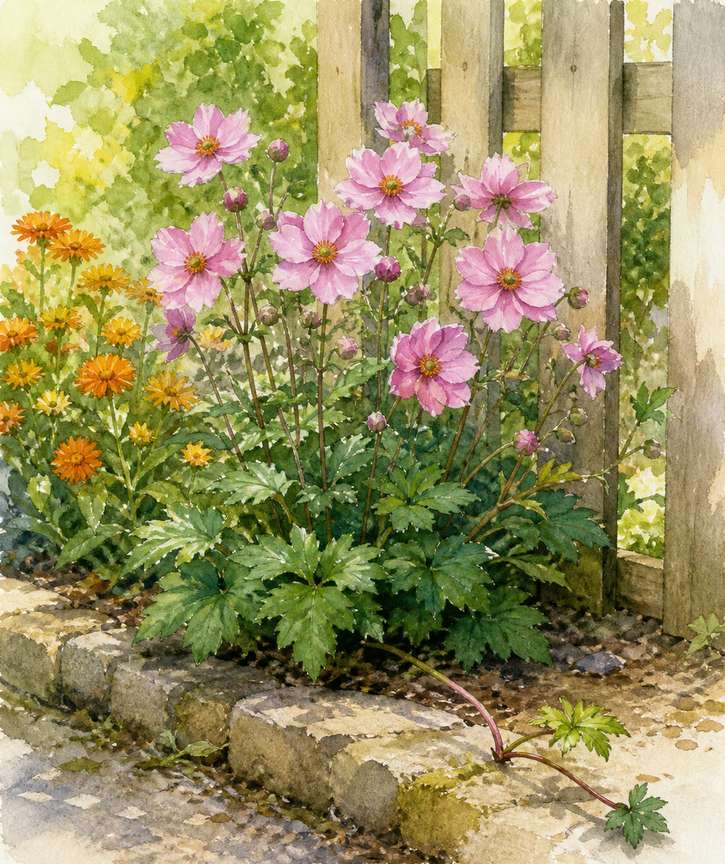
Japanese anemone extends a small shade border into late summer and fall, when many woodland perennials are finished. A relatively compact cultivar such as ‘Pamina’ reaches roughly 30 inches tall, carrying rose-pink flowers on slender stems without needing a wide shrub-sized footprint. Give it bright shade or several hours of morning sun; in deep low light, the stems may lean and flowering will be sparse. The honest warning is spread: Japanese anemones can travel by underground rhizomes once established, especially in loose, moist soil. Use one plant, watch the bed edge each spring, and lift wandering shoots before they root deeply. It may also take a year to settle in, so do not mistake a quiet first season for failure.
Common questions
- Will flowering perennials bloom in complete shade?
- Very few bloom heavily with no direct or filtered light. Most plants here perform best with bright shade, dappled light, or about two to four hours of gentle morning sun. Dense evergreen cover or the space under a deck may produce healthy leaves but few flowers.
- Which of these plants can handle dry shade under a tree?
- Established epimedium is the strongest choice on this list for dry shade. Hellebore can manage moderate dryness after establishment, but astilbe, foamflower, and brunnera need more consistent moisture. Dig carefully around major roots and avoid piling extra soil over the tree's root flare.
- Can these shade perennials grow in containers?
- Compact heuchera, hellebore, brunnera, and astilbe can grow in pots at least 12 to 16 inches wide with drainage holes. Containers dry and freeze faster than garden soil, so check moisture weekly and confirm that the plant is hardy at least one zone colder than your location before leaving it outside all winter.
- When is the best time to plant shade perennials?
- Early spring and early fall are usually easiest because temperatures are mild and rainfall is more reliable. In cold regions, plant at least six weeks before the ground typically freezes. Water new plants through their first growing season, even when the label calls them drought tolerant.