9 Morning-Sun, Afternoon-Shade Plants for Small-Space Gardens
A spot that gets three to five hours of gentle morning sun but misses the afternoon heat can support far more than deep-shade foliage. These nine plants fit containers and compact beds, with the pot sizes, watering needs, and climate limits worth checking first.
1. Tuck Tuberous Begonias Into a 10-Inch Pot
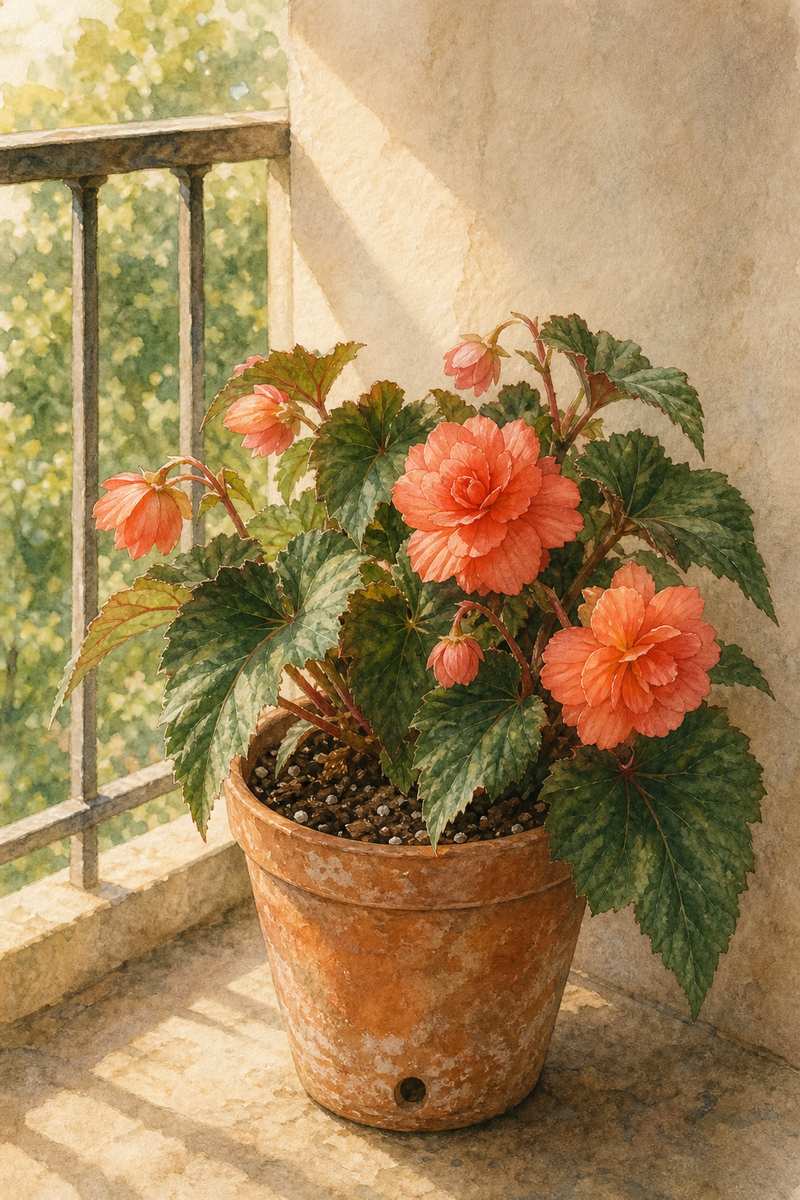
Tuberous begonias bring large coral, yellow, or white flowers to a balcony that receives two to four hours of direct morning sun. Give one plant a pot at least 10 inches wide with drainage holes, then use fresh potting mix rather than dense garden soil. Their fleshy stems snap in strong wind, so place the container below railing height or beside a sheltered wall. Water when the top inch feels dry, but never leave the pot standing in a full saucer; tubers rot surprisingly fast. Begonias are not frost-hardy, which means gardeners in cold zones must lift and store the tubers or treat them as annuals. The payoff is steady color without exposing delicate blooms to scorching afternoon light.
2. Grow a Compact Hosta in a Wide Resin Planter
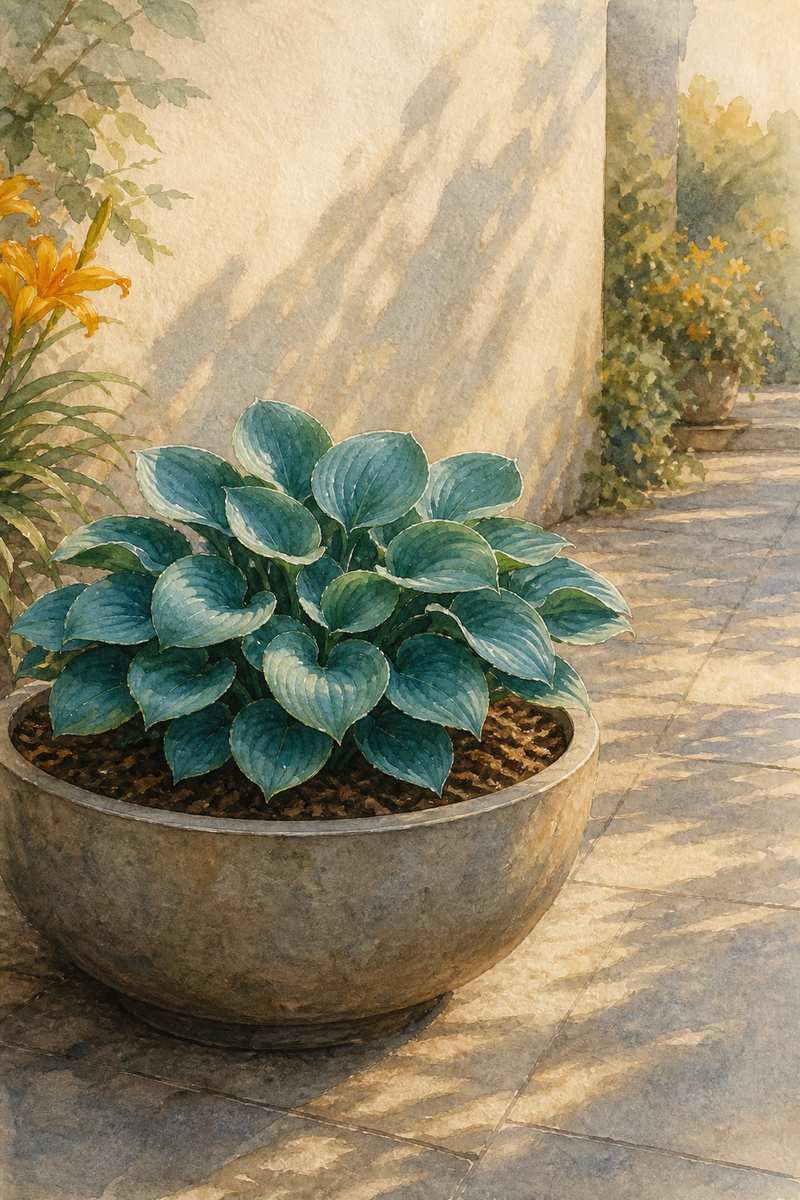
A compact hosta such as ‘Blue Mouse Ears’ gives you layered blue-green foliage without swallowing a tiny patio. Its mature spread is roughly 12 inches, so one plant fits a 12- to 14-inch-wide resin planter with room for roots and mulch. Morning light keeps the leaf color lively, while afternoon shade prevents bleached, papery edges. The catch is water: hostas dislike drying out, and pots can need checking daily during a hot week. Resin weighs less than glazed ceramic, but confirm your balcony’s load rules before grouping several wet containers. Slugs may hide beneath the rim on ground-level patios; inspect after rain rather than scattering pellets where pets can reach them. Hostas die back in winter and return in suitable zones.
3. Keep Dwarf Hydrangea in a Moisture-Retentive Container
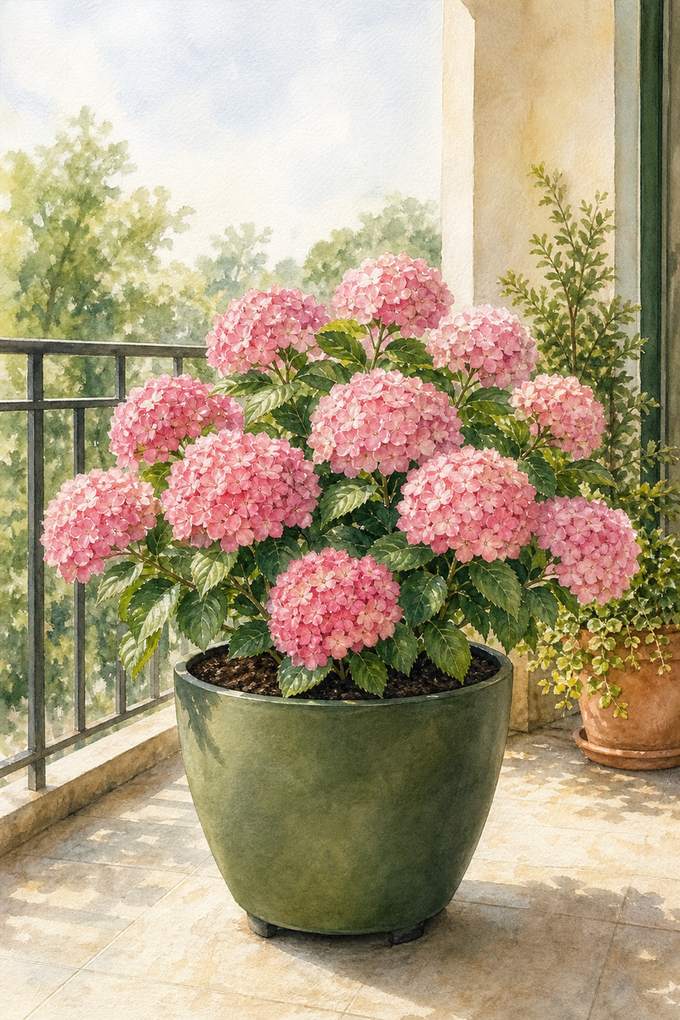
A dwarf bigleaf hydrangea such as ‘Pia’ supplies full flower clusters while staying around 2 to 3 feet tall. Start with a sturdy container about 18 inches across; anything much smaller dries too quickly for its thirsty root system. Three or four hours of morning sun encourage blooms, and shade after noon limits wilting and scorched leaf margins. Even so, expect to water more often than you would a begonia, especially when the shrub is flowering. A filled 18-inch ceramic pot can be awkwardly heavy, so choose fiberglass or resin for a balcony and check the building’s weight restrictions. Cold hardiness is also less reliable in a pot than in the ground; insulate the container or follow local overwintering guidance for your zone.
4. Use Heuchera for Color Without a Wide Footprint
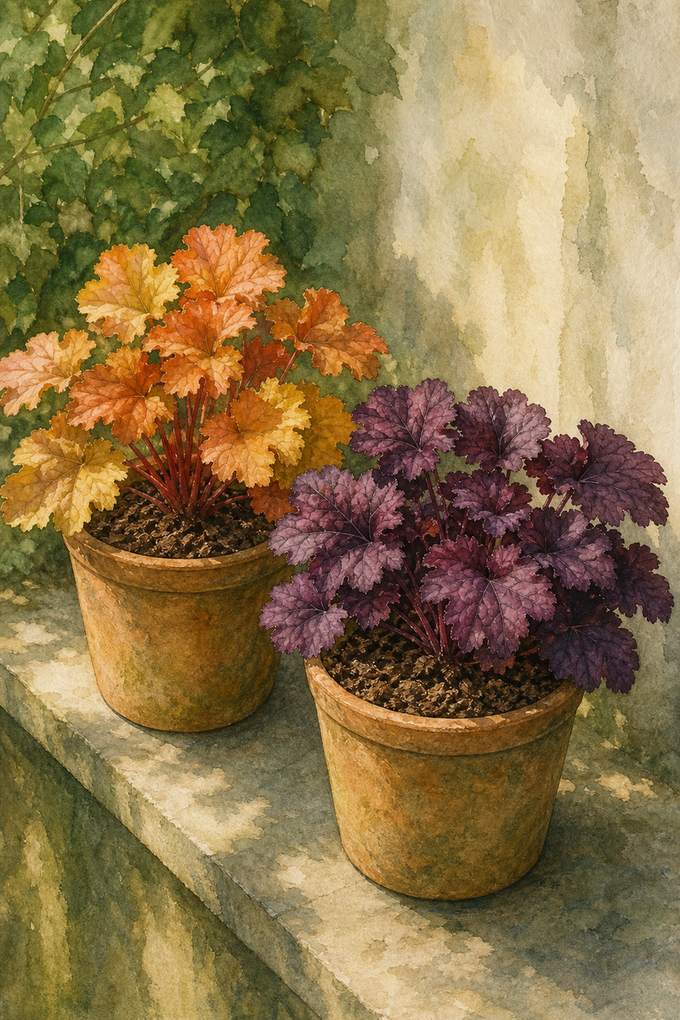
Heuchera earns its space through foliage rather than a short burst of flowers. A cultivar such as ‘Caramel’ or ‘Forever Purple’ fits one plant per 10- to 12-inch pot and usually stays under 18 inches wide. Give it bright morning sun to strengthen the leaf color, followed by shade during the hottest part of the day. Its main weakness is soggy soil: mix fine bark or perlite into standard potting mix and keep the crown just above the soil line. Heuchera also tends to heave upward during freeze-thaw cycles, so check the crown in early spring and reset it if roots are exposed. In very hot, humid regions, ‘Caramel’ generally handles heat better than many purple-leaved selections, but local performance varies.
5. Let Japanese Forest Grass Soften a Shady Corner
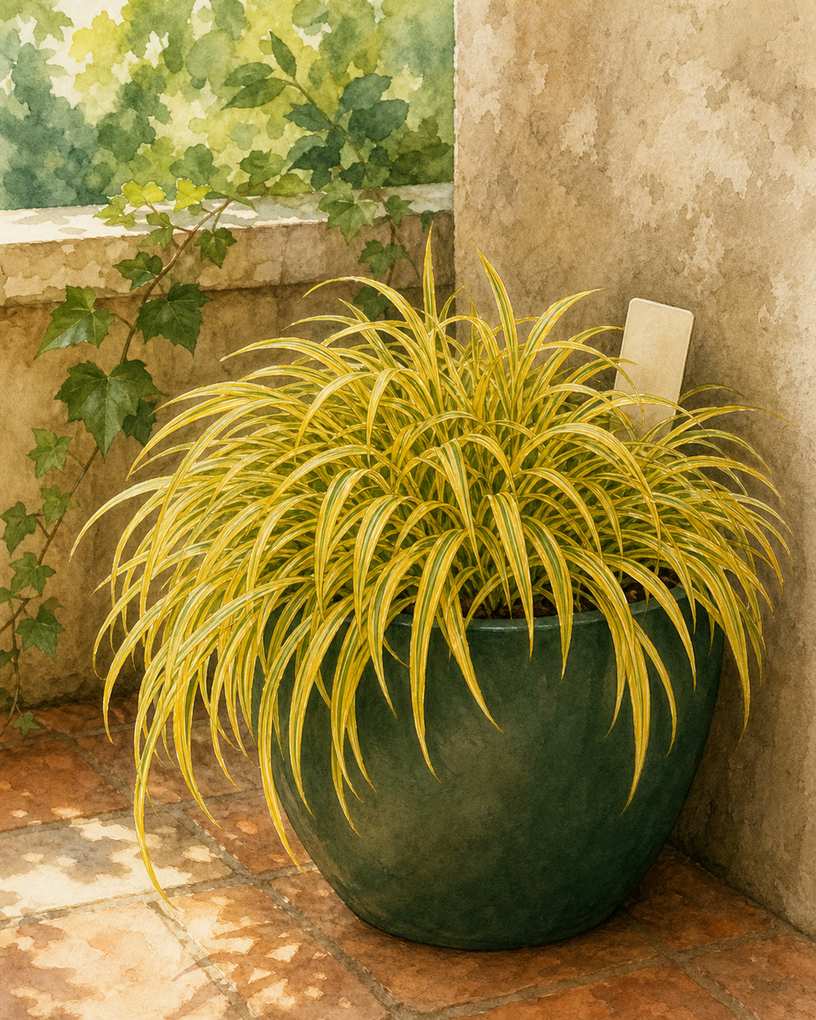
Japanese forest grass, especially golden ‘Aureola’, forms a graceful mound that brightens a corner without needing flowers. One plant can fill a 14-inch-wide pot, eventually reaching about 18 inches tall and spreading slowly rather than racing through neighboring containers. A little morning sun sharpens the gold striping; harsh afternoon exposure can brown the narrow blades. Keep the mix evenly moist and shelter the pot from drying wind, because curled tips are often a water or wind problem rather than a disease. This grass is deciduous, so the entire top turns tan and collapses in winter. Cut it back near the soil in late winter, but mark the container so you do not mistake the dormant crown for an empty pot.
6. Plant Dwarf Astilbe Where the Pot Stays Cool
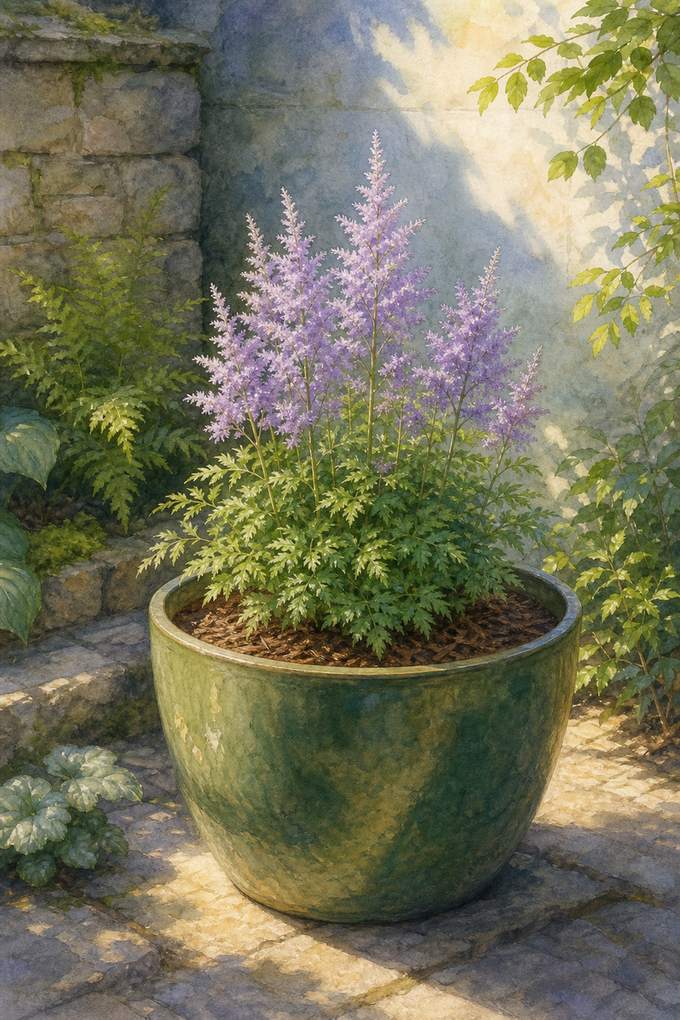
Dwarf astilbe such as ‘Pumila’ adds feathery lavender plumes above fernlike leaves and stays roughly 10 to 12 inches tall. It works in a 12-inch container that receives morning sun but remains shaded and cool after lunch. Moisture is the nonnegotiable part: once astilbe wilts hard, browned leaf edges rarely recover that season. Use a potting mix with compost, leave an inch of headspace for watering, and add a thin bark mulch rather than relying on a tiny reservoir saucer. The plant is hardy in many cold-winter areas, though exposed pots experience colder roots than garden beds; check your zone before leaving it outdoors. Astilbe is a poor choice for windy upper balconies unless you can provide both shelter and consistent watering.
7. Train Clematis With Its Roots in Afternoon Shade
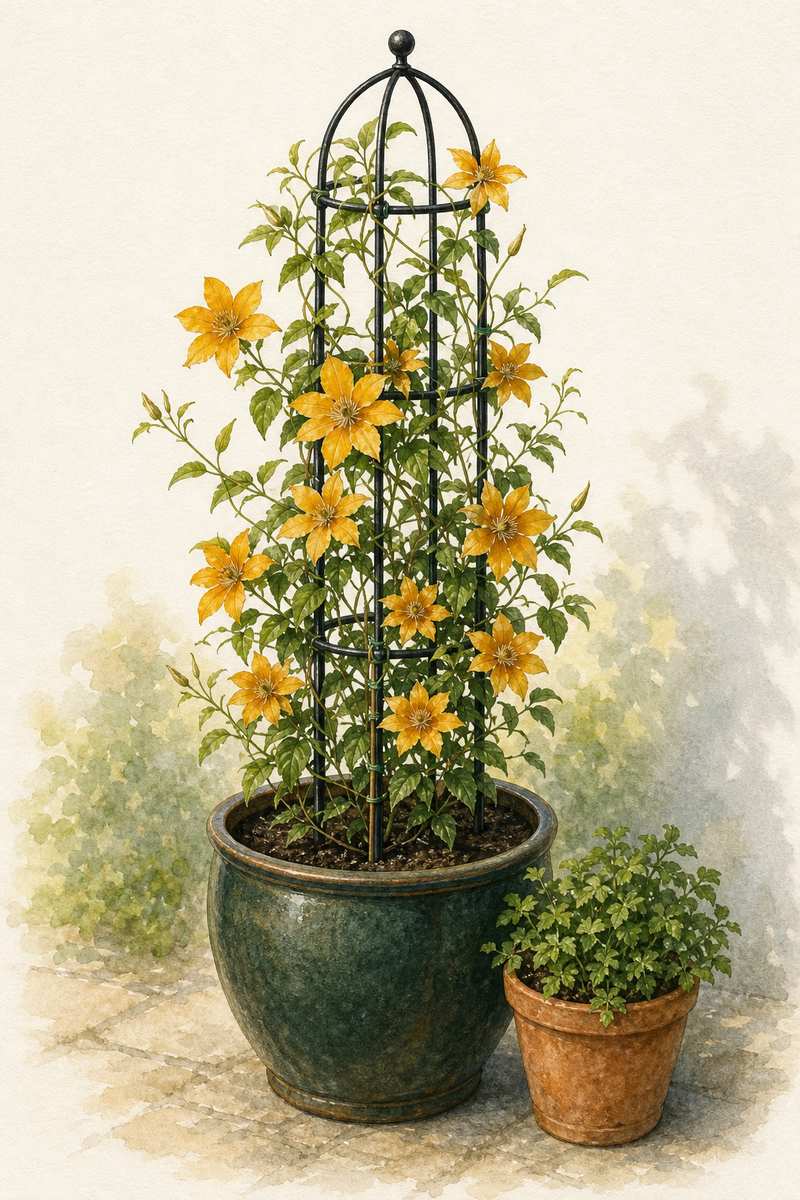
A compact clematis such as ‘Bijou’ brings vertical flowers to a small patio without requiring a wall-mounted trellis. Set it in a pot at least 16 inches deep with a freestanding 3- to 4-foot support, then place the container where the vines meet morning sun and the root zone is shaded later. A neighboring pot can shade the soil, but leave airflow around the stems. Clematis roots resent both heat and waterlogging, so use drainage holes instead of piling decorative stones inside the pot. Tying new growth loosely every week or two prevents a windy tangle. Pruning rules differ by cultivar; keep the plant label rather than cutting every clematis the same way. The trellis adds wind resistance, so stabilize its base without attaching it to a rental wall.
8. Harvest Flat-Leaf Parsley From a Morning-Light Pot
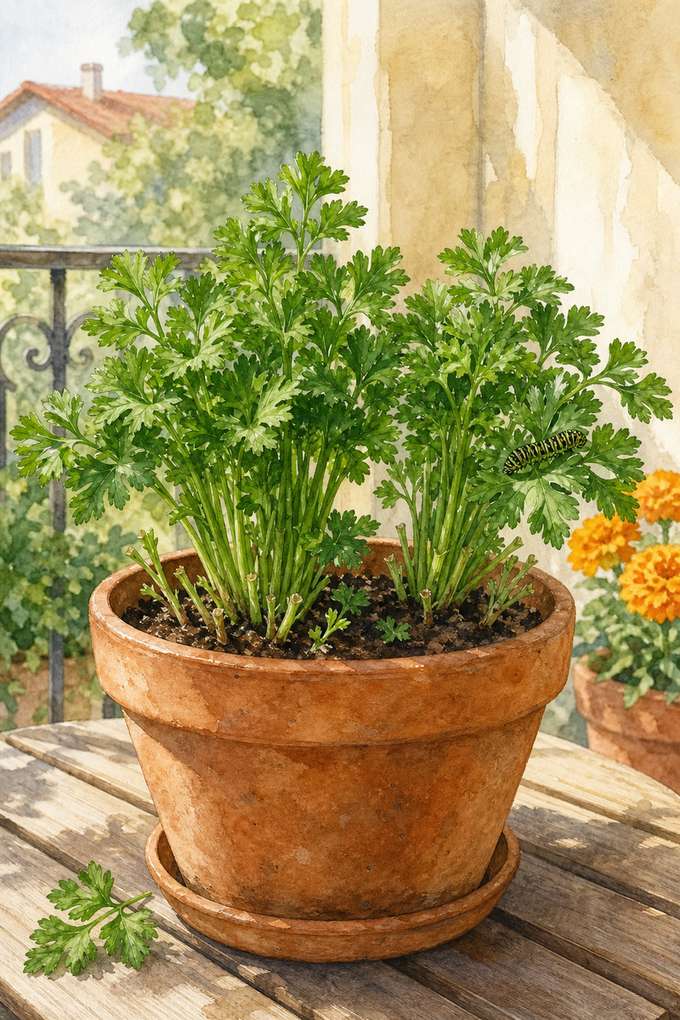
Flat-leaf parsley handles a half-day of gentle light better than many Mediterranean herbs and gives a small container a practical job. Sow or transplant two to three plants into a pot at least 8 inches deep, leaving enough room for their taproots. Four hours of morning sun usually produces sturdy growth without the rapid drying caused by late-day heat. Keep the soil consistently damp, then harvest outer stems at the base instead of shaving leaves from the top. Parsley is biennial: it often sends up a flower stalk in its second season, after which flavor and leaf production decline. Caterpillars of black swallowtail butterflies may also find it. Share some foliage if you can, or grow an extra plant rather than using broad-spectrum insecticide.
9. Rotate Violas Through the Coolest Months
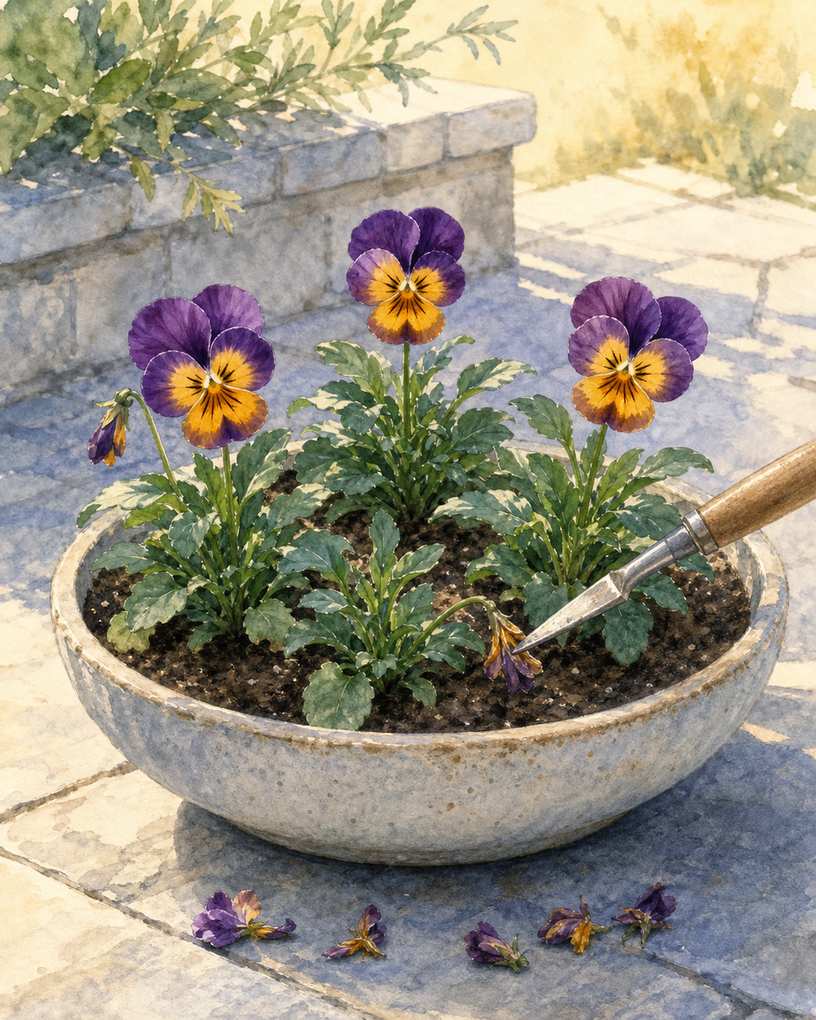
Violas are the flexible choice when your morning-sun spot looks bare in spring or fall. Fit three plants into an 8- to 10-inch bowl planter, where their shallow roots need less soil—and therefore less weight—than a shrub requires. They flower best with several hours of morning light and cooler shade later, but they usually fade once nights and afternoons turn hot. Deadhead twice a week to prevent seed production, and water when the top half-inch of mix dries. Rather than nursing tired plants through midsummer, compost them and reuse the bowl for a heat-tolerant begonia. In mild-winter regions, violas may bloom for months; where pots freeze solid, treat them as seasonal color. Check nursery labels because cold tolerance varies among series.
Common questions
- How many hours count as morning sun and afternoon shade?
- For these plants, aim for roughly two to five hours of direct light before noon, followed by bright shade or filtered light. Watch the space on a clear day in midsummer: a location shaded at 1 p.m. in April may receive much stronger afternoon sun in June.
- Do containers in afternoon shade still need daily watering?
- Sometimes. A 10-inch pot, a windy balcony, and a thirsty plant such as astilbe can still require daily checks during hot weather. Push a finger about 1 inch into the mix before watering; keep astilbe and hydrangea evenly moist, but let begonia and heuchera lose a little surface moisture.
- Can these pots stay outside through winter?
- Hosta, heuchera, astilbe, clematis, and Japanese forest grass may overwinter outdoors where they are hardy, but roots in containers are less insulated than roots in the ground. Check the cultivar’s zone and your local winter conditions, then protect the pot or move it to an unheated sheltered space if needed. Tuberous begonias require frost-free storage.
- How do I keep a balcony planting within its weight limit?
- Ask your landlord, building manager, or condo association for the actual load rules; do not rely on a generic online figure. Choose resin or fiberglass over ceramic, avoid garden soil, and remember that wet potting mix is heavier than dry mix. Spread containers out rather than clustering every large pot beside one railing.