9 Groundcover Plants for Shady Areas Where Grass Won't Grow
Tree roots, dry soil, and fewer than four hours of direct sun can leave a small yard with stubborn bare patches. These nine groundcovers offer practical alternatives to turf, with options for dry shade, damp soil, cold winters, and narrow planting strips.
1. Plant Pennsylvania Sedge for a Soft, Lawnlike Look
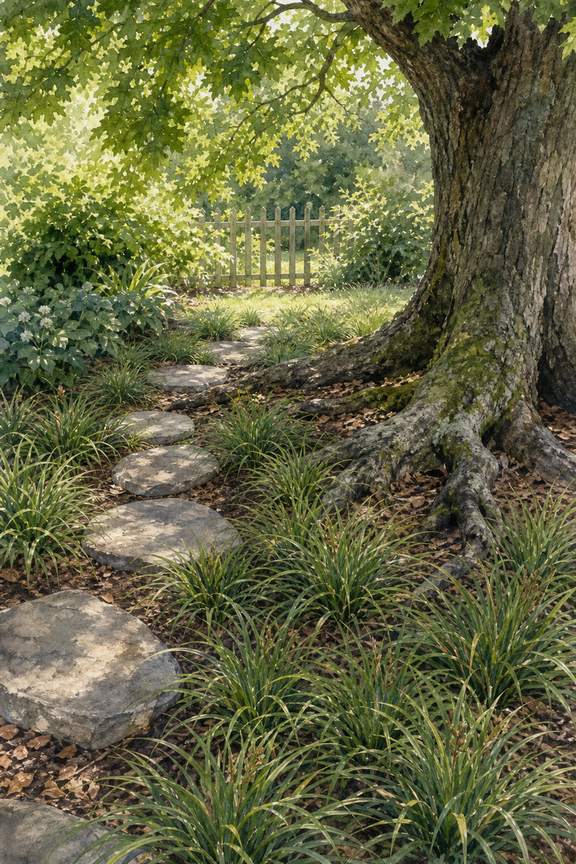
Pennsylvania sedge (Carex pensylvanica) makes an 8- to 12-inch green carpet without pretending to be turf. It handles the dry, root-filled shade beneath established deciduous trees better than most lawn grasses and needs mowing only if you want a tidier spring reset. Space plugs about 8 to 12 inches apart; wider spacing costs less initially but leaves bare soil open to weeds for another season or two. This sedge spreads gradually by rhizomes rather than racing across the yard. The trade-off is foot traffic: an occasional step is fine, but it will flatten along a daily route. Add stepping stones first, then plant around them. It performs best in well-drained soil and may struggle in a low spot that stays soggy after rain.
2. Use Wild Ginger Around Shallow Tree Roots
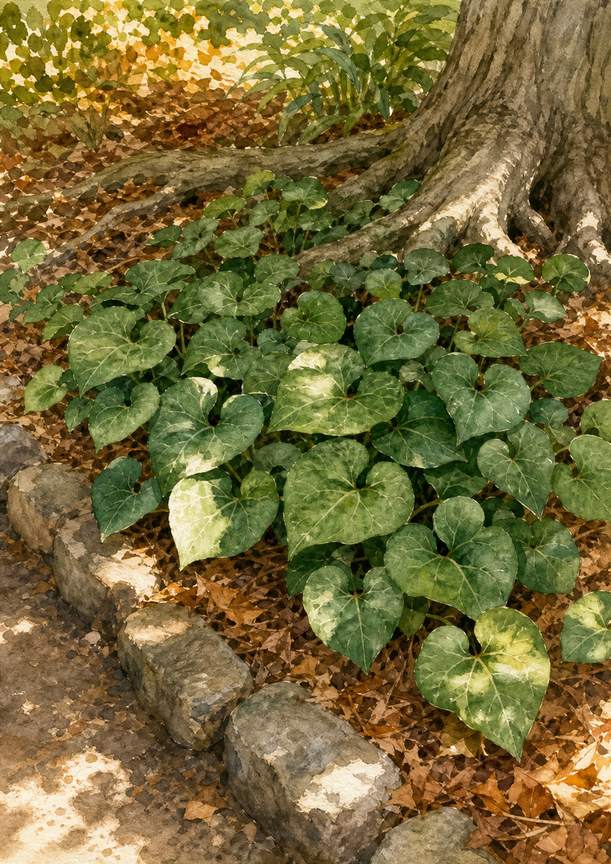
Wild ginger (Asarum canadense) forms a low colony of heart-shaped leaves that hides bare soil without requiring deep digging around tree roots. This eastern North American native usually reaches 6 to 8 inches tall; set small plants roughly 12 inches apart and let the underground rhizomes fill the gaps. It is a better match for humus-rich shade than for powder-dry soil, so spread 1 to 2 inches of shredded leaves over the bed each fall rather than piling mulch against the trunk. Wild ginger is deciduous, which means the ground may look open in winter. It also dislikes heavy foot traffic and hot afternoon sun. Give it a defined edge beside a path, because a happy patch can wander beyond its original outline over several years.
3. Choose Epimedium for the Driest Shade
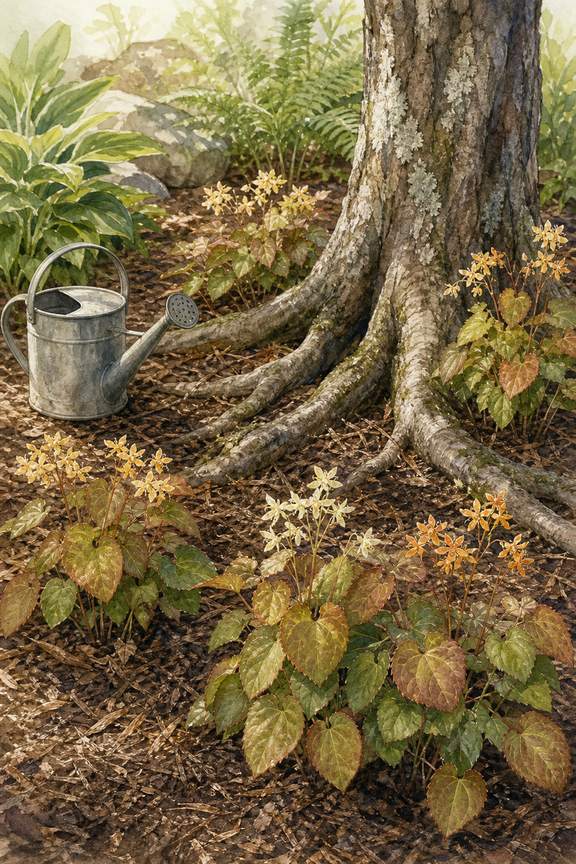
Epimedium is one of the more dependable choices where a mature tree drinks most of the available moisture. Many varieties stand 8 to 12 inches high, with wiry spring flowers above leaves that often take on bronze or red tones. Plant nursery-size divisions about 12 inches apart and water them through their first growing season; established clumps tolerate dry shade, but new roots do not. The downside is speed and price. Epimedium fills in slowly, so covering a large circle with gallon pots gets expensive. Start with a smaller drift where it will be seen, then divide mature clumps later. Some varieties keep foliage through mild winters, while others look ragged by February. Shear old leaves before flower stems emerge, taking care not to cut the new buds.
4. Try Allegheny Spurge Instead of Japanese Pachysandra
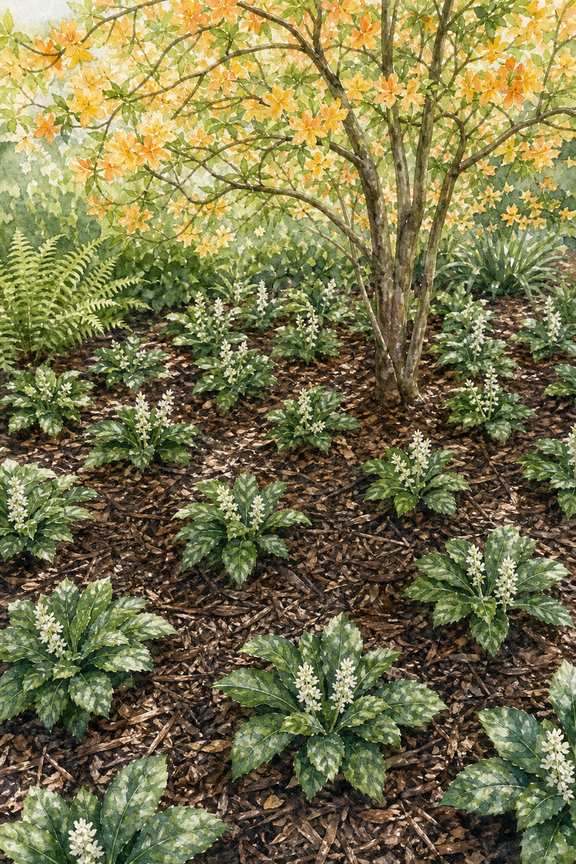
Allegheny spurge (Pachysandra procumbens) offers mottled leaves and spring flower spikes without the forceful spread associated with Japanese pachysandra. Native to parts of the southeastern United States, it grows roughly 6 to 10 inches tall and suits shaded beds with loose, well-drained soil. Place plants 8 to 12 inches apart for a continuous patch over time. It tolerates some dryness after establishment, although prolonged drought can scorch the leaf edges. Its restrained growth is both the benefit and the drawback: it is easier to contain, but it will not cover a bare area overnight. Confirm that it suits your USDA zone and region before buying, especially in very cold climates. Keep mulch below the leaf crowns, since wet, buried crowns are more vulnerable to rot.
5. Fill Moist Shade With Running Foamflower
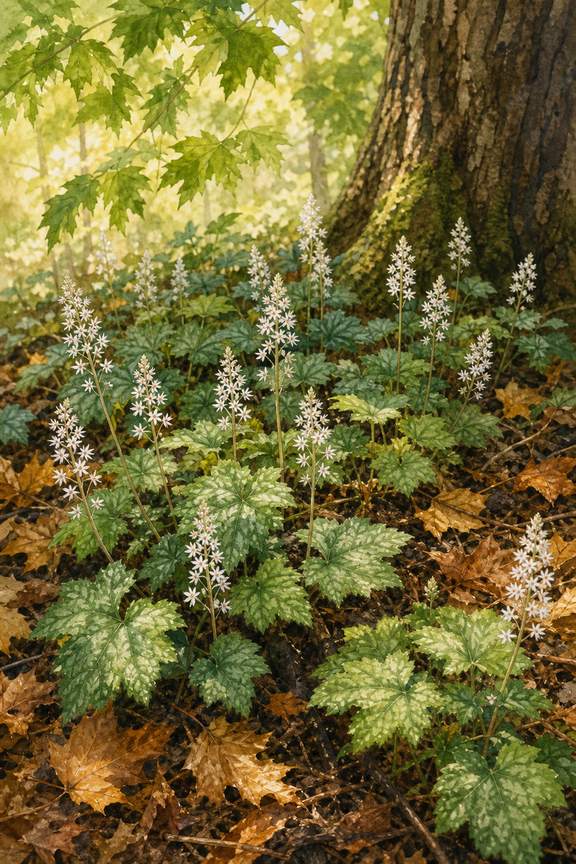
Running foamflower (Tiarella cordifolia) belongs in the cooler, slightly damp part of the tree canopy rather than the driest soil beside the trunk. Its maple-shaped leaves make a 6- to 12-inch layer, followed by slender white flower wands in spring. Choose a running form if you want ground coverage; clump-forming cultivars stay neater but fill space much more slowly. Set plants about 10 to 12 inches apart in soil improved with leaf mold, disturbing as few tree roots as possible. Foamflower is native to eastern North American woodlands and supports a natural woodland look in small yards. The catch is moisture: a shallow-rooted patch can wilt during a hot week. Use a 1-inch leaf mulch and water when the top inch of soil becomes dry.
6. Edge a Shady Path With Barren Strawberry
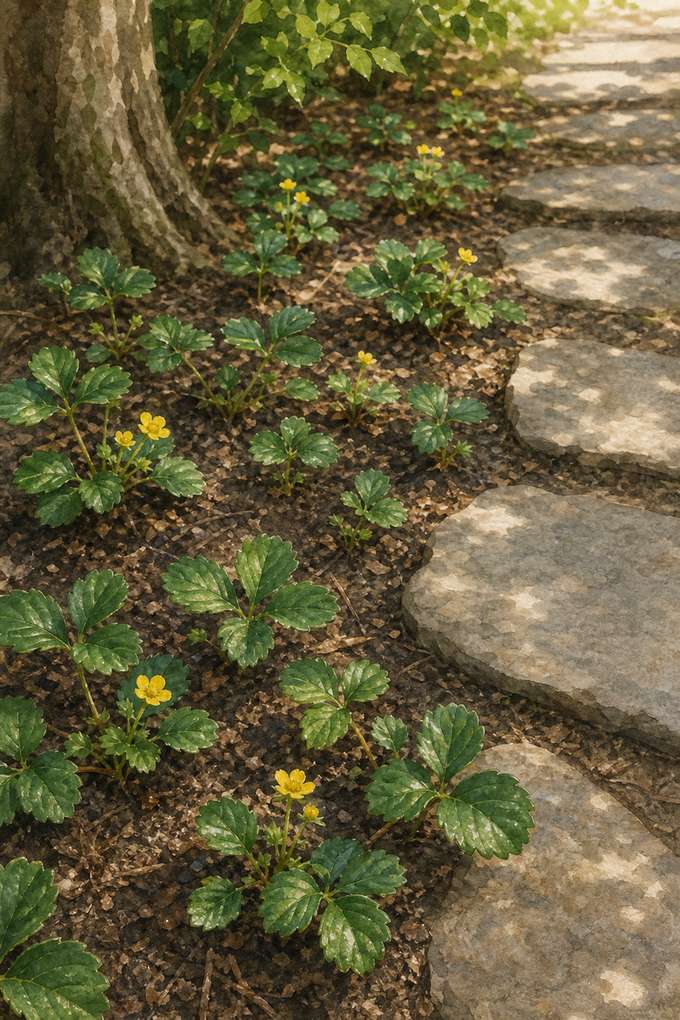
Barren strawberry, often sold as Waldsteinia or Geum fragarioides, creates a 4- to 6-inch mat with strawberry-like leaves and small yellow spring flowers. It works especially well beside stepping stones because its low foliage keeps a narrow shaded path from feeling crowded. Space plants around 10 to 12 inches apart in average, well-drained soil. Once rooted, it handles moderate dryness and spreads steadily without producing edible fruit. Its limits show in deep, parched shade, where flowering thins and the mat may develop gaps. It is also only semi-evergreen in many cold regions, so winter appearance varies by zone and snow cover. Clip browned foliage in early spring rather than shearing it in fall; the old leaves help protect the crown through freeze-and-thaw cycles.
7. Confine Sweet Woodruff to a Bordered Pocket
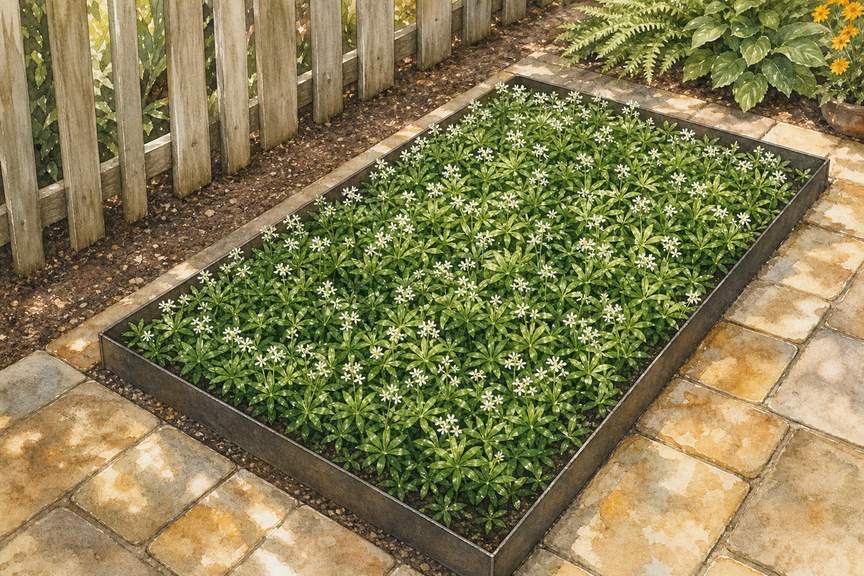
Sweet woodruff (Galium odoratum) can quickly cover a damp, shaded pocket with whorled leaves and tiny white flowers. At 6 to 8 inches tall, it fits beneath low branches and knits around bulbs without hiding them completely. This is not a plant to scatter casually, though. In moist soil it can spread beyond its assignment, and some regions consider it invasive or potentially troublesome. Check your state invasive-plant list before planting. If it is appropriate locally, use a bed enclosed by paving, a wall, or edging sunk about 6 inches rather than relying on a loose mulch boundary. Dry shade slows its growth but can also leave it thin and scorched. Remove wandering stems before they root, and avoid placing it beside a natural woodland or shared property line.
8. Add Mondo Grass in Mild-Winter Shade
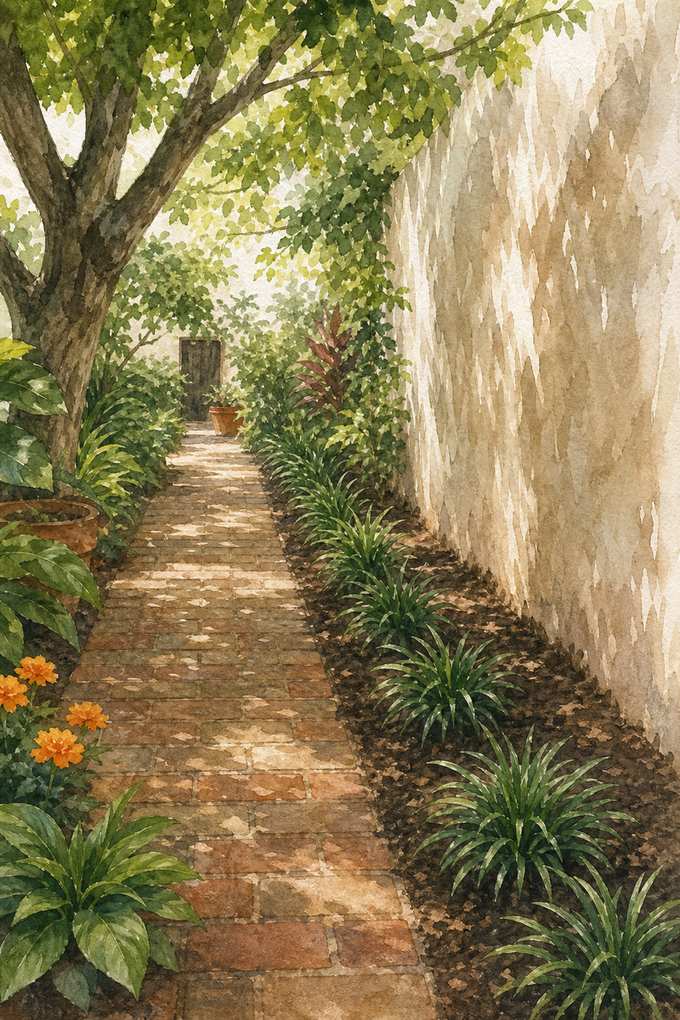
Mondo grass (Ophiopogon japonicus) is not a true grass, but its narrow evergreen leaves give shaded ground a crisp, tufted finish. Standard forms reach about 6 to 10 inches high and can be planted 6 to 8 inches apart along a walkway or beneath an airy tree canopy. It tolerates shade and established-tree competition once rooted, though occasional deep watering helps during summer drought. The major constraint is winter: mondo grass is most dependable in roughly USDA Zones 7 to 10, and exposed foliage may burn in colder or windy sites. It also spreads slowly, making a large installation costly. Use it for a narrow strip rather than an entire yard, and choose standard green plants over dwarf cultivars when faster coverage matters. Avoid constantly wet clay, which encourages root problems.
9. Mass Christmas Ferns on a Shady Slope
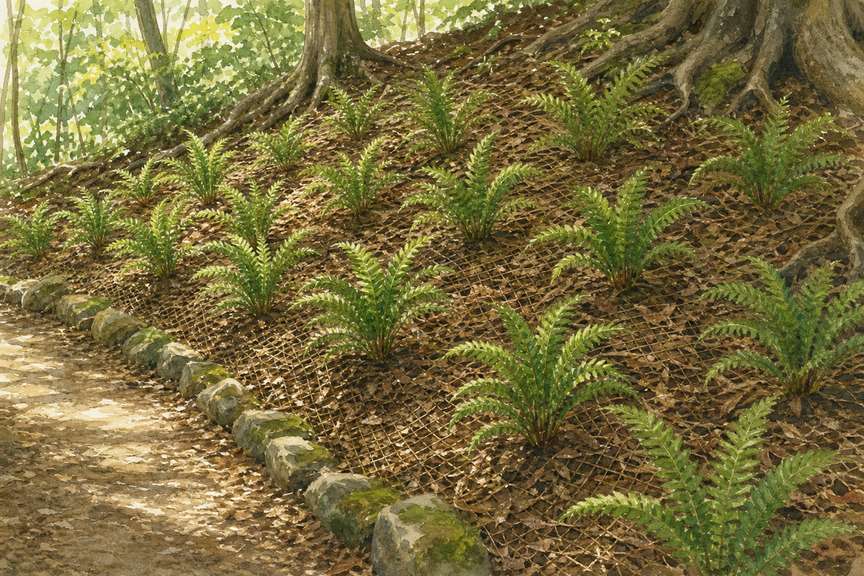
Christmas fern (Polystichum acrostichoides) is useful where a shaded bank needs taller, year-round cover rather than a flat green mat. The arching fronds usually stand 18 to 24 inches high, so space plants about 18 inches apart and keep them away from the edge of a very narrow path. This eastern North American native tolerates dry shade once established and helps visually cover exposed roots without aggressive runners. It will not spread fast enough to stabilize badly eroding soil by itself; use shredded leaves or biodegradable erosion netting while plants fill in. Fronds can look flattened after snow, but new growth replaces them in spring. Plant the crown level with the soil surface, not buried under mulch, and water during the first summer whenever the upper 2 inches feel dry.
Common questions
- Can I plant groundcover directly over exposed tree roots?
- Do not bury exposed roots under a new layer of topsoil or cut them to make planting holes. Tuck small plugs into existing pockets between roots using a hand trowel, then add no more than 1 to 2 inches of shredded leaves or fine mulch. Keep mulch several inches away from the trunk flare. If roots occupy every available pocket, use stepping stones and a thin mulch layer instead of forcing plants into the site.
- Which groundcover handles dry shade best?
- Established epimedium and Pennsylvania sedge are two of the more reliable choices beneath thirsty deciduous trees. Both still need regular water during their first growing season. Wild ginger and foamflower prefer more consistent moisture, while sweet woodruff can become aggressive where shade and soil are both damp.
- Will these plants stay green through winter?
- It depends on the plant and your USDA zone. Christmas fern and mondo grass generally provide the strongest evergreen structure in suitable climates. Epimedium and barren strawberry may be semi-evergreen, while Pennsylvania sedge, wild ginger, and foamflower can die back or look tired after hard freezes. Leave healthy fallen leaves as light insulation, but do not bury plant crowns.
- How do I keep weeds out while groundcover fills in?
- Plant plugs at the recommended spacing rather than scattering a few plants across a large bed, and cover open soil with about 1 inch of shredded leaves. Hand-pull weeds every two to three weeks during the first growing season, before they seed. Avoid landscape fabric around trees: roots grow into it, leaf litter builds on top, and future divisions become difficult.