8 Shade Garden Layouts for Small Yards Under Heavy Tree Cover
Mature trees can leave a small yard with patchy light, thirsty roots, and little room to dig. These eight layouts work with those limits, using measured beds, movable containers, and plants that can handle real shade.
1. Wrap a shallow woodland bed around one tree
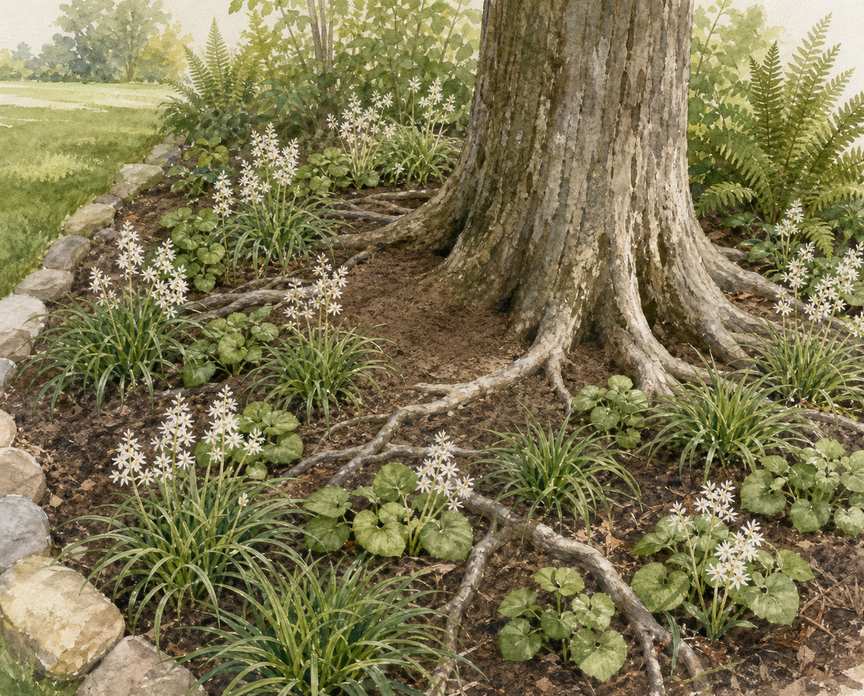
Make one mature tree the center of a curved woodland bed, but build outward rather than piling soil against the trunk. Start the planting at least 12 inches from the root flare and keep added compost to a thin 1-inch layer so existing roots can still breathe. Tuck small plugs of Pennsylvania sedge, wild ginger, and foamflower between roots instead of cutting through them for gallon pots. A 5-foot-wide crescent is enough to read as a deliberate bed in a tiny yard. The catch is water: a tree canopy intercepts rain while its roots take the rest. Water new plugs slowly once or twice a week through their first growing season, then reduce as they establish.
2. Run a 30-inch stepping path through two narrow beds
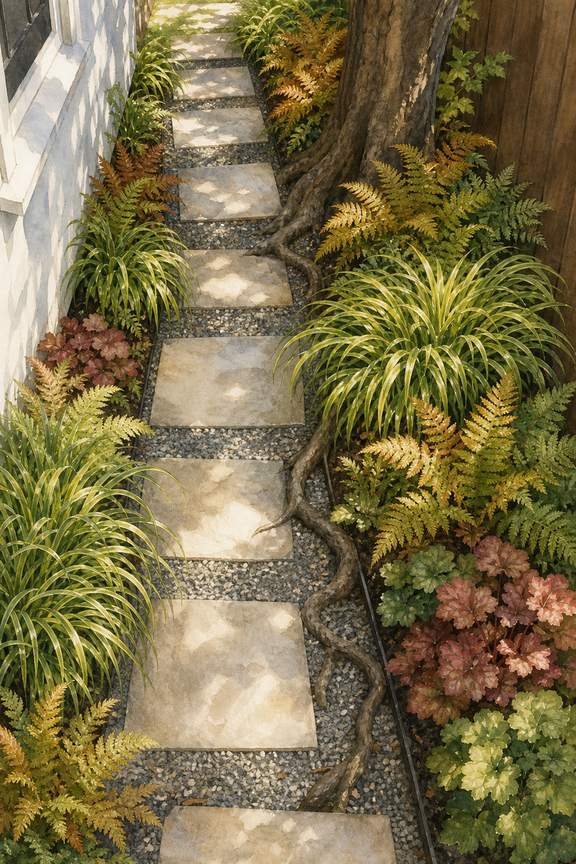
Split a long, skinny side yard with a 30-inch path and plant a bed on each side. Large stepping stones set in fine gravel let rain reach the soil and are easier to adjust around roots than poured concrete. Keep the beds 18 to 24 inches deep, using repeated clumps of Japanese forest grass, autumn fern, and coral bells so the passage feels calm rather than crowded. Check whether you regularly move bins, bikes, or a mower through this route; 30 inches works for walking, but a 36-inch path is kinder to wheeled gear. Gravel also migrates and catches leaves. Metal edging helps, though you will still rake or blow the path several times each fall.
3. Build a container island where digging is impossible
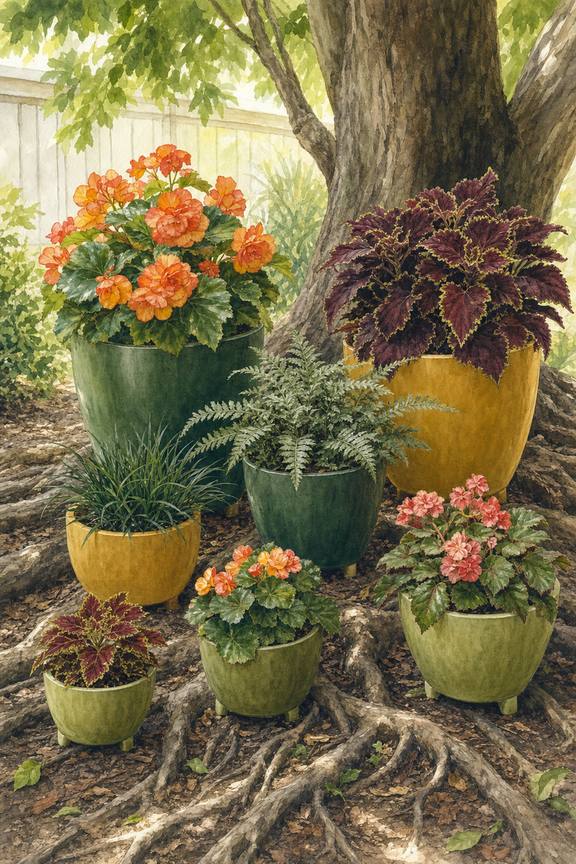
Group five or seven pots over the root-heavy section you cannot excavate, leaving bare soil or mulch beneath them. Use one 20-inch lightweight fiberglass pot as the anchor, then step down to 14- and 10-inch containers filled with begonias, coleus, dwarf mondo grass, and a compact Japanese painted fern. Set pots on broad feet so drainage holes stay open and roots do not grow into the ground. This layout is renter-friendly and can move when the canopy changes, but containers under trees dry faster than they look. Check the top 2 inches of mix before watering. Large glazed ceramic pots are handsome, yet once filled they may weigh more than 100 pounds and become effectively permanent.
4. Turn the darkest corner into a fern-and-bench nook
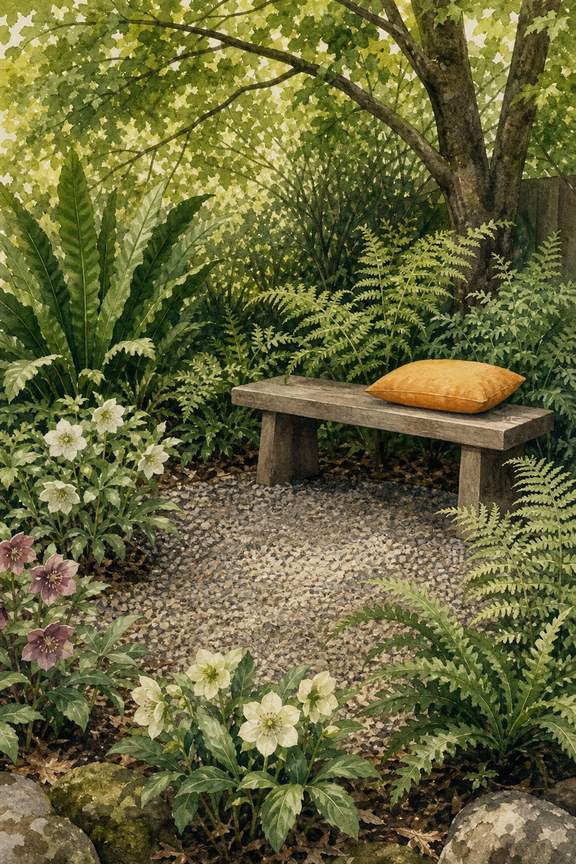
Use the corner that receives less than two hours of direct sun for a simple sitting nook instead of fighting it with lawn. A 4-by-6-foot pad of compacted gravel holds a 36-inch backless bench without pouring a footing near tree roots. Plant Christmas fern, lady fern, and hellebores along the back edge, keeping foliage at least 6 inches from the seat so damp fronds do not brush your clothes. Add one light-colored pot or cushion to keep the corner from looking visually heavy. The downside is mosquitoes and moisture: dense shade can stay cool and still. Avoid saucers that hold water, prune low twiggy growth for airflow, and expect to clean algae from the bench once or twice a year.
5. Edge the yard with a dry-shade ribbon
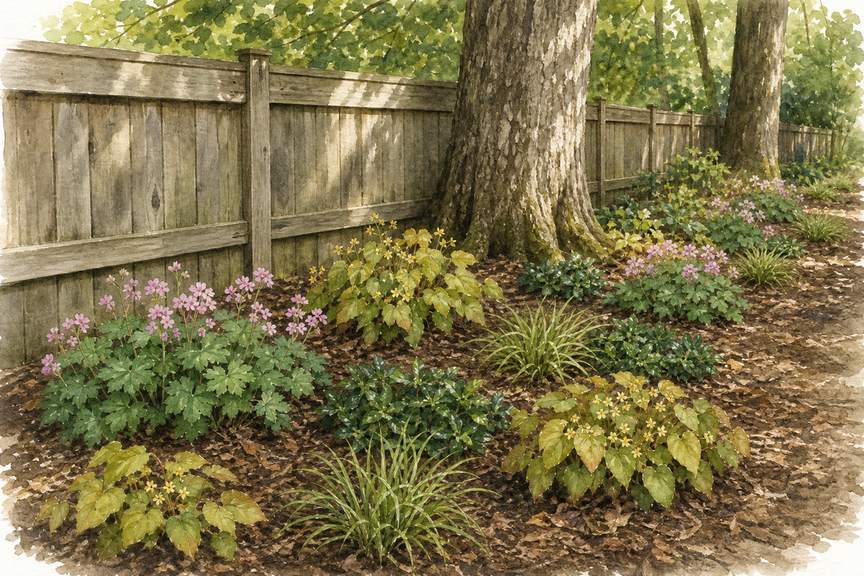
Plant a continuous 24-inch-wide ribbon along the fence where tree roots and a rain shadow make soil especially dry. Tough groundcovers are more realistic here than thirsty hostas: try barrenwort, bigroot geranium, Appalachian sedge, or Allegheny spurge, choosing plants suited to your region. Repeat each variety in drifts of three to five rather than mixing every plant evenly. That makes a narrow border look longer and simplifies replacement later. Before planting, watch the fence line after a storm; runoff from a neighboring property can turn one section unexpectedly wet. This is a slow layout, not instant coverage. Small plugs cost less and disturb fewer roots, but most need two or three growing seasons to knit together and regular weeding while gaps remain.
6. Make a small rain-garden pocket at the low point
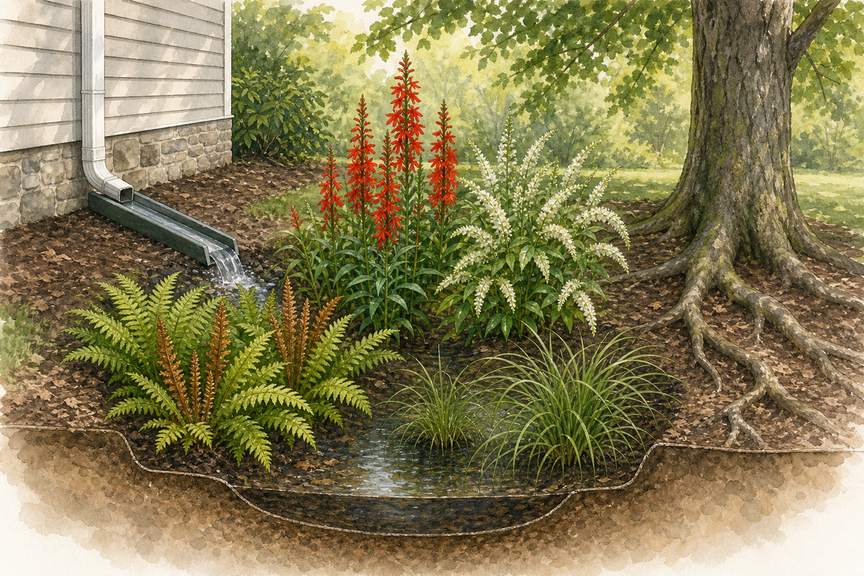
If water pools in one spot while the rest of the yard stays dry, shape that low point into a shallow rain-garden pocket. A basin about 4 feet across and 4 to 6 inches deep can catch downspout runoff without consuming the whole yard. In dappled shade, try moisture-tolerant plants such as cardinal flower, Virginia sweetspire, cinnamon fern, and tussock sedge. Keep the basin at least 10 feet from the house foundation unless a local drainage professional approves a closer location, and never excavate through major tree roots. This idea only fits soil that drains within roughly 24 to 48 hours after rain. If water lingers longer, you may have compacted clay or a drainage problem that plants alone will not fix.
7. Use a diagonal bed to borrow the brightest gap
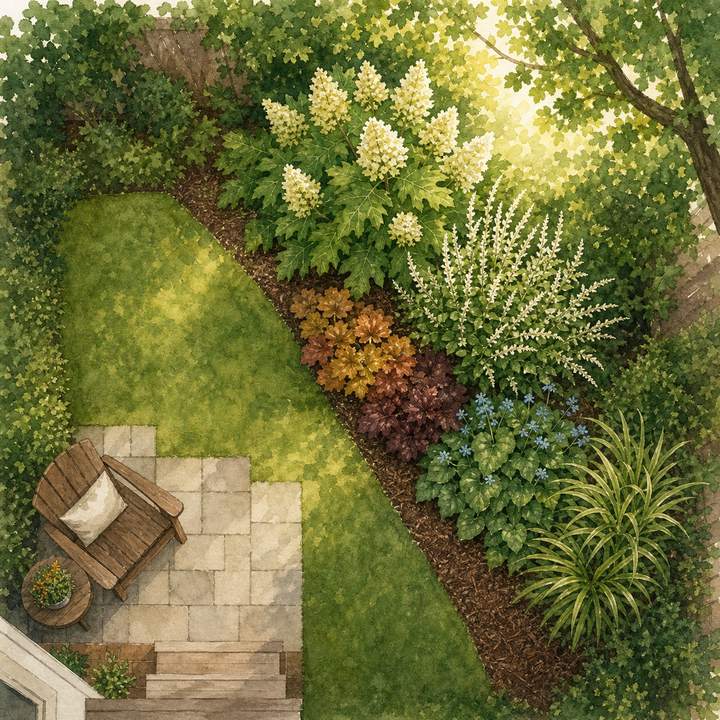
Place a diagonal planting bed beneath the one opening where three or four hours of filtered afternoon light reach the ground. Running the bed from one corner toward the center makes a boxy yard feel wider and gives brighter plants first claim on the usable light. Put oakleaf hydrangea or dwarf summersweet at the luminous end, then grade into heuchera, brunnera, and sedge as the shade deepens. Mark the light patch with stakes in spring and again midsummer; leaf-out can shift its edge by several feet. The trade-off is an awkward strip of lawn or mulch beside the diagonal. Keep that leftover wedge wide enough for a mower, or remove the turf and cover it with shredded bark.
8. Replace struggling lawn with a mow-free grid
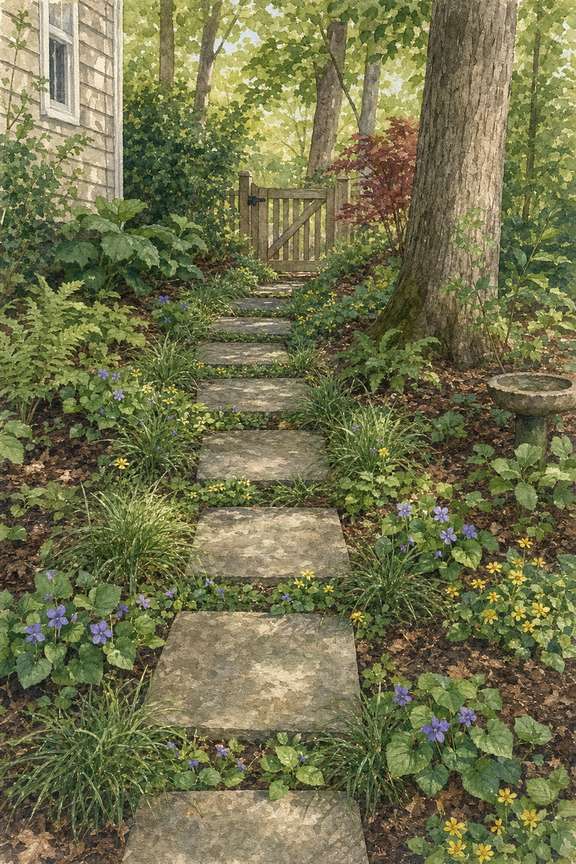
Where thin grass has become a yearly repair job, divide the ground into a loose grid of 18-inch square stepping stones and low shade plants. Space stones about 3 inches apart, then fill wider pockets with Pennsylvania sedge, common violet, or green-and-gold. The hard surface gives you a dry route to the gate while planted joints soften the look and leave water access for tree roots. Do not lay an impermeable plastic weed barrier underneath; it blocks organic matter and becomes tangled with roots. Stone can also be expensive and hard to level around established trees. Start with the route you actually walk, then expand one section at a time. Expect occasional hand trimming because most groundcovers will creep over the stone edges.
Common questions
- How can I tell whether my yard has full shade or partial shade?
- Check the same spots at 9 a.m., noon, and 3 p.m. after the trees have fully leafed out. Fewer than about 2 hours of direct sun is full shade; 2 to 4 hours is usually partial shade. Dappled light moving through leaves counts differently from an uninterrupted beam, so note both duration and intensity.
- Can I add raised beds over large tree roots?
- Usually, that is risky. Deep soil placed over a tree's root zone can reduce oxygen and hold moisture against the trunk. Avoid burying the root flare, cutting roots thicker than about 2 inches, or fastening a bed to the tree. Shallow planting pockets and freestanding containers are safer; ask a certified arborist before altering the root zone of a valuable mature tree.
- What grows in dry shade under mature trees?
- Once established, Pennsylvania sedge, barrenwort, bigroot geranium, Christmas fern, wild ginger, and some heucheras handle dry shade better than moisture-loving hostas. Plant small plugs between roots, add no more than 1 to 2 inches of mulch, and water through the first growing season. Plant suitability still depends on your USDA zone and local deer pressure.
- How much maintenance does a small shade garden need?
- Plan on weekly watering during establishment, spring top-dressing with about 1 inch of compost, and several fall leaf cleanups. Leave a light layer of chopped leaves in beds, but remove thick mats that smother small plants. Containers need more attention: in hot weather, even shaded pots may require water every one to three days.