9 Shade Garden Walkway Plant Ideas for Narrow Side Paths
A shady side path can feel planted without sacrificing the few inches you need for walking. These nine ideas use compact, low-flop plants and practical spacing for narrow routes beside fences, walls, and foundations.
1. Edge the Path With Japanese Forest Grass
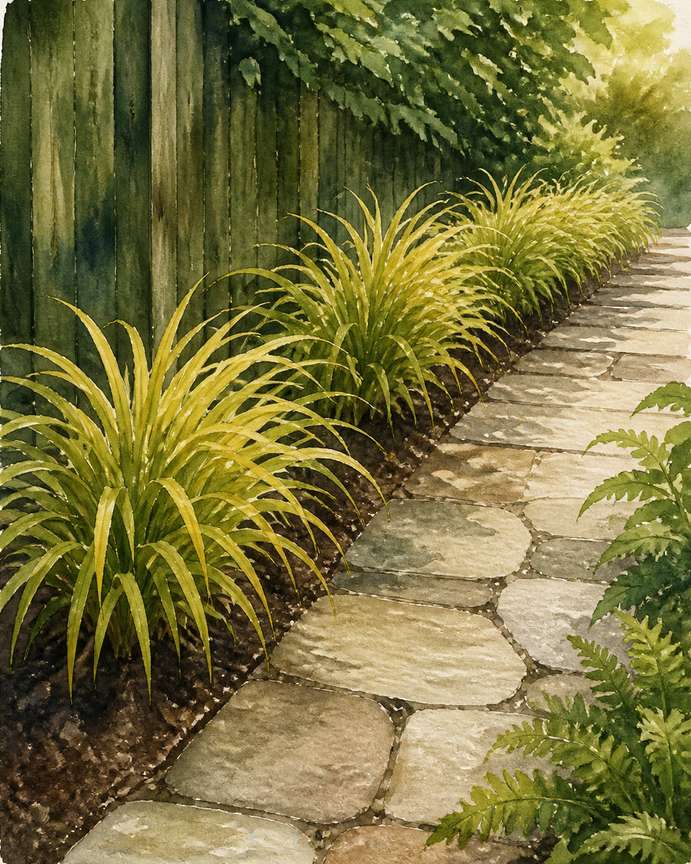
Japanese forest grass, especially compact Hakonechloa macra cultivars such as 'All Gold,' makes a soft edge without sending stiff stems across your ankles. Set plants 18 to 24 inches apart and keep their crowns at least 8 inches back from the paving; mature clumps commonly reach about 18 inches wide. The cascading leaves brighten deep shade beside a dark fence, but this is not the choice for a bone-dry strip under roof eaves. It performs best in evenly moist, well-drained soil and may need weekly watering during its first summer. Cut the old foliage to 2 or 3 inches in late winter. Expect slow establishment rather than instant coverage, and check the cultivar's hardiness for your zone.
2. Tuck Dwarf Mondo Grass Between Stepping Stones
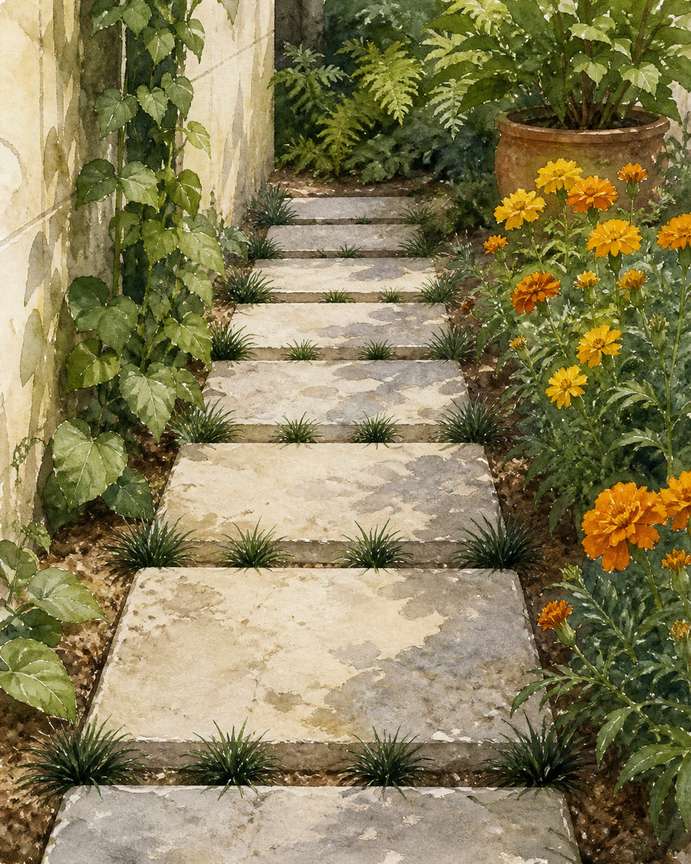
Dwarf mondo grass, Ophiopogon japonicus 'Nana,' fits the small gaps where ordinary edging plants would crowd a walkway. Plant small divisions 4 to 6 inches apart between stones, leaving each stepping surface fully exposed and nearly level with the soil. Its dark evergreen blades stay only a few inches tall in many climates, so the path keeps a crisp outline. The catch is speed: dwarf mondo can take several seasons to knit together, and flats are expensive when you need dozens of plugs. It tolerates occasional foot contact, not daily heel traffic, so reserve it for joints wider than about 2 inches or along the outer edge. Avoid persistently soggy soil, and confirm local winter hardiness before treating it as evergreen.
3. Repeat Coral Bells in Slim Color Pockets
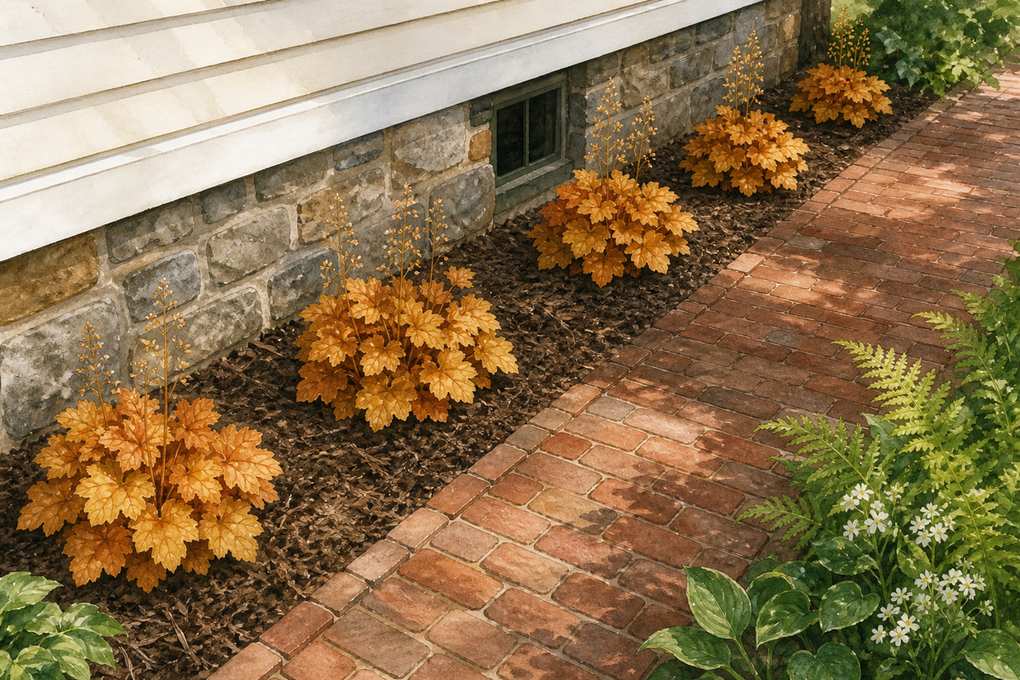
Coral bells give a narrow walkway color without relying on flowers, which matters when the path receives only filtered light. Repeat one restrained cultivar, such as amber 'Caramel' or lime 'Lime Marmalade,' every 24 inches instead of mixing six leaf colors in a cramped strip. Most clumps mature around 12 to 18 inches wide, so place their centers roughly 10 inches behind the hard edge. Good drainage is the nonnegotiable detail: Heuchera crowns can rot in wet clay and may heave during freeze-thaw cycles. Work compost into compacted soil, but keep mulch away from the crown. Trim battered leaves in spring rather than shearing everything in fall. In hot regions, bright-leaved cultivars appreciate afternoon shade and consistent moisture, while deep shade can mute their color.
4. Use Autumn Ferns as Upright Corner Markers
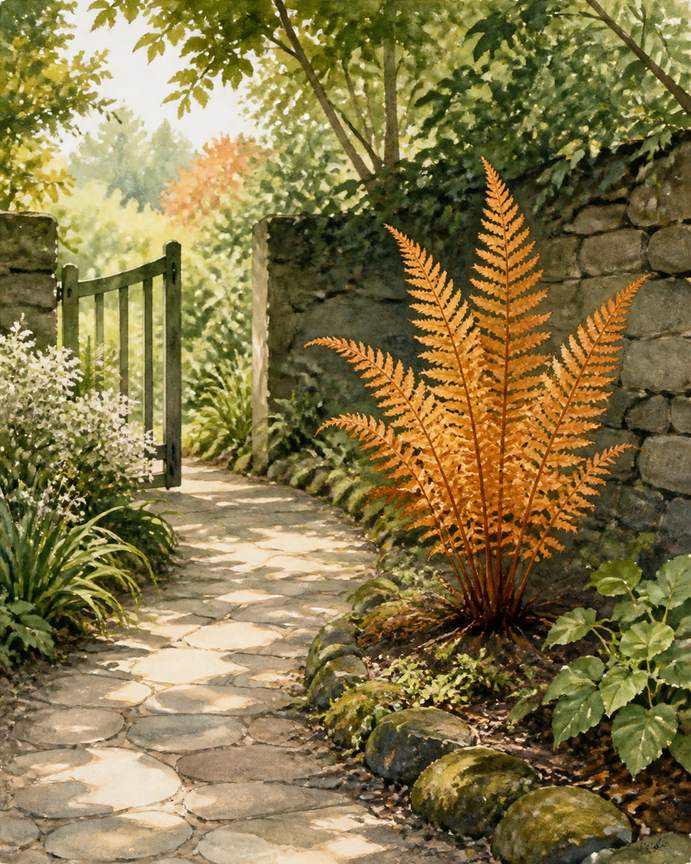
Autumn fern, Dryopteris erythrosora, adds coppery new fronds while keeping a more upright outline than many sprawling woodland ferns. Use one at a gate, downspout turn, or path bend rather than lining the entire passage; a mature plant can reach about 24 inches across. Give the center at least 14 inches of setback from the walkway so wet fronds do not brush clothing after rain. This fern handles shade and established-root competition reasonably well once settled, but it still needs regular moisture during its first year. Its downside is winter appearance: it may remain semi-evergreen in mild areas yet look flattened or brown after snow. Remove damaged fronds individually in early spring. Check your regional hardiness and avoid placing it where a swinging gate needs the same clearance.
5. Make a Controlled Ribbon of Pennsylvania Sedge
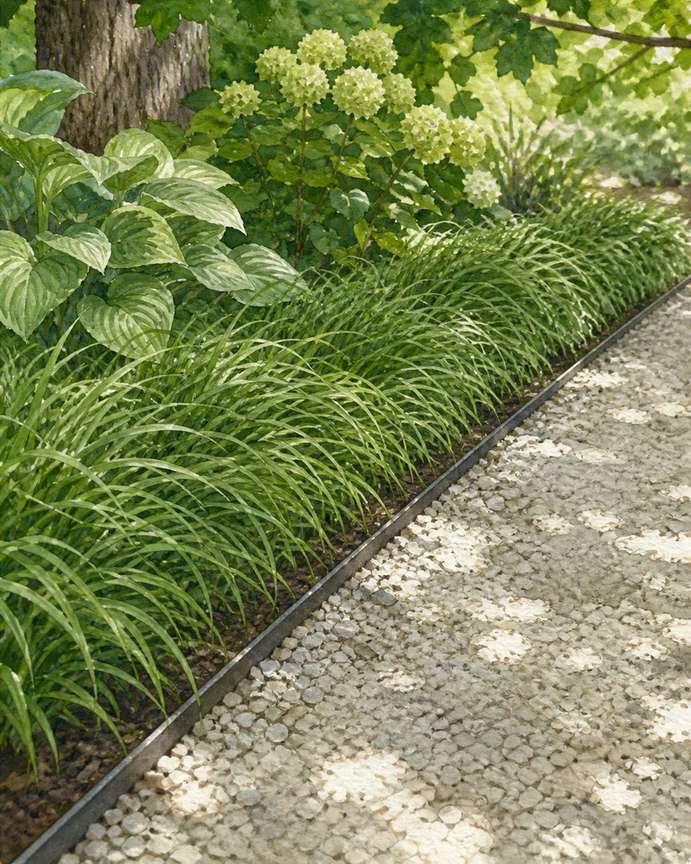
Pennsylvania sedge, Carex pensylvanica, forms a fine-textured ribbon that looks relaxed beside gravel or irregular stone. Plant plugs 8 to 12 inches apart in a strip no wider than about 18 inches, then define the path side with steel edging or a shallow spade-cut trench. It tolerates dry shade better than many lush woodland plants once established, making it useful beneath tree canopies where irrigation is limited. The honest trade-off is movement: its rhizomes can wander beyond the intended line, and loose blades may lean onto the path. Pull stray runners twice a year and comb out dead foliage in early spring rather than mowing it repeatedly. Confirm the species is appropriate and available in your region; a locally native Carex may offer the same narrow habit with less ecological guesswork.
6. Plant Foamflower Along the Damp Side
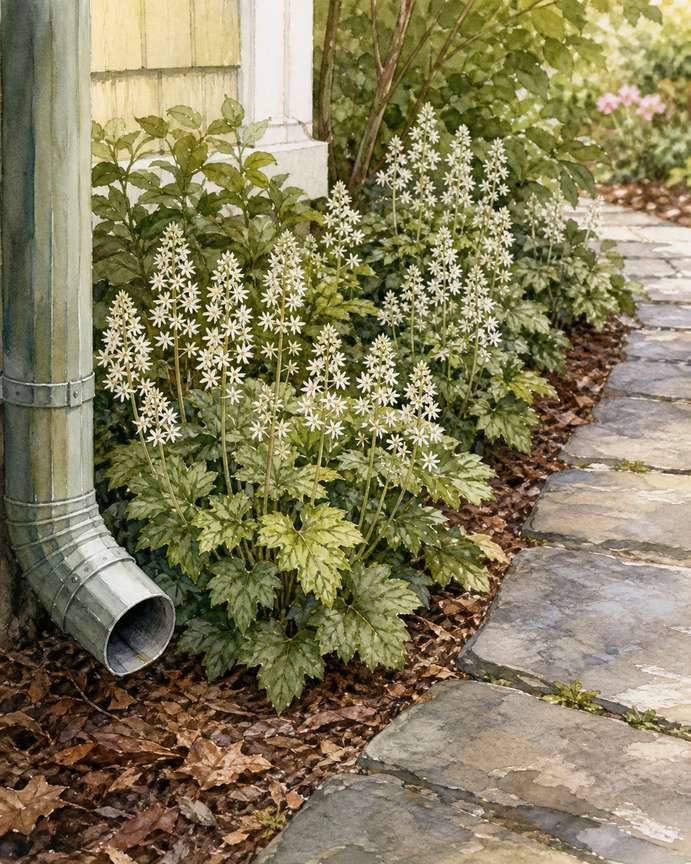
Foamflower, Tiarella cordifolia, suits the cooler side of a walkway where runoff keeps the soil moist but never puddled. Its maple-shaped leaves form low clumps, while spring flower stems rise roughly 10 to 15 inches without creating a bulky wall of foliage. Space plants about 12 inches apart and set them 6 inches behind the path edge. Choose clumping forms when you need a precise border; running forms can spread into neighboring plants and require occasional thinning. Foamflower dislikes hot, dry reflected air beside brick or a south-facing foundation, even if the ground is technically shaded. Add 1 to 2 inches of leaf mold rather than piling bark against the crowns. The flowers are delicate, so expect them to bend where hoses, pets, or trash bins regularly pass.
7. Brighten a Wall Edge With Spotted Deadnettle
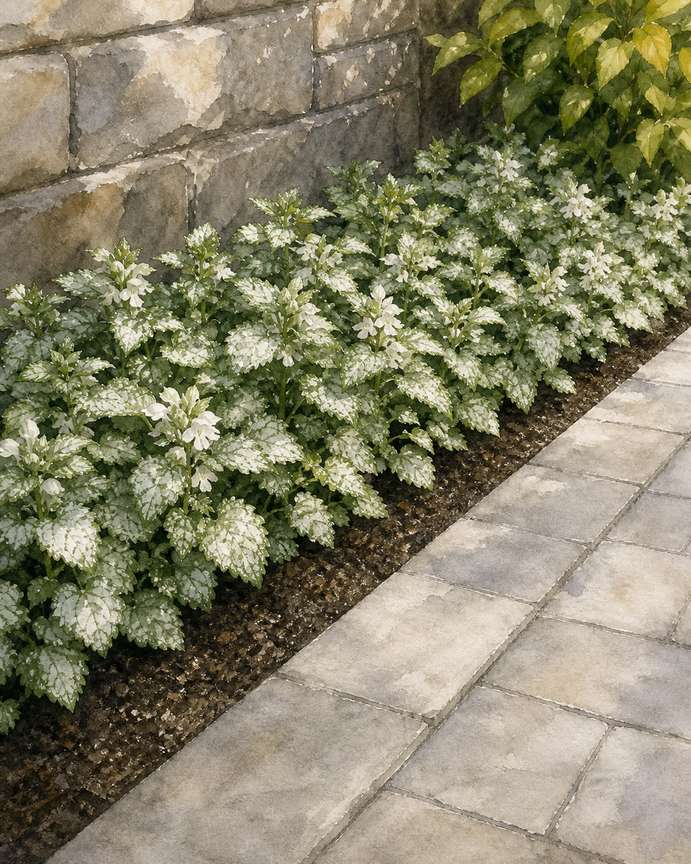
Spotted deadnettle, Lamium maculatum, quickly brightens a dim wall edge with silver-patterned leaves, especially where the planted strip is only 12 to 18 inches wide. Start with compact cultivars such as 'White Nancy' and space them about 12 inches apart. Keep the first row 5 or 6 inches from the paving so stems can fill in without immediately covering it. Speed is also the drawback: Lamium roots as it travels and can escape into beds or path joints. Clip the edge three or four times during the growing season and remove unwanted rooted pieces promptly. Give it some moisture in dry shade, but avoid constantly wet soil. Because Lamium behavior and invasive status vary by region, check local guidance before planting; use foamflower or a compact sedge if it is discouraged locally.
8. Place Hellebores Where the Path Widens
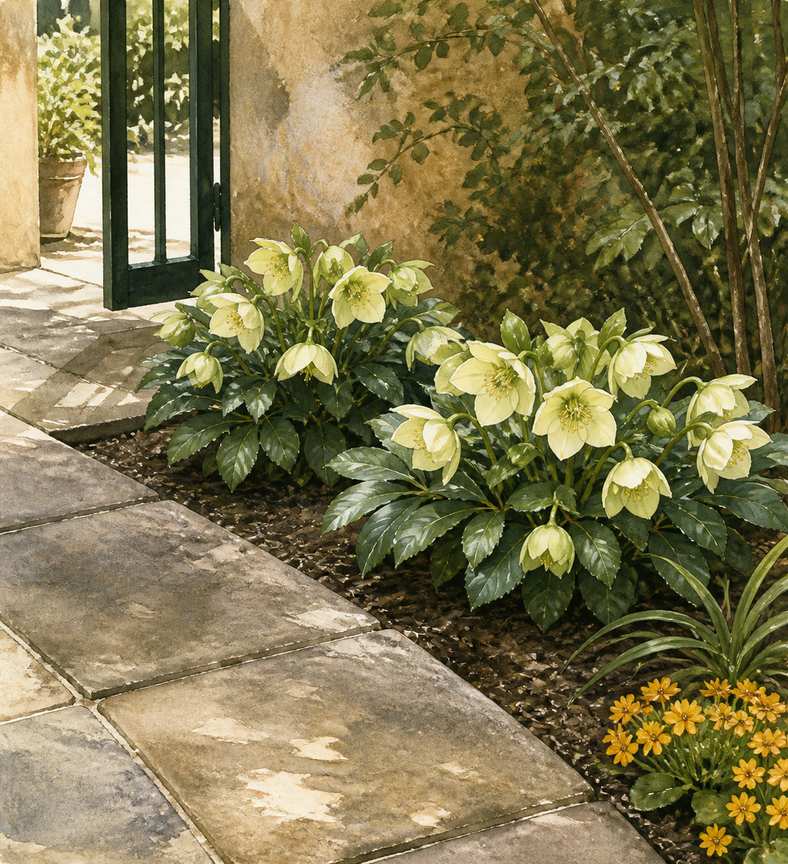
Hellebores make useful winter and early-spring anchors, but they belong in the occasional wider pocket rather than a continuous narrow border. A mature hybrid can spread 24 to 30 inches, so reserve a recess near the path entrance or beside a landing and set the crown at least 15 inches from the walking edge. Their leathery foliage holds structure in shade, and downward-facing flowers are easier to appreciate beside a route you use daily. The compromise is maintenance: old leaves can look rough by late winter and may shelter leaf-spot problems. Cut damaged foliage at the base before flowers open, wearing gloves because the sap may irritate skin. Hellebores are toxic if eaten, so skip this placement where pets or young children routinely investigate plants. They also resent wet, poorly drained clay.
9. Soften One Edge With Fragrant Sweet Woodruff
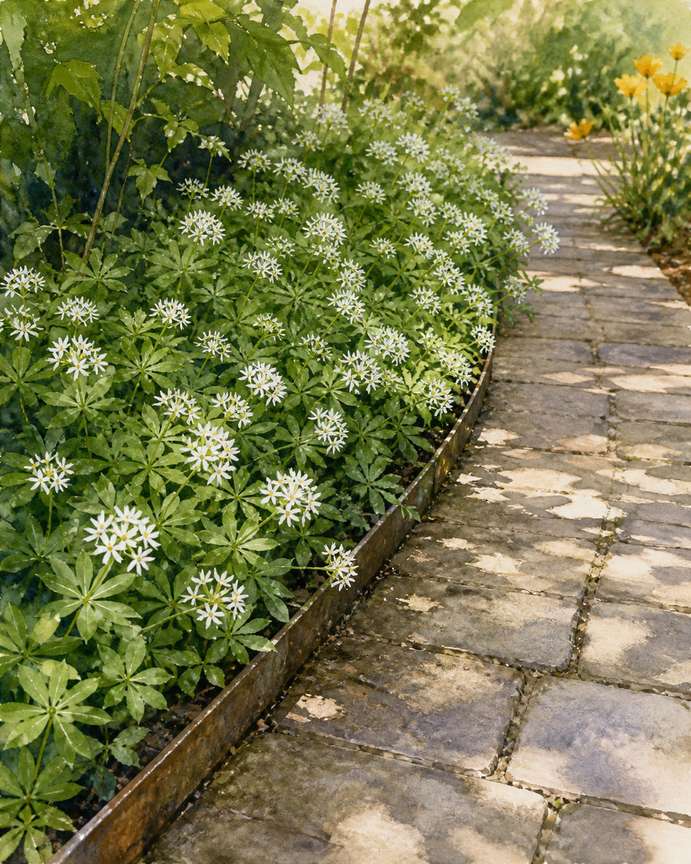
Sweet woodruff, Galium odoratum, creates a low green skirt beside a shaded walkway and releases a haylike scent when its leaves are brushed or dried. Install small divisions 10 to 12 inches apart along only one edge, then use a rigid metal or paver boundary to keep the walking width intact. It stays roughly 6 to 10 inches tall and carries small white flowers in spring. The warning matters more than the charm: in moist, loose soil, sweet woodruff can spread aggressively through shallow runners and overwhelm slower perennials. It is easier to restrain in a contained strip than beneath shrubs with no boundary. Shear or pull it back after flowering and never let runners cross into woodland or natural areas. Check local invasive-plant guidance before buying, as recommendations differ across the US.
Common questions
- How wide should a narrow garden walkway remain after planting?
- Keep at least 30 inches clear for a lightly used household path; 36 inches is more comfortable for carrying bins, groceries, or tools. Measure mature plant width from the crown, not the size of the nursery pot, and add several inches of setback for arching or rain-heavy foliage.
- What plants handle dry shade beside a walkway?
- Pennsylvania sedge and established autumn fern can tolerate some dry shade, though both need regular watering while their roots develop. Japanese forest grass, foamflower, and sweet woodruff are less forgiving under roof eaves or thirsty tree roots. A 1- to 2-inch layer of leaf mold helps, but it cannot replace irrigation during establishment.
- Can shade-path plants survive occasional foot traffic?
- Dwarf mondo grass tolerates occasional steps better than the other plants here, but none is a substitute for a durable walking surface. Use stone, brick, or compacted gravel for the actual route, keep plant crowns outside the main footfall, and avoid placing delicate foamflower stems where bins or hoses pass.
- When should walkway plants be cut back?
- Remove old Japanese forest grass and sedge foliage in late winter before new blades emerge. Trim damaged fern and hellebore leaves individually in early spring, and edge spreading Lamium or sweet woodruff several times during active growth. Exact timing shifts with climate, so watch for new growth rather than relying on one national date.