9 Budget Drainage Fixes for Muddy Small Backyards Without Major Digging
A tiny yard can stay muddy for days when roof runoff, compacted soil, and foot traffic all meet in the same few square feet. These nine fixes manage the water at its source or make the soggy areas usable without bringing in an excavator.
1. Extend the Downspout Past the Muddy Zone
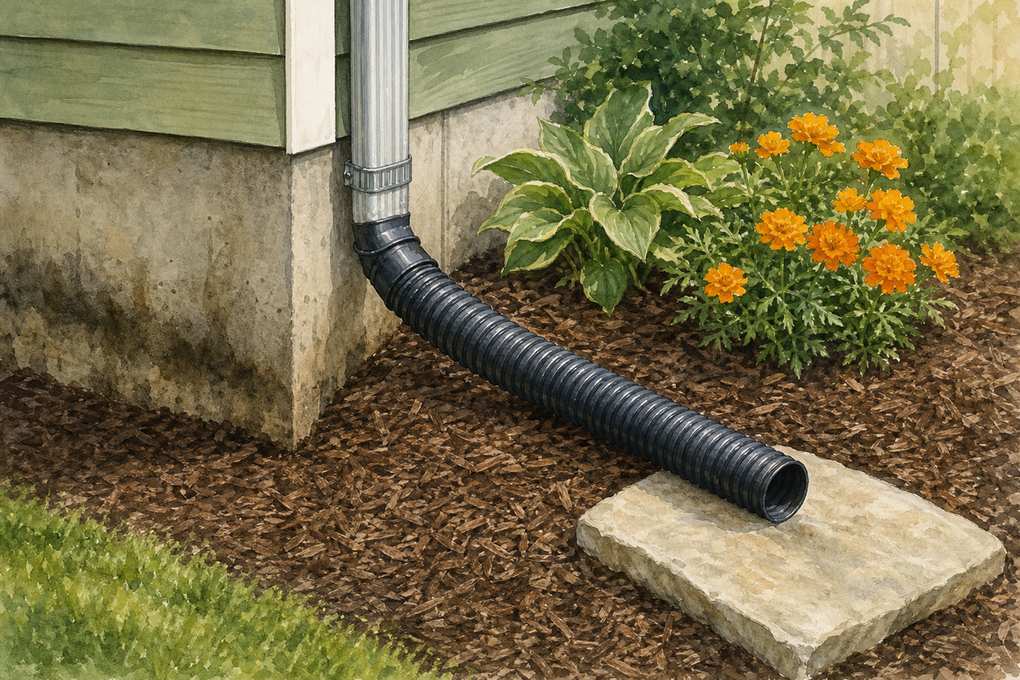
Start at the roof, because one downspout can dump hundreds of gallons beside a small yard during a heavy storm. Attach a flexible 4-inch downspout extension and carry the outlet at least 5 feet from the foundation, aiming toward a planted area that can absorb water. A splash block beneath the end prevents a new crater from forming. The awkward part is placement: the extension cannot cross a walkway, discharge onto a neighbor's property, or send water toward a basement. Hinged or roll-up versions move out of the way between storms, but they clog more easily with leaves. Check the connection and outlet monthly during rainy seasons.
2. Core-Aerate the Most Compacted Patch
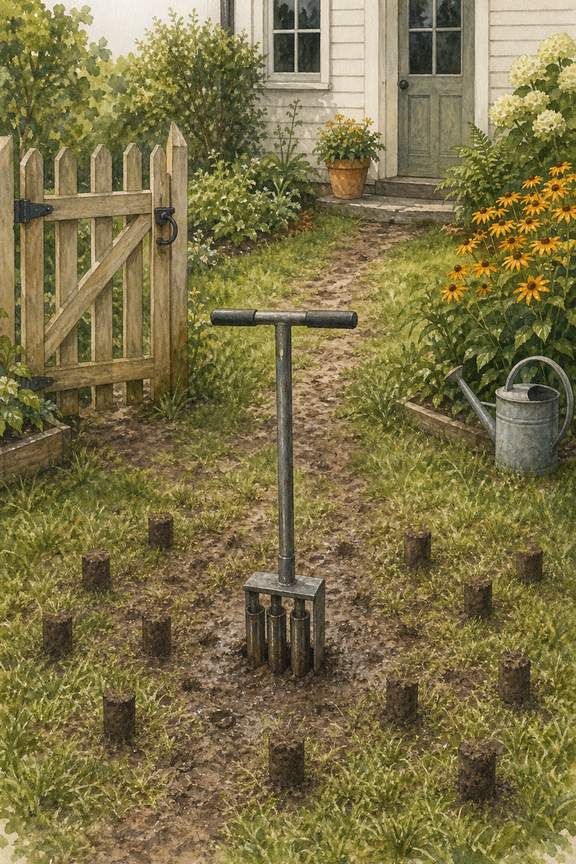
A manual core aerator opens narrow channels where repeated footsteps have pressed the soil nearly solid. Work when the ground is moist but not soupy, removing plugs about 2 to 3 inches deep every 4 to 6 inches across the problem patch. Focus on the route between the gate, bins, and back door rather than aerating the entire yard. This helps modest rainfall soak in, but it will not cure a low spot fed by a downspout. Avoid spike shoes, which tend to squeeze the surrounding soil tighter instead of removing a core. Mark irrigation tubing and call 811 before pushing any long-tined tool into an unfamiliar yard.
3. Top-Dress Clay Soil With Finished Compost
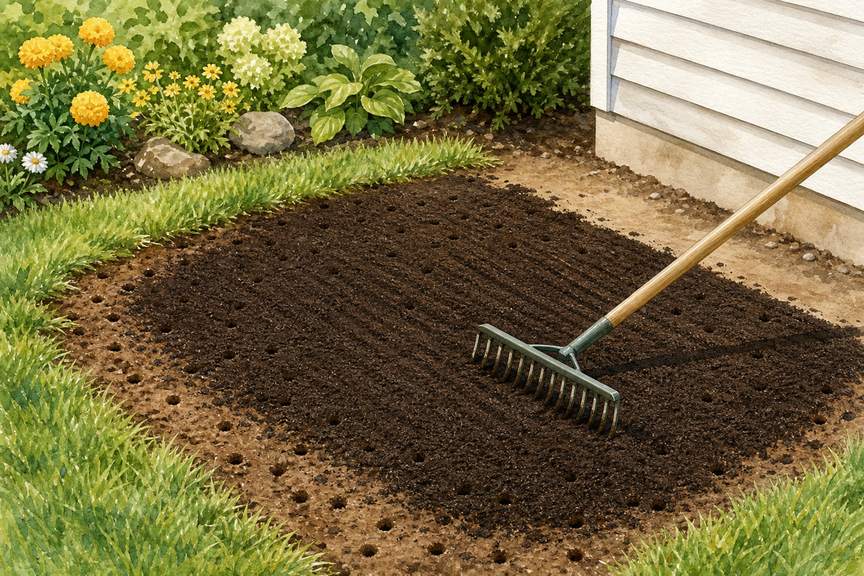
Spread a quarter-inch layer of screened, finished compost over compacted clay, then rake it into aeration holes and the upper surface. Earthworms and weather gradually blend the organic matter into the soil, improving its structure without tilling up the whole yard. Repeat once in spring and once in fall rather than burying the lawn under a thick load. Compost is a slow repair, not an instant drain; expect improvement over several growing seasons, and solve concentrated roof runoff first. Avoid adding straight sand to clay in small amounts, because the mixture can set surprisingly hard. Keep compost below siding and leave plant crowns uncovered to prevent rot.
4. Cover a Soggy Route With Arborist Wood Chips
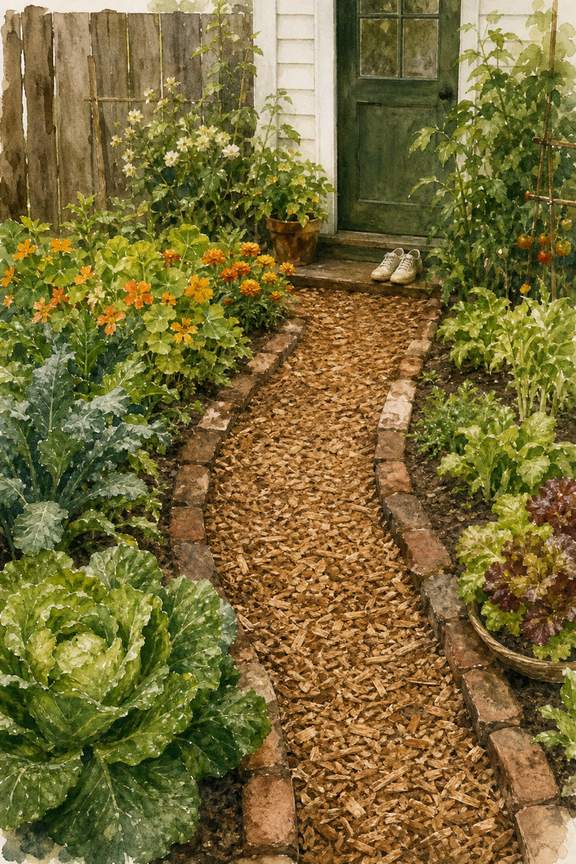
For a muddy route that needs to remain walkable, lay down 3 to 4 inches of coarse arborist wood chips in a path at least 30 inches wide. The irregular chips knit together better than slick bark nuggets, and many tree services provide a load cheaply or free. Define the edges with reused bricks or untreated logs so the material does not migrate into beds. Chips absorb splashes and spread foot pressure, but they do not remove standing water; redirect active runoff before building the path. Expect to add another inch each year as the lowest layer decomposes. Keep the path 6 inches below wood siding and away from direct soil contact with fence boards.
5. Set Stepping Stones on Shallow Gravel Pads
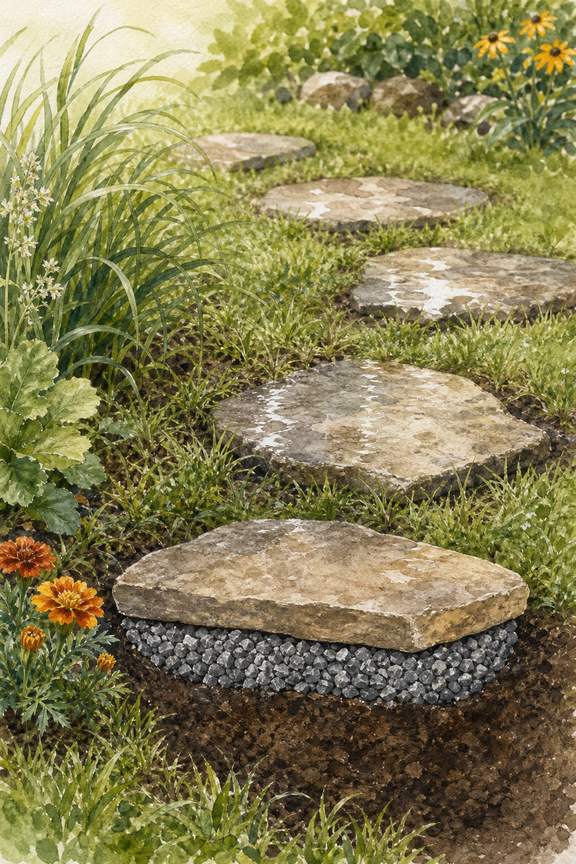
Stepping stones create dependable footing without paving the whole yard. For each stone, scrape out a shallow pocket, add about 2 inches of compacted crushed gravel, and set a textured concrete or natural-stone slab with its top just above the surrounding grade. Space centers roughly 18 to 24 inches apart, adjusting for the shortest household stride. Do not install a continuous raised row across the direction water naturally travels, or the stones may act like a tiny dam. Individual gravel pads let water pass between them and reduce wobbling after freeze-thaw cycles. Large slabs are heavy, so choose pieces one person can safely lift or split the route into smaller units.
6. Build a Shallow Pocket Rain Garden
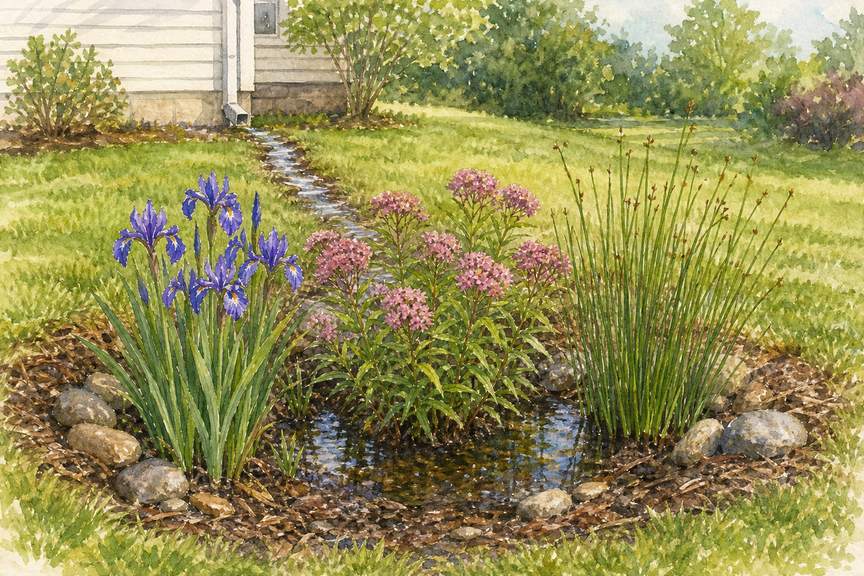
A pocket rain garden is a shallow planted basin that catches runoff and releases it into the soil gradually. Place it downhill from the wet area, generally at least 10 feet from a foundation, and shape a basin only 4 to 6 inches deep with a level bottom. In sunny, periodically wet sites, tough native options include blue flag iris, swamp milkweed, and soft rush; confirm suitable species for your state before planting. Test the empty basin after rain: water should disappear within 24 to 48 hours. If it remains longer, the soil may need professional drainage help. Never locate a rain garden over utilities, a septic field, or a consistently high water table.
7. Shape a Shallow Stone-Lined Swale

A shallow swale guides water around a patio or play area instead of letting it spread across the whole yard. Follow the existing downhill route and shape a broad channel only 1 to 2 inches deep, then line the center with pea gravel or small river stone over permeable landscape fabric. A gentle fall of about 1 inch per 8 feet is often enough to keep water moving without creating an eroding stream. Test the route with a hose before adding stone. The outlet must end in an absorbent area on your property, never against the house, across a sidewalk, or through a neighbor's fence. Flat yards may not have enough fall for this fix.
8. Add a Rain Barrel With a Planned Overflow Route
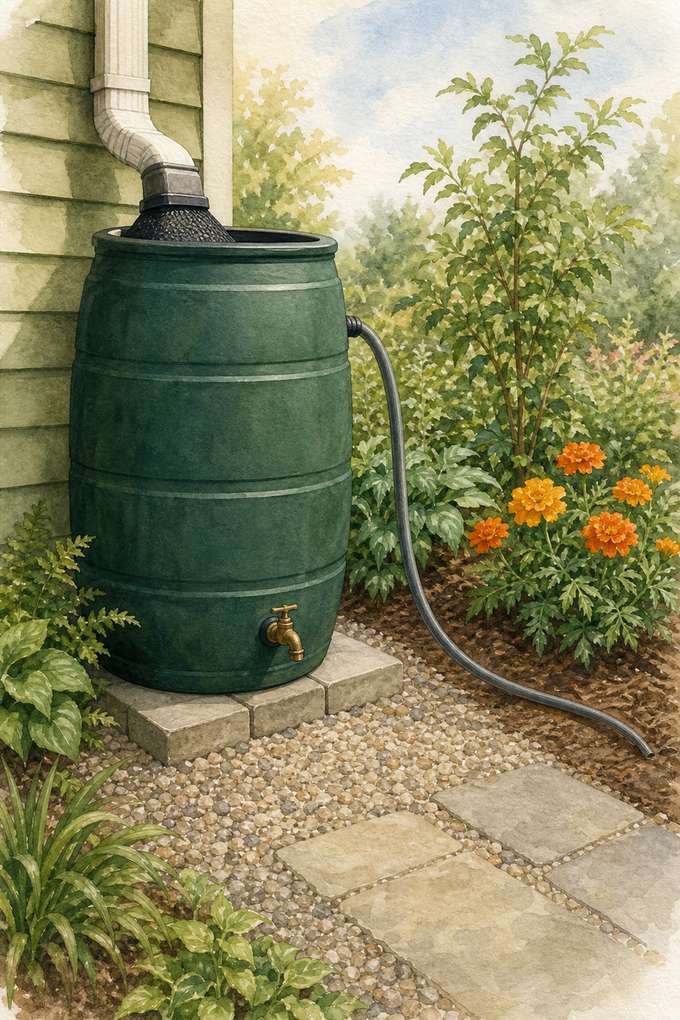
A rain barrel temporarily holds roof water that would otherwise hit the muddiest corner all at once. A 50-gallon barrel can weigh more than 400 pounds when full, so set it on a level base of compacted gravel and concrete pavers rather than soft soil or a lightweight deck. Fit a screened inlet, secure lid, and overflow hose at least as large as the incoming downspout connection. Route that overflow 5 feet or more from the foundation toward a rain garden or stable planted bed. The barrel will fill quickly in a sustained storm, making the overflow route essential. Drain and disconnect it before freezing weather if the barrel is not rated for winter use.
9. Replace Failed Turf With Moisture-Tolerant Plants
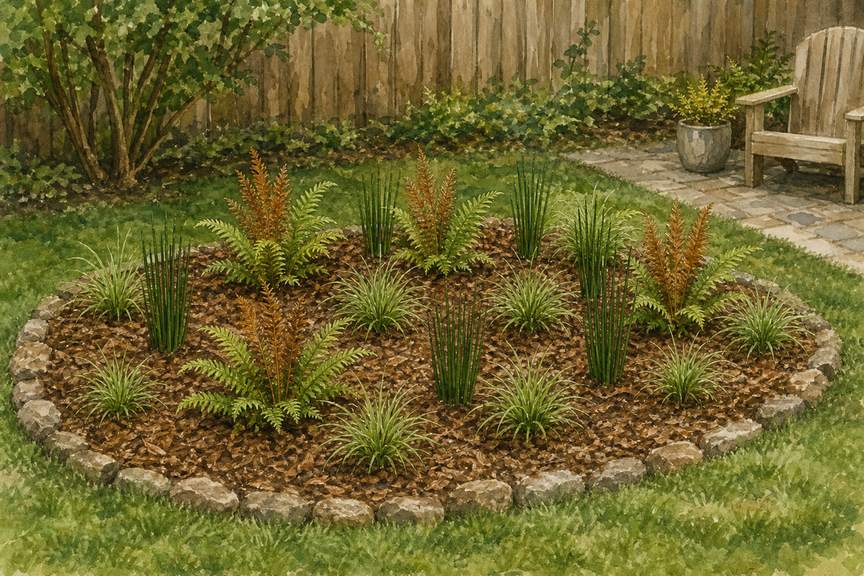
Where grass repeatedly thins and exposes mud, moisture-tolerant plants can stabilize the surface better than another bag of seed. For a sunny damp patch, plant soft rush or fox sedge plugs about 12 inches apart; in part shade, try native cinnamon fern where your climate and soil suit it. Cover the gaps with 2 inches of shredded leaf mulch while roots establish. This is not a fix for deep standing water, and the area should stay out of regular foot traffic for its first growing season. Sedges and rushes also look wilder than clipped lawn, which may matter under HOA rules. Check local native-plant guidance because moisture tolerance and mature size vary by region.
Common questions
- How can I tell whether the mud is caused by runoff or compacted soil?
- Watch the yard during steady rain. Water flowing from a downspout, patio, or neighboring slope points to a runoff problem; puddles forming directly under walked-on soil suggest compaction or a low spot. A simple infiltration check helps: dig a 6-inch hole, fill it with water, and see whether it drains within 24 hours. Persistent water may indicate heavy clay, a high water table, or a damaged underground line.
- Will adding gravel directly over mud improve drainage?
- Usually not for long. Loose gravel sinks into saturated soil and mixes with the mud unless it sits on a compacted crushed-stone base or appropriate permeable fabric. It can create cleaner footing, but it does not correct the source of the water. Redirect downspouts and confirm where runoff can legally discharge before buying stone.
- Do I need my landlord's permission for these fixes?
- Renters should get written approval before changing grade, digging a basin, attaching anything permanent to a downspout, or installing a large rain barrel. Removable extensions, freestanding splash blocks, wood-chip paths, and portable stepping stones are easier to reverse, but the lease and local drainage rules still apply.
- When is a muddy yard a job for a drainage professional?
- Call for help if water reaches the foundation, smells like sewage, appears during dry weather, remains more than 48 hours after ordinary rain, or suddenly develops over a buried pipe. A contractor may also be necessary when the only apparent outlet crosses a property line or public sidewalk. Those situations can involve plumbing, grading, easements, or local stormwater rules rather than a simple garden fix.