9 Cottage Garden Layout Ideas That Fit a Small Yard
A cottage garden does not need a sweeping lawn or deep flower beds. These nine layouts fit winding paths, layered blooms, herbs, and informal structure into compact yards without ignoring access, drainage, light, or rental restrictions.
1. Wrap a 3-Foot Border Around the Fence Line
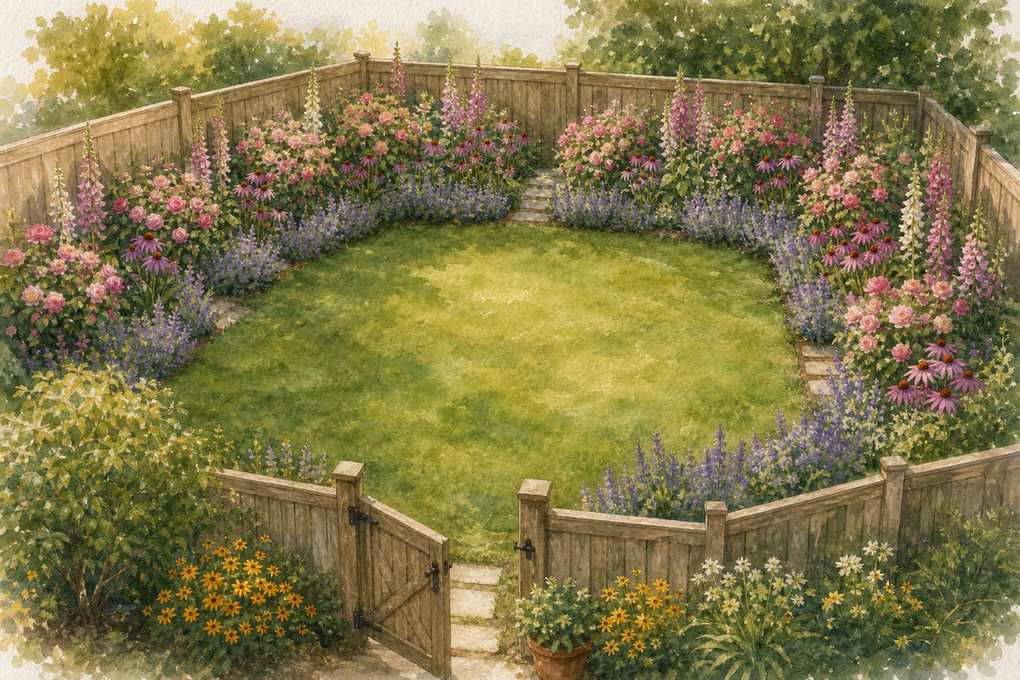
Use the perimeter instead of dividing an already small yard into separate beds. A border about 3 feet deep can hold one narrow shrub layer, medium perennials, and a low front edge while preserving an open center. Try a compact shrub rose at the back, foxglove or purple coneflower in the middle, and catmint spilling forward. Before digging, check where fence posts, utility lines, and roof runoff sit; crowded roots and soggy corners cause more trouble than the romantic planting is worth. Keep at least 30 inches of clear passage beside the bed for a mower or wheelbarrow. The downside is maintenance: a continuous border looks relaxed, but it still needs reachable stepping gaps every 5 to 6 feet for weeding.
2. Curve One Narrow Path, Not Three

A single gently curving path creates cottage-garden softness without wasting half the yard on circulation. Make it 30 to 36 inches wide so one person can walk comfortably, then let thyme or lady's mantle soften the edges. Pea gravel gives the right informal look and drains well, but install a compacted base and metal edging or it will migrate into the beds. If anyone uses a walker, stroller, or wheelchair, choose firm decomposed granite or closely laid brick instead of loose gravel and widen tight turns. Resist adding decorative side paths in a yard under about 300 square feet; they consume planting room and often lead nowhere. The trade-off is directness: a curve feels generous, but it should not turn a 15-foot trip into an obstacle course.
3. Build a Keyhole Bed Around a Tiny Sitting Spot
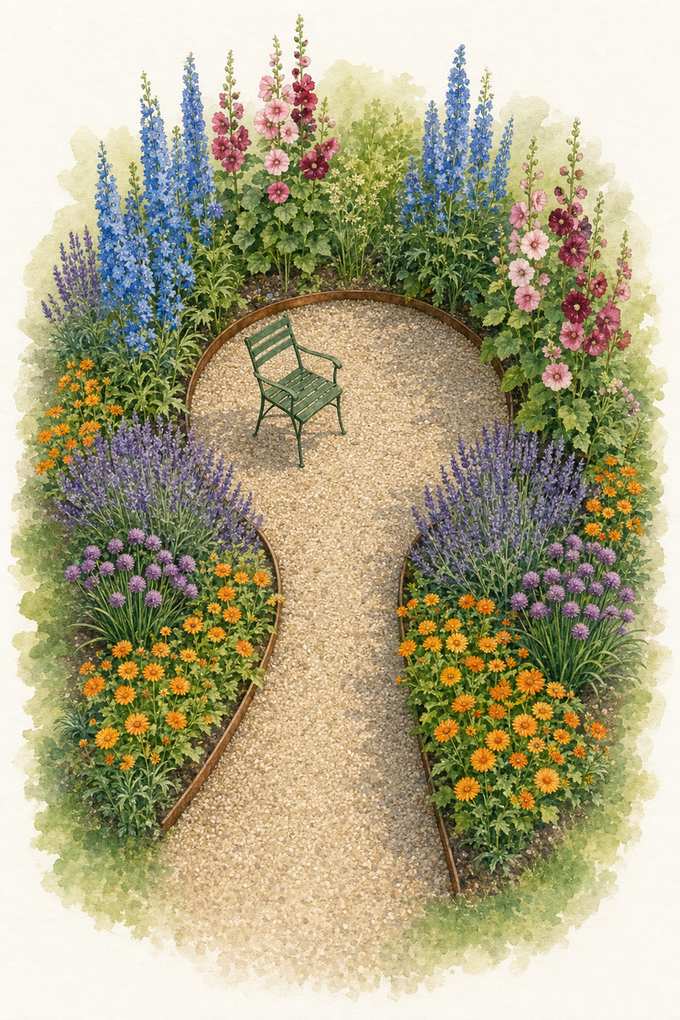
Shape one broad planting bed around a 5-foot-wide circular nook, leaving a narrow opening like a keyhole. The inward-facing flowers make a single chair or café table feel tucked into the garden without requiring a separate patio. Use upright plants such as delphinium or hollyhock at the outer edge, then bring lavender, calendula, and chives closer to the seat. Check the mature spread rather than the nursery-pot size; a vigorous rose can swallow the entrance within two seasons. Set the chair on four large pavers or compacted gravel so its legs do not sink after rain. This layout sacrifices open floor area, and the enclosed bed can be awkward to weed, so keep every planted section within roughly 30 inches of either the nook or the yard edge.
4. Frame the Back Door With Mirrored Pocket Beds
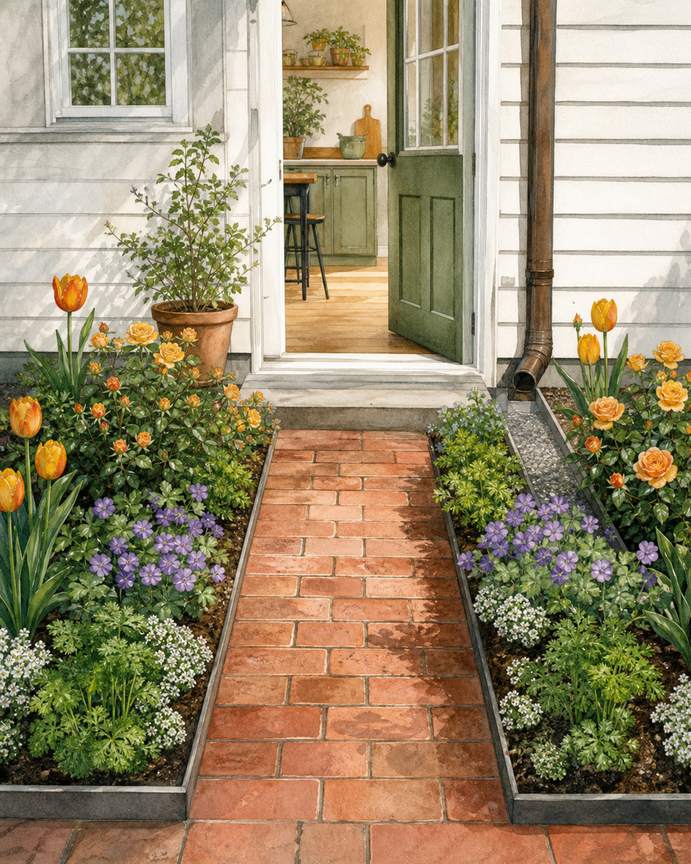
Place two small beds on either side of the back-door route to make the house feel connected to the garden. Matching rectangles around 3 by 5 feet provide enough repetition for structure while mixed planting keeps the cottage character loose. Anchor each bed with the same compact rose or dwarf hydrangea, then vary the lower layer with geranium, sweet alyssum, parsley, and tulip bulbs. Leave the actual walkway at least 36 inches wide and keep thorny roses 18 inches back from sleeves, grocery bags, and screen doors. Observe roof runoff before planting because downspouts can flatten seedlings or waterlog one side. The mirrored layout is tidy rather than wild, which is useful in a tiny yard, but it requires replacing a failed anchor plant promptly or the imbalance becomes obvious.
5. Turn a Sunny Corner Into a Mini Potager
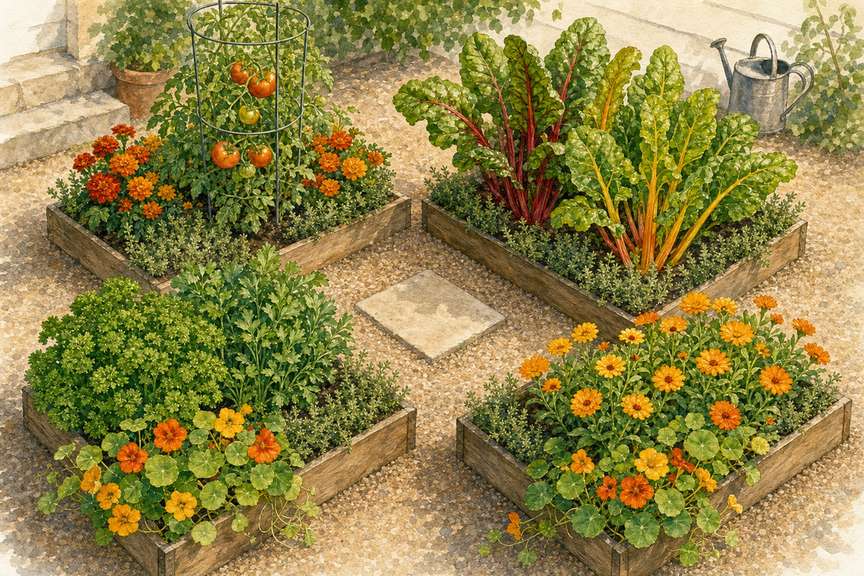
Give the brightest corner a cottage-style potager: four compact beds arranged around a central stepping stone. Beds measuring 2 by 3 feet are reachable without stepping on the soil and can mix useful plants with flowers—one tomato in a slim cage, curly parsley, rainbow chard, nasturtium, and calendula. Confirm the spot receives at least 6 hours of direct summer sun before assigning it to tomatoes; with 4 hours, use lettuce, chives, and leafy herbs instead. Keep mint in a buried pot or separate container because it will ignore the layout by year two. A potager needs more watering and harvesting than a purely ornamental bed, especially in July. It also looks bare in winter, so edge it with evergreen thyme or add a simple 24-inch willow border for off-season structure.
6. Replace the Lawn With Mown Paths and Flower Pockets
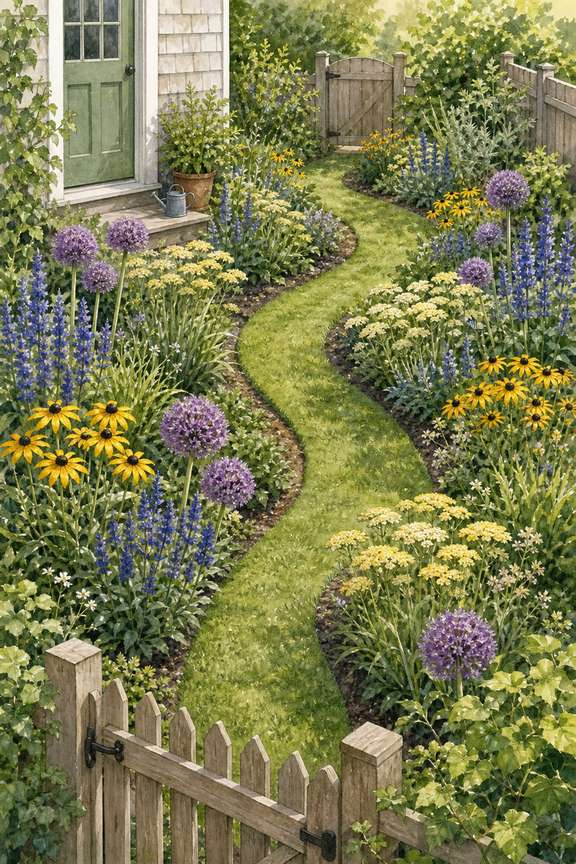
In a yard that is mostly thin turf, keep only the grass needed for movement and convert the rest into irregular flower pockets. A 30-inch mown route looping from the door to the gate provides clear access while islands of yarrow, black-eyed Susan, salvia, and ornamental allium create the abundant cottage look. Mark the layout with a garden hose, then live with it for a week before removing sod; the path must still accommodate trash bins, pets, and the shortest route across the yard. Use steel edging where grass meets beds or expect frequent trimming. This plan reduces mowing but does not eliminate work—young beds need weeding until plants knit together. In tick-prone areas, keep vegetation from leaning into the walking route and maintain a crisp, sunny path rather than a damp tunnel.
7. Use a Freestanding Arch as the Layout’s Backbone
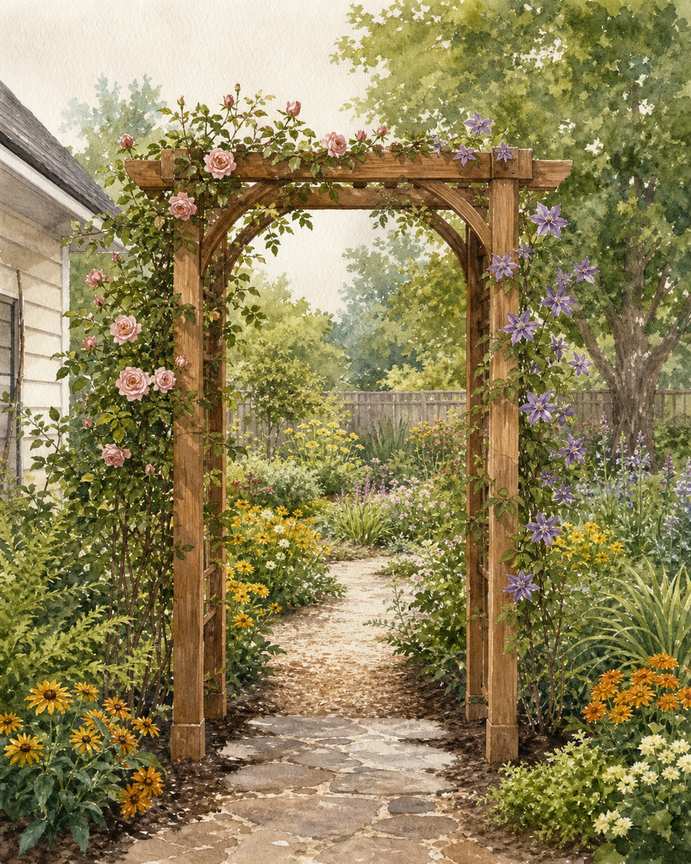
A freestanding arch can give a shallow yard a clear destination even when there is no room for a gazebo. Position a 4-foot-wide metal or cedar arch over the main path, ideally one-third of the way into the space rather than pressed against the fence. Train a repeat-flowering clematis on one side and a less aggressive climbing rose on the other, checking mature height and your USDA zone before buying either. The arch must be anchored with ground spikes or concrete-rated feet; a leafy climber catches surprising wind, and renters should not rely on fence screws. Leave 7 feet of headroom after vines are tied in. Expect annual pruning and occasional bare months. If the yard receives fewer than 4 hours of sun, substitute climbing hydrangea, knowing it grows slowly and eventually becomes heavy.
8. Make a Dry Cottage Garden for the Hottest Strip

Treat the hot strip beside a south- or west-facing wall as a dry cottage border rather than fighting it with thirsty plants. A bed only 24 inches deep can layer upright Russian sage, compact yarrow, lavender, and low creeping thyme among gravel mulch and three locally sourced stones. First check drainage by filling a 12-inch-deep test hole with water; if it remains wet the next day, improve the soil or choose moisture-tolerant plants instead. Keep lavender at least 12 inches from an exterior wall so air can circulate, and avoid piling gravel over a building’s weep holes. This layout uses less water once established, but it is not maintenance-free: lavender may be short-lived in humid climates, and gravel makes later plant changes harder than shredded-leaf mulch does.
9. Create a Renters’ Cottage Garden With Movable Troughs
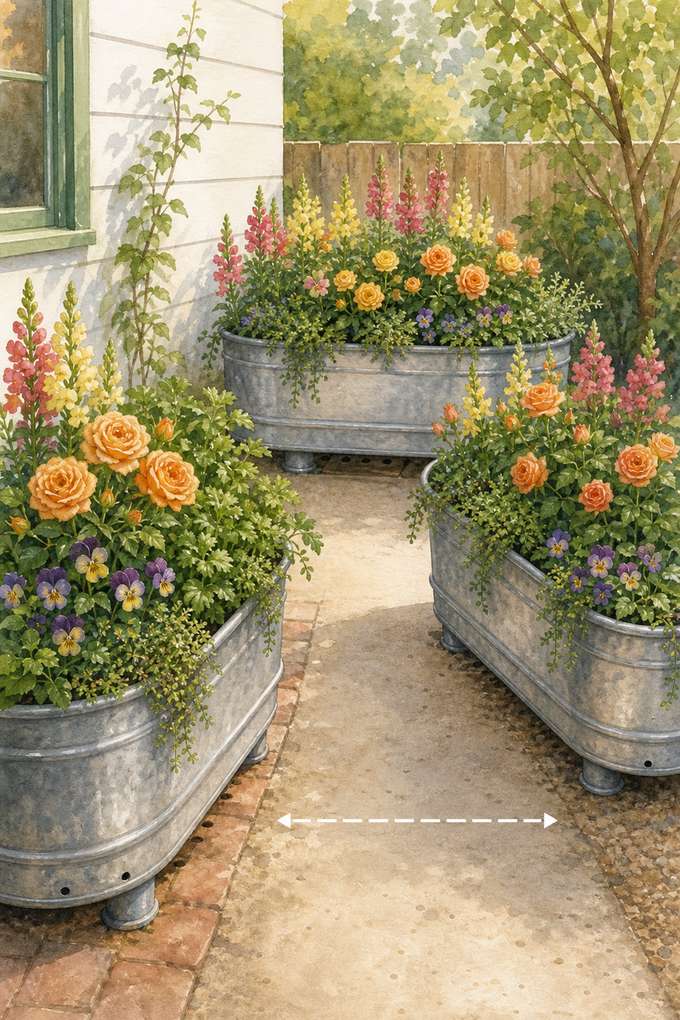
Build the layout from freestanding containers when digging, drilling, or permanent edging is off-limits. Arrange three galvanized troughs or fiberstone planters in a loose L shape, leaving a 36-inch route between the door and gate. Containers around 30 inches long and 12 to 16 inches deep can support dwarf roses, snapdragons, parsley, violas, and trailing thyme without looking like a row of nursery pots. Confirm that every trough has drainage holes, and set it on pot feet so runoff does not stain paving or rot a deck. Filled metal troughs become extremely heavy, so use lightweight potting mix rather than garden soil and position them before planting. The trade-off is watering: containers may need daily attention during a heat wave, and galvanized metal can warm roots in full afternoon sun.
Common questions
- How much space do I need for a small cottage garden?
- Even a 10-by-12-foot yard can hold one 30- to 36-inch path and beds about 2 to 3 feet deep. Start with the routes you must keep clear for doors, bins, pets, or utilities, then assign the remaining space to planting rather than shrinking every feature until none works well.
- Can a cottage garden work with only four hours of sun?
- Yes, but skip the classic full-sun plant list. With roughly four hours of direct light, try foxglove, hardy geranium, columbine, heuchera, parsley, and some shrub roses labeled for partial shade. Fewer than three hours usually calls for a shade-focused layout, and flowering will be lighter.
- How do I keep a tiny cottage garden from becoming messy?
- Use one repeating edge plant, one path material, and two or three anchor plants throughout the yard. Keep paths at least 30 inches wide, stake tall flowers before they flop, and cut back one bed at a time rather than clearing everything. Informal planting still needs visible edges and access.
- What should stay in the garden over winter?
- Leave sturdy seed heads from coneflower, yarrow, and ornamental allium for texture and birds, but remove diseased foliage. Protect containers according to the plant and your USDA zone; roots in pots are less insulated than roots in the ground. Keep paths clear of wet leaves, which become slippery on brick and gravel.