9 Edible Garden Ideas for Narrow Side Yards That Waste No Space
A narrow side yard can grow more than weeds, even when the path must stay open for bins, bikes, or utility access. These nine layouts use slim beds, overhead vines, movable pots, and shade-tolerant crops without turning the passage into an obstacle course.
This page contains affiliate links — we may earn a commission at no extra cost to you. See our disclosure.
1. Run a 16-Inch-Deep Bed Along the Sunny Wall
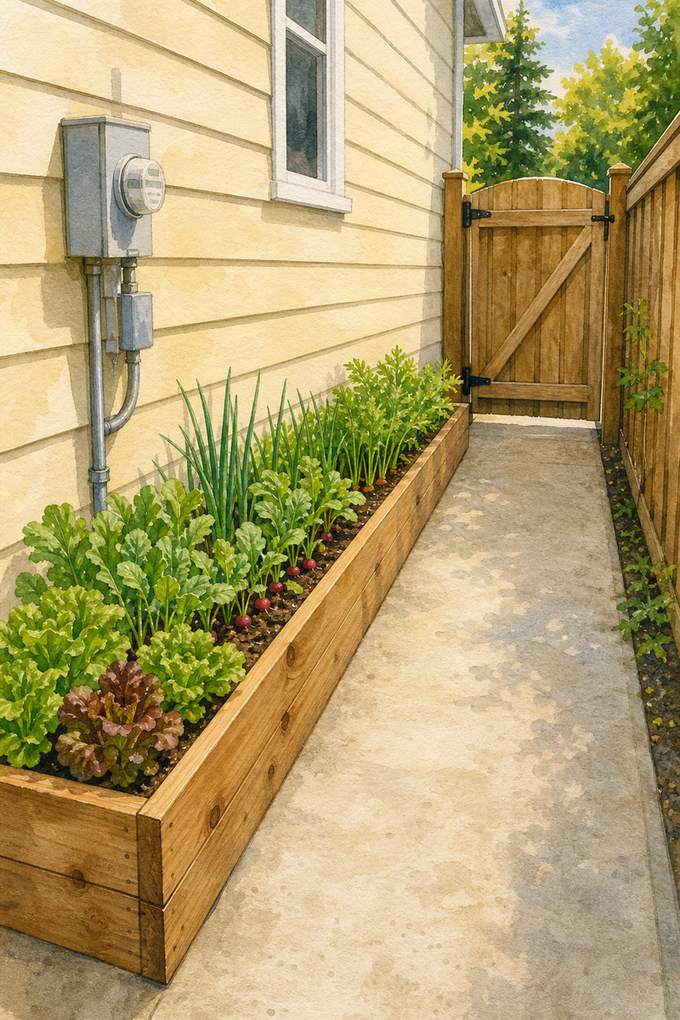
A 16-inch-deep raised bed running along the sunnier wall gives lettuce, radishes, scallions, and compact carrots usable root room without swallowing the path. Keep at least 30 inches of clear walking width; 36 inches is kinder if bins or bikes pass through. Build with untreated cedar or galvanized steel, and stop the bed short of gates and utility meters. Before filling it, watch the light for a full day: fruiting crops usually want 6 or more direct-sun hours, while leafy crops can manage about 3 to 5. The catch is volume—a 2-by-8-foot bed can require roughly 16 cubic feet of mix at 12 inches deep, so delivery cost and wheelbarrow access matter.
2. Grow Beans and Cucumbers Over a Walk-Through Arch
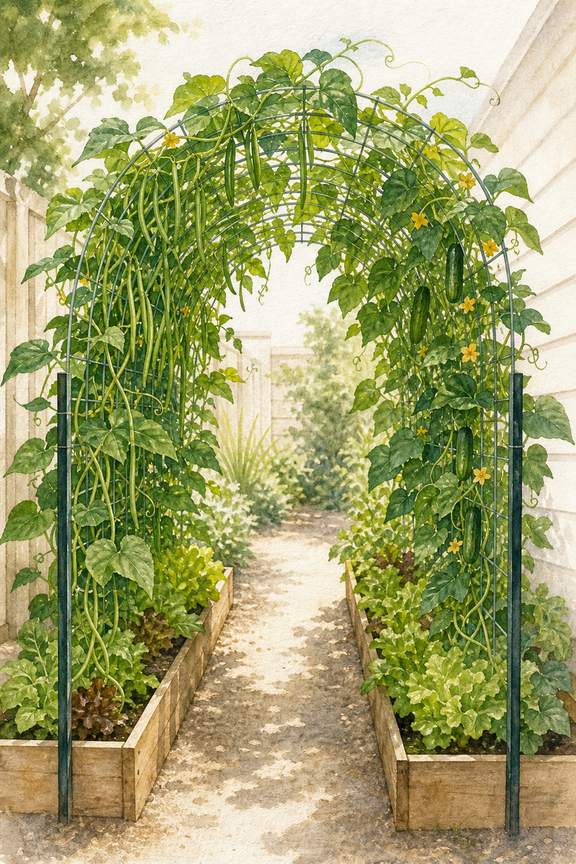
A freestanding cattle-panel arch turns the air above a narrow path into growing room for pole beans, cucumbers, and small-fruited squash. Bend a 50-inch-wide panel between two slim beds or large containers, leaving about 6 feet 6 inches of headroom at the center. Secure it to driven T-posts or heavy planter frames rather than the house or fence, which keeps renters out of drilling trouble. Train vines weekly so fruit hangs inside the arch instead of snagging clothes. This setup needs strong light—aim for 6 to 8 hours—and it can shade neighboring crops by midsummer. Put sun lovers on the south side and lettuce beneath; avoid heavy pumpkins, which can bend the panel and block the passage.
3. Train a Dwarf Fruit Tree Flat Against a Fence
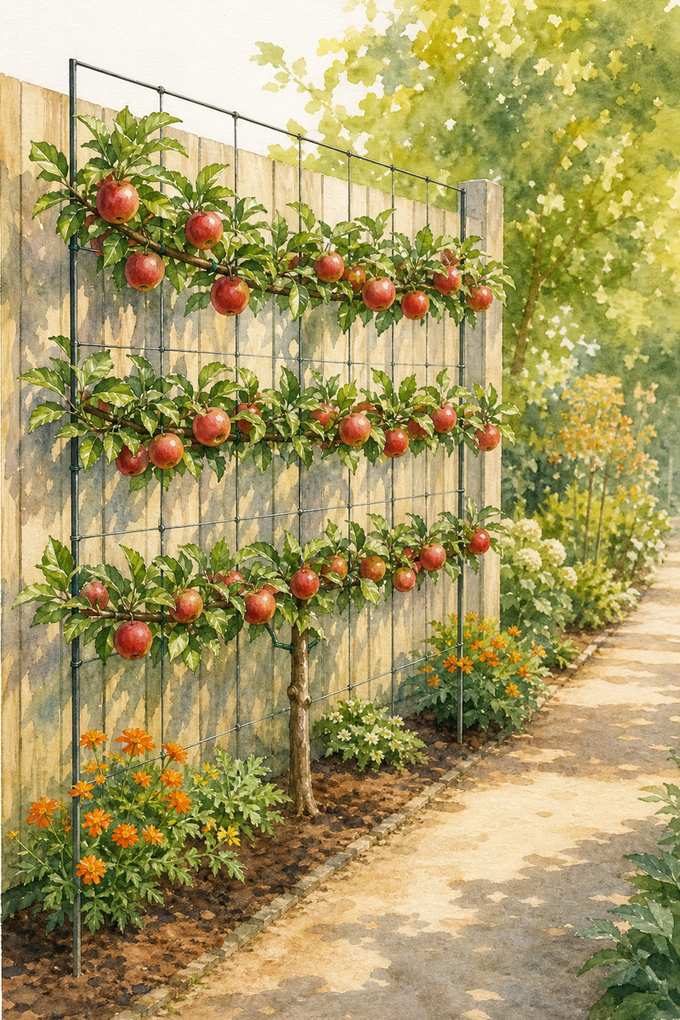
Espaliered apples or pears produce fruit on a plane only 12 to 18 inches deep, making them unusually useful beside a fence. Choose a dwarf tree on M.9 or Bud.9 apple rootstock, then train three horizontal tiers to a freestanding wire frame set a few inches off the boundary. Allow roughly 8 feet of length per tree and confirm that a compatible pollinator grows nearby, unless the cultivar is self-fertile. Pruning is the price of the slim profile: tie new growth in summer and remove shoots that point into the walkway. Expect little fruit in the first 2 or 3 years. Also locate buried utilities before setting posts, and keep roots away from cracked drains or foundations.
4. Put Shallow Crops on a Freestanding Trough Tower
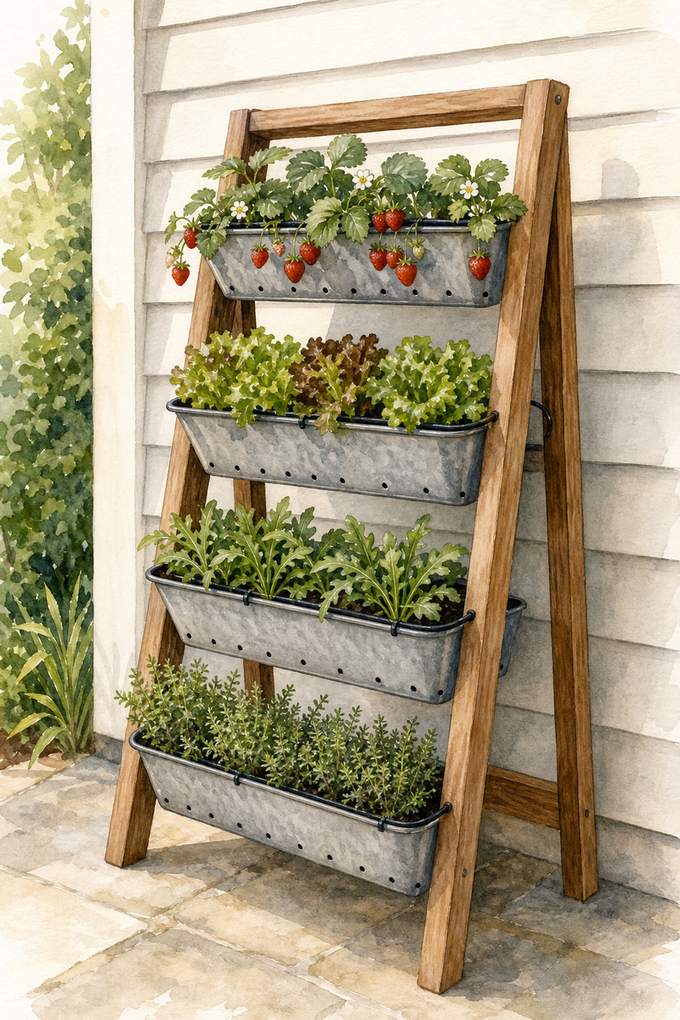
Mount 6- to 8-inch-deep gutters or purpose-built troughs on a freestanding A-frame, then sow strawberries, loose-leaf lettuce, arugula, and thyme in separate rows. The frame can sit against a blank wall without attaching to it, and a base no deeper than 24 inches keeps the path usable. Drill drainage holes every 8 to 12 inches and use lightweight potting mix, not garden soil. Shallow troughs dry quickly, especially beside reflective siding; in July they may need water every day. A drip line on a timer helps, but check emitters weekly because one clog can wilt an entire level. Skip tomatoes and full-size chard here—their roots and top weight exceed what narrow channels handle well.
5. Plant a Low-Light Salad and Herb Strip
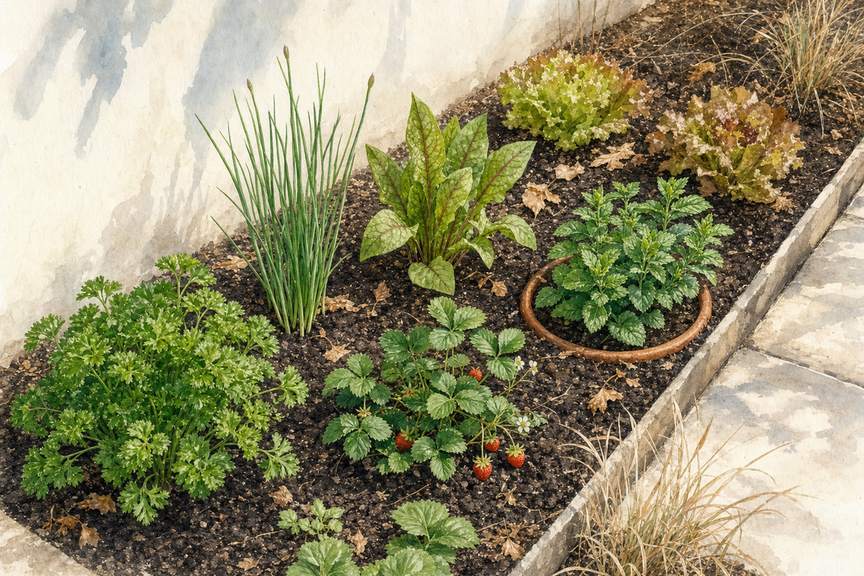
Where the side yard gets only 3 to 4 hours of direct sun, use a 24-inch-wide strip for crops that tolerate a slower pace: parsley, chives, mint in a buried pot, sorrel, leaf lettuce, and alpine strawberries. Arrange taller parsley toward the wall and harvest lettuce young at 4 to 6 inches so leaves stay tender. Bright shade can still produce useful greens, but a deeply shaded corridor between two buildings may not; measure direct light in May and again when trees leaf out. Slugs and mildew are the main trade-offs in cool, still air. Space plants a little wider than the seed packet suggests, water soil rather than leaves, and keep mint contained so it does not claim the entire strip.
6. Park Compact Fruiting Crops on Locking Dollies
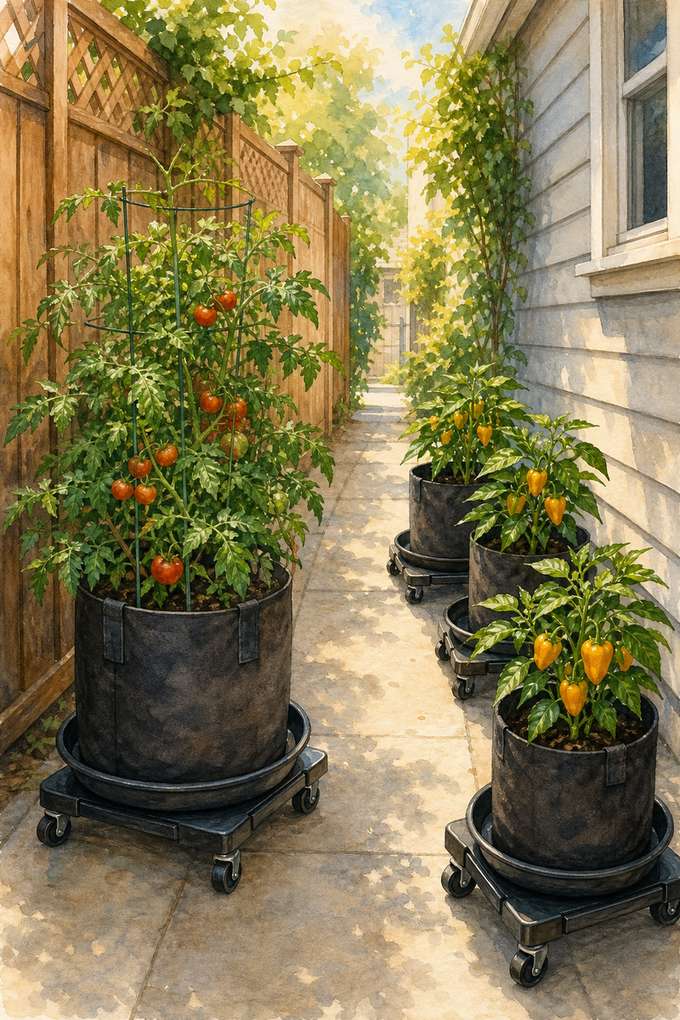
Use the brightest 4 to 6 feet near the street or backyard opening for two or three compact fruiting crops in movable containers. A 10-gallon fabric pot suits a determinate tomato such as ‘Bush Early Girl,’ while a 5-gallon pot can hold one ‘Lunchbox’ pepper or a patio eggplant. Set pots on square dollies so utility access and moving day stay manageable, but choose locking wheels on any slope. Containers need 6 to 8 hours of sun and consistent feeding; mix in slow-release fertilizer according to its label, then check moisture daily during hot weather. Fabric pots breathe well but dry faster and can stain paving, so place each on a sturdy saucer and empty standing water after storms.
7. Raise Salad Greens on a Narrow Planting Table
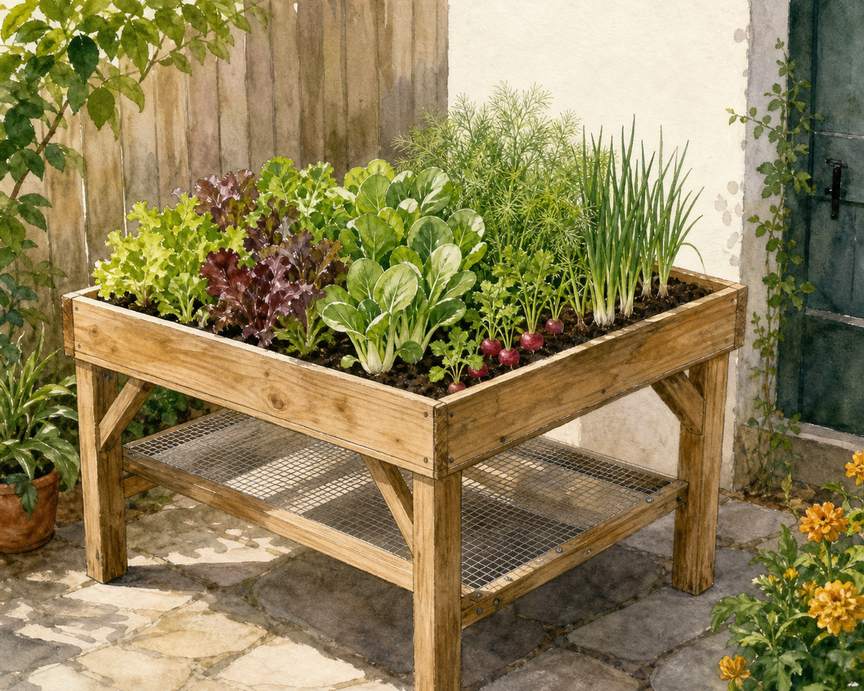
A waist-high salad table makes a productive bed where tree roots, compacted soil, or rental rules make digging impossible. Build or buy a box about 8 inches deep, 24 inches wide, and 4 feet long; that is enough for mesclun, baby bok choy, radishes, dill, and shallow-rooted bunching onions. Line the bottom with rigid mesh and permeable landscape fabric, then provide several drainage holes over gravel or soil—not against wood siding. The raised surface is easier on knees and discourages rabbits, but it dries faster than an in-ground bed. In warm spells, check it each morning, and resow one short row every 10 to 14 days rather than planting the whole table at once. Full-size tomatoes and carrots are too demanding for this depth.
8. Keep the Walkway Dry With Edge-Run Drip Irrigation
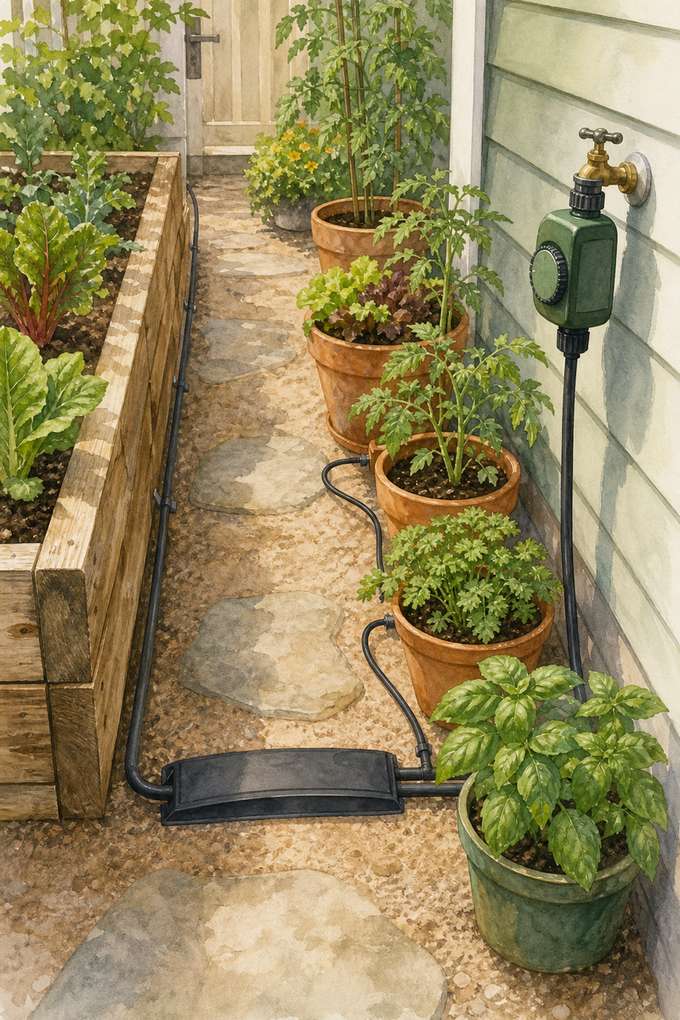
Fit a narrow drip manifold along the bed edge so irrigation happens without leaving a hose across the walkway. Run 1/2-inch poly tubing beside the wall, branch 1/4-inch lines to containers, and use 1-gallon-per-hour emitters for larger pots; start with 20 to 30 minutes, then adjust after checking moisture 2 inches down. A battery timer on the spigot is useful for renters because the system lifts out at season’s end. Add a backflow preventer and pressure regulator, and route tubing under a low cable cover anywhere feet cross it. Drip saves daily carrying, but it is not set-and-forget: filters clog, squirrels chew lines, and pots at the far end may receive less water. Inspect every outlet once a week.
Product pick — a renter-friendly drip irrigation starter kit
9. Rotate Three Crops Through One Trellised Strip
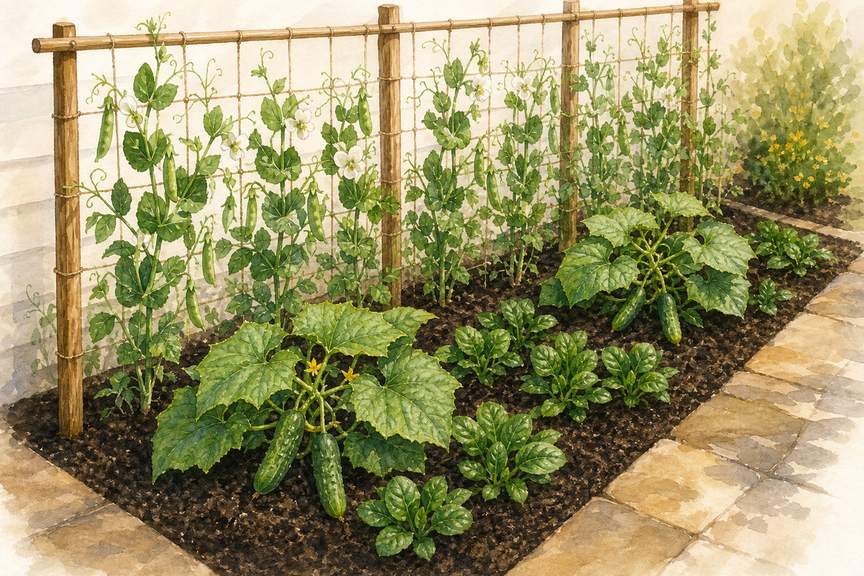
Stack the planting calendar instead of adding another bed: peas climb in early spring, cucumbers take their trellis after frost, and spinach returns beneath them in late summer. In a 2-by-6-foot strip, place one 6-foot trellis on the north edge so it does not shade shorter crops, then sow peas about 2 inches apart. Cut vines at soil level when they fade, leaving roots to decompose, and transplant two compact cucumbers rather than crowding the whole row. Timing depends on your frost dates, so check the local extension calendar rather than a generic month. The trade-off is attention—succession beds look bare between crops and need prompt replanting. Refresh with 1 inch of compost, but do not repeatedly add fertilizer without a soil test.
Common questions
- How wide should the walking path remain in a narrow side yard?
- Keep at least 30 inches clear for routine foot traffic, and aim for 36 inches if you regularly move trash bins, bicycles, or a wheelbarrow through the yard. Gates, electrical panels, hose bibs, and utility meters may need more clearance, so confirm local utility and fire-access requirements before installing a permanent bed.
- Can vegetables grow in a side yard with only a few hours of sun?
- With 3 to 5 hours of direct sun, prioritize leaf lettuce, arugula, parsley, chives, sorrel, and radishes; growth will usually be slower than in full sun. Tomatoes, peppers, cucumbers, and most fruit need roughly 6 to 8 hours. Observe the yard after nearby trees leaf out, because spring measurements can overstate summer light.
- How can renters create a side-yard garden without drilling or digging?
- Use freestanding A-frames, weighted trellis bases, planting tables, fabric pots, and containers on locking dollies. Keep every element movable and avoid blocking drainage, meters, gates, or shared access. Before adding a large soil-filled planter, check the lease and ask the landlord whether the paving or underlying structure has a stated weight limit.
- What should happen to a narrow side-yard garden in winter?
- Drain timers and drip tubing before a hard freeze, then store lightweight pots or raise frost-safe containers on feet so drainage holes stay open. Untreated cedar beds can remain outside, while terracotta may crack in freeze-thaw cycles. Perennial survival depends on the plant and USDA zone, so check local guidance rather than assuming a container offers the same protection as the ground.