9 Low-Maintenance Small Backyard Ideas for People With Zero Weekend Time
A tiny yard should not claim every Saturday for mowing, watering, and weeding. These nine ideas simplify the layout, automate repetitive jobs, and use durable plants and materials, with the upfront costs and practical drawbacks spelled out.
This page contains affiliate links — we may earn a commission at no extra cost to you. See our disclosure.
1. Shrink the lawn to one mowable rectangle
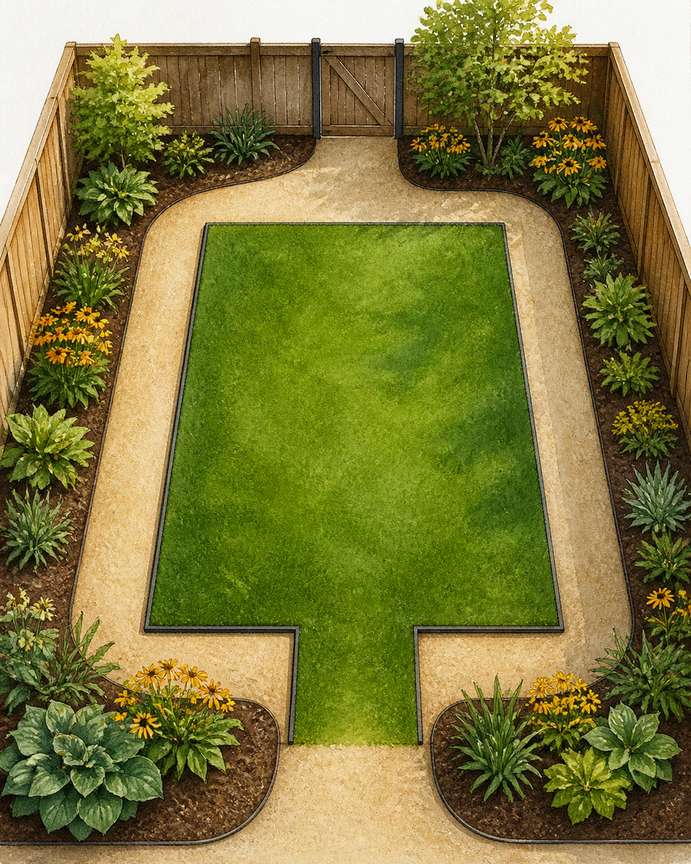
Keep a patch of grass if you use it, but make it a simple rectangle that the mower can cross without backing around beds or furniture. A 10-by-14-foot lawn is enough for a picnic blanket or a small dog's play area, while broad planting beds absorb the awkward corners. Install a 4- to 6-inch steel or brick mowing strip flush with the soil so one mower wheel can ride over it. The honest catch is the conversion work: removing sod and redefining edges takes a hard weekend or paid help. After that, mowing a clean rectangle is quicker than trimming five curving borders. Skip this approach if your remaining patch gets fewer than four hours of direct sun; turf there will thin and invite weeds.
2. Plant shrubs in broad, repeatable groups
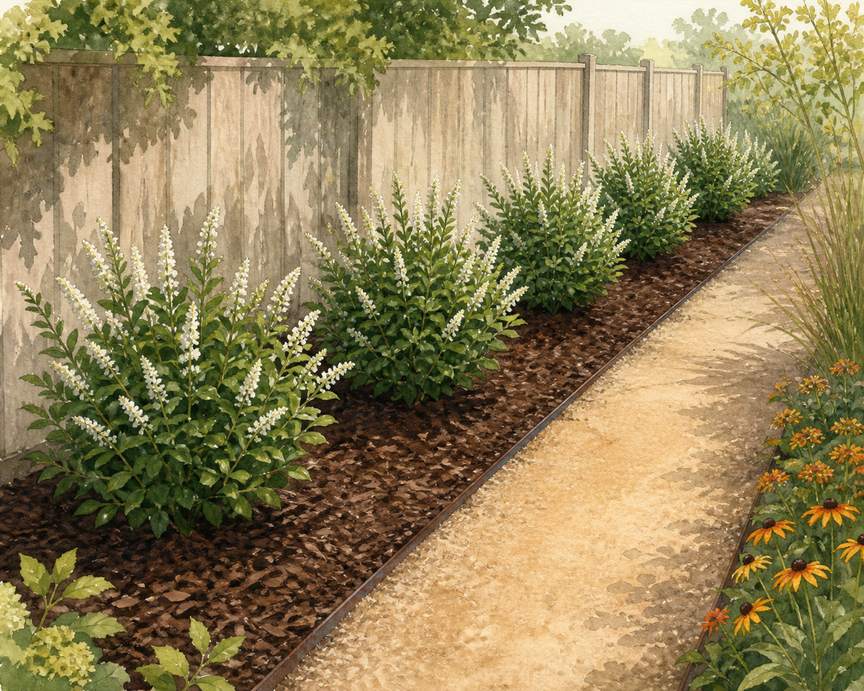
Build the planting around three to five shrubs rather than dozens of fussy perennials. Compact cultivars such as 'Little Lime' hydrangea, dwarf inkberry, or Virginia sweetspire can fill a 4-foot-deep bed without weekly deadheading. Choose one species that suits your actual light and repeat it in odd-numbered groups, leaving enough room for its listed mature width. That spacing looks bare in year one, but packing shrubs tightly creates pruning work later. A 2- to 3-inch mulch layer can cover the gaps while plants grow. Check mature size carefully: a shrub labeled 5 feet wide will not politely remain 30 inches wide beside a path. Hydrangeas also need more water than inkberry or locally native alternatives during hot, dry summers.
3. Make a compact gravel sitting pad
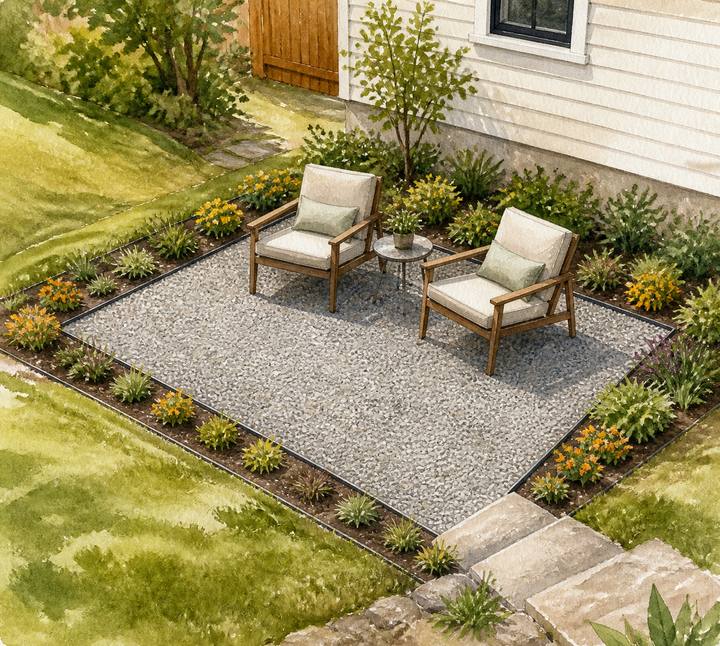
A 7-by-9-foot gravel pad fits two lounge chairs and removes a patch of lawn that would otherwise need mowing around furniture legs. Excavate about 3 inches, compact the soil, add a woven geotextile, then spread 2 inches of angular crushed stone such as three-eighths-inch granite. Angular gravel locks together better than pea gravel, which rolls under chair feet and escapes into beds. Use metal edging to contain it. This surface drains well on level ground, but it will not fix a yard where water already flows toward the house; address the grade first. Gravel also collects leaves, so yards beneath maples may require occasional blowing. Renters should ask before excavating, since removal is far less convenient than rolling up an outdoor rug.
4. Replace shaded turf with a sedge carpet
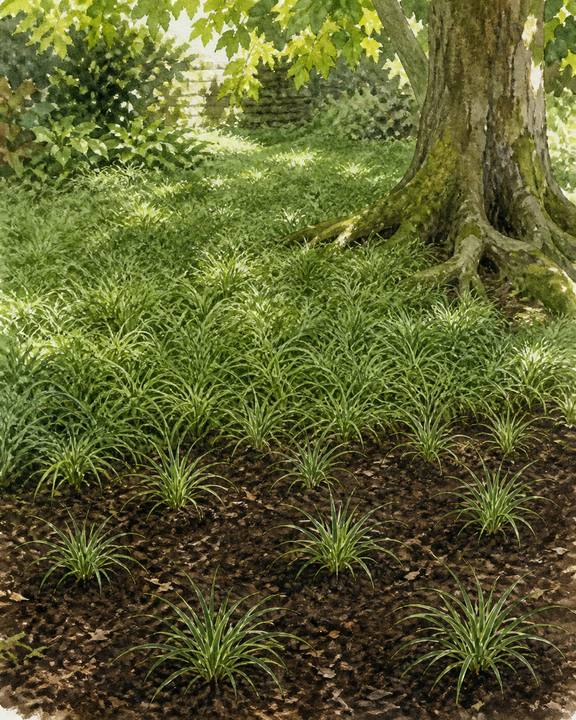
Where grass stays thin beneath a tree or along a north fence, plant a low sedge that matches the site instead of reseeding every spring. Pennsylvania sedge works in dry, dappled shade across much of the eastern US, while Berkeley sedge suits many mild western gardens. Set plugs 8 to 12 inches apart and mulch lightly until they knit together. Once established, a sedge patch can be left unmown or cut to about 3 inches once in late winter. The trade-off is patience and upfront plant cost: plugs may need two growing seasons to close the gaps, and weeds still need pulling during that period. Confirm that the species suits your region and soil moisture; a sedge adapted to damp ground will not become low maintenance under a thirsty maple.
5. Put the whole yard on timed drip irrigation
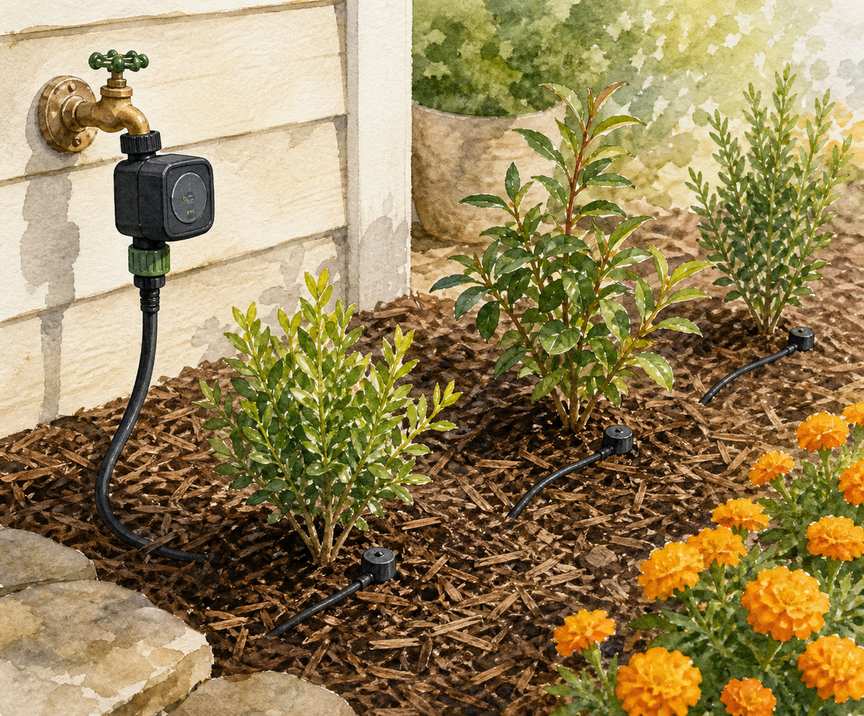
Run half-inch drip tubing along the back of each bed and connect individual emitters or inline tubing to shrubs and perennials. A battery hose timer set for one or two deep watering sessions each week removes the easy-to-forget chore of dragging a sprinkler around a narrow yard. Start with roughly one 1-gallon-per-hour emitter per young shrub, then adjust for soil, rainfall, and plant size rather than treating that number as universal. Cover tubing with mulch but leave connectors visible enough to inspect. Drip systems save time, yet they are not maintenance free: flush the lines each spring, check for chewed tubing, and remove the timer before a hard freeze. If the hose bib is shared or controlled by a landlord, get permission before leaving anything attached.
Product pick — a battery hose timer and starter drip kit
6. Use deep mulch and fewer exposed edges
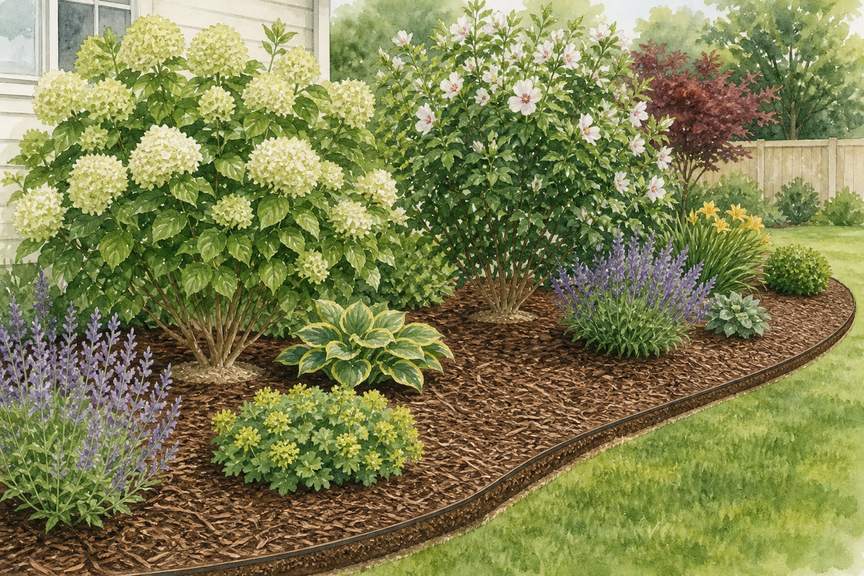
Join scattered little beds into one broad border, then cover bare soil with 2 to 3 inches of shredded bark or arborist wood chips. Fewer bed edges mean less trimming, and the mulch slows annual weeds while keeping shallow roots cooler. Keep it 3 inches away from shrub stems and tree trunks; mulch piled like a volcano holds moisture against bark and causes trouble. Wood chips break down, so expect to top up roughly an inch every year or two rather than replacing the full layer. They can also migrate onto paving in windy yards. Landscape fabric beneath organic mulch is usually a poor bargain because roots and decomposed material eventually tangle through it, making later planting and weeding harder instead of easier.
7. Anchor the layout with two compact evergreens
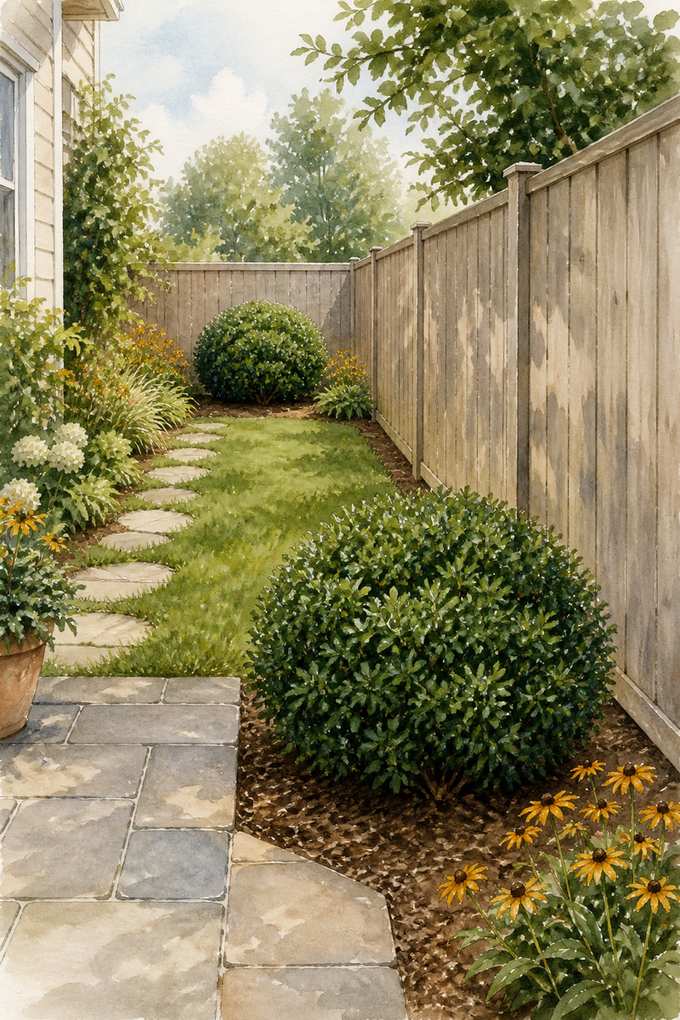
Two well-placed evergreens can keep a small yard looking intentional when flowers fade, without creating a hedge that needs constant clipping. Try compact inkberry holly, dwarf yaupon holly, or a naturally narrow juniper suited to your region. Place one near the patio and another at the far end to balance the view, while respecting the plant's mature width and a 12-inch gap from siding or fences. Avoid fast-growing arborvitae sold as instant screening unless you have room for their full size; crowded plants brown inside and become a pruning project. Even drought-tolerant evergreens need deep watering through their first growing season. In snowy climates, choose a cultivar rated for your zone and avoid placing salt-sensitive foliage beside a treated walkway.
8. Fill sunny gaps with clumping ornamental grasses
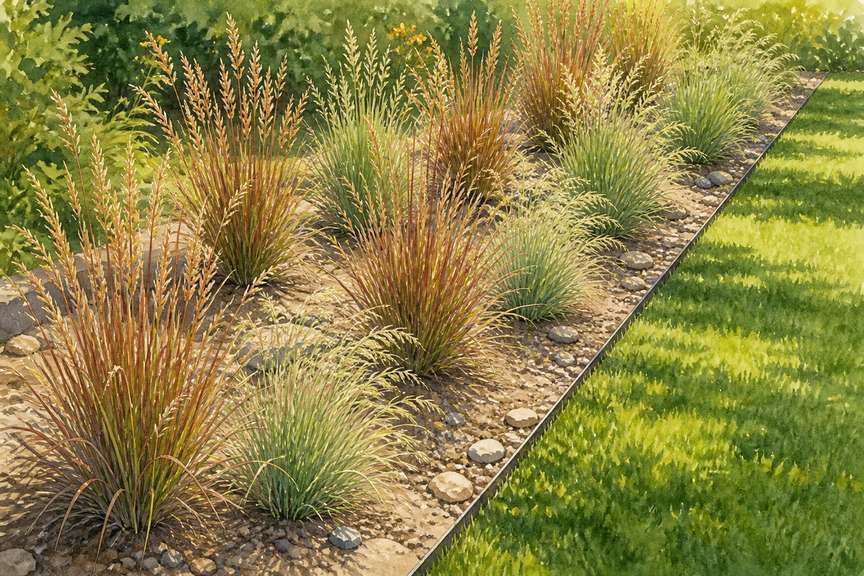
Clumping grasses provide months of shape without deadheading, staking, or weekly watering once their roots settle in. Little bluestem, prairie dropseed, or a sterile compact switchgrass can fill a sunny 2- to 3-foot-wide bed and tolerate lean soil better than many flowering borders. Leave the dry stems standing through winter, then cut them to 4 to 6 inches once in late winter or early spring. That single cleanup is the main annual job. Choose clumping species rather than running grasses, which can spread into paving and neighboring beds. The downside is a temporarily bare-looking patch after the yearly cutback. Little bluestem also flops in rich, heavily irrigated soil, so do not place it beside a lawn that receives frequent fertilizer and water.
9. Give one small tree an oversized mulched ring
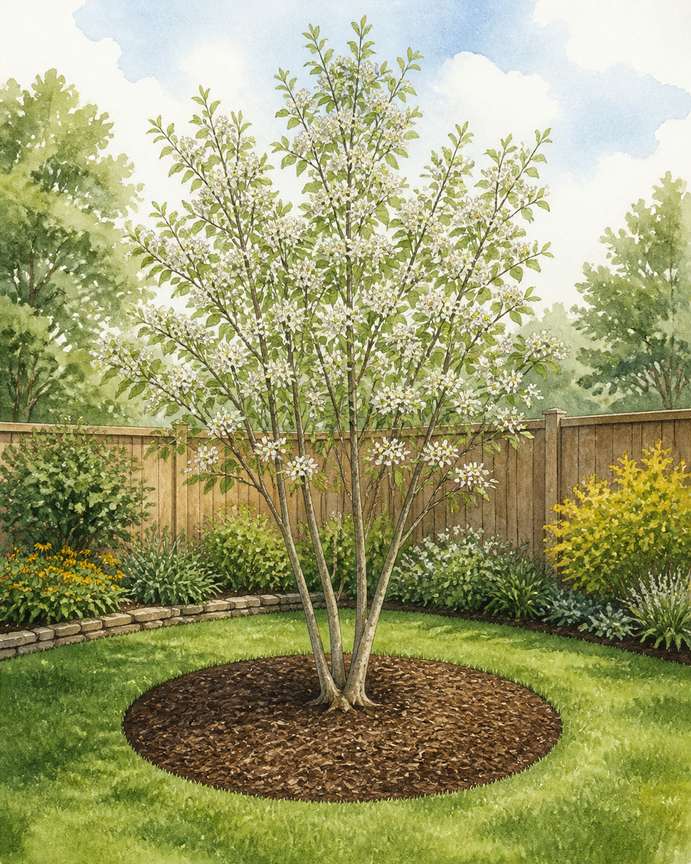
One compact tree can do more visual work than a collection of small pots, and a wide mulched ring removes difficult mowing around its trunk. Serviceberry, eastern redbud, or a disease-resistant crabapple can suit a small yard, depending on climate, soil, and overhead clearance. Start the mulch ring at least 5 feet across and widen it as the canopy grows, keeping mulch off the trunk flare. Before digging, locate utilities and check the cultivar's mature height; even a small tree may reach 15 to 25 feet. Trees are low maintenance, not mess free. Serviceberries attract birds, crabapples may drop fruit, and redbuds shed leaves. Water deeply during the first two summers, because a new tree cannot coast through vacation-level neglect until its roots establish.
Common questions
- How many hours a month does a low-maintenance small backyard need?
- After plants establish, a simple yard with timed drip irrigation, mulched beds, and a small rectangular lawn may need about two to four hours a month during the growing season. Expect more in spring for mulch, pruning, and irrigation checks. Newly planted shrubs, sedges, and trees still need regular watering and weed checks through their first one or two summers.
- What should I remove first if I want less yard work?
- Start with awkward lawn strips and isolated beds that create extra edging. Keep any turf you use as one simple shape, then combine the leftover corners into broad mulched beds. Do not remove healthy shade trees merely to reduce leaf cleanup; replacing their cooling canopy takes decades, and a mulched ring can make fallen leaves easier to manage.
- Can renters make these changes without losing a deposit?
- Timed drip lines laid on the surface, removable steel edging, and plants kept in nursery pots inside larger containers are relatively reversible. Excavating for gravel, removing sod, planting a tree, or attaching irrigation equipment to a shared hose bib needs written landlord approval. Photograph the starting condition and agree on who owns installed plants before spending money.
- Which low-maintenance plants survive winter?
- Choose perennials, shrubs, grasses, and trees rated at least as cold-hardy as your USDA zone, then check local heat and moisture needs too. Little bluestem, Pennsylvania sedge, inkberry, and serviceberry cover broad parts of the US, but none fits every region. Leave ornamental-grass stems standing over winter, drain irrigation lines before freezing weather, and water evergreens during dry fall weather before the ground freezes.