9 Pollinator Garden Ideas That Fit a Small Backyard
You do not need a meadow to feed bees, butterflies, and hummingbirds. These nine layouts work around tight beds, rental rules, patchy sun, and limited watering while keeping paths and seating usable.
1. Plant a 4-by-6-foot three-season native bed
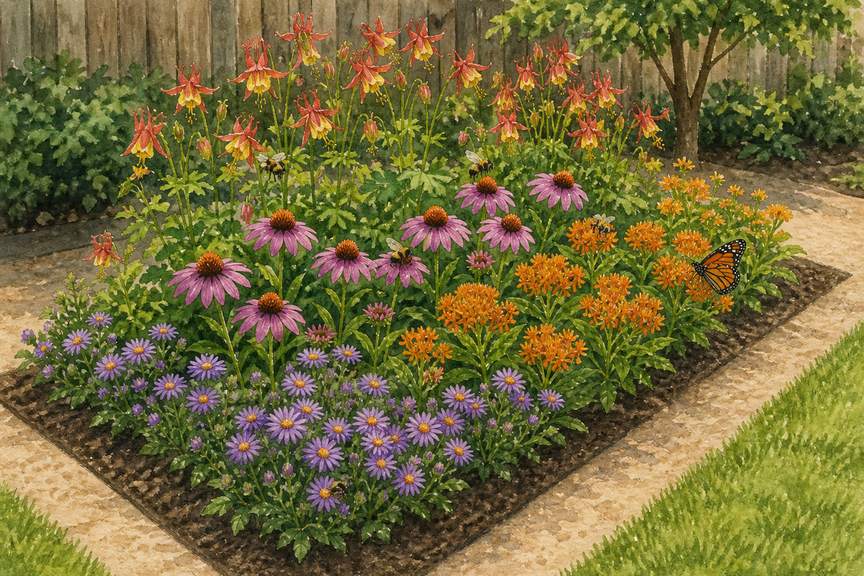
A single 4-by-6-foot bed can offer more useful forage than scattered annuals if something blooms from spring through fall. In a sunny yard, group three plants each of wild columbine, purple coneflower, butterfly weed, and aromatic aster, placing the 3-foot coneflowers at the back. Repeated clumps are easier for bees to spot than one of everything. Check mature width before buying; crowded perennials invite mildew and spill onto the path. This plan needs roughly six hours of sun, and butterfly weed dislikes wet clay. Leave the dried aster and coneflower stems standing 12 to 18 inches through winter, then cut them back in late spring after insects have had time to emerge.
2. Run an 18-inch nectar border beside the path
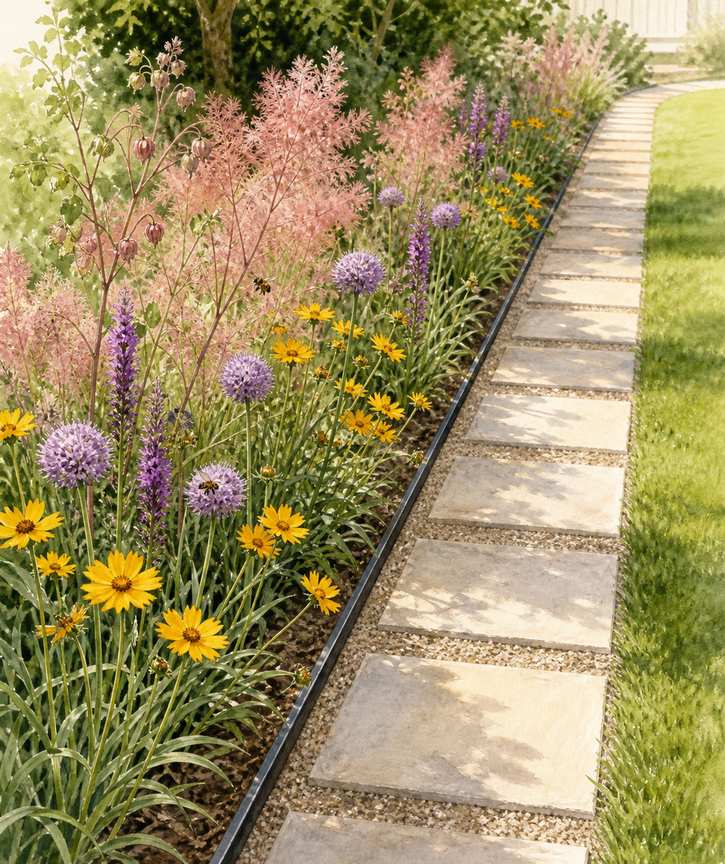
Use the thin strip beside a walkway as a continuous feeding lane rather than surrendering another chunk of lawn. An 18-inch-wide border can hold low, well-behaved plants such as prairie smoke, lanceleaf coreopsis, nodding onion, and 12-inch dwarf blazing star. Set plants 10 to 14 inches apart in loose drifts and keep the tallest stems away from ankles. The catch is edging: vigorous turf will creep into such a narrow bed quickly, so sink steel or recycled-plastic edging about 4 inches deep. Avoid floppy bee balm here; after rain it can block a 30-inch path. Choose regionally native substitutes if these species do not suit your soil or USDA zone, and expect to hand-weed the border during its first two summers.
3. Cluster three movable pots for a rental yard
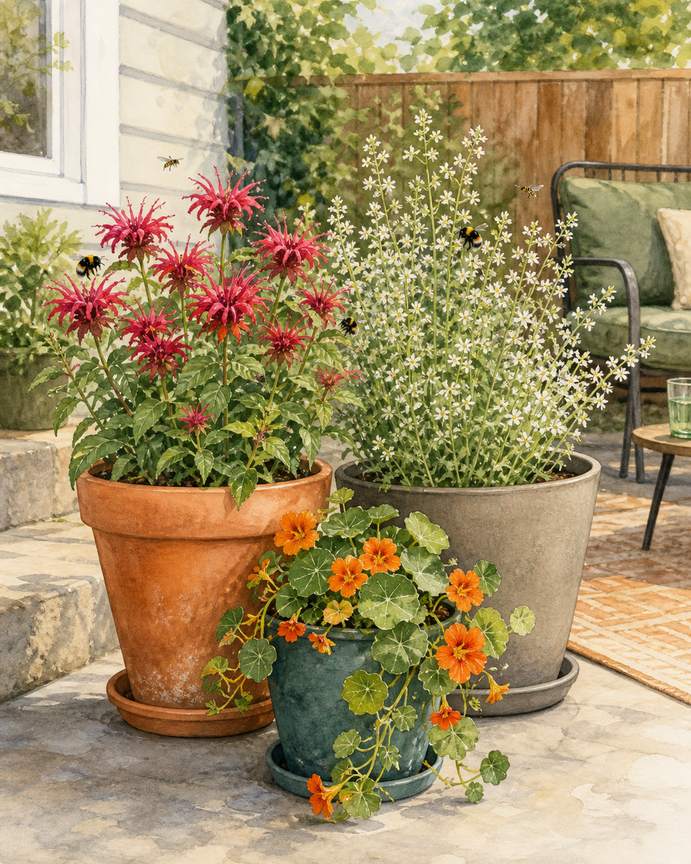
Three containers create a real pollinator stop and can move with you at lease end. Use one 18-inch pot for dwarf bee balm, one 16-inch pot for calamint, and one 14-inch pot for trailing nasturtium; cluster them within a few feet so insects find them as one patch. Each pot needs a drainage hole and a saucer emptied after watering, especially on stained concrete. Containers dry much faster than beds, so check the top inch of mix daily during hot spells. Skip insecticide-treated nursery plants, which may carry systemic residues even when the flowers look healthy. Perennial roots are also less cold-hardy above ground; in winter, shelter the pots against the house or follow advice for your USDA zone.
4. Turn a downspout corner into a mini rain garden
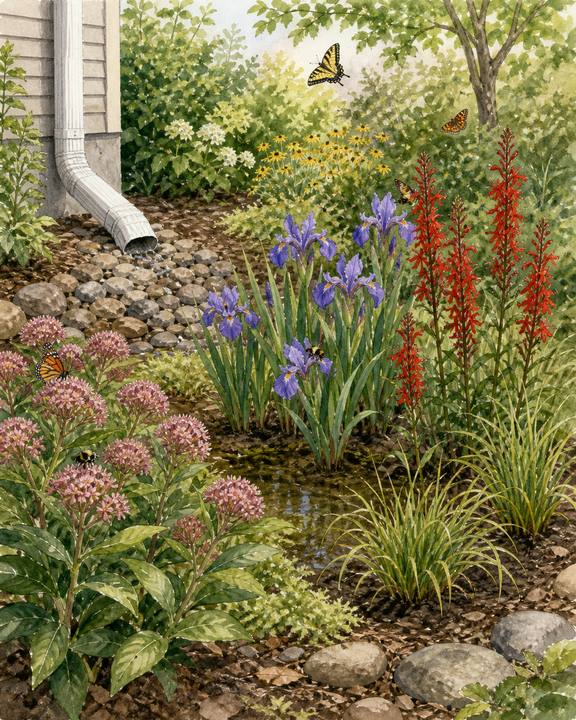
A shallow rain garden makes a soggy corner useful while giving pollinators flowers that ordinary dry beds cannot support. Dig a basin about 4 by 5 feet and 4 to 6 inches deep, then direct a downspout extension toward it. Blue flag iris, swamp milkweed, cardinal flower, and fox sedge handle brief wet periods in many eastern and central regions. Water should soak away within 24 to 48 hours; standing water longer than that can breed mosquitoes and may signal soil that needs professional drainage advice. Keep the basin at least 10 feet from the foundation, septic components, and utility lines where local guidance requires it. Do an infiltration test before digging, and use locally suitable plants rather than forcing moisture lovers into an arid climate.
5. Grow a sunny pollinator patch you can eat
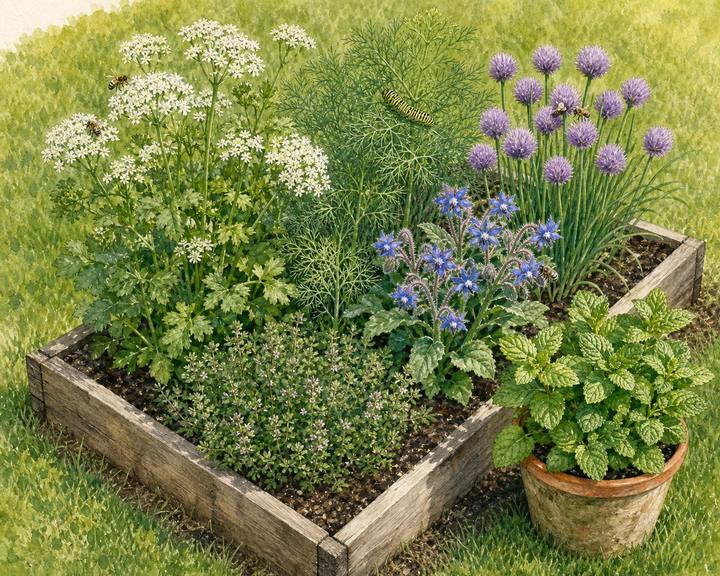
Let a few kitchen plants flower and a 3-by-4-foot edible bed becomes a busy insect cafe. Plant parsley, dill, chives, thyme, and borage, then harvest only two-thirds and allow the rest to bloom. Black swallowtail caterpillars may strip dill or parsley nearly bare, so add two extra plants if you want leaves for dinner. Borage can self-seed enthusiastically; deadhead it before every flower drops seed if volunteers will annoy you. Keep mint in a separate 12-inch pot because its runners can take over the bed. Most of this mix performs best with six hours of sun and soil that drains freely. Avoid spraying caterpillars, including with organic Bt products, if butterfly habitat is the point.
6. Build a moonlight strip for moths
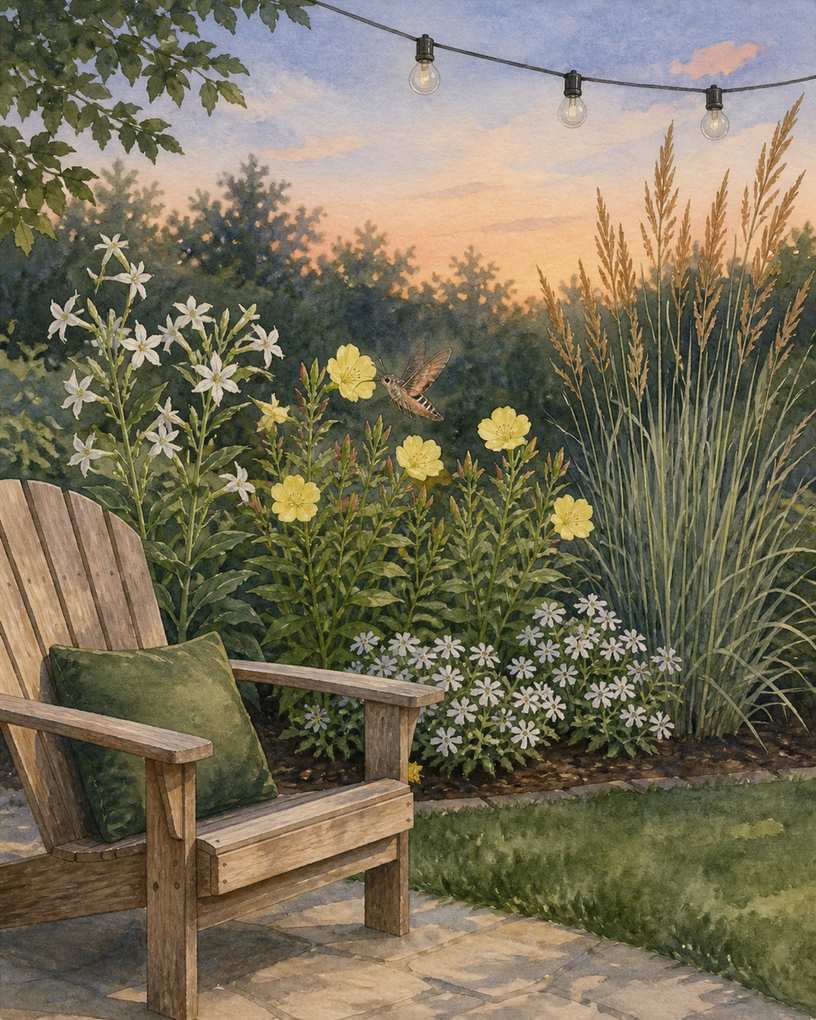
A 2-foot-deep border near the evening chair can serve moths after daytime bees clock out. Use pale, night-scented flowers such as evening primrose, white woodland phlox, and flowering tobacco, choosing a noninvasive Nicotiana variety for your region. Add native little bluestem behind them so moth pupae and other insects have undisturbed cover. Place the strip where it receives the sun those species need, but keep it at least 3 feet from the chair if strong fragrance bothers you. Flowering tobacco is toxic if eaten, so it is a poor choice around pets or toddlers who chew plants. Turn off nearby decorative lights after use; bright all-night fixtures can disrupt nocturnal insects and defeat the purpose of this bed.
7. Tuck a bee-nesting corner behind the flowers
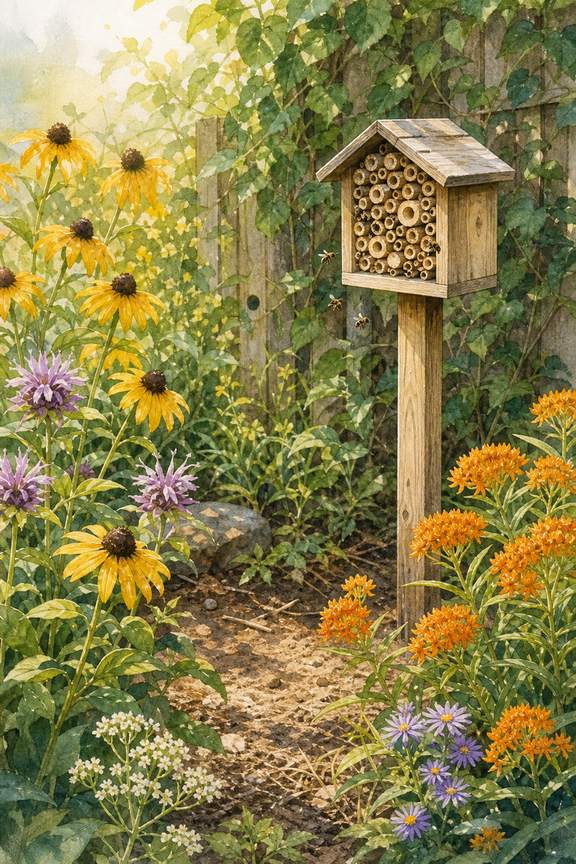
Reserve a 2-by-3-foot back corner for nesting habitat, not more blooms. Leave one sunny patch of bare, well-drained soil for ground-nesting bees, then bundle hollow, clean plant stems in a small roofed box 3 to 5 feet above ground for cavity nesters. Use stems with varied interior diameters around 1/8 to 3/8 inch and replace them every year or two to limit mites and disease. A decorative bee hotel is not maintenance-free; deep blocks that cannot be opened or cleaned can concentrate pests. Keep the shelter dry, face it east or southeast for morning warmth, and do not place it beside a busy gate. Skip landscape fabric and thick mulch in the bare patch because both block access to soil.
8. Add a pebble saucer instead of a deep birdbath
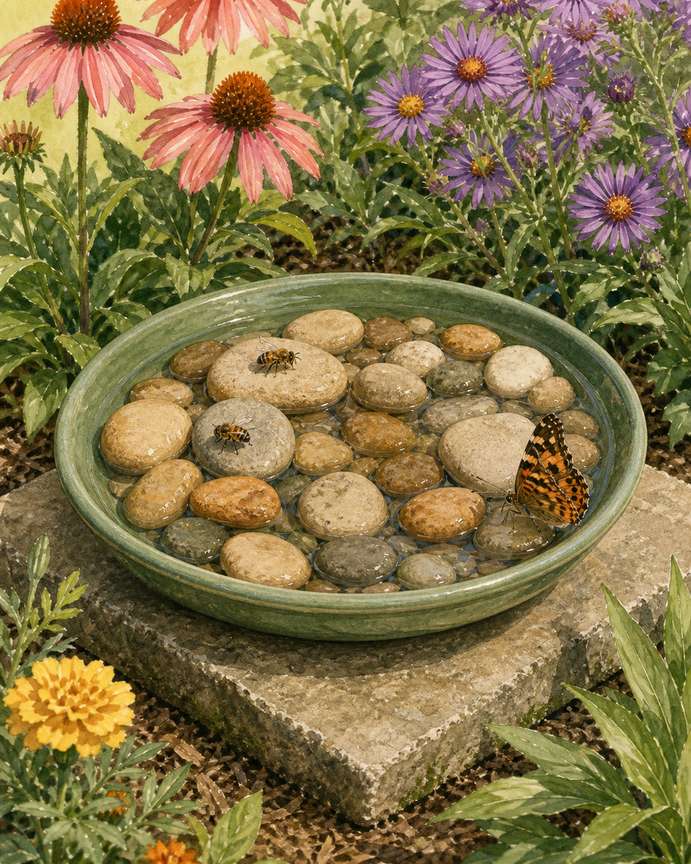
A shallow water station fits where another plant will not, and it gives bees and butterflies a safe landing place. Set a 12- to 14-inch glazed saucer on a stable paver, add rinsed pebbles, and keep the water level below the stone tops. Site it within a few feet of flowers but outside the main walking line. You must dump, scrub, and refill it every two or three days in warm weather; otherwise algae and mosquito larvae turn a helpful feature into a nuisance. A dripping hose is unnecessary and wastes water in a tiny yard. Expect birds to use the saucer too, which means occasional mess. During freezing weather, store glazed ceramic indoors or use a frost-safe basin rated for your climate.
9. Replace one fence panel's lawn edge with dwarf shrubs
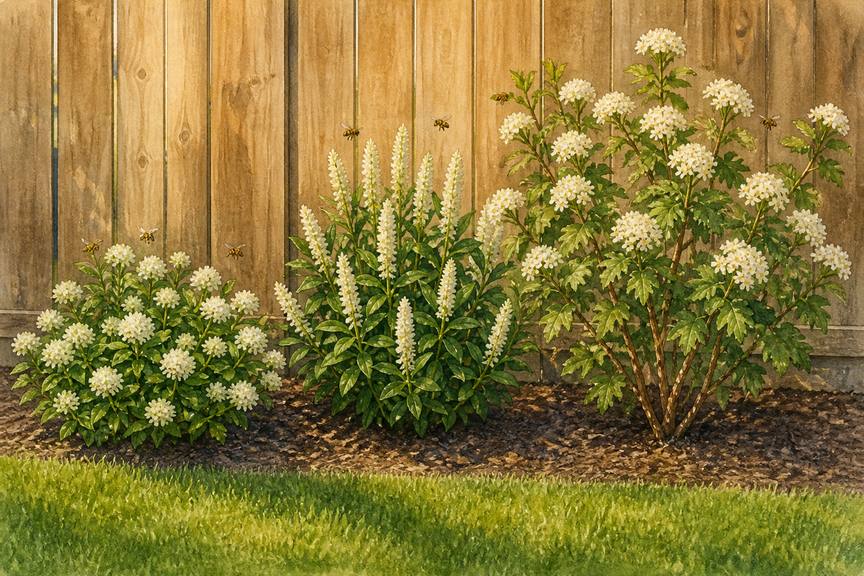
A 6- to 8-foot run of compact flowering shrubs supplies more bloom mass without filling the whole yard. Choose two or three shrubs matched to your region, such as New Jersey tea for dry sun, dwarf summersweet for moist part shade, or a compact native ninebark for a sunny boundary. Keep each plant's mature width on the label inside the bed line; a shrub sold in a 2-gallon pot may still grow 4 feet wide. This is the slowest and priciest idea here, and shrubs are harder to move than perennials. Water deeply once or twice weekly during the first growing season rather than sprinkling daily. Before planting near a shared fence, confirm the property line and leave enough access for staining or repairs.
Common questions
- How much sun does a small pollinator garden need?
- Aim for six hours of direct sun for the widest plant choice, but a yard with three to four hours can still help pollinators. In part shade, try woodland phlox, wild columbine, golden ragwort, or dwarf summersweet, matched to your region and soil. Watch the site for a full day before buying plants; a fence or tree can change the light by several hours.
- Will a pollinator garden attract stinging bees near the patio?
- Foraging bees usually focus on flowers, but give dense bloom patches and nesting areas a little breathing room. Keep them 3 feet or more from gates, play zones, and the main chair when space allows. Do not place managed honeybee hives in a tiny yard without checking local rules and neighbors; this page is about supporting wild visitors, not keeping a hive.
- What should stay standing through winter?
- Leave seed heads, leaf litter, and hollow perennial stems where they do not create a slipping or fire hazard. Cut stems to mixed heights of roughly 12 to 18 inches in late spring, after several warm days, so nesting insects have time to emerge. Local fire codes, HOA rules, and pest pressures vary, so keep the patch tidy at the path edge and check rules that apply to your property.
- How do I avoid mosquitoes in a tiny pollinator garden?
- Empty saucers and refresh shallow water every two or three days during warm weather. A rain garden should drain within 24 to 48 hours, not remain a permanent puddle. Clear clogged gutters and store spare pots upside down. If a low spot stays wet longer, fix the drainage or ask a local extension office about soil conditions before adding more water-loving plants.