9 Small-Backyard Fire Pit Landscaping Ideas With Safer Spacing
A fire pit can fit a small yard without crowding every chair against the fence. These nine layouts use compact seating, noncombustible materials, and practical planting distances, with room to adjust for your fire pit manual and local fire code.
1. Build a wide gravel ring before adding plants
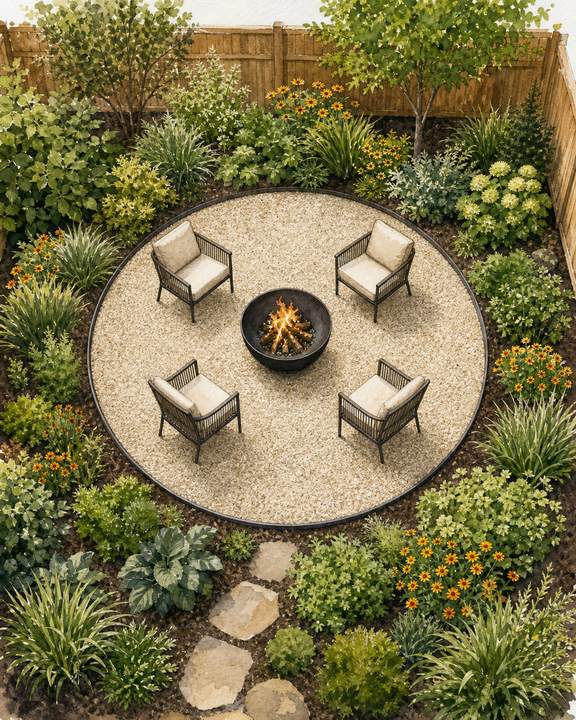
Start with a round fire pit centered in a gravel pad at least 10 feet across, rather than squeezing mulch and shrubs close to the bowl. A 3- to 4-foot band of compacted crushed granite or 3/8-inch gravel gives chairs a stable footing and removes dry organic material from the immediate fire zone. Metal edging keeps stones out of nearby beds, but choose steel rather than plastic where heat or stray embers may reach it. Treat 10 feet from open flame to combustible fences, branches, and dense planting as a planning minimum, then follow whichever distance is greater in the fire pit manual or local code. Gravel migrates under chair legs and needs raking, so this is practical rather than maintenance-free.
2. Use a paver apron where chair legs land
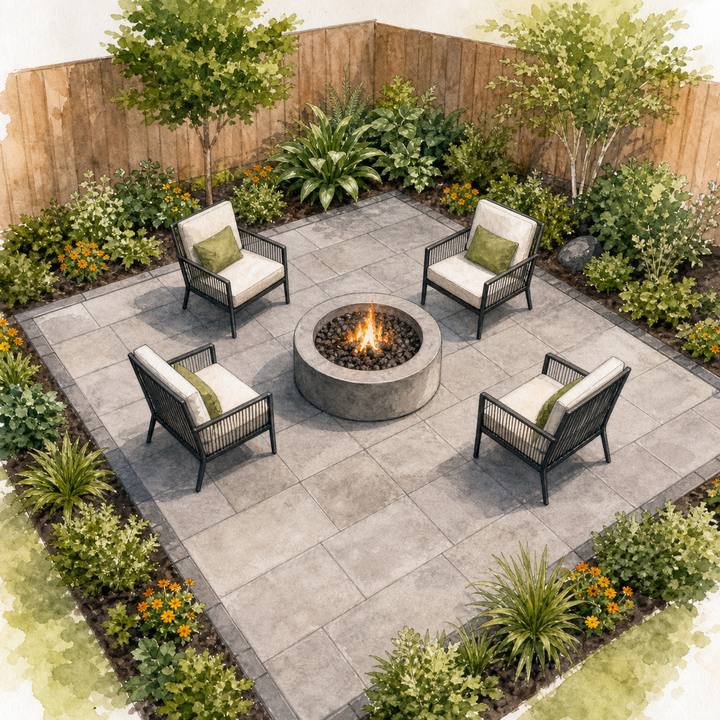
Lay a compact paver apron around the pit if loose gravel makes dining chairs or mobility aids feel unsteady. Concrete pavers rated for patios are easier to level than thin decorative stepping stones; leave roughly 36 inches between the fire pit edge and the front of each chair so knees do not crowd the heat. A 12-by-12-foot square can hold a 30-inch pit and four modest chairs, provided the pit's required clearances still fit inside the yard. Keep polymeric sand and fallen leaves swept out of joints near open flames. The downside is excavation: even a small pad usually needs 4 to 6 inches of compacted base, and drainage must send water away from the house rather than toward the foundation.
3. Pair a curved bench with two movable chairs
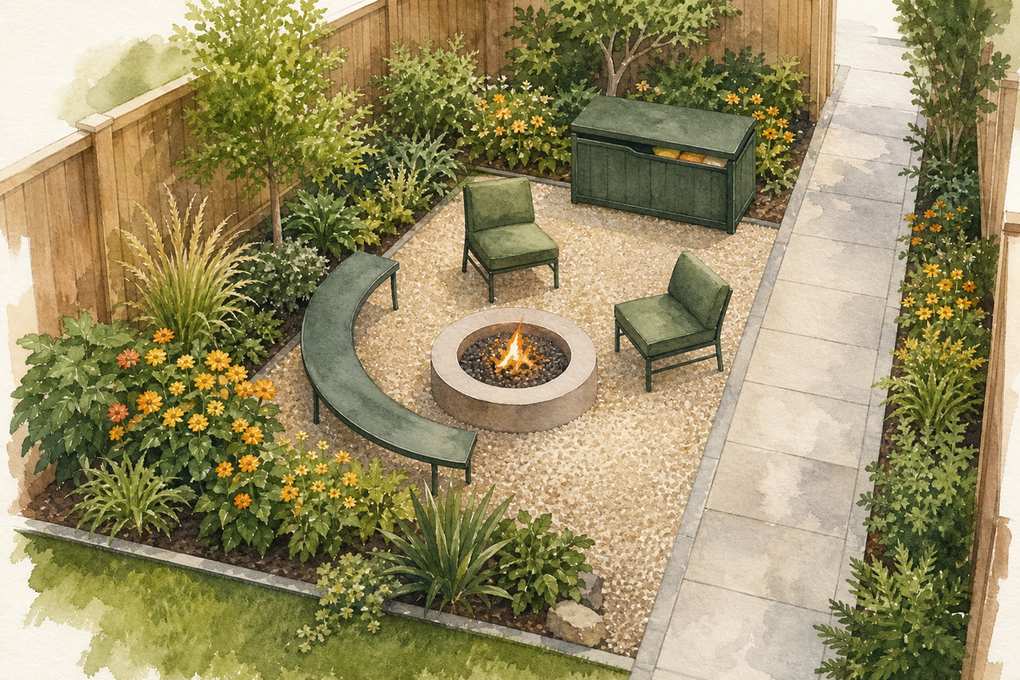
A shallow curved bench saves space along one side while two movable chairs keep the layout flexible. Place the bench outside the fire pit manufacturer's seating clearance, commonly at least 3 to 4 feet from the pit edge, and leave a 30-inch route behind or beside it for entry. A masonry bench is noncombustible but expensive and permanently fixes the arrangement. A powder-coated steel bench is lighter and easier to relocate, though it can become hot in full sun. Skip deep cushions during burn season unless you have a closed storage box well away from sparks. This setup works best for four people; trying to wrap seating around the entire circle usually blocks the only path through a narrow backyard.
4. Plant a low, moisture-holding outer ring
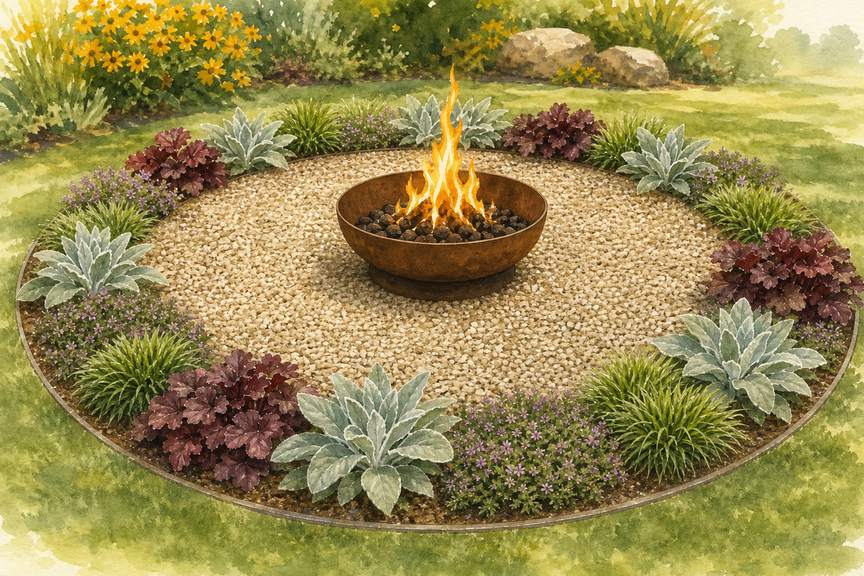
Put plants beyond the noncombustible seating zone, then favor low clumps that do not shed piles of brittle material. Dwarf fountain grass still dries into tinder, so use plants such as lamb's ear, coral bells, creeping thyme, or compact sedges where your light and climate suit them. Keep foliage at least 3 feet from a contained gas flame and much farther from a wood fire; a 10-foot flame-to-plant buffer is the safer starting point for combustible growth unless the appliance manual permits less. Prune stems that lean into the gravel and remove dead leaves before each burn. Thyme may tolerate foot traffic, but it can spread between pavers and needs trimming. Avoid resinous juniper and oily rosemary near sparks, even though both look tidy.
5. Raise the far planting bed, not the fire pit
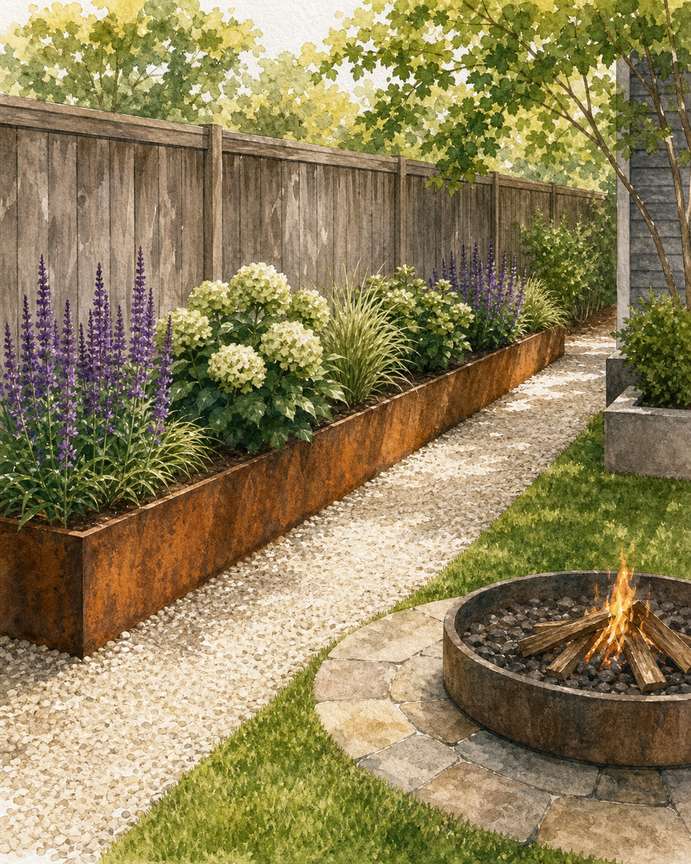
A raised bed along the back fence can make the garden feel layered without placing foliage beside the flames. Keep the bed outside the pit's required combustible clearance and use masonry, brick, or Corten steel rather than timber sleepers on the fire-facing side. In a bed 18 to 24 inches deep, try dwarf switchgrass, salvia, or a compact panicle hydrangea, choosing for your sun and USDA zone. Leave an access gap of at least 24 inches so you can prune and water without climbing over chairs. Corten steel stains pale paving as it weathers, while masonry takes more room and costs more. Whatever the material, do not count a raised wall as a spark barrier unless the fire pit manufacturer specifically approves that arrangement.
6. Shift the pit off-center to preserve one clear path
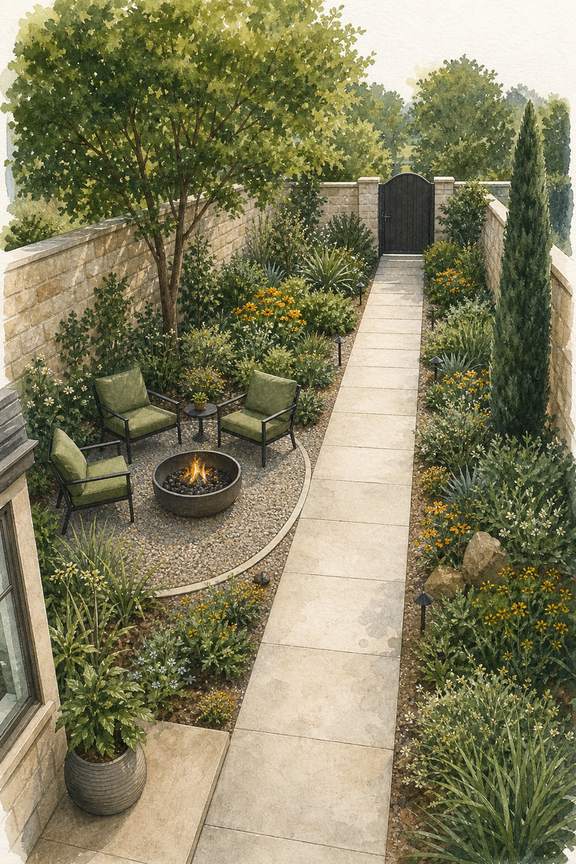
An off-center layout often fits better than a perfectly symmetrical circle. Place the fire zone toward the wider end of the yard, while keeping the full manufacturer-required clearance from the house, fence, shed, and plants. Reserve one uninterrupted path at least 36 inches wide from the back door to the gate; chairs should not need moving every time someone carries out food or a hose. A half-moon gravel pad with seating only on the house-facing side can work where the far boundary is noncombustible masonry. It will look less formal than a centered design, and one seat may receive more smoke when the wind shifts. Watch the yard during a few breezy afternoons before committing to permanent paving or a built-in bench.
7. Choose a portable propane pit for rental flexibility
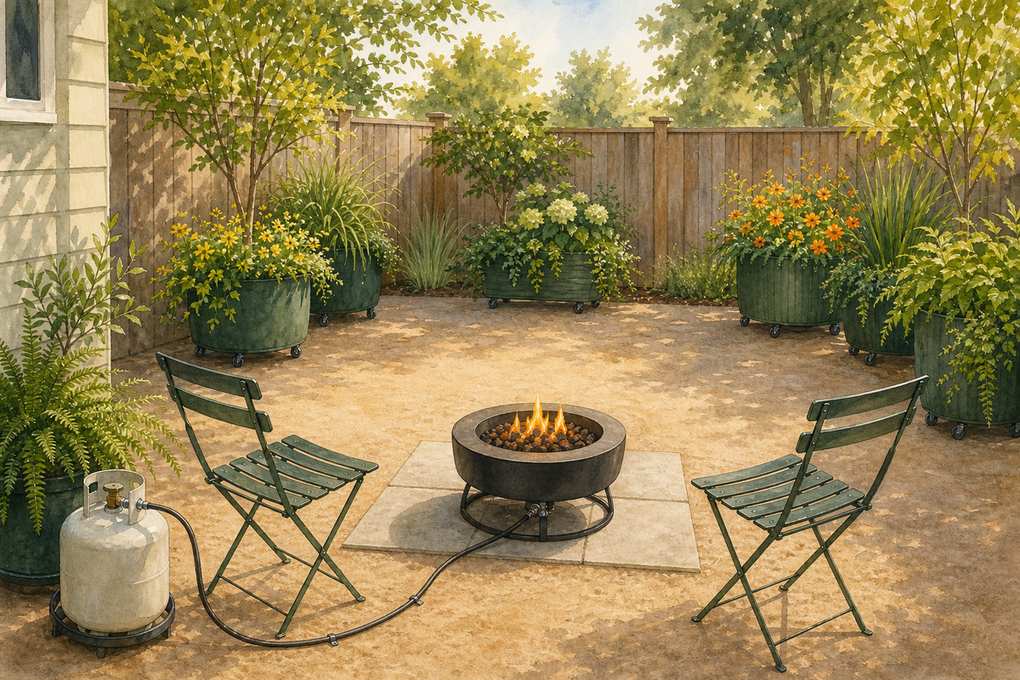
A CSA-listed portable propane fire pit gives renters a removable focal point without digging a permanent ring. Set it on the noncombustible surface named in its manual, keep the hose where feet cannot snag it, and place the propane cylinder upright with the specified ventilation and separation. Many units still require several feet of side clearance and substantial open space overhead, so a tiny covered patio may not qualify. Frame the area with two folding steel chairs and movable planters that can be rolled beyond the required distance before lighting. A fitted cover helps with rain, but the burner still needs cleaning. Propane produces fewer embers than wood, though it does not override a lease, HOA rule, burn ban, or local prohibition on open-flame appliances.
8. Keep the fire zone out from under tree canopies
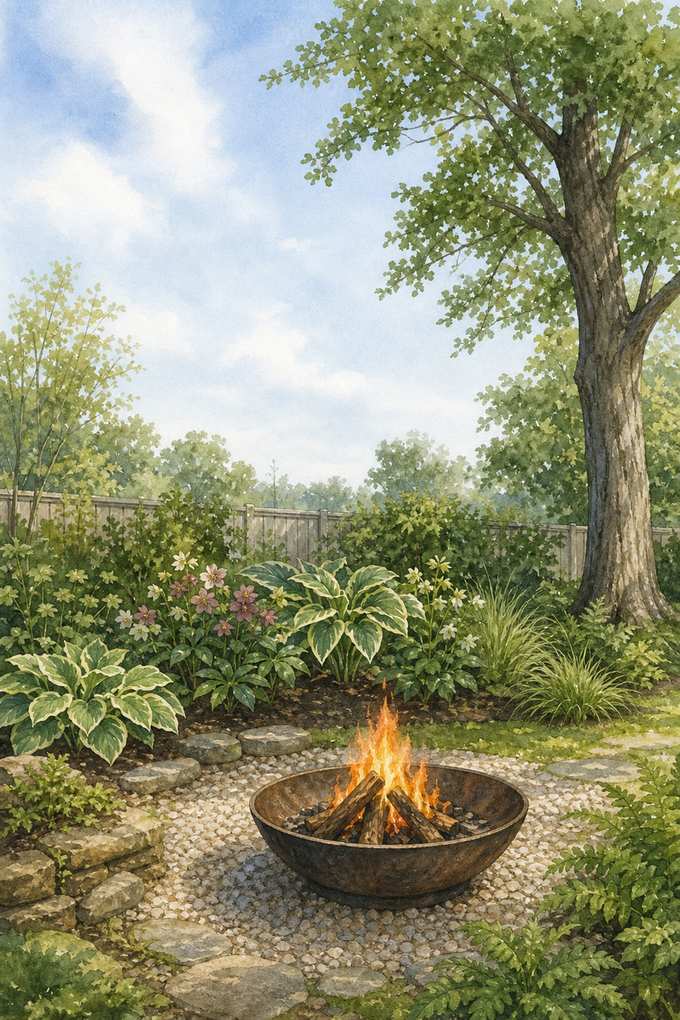
Treat overhead clearance as seriously as the space beside the pit. Do not tuck a wood-burning bowl beneath a mature tree just because the trunk sits 10 feet away; low limbs, dry leaves, and hanging bark can all enter the heat column. Check the appliance manual for its overhead requirement, then choose a fully open patch of sky if the number cannot be met. In a tree-filled yard, a gas appliance may be easier to place, but it still needs the listed clearance. Landscape the shadier, tree-side edge with hostas, hellebores, or Pennsylvania sedge, keeping them outside the fire zone. Moving the pit away from the canopy may sacrifice afternoon shade, so use a removable umbrella only when the fire is completely cold.
9. Add a spark-safe service corner beside the seating
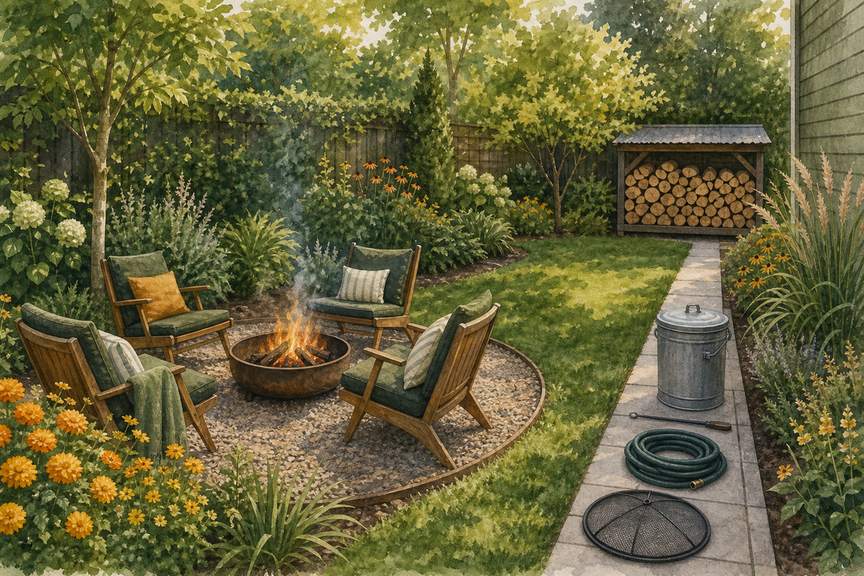
Give tools, water, and cold ashes a designated spot instead of scattering them around the chairs. A 2-foot-wide strip of pavers can hold a metal lidded ash can, poker, and charged garden hose while leaving the main 36-inch exit route clear. Store split wood in a covered rack outside the fire pit's combustible clearance, never under the bench or against a wooden fence beside the flame. For wood fires, a correctly fitted mesh spark screen can reduce escaping embers, but it does not make nearby mulch or dry grass safe. The service corner takes valuable floor area, yet it prevents the usual clutter from narrowing the walkway. Wait until ashes are completely cold before moving them, and follow local disposal rules during burn restrictions.
Common questions
- How far should plants and fences be from a backyard fire pit?
- Use the fire pit manual and local fire code first. For early planning, allow at least 10 feet from an open flame to combustible fences, structures, dense shrubs, and low branches, then increase that distance if either source requires it. Gas units may permit smaller clearances, but the listed model-specific numbers control.
- Can a fire pit go on a deck or small patio?
- Only if the appliance is listed for that exact surface and your lease, HOA, insurer, and local code allow it. Never assume a heat mat makes a wood deck suitable. Check the deck's condition and load capacity, especially for masonry tables, which can weigh several hundred pounds before the propane cylinder or decorative stone is added.
- What should happen to the fire pit area in winter?
- Clean out cold ash, dry the burner or bowl, and use a vented fitted cover. Disconnect portable propane cylinders according to the manual and store them outdoors in an approved upright location, not in a basement or attached garage. Freeze-thaw climates may shift pavers, so refill joints and relevel rocking stones before spring use.
- Which plants work near a fire pit in a shady backyard?
- Outside the required fire clearance, try coral bells, Pennsylvania sedge, hellebores, or compact hostas. None is fireproof. Remove dry foliage and leaf litter before using the pit, and avoid placing plants where chairs will crush them. For a north-facing yard, confirm the bed receives enough indirect light for the specific cultivar.