9 Privacy Planting Ideas for Small Backyards and Narrow Fence Lines
A narrow yard rarely has room for a six-foot-deep hedge, and a bare privacy fence can feel just as cramped. These nine planting ideas add useful screening without swallowing the lawn, blocking every bit of light, or creating a maintenance problem along the property line.
1. Plant a 30-inch-wide columnar evergreen screen
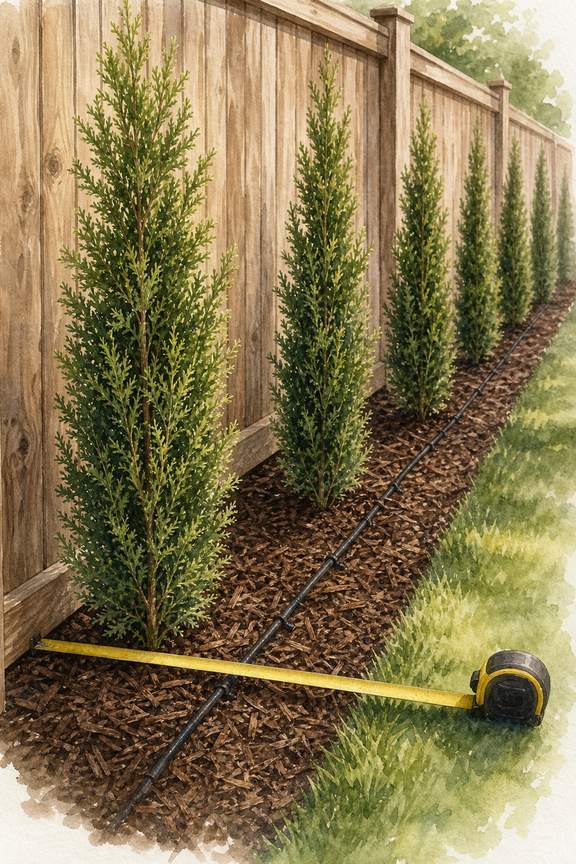
A row of columnar evergreens gives year-round cover without demanding the four-to-six-foot depth of a conventional hedge. North Pole arborvitae and Sky Pencil holly stay relatively narrow, though mature width still varies by climate and pruning. Set plants at least 24 to 36 inches from the fence so air can move behind them and you can reach both sides. Before buying, measure the available sun: arborvitae generally wants six hours, while Sky Pencil holly handles partial shade better. The trade-off is regular watering during the first two growing seasons. Evergreens beside a solid fence sit in a rain shadow, and a drip line is far more reliable than hoping storms reach their roots.
2. Train vines on a freestanding trellis inside the fence
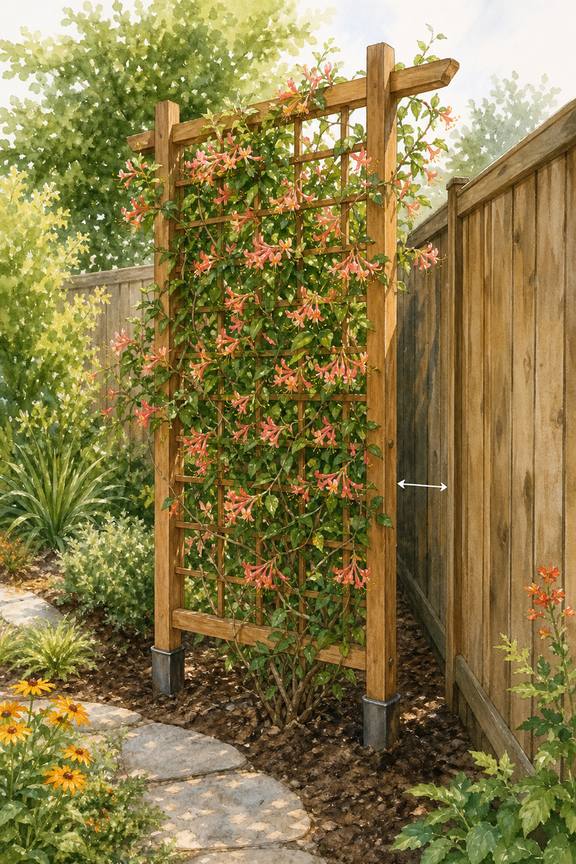
A freestanding cedar or powder-coated steel trellis can add height without attaching anything to a shared fence. Place it 12 to 18 inches inside your property line and anchor it for local wind conditions; a leafy panel behaves like a sail during summer storms. For fast seasonal cover, grow scarlet runner bean or black-eyed Susan vine. Clematis gives a longer-lived screen but needs a few seasons to fill in, while native coral honeysuckle is a sturdier choice in many eastern US gardens. Avoid English ivy, which can escape and work into fence joints. Vines also concentrate weight at the top, so a decorative trellis pushed loosely into soil is not enough for a six-foot screen.
3. Use a small multi-stem tree to block one upstairs window
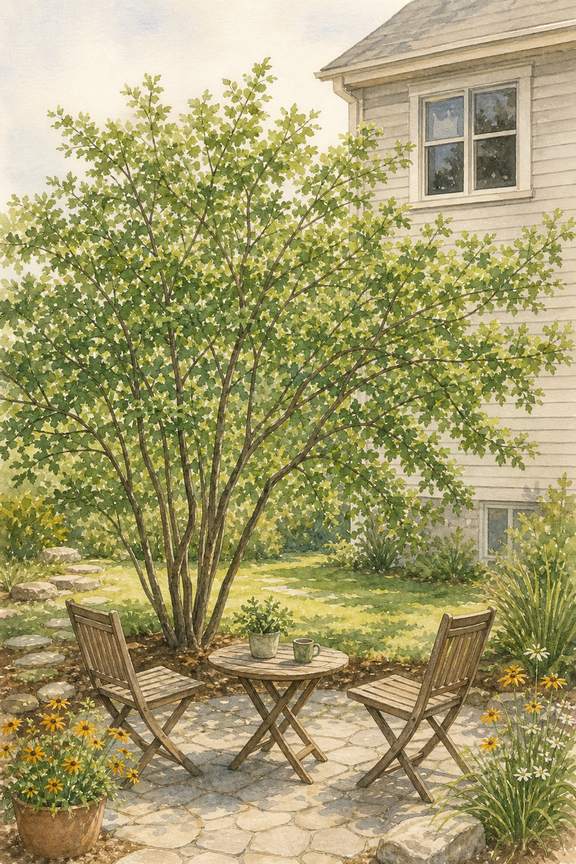
When the privacy problem is one second-story window, screen that sightline instead of planting a wall around the whole yard. A multi-stem serviceberry, paperbark maple, or Japanese tree lilac can interrupt the view while leaving useful space beneath its canopy. Mark the exact line between your seating area and the window before choosing the planting spot; moving the tree three feet may matter more than buying a taller specimen. Check the mature canopy width, overhead wires, and the distance required from foundations or utilities. Deciduous trees lose much of their screening in winter, but that can be helpful in a small yard that needs cold-season light. Expect leaf cleanup and occasional structural pruning.
4. Layer shrubs in a narrow staggered border
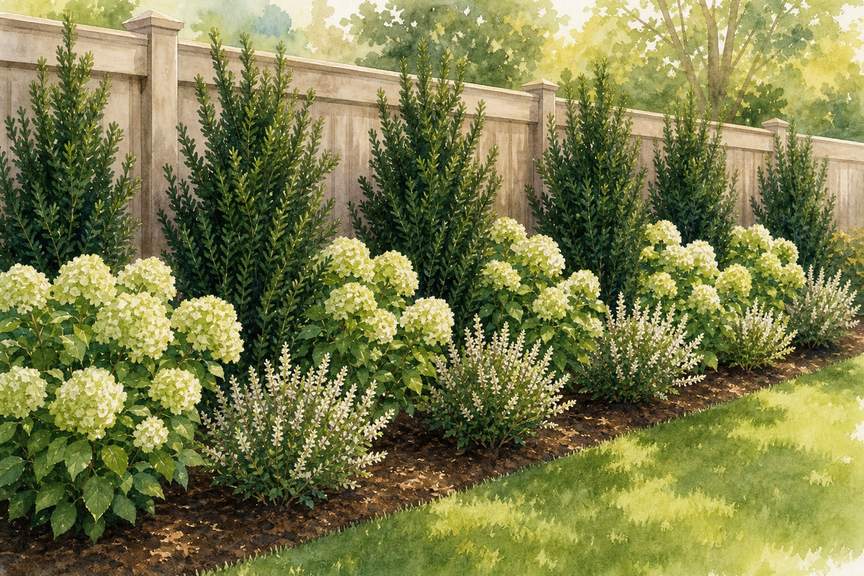
A staggered border looks fuller than a single-file hedge and can still fit within a bed about four feet deep. Put taller plants such as Hicks yew or compact inkberry toward the fence, then tuck lower plants like Little Lime hydrangea or dwarf sweetspire into the gaps. Use fewer varieties than you might in a large border; repeating three plants keeps a short fence line from looking chopped up. Match the mix to the light rather than combining plants by appearance alone. Hydrangeas may wilt against a hot west-facing fence, while yews dislike waterlogged soil. This arrangement also takes more pruning than one species, and fallen leaves can collect behind the back row where they are awkward to reach.
5. Make a summer screen with upright ornamental grasses
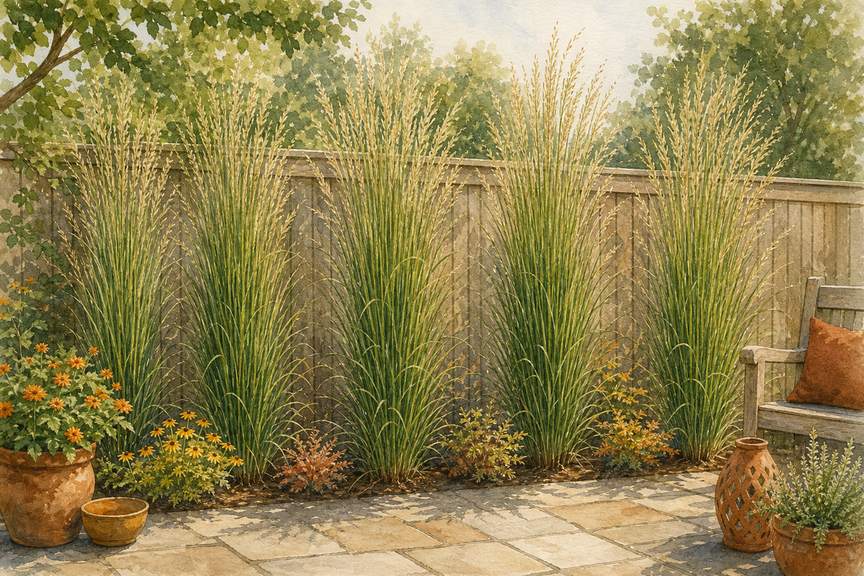
Upright grasses are useful where you want privacy during patio season but cannot tolerate a heavy evergreen wall. Northwind switchgrass reaches roughly four to five feet and holds a narrow shape; Karl Foerster feather reed grass is similarly upright and starts growing early. Space them according to mature width, usually about 24 to 36 inches apart, rather than packing young plants tightly. Most perform best with at least six hours of sun and soil that drains after rain. The honest downside is winter. Stems become thinner and may flatten under snow, then the entire screen needs cutting to about six inches in late winter. Check local invasive-plant guidance before choosing any ornamental grass, especially maiden grass.
6. Espalier a fruit tree against a sunny fence line
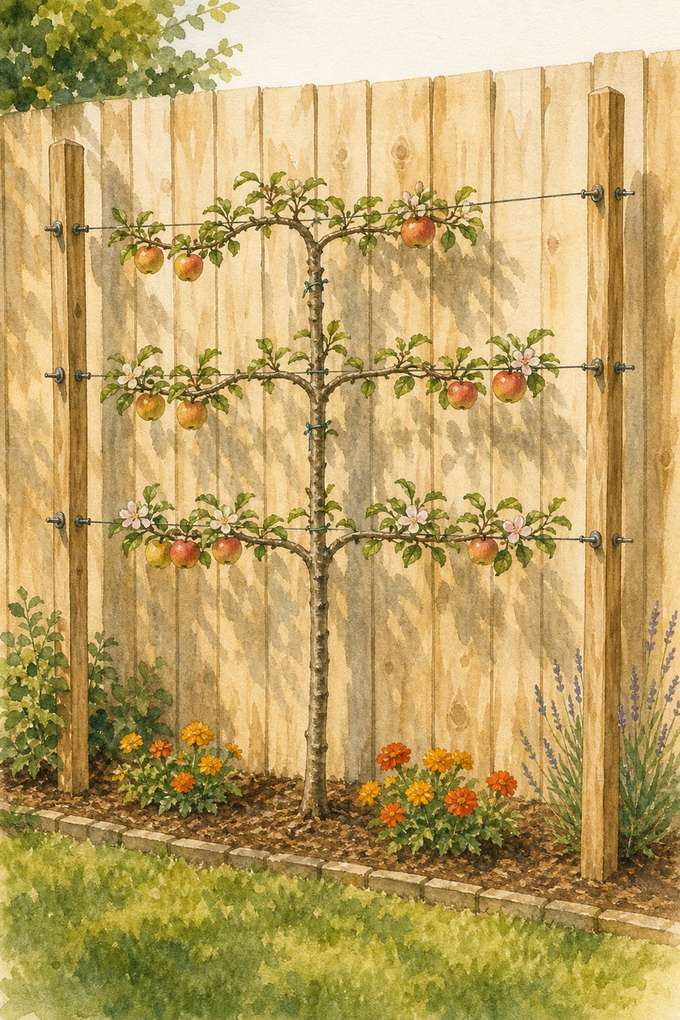
An espaliered apple or pear turns a sunny boundary into a flat, productive screen only 18 to 24 inches deep. Install posts and horizontal wires inside your property rather than relying on an aging fence to carry the load. Dwarf rootstock controls size, but it does not remove the need for summer pruning, branch tying, and annual inspection of the supports. Apples usually need six or more hours of direct sun, and many varieties require a compatible pollination partner nearby. A self-fertile pear or a multi-graft apple may suit a one-tree yard better. This is not instant privacy: a young tree can take several seasons to cover three wire tiers, and winter branches provide only partial screening.
7. Contain clumping bamboo in a raised root barrier
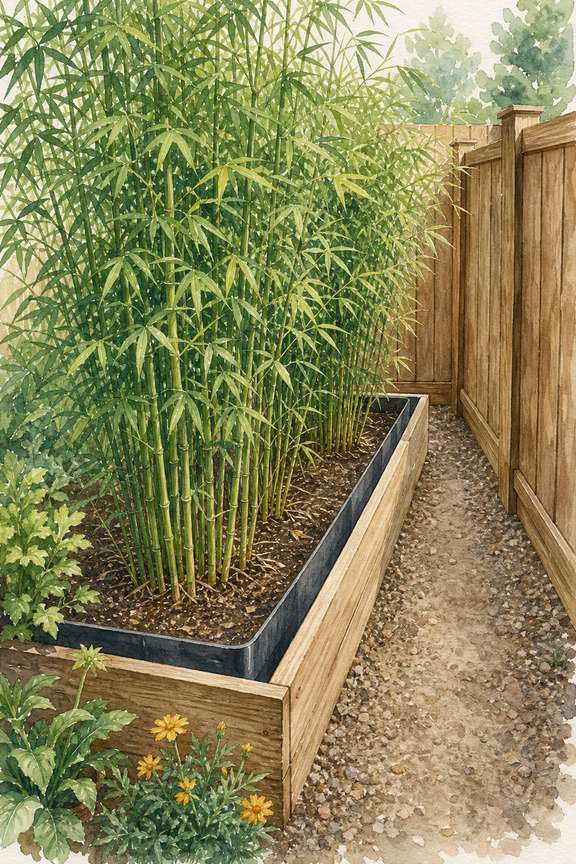
Clumping bamboo can form a tall, narrow screen, but the word clumping does not mean stationary. Fargesia species spread more slowly than running bamboo and tolerate some shade, making them better candidates for tight yards in cooler regions. Even so, install a purpose-made rhizome barrier or a contained raised bed, and leave an accessible inspection edge around it. Running bamboo should not go into a property-line bed; one missed rhizome can create an expensive dispute next door. Bamboo also sheds leaves, needs steady moisture, and may suffer winter burn where cold wind funnels between houses. Check municipal and HOA rules before planting because some communities restrict bamboo regardless of type. Choose a species hardy for your USDA zone.
8. Build a movable screen with deep planter boxes
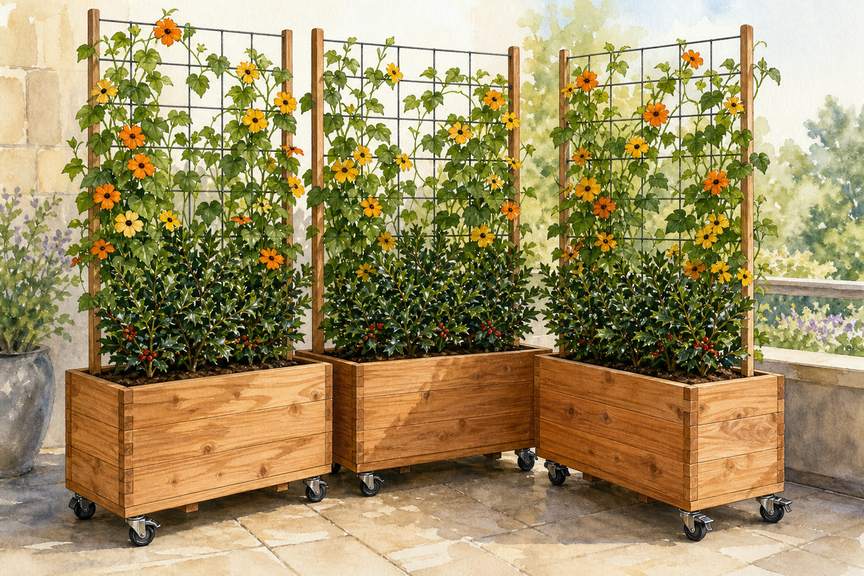
Two or three long planters can screen a rental patio or a utility view without permanent planting. Choose boxes at least 18 inches deep for compact shrubs such as Emerald Colonnade holly, dwarf panicle hydrangea, or a trellised annual vine. A 36-inch planter filled with wet potting mix can weigh well over 100 pounds, so place it before filling and use locking casters only on a level, load-bearing surface. Drainage holes must remain open, and runoff should not flow toward the foundation or a neighbor's yard. Container shrubs need more winter protection than the same plants in the ground; in cold zones, roots may not survive an exposed pot. The advantage is flexibility, but moving a planted box is never effortless.
9. Soften the fence with a mixed edible screen
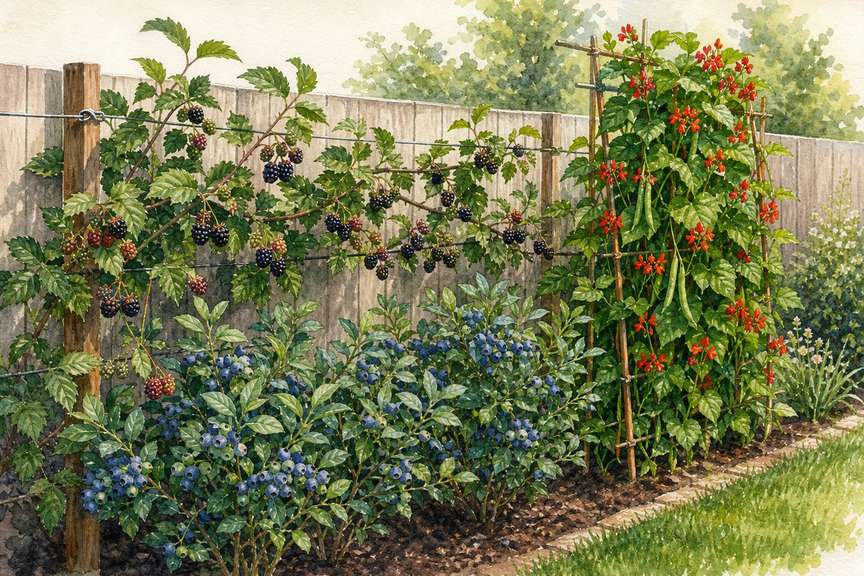
A mixed edible strip can provide shoulder-height privacy while earning its space in a tiny yard. Train thornless Triple Crown blackberry on two horizontal wires, add a compact blueberry such as Northblue where the soil can be kept acidic, and fill sunny gaps with six-foot scarlet runner beans. Keep berry canes at least 18 inches inside the property line so fruit and new growth do not invite reaching over the fence. This screen changes through the year and will never look as uniform as an evergreen hedge. Blackberries require annual removal of canes that already fruited, blueberries need a soil pH around 4.5 to 5.5, and birds may harvest first unless you add netting that is kept taut and checked regularly.
Common questions
- How close can privacy plants go to a backyard fence?
- Use the plant's mature width, not its nursery-pot size. For a shrub expected to reach four feet wide, placing the trunk about two feet from the fence is the bare minimum, and another 12 inches makes pruning easier. Keep trunks, roots, and supports entirely inside your property line, and check local setback or utility rules before digging.
- What can I plant when the fence line gets only a few hours of sun?
- For roughly three to five hours of direct sun, consider Hicks yew, compact inkberry, Fargesia bamboo where it is hardy, or a shade-tolerant serviceberry. Skip sun-hungry espaliered fruit and most ornamental grasses. Watch the bed after rain, too: deep shade plus poor drainage is harder on roots than shade alone.
- Which privacy planting gives useful screening in winter?
- Columnar arborvitae, yew, inkberry, and holly provide the most dependable winter cover when suited to your zone. Deciduous trees, grasses, vines, and berry canes become noticeably thinner after frost. Evergreens still need winter watering during dry spells until the ground freezes, especially beside fences that block rainfall.
- How do I prevent a narrow privacy border from becoming hard to maintain?
- Leave a 12-to-24-inch access path or reachable gap wherever plants will hide the fence. Install drip irrigation before the bed fills in, keep vines on their own supports, and prune to the plant's natural shape rather than forcing a wide shrub into an 18-inch strip. Avoid running bamboo and plants with aggressive suckers near shared boundaries.