9 Freestanding Trellis Ideas for Renters Who Can't Drill Into Walls
Blank wall or strict lease, you can still grow upward without making holes. These nine freestanding setups balance climbing space with the less-photogenic realities of wind, weight, drainage, and moving day.
This page contains affiliate links — we may earn a commission at no extra cost to you. See our disclosure.
1. Anchor a Metal Obelisk Inside One Large Pot
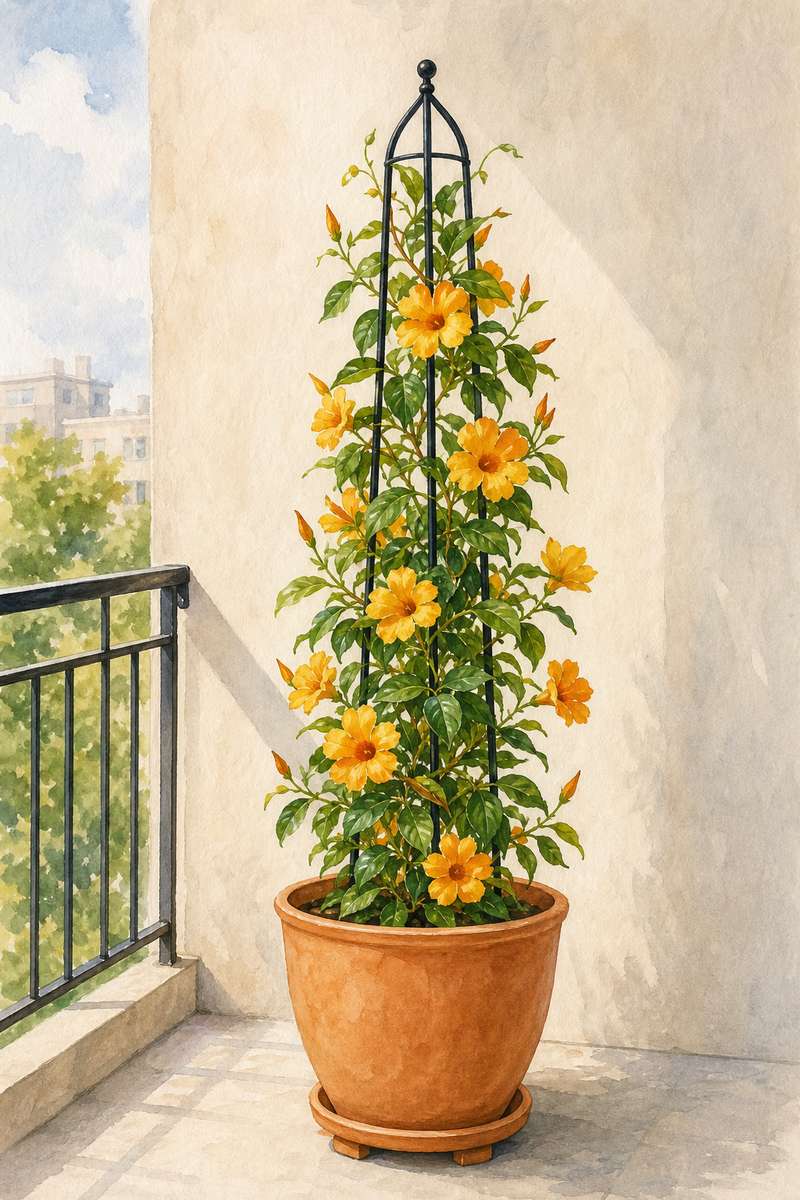
Set a powder-coated steel obelisk 5 to 6 feet tall directly into a 20-inch-wide planter, then add potting mix around its legs. This gives mandevilla, compact clematis, or black-eyed Susan vine a narrow climbing tower without a wall tie. The container is the anchor, so skip featherlight plastic unless you add a broad base and 2 to 3 inches of gravel beneath the potting mix. Gravel adds stability but also adds moving-day weight; a filled planter this size can exceed 80 pounds. Keep the obelisk centered, use a saucer or pot feet to prevent stains, and move the whole setup away from exposed balcony edges when strong wind is forecast.
2. Build a Folding Cedar A-Frame for Beans
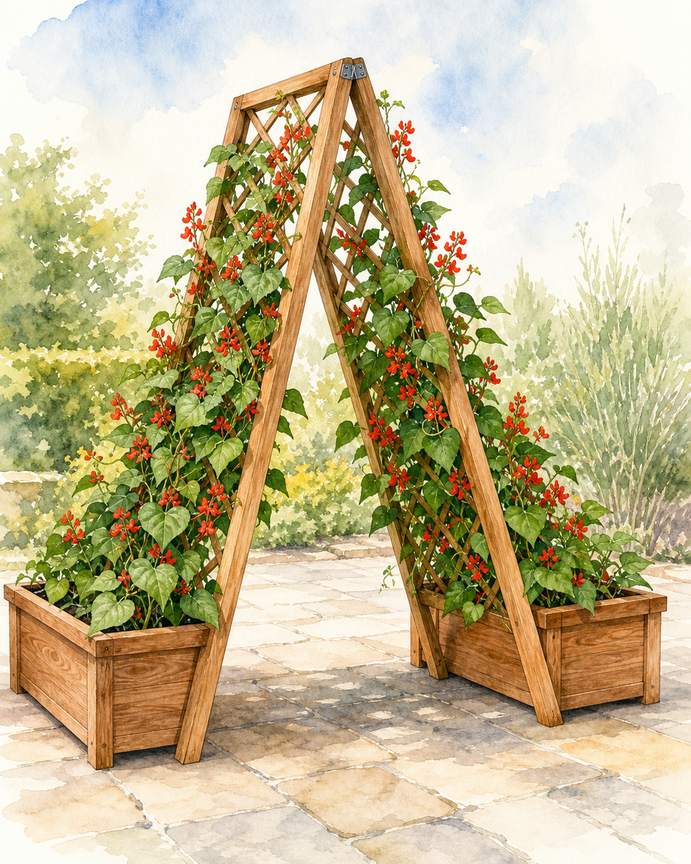
Join two 3-by-6-foot cedar lattice panels at the top with outdoor hinges to make a self-supporting A-frame. Spread the feet 30 to 36 inches apart and grow scarlet runner beans, sugar snap peas, or cucamelons up both sides. The broad stance handles moderate wind better than a flat panel, while folding nearly flat for winter storage or a move. Its drawback is floor space: the footprint can swallow a narrow balcony, and vines may close off the center by midsummer. Place a long planter along each lower edge rather than hanging weight from the frame. Cedar tolerates weather without paint, but check hinge screws each spring because repeated folding can loosen them.
3. Turn a Wooden Ladder Into a Lean-Free Trellis
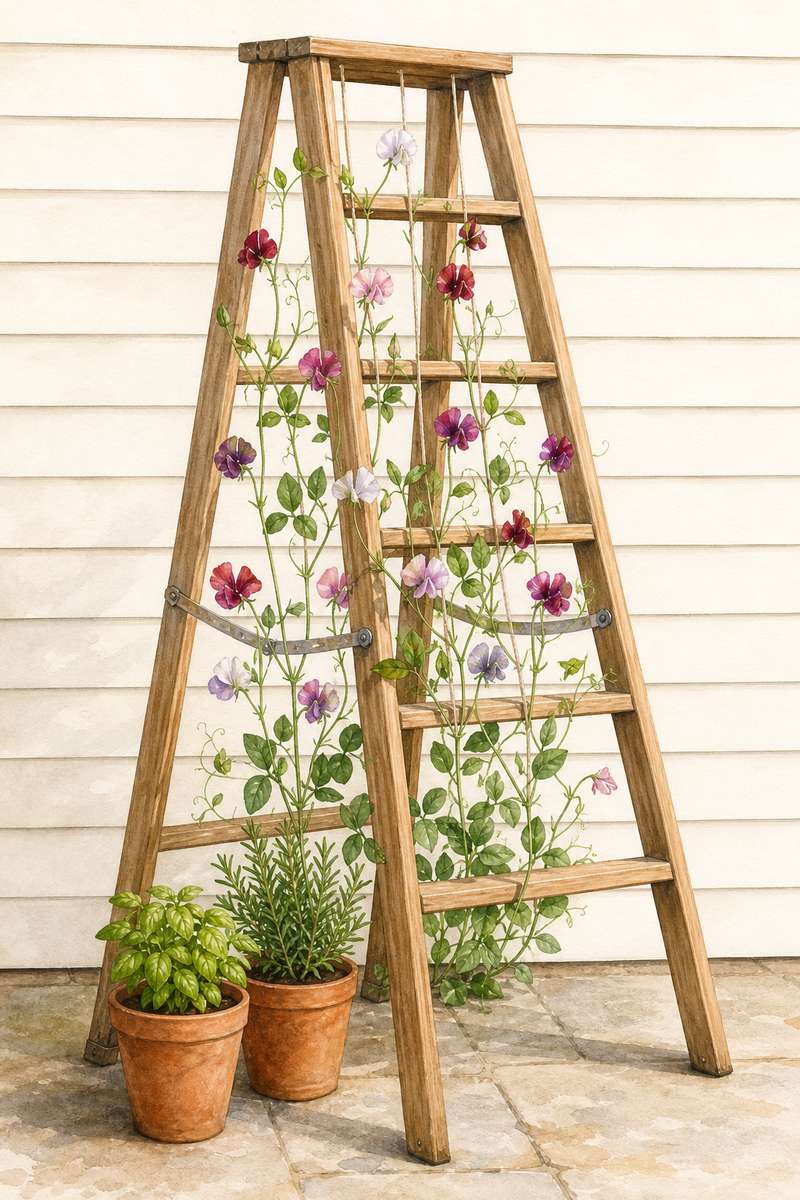
A 5-foot wooden stepladder stays upright on its own, so it works where leaning anything against the siding violates the lease. Train dwarf sweet peas, nasturtiums, or climbing spinach along jute twine tied between the steps, and place two 12-inch pots beside the feet. Choose a true folding stepladder with locking spreaders, not a decorative straight ladder that still needs wall support. The steps also hold small herb pots, but keep total shelf weight within the ladder manufacturer's rating and place heavier containers below knee height. Bare wood needs an exterior sealant, while painted ladders eventually chip. Close and store the ladder before freezing weather so wet joints do not swell or seize.
4. Repurpose a Garment Rack for Annual Vines
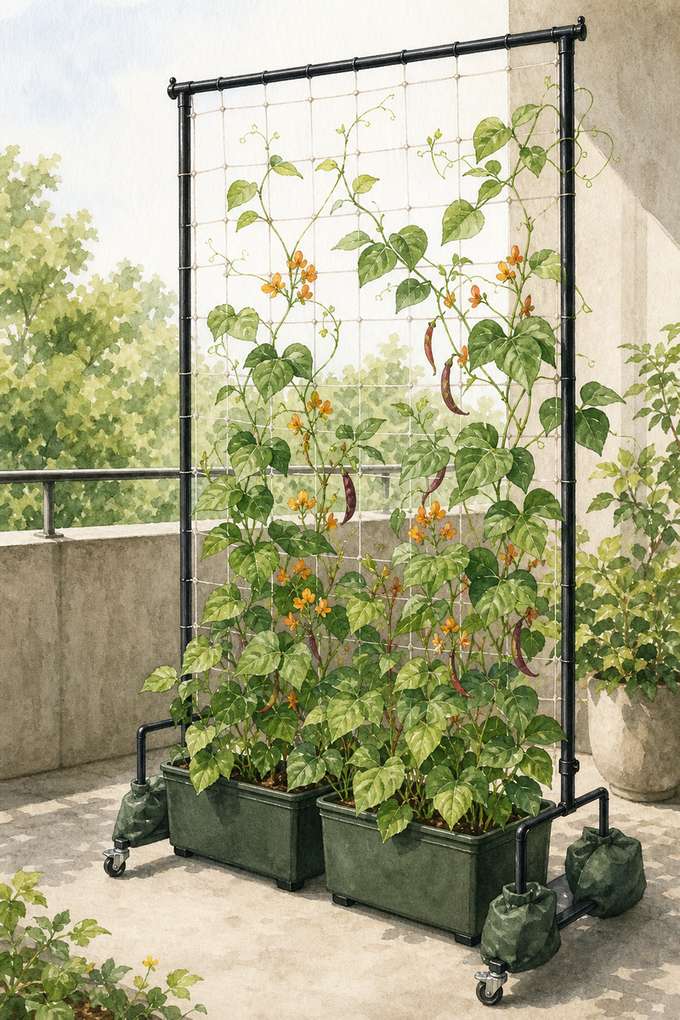
A steel garment rack creates a slim, 4- to 5-foot-wide trellis that can roll aside when the patio needs cleaning. Hang a nylon garden net from the top bar and guide hyacinth bean, moonflower, or cucamelon upward from rectangular planters below. Look for a rack rated for at least 100 pounds even though the vines weigh far less; sturdier joints wobble less outdoors. Locking casters help on smooth concrete, but wheels are a liability in wind, so park each end inside a 25-pound sandbag cover or remove the casters entirely. Most indoor racks will rust at scratched joints. A coat of exterior metal enamel extends their life, although this remains a budget setup rather than a permanent heirloom.
5. Span Two Heavy Planters With a Garden Arch
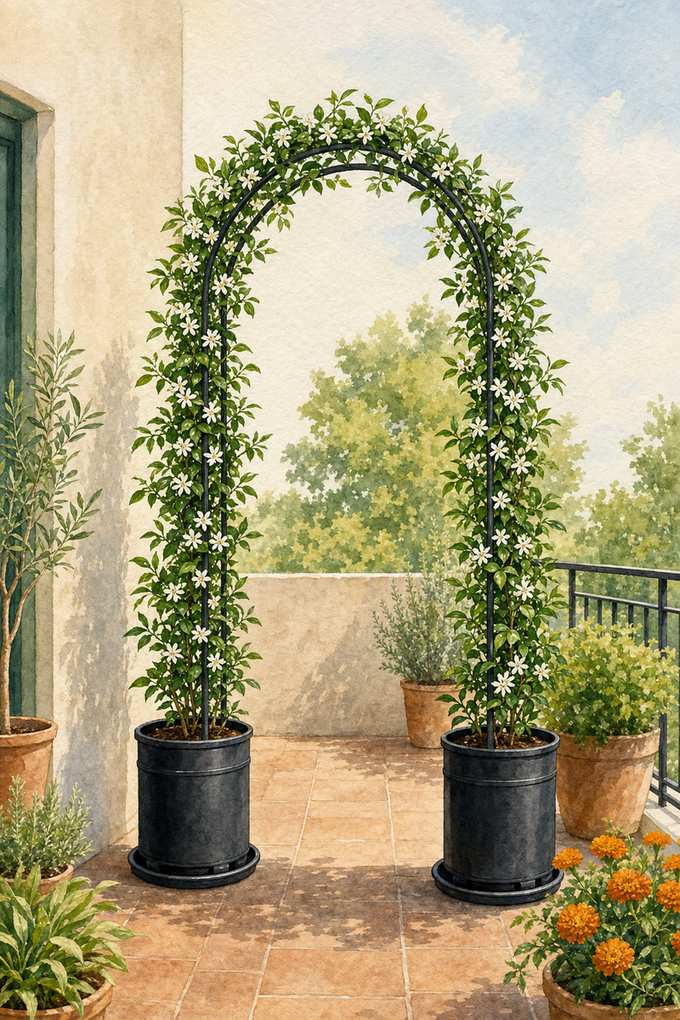
Create a walk-through trellis by setting the legs of a narrow metal arch into two matching planters, one on each side. A 36-inch-wide arch can frame a patio door or mark the transition between seating and planting without touching the building. Star jasmine suits warm climates, while annual cypress vine keeps the structure lighter and is easier to remove at lease-end. Both pots need equal ballast and drainage; an unbalanced arch twists quickly in gusts. Use containers at least 18 inches wide, and confirm the combined wet weight is acceptable for your balcony. The top can be awkward to prune above 6 feet, so this design works best where you can safely reach it from the ground.
6. Lash a Bamboo Tripod for a Tiny Footprint

Tie three or five 6-foot bamboo canes together about 8 inches from their tops, then spread the bases into a 16- to 20-inch container. The tripod gives pole beans, mini pumpkins, or purple bell vine climbing room while using less floor area than a flat panel. Natural jute looks tidy but may rot before the second season; waxed garden twine or reusable rubber ties last longer. Bamboo is light enough to carry indoors, which also means a leafy tripod can become top-heavy in summer wind. Push each cane at least 10 inches into moist potting mix and add a low cross-tie around the legs. Replace split canes promptly because sharp fibers can snag clothing in a narrow walkway.
7. Choose a Wheeled Planter With a Built-In Trellis
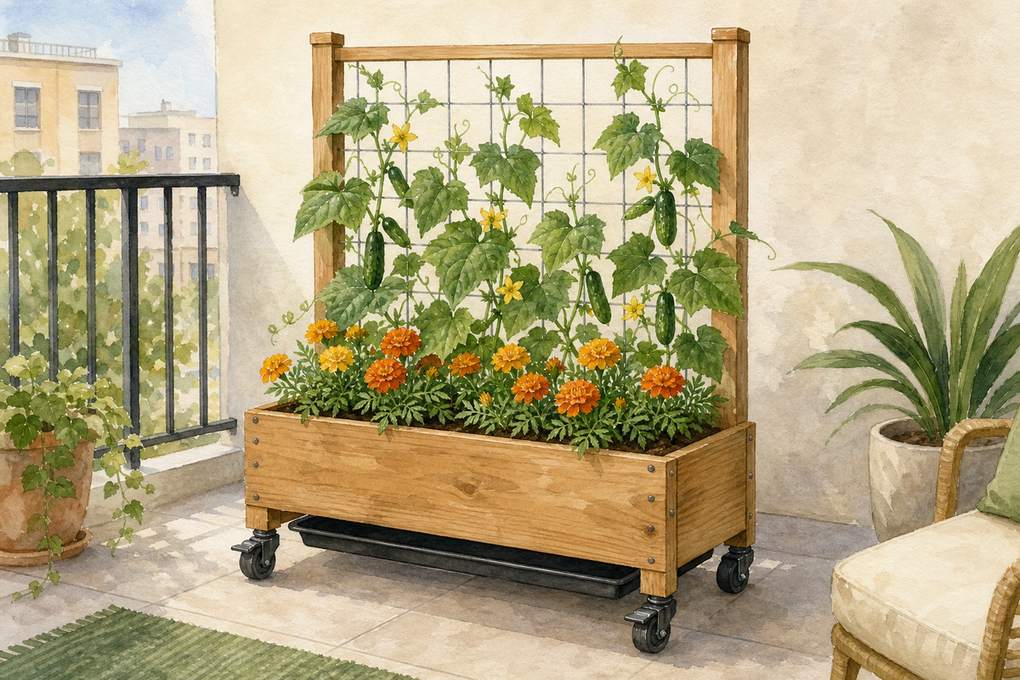
A planter-and-trellis unit on locking casters combines the growing bed, support, and movable base in one renter-friendly piece. Choose a box at least 12 inches deep for compact cucumbers, cardinal climber, or patio-trained star jasmine, and look for a trellis fastened to the planter frame rather than merely pushed into the soil. Wheels make it easier to chase seasonal sun or clear access for maintenance, but they do not reduce the load on a balcony. A 30-inch box filled with wet mix can still weigh 70 pounds or more. Lock every caster on level ground, avoid rolling across deck-board gaps, and use a fitted drip tray so irrigation water does not mark the surface below.
Product pick — a wheeled planter with an integrated trellis
8. Make a Cattle-Panel Tunnel Over Two Grow Bags
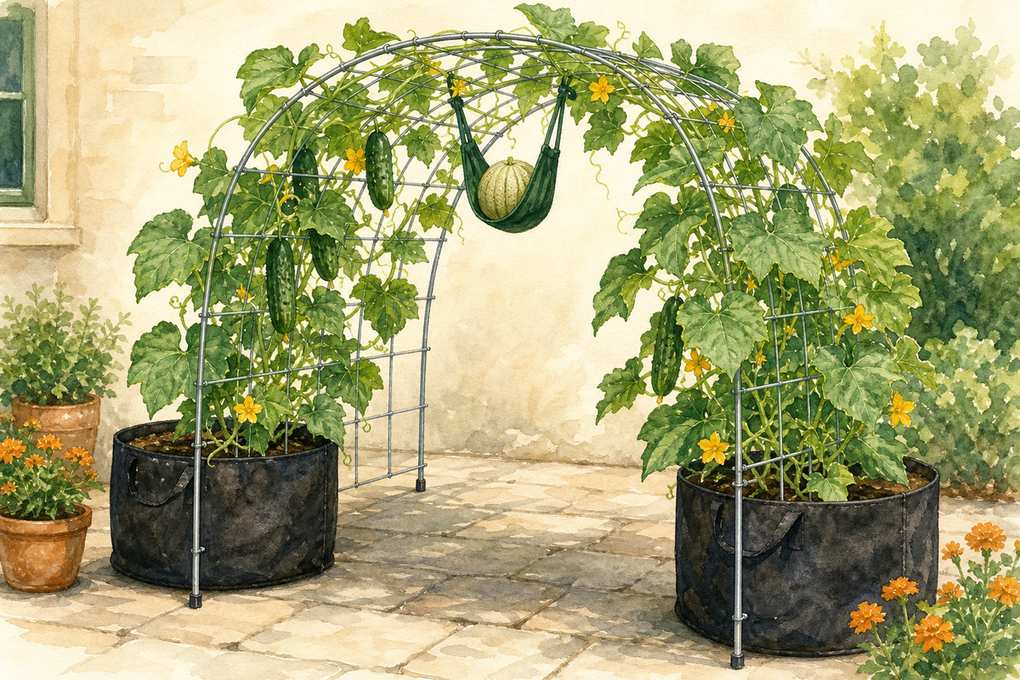
Bend a 4-by-8-foot section of galvanized cattle panel into a low tunnel and secure each long edge to a 15- or 20-gallon fabric grow bag with heavy reusable ties. The arch is strong enough for cucumbers, small melons supported in slings, or indeterminate cherry tomatoes, and you can harvest from underneath. Cut panel edges are sharp, so cap every exposed wire end and wear gloves during assembly. This setup is better for a ground-level patio or tiny yard than an elevated balcony because the panel is bulky and catches wind. Fabric bags also dry faster than rigid pots; in midsummer they may need daily watering. At lease-end, snip the ties and store the panel flat.
9. Use a Weighted Privacy Screen as a Trellis
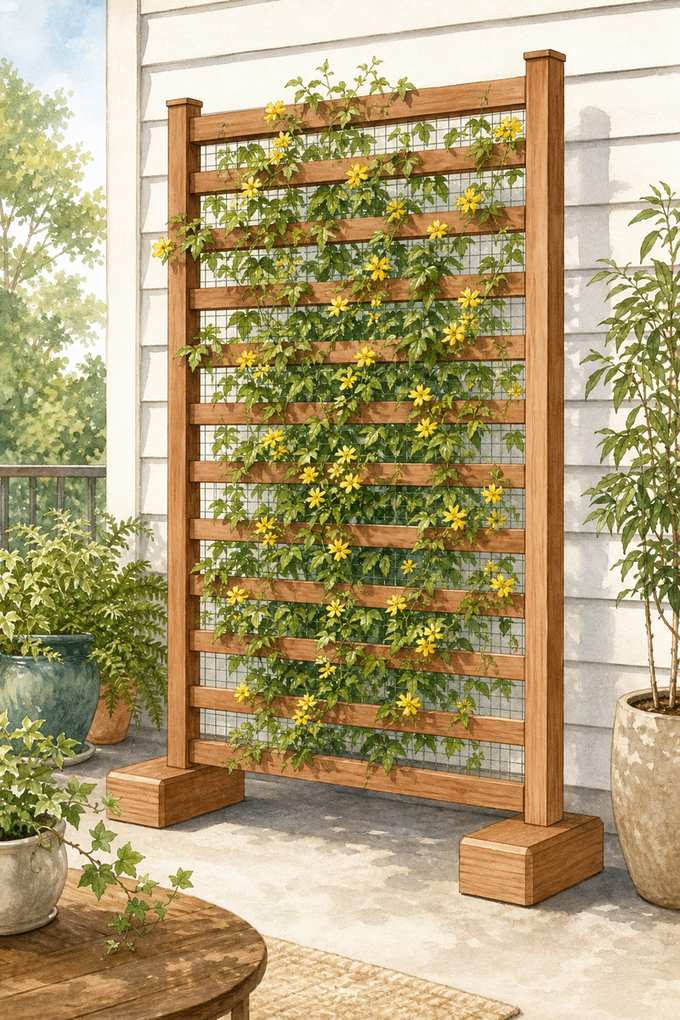
Start with a freestanding outdoor privacy screen that has wide feet, then add removable wire mesh or horizontal garden cord for vines. A 5- to 6-foot panel can screen a neighboring window while supporting compact clematis, chocolate vine, or annual canary creeper. The screen must be rated for outdoor use, and each foot should accept a planter box or purpose-made weight; a solid panel without airflow behaves like a sail. Leave at least 6 inches between foliage and siding so damp leaves do not stain the building. Privacy improves only after the plant fills in, often halfway through the first season. Until then, the frame remains visible, and evergreen climbers may be too heavy for lightweight composite screens.
Common questions
- How heavy should a freestanding trellis be on a balcony?
- There is no universal safe weight because balcony load limits, structure, and local codes vary. Ask your landlord or building manager before adding large wet planters, and remember that water can add several pounds to a container after rain. A wide base generally resists tipping better than one very heavy, narrow pot.
- How do I keep a no-drill trellis from blowing over?
- Choose an A-frame, tripod, or base at least 16 to 24 inches wide, then place weight low rather than hanging it from the top. Open lattice and wire mesh pass more air than solid screening. Move lightweight setups indoors before severe weather, and never tie a trellis to a balcony railing unless building rules specifically allow it.
- Which climbing plants work with lightweight freestanding trellises?
- Annual vines such as sweet peas, cucamelons, nasturtiums, and cardinal climber are easier on movable frames than mature woody vines. Wisteria and large climbing roses can overwhelm light trellises. Match the plant to your sun exposure, and check local guidance before growing aggressive or invasive vines such as chocolate vine.
- What should I do with the trellis in winter?
- Remove dead annual vines before they become brittle, clean off soil, and fold or store bamboo, wood, and indoor-grade metal frames under cover. Powder-coated steel can remain outside if sound, but touch up chips before rust spreads. In freezing regions, empty vulnerable ceramic pots and check your plant's hardiness zone before overwintering perennial climbers.